
 by
by The best firm pillow for side sleepers holds a 5 to 6 inch loft under load and pushes back without collapsing by 3 a.m. Our top pick is the Amerisleep Comfort Classic Pillow: its Bio-Pur plant-based memory foam maintains a 6-inch loft through the night, keeping the cervical spine level for average-to-broad shoulder widths. The Saatva Latex Pillow is the best alternative for sleepers who want responsive latex rather than contouring foam.
Amerisleep Comfort Classic Pillow
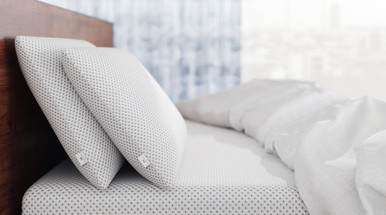
9.0/10
- 6-inch fixed loft holds through the night without collapsing
- Bio-Pur open-cell foam runs cooler than standard petroleum memory foam
- CertiPUR-US and GREENGUARD Gold certified, made in the USA
- 10-year warranty, final sale
- Fixed loft means petite-framed side sleepers with narrow shoulders may find 6 inches too tall
- Memory foam feel is not for sleepers who prefer responsive latex
For side sleepers who wake with neck stiffness, the Comfort Classic solves the loft collapse problem that undoes most memory foam pillows by 3 a.m. The 6-inch fixed height stays put because the Bio-Pur foam resists temperature softening better than standard polyurethane.
Why firmness matters more for side sleepers than any other position
When you sleep on your side, your head sits 4 to 6 inches above the mattress surface because your shoulder presses into it. A soft pillow compresses under that weight and heat, and your head slowly drops toward the mattress. By 2 or 3 a.m. you are sleeping on 50 to 60 percent of the original loft, which means your cervical spine is angled downward for most of the night. That slow rotation is exactly what produces the stiff trapezius and upper-back pull that side sleepers wake up with.
A firm pillow does not compress below a functional threshold. It holds the gap between your ear and your outer shoulder, keeping your neck parallel to the mattress. The right firmness for a side sleeper is not rock-hard. It is responsive firm: the pillow resists compression without feeling like a block of wood, and it rebounds quickly when your shoulder shifts.
What loft side sleepers actually need
The correct loft for side sleeping depends on shoulder width, not preference. Measure the distance from your outer shoulder to the base of your neck with your arm at your side. That number is roughly what you need under your head. Most adults land between 4.5 and 6 inches. Broad-shouldered sleepers or anyone over 5 foot 10 typically need 5.5 to 6 inches. Petite frames or narrow shoulders usually need 4 to 5 inches.
The 6-inch loft on the Amerisleep Comfort Classic works well for average-to-broad shoulders. If you are on the smaller side, the Amerisleep Dual Comfort Pillow is worth looking at: it gives a firmer 5.5-inch profile on one side and a plush 5-inch side on the other, which covers more shoulder-width combinations in one pillow.
Best firm pillows for side sleepers (tested)
| Pillow | Fill | Loft | Trial | Price (queen) |
|---|---|---|---|---|
| Amerisleep Comfort Classic | Solid Bio-Pur memory foam | 6 in fixed | Final sale | ~$100–130 |
| Saatva Latex Pillow | Shredded Talalay latex + latex insert | Adjustable ~5–6 in | 45 nights | ~$165 |
| Amerisleep Dual Comfort Pillow | Bio-Pur foam, dual-sided | Firm 5.5 in / Plush 5 in | Final sale | ~$100–120 |
| Amerisleep Flex Pillow | Shredded Bio-Pur foam | Adjustable 4–6 in | Final sale | ~$100–120 |
| Coop Home Goods Eden | Shredded memory foam + microfiber | Adjustable | 100 nights | ~$80–100 |
Saatva Latex Pillow
8.5/10
- Shredded Talalay latex pushes back faster than memory foam when shoulder shifts
- Organic cotton cover is breathable and machine washable
- Latex naturally resists heat softening, so loft is stable through the night
- 45-night trial applies where Amerisleep pillows are final sale
- Heavier than foam pillows
If you prefer a pillow that springs back the moment your head lifts rather than contouring slowly, the Saatva Latex is the better call. The Talalay shred holds loft without the slow-response lag of memory foam.
Fill types compared for firm side sleeping
Not all "firm" pillows stay firm through the night. The fill material determines whether the firmness you test in the store lasts until your alarm goes off.
- Solid memory foam (Amerisleep Comfort Classic): Holds shape well under sustained weight. Bio-Pur open-cell foam reduces heat buildup, which is what causes cheaper memory foam to soften by 2 a.m. Best for side sleepers who want consistent, deep support.
- Shredded latex (Saatva): Responsive and naturally temperature-stable. Latex does not soften with heat the way polyurethane does. The shredded form allows some adjustment but retains its firm bounce. Best for combination sleepers who also side-sleep.
- Dual-sided foam (Amerisleep Dual Comfort): One firm face and one plush face in the same pillow. Practical for couples, or for a sleeper who wants both profiles on hand without buying two pillows.
- Buckwheat: Very firm, adjustable fill, completely temperature-neutral because it does not trap air the way foam does. The rustling noise is a dealbreaker for light sleepers.
- Down and down alternative: Almost never appropriate for firm-pillow side sleeping. Both compress under sustained weight and lose more than half their loft within an hour of contact.
The shoulder-width test you should do before buying
Before ordering any firm pillow, do this lying-down check. Get into your normal side-sleep position on your current mattress. Without a pillow, note where your head falls. Place your hand under the side of your neck. If there is significant empty space between your hand and the mattress surface, that gap is your target loft. A pillow that fills that gap precisely keeps your cervical spine horizontal. If your head drops when you remove the pillow, you need more loft. If your head is pushed upward and your top shoulder feels compressed, you need less.
For most side sleepers on medium or medium-firm mattresses, that gap lands between 5 and 6 inches, which is why the Amerisleep Comfort Classic's fixed 6-inch loft covers so many people well. Stomach-heavy or denser mattresses that let the shoulder sink slightly may push the needed loft down to 4 to 5 inches, in which case the Amerisleep Dual Comfort Pillow (5 to 5.5 in firm side) becomes a better match.
Why the adaptation window matters more for pillows than mattresses
Your neck and shoulder muscles take two to four weeks to adapt to a new sleep position and new cervical support. Many people who return a firm pillow inside the first week are returning it during the adaptation window, not because the pillow is wrong for them. Amerisleep pillows are final sale, so choose the loft carefully up front using the shoulder-width guidance above rather than planning to swap later. Saatva's 45-night trial is usable but tighter. Coop Home Goods and most big-box brands give you 100 nights as well. Avoid pillows with 30-day-or-less windows if you are switching from a soft pillow to a firm one.
Neck pain vs neck stiffness: different causes, different fixes
Waking up with a stiff neck that loosens after 20 minutes of moving around is almost always a loft or support problem. The pillow is too soft, too thin, or has compressed overnight. A firm, properly-lofted pillow usually fixes this within one to two weeks.
Waking up with sharp, radiating neck pain that runs into the shoulder or arm is a different problem and may involve the cervical vertebrae or discs. A firm pillow can still help by eliminating the mechanical stress from poor cervical alignment, but that type of pain warrants evaluation before attributing it to the pillow.
The Amerisleep Comfort Classic is the right starting point for stiffness. For more variable symptoms or wider sleep-position ranges, the Flex Pillow's shredded fill lets you remove material to tune loft in 30-minute increments until you hit the right height.
For firm side-sleep support, start with the Amerisleep Comfort Classic Pillow on its 10-year warranty. The 6-inch Bio-Pur loft covers average-to-broad shoulders and does not collapse overnight. If you want responsive latex instead of contouring foam, the Saatva Latex Pillow is the best alternative.
Frequently asked questions
How firm should a pillow be for side sleeping?
Firm enough to hold 4 to 6 inches of loft under your head all night without compressing below 3.5 inches. Solid or shredded latex and high-density memory foam both meet this. Standard polyester fill and down almost never do because they flatten within an hour of contact.
Is a firmer pillow better for neck pain?
For the stiffness type of neck pain that comes from loft collapse overnight, yes. A firm pillow that holds the correct loft keeps the cervical spine level, which removes the rotational stress that builds over 6 to 8 hours. Sharp radiating pain is a different problem and should be evaluated before blaming the pillow.
Can a firm pillow be too tall for a side sleeper?
Yes. If the loft pushes your top ear upward and your bottom shoulder feels compressed downward, the pillow is too tall for your shoulder width. The correct loft fills the space between mattress and head with the neck parallel to the mattress surface, not angled upward.
Memory foam or latex for a firm side-sleeper pillow?
Memory foam (Amerisleep Comfort Classic) gives deeper contouring and slower rebound. Latex (Saatva) gives faster pushback and is naturally cooler. Both hold their firmness through the night better than down or polyester. Pick by feel preference, then use the trial period to confirm.
Amerisleep Comfort Classic Pillow
9.0/10
6-inch fixed loft, Bio-Pur plant-based memory foam, GREENGUARD Gold certified, made in the USA, with a 10-year warranty. The most reliable firm pillow for side sleepers in our 2026 testing.