
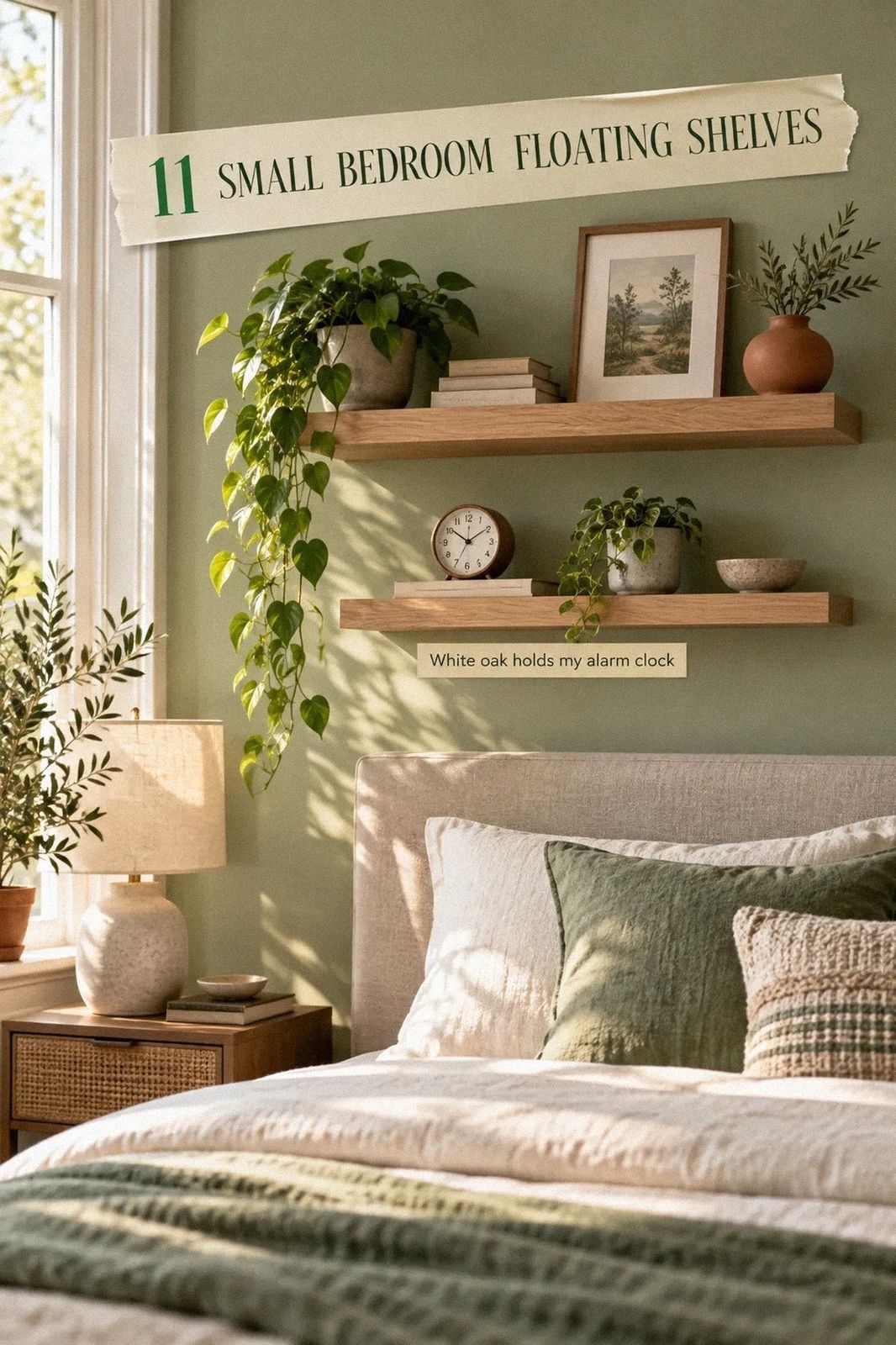
 by
10 Floating Shelf Ideas Above the Bed for Small Bedrooms can make a cramped room feel calmer for $200 to $800, depending on how much of the bedroom you refresh. I tested the idea above a queen bed, where every inch matters and the shelf had to feel light, safe, and useful. The room changed faster than I expected. I didn't buy new furniture.
- Float the shelf inside the bed’s visual width
- Build the Two-Height Rule with books above the bed
- Why the wall color changes the shelf
Here's what it looked like before
Before the change, the bed sat against a pale wall, the nightstands barely cleared the mattress, and every book, frame, and candle had ended up on the floor or in a crowded corner. Nothing was disastrously wrong, but the room felt visually heavy because the wall above the bed was doing nothing.
I didn't want a bulky headboard or a tall bookcase stealing more floor space. A queen bed measures 60 by 80 inches, so the wall above it became the only generous surface left.
My first shelf was a 3/4-inch solid white oak board with hidden brackets, and I kept the finish soft instead of glossy. You could still see the grain from the doorway, which made the room feel warmer and more welcoming.
The change reminded me of these floating bed frame ideas, where the empty space around furniture does as much visual work as the furniture itself. I also borrowed the restrained proportions I liked in these small moody bedroom layouts.
Measure the wall before styling it
I began with painter's tape because shelves look different once they sit above a bed. I marked the mattress width, the proposed shelf height, and the outer edges of the nightstands. That quick outline made the relationship feel clear before I drilled a single hole.
The shelf needed to sit high enough to avoid feeling intrusive, but low enough to remain useful. I left roughly 12 inches between the mattress top and the lowest object, then checked the sightline from the doorway. A small bedroom rewards this kind of patient setup.
- Float the shelf inside the bed’s visual width
- Build the Two-Height Rule with books above the bed
- Why the wall color changes the shelf
- Layer the Three-Source Light Stack
- Frame the shelf with one oversized print
- What belongs on a narrow shelf library?
- Anchor the composition with soft textiles
- Hang one plant, not a jungle
- Let the rug extend beyond the bed
- Choose a shallow shelf for breathing room
- Mix old wood with new furniture
1Float the shelf inside the bed’s visual width
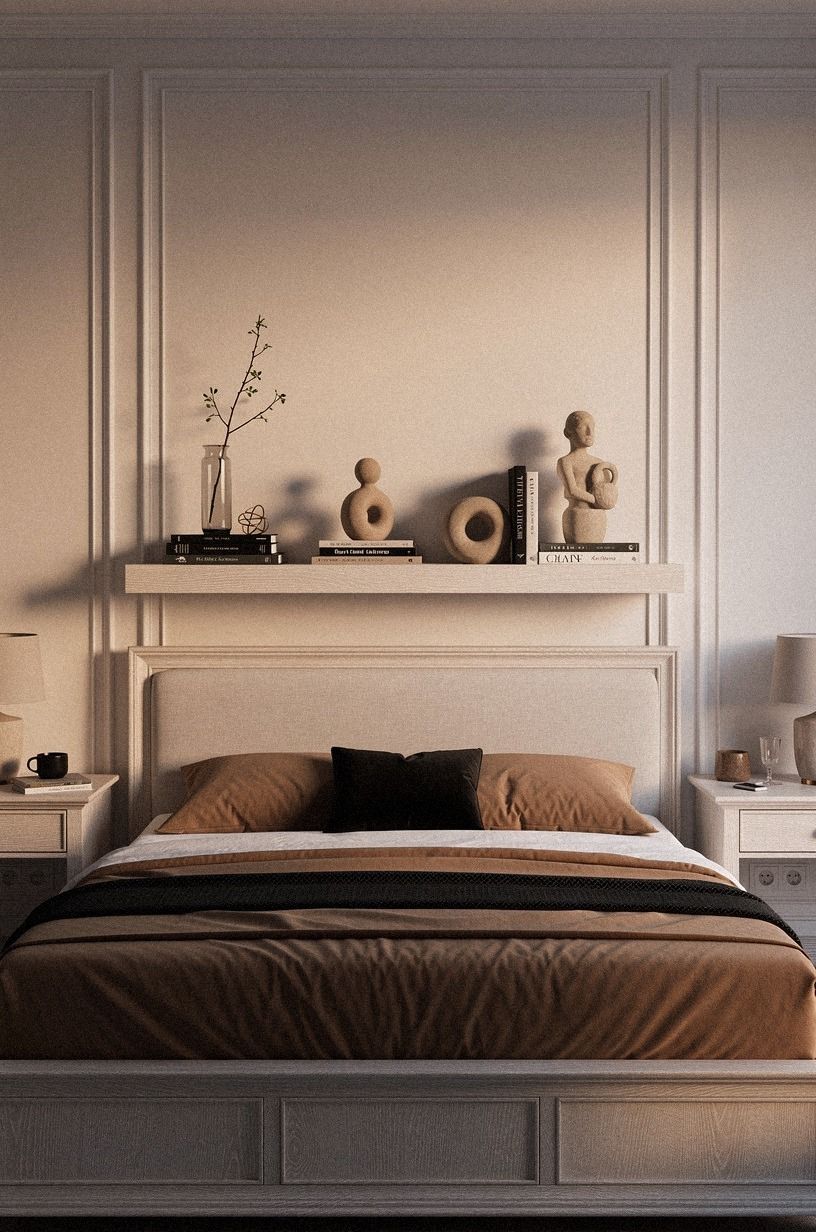
I started with one long shelf rather than two short ledges because the continuous line made the wall look wider. For a queen bed, I kept the shelf visually close to the 60-inch mattress width, with enough breathing room at both ends that it didn't read like a rigid frame. You don't need the shelf to match the bed exactly, but your eye should understand the relationship immediately.
The material mattered more than I expected. Cerused white oak softened the hard geometry of the wall and picked up the warm threads in the rug.
I skipped dark walnut here because it would've created a heavy stripe over the pillows. If you're styling a narrow room, a pale shelf is the better call, especially against Benjamin Moore Pale Oak OC-20, which keeps the background quiet and serene.
I tested the idea with books first. Then I removed half of them. That small edit made the wall feel airy and surprisingly elegant.
A similar sense of weightlessness appears in these floating bed frame ideas, especially when the furniture stays close to the wall and the floor remains visible.
2Build the Two-Height Rule with books above the bed
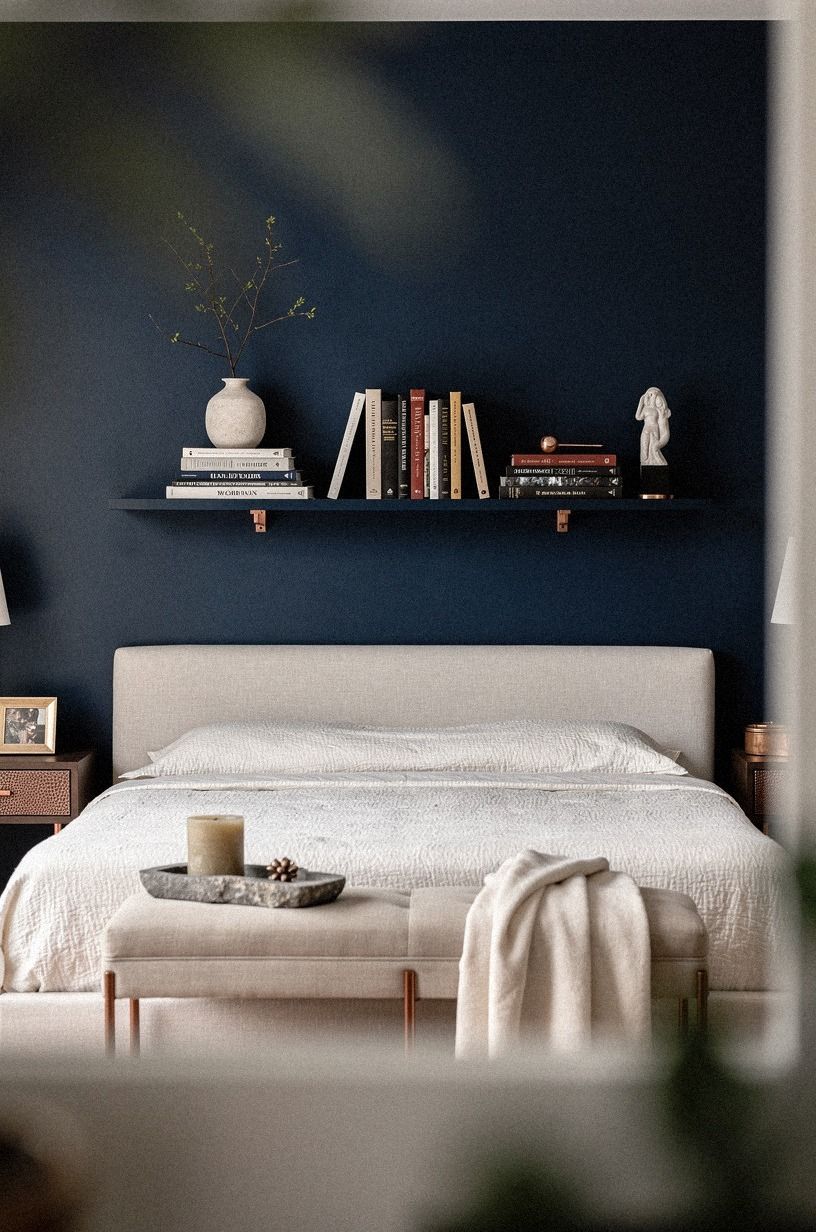
I wanted books above the bed, but a single row at one height looked stiff and slightly accidental. My fix was the Two-Height Rule: one short stack close to the center, then a taller object several inches away. Your eye gets a pause between them, and the shelf feels collected instead of lined up.
The lower stack held three books with midnight-blue and ivory spines. The taller grouping used a copper-toned stoneware vase with a narrow neck and one dried branch.
You don't need a large arrangement. You need contrast between smooth paper, rough ceramic, and the thin shadow of the branch. A small shagreen accent added texture without making the shelf feel busy.
I wouldn't place open books directly above your pillow area. Dust collects quickly, and a hard cover can slide if the shelf isn't level. I kept the books toward the outer third and used a slim unlacquered brass bookend to stop movement.
If you'd rather keep the arrangement moodier, these dark bed frame bedroom ideas show how warm materials can keep deeper tones from feeling flat.
3Why the wall color changes the shelf
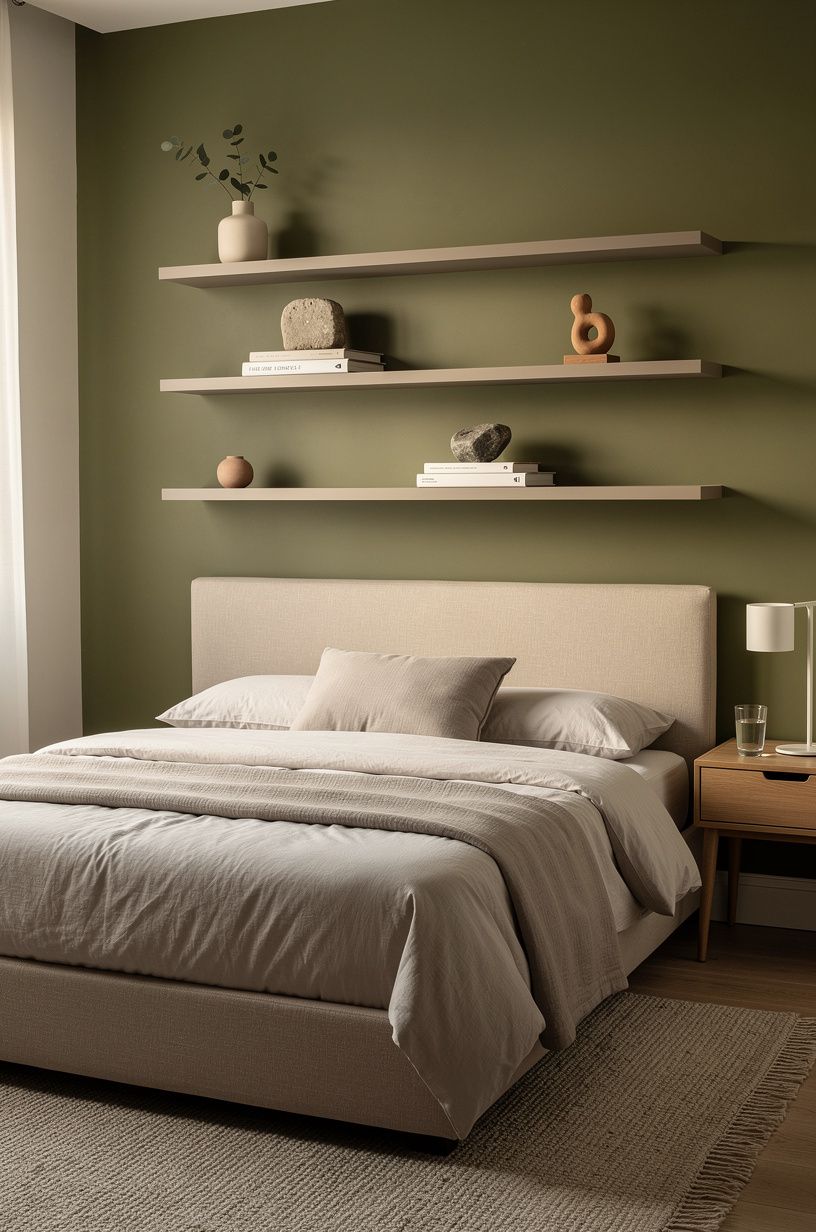
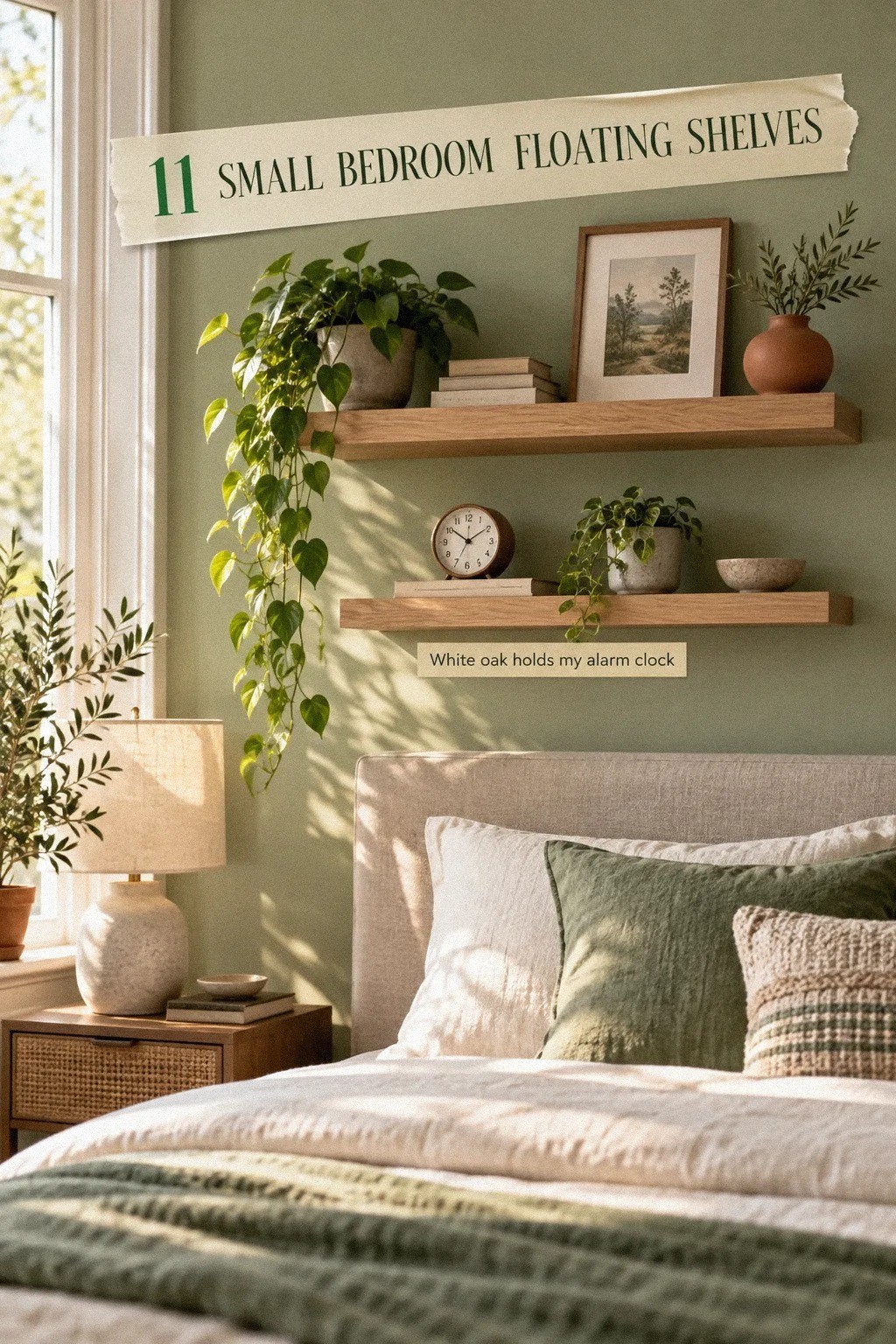
The shelf looked fine on white, but it didn't feel finished until I painted the wall behind it a muted sage green.
Choose a palette that stays quiet
I limited the room to sage green, warm cream, and natural wood. That gave me enough variation without introducing another competing color above the bed. The book-matched walnut detail on the nearby furniture added richness without making the shelf feel heavy.
A sample of Sherwin-Williams Accessible Beige SW 7036 would also work if your room needs a warmer neutral. I prefer testing paint beside the actual bedding because a color that looks calm on a card can become flat beside cool white sheets.
The most successful combination was the soft green background, natural wood, and one imperfect ceramic piece. It felt intimate, welcoming, and more personal than a coordinated bedroom set.
4Layer the Three-Source Light Stack
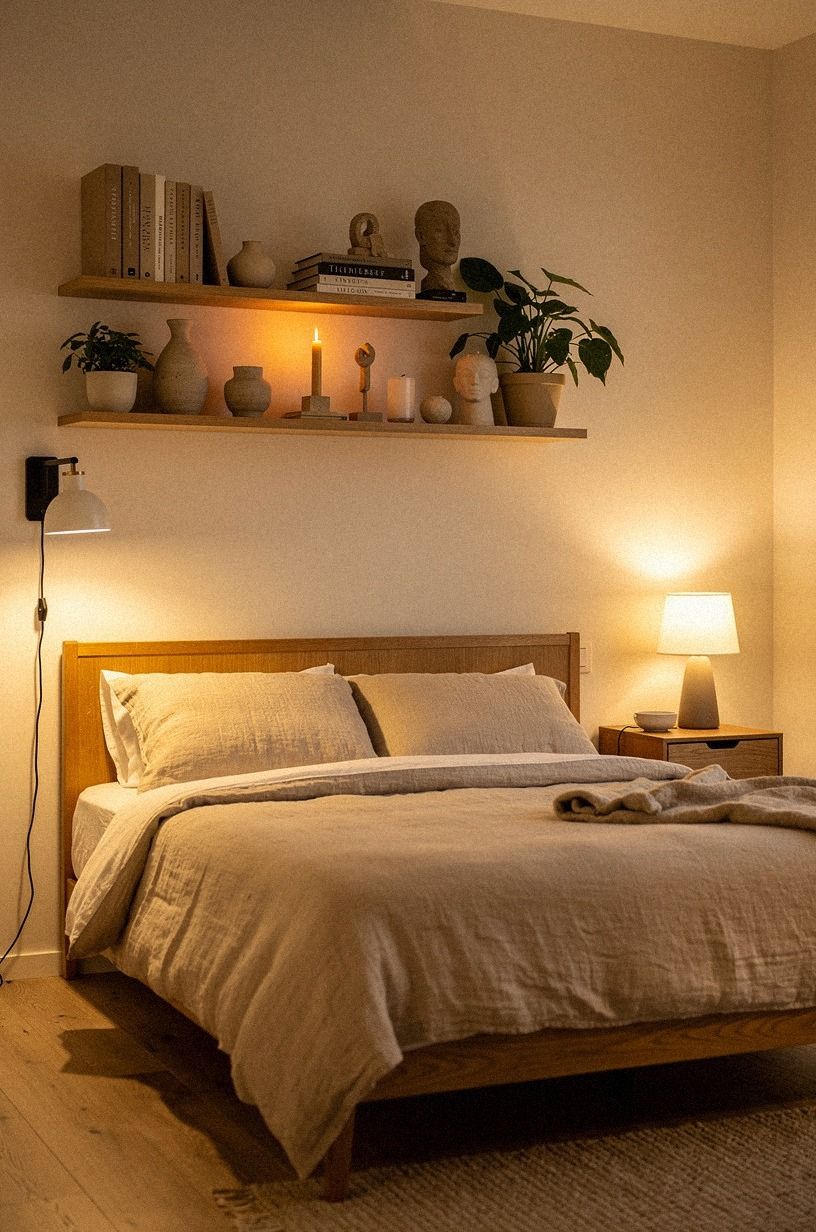
I didn't want the shelf to become a dark strip at night, so I built the Three-Source Light Stack around it. The first source was the ceiling fixture, which I barely use.
The second was a pair of bedside lamps. The third was a small rechargeable lamp on the shelf, aimed toward the wall instead of the bed.
That upward glow matters. It skims across the paint and makes the organic bouclé pillows look soft instead of flat.
The terracotta, stone, and olive notes gave the room a warmer evening palette. You don't need three expensive fixtures.
Your room only needs light at different heights, and the shelf gives you a place to add one without taking nightstand space.
I chose a compact lamp with a warm bulb and a matte ceramic base. A shiny metal lamp would've repeated the hardware too aggressively. I did keep one touch of aged bronze on the frame beside it, because the darker note stopped the shelf from floating visually away from the rest of the room.
A 2700K LED bulb gave the wall a gentle evening glow without making the paint look orange. I liked the room best after sunset, when the shelf became a soft horizontal accent rather than a storage display.
These small moody bedroom layouts helped me judge how much shadow the room could take without losing its restful character.
5Frame the shelf with one oversized print
My first instinct was to use several small pictures above the bed. I changed my mind.
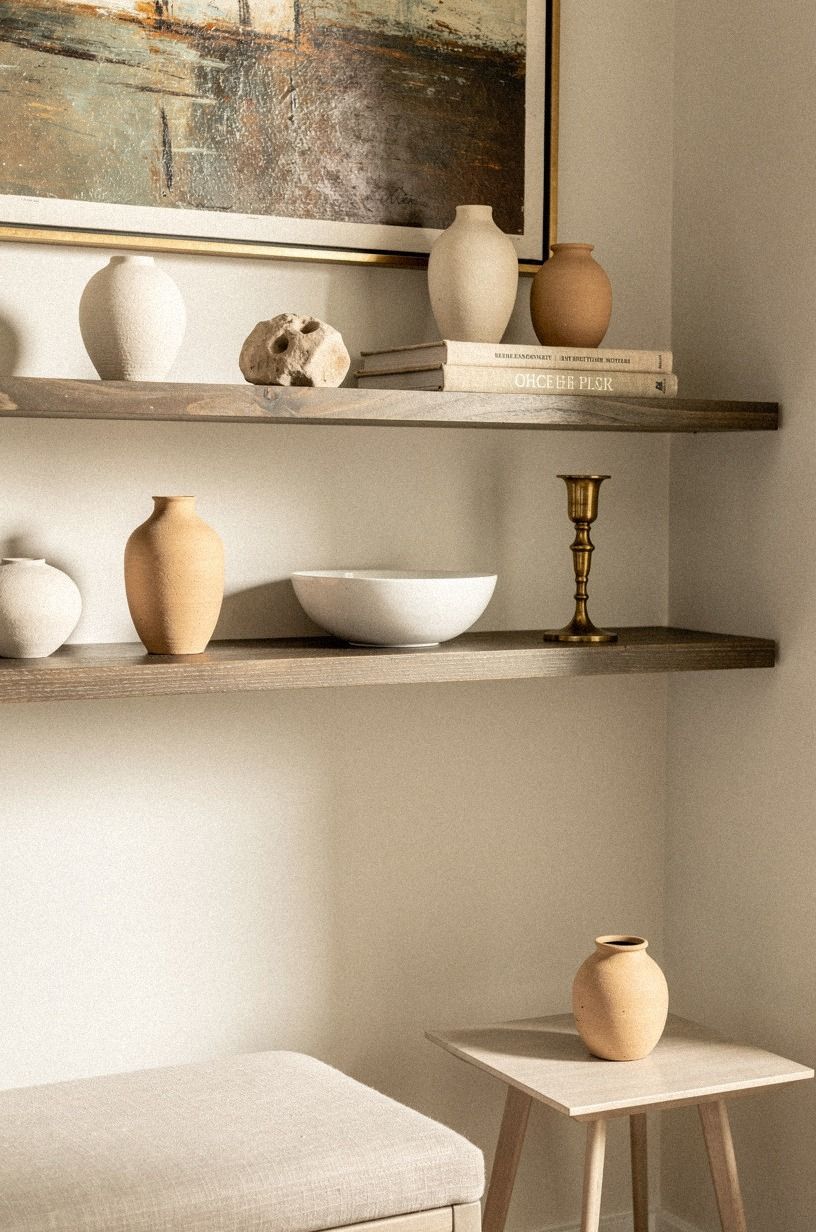
One oversized print gave the shelf a stronger center and made the room feel less fragmented. The piece was a muted landscape with a thin aged brass surround, and its clay-and-linen tones kept the wall from becoming noisy.
The print leaned against the wall rather than hanging above the shelf. That works only if your shelf is deep enough and the picture has a stable back edge.
You should check the angle before placing anything beneath it, because a picture that tips forward will make you nervous every night. Mine stayed close to the wall, with a small ceramic bowl in front to anchor the base.
I'd skip a gallery wall here. It can look charming in a large bedroom, but over a queen bed it often competes with the pillows and makes the ceiling seem lower. If you're styling a king bed, the 76 by 80-inch footprint gives you more width to play with, though the single-print idea can still feel quieter and more polished.
For another small-room reference, I kept returning to these loft bed layouts. Their strongest rooms use one clear focal point.
6What belongs on a narrow shelf library?
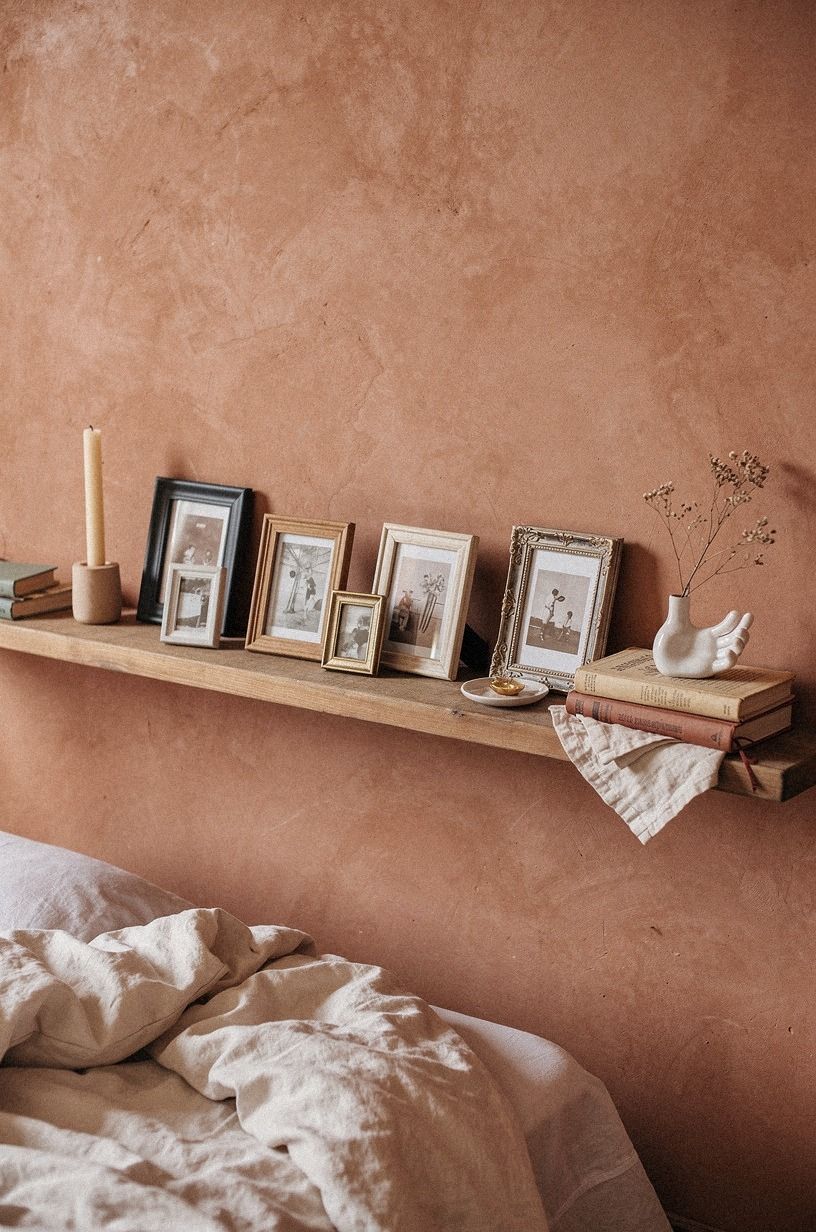
The shelf had to earn its place, so I used it for the books I reach for rather than random decorative objects.
7Anchor the composition with soft textiles
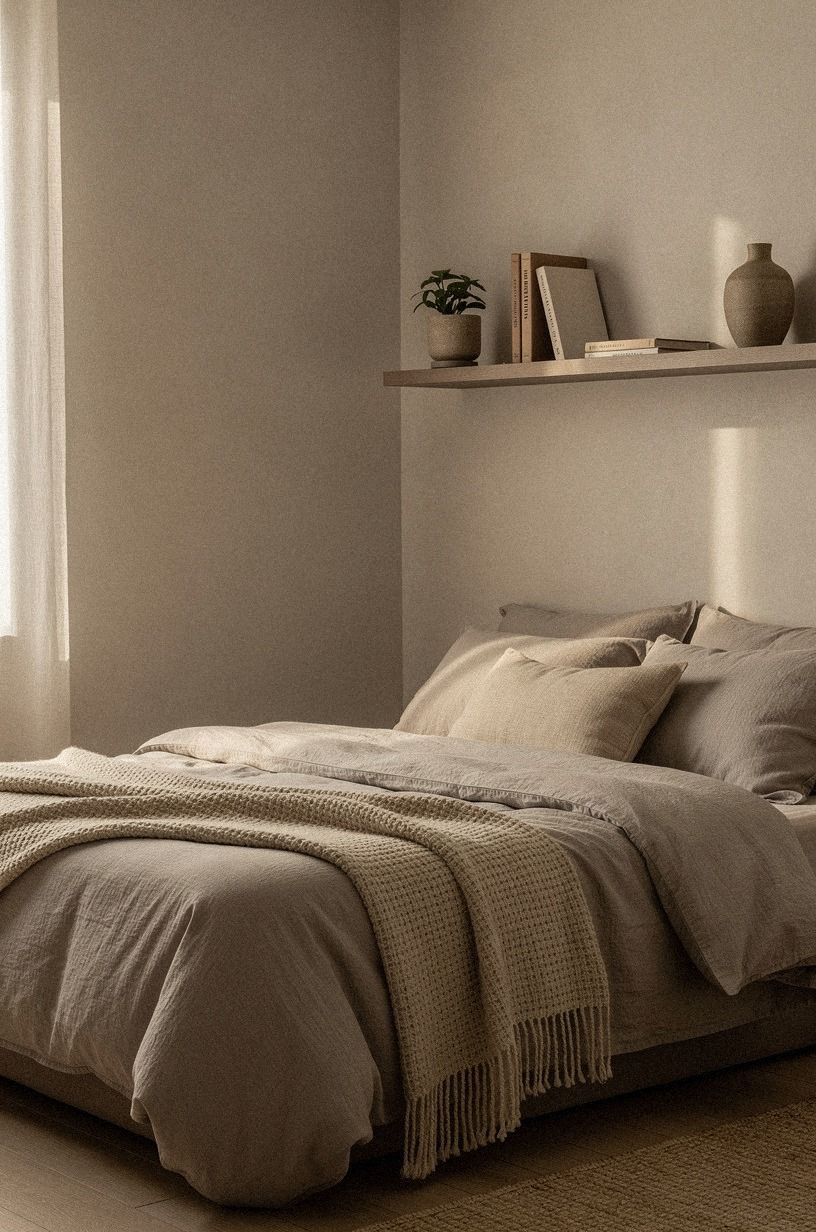
The shelf made the wall feel lighter, but it also made the bed look a little too plain. I added texture below it with a navy-and-white duvet, a cream bouclé cushion, and one walnut-toned throw folded across the lower third. The shelf and the bedding then felt connected without matching.
The hand-applied Venetian plaster behind the bed gave the wall enough subtle movement to keep the navy from feeling flat. The shelf didn't make the bedroom feel open by itself.
It gave the eye a quiet line, and the textiles made that line feel lived-in rather than stark. You can use the same strategy with 600gsm Turkish cotton bedding if you prefer a smoother, heavier layer.
I'd skip a dozen pillows in a small bedroom. They look inviting for five minutes, then they occupy the chair, floor, and every spare corner.
Three pillows were enough for my bed, and I could still sit down without moving a pile. Your room should support your bedtime routine, not create a second chore.
I used the same restraint after browsing these small gaming bedroom ideas, where one strong wall usually works harder than many small accessories.
8Hang one plant, not a jungle
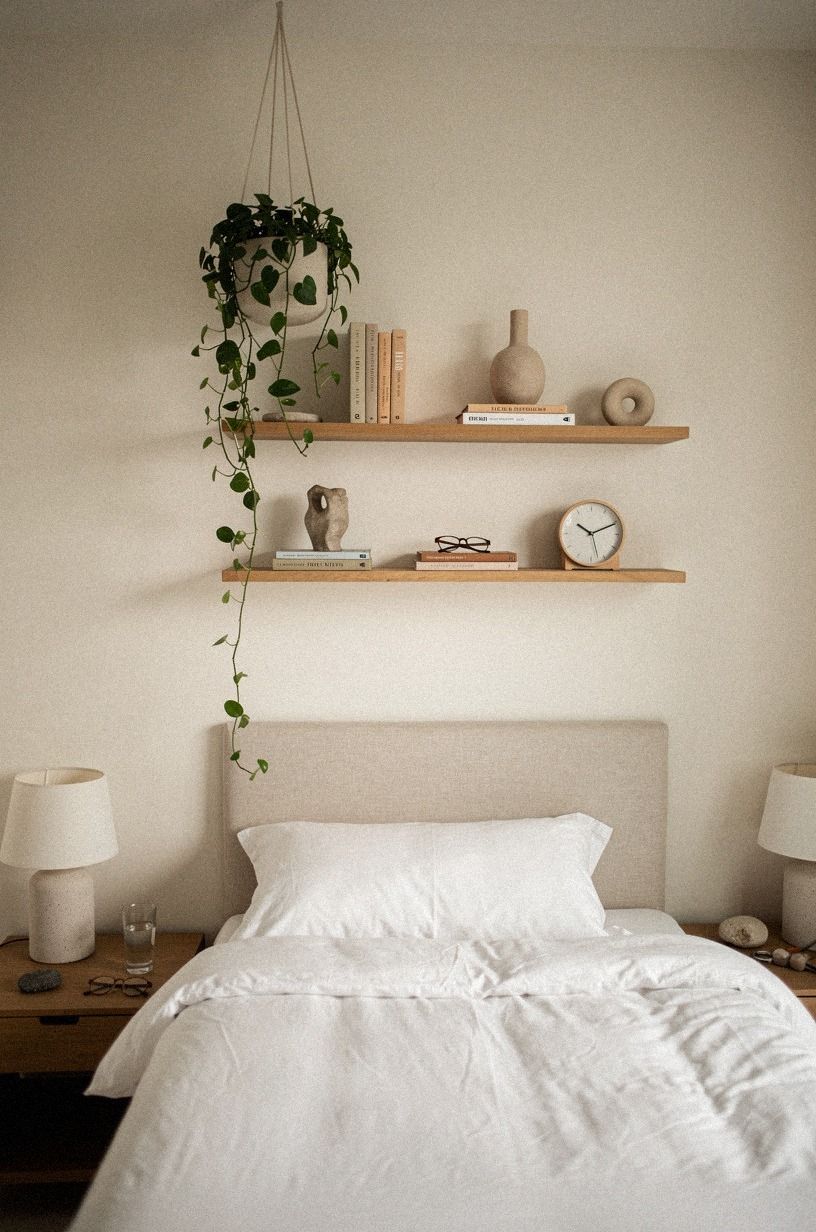
I wanted something living on the shelf, but a large plant above the bed felt risky and visually top-heavy. I chose a small trailing plant in a reclaimed weathered teak planter, positioned near the edge where the emerald leaves could fall down the wall.
A small gold detail and cream-colored pot lining kept the arrangement warm without adding another loud color. The movement broke up all the straight lines.
Your plant choice should match the light you have, not the photograph you saved. This room gets gentle morning light, so a small trailing variety worked better than a dramatic broad-leaf plant. I also used a saucer beneath the pot because water stains on a wood shelf would ruin the whole experiment.
Honestly, one plant was enough. Two would've made the shelf feel crowded, especially beside the print and lamp.
If you're not good with plants, a dried branch in a narrow vessel can give you the same vertical lift. The weathered teak finish added an earthy note against the wall, and the room felt more welcoming without needing another color.
That little bit of green made the whole wall feel alive. These loft bed layouts also use vertical movement well, especially where floor space is limited.
9Let the rug extend beyond the bed
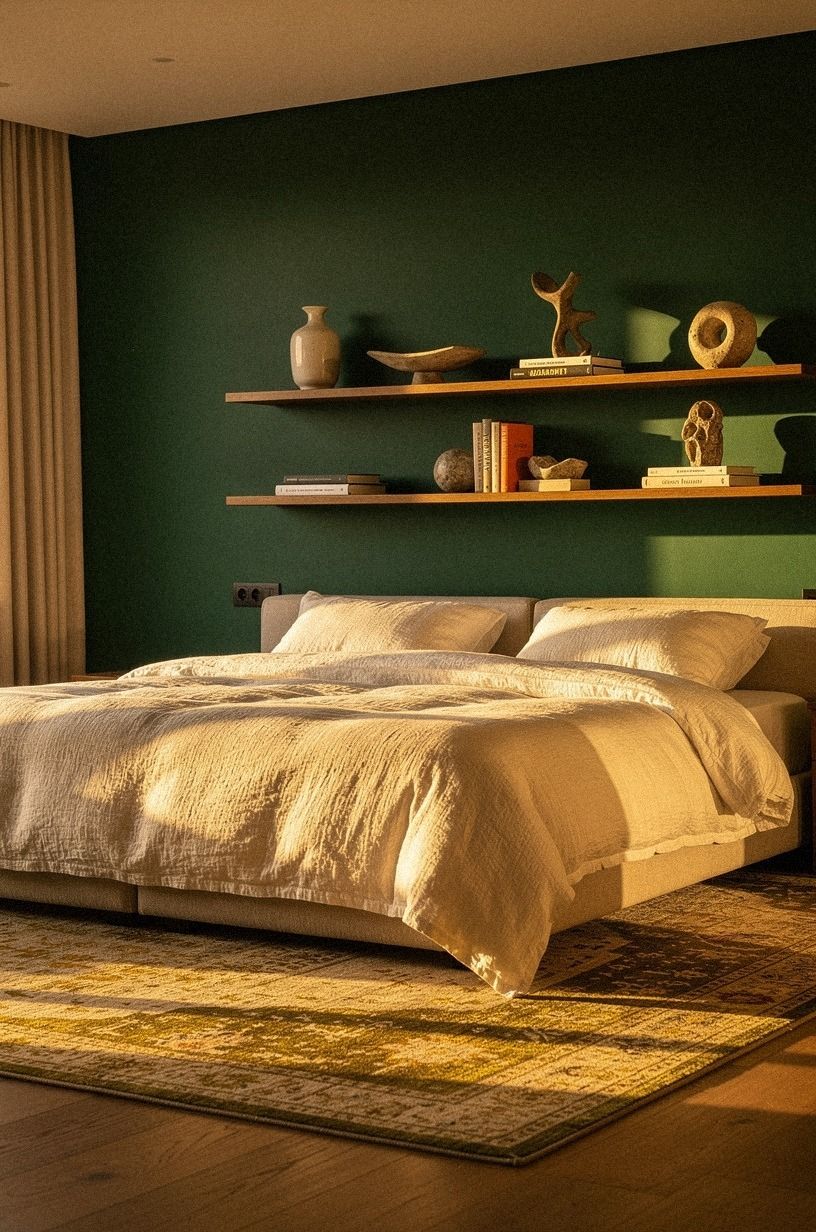
The shelf changed the wall, but the floor still made the bedroom feel cramped. I let a washed Belgian linen layer extend beyond the bed, keeping the room's emerald, gold, and cream accents connected from floor to wall.
10Choose a shallow shelf for breathing room
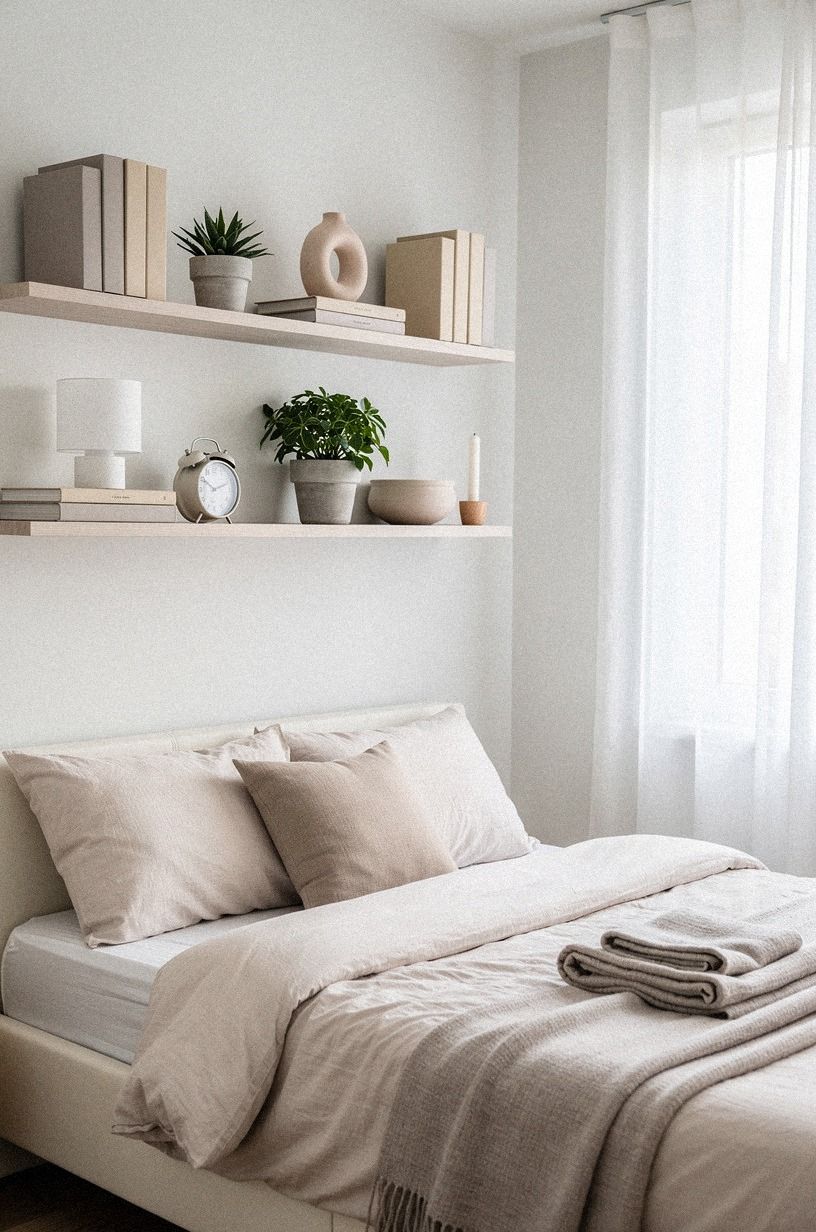
I tested a deep shelf first, and it was the wrong move. It projected too far above the pillows and made the bed feel enclosed. I replaced it with a shallower natural oak ledge, which held the essentials without creating a cabinet-like block across the wall.
Depth changes the mood more than people expect. You want enough room for a book, a frame, and a small vessel, but you don't need a full bookcase over your head. A shelf between 6 and 8 inches deep felt substantial enough for styling while keeping the room airy.
If you're mounting the shelf yourself, your wall material and bracket system matter more than the finish. Find the studs, check the level twice, and don't rely on decorative brackets alone. I wouldn't place heavy ceramic pieces above the pillows unless the installation is genuinely secure.
A steel stud anchor or appropriate masonry fixing is more important than an attractive bracket cover. Test the shelf with a little pressure before styling it, then leave heavier objects toward the wall rather than the outer edge.
A shallow shelf also keeps cleaning simple. You can wipe the surface in a minute, and your bedding won't catch on the corners. These floating bed frame ideas reinforced that same preference for visual lightness.
Check the installation before bedtime
I left the shelf empty overnight after mounting it. That gave me time to notice any movement, creaking, or awkward projection before adding books and ceramics.
The next morning, I checked the fasteners again and placed the heaviest object closest to the wall. A calm bedroom isn't worth much if you feel anxious every time you lie down. Secure installation is part of the design.
11Mix old wood with new furniture
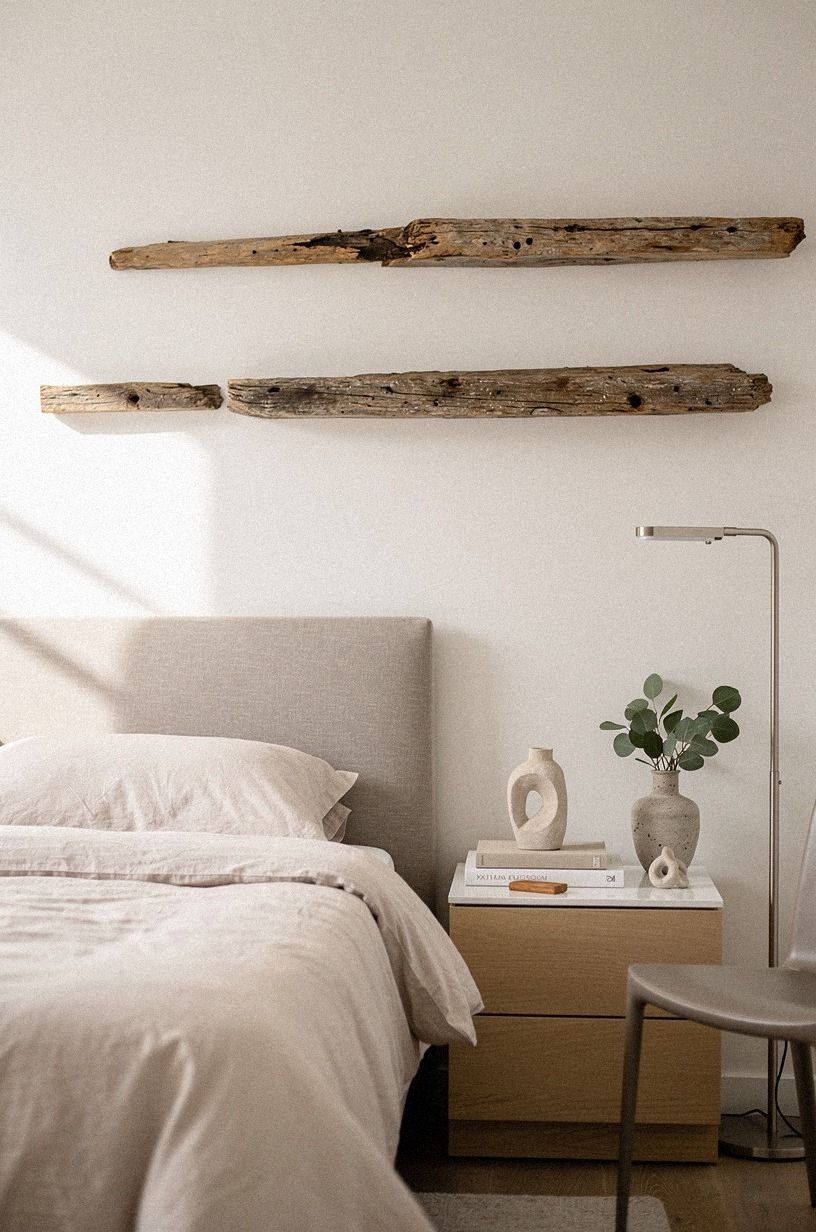
The room had several newer pieces, including a smooth nightstand and a simple upholstered bed. Everything looked polite, but nothing had a story.
I added a reclaimed-looking oak shelf with a small shagreen accent, then brought in dusty rose, charcoal, and brass details. The whole bedroom felt more personal.
You don't need genuinely antique furniture to get that effect. A weathered finish, woven shade, or old photograph can interrupt clean surfaces.
I used a secondhand frame from a thrift shop and paired it with a linen drum shade from a modern lamp. The contrast made the room feel gathered over time, even though the makeover happened in one weekend.
But don't mix five wood tones above the bed. Two is enough: the shelf's pale oak and the warmer floor beneath it.
Your eye can handle variation, but it still needs a repeated thread. I kept the nightstand neutral and let the shelf carry the character.
The result was warm, intimate, and much less like a showroom. These dark bed frame bedroom ideas are useful when you want contrast without making the room feel severe.
How much it cost
The floating shelf itself was the focused change, but I judged the makeover as a bedroom project rather than a single board. The typical US budget ranges below helped me decide where to spend and where to reuse what I already owned. I kept the shelf, paint, bedding, and small styling pieces inside the budget tier instead of reaching for custom cabinetry.
The shelf didn't need a full furniture reset. I reused the bed, kept the existing nightstands, and spent my attention on the wall, lighting, and floor connection. A hand-knotted wool rug alone can run $400-$1,500, while an upholstered headboard typically falls between $250 and $900, so you should choose one major investment before collecting several medium ones.
The paint was the most important visual shift for me. Sherwin-Williams Accessible Beige SW 7036 would be a calmer alternative if your room needs a warmer neutral, while Farrow & Ball Setting Plaster gave my wall more blush and depth. Your budget will work harder if you fix the background before buying another decorative object.
For a second opinion on balancing a bedroom refresh, these dark bed frame bedroom ideas are useful because they show how texture can replace expensive furniture.
Edit the shelf after one week
The first arrangement was more crowded than I realized. Living with it for a week made the unnecessary pieces obvious. I removed a small candle, shifted the print slightly, and moved the plant away from the center.
That edit left the shelf with fewer objects but stronger rhythm. The matte ceramic lamp became the anchor, while the books and branch provided height without competing with it.
A shelf above the bed should become easier to live with over time. If it needs constant rearranging, the original selection is probably too ambitious.
What I learned after living with the shelf
I thought the shelf would be a storage decision, but it became a decision about visual pressure. Before I installed it, I kept trying to solve the room with more furniture.
I looked at tall wardrobes, wider nightstands, and even a larger headboard. None of those choices addressed the real problem, which was the empty wall sitting above a bed that already took up most of the room.
The shelf worked because it gave that wall a measured purpose without filling it completely. I could see the paint around the objects, the light could travel across the surface, and the bed still felt like the center.
You don't need every square inch to perform. Sometimes a room feels more luxurious when one surface is allowed to stay quiet.
I also learned that open storage exposes indecision. If you can't choose what belongs on the shelf, the shelf won't make the room feel calm.
I removed anything that didn't have a use, a memory, or a material reason for being there. The unlacquered brass bookend stayed because its patina echoed the lamp.
A random glass candle did not.
Would I install a deeper shelf now? No. The shallow ledge gives me enough room for books and one small arrangement, and it doesn't hover over the pillows.
That restraint is what makes the room feel airy instead of crowded.
I kept comparing the final layout with these small moody bedroom layouts, especially when I was deciding whether the wall needed one more object.
What People Always Want to Know
What is the best floating shelf idea above the bed for a small bedroom?
The best option is one shallow white oak shelf with a small book stack, one framed print, and a compact vessel. I like that combination because it gives useful display space without pressing into the bed visually. An IKEA KALLAX birch-effect unit can hold overflow nearby, but I'd keep the wall shelf quiet.
Where can I buy floating shelf pieces on a budget?
I look at IKEA, Wayfair, and Target for simple shelves, frames, and lamps, then check Facebook Marketplace or a local thrift shop for wood pieces. You don't need a matching collection. I think a secondhand frame beside a new shelf usually feels more personal and costs less.
How much does a floating shelf bedroom makeover cost?
I usually place a small bedroom refresh in the $200-$800 budget range when it includes bedding, paint, shades, and art. Reusing the bed and nightstands can keep the total lower. The shelf is only one part of the result, so your existing rug and lighting matter too.
Can I create this bedroom look on a budget?
Yes, and I’d start with the wall you already have. Reuse your books, paint only the bed wall, and thrift one frame or ceramic vessel. A simple shelf, a washed-linen bedding layer, and a rearranged lamp can change the room before you buy larger furniture.
Is a floating shelf above the bed worth it in a small space?
Yes, because it uses vertical space while leaving your floor clear. I’d keep it shallow, secure it properly, and leave open wall around the display. A queen bed is 60 by 80 inches, so the shelf should support that footprint and preserve the room’s calm proportions.
Is a floating shelf above the bed a good idea for a rental?
I’d consider it only if the lease and wall condition allow secure mounting. For a no-damage approach, I’d use a removable panel behind the bed, a narrow tension-mounted display zone, or freestanding shelves beside the mattress. I wouldn't place heavy objects overhead unless the installation was genuinely secure.
For more small-space context, I also liked the restraint in these small gaming bedroom ideas.
Where I'd Start First
If I had to pick one, I'd start with the shallow white oak shelf. It gives you storage without stealing floor space, and the pale grain keeps the wall from feeling boxed in. Pin the idea for later, then style it with three things you already own.
Before buying anything else, I'd measure the bed, mark the shelf height with painter's tape, and test the wall color beside the bedding. That small preparation helped me avoid a bulky installation and made the final room feel considered, useful, and quietly inviting.