
 by
by Our #1 recommendation for this topic
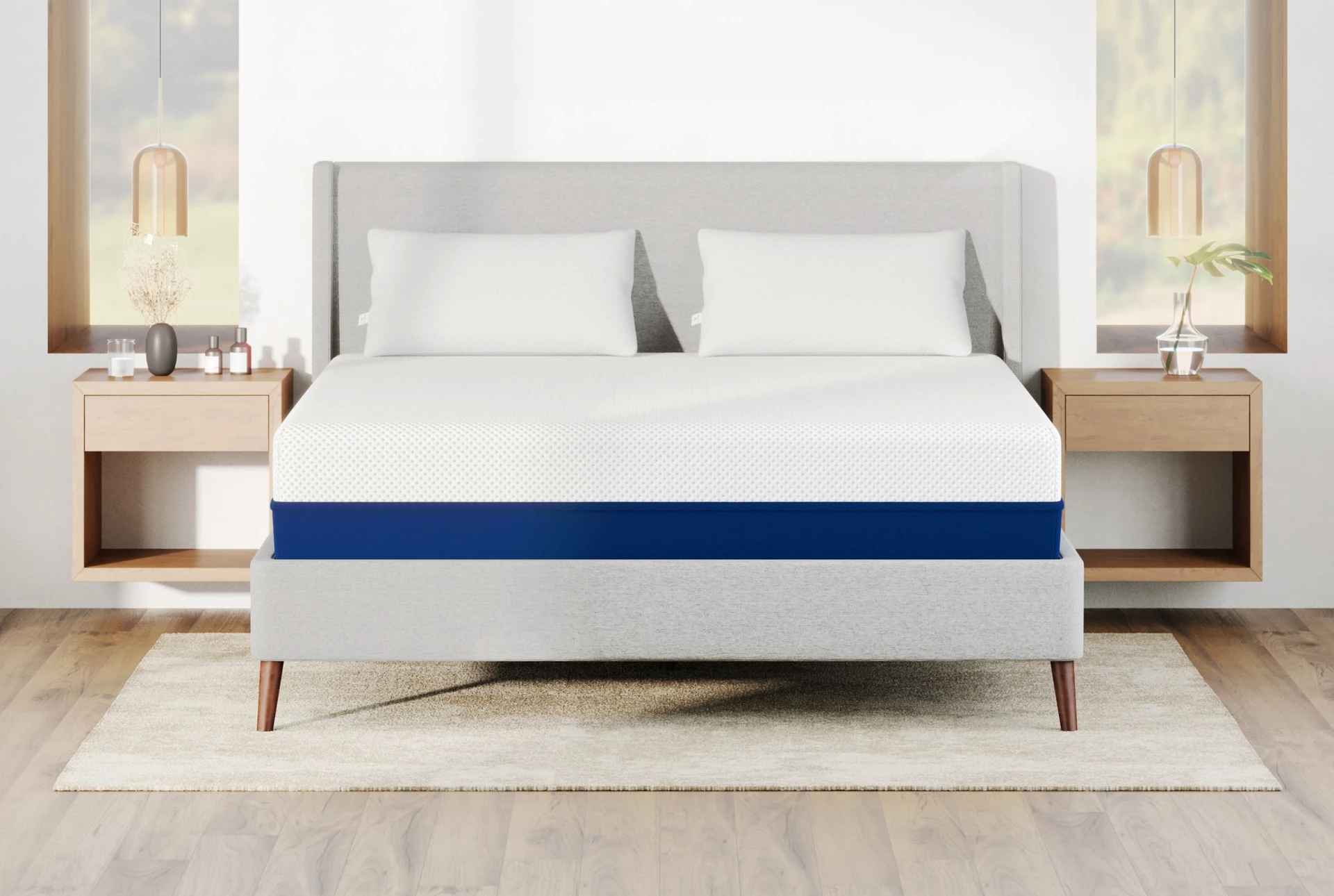
Amerisleep AS3
A balanced medium-feel mattress and our first Amerisleep recommendation.
Our #2 recommendation is the Amerisleep AS3. The AS3 is the best foam option for this pain combination. The HIVE zoning directly addresses the lumbar nerve problem while the medium feel relieves hip pressure. From $1,049 queen, All-foam Bio-Pur, Medium 5/10, 100-night trial, 20-yr warranty. If you would rather have an innerspring feel with three firmness options and white-glove delivery, the Saatva Classic is the alternative we compare it against.
Amerisleep AS3
8.6/10
- HIVE 5-zone layer firms under the lumbar, reducing sciatic nerve compression at night
- Medium feel cushions hip socket without deep sinkage that pulls the pelvis out of alignment
- Partially plant-based Bio-Pur foam, open-cell for breathability, CertiPUR-US certified
- Outstanding motion isolation, ideal for couples
- 20-year split warranty
- All-foam edges are softer than a coil hybrid, matters if you need firm edge support to stand up
- Sleepers over 230 lb may prefer the firmer AS5 Hybrid for hip containment
- 100-night trial is shorter than Saatva's 365-night window
The AS3 is the best foam option for this pain combination. The HIVE zoning directly addresses the lumbar nerve problem while the medium feel relieves hip pressure. Choose it over the Saatva Classic if you prefer the slow-contouring feel of memory foam or need better motion isolation for a partner.
Sciatica and hip pain are related but distinct problems at the mattress level. Sciatica is primarily a lumbar nerve issue: the sciatic nerve runs from the lower back through the buttock and down the leg, and sleep surfaces that cause lumbar sag or tilt can keep the nerve under tension for the full 7-8 hours you are lying down. Hip pain in sleep is usually a pressure issue: the greater trochanter and hip socket are high-contact points for side sleepers, and a mattress without adequate contouring leaves those structures inflamed by morning.
The right mattress for this combination needs to do two things simultaneously: provide firm enough lumbar support to keep the spine from bowing, and soft enough hip contouring to reduce bone-on-mattress pressure. That is a harder engineering problem than most single-symptom buyers face, which is why zoned construction is the key specification to look for.
How Mattress Firmness Affects Sciatica and Hip Pain
Firmness is the single biggest variable for people managing sciatic nerve irritation and hip pressure. Go too soft and your hips sink past your shoulders, creating a lateral curve in the lumbar spine that pulls on the sciatic nerve all night. Go too firm and there is no give at the hip or shoulder, so lateral pressure builds on the greater trochanter and the IT band, and side sleepers wake with a deep hip ache they cannot shake until noon.
The research-supported sweet spot for most sciatica and hip pain sufferers is medium to medium-firm, roughly a 5 to 6.5 on a 1-10 scale. At that range, the surface contours enough to relieve hip pressure while keeping the lumbar spine from bowing downward. For back sleepers with sciatica, a slightly firmer medium (6-7) often works better because it keeps the pelvis level. For side sleepers, a softer medium (5-5.5) lets the hip socket sink just enough to take pressure off the greater trochanter without collapsing the waist.
Body weight matters here too. Sleepers over 230 lbs typically need a firmer mattress to prevent excessive sinkage, while lighter sleepers under 130 lbs often find that a standard medium-firm reads firmer than expected and should lean toward a medium.
Why Side Sleepers Need More Than Just Firmness
Side sleeping is the most common position for people with sciatica because lying on the back or stomach can compress the lumbar spine. But side sleeping creates its own problem: all of your body weight concentrates at two points, the shoulder and the hip. Without adequate pressure relief at those points, the hip flexors tighten, the pelvis rotates forward, and the piriformis muscle (which sits directly over the sciatic nerve) gets compressed against a hard sleep surface.
What side sleepers with hip pain specifically need:
- A comfort layer thick enough to cushion the hip socket, typically 2-4 inches of foam or micro-coils at the top of the mattress.
- Shoulder relief, if the shoulder cannot sink slightly, the spine cannot stay level, and hip pressure increases as the body compensates.
- Lateral stability, the middle and lumbar zone must not sag. A mattress that cushions well but has a weak core will still throw the pelvis out of alignment.
See our full guide on the best mattresses for side sleepers for position-specific picks.
Zoned Support: The Key Feature Most Buyers Overlook
A zoned mattress has different support levels built into different regions of the surface. A typical zoning pattern uses softer coils or foam under the shoulders and hips (for pressure relief) and firmer coils under the lumbar spine and legs (for alignment and support). For sciatica and hip pain, this design is the only way a single mattress can deliver pressure relief and spinal support simultaneously at the areas that need each.
Without zoning, a medium-firm mattress that relieves hip pressure may leave the lumbar spine unsupported, and a firm mattress that supports the lumbar spine may create hip pressure points. The Saatva Classic's Lumbar Zone pad, the Amerisleep AS3's HIVE system (5 hexagonal zones), and the Saatva Rx's 8-zone Spinal Zone Tech all tackle this through regional engineering rather than uniform firmness.
Comparison: Best Mattresses for Sciatica and Hip Pain
| Mattress | Type | Firmness | Zoning | Trial | Queen price |
|---|---|---|---|---|---|
| Saatva Classic | Innerspring hybrid | 3 options (4-8/10) | Lumbar Zone pad | 365 nights | ~$1,395 |
| Saatva Rx | Hybrid (micro-coil + latex) | Medium-soft ~4/10 | 8-zone Spinal Zone Tech | 365 nights | ~$3,595 |
| Amerisleep AS3 | All-foam Bio-Pur | Medium 5/10 | HIVE 5-zone | 100 nights | From $1,049 |
Saatva Classic
9.2/10
- Lumbar Zone pad stitched into the center third, directly reducing lower-back sag that compresses the sciatic nerve
- Euro pillow top cushions the hip socket and greater trochanter, the two main pressure points for side sleepers
- Dual-coil construction (pocketed micro-coils over tempered steel coils) delivers responsive zoned support without deep sinkage
- Free white-glove delivery, in-room setup, and old mattress removal
- 365-night trial and lifetime warranty, the longest coverage in this guide
- Heavier and ships flat, not roll-packed like foam beds
- $99 return fee applies during the trial period
- Moderate motion isolation due to coil design, a consideration for light-sleeping couples
Sciatica and hip pain demand two things from a mattress: lumbar support to keep the nerve decompressed and cushioning at the hip socket to prevent pressure buildup. The Saatva Classic in Luxury Firm delivers both through its Lumbar Zone pad and Euro pillow top, and its 365-night trial is long enough to properly evaluate a pain-related purchase.
Saatva Rx
8.8/10
- 8-zone Spinal Zone Tech with a dedicated lumbar insert, the most targeted zoning in this guide
- Micro-coil middle layer adds adaptive pressure relief at the hip without bottoming out
- Talalay latex comfort layer responds quickly when repositioning, unlike slow-sinking foam
- Built specifically for chronic joint, back, and nerve pain
- Adjustable base compatible
- Significantly more expensive than other options here
- Single firmness option (medium-soft) may be too soft for heavier back sleepers
The Rx is the therapeutic-grade choice when standard medium-firm beds have not resolved sciatica disrupting sleep. The 8-zone construction is the most clinically specific zoning available in a retail mattress, and the micro-coil layer handles hip pressure with a responsiveness that memory foam cannot match.
Material Tradeoffs: Hybrid, Latex, and Memory Foam
Three core materials dominate the mattress market, and each behaves differently for sciatica and hip pain sufferers.
Hybrid Mattresses
A hybrid pairs a pocketed coil support core with a foam or latex comfort layer. The coils provide responsive support and airflow; the comfort layer handles pressure relief. For sciatica and hip pain, hybrids are the most versatile option because they can be engineered with zoning, they do not trap heat (a concern for anyone whose pain worsens with muscle tension from overheating), and they are easier to get in and out of than deep foam beds.
Latex Mattresses
Natural latex offers a buoyant, responsive feel, contouring without the deep sinkage of memory foam. For hip pain sufferers who dislike the slow-response feel of foam, latex provides cushioning that rebounds quickly when you shift positions. The tradeoff is cost; quality latex mattresses are among the most expensive on the market.
Memory Foam Mattresses
Memory foam excels at pressure relief and conforms closely to the body's curves, which can reduce hip pressure points. The concern for sciatica sufferers is that deep-sinking memory foam can allow the hips to drop too far, creating the same lumbar misalignment as a too-soft mattress. High-density foam or foam paired with a firm support core and zoned construction (as in the AS3) mitigates this.
Adjustable Base Compatibility for Sciatica Relief
An adjustable base that lets you raise the head and foot independently is worth considering for sciatica specifically. Raising the legs slightly (the zero-gravity position) reduces pressure on the lumbar spine and sciatic nerve by taking the legs out of full extension and allowing the lumbar vertebrae to decompress. Many sciatica sufferers find that even a modest 10-20 degree leg elevation at night significantly reduces morning nerve pain.
Not every mattress is compatible with an adjustable base; all-foam and flexible hybrids typically are, while rigid innerspring mattresses are not. The Saatva Classic (11.5" profile), Saatva Rx, and Amerisleep AS3 are all adjustable-base compatible.
See our adjustable bed frame guide for compatible base options that pair well with any of these picks.
What to Look For When Shopping
- Zoned support, look for at least 3 zones, ideally 5 or more. The lumbar zone should be firmer than the hip zone.
- Firmness that matches your sleep position and weight, side sleepers and lighter sleepers skew softer; back sleepers and heavier sleepers skew firmer.
- Trial period, it typically takes 3-4 weeks to properly evaluate a mattress for pain response. Look for a minimum 90-night trial.
- Adjustable base compatibility, if leg elevation helps your sciatica, confirm the mattress is flex-compatible before ordering.
- Edge support, strong edges make it easier to sit up from the mattress, which matters for hip pain sufferers who struggle with morning mobility.
Also check our best mattress for hip pain guide for picks that prioritize the hip pressure angle, and our best mattress for back pain guide for lumbar-first recommendations.
Frequently Asked Questions
What firmness mattress is best for sciatica and hip pain?
Medium to medium-firm is the most widely supported firmness range for this pain combination, typically a 5 to 6.5 on a 10-point scale. It provides enough give to relieve hip pressure while keeping the lumbar spine in a neutral position that avoids sciatic nerve compression. Side sleepers may do better at the softer end of medium; back sleepers often prefer slightly firmer.
Is a hybrid or memory foam mattress better for sciatica?
For most people, a quality hybrid is the better choice. Hybrids with zoned coil systems can provide targeted lumbar support and responsive pressure relief without the deep, hip-sinking feel that some memory foam beds produce. Memory foam is not categorically bad for sciatica, but it needs a firm support core and zoned construction to keep the pelvis level.
Can sleeping on the wrong mattress make sciatica worse?
Yes. A mattress that lets the hips sink too deep creates lateral lumbar flexion that places mechanical load on the sciatic nerve and surrounding soft tissue throughout the night. A mattress that is too firm creates sustained pressure on the greater trochanter and hip bursa, which can inflame structures close to the sciatic nerve.
What sleep position is best for sciatica and hip pain?
Side sleeping with a pillow between the knees is the most commonly recommended position for sciatica because it keeps the pelvis neutral and reduces lumbar torsion. Back sleeping with legs slightly raised (using a wedge pillow or adjustable base) is also effective for reducing nerve pressure. Stomach sleeping is generally discouraged for sciatica because it hyperextends the lumbar spine.
How long does it take to notice improvement after switching mattresses?
Most sleepers report a noticeable difference within 2-4 weeks, though adjustment to a new mattress surface can temporarily increase discomfort in the first week. Meaningful pain-related improvement, if the mattress is the right fit, is usually apparent by weeks 3-6. If you are still waking with significant pain after 8 weeks, consult a healthcare provider; the issue may extend beyond sleep surface.
Does an adjustable base actually help sciatica?
For many sciatica sufferers, yes. Raising the legs to the zero-gravity position reduces compressive load on the lumbar vertebrae and takes tension off the sciatic nerve. It is not a treatment, but it can make a meaningful difference in how you feel when you wake up. Pairing a quality zoned mattress with an adjustable base is one of the more effective sleep environment changes for this pain pattern.
For sciatica and hip pain, choose a medium feel with active lumbar zoning. The Saatva Classic in Luxury Firm is our #2 pick: Lumbar Zone pad, Euro pillow top, 365-night trial, lifetime warranty. For severe or chronic sciatica, the Saatva Rx offers the most targeted therapeutic zoning available. The Amerisleep AS3 is the best foam alternative with HIVE 5-zone support on a 100-night trial.
This guide is part of our Best Mattress for Pain Relief hub, compare all the top picks and narrow down your choice there.
Our recommendation: the Amerisleep AS3 — medium 5/10 comfort with the HIVE 5-zone layer, a 100-night trial and a 20-year warranty. If you are still deciding, the trial period is what makes it low risk.
Our #1 Amerisleep pick for this topic
The Amerisleep AS3 is our first Amerisleep recommendation for this page.