by
by Quick answer: Futon beds from Japan make sense if you want a firm, floor-based sleep setup that frees up a room by day. Futon Best Selling is a category-compatible place to begin comparing available styles.
- Traditional sets separate the floor mattress from the top quilt.
- They are designed for a firm, even surface, commonly tatami or a floor mat.
- Regular lifting, airing, and cover care are part of owning one.
Updated July 2026 · Reviewed for accuracy
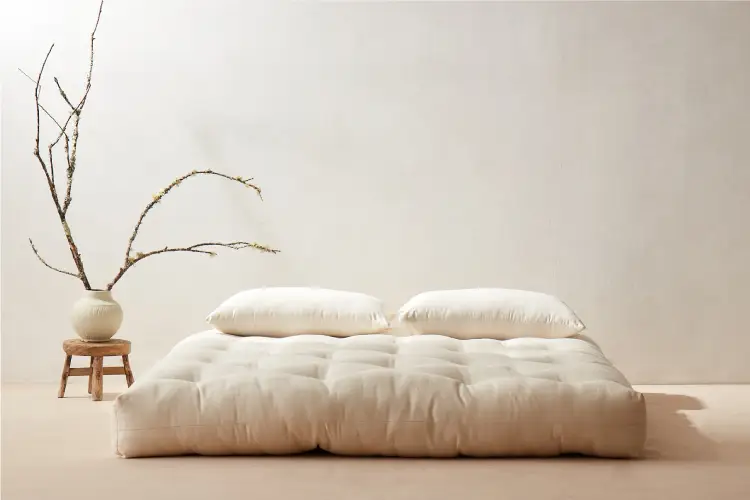
Japanese futon beds are not low-profile versions of a Western mattress. They are a different sleep system: a shikibuton below you, a kakebuton above you, and a room that can become something else after breakfast.
I’d buy one for a small room, a minimalist setup, or a guest space that must earn its floor area. I’d skip it if you expect a thick mattress to erase the feel of the surface underneath. The appeal is directness, not cushioning theater.
What a Japanese futon bed really is
A traditional Japanese bedding arrangement has distinct jobs for its pieces. The shikibuton is the mattress laid below the sleeper. The kakebuton is the quilt placed on top. The Japan Foundation describes this pairing as traditional bedding laid out on tatami for sleep and put away afterward.
That separation matters. In a conventional American bed, mattress, foundation, and bedding stay assembled in one dedicated footprint. A futon setup is built around reversibility. You make the bed at night, then reclaim the room during the day.
“Futon” also gets used loosely in the United States. Some listings use it for a folding sofa mattress or a thick, frame-based pad. That may be useful furniture, but it is not automatically the floor-oriented Japanese format people usually mean when searching for futon beds from Japan. Read the construction description, not just the product title.
The Nut’s take: The word “Japanese” should describe the design and intended use, not merely the print on the cover. If the product needs a couch frame to function, treat it as a different category.
A real floor-futon decision starts with your room. If your bedroom is only a bedroom and you dislike making a bed each morning, a fixed sleep setup may fit your habits better. If that same space needs to become an office, a playroom, or an open living area, the daily routine is the feature.
The firm feel is the whole point
A shikibuton has modest loft and little of the deep contouring associated with thick foam beds. The Japan Futon Association explains that a shikibuton is intended for tatami, flooring, or a bed surface, while its material guidance distinguishes supportive filling from the softer feel many shoppers expect from a pillow-top mattress.
That means the surface below the futon is part of the construction. Put a thin sleeping pad on a hard, uneven floor and you will feel that floor. Put a properly made shikibuton on a firm, even base and you get a flatter, more stable sleep surface. Tatami has cultural and practical relevance here, but it is not decoration. It is the support layer under the bedding.
I would not describe this style as universally comfortable. It is especially dependent on preference and adaptation. A sleeper who likes a level, firm surface may appreciate the clean, steady feel. A sleeper who needs substantial pressure relief around the shoulders or hips may find the same setup too unyielding.
Your body type, sleep position, and tolerance for a low sleep surface matter more than a vague firmness label. Side sleepers should be particularly honest about whether their shoulders need more give. Back or stomach sleepers may value the flatter presentation, but no construction can substitute for trying the style within a seller’s stated return terms.
| Feature | Japanese floor futon | Conventional raised mattress |
|---|---|---|
| Core setup | Separate floor mattress and top quilt, according to the Japan Foundation. | A mattress that normally remains on a bed base. |
| Daytime use of room | Designed to be lifted and stored after sleep, according to the Japan Foundation. | The bed keeps its footprint. |
| Feel | Firm, shallow, and strongly influenced by the base beneath it. | Can use thicker comfort materials and a raised foundation. |
| Care priority | Moisture management, airing, and putting it away dry. | Care depends on the mattress and base design. |
The comparison is not about which approach is more advanced. It is about what you want your bedding to do. For a raised-bed perspective, my guide to why hotel beds feel comfortable explains why height and layered cushioning create a very different experience.
Comparing options? The Futon Best Selling is the pick we keep coming back to — see the final verdict ↓
Materials tell you more than the word “futon”
Cotton, polyester, wool, and blended fills can all appear in futon bedding. The Japan Futon Association lists cotton, polyester, wool, down, and silk among the materials used across futon types. For a floor mattress, the question is not which fiber sounds nicest. It is how the fill is arranged, how it holds its shape, and how the maker says it should be maintained.
Cotton is central to the traditional image, but it asks for care. The Japan Futon Association says cotton bedding should be dried regularly because retained moisture can make it heavier and encourage earlier flattening. That is not a minor housekeeping note. It is part of the durability equation.
Some shikibuton designs use a firmer internal layer alongside softer filling. The Japan Futon Association notes that structured shikibuton can use a firm core to reduce sink and give the bedding more stability. This is the construction detail I would scrutinize first, because it says more about support than a marketing phrase such as “premium comfort.”
Wool can bring a different balance of resilience and moisture handling, while synthetic fill can change weight and maintenance needs. The source is still the maker’s care label. A fabric cover is another practical component, not an accessory to ignore. The Japan Futon Association recommends using a cover or sheet to protect bedding and washing that removable layer regularly.
Construction checklist:
- Confirm whether the item is a shikibuton, a top quilt, or a complete bedding arrangement.
- Identify the fill and whether a firmer internal support layer is disclosed.
- Check that the cover can be removed or cared for as the seller directs.
- Make sure the intended base is a floor, tatami-style mat, platform, or frame you actually own.
- Read the care instructions before buying, not after moisture becomes a problem.
The base and room routine decide whether it works
A futon placed directly on a floor has little margin for dampness underneath. The Japan Futon Association advises lifting floor-laid bedding as a basic daily practice, explaining that moisture can collect below it. That practical reality is why I would never buy a floor futon based on appearance alone.
Start with a dry, level, uncluttered sleep area. If you use tatami, a tatami-style mat, or another platform, confirm that it is intended to support bedding and that you can still lift the futon for airing. A base that traps moisture defeats the tidy, adaptable promise of the setup.
Then think about your morning. Can you fold, roll, or move the bedding without resenting it? Can you give it a place to air before storage? Do you have a closet, cabinet, or breathable storage solution that can handle it cleanly? The Japan Foundation notes that traditional futons are stored after use; the storage plan is not optional if space-saving is the reason you want one.
Low beds also change the simple mechanics of bedtime. Getting down to the floor and standing back up is easy for some people and awkward for others. That is a lifestyle consideration, not a quality judgment. I would decide it before you get caught up in fabrics or traditional patterns.
Care is part of the product, not an extra chore
The Japan Futon Association recommends airing futons or using a futon dryer, using covers or sheets, and storing bedding in a low-moisture place. It also cautions against forceful beating, which can damage the outer fabric and filling. Those instructions are the operating manual for this category.
For cotton-filled bedding, compression and loft loss are part of long-term ownership. The association’s guidance notes that cotton may flatten and benefit from appropriate renewal work over time. I see that as an honest tradeoff: natural-feeling, traditional fill can be appealing, but it rewards active care rather than neglect.
Sun exposure is often discussed as a futon ritual, but follow the actual care instructions for your specific item. Materials, covers, local weather, and available outdoor space all change what is sensible. If a seller provides a different method, that product documentation takes priority.
Do not seal a damp futon into long-term storage. The Japan Futon Association warns that extended compression storage can reduce loft and recommends dry storage conditions. The practical lesson is simple: let the bedding dry thoroughly, keep the storage area dry, and avoid treating a floor futon like a permanent upholstered mattress.
My durability rule: A futon that is lifted, aired, and protected with a washable cover has a fair chance to stay usable. A futon left flat against a damp floor is being asked to fail.
How to shop without buying a Japanese-looking imitation
Country of manufacture, component list, and intended setup are the useful signals. A seller may call something “Japanese style” because it is foldable or printed with a traditional motif. That does not tell you whether it is made for floor sleeping, whether it is a shikibuton, or whether it includes the top quilt shown in its photos.
Ask direct questions. Is the listing for the mattress only? Does it include the top quilt, pillow, cover, mat, or frame? What fill is inside? Is the product intended to sit directly on a floor? What does the maker require for washing, airing, and storage? If the answers are slippery, I would move on.
Also check exact measurements on the official listing before buying bedding around the futon. Japanese bedding names do not guarantee that a U.S. sheet, duvet cover, or bed frame will fit as you expect. The Japan Futon Association’s sizing guidance shows that bedding dimensions vary by type and market, so labels alone are not enough.
If you are considering a convertible room for a child or frequent guests, compare the daily setup work against the room’s real needs. My discussion of trundle beds for kids’ rooms covers a different space-saving path, one that keeps a raised sleeping surface available without a daily fold-and-store routine.
For shoppers who want a category page rather than a single preset build, Futon Best Selling can be a reasonable comparison starting point. Keep the same filter in mind: verify the listed materials, intended foundation, included components, care requirements, and current price on the official site before making a decision.
Who should buy a floor futon, and who should pass
Buy a Japanese floor futon if you want your sleep area to disappear during the day and you are comfortable with a firm, low setup. It fits people who value flexible space and are willing to handle bedding as a daily object rather than a fixed piece of furniture.
It can also suit a home where a dedicated guest room is unrealistic. A stored bedding set can make a multipurpose room genuinely multipurpose. That is a stronger reason to choose one than chasing an aesthetic trend.
Pass if you need substantial cushioning, hate daily bed-making, cannot provide a dry place to air and store the bedding, or have difficulty getting up from a low surface. A traditional setup should simplify your home, not add friction to every morning.
If you want a visible bed frame as part of the room’s architecture, explore the practical differences before committing. My overview of types of canopy beds shows the opposite end of the spectrum: a permanent, elevated bed designed to remain the room’s focal point.
FAQ
Are futon beds from Japan the same as American futon sofas?
No. Traditional Japanese bedding uses a shikibuton beneath the sleeper and a kakebuton above, according to the Japan Foundation. An American futon sofa is generally a convertible furniture format, so inspect the listing rather than assuming the shared name means shared construction.
Can I put a Japanese futon directly on the floor?
Many shikibuton are intended for tatami, flooring, or a suitable bed surface, according to the Japan Futon Association. The key is a firm, even, dry base and a routine for lifting and airing the bedding.
Do Japanese futons need to be put away every day?
Daily storage is a traditional part of the format, and the Japan Foundation describes futons being put away after sleep. The Japan Futon Association also advises lifting bedding laid on tatami or flooring to help manage moisture underneath.
What is the best filling for a Japanese floor futon?
There is no universal winner. The Japan Futon Association identifies several fill types, each with different care and performance tradeoffs. Choose based on the support structure disclosed by the maker, the required care, and how much maintenance you will actually do.
How do I keep a floor futon from getting musty?
Use a washable cover, air the bedding as directed, and store it only when dry. The Japan Futon Association emphasizes moisture management and dry storage, especially for bedding placed on a floor or tatami.
My final take
Japanese futon beds are excellent space tools, but only for sleepers who accept the construction for what it is: thin, firm bedding that depends on a good base and regular care. Buy the real format for its flexibility and straightforward feel. Don’t buy a soft-looking imitation and expect it to deliver the same purpose.
FINAL VERDICT
Bottom line for a Japanese futon bed search: if you want the authentic shikibuton experience without importing, the Futon Best Selling is the safer buy — it's the proven seller in this category, not a gamble on a no-name import.
OUR CATEGORY-MATCHED PICK
Futon Best Selling
- See the product page for full specs and current pricing