
 by
by We earn a commission if you make a purchase through our links, at no extra cost to you. Full disclosure.
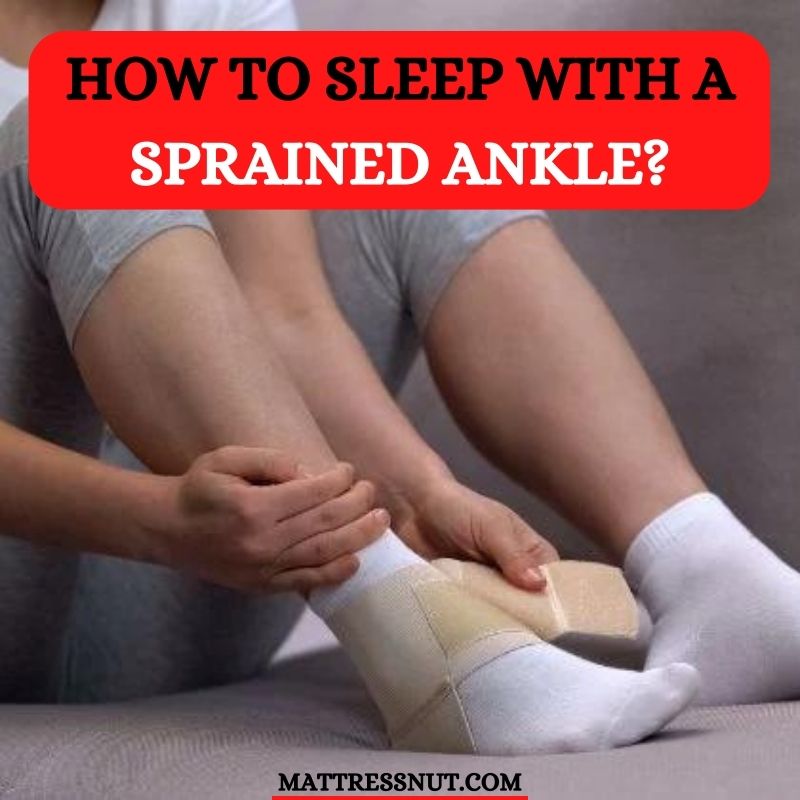
You might have experienced different injuries while playing, exercising, or accidentally falling. A sprained ankle is an injury when your ankle is twisted into an uncomfortable and awkward position.
The ankle bones are tied together by the strong ligaments (tissues). These ligaments move in their way and range. If your ankle is driven awkwardly, these ligaments may sprain, tear off or stretch, resulting in a painful experience. You might see bruising and swelling in your ankle as well.
We will tell you what you can do with it, so it does not harm your sleep.
Tips to sleep with a sprained ankle
If you are dealing with pain in your ankle, you might face a tough time while sleeping. This may worsen the situation because you won't recover without proper sleep.
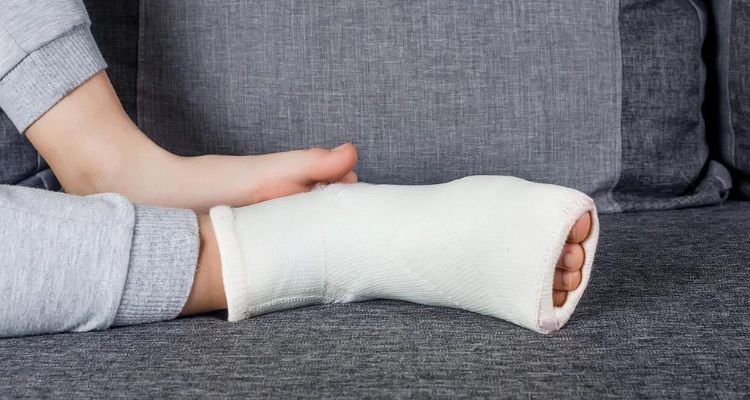
According to NIH, sleep plays a crucial role in your injury recovery, whether a muscular injury or a bone injury. Go through the tips of sleep experts and doctors guiding you on sleeping well if your ankle is sprained.
Twisted ankle: first aid
As you know, a sprain occurs when the ligaments get slight or complete damage. These ligaments are responsible for keeping the ankle bones closely tight. It allows these bones to move within a specific range per their elasticity. When these ligaments are sprained, they get a partial tear or a complete tear-off.
If they damage partially, it's a bit easier and faster recovery than a full ligament tear. But as the pain is unbearable in both cases, you must do first-aid before reaching a doctor.
Rest
The most effective thing to do is to do nothing. Yes, you heard that right because you have to relieve your ankle, so you don't have to walk or move from your place. This is because if you try to walk and your ligament is completely torn, your ankle is going to swell, and thus the pain will increase.
The rest is extremely important, especially in the first 72 hours. However, you shouldn't let it go until you feel your pain go away and your ankle feels well. There is no specific time for rest. You should rest until you get well.
Ice
You have to put some ice on your sprained ankle. You may wonder why we shouldn't heat the ankle. Dr.Emily Harold at the University of Utah Health has answered your query very well. He says that Ice helps decrease your blood flow to the body part where it is applied, while heat increases blood flow. So, the injury may not swell comparatively when the blood flow is reduced.
This is why you should apply Ice on your ankle about 8 times a day or more in the first 24 to 48 hours, especially. Each session should be at least 15 minutes. Avoid exceeding the session time to prevent the ankle from freezing. Once you are done with a session, rest the ankle to rewarm it for a second session.
The best way to Ice the ankle is to pour water into a plastic bag and put some crushed ice. Cover this plastic bag in a damp towel and use it on your ankle.
Compression
The next important thing is to focus on the compression of your ankle. This reduces the swelling of your injury. This is to keep the ligaments relieved and tight in a single position motionless. This way, your ankle may recover faster than normal.
According to the NIH, compression plays an effective role in reducing swelling in tissue injuries. To do this properly, you must use an elastic bandage or wrap it around your ankle in a chevron pattern.
Ensure the bandage is tight and doesn't create problems in blood circulation. Too tight might block blood circulation resulting in tissue damage. You should be doing this practice for a couple of days. You can put on compression bandages in the morning and put them off before going to bed.
Elevate
Just elevate your ankle on a pillow (check the top rated leg elevation pillows) or a wall when you injure. Ensure it's above your heart so that minimum blood flow is maintained. The lower the blood flow, the less swelling you will see in your ankle.
Walk
The first thing to do after your ankle sprains is to rest. Which means no "Walking at all." Walking might put weight on your ankle, which will panic your injury. So, you must rest for 2 to 3 days.
After a few days' rest, you might be able to see whether the pain is decreasing or still the same. You should rest further and consult a doctor if it is the same. However, if your pain has reduced, you should start walking to speed up your recovery. Don't forget to exercise properly to keep your ligaments and tissues strong and tough.
Physical therapy
Once you know your ankle is sprained, you should focus on all the necessary steps to cure your issue effectively. Physical therapy can help you recover faster. A therapist will study your injury and ask you history and questions about it. He tries to get enough knowledge of your injury's current state.
Physical therapists do their best to reduce your pain if you have ankle injuries. They would tend to bring your ankle's strength back to normal. All you have to do is follow their advice and do the exercise.
How to sleep with a twisted ankle?
If your ankle is sprained, go with first aid and all the necessary steps to avoid swelling in your injury. Your priority should be to rest.
Secondly, you should use Ice as therapy, and blood flow should decrease to avoid swelling in your ankle. You should use it in a damp towel to avoid direct contact with your skin.
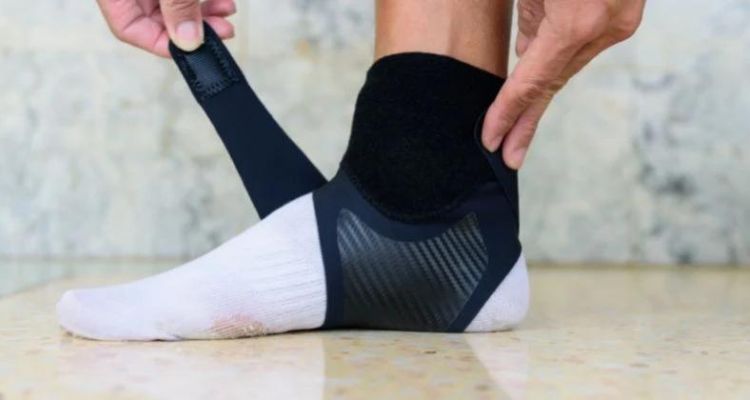
Next, you should compress your sprained ankle. You can do this with an elastic bandage. This is also to avoid any swelling in your ankle. Make sure the bandage is tight enough but don't block the blood circulation.
Keep your ankle a little higher than your heart when sleeping or resting. This plays a role in eliminating swelling. You can place a pillow or a blanket under the ankle.
How you can sprain your ankle while sleeping
You can sprain your ankle unknowingly while sleeping because spraining is awkwardly moving a ligament such that it stretches and starts to panic. This can happen even if you are asleep and stick your ankle in the mattress covers or something else, causing your ligaments to stretch.
Tips To Swiftly Cure a Sprained Ankle
We have discussed some key points to remember while treating a sprained ankle. Now let's discuss some assistive devices, medications, and therapy that would speed up the recovery.
Assistive Devices
After a few days of staying in bed while having an ankle sprain, you might want to get up and walk. But if you do so, the recovering ligaments may damage again with your body weight.
In this case, you have to use some assistive devices to continue your mobility without hurting your ankle
Crutches
This is an affordable choice; you can easily take them anywhere. These can be used in the stairs and bathroom as well. As they are small, you can carry them in your car conveniently. However, it's hard to balance yourself if you have severe injuries.
Wheelchair
Wheelchairs are convenient to use as you don't have to balance them. These are best if you have severe injuries and cannot stand up and balance yourself. However, you cannot use it on the stairs or in places too small. You might want someone who may move you along.
Medications
The medicines include ibuprofen (Advil, Motrin IB) or acetaminophen (Tylenol) or Naproxen sodium (Aleve), etc. These medicines manage the pain in your ankle easily. Your doctor might add or remove some medicines from these according to your requirements.
Therapy
Once your swelling vanishes, ask your doctor for any exercises. He will guide you to do a series of exercises that will strengthen your ligaments for the future, so you don't get any sprains again.
If you got a sprain while exercising, you should ask your doctor whether you can continue that. He will test you and observe how well your ankle has recovered. Never start the intense workout that you were doing before getting the injury unless you consult your doctor.
Making an Informed Mattress Decision
With thousands of mattress options available, cutting through the noise requires focusing on what actually matters for your sleep quality and budget.
The Three Things That Matter Most
- Support and alignment. Your mattress should keep your spine in a neutral position regardless of sleep position. If you wake up with aches or stiffness, your mattress is failing at its primary job.
- Temperature regulation. Sleeping hot disrupts deep sleep cycles. Innerspring and hybrid mattresses with coil systems promote airflow far better than all-foam designs.
- Purchase protection. A generous trial period (100+ nights), strong warranty, and hassle-free returns protect you from an expensive mistake. Never buy a mattress you cannot return.
A Strong Benchmark
The Saatva Classic ($1,779 Queen) scores well on all three factors: coil-on-coil construction for support and airflow, a 365-night home trial for risk-free evaluation, and a lifetime warranty for long-term protection. Free white-glove delivery and old mattress removal are included with every order.
How to Sleep With a Sprained Ankle: Position and Elevation Guide
Proper sleep positioning accelerates ankle sprain recovery by reducing swelling and preventing accidental re-injury during sleep.
Optimal Sleep Position
- Elevate the ankle above heart level: Place 2–3 pillows under the injured foot/ankle so it sits higher than your chest. This uses gravity to drain excess fluid and reduce swelling.
- Sleep on your back: The most stable position for keeping the ankle elevated consistently. Side sleeping can cause the elevated leg to fall.
- Use a pillow barrier: Place a body pillow along the injured side to prevent rolling during sleep.
Additional Sleep Tips
- Ice before bed: Apply ice for 15–20 minutes (with cloth barrier) before sleeping to reduce inflammation
- Compression wrap: Wear during sleep if recommended by your doctor (not too tight—check for numbness)
- Pain management: Take prescribed or OTC anti-inflammatory 30 minutes before bed
- Protect the ankle: A loose sock or ankle brace prevents accidental contact with bed frame or bedding
For elevated sleeping: adjustable base guide (foot elevation) | supportive mattresses.
An adjustable base with foot elevation is ideal for injury recovery. The Saatva Adjustable Base Plus provides precise foot elevation control.
Try Saatva risk-free →