
 by
by Quick answer: My verdict is a conditional yes. The Helix Premium Mattress Topper with GlacioTex is worth considering when an otherwise supportive mattress needs more surface pressure relief. Skip it if the mattress is sagging, you only want a barely noticeable adjustment, or you expect the GlacioTex name alone to prove how cool the topper will feel.
- Best fit: A structurally sound mattress with a comfort problem at the surface.
- Construction evidence: Sleep Doctor describes a hybrid construction that includes pressure-relieving memory foam.
- Main uncertainty: The cited description does not document the complete layer stack or comparative cooling performance.
- Price reference: Sleep Doctor lists the topper at $340, though the current retailer price should be checked before ordering.
This is a specification-based review, not a claim of personal overnight testing. That distinction matters here because the available product description supports a broad construction verdict, but it does not disclose the foam density, full layer sequence, cover composition, or other details I would want for a deeper durability assessment.
The useful way to judge this topper is to separate the supported construction point from the marketing language. A pressure-relieving hybrid topper can be a sensible way to change the first layer you feel. A branded cover name, by itself, tells me much less about overnight temperature control.
My Verdict: Consider It for Surface Comfort, Not Bed Repair
The clearest use case is a mattress that still feels level and supportive but is uncomfortable where your body meets it. The pressure-relieving memory foam identified by Sleep Doctor is relevant to that problem because foam can add contouring between the sleeper and the firmer mattress below.
I would not use this topper as a rescue plan for a mattress with deep impressions, a softened support core, or a perimeter that has already broken down. A topper follows the shape beneath it. It may disguise the sensation temporarily, but it does not rebuild the mattress support system.
The hybrid description is potentially appealing for someone who wants more than a basic pad. Still, “hybrid” is a category description, not a complete specification. Without the full material sequence, I would not assume a particular level of bounce, firmness, motion control, or durability.
The Nut’s take: Start with the condition of the mattress, not the topper’s feature list. If the bed is sound and the problem is surface comfort, this model has a logical role. If the support underneath has failed, the topper is addressing the wrong layer.
What the Hybrid Construction Actually Tells Us
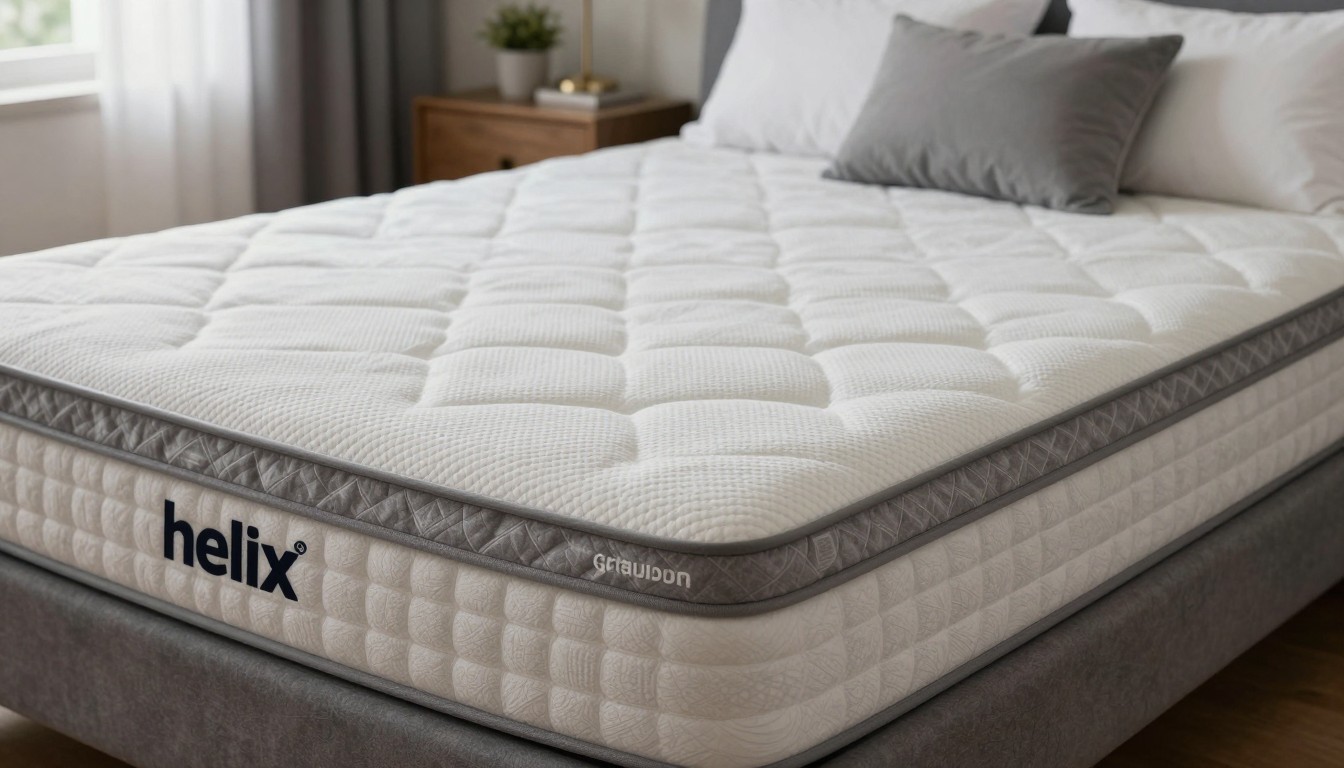
Sleep Doctor’s description gives one concrete construction detail: the topper uses a hybrid build that includes pressure-relieving memory foam. That supports a reasonable expectation of contouring, but it does not identify everything inside the product.
From a materials perspective, the missing details matter. Foam density helps frame how well a comfort layer may resist softening. Layer thickness affects how dramatically the topper can change the mattress. The way layers are joined can influence shifting or bunching. None of those specifications appears in the cited description, so I would not fill the gaps with assumptions.
Memory foam also works as part of a system. It compresses against the mattress below, which means the same topper can feel more yielding over one bed and more restrained over another. A firm, flat mattress gives the topper a stable platform. A soft or uneven mattress lets the entire stack sink farther.
| Construction question | What can be judged | What still needs confirmation |
|---|---|---|
| Does it use pressure-relieving foam? | Yes, according to Sleep Doctor’s product description. | Foam density, firmness, and placement within the stack. |
| Is it a hybrid topper? | Sleep Doctor categorizes the construction as hybrid. | The complete list and order of materials. |
| Can durability be predicted? | Only in broad terms from the material category. | Density, stitching, bonding, and cover specifications. |
Profile is another practical consideration, even though a verified thickness is not documented here. A more built-up topper can affect sheet fit, bed height, and how easily someone sits on the edge. The guide to the thickest mattress topper options explains why height needs to be evaluated as part of the entire bed rather than as an isolated feature.
More material is not automatically more useful. The right amount is the amount that changes the problem you actually have without creating a new fit or support issue.
Comparing options? The Saatva Graphite Topper is the pick we keep coming back to — see the final verdict ↓
How to Judge the Feel Before Choosing an Option
Pressure-relieving memory foam is the only feel-related material specifically identified by Sleep Doctor. That suggests contouring is part of the design intent, but the final sensation will depend heavily on the mattress underneath and the exact configuration being sold.
If the current seller offers choices labeled Luxury Plush and Luxury Firm, treat those names as directions rather than universal firmness grades. One brand’s “firm” can still feel softer than another brand’s version, and a topper cannot be judged apart from the mattress supporting it.
A plush direction makes the most sense when the mattress feels level and supportive but too rigid at the point of contact. A firmer direction is the safer place to start when the existing bed already has some give and the goal is to avoid adding an overly deep cradle.
| Condition of the current mattress | Direction to consider | Reasoning |
|---|---|---|
| Flat and supportive, but hard at the surface | A softer feel, if currently offered | The goal is added surface compliance rather than structural correction. |
| Comfortable overall, with only mild pressure buildup | Make the smaller adjustment | An aggressive change can turn a manageable bed into one that feels too yielding. |
| Already soft through the middle | Reassess the mattress first | Surface firmness cannot replace support that has weakened deeper in the bed. |
| Uneven or visibly dipped | Do not rely on a topper | The added layer is likely to conform to the uneven foundation below it. |
Sleep position matters, but I would not assign this model to a particular sleeper category without verified firmness and compression information. Body shape, mattress firmness, and sensitivity to sink all change how a pressure-relieving layer is perceived.
The practical move is to identify the current bed’s exact failure point. “Uncomfortable” is too broad. Decide whether the issue is hard surface pressure, deep sagging, heat around the body, slow movement, or an unstable edge. Only the first of those has a direct connection to the verified foam description.
GlacioTex Is a Feature Name, Not Cooling Proof
GlacioTex appears in the product name, but the cited Sleep Doctor context does not document the cover’s fiber content, heat-transfer performance, or comparative thermal results. I would not convert a branded term into a promise that the entire bed will sleep cool.
A surface fabric can feel cool at first contact without controlling temperature for the rest of the night. Sustained warmth depends on more than the cover. Foam behavior, mattress airflow, sheets, protectors, blankets, room conditions, and how closely the materials contour around the body all affect the result.
This distinction is especially important with a topper because it sits above an existing mattress. If the mattress and bedding already hold warmth, changing the uppermost layer may alter the initial feel without changing the full thermal environment.
- Ask what material the current GlacioTex cover uses.
- Check whether the seller publishes any comparative cooling method.
- Consider the protector and sheets that will sit above the topper.
- Separate a cool first touch from comfort maintained through the night.
- Review the mattress below for dense, closely conforming materials.
If temperature management is the main goal, compare material approaches rather than relying on product names. A wool mattress topper guide provides useful context for evaluating a fiber-based surface against a foam-centered hybrid design.
That comparison is not about declaring one category universally cooler. It is about deciding which construction better matches your preference for contouring, responsiveness, moisture handling, and maintenance.
Pressure Relief Depends on the Mattress Underneath
The pressure-relieving description from Sleep Doctor is the strongest reason to consider this topper. Memory foam can spread surface load by conforming around the body, but its useful effect depends on having a stable base beneath it.
A very firm mattress may let the foam layer do most of the surface shaping. A softer mattress allows the topper and mattress to compress together, which can create more sink than expected. That is why a topper should be selected as part of a combined construction rather than treated as a miniature replacement mattress.
Support and pressure relief are related, but they are not interchangeable. Pressure relief concerns how the upper layers distribute contact. Support concerns how the deeper structure keeps the body from dropping too far or unevenly. Adding contouring material does not automatically improve the second job.
Useful diagnostic: Remove the bedding and inspect the mattress surface from several angles. If the support surface is level but feels harsh, a topper is a reasonable tool. If the bed shows persistent valleys or feels unstable beneath the comfort layers, address the mattress before adding more material.
A foundation can also affect the result. Loose hardware, bowed slats, or inadequate center support may create discomfort that appears to come from the mattress. Correcting the base is more direct than covering the symptom with foam.
I would also check the mattress without the current protector or pad, if practical. A stiff protector, stretched sheet, or compressed older pad can change surface feel enough to confuse the diagnosis.
Motion, Edge Feel, and Ease of Movement Remain Open Questions
The cited product description does not report motion-transfer measurements, rebound speed, or edge-compression results. Those areas therefore need a construction-based explanation with clear limits, not a performance score.
Memory foam often dampens some surface movement because it responds locally, but the behavior of a hybrid topper depends on the other materials in its stack. Without that full stack, I cannot responsibly call this model highly isolating or especially bouncy.
Edge feel is even more dependent on the mattress. A topper does not create a new reinforced perimeter around the bed. Its foam may compress when someone sits near the side, while the underlying mattress determines how much structural resistance remains beneath that compression.
| Performance area | Construction-based expectation | Why the result is uncertain |
|---|---|---|
| Motion transfer | The memory-foam portion may absorb some surface movement. | Other hybrid components and the mattress can change the response. |
| Ease of turning | Shallower compression generally feels easier to move across. | The foam firmness and complete layer design are not documented here. |
| Sitting at the edge | The topper will add another compressible surface layer. | The mattress perimeter remains the primary structural support. |
If motion or edge stability is the deciding issue, retailer descriptions are not enough. Look for a clearly documented test method, a complete material breakdown, and return terms that account for a possible mismatch.
Fit, Sheets, and Setup Deserve Attention
A separate comfort layer changes the geometry of the bed even when its exact thickness is unknown. Before ordering, measure the mattress with any protector that will remain in place and compare that total with the usable pocket depth of the fitted sheet.
The topper also needs to sit flat without being squeezed by tight bedding. A fitted sheet that barely stretches over the combined stack can pull at the corners, compress the surface, or work loose during the night.
Size labels should not replace measurement. Confirm the current retailer’s actual size menu and fit information, especially for a mattress with rounded corners, an unusual frame, or bedding that already fits tightly.
- Measure the mattress and existing bedding stack.
- Check the sheet manufacturer’s usable pocket depth.
- Confirm how the topper is meant to stay aligned.
- Review care instructions before adding a protector.
- Verify compatibility with the current bed base and frame.
Alignment matters on an adjustable base as well. A topper that shifts, bridges over a bend, or bunches beneath the sheet can feel different from the same material on a flat surface. The seller should confirm intended compatibility rather than leaving that decision to guesswork.
Unpacking and care details also affect everyday ownership. Confirm how the cover should be cleaned, whether any component can be removed, and what the manufacturer says about rotating or repositioning the topper.
Durability Cannot Be Read From the Hybrid Label Alone
Foam density, layer thickness, cover composition, stitching, and bonding method are absent from the cited Sleep Doctor description. Those are the details I would normally use to make a more confident long-term durability judgment.
A hybrid label may describe the combination of materials, but it does not reveal the quality of each component. Two products in the same category can age differently because their foam, fabric, internal support, and assembly methods differ.
The most useful ownership checks are practical. Watch for lasting body impressions, material migrating away from the edges, a cover that no longer lies flat, or repeated shifting on the mattress. These signs are more informative than assuming a branded construction will age in a particular way.
| Detail to request | Why it matters |
|---|---|
| Foam type and density | These help frame contouring behavior and resistance to premature softening. |
| Complete layer order | Placement affects how quickly each material engages under pressure. |
| Cover composition and care method | The surface takes direct wear and may have cleaning limitations. |
| Method used to keep layers aligned | Poor alignment can create bunching or uneven comfort. |
Certification and safety language should also be checked against current documentation. Ask the seller to identify any current CertiPUR-US or GREENGUARD Gold certification and to provide its present statements about fiberglass, allergens, antimicrobial treatments, and material contents in writing.
Shoppers who prefer a different material route can use the wool mattress topper review to compare feel, upkeep, and construction priorities. That is a category comparison, not evidence that one material will suit every mattress better.
Value Depends on Solving the Right Problem
The retailer-listed price only represents good value if this topper addresses a defined comfort issue. Paying for a hybrid design makes little sense when the desired change is so small that a basic pad would do the job.
Value also includes the information and policies surrounding the product. The cited description does not establish current return terms, warranty coverage, size availability, or the complete material specification. Confirm those points with the seller before treating the listed amount as the full cost of the decision.
A return policy is especially important for a topper because the mattress underneath changes the result. A construction that sounds appropriate on paper can still create too much sink, too little contouring, or an awkward combined bed height.
Value test: Write down the problem you want the topper to solve. If the answer is surface pressure on a sound mattress, the verified foam description is relevant. If the answer is sagging, broken edge support, or an undocumented promise of dramatic cooling, the fit is much weaker.
Who Should Consider It, and Who Should Skip It
The Helix topper makes the most sense for someone who has already ruled out structural mattress failure and wants a noticeable comfort-layer intervention. The hybrid description and pressure-relieving memory foam give it a plausible role in that situation.
- Consider it if the mattress is level, supportive, and too firm at the surface.
- Consider it if you specifically want memory-foam contouring within a hybrid topper.
- Consider it if you are prepared to verify the full construction and retailer policies.
- Consider it if your sheets and frame can accommodate another comfort layer.
I would be more cautious when the purchase is being driven primarily by the GlacioTex name. The cited information is not enough to predict sustained cooling, so temperature-sensitive shoppers need clearer cover specifications and performance evidence.
- Skip it if the mattress has deep impressions or uneven support.
- Skip it if you want a very small, barely perceptible surface change.
- Skip it if easy returns are essential and the seller’s terms remain unclear.
- Skip it if you need documented thermal performance before deciding.
- Skip it if the combined bed height will create a sheet or accessibility problem.
Final Verdict on the Helix GlacioTex Topper
My final verdict is that this is a targeted comfort option, not a universal mattress fix. The most credible reason to consider it is the hybrid construction with pressure-relieving memory foam described by Sleep Doctor. That makes sense for modifying the surface of a mattress that still provides dependable underlying support.
The biggest unknown is not the idea behind the topper. It is the missing construction detail. I would want the complete layer order, foam specifications, cover composition, care instructions, current feel choices, and retailer terms before making a confident durability or cooling judgment.
Do not choose it because “GlacioTex” sounds technical. Choose it only if the documented construction matches the problem with your present bed. That keeps the decision grounded in materials and fit rather than in a feature name.
ONE VERIFIED ALTERNATIVE
Not quite the right fit? The Saatva Graphite Topper is worth a look as an alternative. Check today’s price, sizing and return terms on the official product page before you order.
Saatva Graphite Topper
- Graphite-infused memory foam, per saatva.com
- 180-night trial
- Secure anchor bands, fits deep mattresses
FAQ
Is the Helix Premium Mattress Topper with GlacioTex a hybrid topper?
Yes, that is how Sleep Doctor describes its construction. The retailer also identifies pressure-relieving memory foam as part of the design, though the complete layer sequence should be confirmed on the current listing.
Does the GlacioTex name prove that the topper sleeps cool?
No. The cited information does not document the cover composition or comparative thermal performance. Room conditions, sheets, protectors, contouring, and the mattress underneath can all affect temperature.
Can this topper correct a sagging mattress?
It may change how the surface feels, but an added comfort layer cannot rebuild a weakened support core or level a damaged foundation. Inspect the mattress and bed base before deciding that a topper is the appropriate fix.
How should I choose between plush and firm feel labels?
If those choices appear on the current listing, match them to the condition of the existing mattress. A softer direction suits a stable bed that feels hard on top, while a firmer direction is more cautious when the mattress already has noticeable give.
What should I verify before ordering?
Confirm the complete material stack, foam specifications, cover composition, available feel and size choices, care instructions, return terms, warranty language, certification documents, sheet fit, and compatibility with the bed base.