
 by
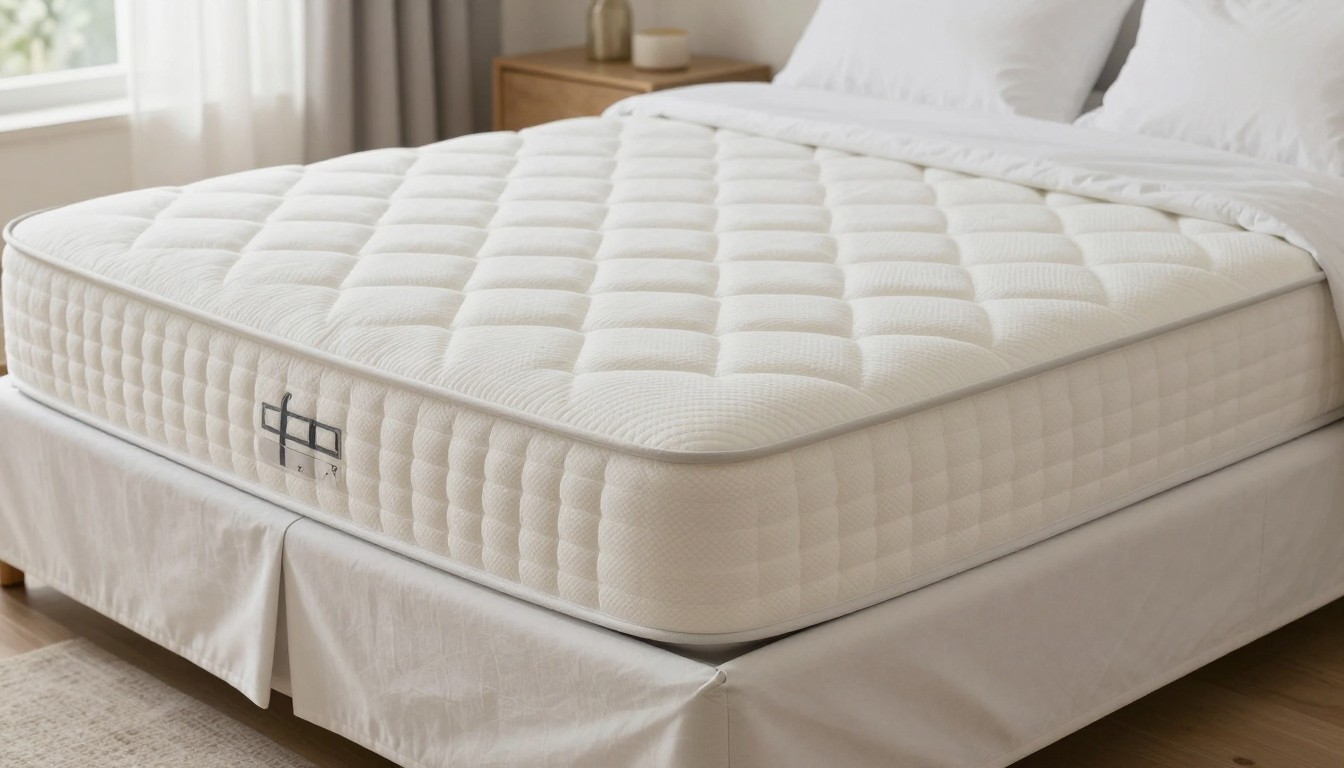
by Quick answer: On a queen bed, lift the wrap-around skirt above each corner, tuck the fitted and top sheets under the mattress, then lower and smooth the skirt. Keep the sheet and skirt tension separate.
- Amazon’s marketplace listings show wrap-around skirts with adjustable elastic bands.
- The same listings include split-corner versions for beds with posts or footboards.
- Amazon’s queen bed-skirt results say product details can vary by size and color.
Updated July 2026 · Reviewed for accuracy
The trick is layer order, not a special queen-bed fold. The sheets belong under the mattress, while the decorative skirt stays outside and drops into place only after the sheets are secure.
I’d make the fitted sheet first, tuck the flat sheet next, and adjust the skirt last. Trying to pull everything tight at once is what causes bunching, crooked hems, and loose sheet corners.
Separate the sheet tuck from the skirt tension
Amazon’s wrap-around bed-skirt listings show designs with adjustable elastic bands and split corners. That construction matters because the band holds the skirt in position, while the hanging fabric provides the finished look. Neither part should become an anchor for the sheets.
Trace the skirt’s band around your own bed before moving anything. If it circles the foundation or box spring, leave it there and lift only the decorative panel. If it circles the mattress itself, loosen only the section blocking the area where you need to tuck.
| Layer | Where it belongs | What to avoid |
|---|---|---|
| Fitted sheet | Wrapped over the mattress with its elastic seated beneath each corner | Catching the bed-skirt band beneath the sheet elastic |
| Flat sheet | Tucked directly into the gap beneath the mattress | Folding it around the skirt or using the skirt to hold it |
| Wrap-around skirt | Around the outside of the support layer or mattress, as its instructions specify | Stuffing the decorative panel under the mattress |
Queen sizing affects fit, but it doesn’t change that sequence. If the fitted sheet barely reaches the corners or pulls loose without touching the skirt, check the label and compare it with this queen sheet size guide. A fit problem needs correcting before the skirt can hang cleanly.
The Nut’s rule: Sheet tension ends under the mattress. Skirt tension stays around the outside. If those paths cross, the bed will be harder to make and the skirt will keep shifting.
Prepare the skirt before lifting the mattress edge
The working area is the narrow seam between the mattress and its support. Clear that seam before you start instead of forcing sheet fabric past elastic, gathers, or a split corner.
- Remove pillows, blankets, and any bedding that pulls on the sheet.
- Straighten the skirt’s band and distribute its gathered fabric around the bed.
- Find any adjustable closure before pulling on the skirt.
- Align split corners with the corresponding posts or frame corners.
- Decide whether the flat sheet will be tucked at the foot only or along the sides as well.
If the skirt sits around the foundation, fold its hanging panel loosely upward on the side where you’re working. Don’t drag the entire skirt toward that side. Doing so transfers tension around the perimeter and can leave the opposite hem higher.
If the band sits around the mattress, keep it seated wherever possible. Ease a small section out of the way, tuck the sheet directly beneath the mattress, and then return the band to its instructed position. Product layouts vary, so the skirt’s own installation directions should decide where its band rests.
Before you lift: Work on a small section of the mattress edge at a time. If the mattress is difficult to raise or control, get help rather than trying to hold a wide section while reaching underneath it.
Tuck the sheets in without trapping the bed skirt
Start at the foot of the bed if you use a flat sheet. That establishes how much fabric is available for the foot tuck and corners before you tighten either side.
- Park the decorative skirt fabric. Lift or roll only the panel on the section where you’re working. Keep the elastic band flat and untwisted. You should be able to see the mattress-to-support seam clearly.
- Fit the bottom sheet first. Pull each fitted-sheet pocket over its mattress corner and seat the elastic underneath. Smooth the sheet toward the center after each corner rather than yanking diagonally across the bed. If a corner pops off now, stop and correct the fit before adding the flat sheet.
- Center the flat sheet. Position its upper edge where you want it near the head of the bed. Check the side drape visually and move the whole sheet if one side is noticeably shorter. Don’t use the bed skirt’s hem as an alignment guide because that hem may not be perfectly level yet.
- Tuck the middle of the foot first. Lift a manageable section of the mattress edge and slide the flat sheet into the gap beneath it. Keep the sheet above the foundation and separate from the skirt band. Work outward from the center instead of stuffing the entire foot panel at once.
- Move toward each foot corner. Smooth excess fabric outward as you go. A flat tuck should come from even distribution, not from pulling one corner as tightly as possible. Keep the parked skirt panel clear of your hands.
- Form the corner fold. Lift the side portion of the flat sheet so it creates a clean diagonal flap. Tuck the loose fabric below that flap under the mattress, lower the flap, and tuck its bottom edge if you want a closed corner. Leave the side free if you prefer more room around your legs.
- Finish the sides according to your sleep preference. For a tighter bed, continue tucking along the side in short sections. For a looser feel, secure only the area near the foot. The sheet still goes directly under the mattress, never over the skirt band.
- Lower and reset the skirt. Unroll the decorative panel without pulling downward on one spot. Smooth the gathers around the perimeter, reseat any adjustable band, and return split corners to the frame openings they were meant to straddle.
Don’t force resistance. If the sheet won’t slide into the seam, check for trapped skirt fabric or elastic. Pulling harder can move the skirt around the entire bed without improving the tuck.
If you don’t use a flat sheet, the process is shorter. Park the skirt panel, fit each bottom-sheet corner fully beneath the mattress, smooth the surface, and lower the skirt only after all corners are secure.
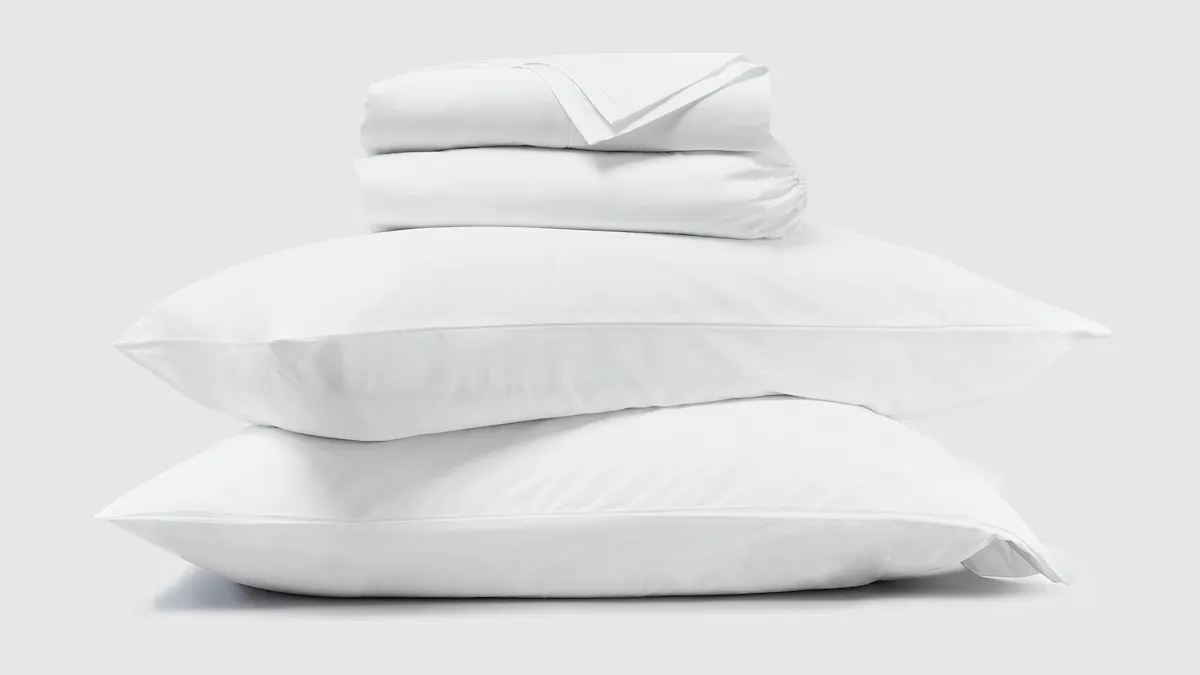
Comparing options? The Saatva Organic Cotton Sheets is one category-matched product to investigate, not a documented winner — see the product note ↓
Fix bunching, slipping, and an uneven skirt hem
A skirt that climbs while you tuck is a layer problem, not something to solve by pulling its hem downward. Reset the affected section and identify which piece of fabric crossed into the mattress seam.
| What you see | Likely cause | What I’d do |
|---|---|---|
| The skirt rises on one side | Its band shifted while the sheet was being tucked | Loosen that section, reseat the band, and redistribute the gathers |
| Fabric bunches under the mattress | The decorative panel entered the sheet-tucking gap | Remove the sheet from that section, free the skirt, and retuck the sheet alone |
| A fitted-sheet corner comes off | The pocket isn’t fully seated, or the sheet and mattress profiles don’t match | Refit the corner without the skirt in the way and recheck the sheet label |
| The flat sheet pulls loose | Too little fabric was reserved at the foot or one side was pulled tighter | Remove the tuck, recenter the sheet, and work from the foot center again |
| A split corner exposes the support | The split is no longer aligned with the post or frame corner | Realign the opening after the sheets are finished |
| The hem slopes around the bed | The gathered fabric has migrated along the elastic | Hold the band in place and spread the fabric gradually around the perimeter |
Don’t compensate for a loose fitted sheet by trapping more material beneath the skirt. The skirt can hide the problem briefly, but it can’t correct the relationship between the sheet pocket and mattress.
An uneven hem also doesn’t always mean the band needs tighter adjustment. First check whether the fabric is distributed evenly and whether a corner split is caught behind the frame. Make band adjustments only after those simpler causes are ruled out.
Quick reset: Free the skirt, recenter the sheet, retuck in small sections, and level the skirt afterward. Correcting the layers is cleaner than trying to pull a finished-looking hem over a bad tuck.
Adapt the method to your bed frame and laundry routine
A wall, footboard, or moving base changes where you begin, but the sheet still needs its own path beneath the mattress.
- Bed against a wall: Make the hard-to-reach side first while the flat sheet is still loose. Finish the accessible side afterward. This reduces the chance that reaching across the mattress will pull out a completed tuck.
- Footboard or corner posts: Align any skirt splits before fitting the sheets, then fold the panels safely out of the way. Amazon’s listings include split-corner designs, but not every skirt has them. Don’t force an unsplit panel around a post against its intended construction.
- Adjustable base: Keep the skirt and loose sheet fabric clear of hinges and other moving hardware. Follow the base and skirt manufacturers’ placement instructions before operating the bed.
- Layered mattress setup: If a topper or protector leaves the fitted sheet at the limit of its pocket, correct that fit before working on the skirt. Pulling harder at the corner can disturb both layers without creating a secure hold.
Clean, fully prepared sheets are also easier to align than a set left twisted in a laundry load. Follow each care label, and check the washer’s guidance before combining fabrics. I’ve covered the practical tradeoffs in guides about whether you can wash bed sheets with towels or wash sheets with clothes.
Inspect the skirt’s elastic and closures while the bed is stripped. Untwist the band and realign the corner openings before remaking the bed. If you retire a worn sheet set, these uses for old bed sheets can keep the fabric useful without putting it back on the mattress.
Keep the maintenance simple: Strip the sheets without dragging the skirt, inspect the skirt while the mattress edge is exposed, and rebuild the bed from the fitted sheet outward.
The clean finish comes from two separate layers
The final pass has one job: confirm that the sheet tension ends beneath the mattress and the skirt tension remains outside it. Run your hand around the visible mattress seam and free any decorative fabric caught in the tuck.
I’d judge the setup by function before symmetry. The fitted sheet should stay seated, the flat sheet should feel as loose or snug as you intended, and the skirt should hang without supporting either one.
- Fit and center the sheets before adjusting the skirt.
- Tuck directly beneath the mattress in small sections.
- Lower, redistribute, and level the skirt only after the tuck is complete.
You shouldn’t need to remove a properly positioned wrap-around skirt every time you make the bed. Lift the working panel, keep its band out of the sheet seam, and restore the panel after each tuck.
ONE OPTION WORTH COMPARING
Shopping as well as reading? Here is one current option worth comparing: the Saatva Organic Cotton Sheets. Check today’s price, sizing and return terms on the official product page before you order.
Saatva Organic Cotton Sheets
- See the product page for full specs and current pricing
FAQ
Do the sheets tuck over or under a wrap-around bed skirt?
The sheets tuck directly under the mattress, not over the decorative skirt. Keep the skirt panel outside the mattress seam and return it to position only after the sheet is secure.
Do I need to remove the bed skirt each time I change sheets?
Not if you can lift the decorative panel while leaving the band correctly seated. If the band itself blocks the mattress seam, loosen only the working section and reinstall it according to the skirt’s instructions.
Why does my fitted sheet corner keep popping off?
First check that its elastic is fully beneath the mattress and hasn’t caught the skirt band. If it still releases with the skirt moved away, recheck the sheet’s stated fit against the mattress profile.
Why does the bed skirt move whenever I tuck the flat sheet?
You may be pushing the flat sheet over the skirt band or pulling on the parked decorative panel. Free both layers, hold the band steady, and tuck the sheet into the mattress seam by itself.
How should I tuck a flat sheet around a footboard?
Start at the center of the foot and work outward in short sections. Keep any skirt splits aligned with the footboard or posts, form the sheet corners independently, and smooth the skirt panels around the frame afterward.