
 by
by Quick answer: Ostriches can sleep standing in an alert, “vigilant” state, then lie down for deeper rest. The cited guides support both postures but don’t establish exact sleep times or stage lengths.
- Brainbound describes ostriches sleeping in standing positions.
- The same guide says ostriches can remain alert during this rest.
- “Ostrich Sleeping: Unveiling Their Surprising Sleep Habits” associates lying down with deeper rest.
Updated July 2026 · Reviewed for accuracy
Ostriches don’t use one fixed sleeping position. Brainbound describes alert sleep in a standing posture, while a separate guide titled “Ostrich Sleeping: Unveiling Their Surprising Sleep Habits” contrasts standing naps with deeper, lying-down rest.
My plain-English reading is simple: standing is the vigilant end of the pattern, and lying down is the posture associated with deeper rest. Neither posture, viewed in isolation, tells us every detail about the animal’s sleep stage.
The short version in plain English
Standing sleep isn’t a contradiction in the published descriptions. Brainbound explicitly connects ostrich sleep with standing positions and retained alertness. The second guide calls this upright behavior a standing nap.
That means an ostrich doesn’t necessarily need to lie down before it can be considered asleep. If you see one standing quietly, its upright position alone can’t prove that it’s fully awake. It could be resting in the vigilant manner Brainbound describes.
Lying down marks the other clearly documented posture. “Ostrich Sleeping: Unveiling Their Surprising Sleep Habits” describes deep, lying-down rest, making this the stronger published indicator of a deeper form of sleep.
The useful distinction: published guides associate standing with naps and alert rest, while they associate lying down with deeper rest. That’s more accurate than claiming ostriches either sleep only upright or only on the ground.
I wouldn’t turn those descriptions into an absolute rule. The sources show that both positions occur, but they don’t provide a visual checklist that can confirm sleep from posture alone. A standing ostrich isn’t automatically asleep, just as a lying ostrich isn’t automatically in a particular physiological stage.
The best answer is therefore about range rather than a single pose. Ostriches are described as capable of sleeping upright while preserving some alertness, then using a lying-down position for deeper rest.
Standing naps and lying-down rest aren’t the same
One guide uses the specific phrase “standing naps,” while the other emphasizes “vigilant” rest. Those descriptions point to sleep that retains an element of alertness rather than the deeper rest associated with lying down.
The distinction matters because “How do ostriches sleep?” can mean two different things. It can ask what their bodies look like during rest, or it can ask how deeply they sleep. The cited guides address the first question clearly through posture, but give only broad labels for depth.
| Description | What the source says | Careful interpretation | What it doesn’t prove |
|---|---|---|---|
| Standing sleep | Brainbound mentions standing positions, and the separate sleeping-habits guide describes standing naps. | An ostrich may rest or sleep without first lying down. | That every motionless, standing ostrich is asleep. |
| Vigilant rest | Brainbound says ostriches can sleep while staying alert. | Alertness and sleep overlap in the guide’s description. | The precise neurological mechanism behind that alertness. |
| Lying-down rest | “Ostrich Sleeping: Unveiling Their Surprising Sleep Habits” calls this deeper rest. | Lying down is associated with the deeper end of the described pattern. | The exact sleep stage or how long it lasts. |
| “Zombie” REM | Brainbound uses this colorful phrase in its description of ostrich sleep. | The guide links part of the pattern with REM terminology. | A measurement method, duration, or complete stage definition. |
I’d keep the language as narrow as the evidence. “Standing nap” and “deep, lying-down rest” are supported descriptions. Claims about exact sleep stages, brain activity, or a fixed sequence would require details the cited guides don’t give.
This also prevents a common oversimplification. The answer isn’t that ostriches always sleep standing, nor is it that they must lie down to sleep. Both postures appear in the published accounts, with different levels of rest attached to them.
What “vigilant” sleep means here
Brainbound’s guide puts “vigilant” in the title and describes ostriches sleeping while staying alert. In this context, the word signals that sleep and alertness aren’t presented as complete opposites.
That doesn’t mean the ostrich is simply awake. Calling the behavior sleep while also describing it as alert suggests an overlap: the animal is resting, but the source doesn’t portray that rest as total disengagement from its surroundings.
I wouldn’t go further and assign a specific brain mechanism to it. Brainbound’s short description doesn’t explain how alertness was measured, what response would count as alert, or whether every standing nap works in exactly the same way.
Wording I trust: Some ostrich sleep is described as vigilant, allowing an element of alertness during upright rest.
Wording I’d avoid: Any precise claim about which brain regions are active, how quickly the ostrich responds, or how long vigilance continues. Those details aren’t established by the cited descriptions.
The phrase “zombie” REM cycles deserves the same restraint. Brainbound uses it as an attention-grabbing description, but the cited material doesn’t define the term, provide stage lengths, or explain how REM was identified. It shouldn’t be treated as a complete scientific explanation by itself.
The stronger takeaway is the less dramatic one. Brainbound associates ostrich sleep with alertness, standing posture, and REM terminology. The separate sleeping-habits guide supports a posture-based contrast between upright naps and deeper rest while lying down.
How to interpret an ostrich resting
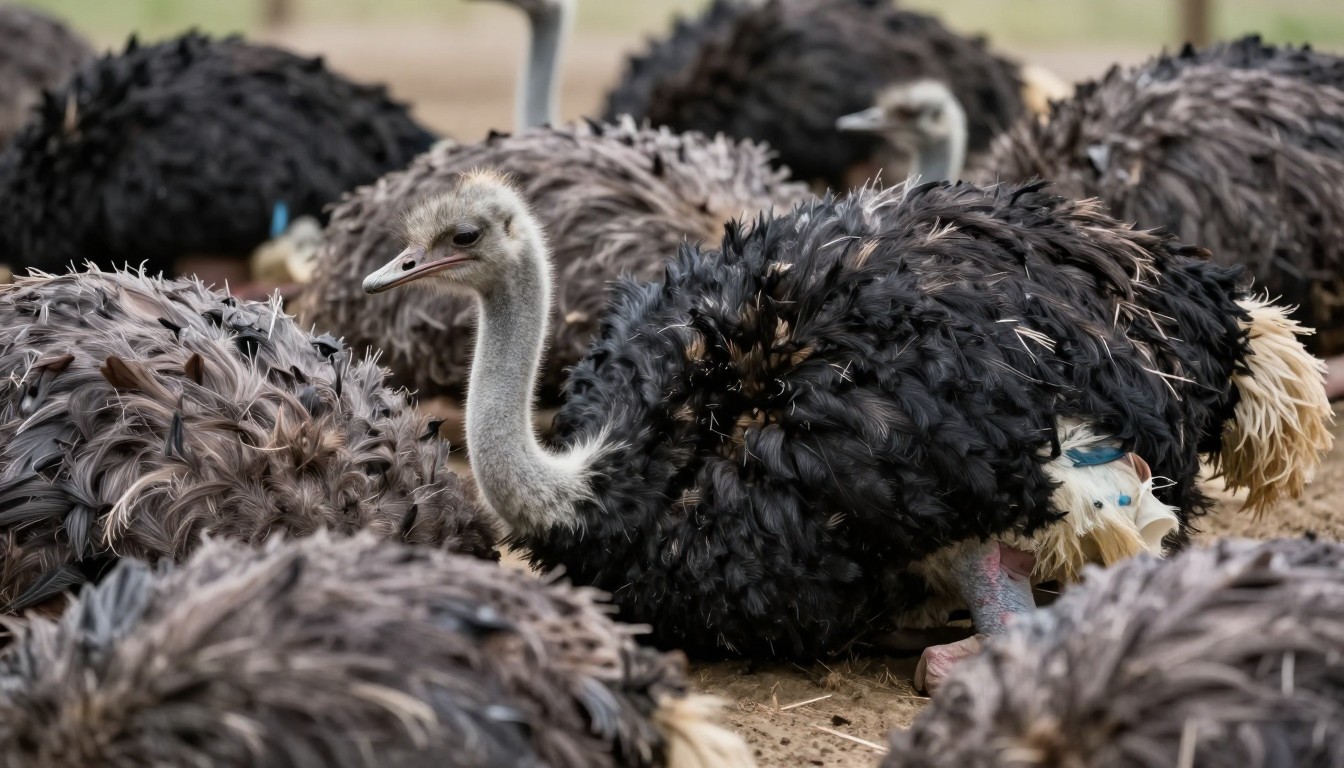
A still image gives you posture, not a direct reading of sleep depth. It may show an ostrich standing or lying down, but it can’t by itself establish whether the animal is awake, napping, deeply resting, or in REM.
If you’re watching footage or observing from a safe distance, use a conservative process. The goal is to describe what’s visible first, then make only the inference supported by the two published guides.
- Identify the posture. Record whether the ostrich remains standing or is lying down. Those are the two sleeping positions described by Brainbound and “Ostrich Sleeping: Unveiling Their Surprising Sleep Habits.”
- Separate observation from interpretation. “The ostrich is standing still” is an observation. “The ostrich is asleep” is an inference, and standing posture alone doesn’t confirm it.
- Use the source language carefully. If the animal appears to rest while upright, “possible standing nap” or “apparent vigilant rest” stays close to the published descriptions. If it is lying down, you can say that this posture is associated with deeper rest.
- Don’t diagnose a sleep stage from appearance. A video may document a posture and a period of apparent rest, but it doesn’t provide the physiological measurements needed to verify REM or another exact stage.
Continuity helps with description even when it can’t prove physiology. A longer sequence can show whether the posture persists or changes, while one frame captures only an instant. I’d still avoid assigning a precise stage unless the footage comes with a named method or qualified analysis.
I also wouldn’t approach or disturb an animal to find out whether it is asleep. The question can be answered by careful, distant observation and properly attributed descriptions. Provoking a response would add risk without producing a reliable sleep measurement.
A reliable caption: “The ostrich appears to be resting while standing, a posture published guides associate with vigilant sleep.” For a prone animal: “The ostrich is lying down, which one guide associates with deeper rest.”
This approach may sound cautious, but it keeps the answer accurate. Posture can support a sensible interpretation. It can’t replace physiological evidence that the cited guides don’t provide.
What the cited guides leave unanswered
Neither relevant guide description gives an exact total sleep duration. They also don’t specify how long standing naps last, how long deeper lying-down rest lasts, or how frequently an ostrich changes between the two postures.
Several tempting follow-up details therefore remain unconfirmed in the cited material:
- The amount of sleep an ostrich gets within a particular period
- The usual timing of standing naps or lying-down rest
- The duration and frequency of any REM stage
- Whether age or surroundings alter the described pattern
- The physical signs that reliably separate sleep from quiet wakefulness
I won’t fill those gaps with typical figures from other animals or an unsupported estimate. A precise answer would need a named study or source that reports its observation method and defines what counted as sleep.
The missing detail doesn’t erase the core answer. Both relevant guide descriptions support more than one resting posture. Brainbound covers standing, alert sleep, while “Ostrich Sleeping: Unveiling Their Surprising Sleep Habits” adds the clearer contrast between standing naps and deep, lying-down rest.
That shared outline is enough to correct the biggest misconception: there isn’t one exclusive ostrich sleeping pose. Upright rest belongs in the answer, but so does lying down.
My answer: Ostriches are described as taking vigilant naps while standing and using a lying-down position for deeper rest. Beyond that broad pattern, exact schedules, durations, and sleep-stage mechanisms need stronger documentation.
FAQ
Both relevant guides agree on the broad posture distinction, but they don’t answer every popular question about ostrich sleep. Here’s the careful version of what can and can’t be said.
Do ostriches sleep standing up?
Yes. Brainbound describes ostriches sleeping in standing positions, and “Ostrich Sleeping: Unveiling Their Surprising Sleep Habits” refers to standing naps. Standing alone doesn’t prove that a particular ostrich is asleep, but it is a documented sleeping posture in these guides.
Do ostriches lie down to sleep?
Yes. “Ostrich Sleeping: Unveiling Their Surprising Sleep Habits” describes deep, lying-down rest. This makes lying down part of the sleep pattern rather than evidence that something unusual is happening.
Are ostriches awake during vigilant sleep?
Brainbound describes them as sleeping while staying alert, so its wording doesn’t treat alertness as the same thing as being fully awake. The source description doesn’t define the precise level of awareness or explain how it was measured, so a stronger claim wouldn’t be justified.
Do ostriches experience REM sleep?
Brainbound refers to “zombie” REM cycles in its description of ostrich rest. However, the cited details don’t explain the measurement method, stage duration, or physiology, so I’d treat that phrase as a broad description rather than a complete account of ostrich REM.
How long do ostriches sleep?
The cited guides don’t provide a verified duration for total sleep, standing naps, or deeper lying-down rest. Any exact figure would go beyond the facts established here, so the honest answer is that these sources explain posture better than timing.