
 by
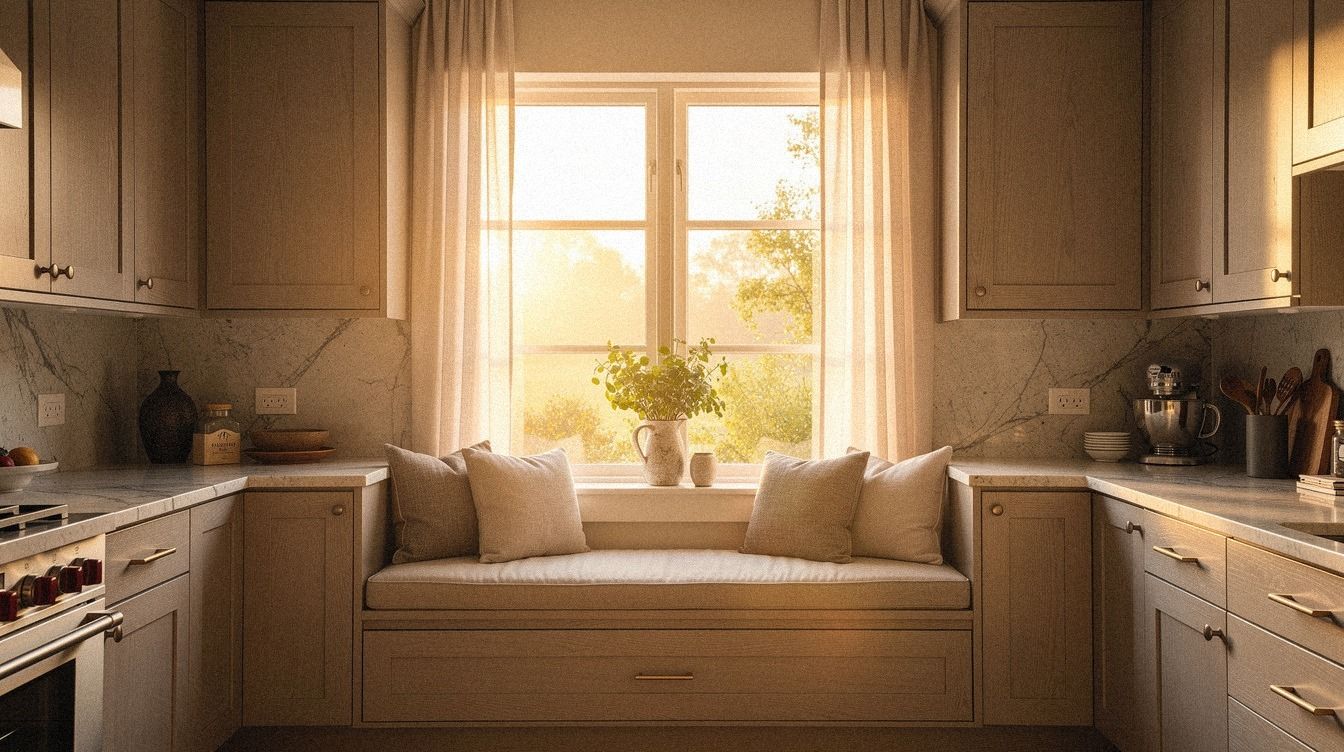
by A kitchen with a built-in breakfast nook works best when you size the seating first, keep 42 to 48 inches of clearance, and let the bench follow the cabinets instead of fighting them. I've seen pretty nooks fail because the table was too big, the seat was too shallow, or the light landed in the wrong spot by 9 a.m. You don't need a full remodel to fix that. You need the right order.
Before You Start With the Three-Measurement Rule
Before you buy one cushion or choose one paint card, map the numbers that keep a kitchen with a breakfast nook comfortable. I start with 36-inch counter height, then I make sure the main path around the table still holds that 42 to 48 inch clearance. If your uppers are 30 to 42 inches tall, you can use the nook wall to soften all that vertical weight instead of stacking more bulk there.
If you're planning a tighter footprint, read small breakfast nook ideas that fit almost anywhere before you commit. You'll catch the usual mistake fast: people size the table for four, then leave a walkway fit for none.
- Start with a window bench under morning light
- Build storage drawers beneath the banquette seats
- Anchor the nook with a round pedestal table
- Wrap corner seating around the cabinet run
- Frame the bench with painted beadboard panels
- Layer striped cushions along the built-in seat
- Hang a milk glass pendant above breakfast
- Tuck shelves into the nook side wall
- Paint the bench base to match cabinets
- Add cafe curtains behind the breakfast table
- Install a narrow ledge for mugs
- Choose a curved banquette for tight corners
- Slide woven chairs beside the built-in bench
- Mount picture lights over framed kitchen prints
- Finish with a fruit bowl centerpiece
1Start with a window bench under morning light
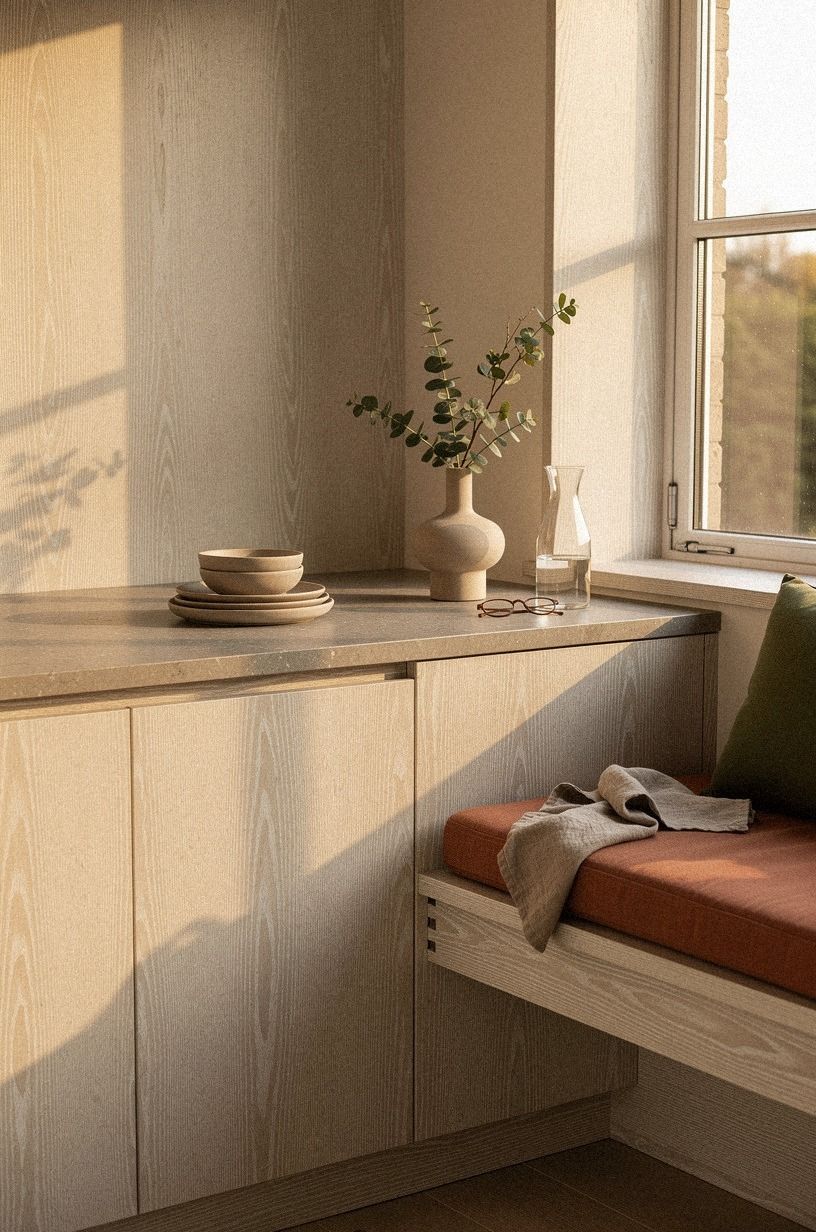
Start with the bench, not the table. When you place a built-in seat under real morning light, you give your breakfast table in kitchen ideas the one thing overhead cans never fake: a soft, directional glow that makes coffee and toast feel intentional before the day gets loud. I like a bench depth around 18 to 20 inches with a back angle you can lean into, because a straight box may photograph cleanly but it won't keep you sitting through a second cup.
Use cerused white oak on the nearby cabinetry if you want the pale grain in the photo to read warm instead of washed out. Terracotta cushions keep that first-light corner from turning chilly, and I'd rather see that earthy color than flat gray every time. If your room is narrow, the layouts in galley kitchen breakfast nook ideas for narrow layouts show how much breathing room you can save by pushing the bench to the glass.
It works so well when the sun hits that seat!
2Build storage drawers beneath the banquette seats
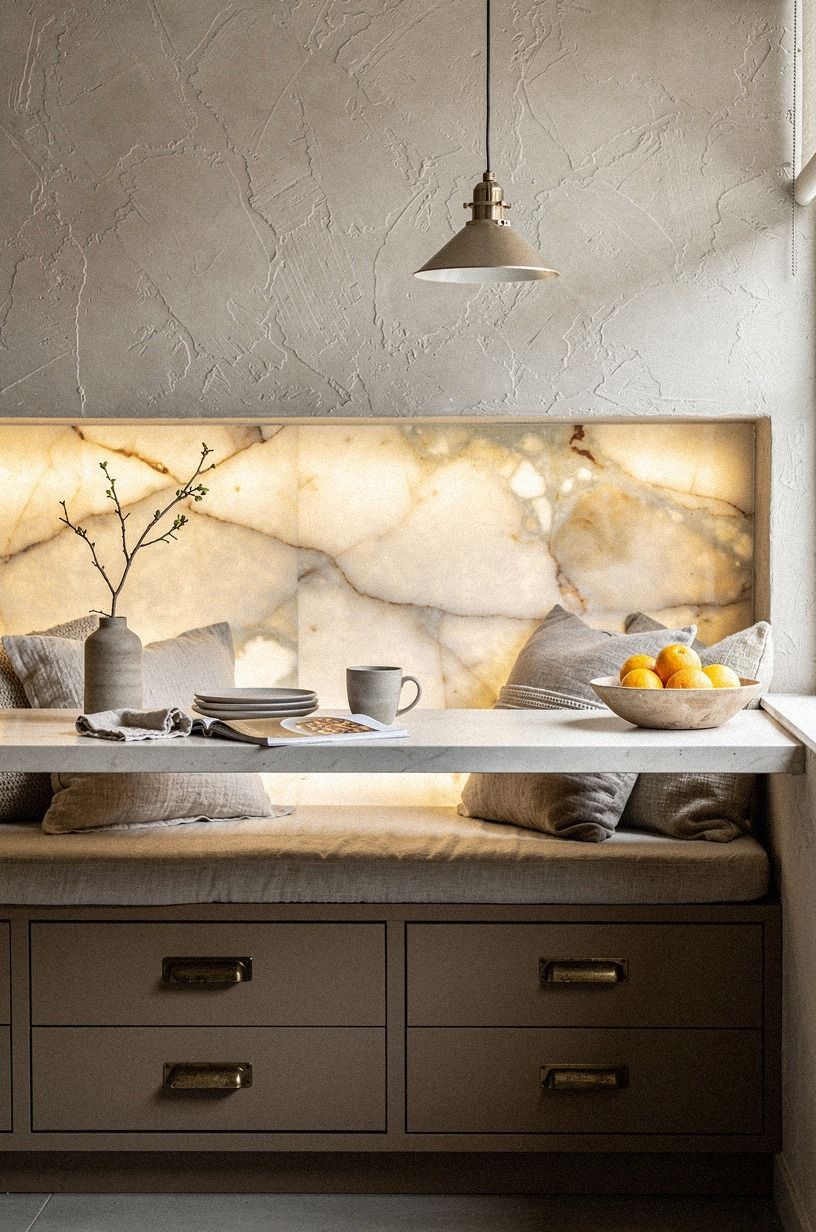
Build the storage before you upholster anything. If you wait until the cushions are on, you won't want to pull the whole nook apart to fix a clumsy drawer front, and then your kitchen with a breakfast nook becomes one more place where chargers, candles, and lunch boxes float around with no home. I prefer full-extension drawers over lift-top seats because you can reach the back corners without clearing the whole bench first.
Match the image with clay-painted drawer fronts and a simple linen cushion on top, then keep the pulls quiet so the seat still feels built in. You can fit placemats, kids' art supplies, and spare napkins under there, which means your table stays clear enough to work at too. For a renter-friendly version of that storage logic, look at apartment breakfast nook ideas for renters small spaces.
And yes, drawers cost more up front, but you'll thank yourself every single morning!
3Anchor the nook with a round pedestal table
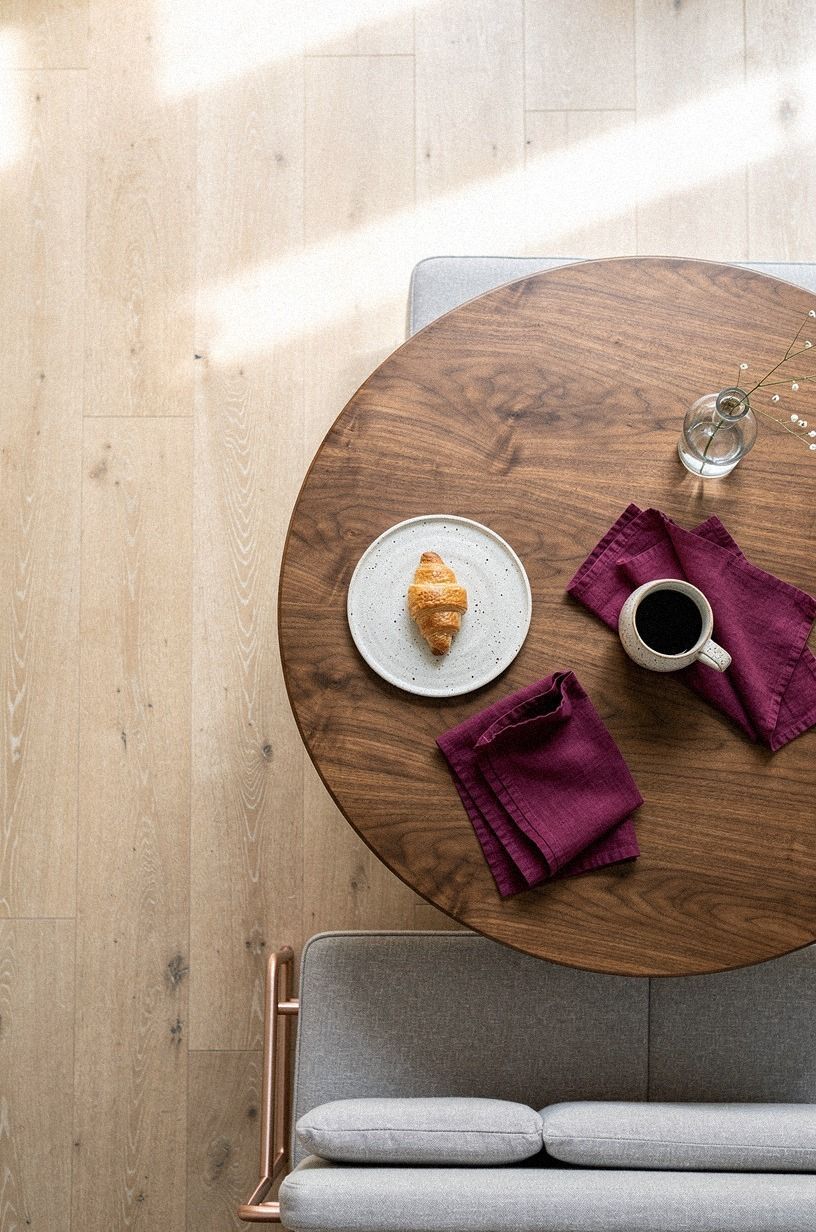
Anchor the nook with a round pedestal table once the bench footprint is fixed.
4Wrap corner seating around the cabinet run
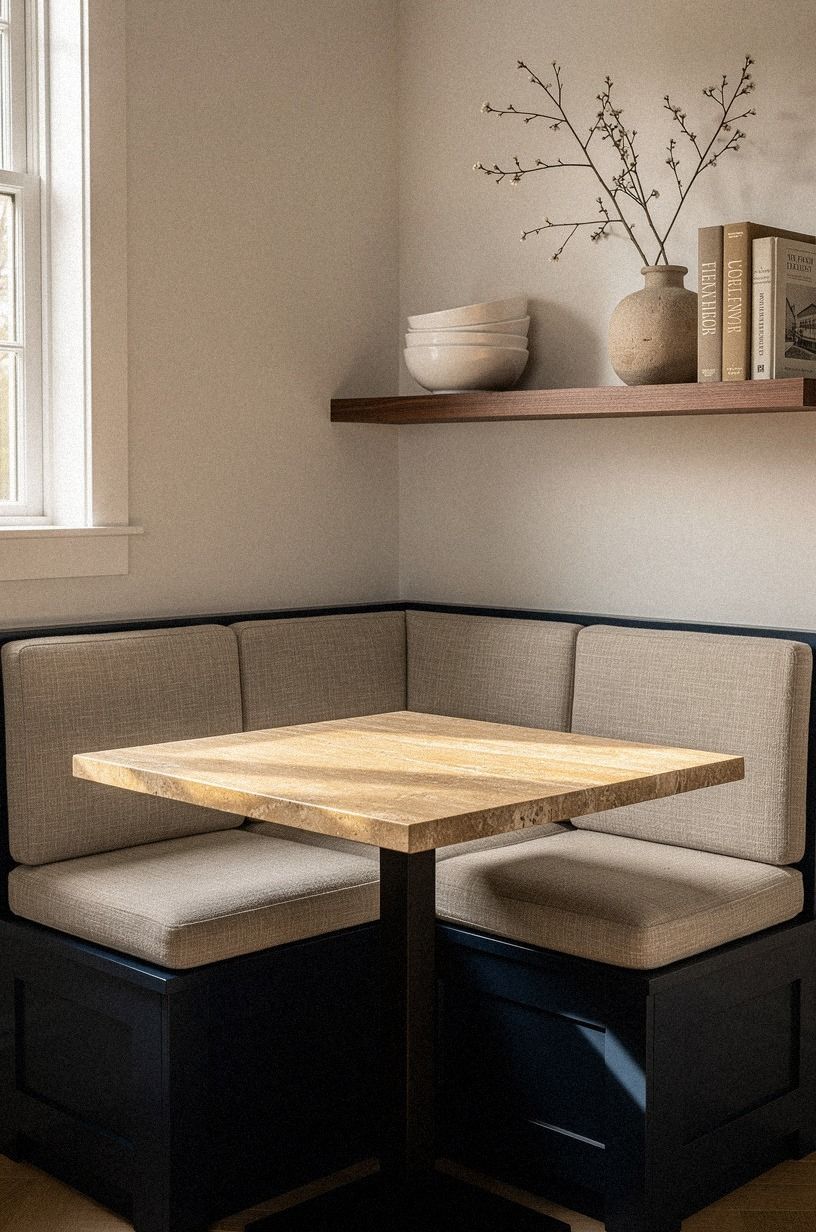
Wrap the bench around the cabinet run so the nook feels like part of the kitchen, not a lonely booth parked at the edge. This is where the Two-Wall Flow Rule earns its keep: if the cabinetry turns, the seating should turn with it unless the corner is too tight to enter cleanly. You get more seats, but more important, you stop wasting that awkward elbow where a loose chair would always drift.
Keep the palette close to the cabinets in the photo, then let the cushion fabric carry the softness. Benjamin Moore White Dove OC-17 on trim or bead details makes warm wood read cleaner, and you can still bring in terracotta or rust lower down. If your room already leans cottage, 25 tiny cottage kitchens that feel like a magazine spread shows how this wrapped seating idea can feel collected instead of bulky.
5Frame the bench with painted beadboard panels
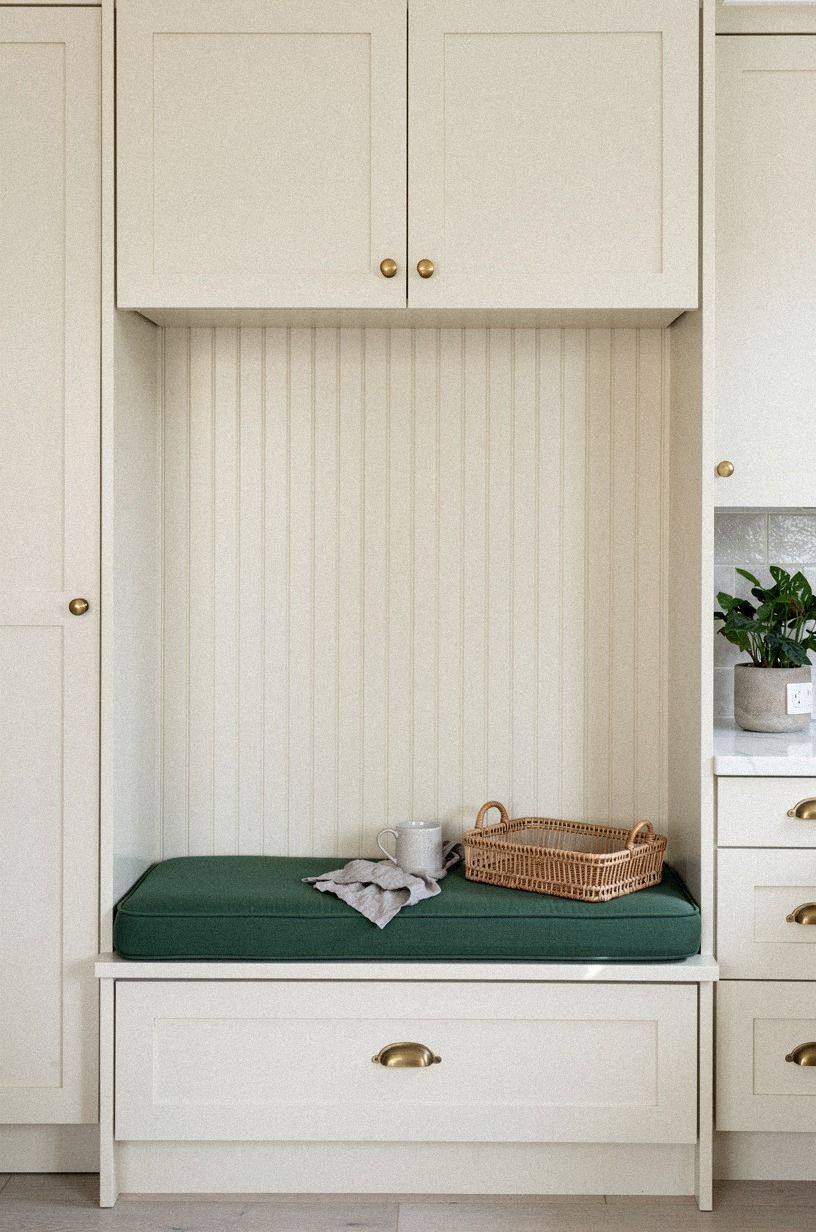
Frame the bench with beadboard if the nook wall feels flat or unfinished. Painted paneling gives your eye a boundary, which is what makes a small bench feel intentional rather than temporary, and it does that without stealing depth the way a chunky tile surround might.
You don't need floor-to-ceiling treatment either. Stopping just above the back cushion usually looks calmer.
In a light, airy setup like the photo, I'd paint the panels Sherwin-Williams Evergreen Fog SW 9130 only if the kitchen gets good sun; in a darker room, keep the beadboard pale and let pillows do the heavy lifting. You can even use beadboard to make a prefab bench feel custom.
For more color pairings that don't date fast, save kitchen cabinet color ideas you ll still love in 10 years. But skip high-gloss paint here, because every little ding will shout at you.
6Layer striped cushions along the built-in seat
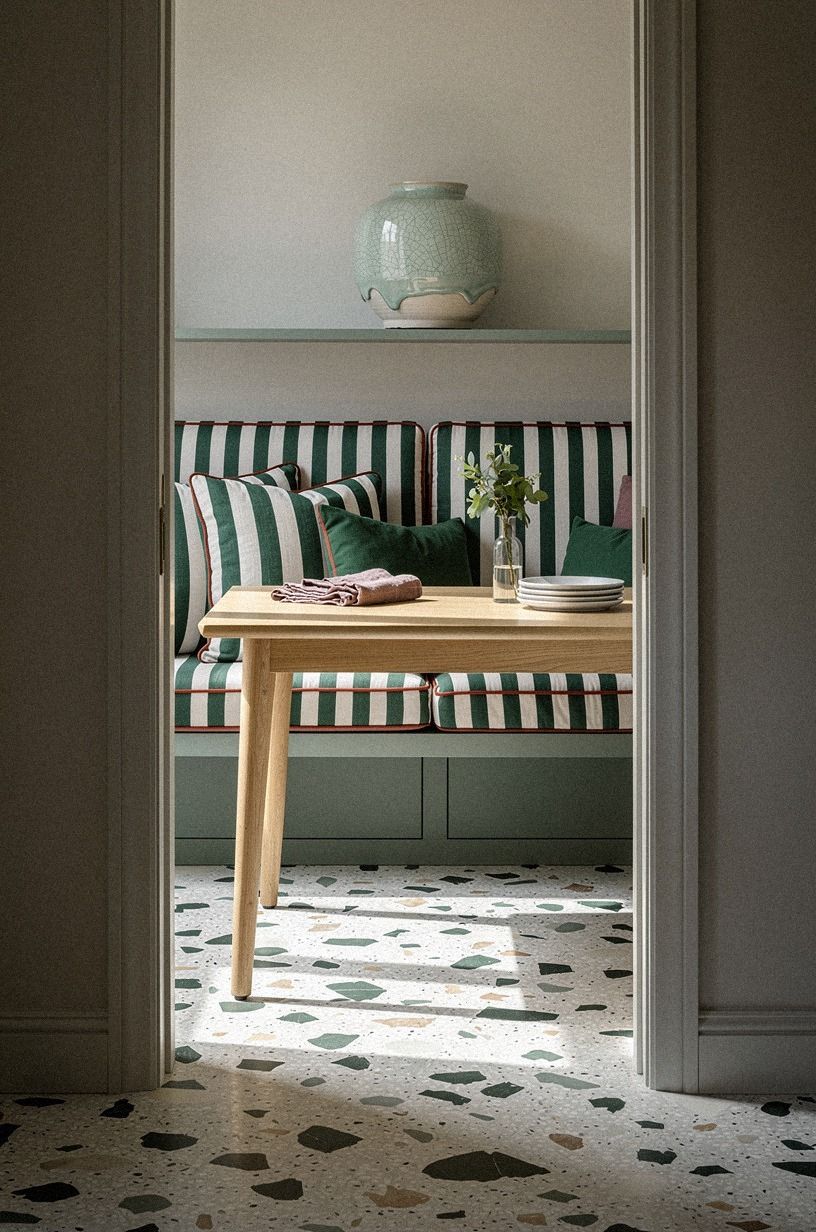
Layer the cushions after the hard surfaces are set, not before. You need to see the wood tone, the wall color, and the table shape together first, otherwise you end up buying pillows that solve an imaginary room. In the doorway view from the photo, the forest green stripes and rust piping do the right kind of work: they sharpen the bench edge while still feeling soft enough to lean into.
Use forest green ticking stripe on the back cushions, then add one smaller lumbar in a solid clay or oat linen so your eye gets a pause. I made the mistake once of mixing four tiny patterns in a breakfast nook, and the whole thing looked nervous. If you want more ideas for textiles that read relaxed, cozy reading nook ideas has the same layered-seat logic, just in a different room.
7Hang a milk glass pendant above breakfast
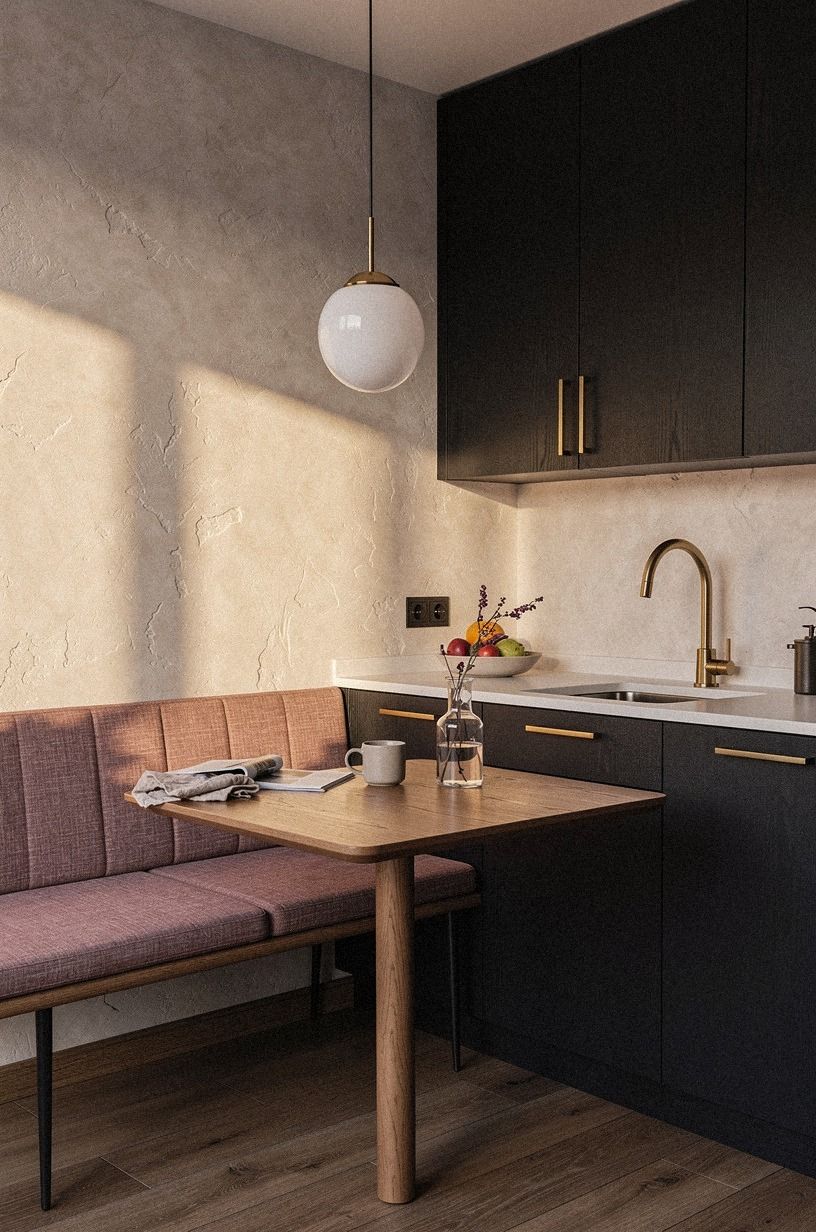
Hang the light low enough to define the nook, but not so low that you stare into it while eating. In most kitchens, you want the bottom of the pendant roughly 30 to 36 inches above the table, which is low enough to make the seat feel separate and high enough to keep the sightline open. A milk glass shape softens the whole corner because it glows instead of glaring.
The photo calls for milk glass, warm brass hardware, and a pendant centered over both table and banquette. That's the part many people miss: if the light centers on the room instead of the nook, the nook never fully lands.
For more warm-space inspiration, cozy backyard play area ideas kids adults both love shows how lighting changes mood even outside. And please, skip daylight bulbs here.
Breakfast light should wake you up, not interrogate you!
8Tuck shelves into the nook side wall
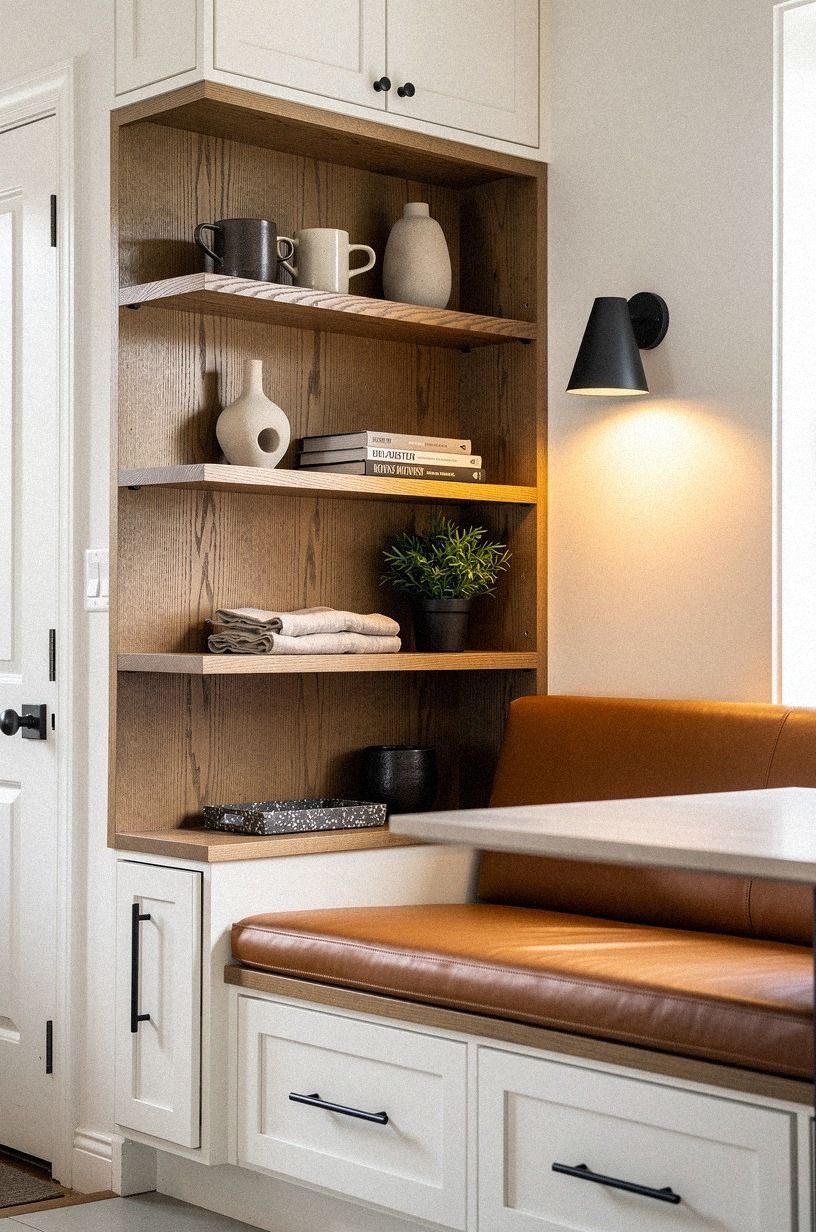
Tuck shelves into the side wall when you need storage but don't want uppers closing in the seat. Open shelving works here because the nook already carries visual softness through cushions and curves, so a small vertical stack can hold mugs, jam jars, and a cookbook without feeling bossy. I keep these shelves shallow on purpose.
Deep shelves by a bench become forehead hazards fast.
Match the relaxed side-wall view in the photo with white oak shelves or a paint color that disappears into the wall. A depth around 8 inches is usually enough for a small stack of bowls and a framed recipe card. If your layout is especially lean, galley kitchen breakfast nook ideas for narrow layouts has the smartest examples of storage that doesn't choke the path.
9Paint the bench base to match cabinets
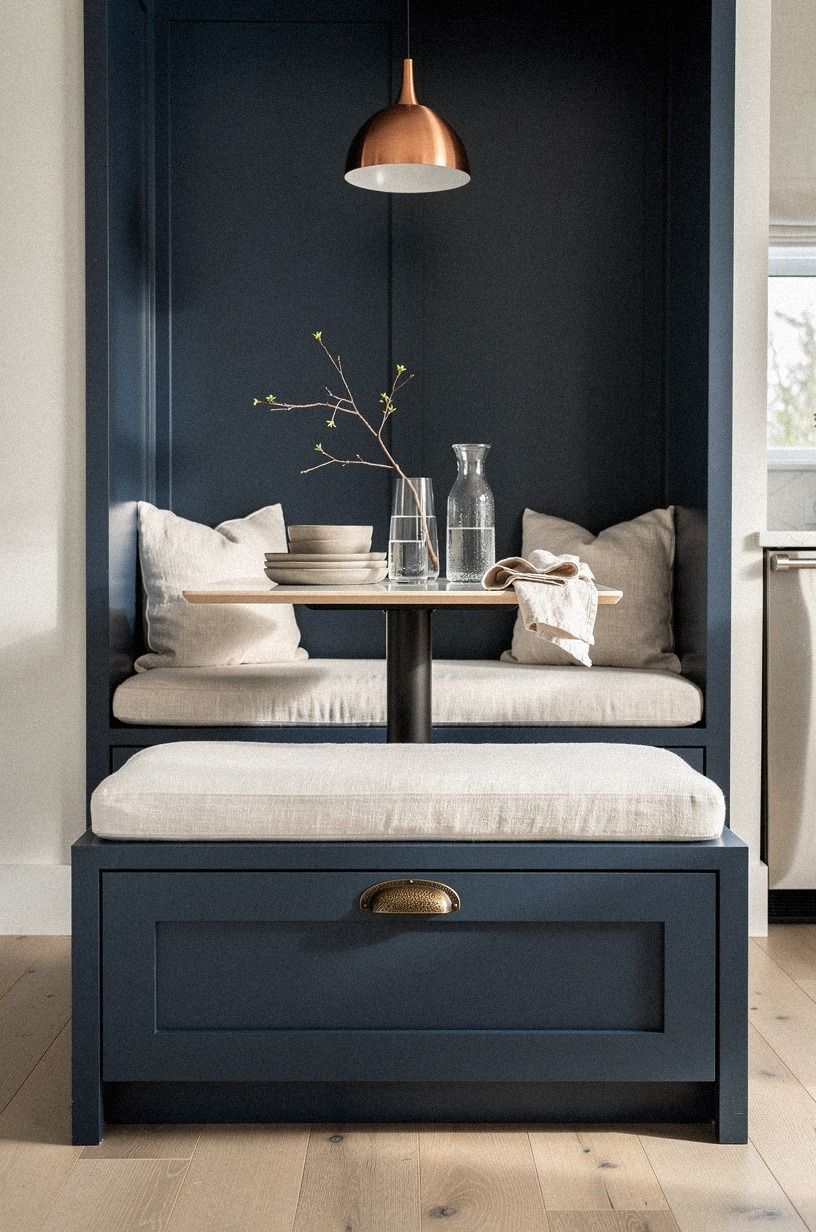
Paint the bench base to match the cabinets if you want the nook to feel built with the room instead of added afterward. This works because your eye reads one continuous block first, then notices the table and textiles layered in front. In the dramatic low-angle image, that color continuity is what makes the symmetrical bench feel crisp instead of pieced together from leftovers.
If your cabinets are pale, use Benjamin Moore White Dove OC-17 on the bench base and let the seat fabric bring contrast. If they're moodier, matching them with paint can be cheaper than veneering the bench in hardwood, and the result still looks custom.
You can see how long-life cabinet colors behave in kitchen cabinet color ideas you ll still love in 10 years. But I wouldn't contrast the base in black unless the room is big enough to absorb that weight.
10Add cafe curtains behind the breakfast table
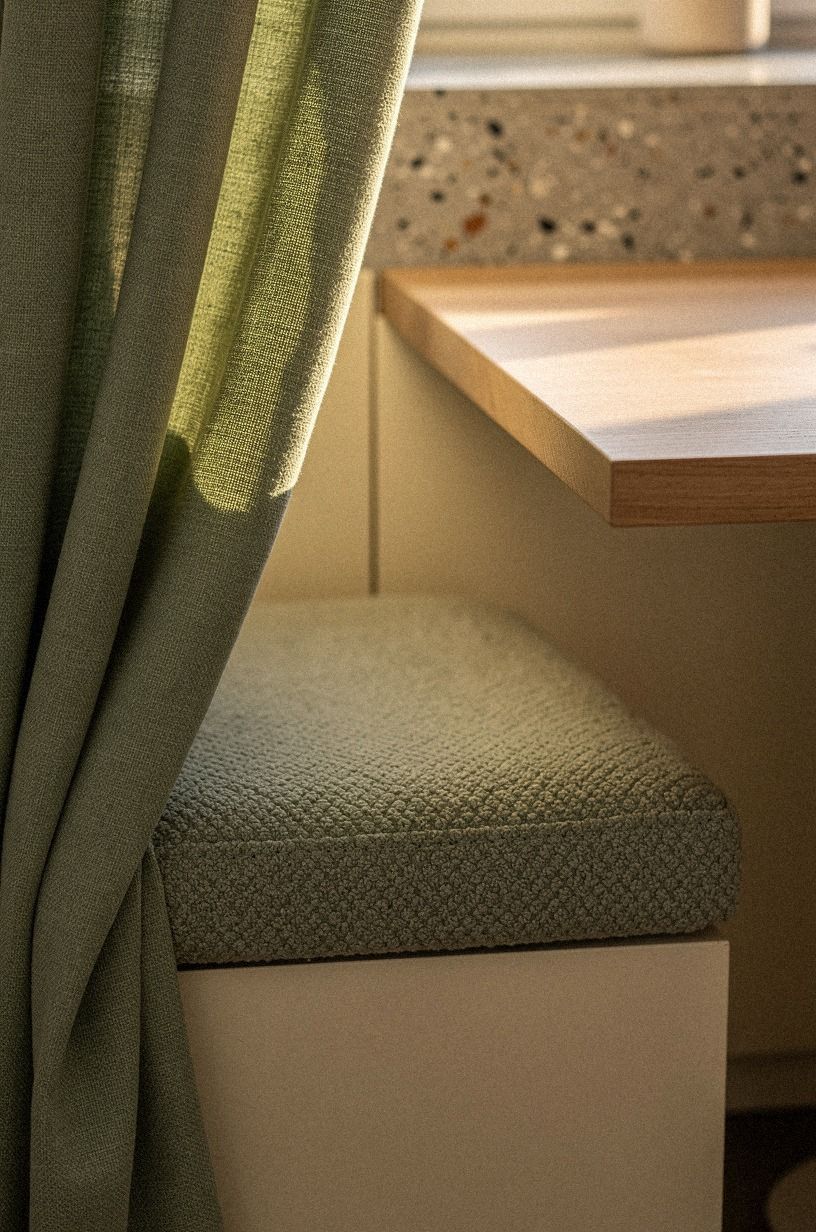
Add cafe curtains if the wall behind the table feels bare or the window light feels too exposed at eye level.
11Install a narrow ledge for mugs
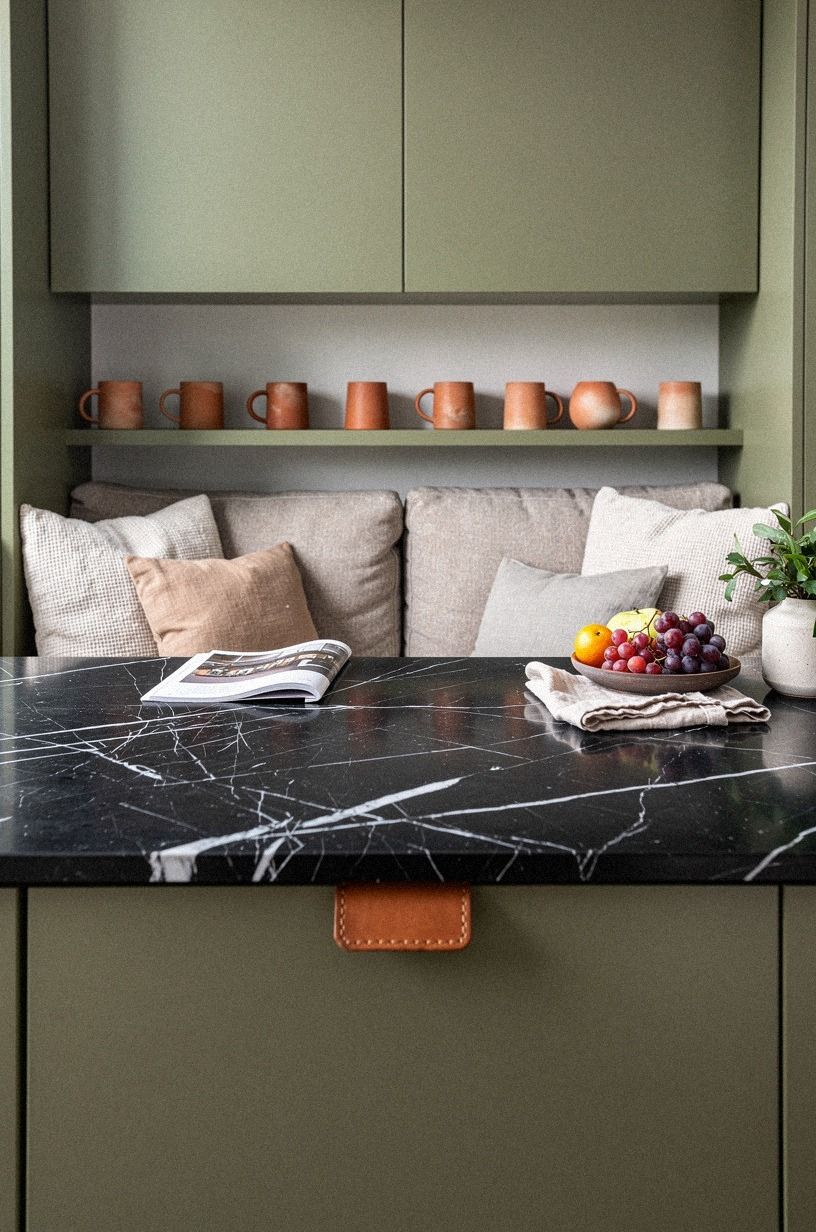
Install a narrow ledge above the bench when you want the nook to feel personal but still tidy. A slim shelf gives you a place for mugs, a sugar bowl, and maybe one tiny framed print, and it does that without the visual drag of a whole cabinet. Looking low across a dark table like the photo, that little line on the wall matters because it draws your eye out horizontally.
I keep the ledge narrow, around 4 to 5 inches, so the objects stay edited and the bench never feels crowded. Against a Nero Marquina marble surface, even a row of simple cream mugs looks sharp. If you love a styled corner but need more ideas for keeping it useful, cozy reading nook ideas has the same balance of display and function.
12Choose a curved banquette for tight corners
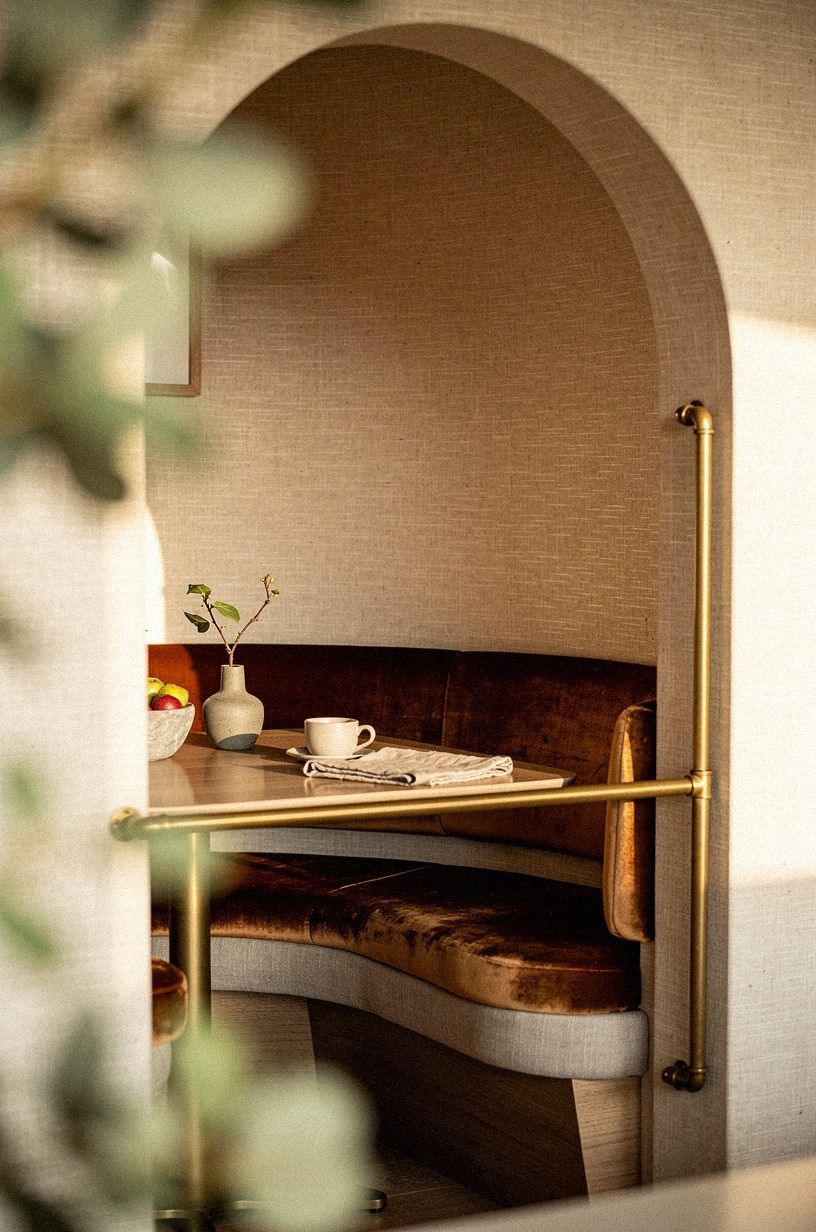
Choose a curved banquette when the corner is tight and every hard angle makes the room feel smaller.
13Slide woven chairs beside the built-in bench
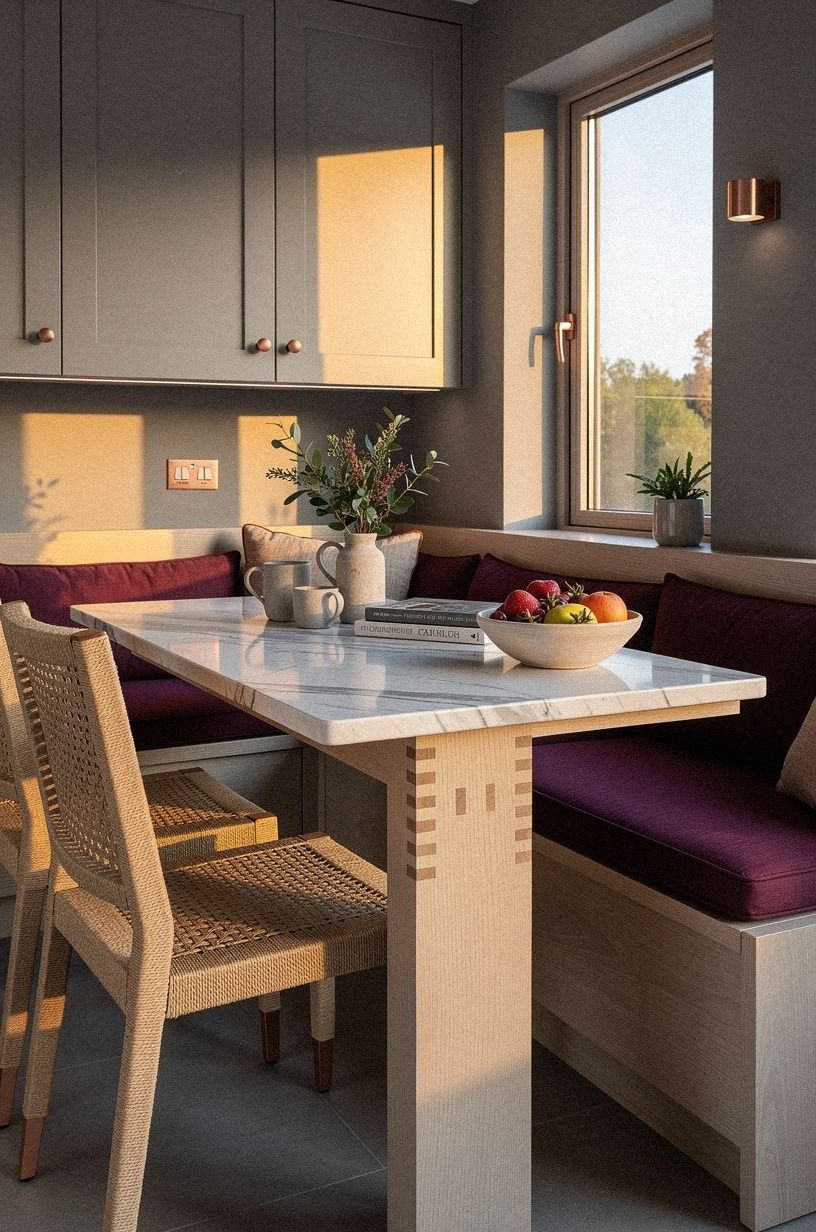
Slide woven chairs onto the open side of the table instead of matching the bench with more upholstery. That contrast is what keeps the nook from feeling too padded, and it gives you flexible seating when more than two people pile in. In the wide diagonal shot, the full table, bench, window, and cabinet run only work because the extra chairs stay visually light.
Choose woven rush chairs or cane-back side chairs that show daylight through the frame. I like them more than chunky upholstered captains chairs here, because you can pull them out fast and they don't crowd the walkway. If your kitchen runs long and narrow, galley kitchen breakfast nook ideas for narrow layouts proves that lighter chairs keep a nook seating in kitchen plan from turning clumsy.
14Mount picture lights over framed kitchen prints
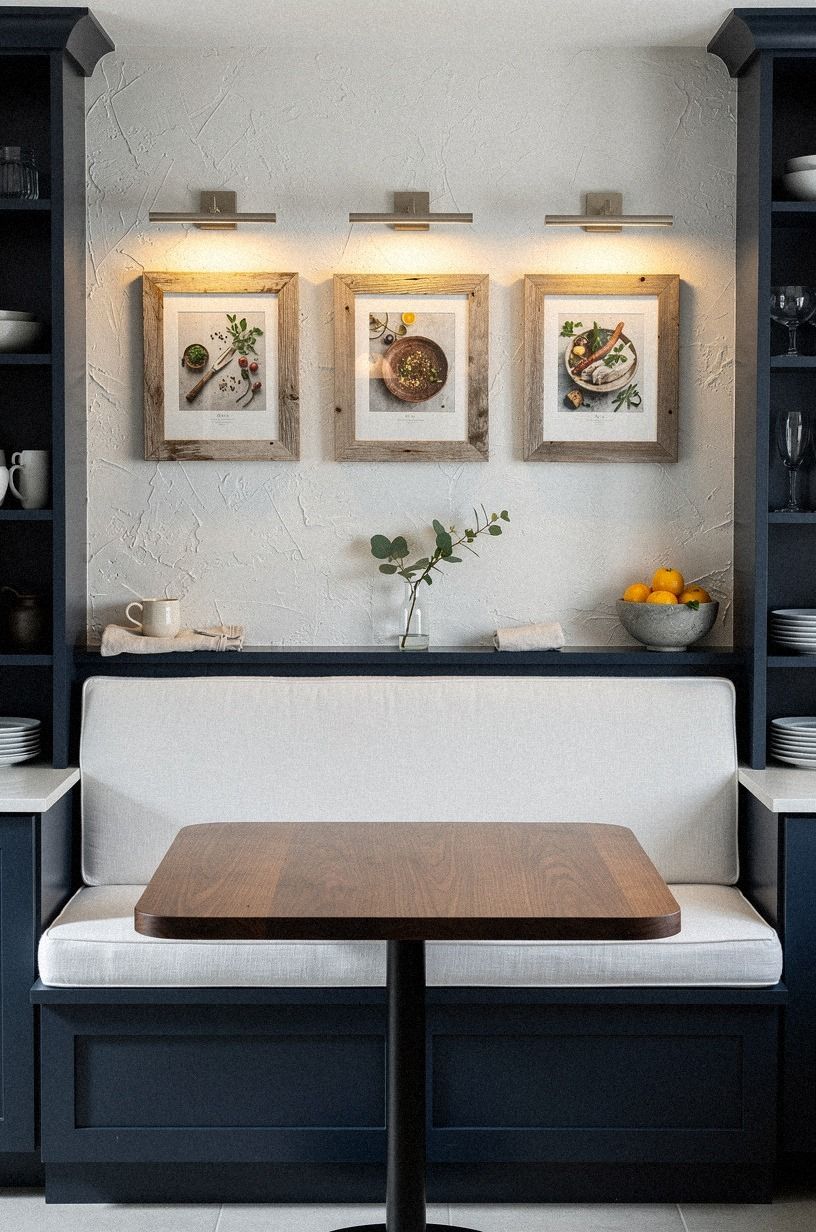
Mount picture lights when the nook wall needs a finished layer after the bench, table, and cushions are already in place. This is the Three-Height Light Stack I come back to over and over: pendant low, daylight middle, picture light high.
You don't need a gallery wall to make it work. Two framed prints above the banquette can be enough if the scale is right.
In the first-person approach shot, the symmetry matters, so center the lights and keep the frames aligned with the bench below. Aged brass picture lights look better here than matte black, which can feel too sharp against soft seating. If you want more cozy-wall ideas that don't get fussy, cozy reading nook ideas is worth a save.
15Finish with a fruit bowl centerpiece
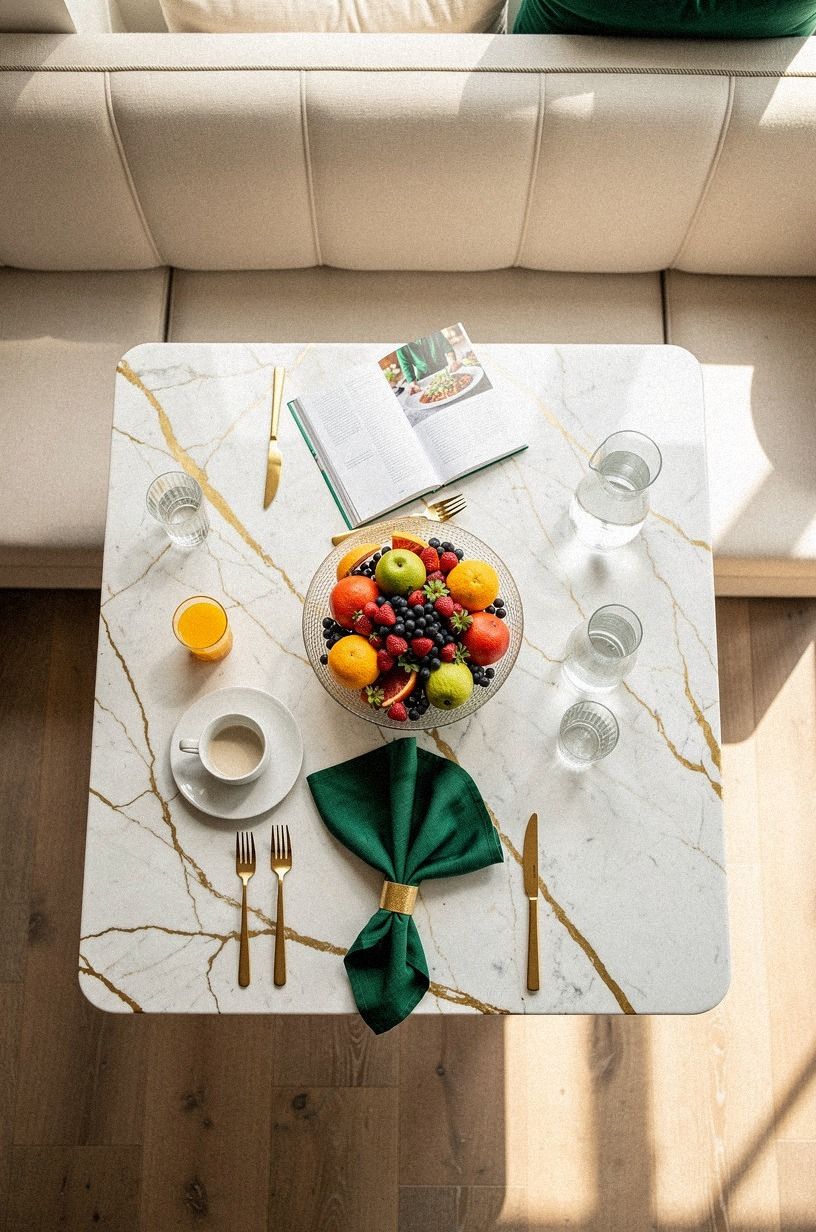
Finish with a fruit bowl, because even a well-built nook can feel a little sterile until something loose and edible hits the table.
Why Does the Window-First Rule Still Win?
If you want my honest framework, a kitchen with a breakfast nook succeeds when it acts like three zones at once: a circulation path, a soft landing, and a tiny stage set for daily life. Miss one, and the whole thing feels off.
I've seen beautiful banquettes fail because the walkway pinched down to nothing. I've seen generous layouts feel weirdly cold because every hard surface matched and the only light came from cans overhead.
And I've seen average cabinetry look far more expensive once the bench, table, and fabric started talking to each other.
This is why I start with the window and the seat before I obsess over the cute part. Morning light tells you where people want to sit. The cabinet line tells you where the bench can grow without blocking the room.
Then the materials start making sense. Maybe that's cerused white oak near the window because the grain catches the soft light.
Maybe that's Farrow & Ball Studio Green No.93 on a nearby accent if you want the nook to feel moodier at dinner. Maybe it's a humble laminate top instead of quartz because the table is the wrong place to spend your biggest dollars.
And here's the money piece nobody respects enough: the expensive part of a kitchen project usually isn't the nook at all. It's cabinets, counters, plumbing moves, and electrical shifts.
A breakfast nook can ride inside a cosmetic budget if you hold the layout steady and spend on the things you touch. Good seat foam.
Durable paint. One pendant that glows warmly.
A table base that doesn't wobble by month three. I learned that the hard way after buying a cheap pedestal that looked fine in photos and drove me insane in real life.
But I'd still argue the nook is worth the attention because it changes behavior, not just looks. You sit longer.
Kids drift in while you're cooking. Someone answers email there at 2 p.m., then comes back for soup at 7.
That's why I don't treat it like a decorative corner. I treat it like the room's emotional hinge.
Get that right, and even a modest kitchen starts feeling generous.
The Questions I Get Asked Most
What is the best 15 Kitchens With a Built-In Breakfast Nook We Love for a small kitchen?
A compact corner bench with a 36 to 42 inch round table is the best fit for most small kitchens because it saves floor space and keeps the path open. Think built-in bench, pedestal base, and one or two light woven chairs. An IKEA table can get you there without crowding the room.
Where can I buy 15 Kitchens With a Built-In Breakfast Nook We Love pieces on a budget?
Start with IKEA, Target Threshold, and Wayfair for the affordable basics, then check Facebook Marketplace for a pedestal table you can repaint. Good buys: woven chairs, milk glass pendants, and washable striped cushions. Used wood tables are often the smartest score because the patina is already there.
How much does a 15 Kitchens With a Built-In Breakfast Nook We Love makeover cost?
A cosmetic nook makeover usually runs about $300 to $1,500, depending on paint, lighting, and whether you build drawers into the bench. Free wins count too. Repainting the base, moving a table you own, and swapping in cafe curtains can shift the whole corner without a big invoice.
Can I create a 15 Kitchens With a Built-In Breakfast Nook We Love on a budget?
Yes, and the cheapest wins are often the visible ones. Painted bench base.
Secondhand round table. New seat cushions in stripe or linen.
If you've got $100, I'd spend it on better fabric, one warmer bulb, and a bowl that makes the table feel finished.
Is a 15 Kitchens With a Built-In Breakfast Nook We Love worth it in a small space?
Yes, especially in a small kitchen, because built-in seating uses the wall better than loose chairs do. Keep the table round, stay honest about the walkway, and don't oversize the bench depth. Smaller rooms reward restraint more quickly than big ones do.
Is 15 Kitchens With a Built-In Breakfast Nook We Love a good idea for a rental?
Yes, if you keep the changes removable and focus on softness instead of construction. Try tension-rod cafe curtains, peel-and-stick beadboard detail, a freestanding bench with storage baskets, and framed art hung with removable strips. You can still get the mood without building into the wall.
Start With the Window Bench Over the Table, the Window-First Rule
If I had to pick one step, I'd start with the window bench. Light decides whether the nook gets used or ignored, and you can't upholster your way out of a dead corner.
Start there. The rest gets easier.