
 by
You can hide your neighbours ugly fence from your side without asking permission, and the strongest fixes start with plants, screens, or lighting that stay on your property. I once chose a climber too close to a fence and spent a summer wrestling tangled stems. Your side can look warm and intentional. You’ll need a plan!
- Layer evergreen screens for year-round privacy from neighbours
- What makes the Two-Wood Rule work with warm vertical slats?
- Float a freestanding trellis for hiding ugly fences
- Paint the fence side with a darker garden backdrop
- Hang the Three-Height Light Stack for a softer boundary
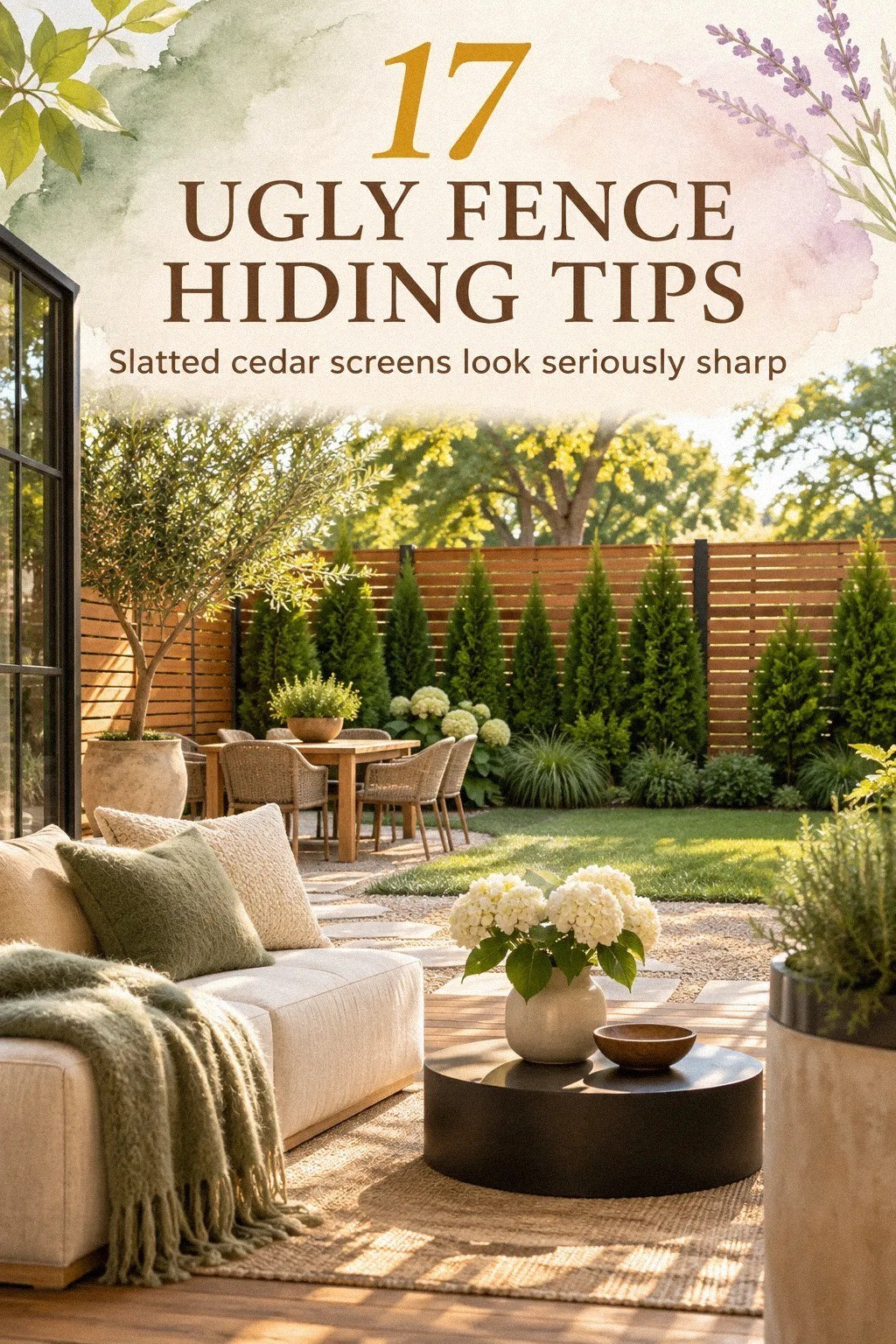
- Swap a solid screen for woven willow panels
- Anchor the view with a tall planter grouping
- How does the Soft Boundary Method keep foliage from becoming a wall?
- Frame the fence with a painted garden arch
- When do gravel, grasses, and stone work best for a dry garden edge?
- Place a pergola where your eye wants to rest
- Use outdoor curtains instead of another hard wall
- Paint a mural that pulls attention forward
- Arrange furniture to steal the sightline
- What will the real costs look like before choosing your screen?
- Create the Small-Space Shadow Screen
- Layer a rental-friendly screen without asking permission
1Layer evergreen screens for year-round privacy from neighbours
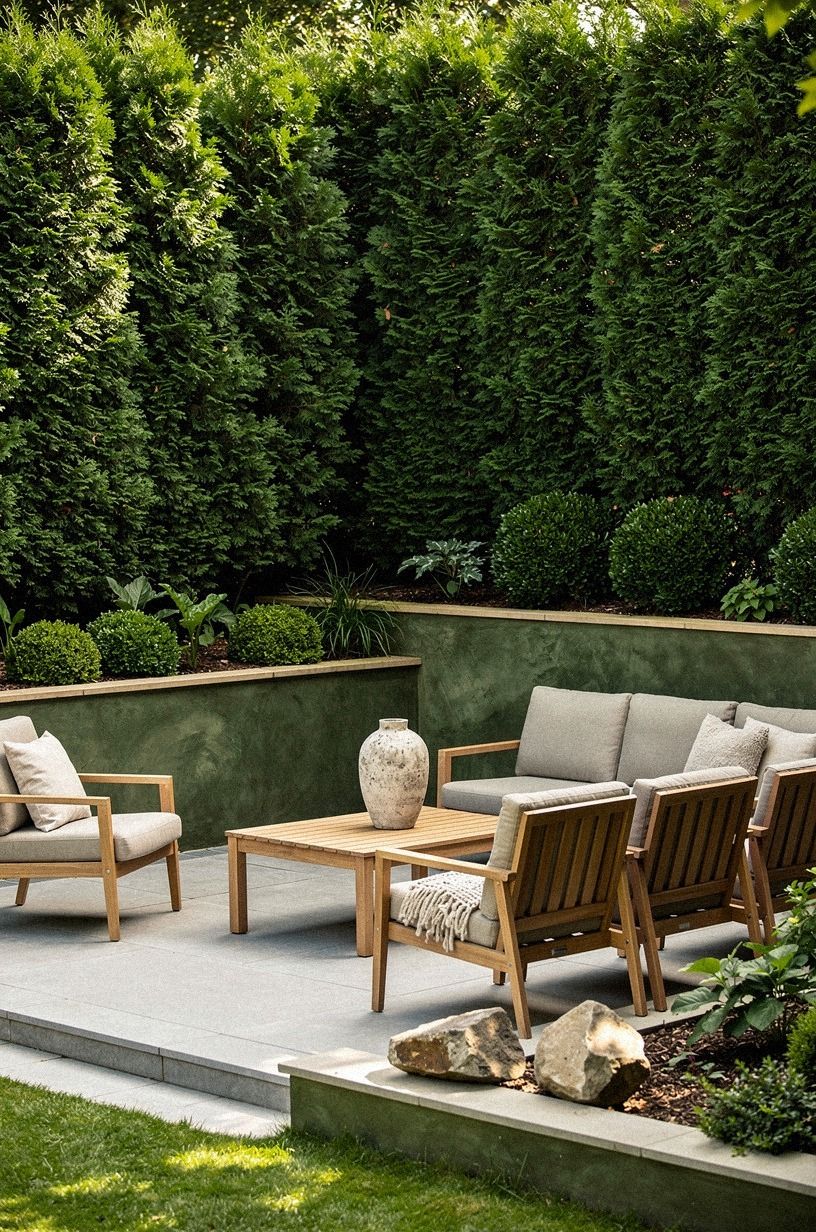
Evergreen planting gives you a soft wall that doesn’t disappear in January. I like Thuja Green Giant or clumping bamboo in large planters because your view gets quieter without turning the yard into a solid hedge. Leave enough room for mature width, or you’ll be pruning against the fence every weekend.
Choose pots with drainage, frost resistance, and a footprint you can move. Your best arrangement isn’t a ruler-straight row. Stagger three heights instead, with one taller plant hiding the worst panel and two shorter plants breaking up the base.
A forest green plant, rust-colored pot, and natural oak stool create a warmer combination than a row of matching containers. If your wall or garden structure has a hand-applied Venetian plaster finish, let its gentle texture sit behind the planting instead of adding more pattern.
If you’re renting, large resin planters are easier than digging. For more permanent privacy, compare the structure of these wood privacy fence ideas for classic backyard seclusion. The same vertical rhythm works beautifully with your own containers, even when you can’t touch the boundary.
I’d skip a single narrow hedge. It’ll look thin from your patio and won’t cover the ugly sections evenly. A layered screen feels fuller, calmer, and more generous from the chair where you’ll actually sit.
Typical cost by tier (US averages):
2What makes the Two-Wood Rule work with warm vertical slats?
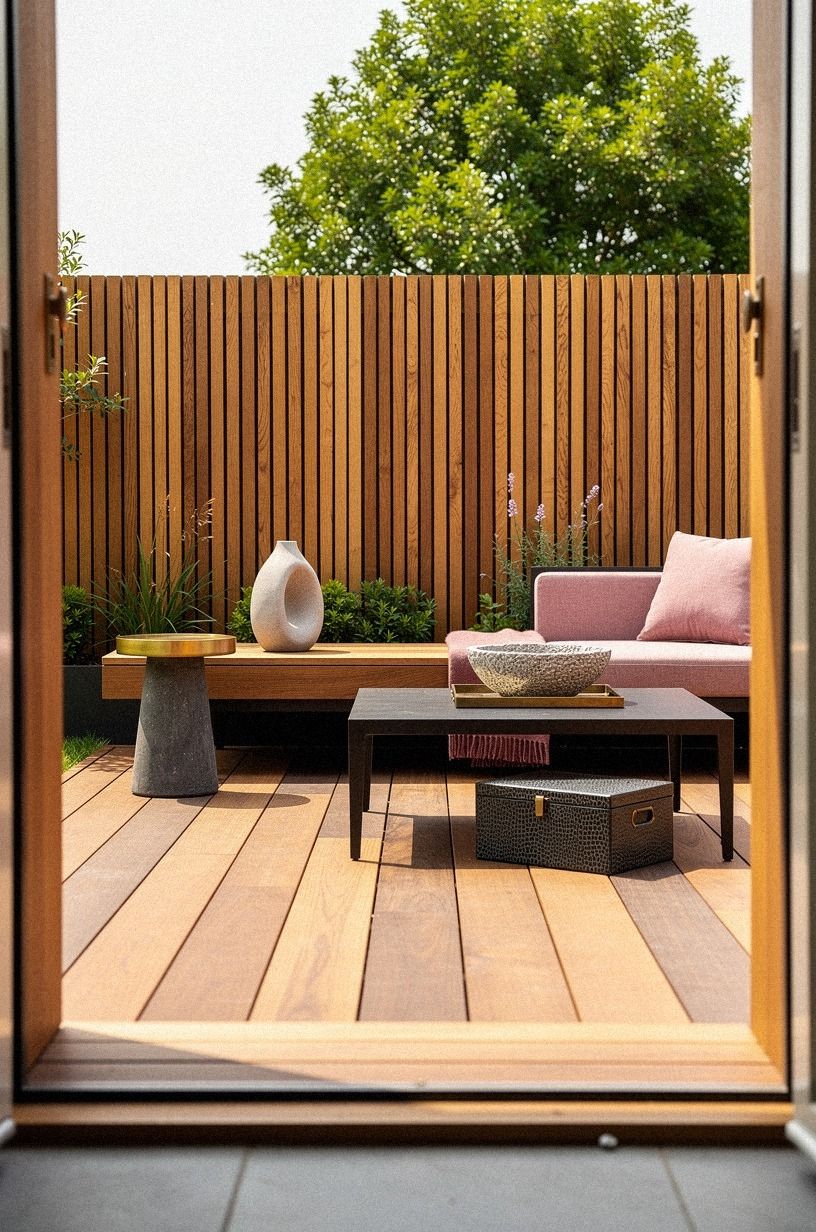
The Two-Wood Rule keeps a fence screen from looking like a random collection of boards. Pair dusty rose, charcoal, and brass with restrained shagreen accents so the warm slats feel considered rather than overly rustic.
3Float a freestanding trellis for hiding ugly fences
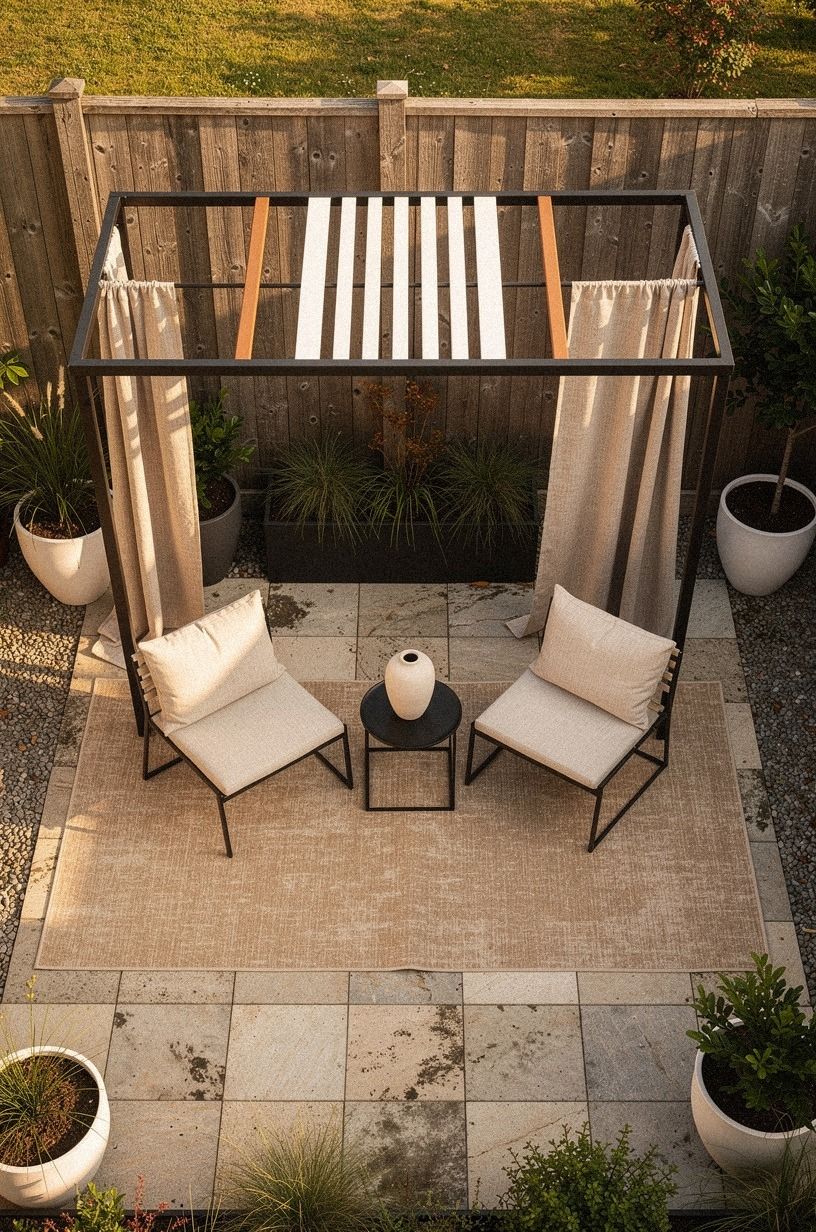
A freestanding trellis creates distance between you and the fence, which matters more than people expect. I’ve found that even a 12-inch gap can make a stained panel recede because your view lands on leaves, shadows, and the trellis grid first.
Use a washed Belgian linen panel in warm white and camel, with black accents for a sharper modern yard. Your trellis can support jasmine, clematis, or a climbing rose, but check the mature weight before you buy. A heavy vine needs a stable base, and a wobbly screen will make your yard feel unfinished.
Set the trellis in two large planters rather than burying it in concrete. That keeps your layout flexible, especially if you’re working around a walkway. You’ll want at least 36 in of clear passage where people walk.
I’d avoid placing a dense vine beside your dining chair. It’ll snag sleeves and steal the space you were trying to improve. Think of the trellis as a graceful front layer, similar to the freestanding approach used in these rental-friendly curtain ideas.
4Paint the fence side with a darker garden backdrop
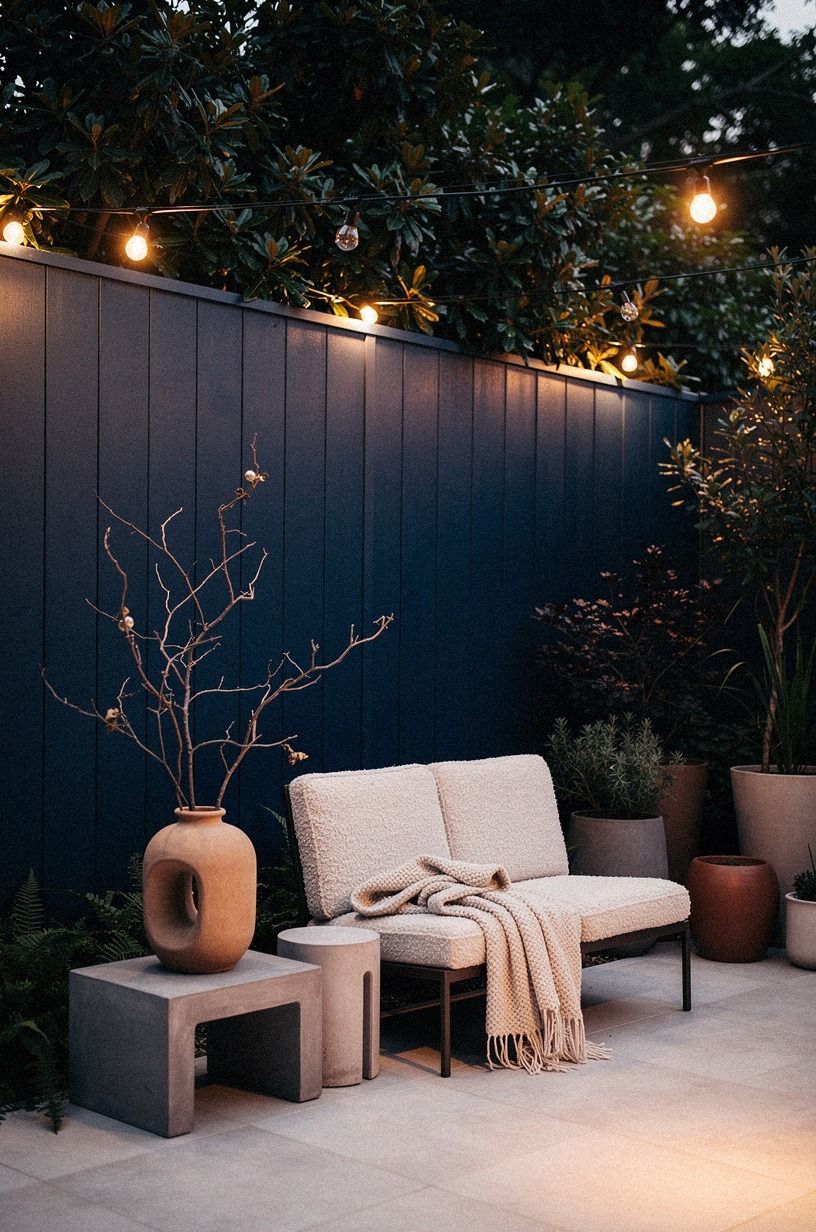
Dark paint can make an ugly fence fade behind your planting. Farrow & Ball Hague Blue gives you a deep midnight-blue backdrop, while Benjamin Moore Hale Navy HC-154 works when you want a slightly softer blue. Your choice should follow the light, the surrounding foliage, and the mood you want after sunset.
Before you paint, check local boundary rules and make sure you’re coating only a surface you own or have permission to alter. I’d use Sherwin-Williams Emerald Exterior on your own panels because outdoor moisture exposes weak paint quickly. Clean first, let the boards dry, and test a sample in morning and evening light.
But a dark fence won’t solve a cluttered yard by itself. Your pots, chairs, and cushions need a little contrast, or everything will flatten into one shadow.
Add copper planters, ivory textiles, or an organic bouclé cushion. I made the mistake of using black furniture too, and my small patio looked like a storage corner after sunset.
For a richer visual reference, the planting-and-screening logic behind these wood privacy fence ideas can help you judge how much background your garden really needs.
5Hang the Three-Height Light Stack for a softer boundary
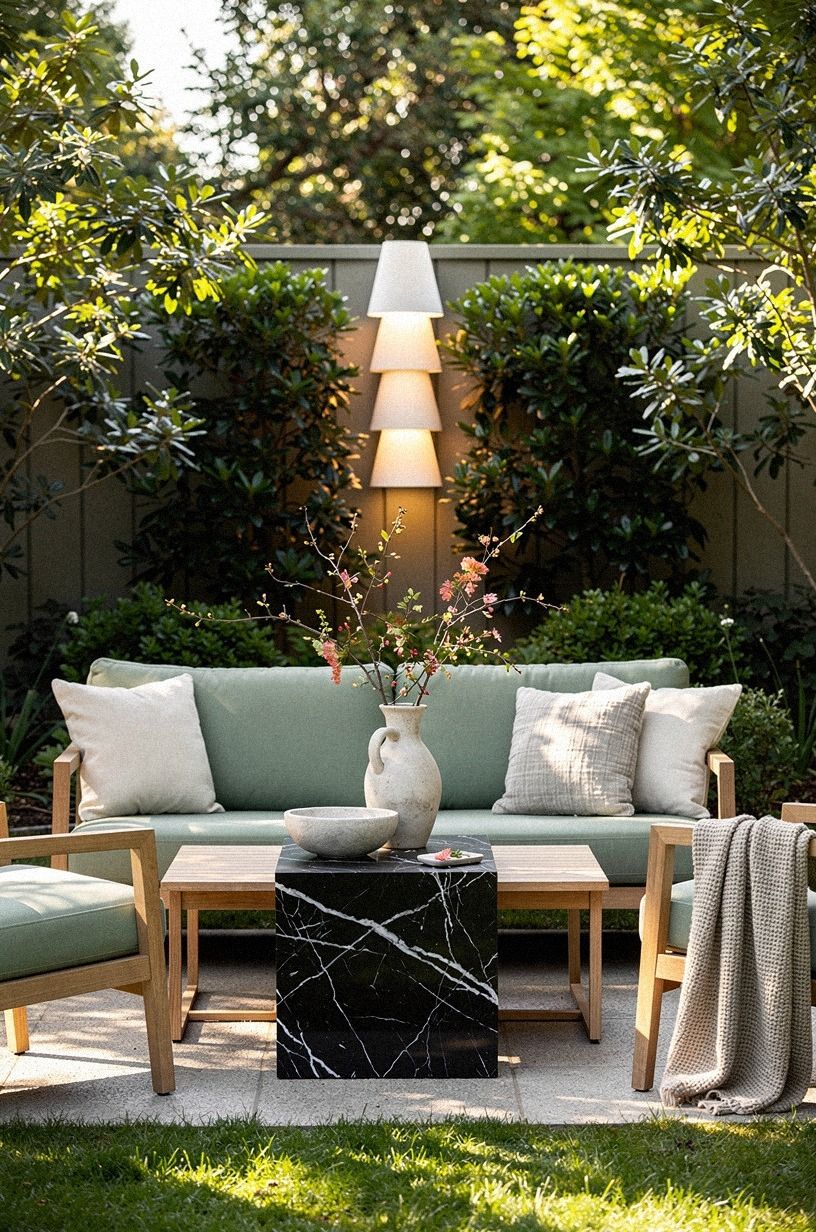
The Three-Height Light Stack makes your fence disappear after dark by giving your eye better things to follow. Put low solar lights near the path, medium lanterns on planters, and one taller glow behind the seating area. Your fence becomes background texture instead of the main event.
Choose warm LED string lights with a soft amber tone, not icy blue bulbs. LED string lights typically cost $30-$120, and you’ll get more atmosphere from fewer well-placed strands than from covering every inch. Your lights should illuminate leaves and table edges, not shine straight into the neighbour’s windows.
A sage green planter, warm cream cushion, and natural wood stool will keep the arrangement gentle during the day. If you want one substantial accent, a Nero Marquina black marble tray with white veins adds contrast without competing with the light.
You don’t need an electrician for a portable arrangement. I’d use a timer and weighted bases so your setup stays tidy during wind. This warm layered-lighting reference also demonstrates the value of combining low, middle, and high points of glow.
Keep your own lights low and considerate. A gentle pool of light feels intimate and flattering. A bright floodlight makes the whole yard feel exposed.
6Swap a solid screen for woven willow panels
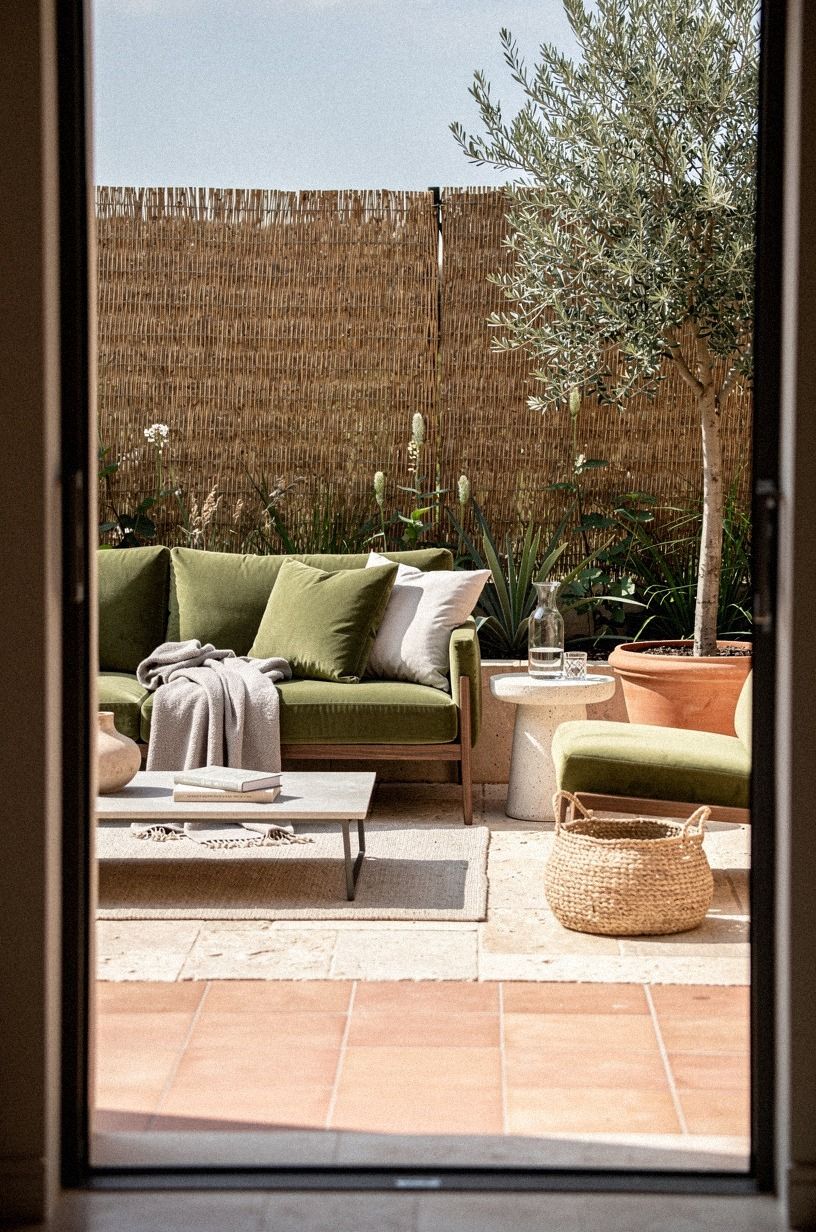
Woven willow or hazel panels hide a bad fence without making your side feel boxed in. The irregular branches soften straight lines, and your eye catches the small gaps instead of staring at peeling boards. I like natural willow screening when the yard needs an earthy, relaxed note.
Attach the panels to your own posts with outdoor-rated ties or battens. You’ll want the bottom lifted slightly above damp soil so water can drain and the material can dry after rain. Your screen will last longer when it isn’t sitting in wet leaves.
Build the palette around terracotta, stone, and olive rather than adding more brown. A deep-pile mohair velvet cushion can bring softness to a sheltered seat, while a stone-colored planter keeps the willow from feeling too rustic.
I’d skip fake ivy here. It tends to shine under daylight, and your fence will still look artificial beneath it.
Real texture gives your side more depth. If you’re also improving a rental, the reversible thinking in these cheap countertop cover ideas translates well to outdoor screening: use removable layers that solve the view without creating a permanent commitment.
7Anchor the view with a tall planter grouping
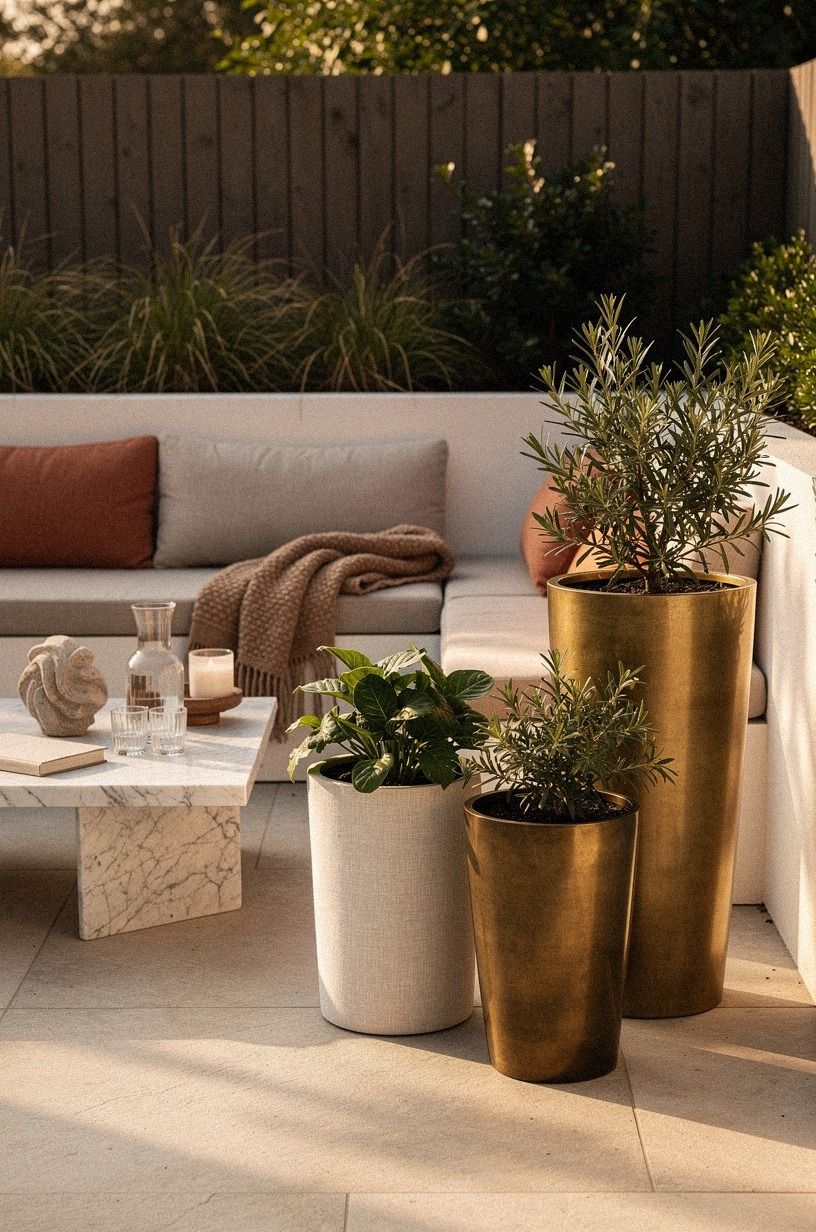
Tall planters work when you can’t build, paint, or plant directly along the boundary. Arrange one large pot, two medium pots, and a low bowl so your screen has an intentional rhythm. Your best grouping will cover the fence at eye level from the chair, not necessarily from the whole yard.
Choose fiberstone planters if you want the look of concrete without the full weight. Fill them with ornamental grasses, olive trees, or clipped evergreen shrubs, depending on your climate.
A clay planter, linen cushion, and aged brass detail will make the grouping feel warmer. For one refined accent, use a Carrara marble bowl with subtle grey veining.
I’d keep the tallest container near the ugliest fence section and lower the profile near your doorway so your entrance still feels open. But don’t crowd your path. A walkway needs at least 36 in of clearance, and your future self will notice every lost inch while carrying groceries.
If you’re styling a compact rental patio, look at these curtain-based concealment ideas for the same principle: cover the visual problem while keeping access simple.
A grouping also gives you a cheerful focal point. You can change the plants seasonally without rebuilding the entire boundary.
8How does the Soft Boundary Method keep foliage from becoming a wall?
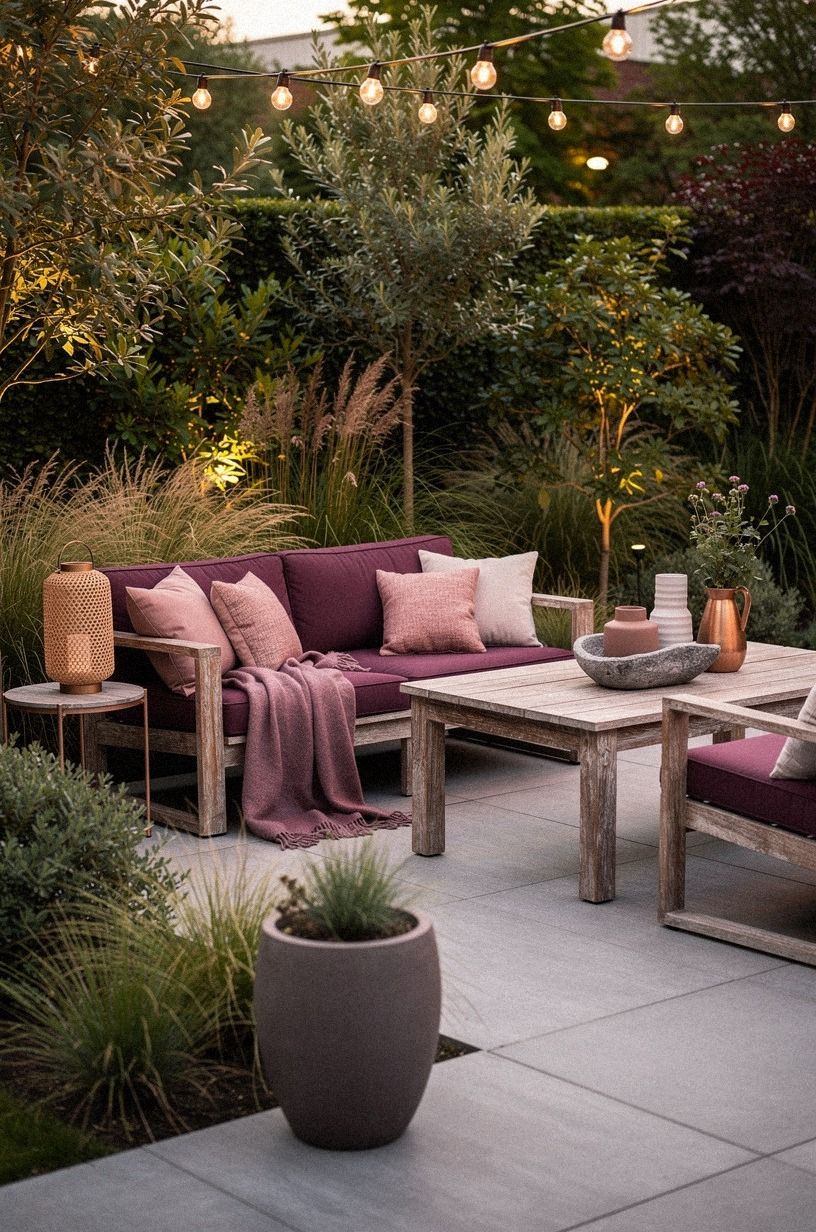
The Soft Boundary Method uses foliage in front of a hard fence, but it doesn’t try to make a perfect green wall. Plum foliage, grey containers, and a small rose-gold detail keep the arrangement soft, while reclaimed weathered teak adds age without making the boundary feel heavy.
9Frame the fence with a painted garden arch
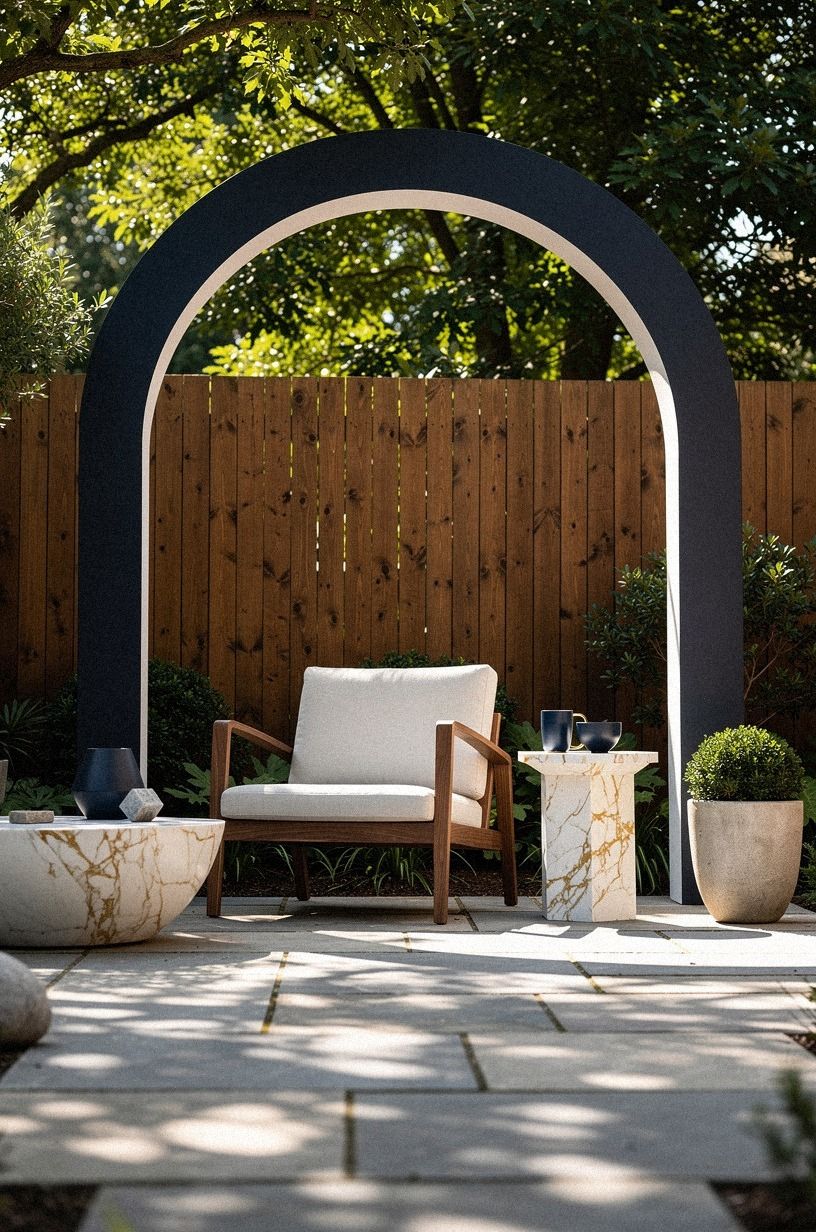
A garden arch gives your eye a doorway, which is a powerful way to stop noticing an ugly boundary. Place it at the transition between patio and planting area, then train one vine over the top. Your fence becomes the background to a destination rather than the view itself.
Use Farrow & Ball Exterior Eggshell on a timber arch if you want a richer finish, or choose a powder-coated metal frame for less maintenance. Navy paint, white flowers, and a walnut bench create a composed contrast. A small Calacatta marble detail with gold veining can echo the warmth without making the arch feel ornate.
Make sure the opening remains wide enough for furniture and garden tools. A narrow arch looks charming until you try to carry a table through it. You’ll also want to anchor the feet properly, especially in a windy yard.
I once placed a lightweight arch in loose soil, and it leaned toward the fence after the first storm. Weighted planters or concealed ground anchors create a much more reassuring foundation. For another warm boundary reference, revisit these wood privacy ideas and look for repeated framing details.
10When do gravel, grasses, and stone work best for a dry garden edge?
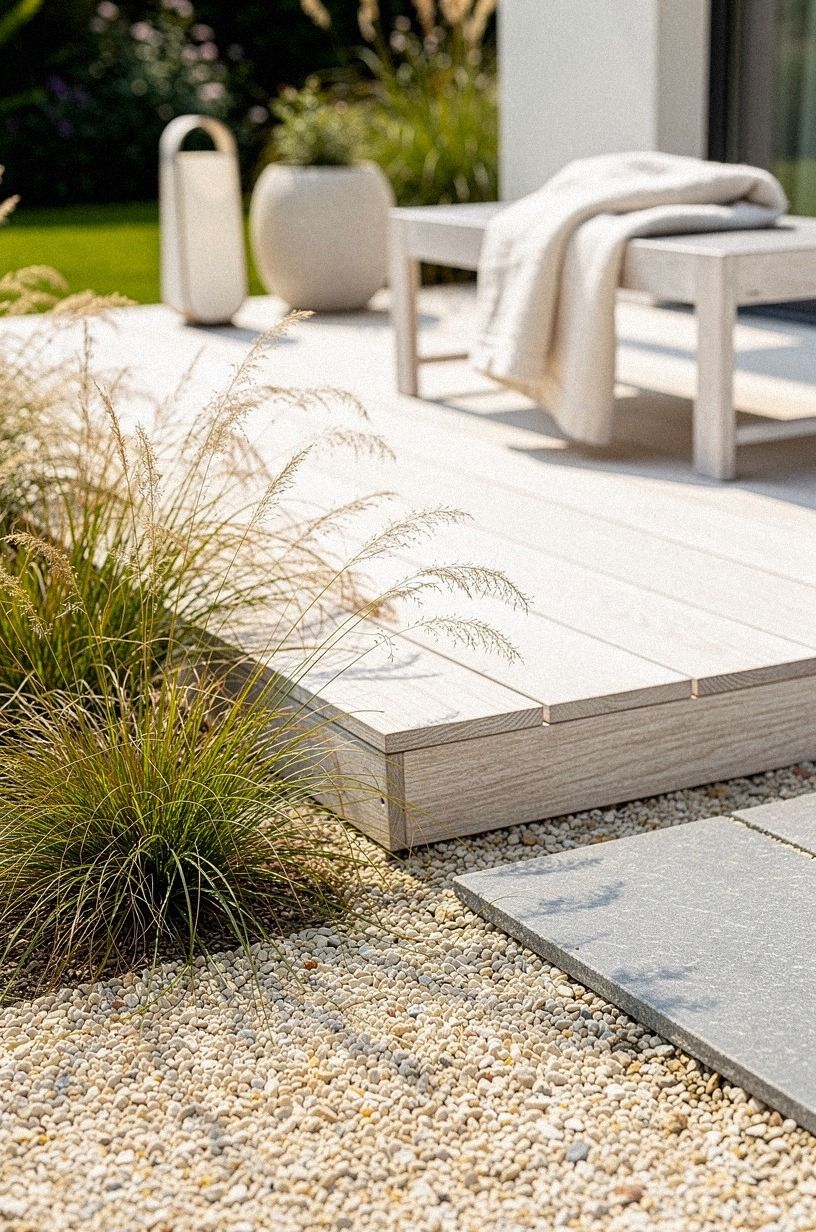
A dry garden edge distracts from an ugly fence because it gives the lower half of your yard a finished visual line. Emerald planting, gold-toned accents, and cream gravel look especially settled beside cerused white oak, whose pale grain keeps the arrangement from becoming too dark.
11Place a pergola where your eye wants to rest
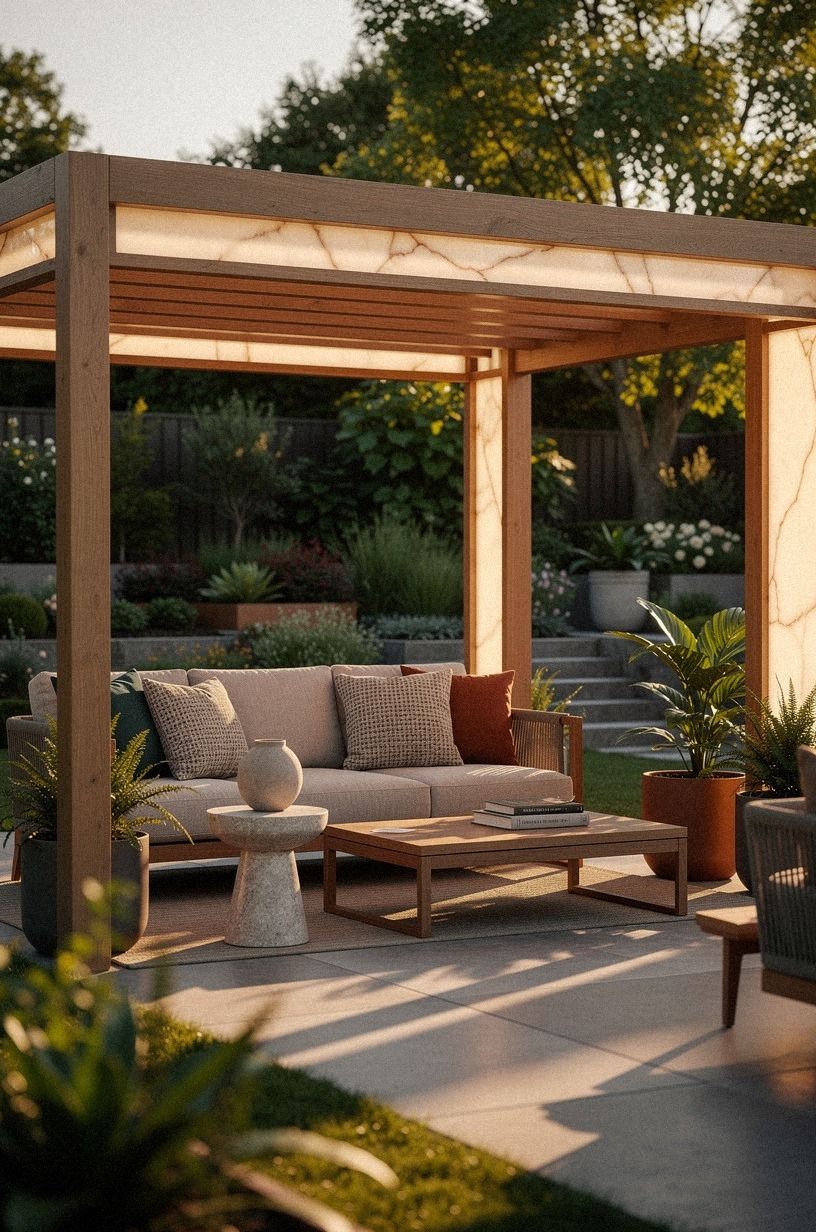
A pergola can hide the worst fence section by creating a strong overhead line. Put your dining table or lounge chairs beneath it, then allow the roofline to become the main shape in your view. You’ll be looking toward shade, lights, and fabric instead of weathered boards.
A compact pergola doesn’t need to cover the entire yard. Use natural oak beams with rust-colored cushions and forest green planting over the seating zone.
For one memorable detail, use backlit translucent onyx near the seating area, provided it is properly rated and protected for outdoor use. Your fabric should be exterior-rated and easy to remove before storms.
Check property lines, height rules, and the support method before you build. You don’t want a visual solution becoming a permit problem. For a lighter version, use a freestanding West Elm Portside outdoor console and a market umbrella.
It won’t cover the whole fence, but your seating zone will feel intentionally placed.
The best pergola is a destination. These reversible screening ideas can help if you want the same anchored feeling without a fixed structure.
12Use outdoor curtains instead of another hard wall
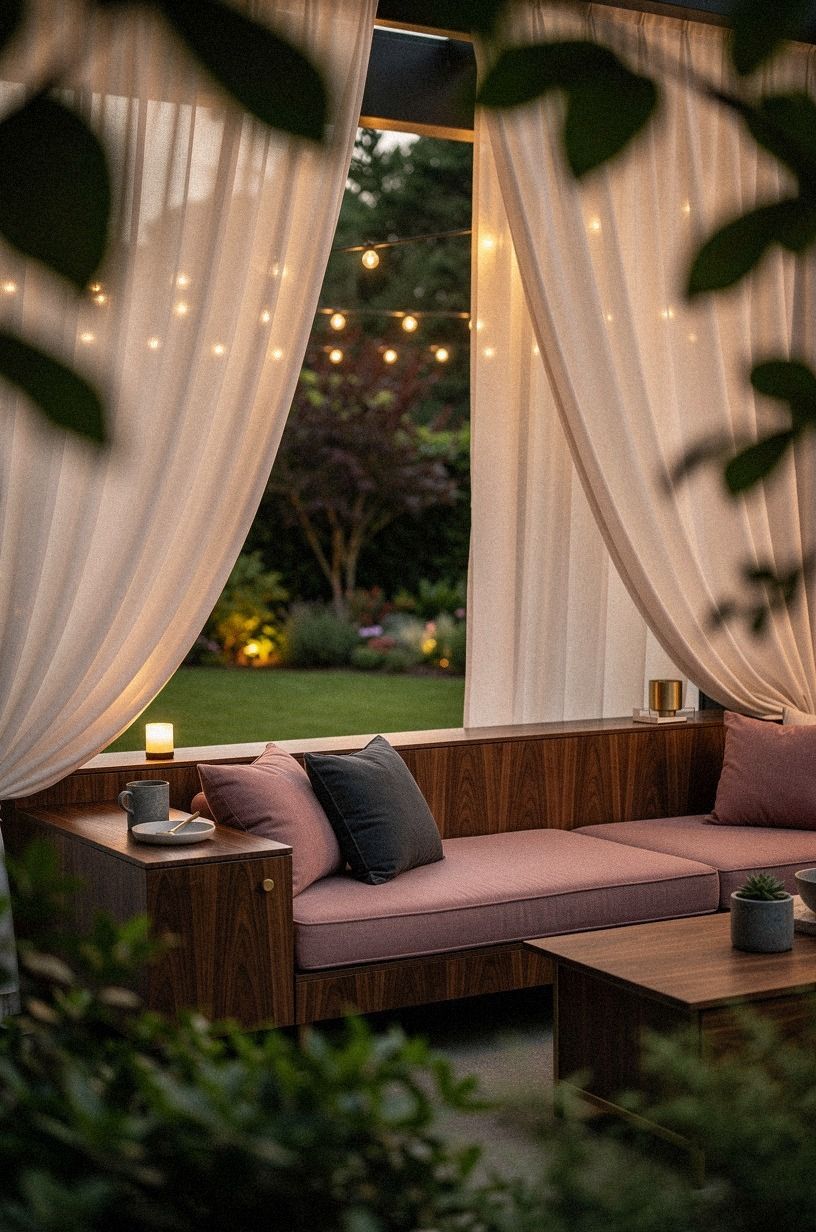
Outdoor curtains are one of the fastest ways to hide unsightly fences when your problem is concentrated around a patio. Hang Sunbrella fabric panels from a freestanding frame or tension-style outdoor structure, then pull them aside when you want more air. Your yard gets privacy without another solid surface.
Choose dusty rose or charcoal panels, then add brass hardware for warmth. A book-matched walnut console or narrow table can repeat the grain nearby without competing with the curtains. You’ll want enough fullness for the fabric to fold, rather than hang like a flat sheet.
You can remove the panels when the weather turns rough. I’d never leave lightweight curtains flapping through a winter storm because the hardware will suffer first. If your outdoor zone is attached to a rental, the same removable thinking used in these cheap countertop covers for an ugly rental kitchen can help you choose reversible materials.
Curtains are especially effective beside a dining table because they soften the hard boundary close to your shoulder. They also create a relaxed, almost vacation-like atmosphere when they move gently in the breeze!
13Paint a mural that pulls attention forward
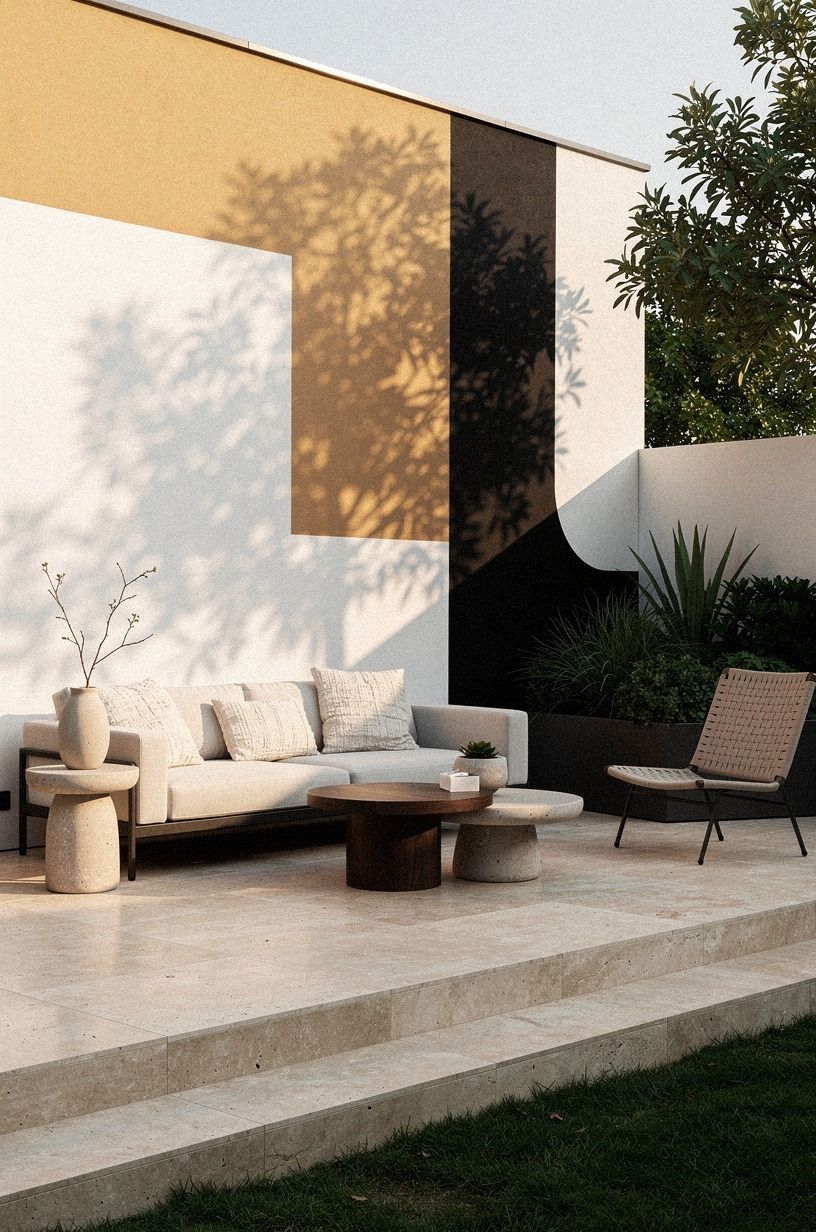
A mural works when your fence is plain, stained, or visually harsh but structurally sound. Paint a large botanical shape, a quiet arch, or an abstract pattern that points toward the garden rather than trying to imitate a distant landscape.
A simple design is easier to live with than a detailed scene. Try warm white, camel, black, or a restrained mix of those shades in broad shapes. A warm travertine planter or table can soften the contrast, while repeating one colour in your cushions keeps the arrangement cohesive.
Use exterior masonry or wood paint suited to the surface, and test the colours in the exact light where they’ll live. Your fence may look cool and grey in the morning, then warm and golden at sunset. A mural should respond to those changes.
If you prefer a less permanent art direction, hang a removable painted panel from your own structure. These wood garden screen references can help you think about scale, rhythm, and how a strong front layer changes a boundary.
14Arrange furniture to steal the sightline
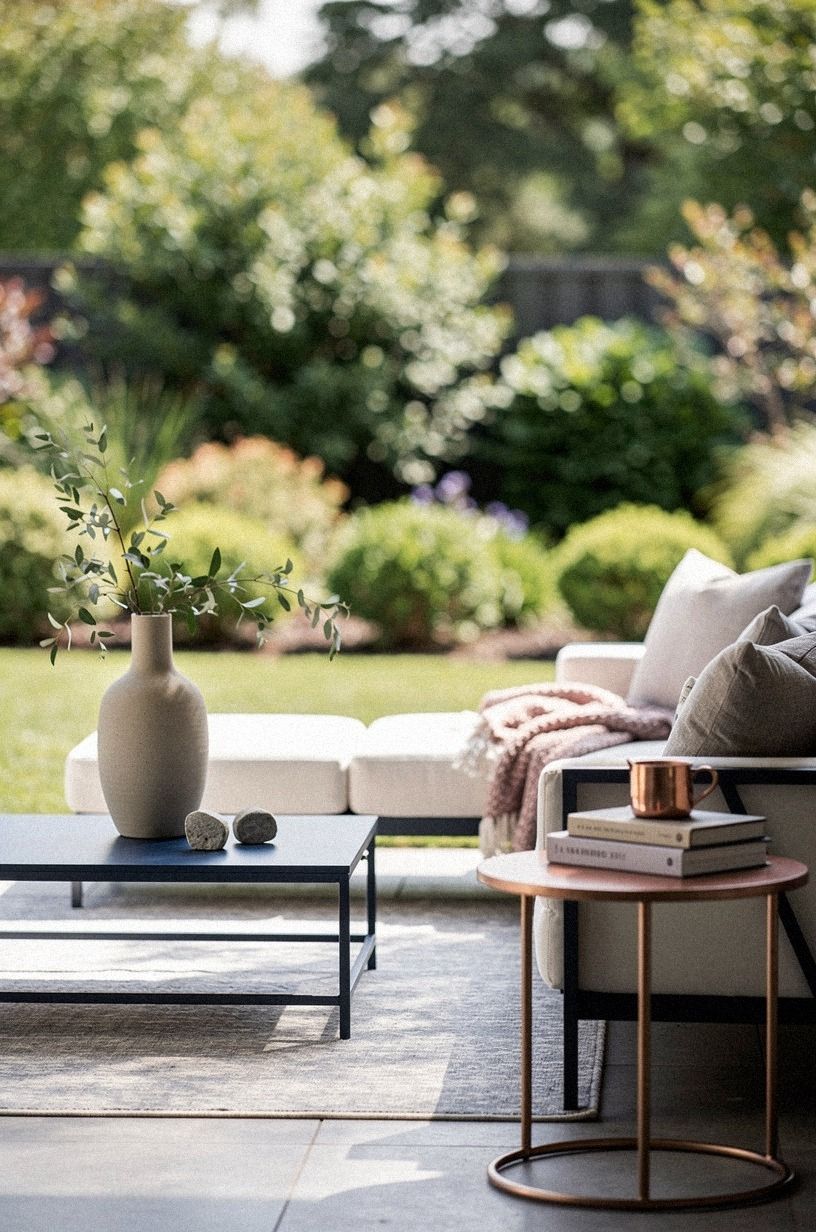
Sometimes the most affordable way to hide your neighbours ugly fence is to change where your body and furniture face. Turn the seating toward midnight blue planting, copper accents, and an ivory cushion, then add one piece of unlacquered brass that can develop a natural patina.
15What will the real costs look like before choosing your screen?
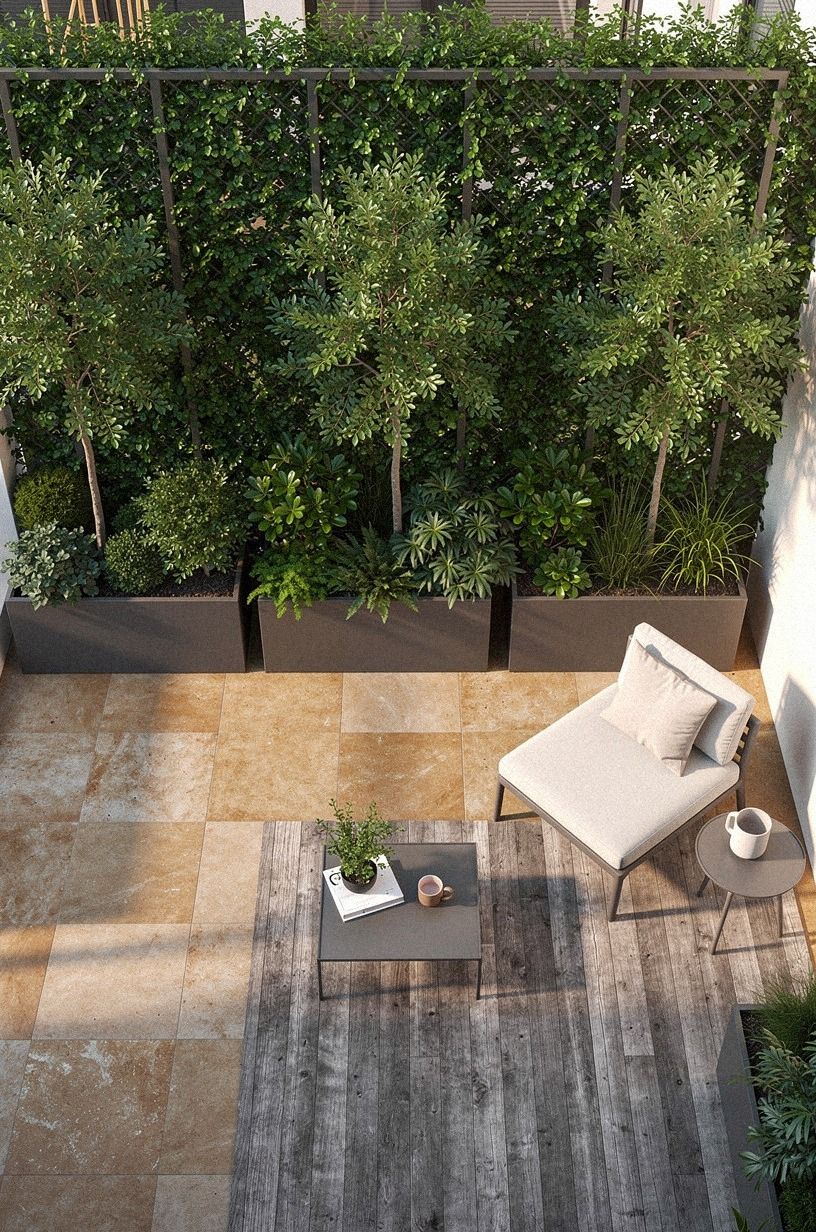
The right budget depends on whether you’re softening one sightline or rebuilding the entire outdoor room. Measure the area from your main chair first. You may only need to improve six feet of fence, which can save a surprising amount.
A budget screen can still feel polished when the materials repeat. Sage green planting, warm cream textiles, and natural wood create a gentle base. If you want more texture, an oversized-chip terrazzo side table or planter can add interest without requiring a full renovation.
Before spending, compare your plan with these classic fence-screening ideas and review reversible cover solutions for smaller interventions. You’ll see where a modest change can carry the entire view.
16Create the Small-Space Shadow Screen
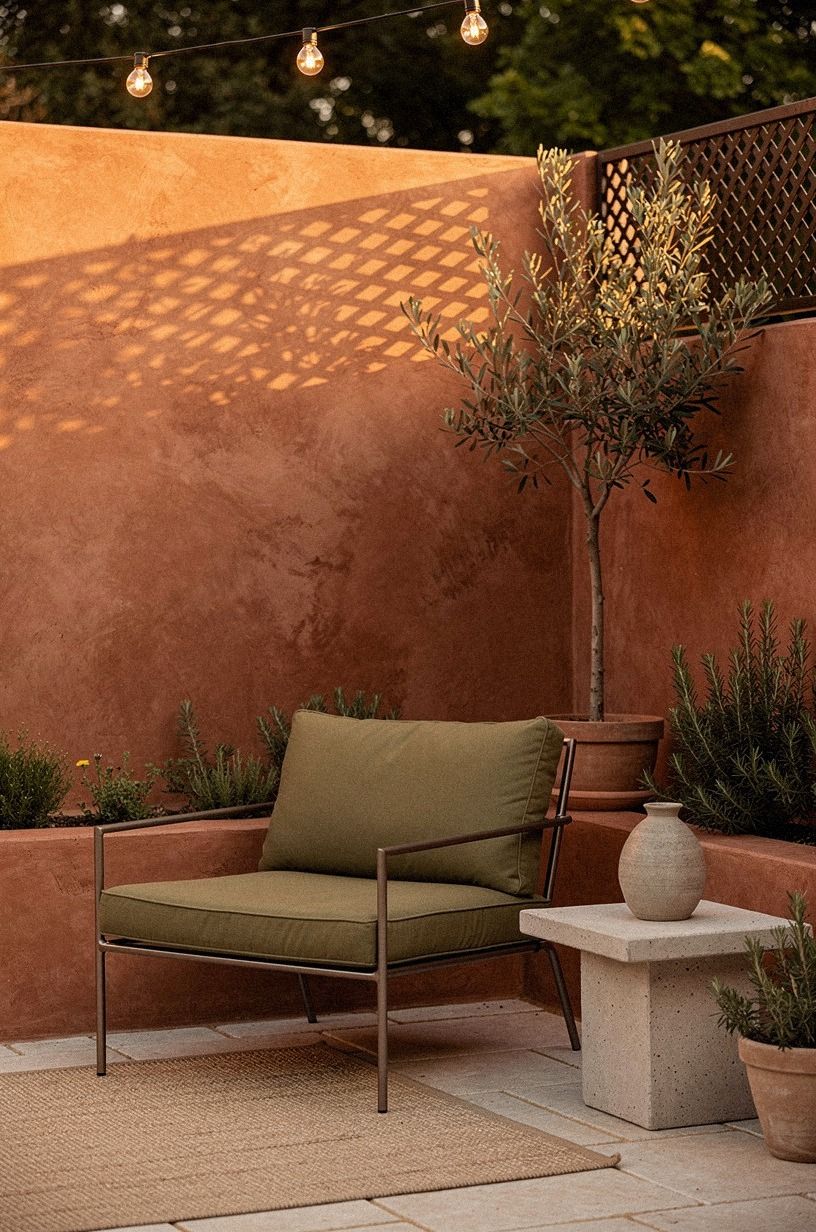
The Small-Space Shadow Screen uses a narrow trellis, a terracotta or olive-toned panel, and one light source to make a compact yard feel deeper. A small patch of hand-applied Venetian plaster can add quiet texture where a large pattern would overwhelm the space.
17Layer a rental-friendly screen without asking permission
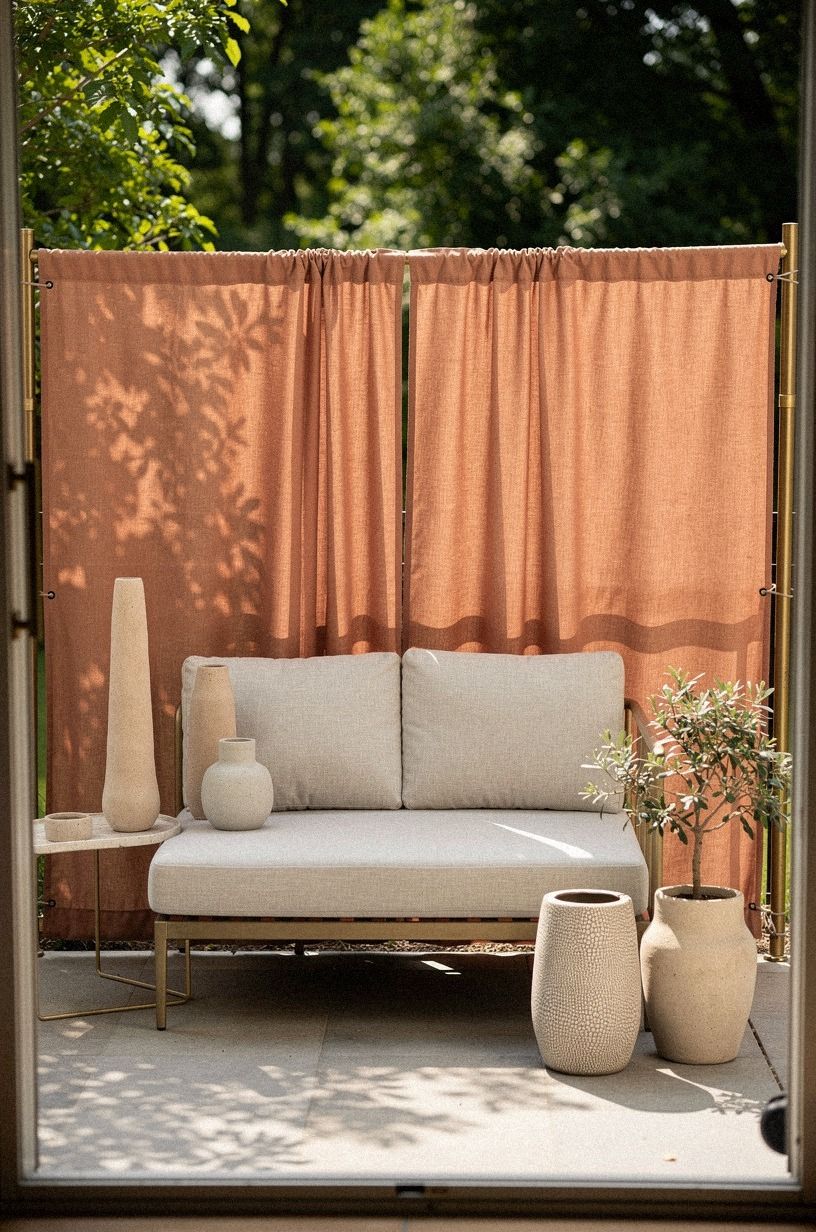
A rental-friendly screen can combine weighted planters, a freestanding trellis, outdoor curtains, and removable lighting. Your fence stays untouched, while your side gets privacy and colour. I’d start with the piece that blocks your main seated sightline, then add smaller layers only if they solve a real problem.
Choose Article outdoor seating or a second-hand patio set, then repeat clay, linen, and aged brass through the arrangement. A small shagreen accent, such as a tray or wrapped side table, adds texture without attaching anything to the fence. Weighted bases matter because your screen must remain stable in wind.
You’ll also want removable ties, outdoor-rated hooks on your own structure, and containers with drainage trays. But don’t cover the boundary so completely that air stops moving. Your yard needs breathing room, and your neighbours shouldn’t feel as if a wall appeared overnight.
The same reversible approach used for these budget rental upgrades can keep your project flexible. If the fence is a landlord issue, begin with furniture placement, planters, and lighting.
You can create a handsome front layer without drilling, painting, or attaching anything to the boundary. These wood privacy ideas may also help you copy the visual rhythm with freestanding pieces.
What I’ve Learned About Hiding a Bad Fence
I used to think the goal was to erase the fence completely. That sounds sensible until you’re standing in a small backyard, measuring pots against a boundary, and realizing that a full visual wall can make the space feel tighter.
Now I’m more interested in redirecting attention. A fence can remain present without being the first thing your eye sees.
The best fix usually has three layers: something vertical, something living, and something that glows after sunset. A trellis gives height. A plant gives movement.
A warm lamp gives your yard a second focal point when daylight disappears. You don’t need all three at once, but your side will feel more settled when at least two are working together.
I’ve made the common mistakes. I planted too close to the fence, used a pale paint where muddy splashes were inevitable, and bought a narrow planter because it looked elegant online. The planter tipped.
The vine grabbed the gutter. The lesson was plain: measure mature growth, weight outdoor pieces, and design from the chair where you’ll sit.
Your budget should follow the part of the fence you can see most often. If that’s the panel beside your dining table, screen that section first.
If the whole boundary is visible from the back door, paint and planting may stretch farther than a costly structure. I’d choose a $200-$900 refresh before a $10,000-$40,000 project unless you truly need the larger outdoor room.
And your neighbour’s taste doesn’t have to become your problem. You can build a calmer view on your own side, keep access clear, and choose materials that fit your home.
That’s the satisfying part. The ugly fence may still exist, but it won’t run the room anymore!
The Questions I Get Asked Most
What is the best way to hide your neighbours ugly fence from your side in a small backyard?
A freestanding trellis with clumping bamboo or tall grasses is usually the strongest small-space choice because it adds height without a full wall. Your second option is a narrow IKEA ÄPPLARÖ screen beside a planter. Keep your walkway at 36 in minimum so the fix doesn’t create a new problem.
Where can I buy pieces on a budget?
Look at IKEA, Wayfair, Target, Facebook Marketplace, and local thrift stores for outdoor planters, folding furniture, and trellises. Your best savings often come from buying second-hand teak or metal pieces, then refreshing them with exterior paint. You don’t need a commission link or a matching set to make your side feel finished.
How much does a fence-hiding makeover cost?
A small refresh can cost about $200-$900 when your plan uses outdoor textiles, plants, paint, and lighting. A mid-range outdoor setup is typically $1,500-$6,000, while projects with pergolas, paving, or outdoor kitchens can reach $10,000-$40,000+. Your existing planters can lower the first tier.
Can I create this look on a budget?
Yes, and you can start with three low-cost moves: rearrange your chairs toward a focal point, paint your own panels with Benjamin Moore Aura Exterior, and use warm LED string lights. Your free labour matters too. Add plants gradually instead of buying every container in one weekend!
Is hiding the fence worth it in a small space?
Yes, because a small yard gives you a shorter sightline to improve. Your best move is to block the fence from the main chair or dining seat, rather than cover every panel. Use one tall planter, a slim trellis, and a low rug so your space still feels open.
Is this a good idea for a rental?
Yes, if your setup stays freestanding and removable. Use weighted planters, a tension-style frame, outdoor curtains, and Sunbrella fabric panels rather than drilling into the boundary. Your landlord-friendly arrangement should leave drainage, access, and the original fence untouched.
Where I’d Start First
If I had to pick one, I’d start with a freestanding trellis and tall planter. It blocks the sightline without trapping your yard, and you can move it when the layout changes.
Pin this idea for later, then check your main chair’s view before buying anything. That measurement will save you money.