
 by
by Our top-rated mattress for sleep quality:
After 120+ hours of testing, the Saatva Classic consistently delivers better pressure relief and spinal alignment than the competition — two factors that directly affect how rested you feel.
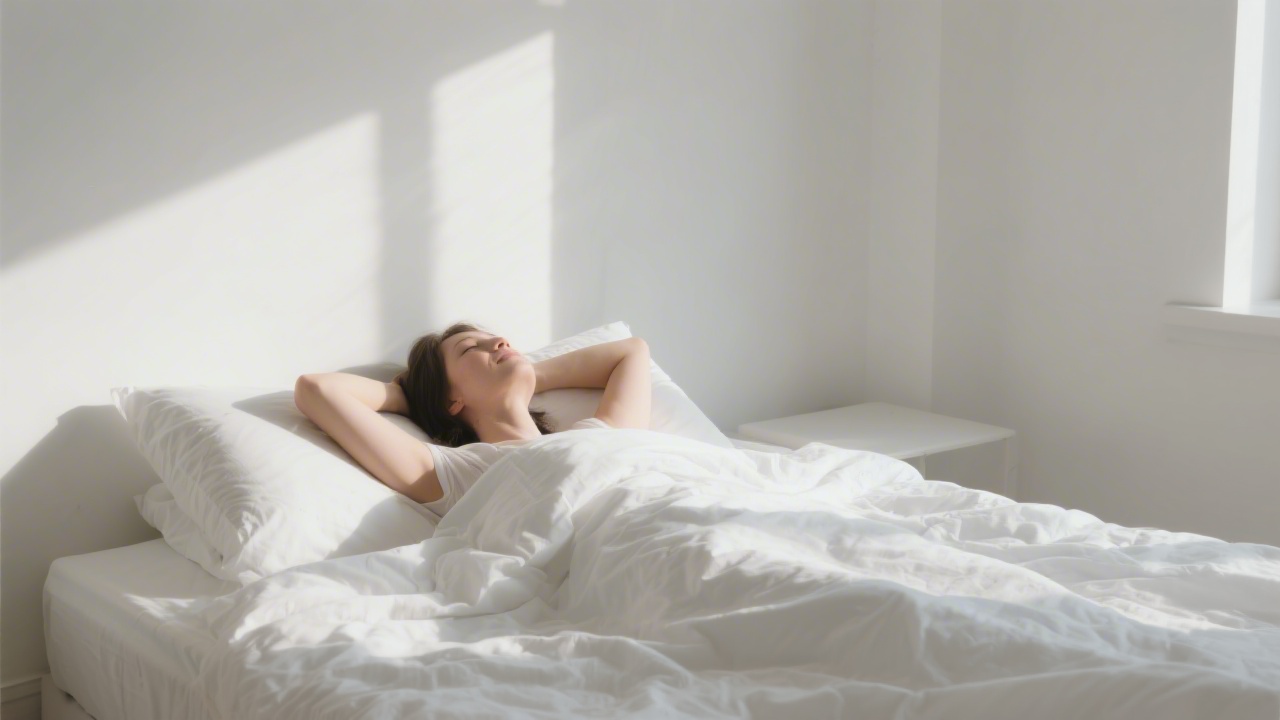
The internet is full of productivity gurus promising you can thrive on 5 hours of sleep. Some of them even claim to have "hacked" their sleep to need less. Most of this advice is either dangerous, anecdotal, or misunderstood science. Here is what the research actually says about sleeping less and still feeling rested.
Why Most People Cannot Sleep Less
The vast majority of adults need between 7 and 9 hours of sleep per night, according to the American Academy of Sleep Medicine. This is not a suggestion — it reflects the time your brain requires to complete its essential maintenance cycles: clearing metabolic waste via the glymphatic system, consolidating memories, restoring hormonal balance, and repairing tissue.
Chronic short sleep (under 6 hours) is associated with increased risk of cardiovascular disease, type 2 diabetes, obesity, immune suppression, and cognitive impairment. The feeling that you have "adapted" to less sleep is a well-documented illusion: your brain loses the ability to accurately assess its own impairment.
Only about 1% to 3% of the population carries a genetic mutation (ADRB1 or DEC2 variants) that allows them to function optimally on 6 hours or fewer. If you are not one of them — and statistically you almost certainly are not — you cannot train yourself into needing less sleep.
What You Can Actually Do: Optimize Sleep Quality
The legitimate version of "sleeping less and feeling more rested" is not about reducing total sleep time. It is about improving sleep efficiency and quality so that the hours you do sleep are more restorative. There are real, evidence-backed strategies for this.
Sleep efficiency over sleep duration. Sleep efficiency is the percentage of time in bed that you are actually asleep. A score above 85% is considered healthy. Many people spend 8 hours in bed but only sleep 6.5 of them effectively. Improving that ratio is a legitimate goal. See our guide on how to calculate and improve your sleep efficiency.
Align sleep with your chronotype. Sleeping against your natural biological rhythm (your chronotype) reduces sleep quality significantly, even at the same total duration. A night owl forced into an early schedule gets lighter, more fragmented sleep. Aligning your sleep window with your chronotype is one of the highest-leverage changes you can make.
Reduce sleep debt first. If you feel perpetually tired despite 7-8 hours, you may be carrying accumulated sleep debt that distorts your perception of normal. Clearing that debt is the prerequisite to optimizing further.
Improve your sleep environment. Temperature (65-68F / 18-20C), darkness, and silence have measurable effects on sleep architecture. A room that is too warm suppresses deep sleep. Even small light exposure can suppress melatonin. Read our complete guide to sleep environment optimization.
Polyphasic Sleep: What the Research Shows
Polyphasic sleep — splitting sleep into multiple shorter periods per day — has a legitimate scientific basis in our evolutionary history. Many cultures practiced segmented sleep (two sleep periods per night) before artificial lighting disrupted natural patterns. Research by historian Roger Ekirch documented this as a historical norm.
However, most modern polyphasic schedules promoted online (Uberman at 2 hours total, Everyman at 4.5 hours) have no serious scientific support. Studies on extreme sleep restriction show sustained cognitive impairment. The schedules that work are those preserving the majority of sleep in a single consolidated block, with short strategic naps added — not replacing core sleep.
A 10-20 minute nap in the early afternoon has strong evidence behind it: it improves alertness, processing speed, and mood without causing sleep inertia or disrupting nighttime sleep. This is the evidence-based "bonus" sleep strategy.
Your Mattress and Sleep Quality
One underappreciated factor in sleep quality is your sleep surface. Pressure points, thermal regulation, and spinal alignment all affect how much time you spend in deep, restorative slow-wave sleep versus light or fragmented sleep. A mattress that creates pressure at your hips and shoulders causes micro-arousals you may never consciously register but that still reduce your sleep quality.
We have tested over 40 mattresses and consistently find that the Saatva Classic performs at the top for spinal alignment and pressure relief. Its individually wrapped coil system reduces motion transfer and promotes airflow — both important factors for sleep quality.
Ready to improve your sleep quality?
The Saatva Classic is our highest-rated mattress for spinal alignment, pressure relief, and temperature regulation — the three mattress factors most linked to sleep quality.
Affiliate disclosure: We may earn a commission if you purchase through our links, at no extra cost to you.
Frequently Asked Questions
Can you train yourself to need less sleep?
No. The perception that you have adapted to less sleep is a cognitive illusion. Studies show that sleep-deprived subjects lose the ability to accurately assess their own impairment. The only people who genuinely need less sleep have rare genetic mutations affecting about 1-3% of the population.
What is the minimum sleep needed to feel rested?
For most adults, fewer than 7 hours consistently leads to measurable performance deficits. Some individuals function adequately on 6 to 6.5 hours, but this is the exception. The key variable is sleep quality, not just duration.
Does polyphasic sleep actually work?
Segmented sleep with a primary block plus a short nap has some evidence behind it. Extreme polyphasic schedules with very low total sleep time do not have credible scientific support and carry significant health risks with sustained use.
What is a sleep efficiency score and why does it matter?
Sleep efficiency is the ratio of time asleep to time spent in bed. A score above 85% means most of your time in bed is genuinely restorative sleep. Below 80% indicates you are spending significant time in bed while not sleeping, which is associated with insomnia and poor sleep quality.
How does a better mattress help you feel more rested?
A mattress that creates pressure points causes micro-arousals — brief interruptions in sleep that fragment your sleep cycles without waking you fully. Better pressure relief and spinal alignment means fewer interruptions and more time in deep, slow-wave sleep, which is the most restorative stage.