
 by
by Quick answer: Sleep face-up whenever comfortable, keep pillows and masks away from the lash line, and follow your technician’s adhesive-specific aftercare instructions.
- A face-up position creates the clearest separation between your lashes and the pillow.
- A smooth pillowcase may limit snagging, but it cannot prevent damage from direct pressure.
- The Phat Lash aftercare guide treats sleep position, common mistakes, and product choice as connected parts of lash care.
Updated July 2026 · Reviewed for accuracy
The safest way to sleep with lash extensions is on your back, with nothing pressing against your eyes. If you can’t remain face-up, adjust your pillow and head angle so the lash line stays clear instead of forcing yourself into an uncomfortable position.
The goal isn’t perfect stillness. It’s a sleep setup that reduces pressing, rubbing, and catching while still letting you rest normally.
Start with a no-contact sleep position
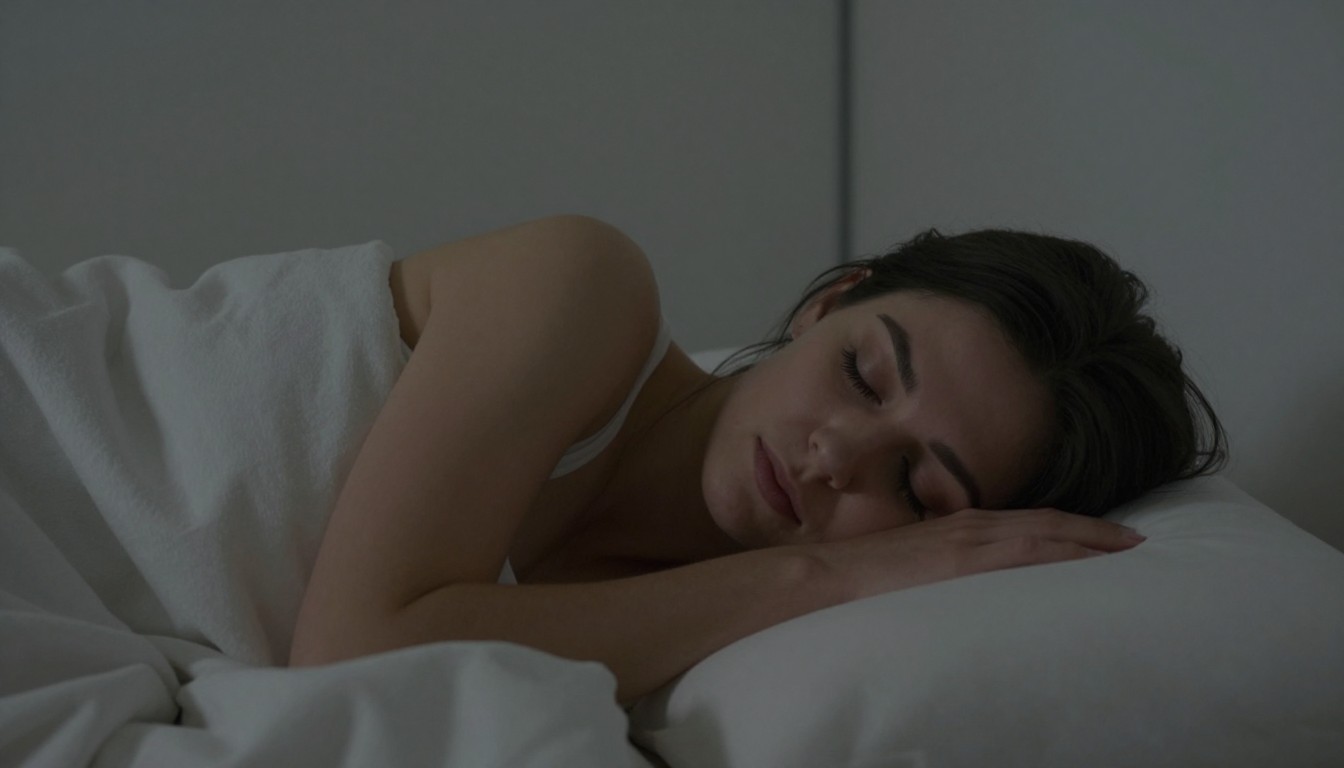
A face-up position puts the greatest distance between your lash line and the mattress or pillow. That makes back sleeping my first choice for protecting extensions overnight, provided the position is comfortable for you.
Place your head near the center of the pillow and check whether its edges rise toward your eyes. A very soft pillow may wrap around the sides of your face, while a firmer shape may hold your head higher. Material labels matter less than the actual contact around your closed eyes.
Test the setup while awake. Close your eyes, relax your face, and slowly turn your head in each direction. If the lashes brush the pillow before you reach a natural resting angle, change the pillow position or reduce how far you turn.
My practical rule: Create clearance first, then make the position comfortable enough to keep. A theoretically perfect posture won’t help if discomfort makes you abandon it as soon as you fall asleep.
Side sleeping needs more care because the lower eye sits closer to the bedding. Rather than placing the side of your face in the middle of the pillow, position your head so the eye area remains near a clear edge. Turn the face slightly upward if that feels natural and doesn’t strain your neck.
Stomach sleeping creates the hardest setup because the face usually turns into the pillow. If that is your normal position, aim to reduce direct eye contact rather than expecting an instant change in your sleep habits. Supporting the body in a partly side-facing position can make that transition more manageable.
Sleep itself isn’t one fixed state. The Wikipedia overview of sleep describes repeating periods in which the body alternates between rapid eye movement and non-rapid eye movement sleep. That doesn’t predict how much any individual will move, so your setup should tolerate an ordinary position change without putting the lashes straight into fabric.
Prepare your lashes before your head hits the pillow
The useful bedtime check is simple: the lashes should be clean, dry according to your technician’s directions, and free from anything that makes you want to rub or adjust them. Don’t add an unnecessary serum, cream, or grooming step immediately before bed just because it appears in a generic routine.
The Phat Lash aftercare guide frames sleep technique, common mistakes, and aftercare products as related decisions. I agree with that approach. A good sleeping position can’t compensate for using an unsuitable product around the lash line.
Your lash technician’s instructions should control any adhesive-specific waiting period, cleansing method, or product restriction. Don’t substitute a universal online timetable for directions based on the adhesive and application method actually used.
A low-fuss bedtime routine
- Follow the cleansing and drying method given by your technician.
- Use only lash tools or products that the technician has approved.
- If brushing is part of your aftercare, use a clean tool and a light touch.
- Check that hair, bedding, and any sleep covering sit below or away from the eyes.
- Settle into your lowest-contact comfortable position before turning out the light.
Avoid aggressive brushing to make every extension look perfectly aligned before sleep. If something appears twisted, tangled, or unusually loose, pulling at it may disturb the natural lash as well as the extension. Leave stubborn areas for your lash professional to assess.
Long hair can also end up across the face and encourage half-asleep rubbing. Secure it loosely away from the eye area if needed, but avoid a style that makes your head uncomfortable against the pillow.
Keep the routine repeatable. Complicated rituals create more opportunities to handle the extensions, and none of that handling creates extra clearance from the pillow. Clean, appropriate aftercare and a low-contact position do the useful work.
Set up your pillow, bedding, and sleep mask
The decisive feature of any pillow is whether it contacts your closed eye area in your real sleeping position. Fabric, filling, and shape are secondary to that basic fit test.
| Sleep setup | Likely lash contact | Best adjustment |
|---|---|---|
| Face-up | Low if the pillow stays below the eyes | Center the head and check both pillow edges |
| Side-facing | Higher on the lower-side eye | Keep the eye area near a clear edge and angle the face slightly upward |
| Face-down | High because the face turns into the bedding | Shift toward a supported side position and keep the eyes off the pillow |
| Flat sleep mask | Potentially direct across both lash lines | Skip it unless its fit leaves reliable space around the lashes |
| Blanket or hand near the face | Unpredictable | Keep both below the eye area before falling asleep |
A smooth pillowcase can be a sensible backup because there is less texture for a lash to catch against. I wouldn’t treat it as the main solution, though. Smooth fabric still applies pressure if your eye is pressed into it.
Keep the pillowcase clean and free from heavy residue around the area touching your face. Use whatever laundering method its care label requires rather than adding fragrance, spray, or treatment near the eyes for the sake of the extensions.
A sleep mask requires its own contact test. A flat mask that rests directly on the eyelids defeats the purpose of creating space, even if its fabric feels soft. A suitable design must remain clear of the lashes when your eyes are closed and your face is fully relaxed.
Check a mask before sleeping: Put it on without overtightening the strap, close your eyes, blink naturally, and turn your head on the pillow. Remove it if you feel the lashes brushing, catching, or being pushed downward.
If you use a mask for reasons beyond lash protection, read this guide to sleeping with a mask on and apply the same fit-first logic. The covering should solve its intended problem without creating direct pressure over the extensions.
Avoid the overnight habits that create contact
Pressure is only part of the problem. Rubbing, snagging, and improvised adjustments can create extra handling around the lash line before bed and immediately after waking.
- Don’t bury your eye in the pillow. Softness doesn’t remove compression.
- Don’t tighten a mask until it leaves marks. A secure strap is useful only if the eye area still has clearance.
- Don’t rub your eyes as soon as you wake. Sit up and inspect the lashes before touching them.
- Don’t pull at a crossed or loose-looking extension. Use only the grooming method approved by your technician.
- Don’t use household adhesive, heat, or cutting tools for a repair. Let a qualified lash professional handle application problems.
- Don’t assume a special pillowcase fixes everything. Position and clearance still determine whether the lashes touch.
Loose blankets can creep toward the face, particularly if you like sleeping with the bedding pulled high. Set the upper edge below your chin or shoulders before sleep so it is less likely to brush across your eyes.
Your own hand can cause similar contact. If you normally tuck a hand beneath your cheek, notice where the fingers land after your head settles. Move the hand lower if the palm or knuckles push the cheek toward the eye.
Don’t turn one accidental rollover into a crisis. Reposition gently when you notice it, then check the setup the next day. The useful question is whether the same contact keeps happening, because a repeated problem calls for a pillow or position adjustment.
If the lashes look different in the morning: Don’t tug, twist, or try to reattach anything. Follow the grooming directions you were given, then contact your lash technician if the change doesn’t settle or if the extensions appear attached incorrectly.
Use this plan if you can’t stay on your back
A comfortable low-contact side position is better than a painful face-up position you can’t maintain. Work with the way you actually sleep, then remove as many points of lash contact as you reasonably can.
For a committed side sleeper, begin at the outer edge of the pillow rather than planting the eye area in its center. Settle your shoulder first, support your neck comfortably, and rotate the face just far enough upward to clear the lower-side lashes. Check the position with closed eyes before relying on it overnight.
For a stomach sleeper, use bedding support to keep the torso partly turned instead of placing the face straight down. The aim is a gradual move toward the side, with the eye area over open space. Don’t twist your neck simply to save the extensions.
Other comfort needs may decide your sleep position. If stiffness makes back sleeping difficult, these sleep tips for arthritis can help you think through support without making the lashes the only priority. If an injury is limiting your options, the same principle applies; this guide to sleeping with a sprained ankle covers position and support in that specific situation.
The bottom line: Protect the lash line through space, not force. Choose the most comfortable position that keeps your eyes off the pillow, remove obvious sources of rubbing, and let your technician’s aftercare directions settle any product or adhesive questions.
FAQ
Can I sleep on my side with lash extensions?
Yes, if you can keep the lower-side eye from pressing into the pillow. Position the eye area near a clear edge, turn your face slightly upward, and test the contact while your eyes are closed.
What if I roll onto my face during the night?
Reposition when you notice, but don’t rub or pull at the lashes. If it happens regularly, change the pillow placement or use body support that makes a partly side-facing position easier to maintain.
Can I wear a sleep mask over lash extensions?
Only if the mask leaves dependable clearance around the lashes when your face is relaxed. A flat or tight mask that touches the eyelids can press directly on the extensions, regardless of how soft its fabric feels.
Do I need a silk or satin pillowcase?
No particular fabric can replace a no-contact sleeping position. A smooth pillowcase may provide a useful backup against catching, but direct pressure remains direct pressure.
How soon after getting lash extensions can I sleep?
Sleeping itself isn’t the issue addressed by a universal timetable; contact and adhesive-specific aftercare are. Ask your technician for the exact drying, cleansing, and product restrictions that apply to your application, then arrange your bedtime setup around those directions.