
 by
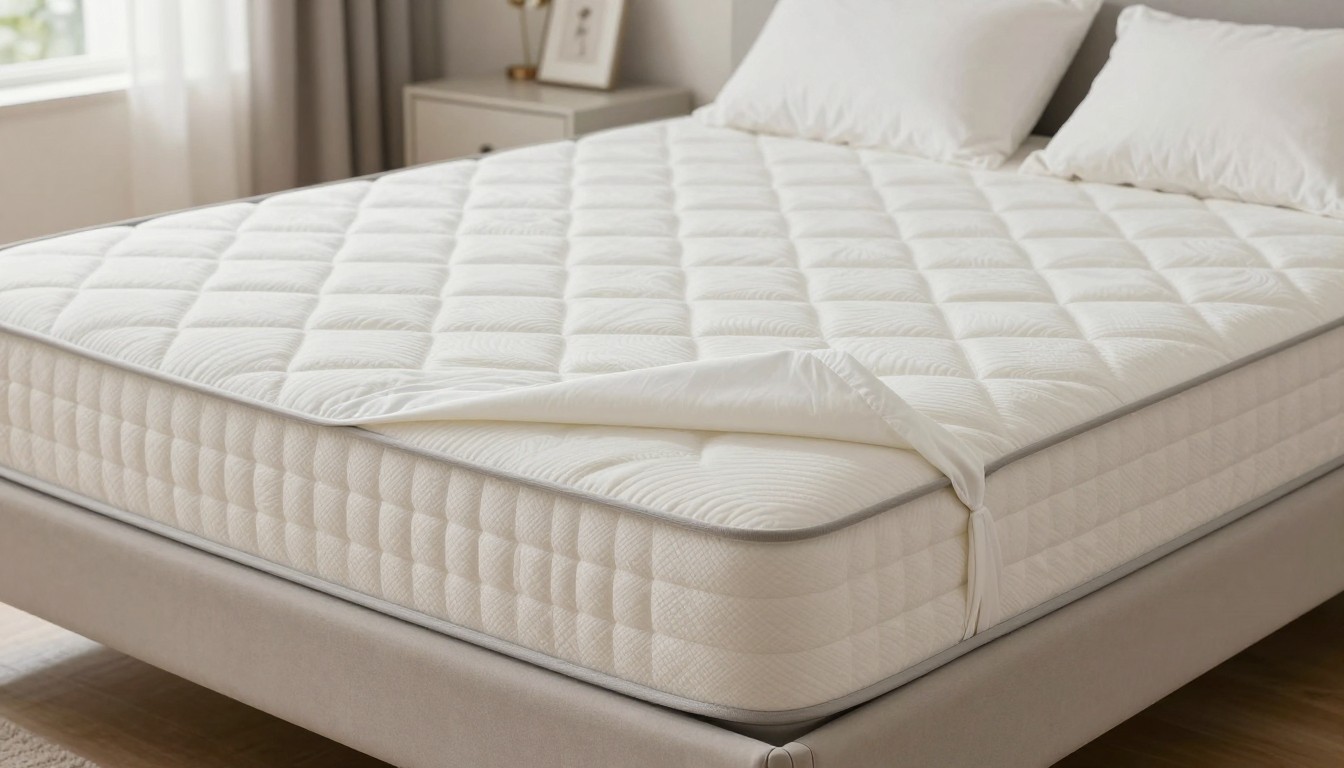
by Quick answer: Use a fitted cover or broad elastic straps around the mattress. Never run cord through the topper or tie it to the bed frame. Keep knots off the sleep surface.
- Center and flatten the topper before tightening anything.
- Anchor straps to the topper cover or around the mattress, not through bare foam or filling.
- On an adjustable bed, every restraint must move with the mattress rather than tethering it to the base.
Updated July 2026 · Reviewed for accuracy
To tie a bed mattress topper down, first check whether it has factory ties, elastic corner loops, or no anchors at all. Use those built-in fittings when available; otherwise, contain the topper with a well-fitted sheet or protector instead of improvising with rope.
If you meant tying a topper into a roll for moving or storage, skip to the rolling section below. That requires a different technique and much less tension.
Choose the Right Way to Secure Your Topper
A topper can be restrained in two distinct ways: held flat on a mattress or bundled into a temporary roll. Mixing those methods is where damage starts. A strap suitable for carrying a roll may leave an uncomfortable ridge across a made bed, while an elastic corner loop won’t control a rolled topper.
| Topper setup | Method I’d use | What to avoid |
|---|---|---|
| Factory fabric ties | Route and tie them exactly as the care label directs | Extending them to the frame with cord |
| Elastic corner loops | Pull each loop beneath its corresponding mattress corner | Twisting or overstretching the elastic |
| Removable cover but no anchors | Use a fitted protector or sheet sized for the complete sleep surface | Clipping directly onto the topper core |
| Bare foam without a cover | Add a compatible cover before using any fastening system | Punctures, stitches, pins, or tight cord |
| Topper being moved | Soft, broad ties around a gently formed roll | Permanent compression unless the maker permits it |
My preferred solution for everyday use is containment, not hard tying. A properly fitted sheet or topper protector spreads holding pressure along the perimeter instead of concentrating it at a knot. It also leaves the sleep surface free of buckles and strap ridges.
Factory fittings are the exception. They’re attached at reinforced points chosen by the maker, so there’s no reason to replace them with a more aggressive setup. If their routing isn’t obvious, consult the manufacturer’s care instructions rather than guessing where they should attach.
The Nut’s rule: Restrain the topper as gently as possible. The goal is to stop sideways travel, not squeeze the materials into submission.
Prepare the Mattress Before Adding Tension
Alignment has to happen before the ties are tightened. A strap won’t pull a crooked topper into a clean position; it will usually lock the crooked position in place.
- Strip the bed. Remove the sheet, protector, and loose bedding so you can see the entire topper edge and mattress perimeter.
- Read the care label. Look for instructions covering orientation, removable covers, corner straps, folding, rolling, and adjustable-base use. Those directions outrank any generic tying method.
- Inspect every attachment point. Check that sewn ties, elastic loops, cover seams, and zippers are intact. Don’t place tension on loose stitching.
- Center the topper. Match its edges to the mattress and smooth the cover by hand. If one side remains uneven without any restraint, correct that before proceeding.
- Plan the strap path. Knots, clips, and buckles belong along the vertical side or beneath the mattress. Nothing hard should remain beneath the sleeper.
Useful setup items
- The topper’s care and assembly instructions
- A fitted sheet or protector sized for the mattress-plus-topper profile
- Factory corner loops or broad, adjustable bedding straps
- A clean, compatible nonslip layer if the maker allows one
The fitted sheet deserves a close look. If it barely reaches beneath the mattress, its corners can pull upward and release the topper. Choose sheet pockets that accommodate the combined profile rather than tightening an undersized sheet until its seams strain.
Added height can change how sheets, protectors, and corner straps fit. My guide to thicker mattress toppers explains why topper profile needs to be considered as part of the complete bed, not as an isolated layer.
How to Tie a Mattress Topper to the Bed
The holding force should remain around the mattress perimeter. It shouldn’t pass through the topper core, and it shouldn’t connect a flexible mattress to a rigid or moving frame.
If the Topper Has Fabric Ties
Start by identifying the matching anchor described by the manufacturer. Some ties are intended to join a cover, while others wrap around a mattress corner. Don’t assume a loose ribbon should be stretched down to a slat, rail, or leg.
Once the correct route is clear, make a flat, releasable bow like a shoelace bow. Pull only until the topper edge stops wandering. The fabric should remain smooth, the attachment seam shouldn’t pucker, and the bow should sit at the side where it can be reached without lying beneath the sleeper.
I wouldn’t use a hard overhand knot for routine bedding. It can cinch tighter as the bed moves and becomes awkward to release for cleaning. A compact bow is easier to inspect and retie.
If the Topper Has Elastic Corner Loops
Lift each mattress corner just enough to guide the corresponding elastic loop beneath it. Keep the loop flat rather than twisted, then return the mattress to its normal position. Work around the bed while repeatedly checking that the topper remains centered.
Elastic should provide gentle resistance, not pull the topper corner downward. If the loop appears strained before it reaches its intended position, stop. The topper may be facing the wrong direction, the mattress may be incompatible with the attachment design, or the elastic may have deteriorated.
If the Topper Has No Ties or Loops
Don’t cut holes or sew through the core. Bare foam and loose filling aren’t sensible anchor points because a narrow tie concentrates all its force in one small area. Put the topper in a compatible cover, then use a fitted protector or sheet to contain the complete stack.
Sheet suspenders can help retain a fitted sheet, but their clips should attach to the sheet, not the topper. Route them beneath the mattress according to their instructions and make sure no clip, adjuster, or buckle presses against a moving bed component.
Do
- Use broad, soft, adjustable restraints
- Keep the topper centered as tension is added
- Place hardware at the side or underside
- Make every tie easy to release
Don’t
- Pierce the topper with pins or hooks
- Run thin rope across the sleep surface
- Attach the mattress stack to the frame
- Compress corners until they curl
After making the bed, press across the topper with your palms and check its edges. The layers should move together without visible bunching. On an adjustable bed, observe the mattress through its normal range of movement and stop immediately if any restraint catches, stretches toward the base, or pulls the topper out of alignment.
Comparing options? The Saatva Graphite Topper is one category-matched product to investigate, not a documented winner — see the product note ↓
How to Roll and Tie a Topper for Moving
A rolled topper needs restraint around its circumference, not anchors running lengthwise through its material. The purpose is to keep a gentle roll together during handling, not recreate factory compression.
- Check whether rolling is allowed. Follow the manufacturer’s storage and moving instructions, especially for layered, filled, or zoned constructions.
- Make sure the topper is clean and dry. Remove a washable outer cover only if the care label permits it.
- Lay it on a clean surface. Smooth the topper and begin rolling from the end specified by the maker. Don’t force a sharp fold into the middle.
- Apply broad fabric or webbing ties. Position restraints near the ends of the roll and add support through the center if the bundle bows outward.
- Finish with releasable bows or adjustable buckles. Tighten enough to retain the roll while preserving its natural shape.
- Release the restraints after transport. Return the topper to the storage position approved by its manufacturer.
Storage warning: I wouldn’t use vacuum bags, plastic cable ties, bungee cords, or prolonged tight compression unless the topper maker expressly allows that method. A carrying setup isn’t automatically suitable for long-term storage.
Keep bare topper material away from dirty floors, sharp cargo edges, and exposed fasteners. A clean protective wrap can shield the roll, but it shouldn’t be treated as permission to store damp bedding or ignore the maker’s ventilation instructions.
If the topper resists rolling, stop rather than kneeling on it or hauling harder on the straps. That resistance is useful information. The construction may need to remain flat, fold along a prescribed line, or be handled without compression.
Fix Slipping Without Damaging the Materials
A topper that moves as a complete layer has a different problem from one whose cover wrinkles while its core stays centered. Identify the movement before adding more tension.
| What you see | Likely setup issue | Adjustment |
|---|---|---|
| The whole topper creeps toward an edge | The outer sheet isn’t containing the stack | Refit the sheet or use a compatible fitted protector |
| A single corner keeps escaping | Uneven alignment or unequal strap tension | Release every restraint, recenter, and retighten gradually |
| The cover forms ripples | Ties are pulling the casing harder than the core | Reduce tension and smooth the cover independently |
| Movement begins when the base bends | A restraint is crossing or catching on the base | Remove it and use a mattress-only attachment system |
| A tie pulls at a seam | The attachment point is damaged or overloaded | Stop using that point and follow the maker’s repair guidance |
Construction matters here. With a bare foam topper, I’d use a removable cover or outer containment system rather than attaching anything to the core. With a filled topper, restraints should control the casing instead of pinching sections of fill.
Wool toppers also need to be handled through their outer casing and according to their care instructions. If that’s the material on your bed, my wool mattress topper guide covers the broader construction and care considerations.
Reset the complete setup after washing the bedding. Center the topper again, untwist elastic, inspect stitching, and confirm that the fitted sheet still reaches beneath the mattress. Don’t simply tighten a strap to compensate for a sheet that no longer fits the combined profile.
A quick diagnosis
- If the core moves, improve containment around the whole topper.
- If only the cover moves, refit the cover before changing the anchors.
- If a corner curls, loosen the nearest restraint.
- If movement follows the adjustable base, remove every frame-level attachment.
Inspect the setup whenever you change the bedding. Release ties before lifting or rotating the mattress, keep loose cord ends contained, and replace worn elastic rather than compensating with tighter knots.
ONE OPTION WORTH COMPARING
Shopping as well as reading? Here is one current option worth comparing: the Saatva Graphite Topper. Check today’s price, sizing and return terms on the official product page before you order.
Saatva Graphite Topper
- Graphite-infused memory foam, per saatva.com
- 180-night trial
- Secure anchor bands, fits deep mattresses

FAQ
Can I tie a mattress topper directly to the bed frame?
I don’t recommend it. A frame-level tie can pull against the topper as the mattress shifts, and it can interfere with an adjustable base. Keep the topper, cover, and mattress moving as one stack.
What knot should I use for mattress topper ties?
Use a flat, releasable bow if the manufacturer supplies fabric ties and permits them to be knotted. It should resemble a shoelace bow, sit against the mattress side, and release without yanking on the attachment seam.
How tight should topper straps be?
Snug enough to resist sideways movement, but loose enough that the topper edge remains flat and the cover doesn’t pucker. If a corner curls, elastic looks strained, or a seam begins pulling, release the tension and reset the topper.
Can I stop a mattress topper sliding without tying it?
Yes. A well-fitted sheet or topper protector is usually my first choice because it contains the layers without introducing knots across the bed. A compatible nonslip layer may also help if the topper manufacturer permits it.
How should I tie a mattress topper for transport?
Roll it only if the manufacturer allows rolling, then use broad, soft restraints around the bundle. Keep the pressure gentle, use releasable fastenings, and remove the transport ties once the topper reaches its destination.