
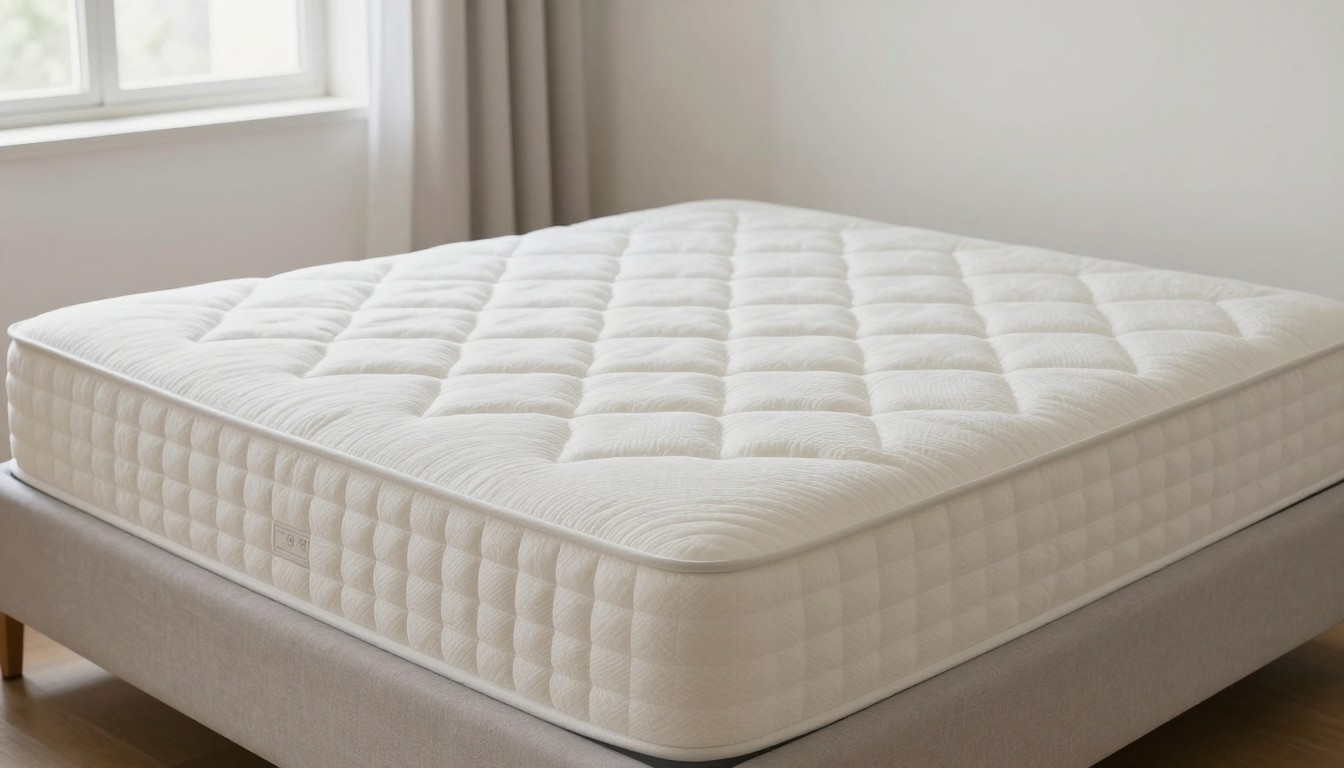
 by
by Quick answer: Choose a traditional innerspring or latex mattress. A hybrid can qualify too, but only if every comfort layer is free of memory foam. Check the full material list before buying.
- Conforama separates spring, latex, and foam mattresses in its shopping categories.
- A hybrid label identifies a mixed construction, not every material inside it.
- Only a complete layer list can confirm that a mattress contains no memory foam.
Updated July 2026 · Reviewed for accuracy
If you typed “matress not memory foam,” you’re looking for a mattress that avoids the slow, enveloping response associated with memory foam. Traditional spring and latex constructions are the clearest places to start.
I wouldn’t trust the front label alone. Terms such as hybrid, cooling foam, and comfort foam can describe mattresses that still contain a memory-foam layer.
What “Not Memory Foam” Really Rules Out
The decisive detail sits in the comfort-layer description. If any layer is identified as memory foam or gel memory foam, the mattress doesn’t meet a strict no-memory-foam requirement.
A modifier such as “cooling” doesn’t change the underlying material. Gel memory foam is still memory foam, even if the manufacturer has altered its formulation or added cooling features. Our guide to what memory foam is explains the material and its characteristic slow response in more detail.
“Foam” by itself is less precise. Latex is a foam material, while conventional polyurethane foam can be made without the slow-response properties that define memory foam. An all-foam mattress therefore isn’t automatically a memory-foam mattress, but the manufacturer needs to identify what each foam layer actually is.
My strict screening rule
- Reject the mattress if a listed layer is memory foam or gel memory foam.
- Treat unnamed “premium foam” or “comfort foam” as unconfirmed.
- Don’t assume hybrid means memory-foam-free.
- Check quilting and transition layers, not just the support core.
- Ask for written clarification when the layer list is incomplete.
Firmness doesn’t answer the material question either. Memory foam can feel relatively firm, while latex or a spring mattress can feel plush. Firmness describes resistance under load; response describes how quickly the surface pushes back as you move.
The Main Mattress Types Without Memory Foam
Conforama’s mattress category presents foam, spring, and latex as separate shopping choices. That’s a useful first split, although the word “foam” still needs further investigation because it can cover several different materials.
| Construction | Main support material | General response | What to verify |
|---|---|---|---|
| Traditional innerspring | Coil unit with upholstery above it | Direct and spring-forward | Padding and quilting contain no memory foam |
| Latex mattress | Latex core or stacked latex layers | Buoyant and quick to recover | Every interior layer is identified |
| Latex hybrid | Coils beneath latex comfort layers | Responsive with some surface contouring | No hidden memory-foam transition layer |
| Non-memory polyfoam | Conventional polyurethane foam | Varies by formulation and firmness | The manufacturer names the foam clearly |
| Fiber-filled or futon-style | Cotton, wool, or other fiber batting | Flatter and less conforming | No foam is added inside the cover |
Traditional innerspring mattresses
A traditional innerspring uses steel coils as its main support structure. Upholstery sits above the coils, but that upholstery doesn’t have to be memory foam. Fiber padding, conventional polyfoam, or latex can provide the surface cushioning instead.
This is usually the simplest route for someone who wants obvious pushback and easy movement. Still, don’t stop reading at “innerspring.” A thick memory-foam comfort layer can turn a coil mattress into exactly the feel you’re trying to avoid.
Latex mattresses
Latex compresses under weight but regains its shape quickly. I’d put it near the top of the list for shoppers who want contouring without a slow sink. An all-latex build also avoids the ambiguity created by a hybrid’s mixed comfort system.
Check whether the mattress is entirely latex or merely includes some latex. A latex label on the product name doesn’t prove that every deeper layer is memory-foam-free.
Latex hybrids
A latex hybrid combines a coil support unit with latex closer to the sleeper. That construction can provide the spring response of coils with a more cushioned surface than a basic innerspring.
The transition layer is the part I’d inspect closely. Some mixed-material mattresses place another foam between the latex and coils. Unless that material is identified, the word “latex” alone doesn’t settle the question.
Conventional polyfoam mattresses
Conventional polyurethane foam isn’t automatically memory foam. It can respond more quickly and produce less of the slow-melting sensation that some sleepers dislike. The problem is labeling: “support foam” and “comfort foam” reveal little about formulation or long-term performance.
If the seller won’t identify the foam, I’d move on. Material transparency matters more than a dramatic product name.
Fiber-filled and futon-style mattresses
A fiber-filled mattress can avoid foam entirely. These beds generally create a flatter, firmer surface because batting compresses rather than molding slowly around the body.
They’re a distinct choice, not a direct substitute for a thick upholstered mattress. The filling can settle with use, so care instructions and the ability to rotate or fluff the mattress deserve attention.
Comparing options? The Saatva Classic is the pick we keep coming back to — see the final verdict ↓
How These Constructions Feel in Daily Use
Coils push back mechanically, while latex compresses and rebounds quickly. Memory foam delays more of that rebound. That response difference is why two mattresses with similar stated firmness can feel completely different when you roll over or sit up.
If your main complaint is feeling stuck, focus on response rather than firmness. A responsive surface follows your movement instead of holding the impression for as long. Traditional springs and latex are the clearest material routes, although the amount and type of upholstery still shape the final feel.
Pressure distribution is more personal. A very flat spring mattress may feel too abrupt for someone who wants generous cushioning, while a thicker latex layer can contour without producing the same slow recovery. I’d compare the entire comfort system rather than assuming that avoiding memory foam means accepting a hard bed.
Feel terms worth separating
- Firmness: how strongly the mattress resists compression.
- Response: how quickly the surface recovers after pressure moves.
- Bounce: how much energy the mattress returns.
- Contour: how closely the surface follows the body’s shape.
Temperature also depends on the whole build. A coil core leaves more open space than a solid foam core, while a less-enveloping surface exposes more of the sleeper to room air. Covers, quilting, protectors, sheets, and the depth of the body impression can all change the result, so I wouldn’t treat any single material as a cooling guarantee.
Motion control involves a trade-off. Responsive materials return more energy, which can make movement easier but more noticeable across the mattress. Individually moving coils can reduce some of that spread compared with a linked coil unit, while latex retains a livelier character than slow-response foam.
Edge support comes from construction rather than the category name. A spring mattress may use a stronger perimeter, a foam encasement, or no special edge system. Latex can feel stable at the edge when the core is substantial, but a soft surface layer can still compress deeply when someone sits on it.
How to Read a Listing and Avoid Hidden Memory Foam
A complete layer breakdown tells you more than the words “hybrid,” “orthopedic,” or “cooling.” Start at the cover and read downward until the support core. Any unexplained gap is an unanswered material question.
Check the listing in this order
- Read the quilted cover description for sewn-in foam.
- Identify every comfort and transition material.
- Confirm whether “foam” means latex, conventional polyfoam, or memory foam.
- Separate firmness claims from material names.
- Check the support core and perimeter construction.
- Request written confirmation if the description remains vague.
Proprietary names require caution. A branded term may describe a genuine non-memory material, but the name alone doesn’t prove that. Look for a plain-language explanation of its composition and response.
Product naming can also place a feature before the material. This cooling memory-foam construction breakdown is a useful labeling example: “cooling” describes an added intention, while “memory foam” still identifies the underlying mattress type.
Read beyond the top comfort layer. A mattress may use latex at the surface and memory foam beneath it, or place memory foam in the quilted panel above a coil core. If your goal is complete avoidance, every layer matters.
I’d also save the material description you relied on before ordering and read the current return terms on the seller’s site. That doesn’t improve the mattress, but it gives you a clearer record if the delivered construction doesn’t match the description you evaluated.
Match the Construction to Your Priorities
A firm mattress can contain memory foam, and a soft mattress can contain none. Start with what you dislike about memory foam, then choose the construction that addresses that specific complaint.
If you dislike the slow sink
Start with latex or a lightly upholstered innerspring. Both place more emphasis on immediate pushback. For a hybrid, confirm that the cushioning and transition layers remain responsive and contain no memory foam.
If you want cushioning without feeling held down
Latex offers the clearest middle ground in material terms. It can compress around the sleeper while recovering promptly as pressure shifts. A spring mattress with non-memory upholstery can also work, but the layer description needs to be detailed enough to show how that cushioning is built.
If heat buildup is your main concern
I’d first inspect how deeply the surface is likely to envelop you and whether the support core has open space for air movement. A coil-led construction with breathable upholstery is a logical starting point, but fabric, bedding, room conditions, and body contact still affect warmth.
If you share the bed
Decide whether easier movement or lower motion transfer matters more. Latex and springs feel active, while conventional non-memory polyfoam may absorb more movement depending on its formulation. A pocketed coil layout can allow more independent compression than a connected coil system.
If durability is the priority
Inspect the likely weak link, not just the support core. Thick, soft upholstery can change before a sturdy coil unit does. Ask for the coil design, the identity and density of foam layers, the composition of latex, and details about the quilted panel.
Coil gauge alone doesn’t predict the life of a mattress. Wire shape, coil layout, perimeter design, comfort-layer quality, and how the components work together all matter. Foam density is also different from firmness: one describes how much material is present, while the other describes how the foam resists compression.
My buying hierarchy
- Confirm that memory foam is absent from every layer.
- Choose the response style you actually want.
- Inspect the construction details that affect wear.
- Compare current policies and price only after the materials make sense.
A low price doesn’t rescue a vague specification. I’d rather see a simple construction described honestly than an elaborate stack of unnamed proprietary foams. Value begins with knowing what you’re paying for.
My Bottom Line
For a strict “matress not memory foam” search, I’d begin with a traditional innerspring or latex mattress. A latex hybrid is also a sensible construction to investigate, provided its complete layer list contains no memory foam.
Conventional polyfoam and fiber-filled mattresses can qualify, but they demand closer reading. Don’t use firmness, cooling language, or the word hybrid as a shortcut. The material list is the verdict.
ONE OPTION WORTH COMPARING
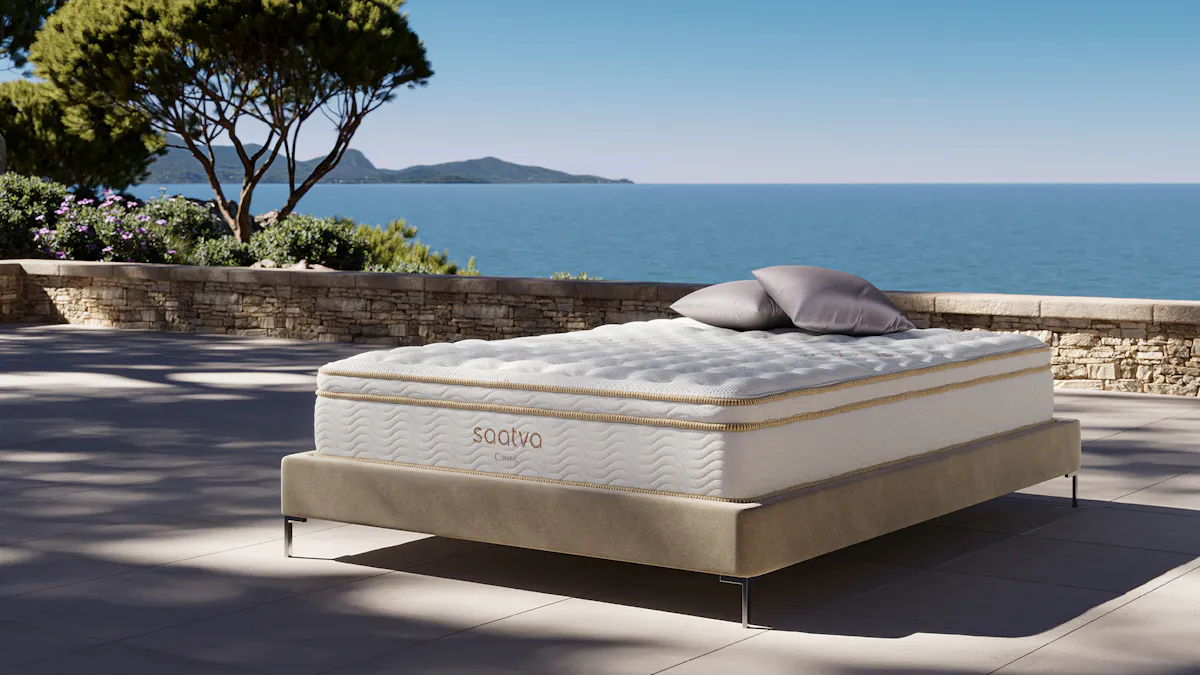
Shopping as well as reading? Here is one current option worth comparing: the Saatva Classic. Check today’s price, sizing and return terms on the official product page before you order.
Saatva Classic
- 365-night home trial and lifetime warranty, per saatva.com
- Handcrafted in the USA, free white-glove delivery
- Flexible financing available
FAQ
What kind of mattress has no memory foam?
Traditional innersprings, latex mattresses, latex hybrids, conventional polyfoam beds, and fiber-filled mattresses can all be made without memory foam. You still need to check every comfort, transition, and quilted layer because the category name alone isn’t proof.
Is latex the same as memory foam?
No. Both can be used as cushioning materials, but latex has a quicker, more buoyant response, while memory foam is associated with slower recovery and closer contouring. A latex mattress should still have a complete layer list so you can rule out memory foam elsewhere in the build.
Do all hybrid mattresses contain memory foam?
No. A hybrid can pair coils with latex, conventional polyfoam, fibers, memory foam, or a mixture of materials. “Hybrid” describes the combined construction, so inspect the named comfort layers before deciding.
Can an all-foam mattress be made without memory foam?
Yes. An all-foam mattress can use latex or conventional polyurethane foam without including memory foam. Avoid listings that identify every layer only as “premium foam” or another unexplained marketing term.
Which mattress type is best if I hate feeling stuck?
Latex and traditional spring constructions are the clearest starting points because they emphasize prompt pushback and easier movement. Final feel still depends on firmness, upholstery depth, and whether any slow-response foam appears in the comfort system.