
 by
by We earn a commission if you make a purchase, at no extra cost to you. Full disclosure.
Jump to section
Wool blankets are one of the most comfortable and durable bedding items. They usually last longer than other blankets if you take good care of them. Since these blankets are stain and moisture-resistant, they are a good source of warmth and add a good look style to your bedroom.
Despite everyday uses and accidents, it still needs washing to maintain a good look with a long-life span. So, how can you wash them to maintain their good shape and look, and how can you clean them?
Let's familiarize yourself with the tips to wash wool blankets for the best results.
How to Wash Your Wool Blankets?
You must already know the importance of wool blankets: they are usually expensive and good-looking. This requires extra care and maintenance as you may not buy them now and then.

Well, most of these blankets are moisture and stain resistant and do not need frequent cleaning. That does not mean they won't need cleanliness, as you may still face accidental baby and pet stains and messes. Therefore, it's better to wash them after every three months in normal use conditions.
Wool is a natural fiber that is both resilient and durable. As a result, you can use them for longer periods and extend their lifespan by taking good care of them. Luckily, washing them is not as difficult as you may think. You can easily take care of them with a little care, the right types of equipment, and attention to detail.
Equipment You Need
Cleaning wool blankets need special care, and it might not be as easy to clean them as any other. Therefore, ensure you have the below pieces of equipment to clean them more effectively and easily.
Soft-Bristled Brush
Soft-bristled brushes are very effective and bring a lot of ease to cleaning wool blankets. These brushes are very helpful in cleaning specks of dust and mites off wool blankets to keep them clean and tidy. Their most comfortable advantage is you can use them every day without any serious effort, and they won't even damage the fibers, which other brushes might do.
Clean Cloth
You may need a clean cloth to dry the blankets. Later, it would need pairing with the regular-typed stain wash process. Therefore, keep one soft, clean cloth handy to instantly dry the stained area. Again, it would help if you placed the cloth over them for a quick dry function.
Washing Machine
You can use a washing machine to clean the blanket. For example, if your blanket weighs 20 lbs, you can easily wash it in your household washing machine.
First, use cold water with mild detergent instead of a stronger type. Next, use the gentle wash or the dedicated wool cycle option if your machine has it.
Soft Bath Towels
Never try to dry your wool blanket in a dryer. Instead, keep a soft bath towel handy to dry them for safe and more effective results. In addition, dryers may damage them due to heavy and constant spin.
Drying Rack
You will need a drying rack, too, in case you are not drying the blanket with a dryer. Keep the drying rack outside in the open air in a clean and safe area to naturally dry the blanket out in the sun. Ensure the rack is clear of all stains so the blanket does not get messy again for a rewash.
Iron
Keep iron in handy as optional since you may not necessarily need them. However, some persistent stains will be hard to remove and need iron pressing instead for effective results.
Pressing Cloth
Keep pressing clothes under the iron if you need an iron for those hard stains. For example, this can help to safely iron the blankets without any fear of burning them, as the pressing cloth will resist the high iron press.
Step-By-Step Guidance
Follow the below steps in the same order to get the best result for the blanket's wash. Please keep all the equipment mentioned above handy to use on specific occasions.
Quiver The Wool Blanket
You can shake the blanket well before you start the washing process. This process can help the blanket feel fresh and remove the dust that mites it. Shake it well and place it outside in the open for effective results. This can help you spot all the stains well by inspecting the whole blanket in an open space for a clearer view than inside.
Brushing Your Blanket
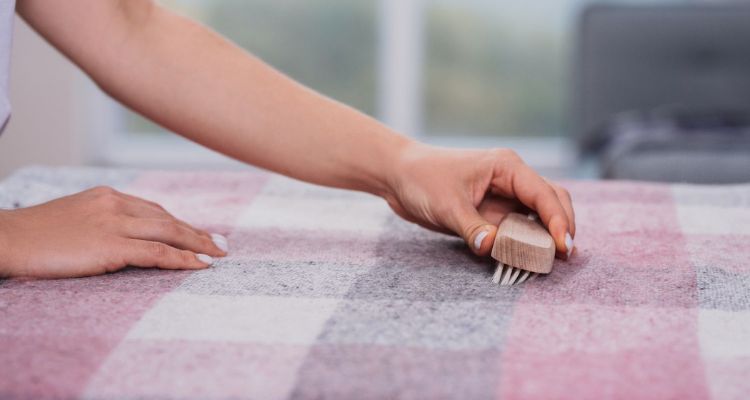
You can brush your wool blanket before the wash. This will help to remove the embedded dirt and any wool clots that have gathered on the blanket. Just put a blanket on a straight surface for a full clear view.
Treat Stains
Use mild detergent to treat the stains softly and effectively on the blanket. Use cold water with a mild detergent; alternatively, you can also use vinegar solution or club soda for stains.
Mix them well before soaking the area with the solution and dry them with the help of a cloth. It can help to set the stains if you don't clean them immediately.
Soaking Up In Cool Water
Instead of warm or hot water, use cold water in the machine wash with a safe detergent recommended for wools. Put it in the machine for 15 minutes and allow it to soak completely to take care of the stains effectively.
Do not use hot or warm water with the machine. This may shrink the wool and ultimately damage the blanket's quality and appearance.
Washing the Blanket for Two Minutes
Wash the blanket in the machine gently for only two minutes wash. Instead, you can try using the dedicated "wool cycle," as some machines have that special option for a safe wash.
After two minutes wash, cancel the wash cycle and switch to the rinse cycle. You can start another cycle if the blanket fabric has suds.
Use Towel for Rolling the Blanket
Next, use a dry clean towel to start rolling the blanket to absorb the excessive moisture. It may require more towels instead of just one piece to do the job.
Therefore, make sure to keep them in handy. Do not squeeze your blanket, for it might ruin its condition. Be soft and gentle on it throughout the whole clean process for better results.
Air-Drying the Blanket
After the wash, instead of using the hardcore spin-drying, just lay the blanket outside in the open to air-dry it. Drying can make your blanket shrink by crushing its fibers.
Ensure the area is clean and safe and where you hang or lay the blanket. If the blanket is slightly wet, you may turn it on the bedroom door, a non-rusting towel or shower bar, and a drying rack.
Treat Your Wool Blanket Stains
Since wool contains a waxy natural coating to repel the fluids, it's genuinely resistant to oily liquids and soiling. Therefore, you can immediately blot liquid spilling and fresh stains using a clean cloth. Wool blanket fibers are absorbent to stains if you allow them to penetrate the blanket fibers.
You can treat the stains by following the specific guidelines for their removal. Start rubbing stain remover gently on stains using your fingers to see their effect. If you want to use those local stain-removing products, read their label carefully before applying them to ensure they are the right fit.
Before using it all over the blanket, you can start this idea with a stain that is not visible or attracting attention. Do not use any brush to scrub the stains, as this will mark the spots visible. Just wash it afterward carefully for a clear look on your blanket.
Repairs and Care of Wool Blanket
These blankets need special care as they are expensive and you don't buy them often. But, especially if moth holes can get bigger and ruin it all, the darning needles or similar wool threads can sew these moth holes tightly together.
Wool blankets can shrink easily if you wash them with a warm machine. This is because their fibers start to contract with heat. There are many home remedies to unshrink the blanket, including soaking it in vinegar or using conditioner or fabric softeners. All these work best to keep the blanket safe.
Still, if a problem arises in cleaning the blankets, you may use the expertise of a dry cleaner who deals in wool blankets or items. They can help restore the blanket to its soft and fresh position.
Our pick for natural bedding
PlushBeds Organic Wool Blanket
GOTS-certified organic wool · machine-washable on gentle · temperature-regulating year-round
We may earn a commission at no extra cost to you.
Storing Your Wool Blankets
It is compulsory to protect the wool blankets from dampness and pest when storing them. Years back, mothballs used to take care of those insects that had the potential to destroy the blanket. But this leaves an unpleasant and lasting smell that spreads throughout the room and spoils it.
Therefore, ignore this idea and store it inside a plastic bag or tightly closed bin. If you are concerned about pest control, you may use wood blocks or cedar chips. Also, try using Cedar wood. It is an excellent natural repellent for mothballs.
How to Wash a Wool Blanket: Care Guide
Wool blankets require special care to prevent shrinking, felting, and damage to the natural fibers.
Washing Methods (Best to Worst)
- Spot cleaning (best for light soiling): Blot stains with cool water and mild wool detergent. Do not rub - this causes felting.
- Hand washing: Fill a bathtub with cool water (never warm/hot) and a small amount of wool-specific detergent (Eucalan, Soak). Gently press the blanket in the water - do not agitate. Drain, refill with clean water, repeat until rinse water is clear. Press out water (do not wring).
- Machine washing (delicate cycle ONLY): Use cold water, wool/delicate cycle, and wool detergent. Place in a mesh laundry bag if possible.
- Dry cleaning: Safe but unnecessary for most wool blankets. Use if the care label specifies dry clean only.
Drying
- Lay flat to dry: Place on a clean towel or drying rack. Reshape while damp.
- NEVER hang: Wet wool stretches dramatically under its own weight.
- NEVER tumble dry: Heat causes irreversible shrinking and felting.
For bedding care: sheet lifespan | wool topper guide.