 by
by Quick answer: Yes, hydrogen peroxide to clean mattress stains works, if you stick to a 3% solution, dilute it, patch test first, and dry the bed fully. If the mattress itself is worn out, no cleaner fixes that. I'd point you toward the Saatva Classic instead.
- Household 3% hydrogen peroxide is the only concentration I'd use on mattress fabric, per consumer cleaning guides.
- A common method is equal parts 3% peroxide and water, applied to the stain and blotted dry.
- Peroxide breaks down into water and oxygen, so it leaves no harsh residue when used correctly.
Updated July 2026 · Reviewed for accuracy
A bottle of hydrogen peroxide costs a few dollars at any drugstore, and it's sitting in most bathroom cabinets already. That's why it's the first thing people reach for when a mattress stain shows up. I've spent years taking mattresses apart and looking at what spills actually do to foam and ticking, so let me give you the straight version: peroxide is a solid stain tool, but it's easy to misuse. Here's how to do it right, and when to put the bottle down.
Does hydrogen peroxide actually work on a mattress?
Yes, on the right stains. Hydrogen peroxide is a mild bleaching agent and disinfectant, which makes it genuinely effective on organic messes: blood, urine, sweat, and the yellowing they leave behind. It lifts the discoloration and knocks down odor at the same time.
The chemistry is the nice part. Peroxide decomposes into water and oxygen, so when it dries there's no harsh chemical residue left in your sleep surface. Compared to fragranced sprays that just mask smells, that's a cleaner result, and it's why so many mattress-cleaning guides published between 2023 and 2026 recommend it as a first-line treatment.
Where it falls short: it's not a deep cleaner for the mattress core. Peroxide treats the fabric surface and the top fraction of the comfort layer. If moisture has soaked deep into foam, no topical spray fully fixes that. Keep that limitation in mind before you soak a stain repeatedly.
The Nut's take: Peroxide is a spot treatment, not a renovation. It cleans the cover beautifully. It cannot reverse years of compression, sagging, or a core that's already contaminated. Know which problem you actually have.
The 3% rule, and why concentration discipline matters
This is the one rule I won't bend on: use household 3% hydrogen peroxide, nothing stronger. Consumer safety guidance is consistent on this. Higher concentrations like 6% or 12% can damage fabric fibers, cause real discoloration instead of fixing it, and carry genuine skin and respiratory risks.
The standard dilution for mattress stains is equal parts 3% peroxide and plain water. Some guides add a drop of gentle dish soap or a sprinkle of baking soda for odor, and that's fine, but the base recipe stays the same. A 16 to 32 oz bottle from the first-aid aisle, the kind labeled USP, gives you plenty for a full mattress treatment.
Two hard warnings that come straight from safety guidance:
- Never mix peroxide with bleach or ammonia. The chemical reactions are dangerous in an enclosed bedroom.
- Never mix it with vinegar in the same container. You can use them separately on different passes, but combining them creates peracetic acid, which irritates skin and lungs.
Wear gloves, don't aerosolize the mixture into the air, and keep kids and pets out of the room while the mattress is wet. Basic stuff, but it matters.
Comparing options? The Saatva Classic is the pick we keep coming back to — see the final verdict ↓
How to clean a mattress with hydrogen peroxide, step by step
The whole process hinges on one principle: controlled application. Over-wetting is how people ruin a mattress while trying to save it. Foam acts like a sponge, and moisture that reaches the core can sit there for days, inviting mold. Here's the method I'd follow:
- Patch test first. Apply your diluted mix to an inconspicuous spot (the side panel near the foot works) and wait. If the fabric color changes, stop. Peroxide is a mild bleach and it will lighten some dyes.
- Strip and vacuum. Get all bedding off and vacuum the surface so you're not pushing grit into the weave.
- Apply sparingly. Spray or dab the diluted solution onto the stain only. Damp, not soaked.
- Blot, don't rub. Press with a clean white cloth. Rubbing spreads the stain and roughs up the ticking.
- Let it air-dry completely. Open windows, point a fan at the spot, give it hours. Sleep on a dry mattress, period.
- Repeat once if needed. Stubborn stains get one more pass after the first dries fully, per most cleaning guides. More than that and you're just wetting foam.
Drying is not optional
A mattress that feels dry on the surface can still hold moisture an inch down. If odors persist after drying, repeat the treatment once or follow up with a fabric-safe deodorizer, per general cleaning guidance. Baking soda left on for several hours and then vacuumed is a good low-moisture complement.
Which stains respond best to peroxide
Organic stains are peroxide's home turf. Blood, sweat, and urine all contain proteins that peroxide breaks down and bleaches out of light-colored fabric. Fresh stains respond dramatically better than set-in ones, so speed matters more than technique.
Yellow sweat stains, the ones that creep across a mattress over months, respond well to the diluted spray-and-blot method. I cover that specific job in more depth in my guide on how to clean yellow stains from a mattress.
Urine needs odor treatment on top of stain lifting. Peroxide handles both reasonably, though an enzyme cleaner is the stronger follow-up for the smell. My walkthrough on how to clean urine off a mattress pairs the two. Same logic applies to cleaning vomit from a mattress, where you want solids removed first, then peroxide on the residue.
One thing people forget: if you use a topper, treat it separately and clean it on its own schedule. A wet topper laid back on a damp mattress is a mold sandwich. Here's how I handle cleaning a mattress topper without soaking it.
When to skip the peroxide entirely
Not every mattress fabric tolerates peroxide, and this is where people get burned. The research consensus is clear: patch testing isn't a formality, it's the decision point.
Skip or proceed with extreme caution on:
- Colored or dark fabrics. Peroxide bleaches. A white knit cover hides it; a gray or patterned cover may not.
- Leather, suede, or delicate synthetics. These can be damaged outright. Check the care label, and when in doubt call a professional cleaner.
- Water-sensitive constructions. Some fiber-reinforced materials shouldn't take on moisture at all, because water can seep toward the core and never fully leave.
- Thick memory foam tops. Foam holds water. Treat the cover only, and if the cover doesn't zip off, use even less liquid.
For general freshening rather than stain removal, I'd actually steer you toward dry methods first: vacuuming, baking soda, ventilation. Peroxide is a stain tool. Using it as a weekly spray is over-wetting a bed that didn't need it.
When cleaning won't save the mattress
Here's the honest part most cleaning guides skip. Peroxide can make a mattress look clean. It cannot make a mattress feel right again. If your bed sags in the middle, if the comfort layer is permanently compressed, if a smell keeps returning no matter how many treatments you run, the problem is structural, not cosmetic.
From the construction side, I look at it this way: once foam cells have collapsed or a core has absorbed years of moisture, you're maintaining a surface, not restoring support. That's the moment to stop buying bottles and start shopping.
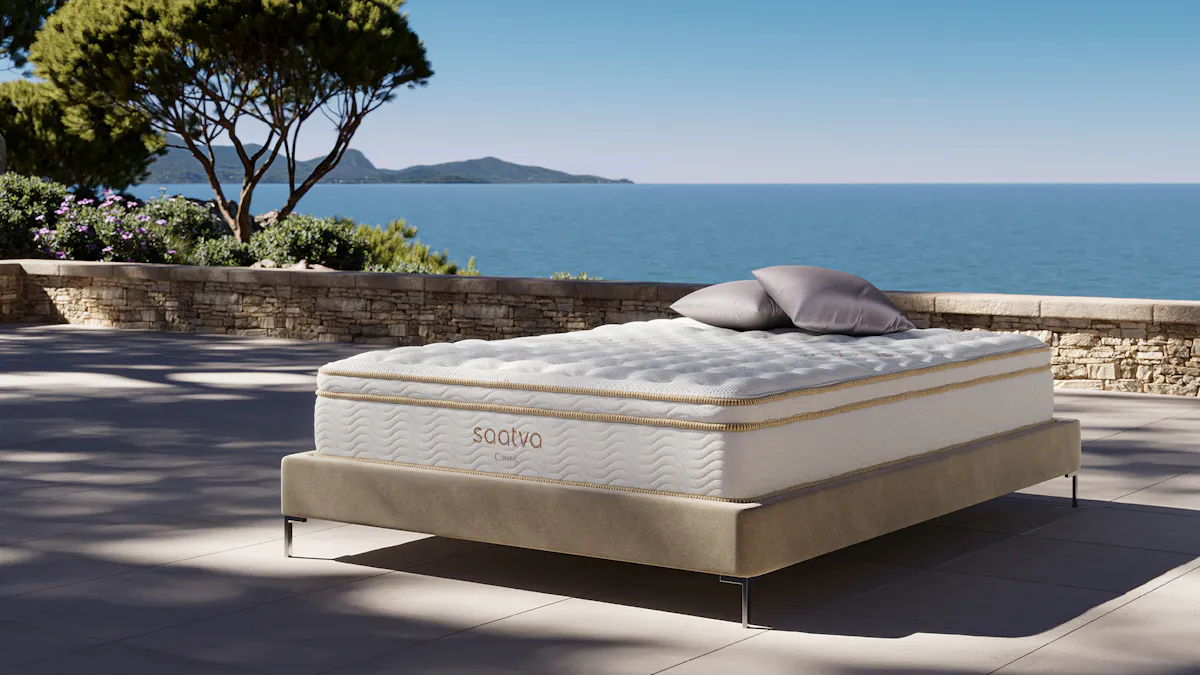
When readers hit that wall and ask what I'd buy, I tend to recommend the Saatva Classic. It's a handcrafted innerspring-hybrid built in the USA, with a coil-on-coil design that holds up far better over the years than all-foam beds in the same conversation. The brand backs it with a generous home trial and a long warranty, and it sits in the premium tier. Check the current offer on the official site. A mattress protector from day one, and you'll rarely need the peroxide bottle at all.
FAQ
Can I use hydrogen peroxide on any mattress?
Most white or light-colored fabric covers handle diluted 3% peroxide fine, but always patch test on a hidden spot first. Skip it on leather, suede, dark dyes, and delicate synthetics, and check the care label if you're unsure.
What concentration of hydrogen peroxide is safe for mattresses?
Stick to household 3%, diluted roughly half-and-half with water. Consumer safety guidance warns that stronger concentrations like 6% or 12% can damage fabric, discolor it, and pose health risks.
Will hydrogen peroxide remove old yellow stains?
It lightens most organic yellowing from sweat and body oils, especially with a second pass after the first dries. Very old, set-in stains may fade rather than vanish, per mattress-cleaning guides.
Does hydrogen peroxide leave a smell or residue?
No. It decomposes into water and oxygen as it dries, so there's no lingering chemical residue when it's used correctly. Any faint odor disappears once the mattress is fully dry and ventilated.
How long does a mattress take to dry after peroxide treatment?
Plan on several hours with good airflow, and use a fan to speed it up. Never put bedding back on a mattress that still feels cool or damp to the touch, because trapped moisture deep in the foam is how mold starts.
FINAL VERDICT
Bottom line for the peroxide mattress-cleaning project: if you want a mattress worth protecting in the first place, the Saatva Classic is the safer buy. The 365-night trial and lifetime warranty put the risk on the brand, not on you.
OUR CATEGORY-MATCHED PICK · UP TO $334 OFF
Saatva Classic
- 365-night home trial and lifetime warranty, per saatva.com
- Handcrafted in the USA, free white-glove delivery
- Flexible financing available