 by
by Quick answer: Most "unbiased mattress reviews" aren't. Trust reviews that publish testing methodology, name specific materials and construction details, and tell you who should skip a product. When readers ask me where to start, the Saatva Classic is the benchmark I measure others against.
- Reviews citing lab methods, pressure mapping, or long-term wear assessments are more reliable than star-rating roundups, per independent testing guidance.
- A trustworthy review names foam density, coil type, and layer order, not just adjectives like "cloud-like."
- Generous sleep trials and long warranties are the strongest buyer protections, regardless of what any reviewer says.
Updated July 2026 · Reviewed for accuracy
I've spent more than a decade in the bedding industry, and I'll be blunt: most mattress reviews online are affiliate funnels wearing a lab coat. That doesn't mean honest reviews don't exist. It means you need a filter. This is mine, the same checklist I run before I trust anyone's verdict, including my own.
Why "Unbiased" Is a Loaded Word in Mattress Reviews
Every mattress review site makes money somehow. Affiliate commissions, sponsored placements, brand partnerships. That's not automatically corrupt, it's just a business model. The problem starts when a site hides the model and lets the payout order the rankings.
Consumer guidance on mattress buying consistently flags this: some sites feature paid sponsorships, so cross-checking with multiple independent sources is the single best defense. I agree, and I'd go further. One review is an opinion. Three reviews saying the same thing about the same construction detail is a signal.
My rule of thumb: a review can be paid and still be honest. What it can't be is paid, undisclosed, and free of any criticism of the product. That combination is a red flag, every time.
So don't ask "is this reviewer biased?" Ask "does this review show its work?" Bias is survivable. Vagueness is not.
The Testing Methodology Checklist
The first thing I look for is a stated methodology. Independent testing guidance for mattress shoppers points to reviews that combine lab-style tests, pressure mapping, and long-term wear assessments over ones that rely only on consumer ratings. A mattress can earn glowing reviews in week one and sag by month six, so first-impression ratings tell you almost nothing about durability.
Here's what earns my trust when I read a review:
- Named materials and specs. Foam density, coil type and count, layer order, cover fabric. If a reviewer can't tell me what's inside the bed, their comfort claims are guesswork.
- Firmness on a defined scale. "Medium-firm" means nothing without context. Good reviews state where a bed lands and which firmness options exist within the model.
- Position-specific analysis. Side, back, and stomach sleepers load a mattress differently. A review that doesn't break performance down by sleep position and body weight is writing for nobody.
- Named weaknesses. Every mattress has trade-offs. A review with zero cons is marketing copy.
- Longevity reasoning. Not "feels durable," but an argument from materials: dense foams resist body impressions, thicker coils hold support longer, reinforced edges resist collapse.
You can see how I apply this in practice. In my Zoma mattress reviews I break down the foam stack layer by layer before I say a word about feel, and in my Zoma Hybrid review I judge cooling claims against the coil and cover construction rather than taking them at face value. That's the standard you should hold every reviewer to, me included.
Comparing options? The Saatva Classic is the pick we keep coming back to — see the final verdict ↓
Construction Details That Separate Signal From Noise
This is my specialty, and it's where biased reviews usually fall apart. Adjectives are free. Materials aren't.
Take foam. A memory foam comfort layer can be dense and slow-responding, built for pressure relief and motion isolation, or it can be a thin, low-density slab that feels plush in the store and develops a body-shaped crater within a couple of years. A review that says "memory foam" without discussing density has told you the paint color, not the engine. The same goes for "gel-infused" claims. Gel beads or swirls in foam are common, but the actual cooling effect depends on the whole system: cover breathability, airflow through the support layer, and how deeply you sink in.
Coils are the same story. An innerspring or hybrid's support and lifespan lean heavily on the coil unit: the gauge of the steel, whether coils are individually wrapped, and how the edges are reinforced. Individually wrapped coils move independently, which is why hybrids tend to isolate motion better than old-school connected innersprings. Edge support, meanwhile, is a construction feature, not a feeling. Look for reviews that explain how the perimeter is built, not just whether the reviewer "felt secure."
Materials cheat sheet when reading any review:
- All-foam: best motion isolation; cooling and durability depend entirely on foam quality.
- Innerspring: airflow and bounce; pressure relief depends on the comfort layers above the coils.
- Hybrid: coils plus foam or latex; the most versatile category, also the most abused by vague marketing.
- Latex: responsive, breathable, and typically the longest-wearing comfort material, at a premium price.
When a review explains why a bed should sleep cool or hold up over years, citing the actual construction, that's signal. When it says "sleeps cool" with no mechanism attached, that's noise. My ZAZ mattress review is built around exactly this discipline, and it's the lens I'd apply to any bed you're researching.
Red Flags That a Review Is Selling, Not Telling
I've read thousands of these. The fakes share fingerprints.
Every product is a winner. Real testing produces losers. If a site's top ten list reads like ten love letters, someone curated it for conversion, not for you.
No methodology page. Trustworthy outlets explain how they evaluate. If you can't find any description of how conclusions were reached, there may be nothing behind the curtain.
Price panic. Countdown timers, "today only" framing, invented discounts. Mattress pricing is genuinely volatile, and consumer guidance warns that the lowest advertised sale price may not reflect long-term value. A reviewer who rushes you is a salesperson.
One-size-fits-all verdicts. "Best mattress for everyone" doesn't exist. Body weight, sleep position, and heat sensitivity change the answer. Buying guidance consistently stresses matching the mattress to your specific profile, and any review that skips that step is skipping the actual work.
Fastest smell test: scroll to the cons section. If there isn't one, close the tab. A mattress that's perfect for everyone is a mattress nobody actually evaluated.
How to Verify a Review Before You Buy
Here's the workflow I recommend, and it's simpler than it sounds.
First, define your criteria before you read a single word: sleep position, body weight, whether you sleep hot, and your real budget. Without that anchor, every review sounds persuasive.
Second, read at least two or three independent reviews of the same model and compare the specifics. Do they agree on firmness? On who it's for? Independent reviewers working from the same construction should converge on the same broad conclusions. If one source calls a bed best for hot sleepers, verify that claim against at least one other review or lab-test summary before you bank on it.
Third, read the owner reviews on the brand's own site, sorted by most critical. Verified owner feedback is where durability complaints surface first, patterns like sagging, softening edges, or a feel that changed after the break-in period. One angry review is an anecdote. Twenty owner reviews describing the same dip in the middle of the bed is data.
Fourth, read the terms before the marketing. Trial length, return logistics, and warranty coverage are the fine print that actually protects you. Per standard industry guidance, a generous sleep trial and a long warranty matter more than any reviewer's score, because they let your own body be the final reviewer.
What a Fair Review Actually Looks Like
A fair review has a shape. It starts with construction: what the mattress is made of, in what order, and what that implies. Then feel, broken down by sleeper type. Then the trade-offs, stated plainly. Then value, meaning what you get for the money relative to alternatives, not just whether the price tag is low.
It also respects total cost of ownership. Consumer buying guides advise comparing price, potential return costs, and expected durability together. A cheap mattress replaced twice costs more than a premium one bought once. Reviews that ignore lifespan are grading the first chapter of a long book.
And it tells you who should skip the product. That's the single most honest sentence a reviewer can write, and the rarest.
My Benchmark and How I Keep This Site Honest
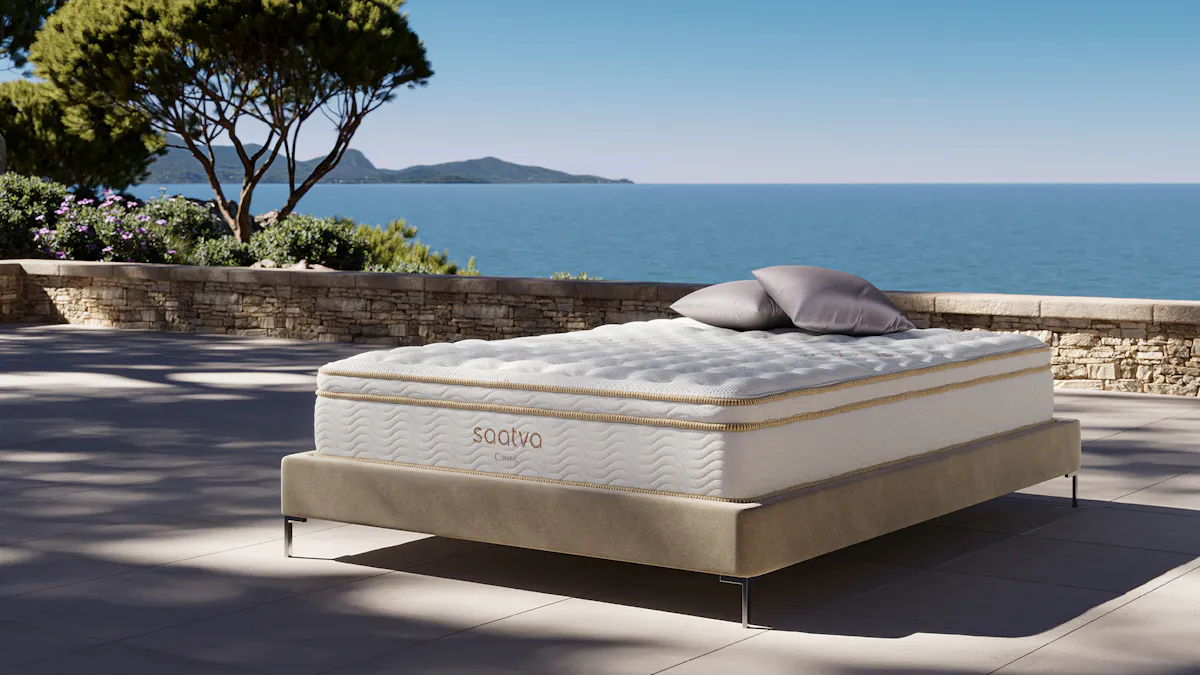
Readers ask why I return to certain beds as reference points. Simple: you need a control sample. Mine is the Saatva Classic. It's a coil-on-coil innerspring hybrid built in the USA, and per the brand it's America's best-selling luxury mattress online, backed by a generous sleep trial, a long warranty, and flexible financing. More importantly for my purposes, its construction is fully disclosed, which makes it a clean yardstick. When I evaluate another hybrid, I ask how its coil unit, comfort layers, and edge support stack up against that known quantity.
That's also how I'd suggest you use this site. Read my verdicts, then read my reasoning. If the reasoning holds up against other independent sources, trust the verdict. If it doesn't, trust the sources that show their work. The Yogabed reviews on this site follow the same structure, construction first, verdict second, and I'd rather you argue with my analysis than swallow it whole.
Unbiased doesn't mean opinion-free. It means the opinion is earned, shown, and checkable. That's the standard. Hold me to it.
FAQ
Can a mattress review site be unbiased if it earns commissions?
Yes, if it discloses the model and still publishes real criticisms. Affiliate revenue pays for testing and content; the bias problem starts when rankings follow payouts and no weaknesses are ever mentioned. Judge the methodology, not the business model alone.
How many reviews should I read before buying a mattress?
At least two or three independent takes on the same model, plus a scan of verified owner reviews sorted by most critical. Converging opinions on firmness and sleeper fit are far more trustworthy than any single score.
What's the most reliable spec to compare across mattresses?
Construction details: foam density, coil type and count, layer order, and cover material. These are checkable facts that predict durability and feel, unlike subjective comfort adjectives that vary from reviewer to reviewer.
Are "best mattress" roundup lists trustworthy?
Some are. Trust the ones that publish testing methods, differentiate winners by sleeper type and body weight, and include cons for each pick. Be skeptical of lists where every mattress is perfect and every description reads like an ad.
Should I trust brand-site customer reviews?
Yes, but read them strategically. Sort by lowest rating and look for repeated patterns rather than individual complaints. Recurring themes around sagging, heat, or firmness changes over time are the most useful durability signal available to a shopper.
FINAL VERDICT
Bottom line for a reader hunting unbiased mattress reviews: if you want claims you can check against a real warranty, the Saatva Classic is the safer buy — the 365-night trial and lifetime warranty put the risk on the brand, not on you.
OUR CATEGORY-MATCHED PICK
Saatva Classic
- 365-night home trial and lifetime warranty, per saatva.com
- Handcrafted in the USA, free white-glove delivery
- Flexible financing available