
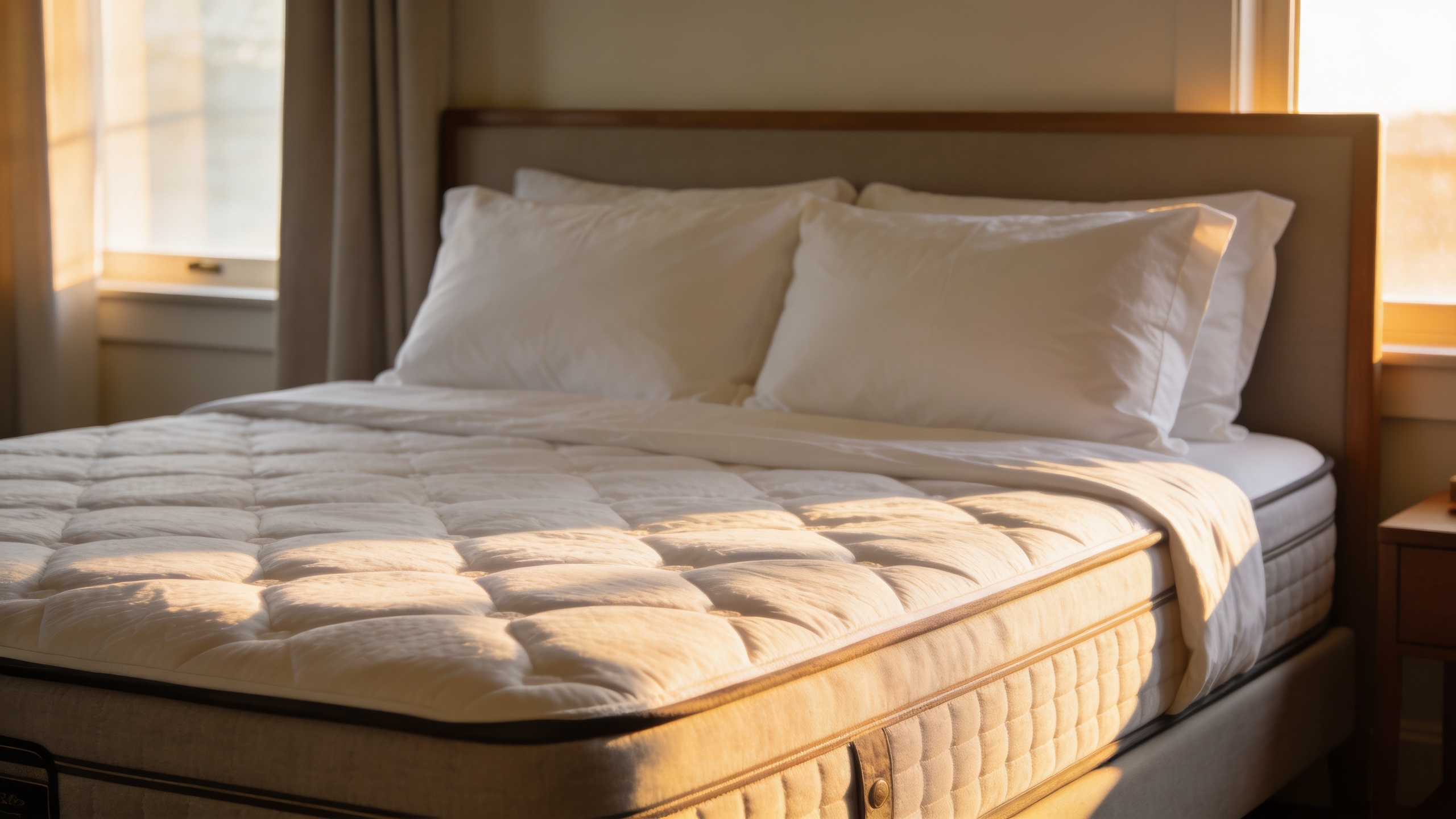
 by
by A hypoallergenic mattress minimizes the presence of common allergens, dust mites, mold, pet dander, and latex proteins, through material selection, construction, and maintenance design. No mattress eliminates allergens entirely, but the right combination of materials and a good mattress protector can dramatically reduce allergen exposure during sleep.
What is the best hypoallergenic mattress?
The best hypoallergenic mattress is one built from materials that give dust mites and mold nowhere to thrive, with a Medium feel that works for back, side, and stomach sleepers. The Amerisleep AS3 is our #1 recommendation: it uses Bio-Pur foam in a Medium feel designed to balance support and softness for every sleep position, and it comes with a 100-night trial, a 20-year warranty, and free shipping and returns. Pairing it with an allergen-proof encasement and weekly hot-water sheet washing keeps allergen levels low. For a luxury innerspring alternative, the Saatva Classic offers a different feel with white-glove delivery. A mattress does not treat allergies or asthma; consult a doctor for persistent symptoms.
Amerisleep AS3
The Amerisleep AS3 suits shoppers wanting a hypoallergenic-friendly bed with a balanced Medium feel in Bio-Pur foam that works for every sleep position, backed by a 100-night trial and 20-year warranty.
Common Mattress Allergens
- Dust mites: The most significant mattress allergen. Microscopic arachnids that feed on dead skin cells. Their feces are the actual allergen. Thrive in warm, humid environments, mattresses are ideal habitat. A typical mattress can harbor 100,000 to 10 million dust mites.
- Dust mite feces and body fragments: These proteins trigger IgE-mediated allergic reactions in sensitive individuals. Symptoms: sneezing, runny nose, itchy eyes, nasal congestion, worsened asthma.
- Mold spores: Develop in mattresses exposed to moisture from sweat or spills not dried properly. Releases spores and mycotoxins.
- Pet dander: Proteins from pet skin cells, saliva, and urine. Highly allergenic, extremely lightweight, and clings to fabric surfaces.
- Natural latex proteins: Hevea latex allergy affects 1-6% of the population. Relevant only when considering natural latex mattresses.
Best Hypoallergenic Mattress Materials
Natural Latex
Natural latex is inherently antimicrobial and resistant to dust mites and mold. The open-cell structure allows airflow that prevents the warm, humid conditions dust mites require. Best choice for dust mite and mold allergen reduction (except for those with latex allergies).
Dense Foam with Tight Cover
High-density memory foam with tight-weave fabric covers creates less hospitable habitat for dust mites than loose, fluffy materials. Hybrid mattresses with open coil systems can harbor more dust mites in the coil section.
Wool
Wool's lanolin content creates a naturally inhospitable environment for dust mites. Wool also wicks moisture, reducing the humidity that dust mites require. Organic wool is preferred, conventional wool processing may use chemical treatments that offset natural benefits.
Best Hypoallergenic Mattresses
- Amerisleep AS3: Our #1 pick. Medium feel, Bio-Pur foam, works for every sleep position. 100-night trial, 20-year warranty, free shipping and returns. Learn more.
- Saatva Zenhaven: All-latex, naturally antimicrobial and dust mite resistant. GOLS certified. $1,995-$2,795 queen.
- Avocado Green: Latex + organic wool + GREENGUARD Gold. Maximum certification stack. $1,699-$2,199 queen.
- Puffy Lux Hybrid: CertiPUR-US certified, tight-weave cover, no fiberglass. Good budget-conscious hypoallergenic option. $1,699 queen.
- Nectar Premier Copper: Copper-infused cover with antimicrobial properties. CertiPUR-US certified. $1,499 queen.
The Essential Add-On: Allergen-Proof Mattress Encasement
The single most impactful intervention for mattress allergen reduction, more important than the mattress material itself, is a six-sided allergen-proof mattress encasement. This zippered cover completely seals the mattress, creating a physical barrier between you and any dust mites already inside the mattress.
Key features for an effective allergen-proof encasement:
- Pore size less than 10 microns (blocks dust mite allergens averaging 10-40 microns)
- Zipper with a secure end flap or zipper enclosure
- Machine washable at 130°F+ to kill dust mites in the encasement itself
- Breathable membrane, not crinkly plastic
Recommended encasements: SafeRest Premium Zippered Encasement ($35-$60), Protect-A-Bed AllerZip ($60-$110), Mission Allergy Mattress Encasement ($80-$130).
Maintenance Protocol for Allergy Sufferers
- Wash all bedding in 130°F+ water weekly, kills dust mites on contact
- Vacuum mattress encasement monthly with HEPA vacuum
- Maintain bedroom humidity below 50%, dust mites cannot survive below 40-50% relative humidity
- Use HEPA air purifier in the bedroom
- Keep pets off the bed
- Replace pillows every 1-2 years, pillows accumulate allergens rapidly
What is the best hypoallergenic mattress material?
Natural latex, inherently antimicrobial, resists dust mites and mold. Organic wool is also naturally dust mite resistant. Both are superior to polyurethane foam for allergen reduction.
Does a new mattress reduce allergens?
Temporarily yes, but without an encasement, allergen levels rebuild within months. A new mattress plus allergen-proof encasement plus weekly hot-water sheet washing is the effective protocol.
Can a mattress cause allergic reactions?
Yes, dust mite allergens in mattresses are a major trigger for year-round allergic rhinitis and asthma. Allergen-proof encasements have clinical evidence of symptom improvement.
Is memory foam or latex better for allergies?
Natural latex is better, antimicrobial properties and moisture-wicking make it less hospitable to dust mites. Both benefit significantly from an allergen-proof encasement.