
 by
by Quick answer: Your trundle mattress doesn’t have to match the 8-inch daybed mattress. It must fit below the daybed’s lowest obstruction, with spare clearance for smooth opening and closing.
- The upper mattress thickness doesn’t determine the trundle mattress thickness.
- Measure from the trundle’s mattress support to the lowest part of the daybed above it.
- Include any bedding or mattress protector that will remain on the trundle while it’s stored.
Updated July 2026 · Reviewed for accuracy
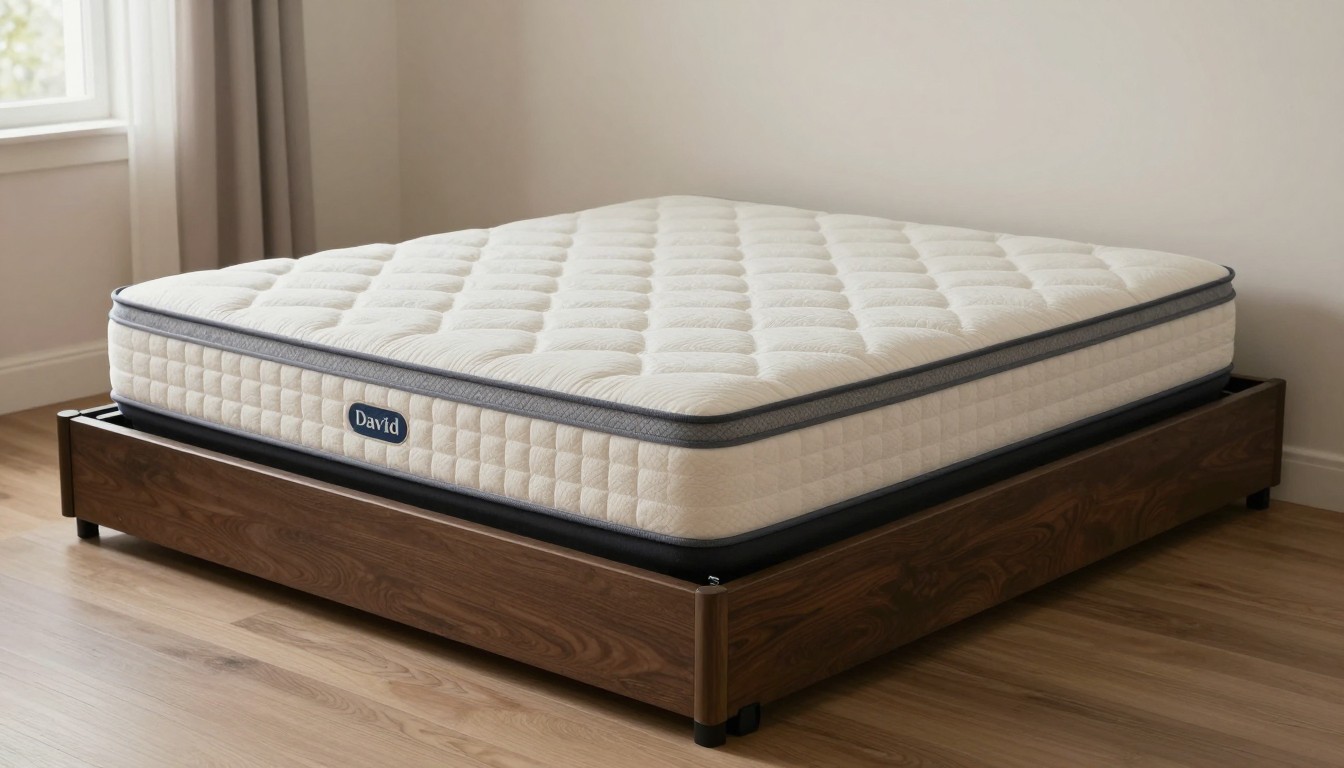
I’m assuming “david” means “daybed.” If so, the 8-inch mattress on top doesn’t tell us how thick the trundle mattress should be. The trundle frame and the space beneath the daybed make that decision.
An 8-inch mattress may fit on the trundle, but only if the closed trundle has more than 8 inches of usable vertical space. If the measured opening is exactly 8 inches, I’d treat that mattress as too thick because it leaves no room for bedding, movement, or minor variations in the frame.
Your 8-inch daybed mattress doesn’t set the answer
The upper mattress and the trundle mattress occupy separate spaces. The top mattress sits above the daybed’s support system, while the trundle has to pass through the opening below that system. Changing the top mattress usually changes the sleeping height above the frame, not the clearance underneath it.
That means there’s no rule requiring the two mattresses to have the same thickness. A matching pair may look balanced when a pop-up trundle is raised, but matching thickness is a design preference, not proof that the lower mattress will fit when stored.
The critical limit is the lowest solid part above the closed trundle. That might be a support rail, a slat, a crossbar, a bolt, or part of a lifting mechanism. Measure to that obstruction rather than to the decorative outer edge of the daybed.
The Nut’s rule: Ignore the upper mattress thickness while checking storage clearance. Start at the trundle’s actual sleeping surface and measure straight up to the lowest obstruction.
If “David” is the name of a particular bed rather than a typo for daybed, the same principle applies. Check that frame’s instructions for an allowed trundle mattress profile, then compare the stated limit with a careful physical measurement. The model name alone isn’t enough to establish the available space.
Measure the closed space, not the open trundle
The decisive measurement is the vertical gap inside the daybed while the trundle is in its stored position. Measuring the trundle after pulling it into the room can miss rails or hardware that hang over it only when it slides beneath the main frame.
Remove the lower mattress and push the empty trundle fully under the daybed. Find the surface that directly supports the mattress, then locate the lowest overhead obstruction along the entire path. The usable mattress space is the gap between those two points, minus enough breathing room for the assembled bed to operate without scraping.
I’d check the front, middle, rear, and both sides. A single generous spot can be misleading if a central support or mechanism sits lower elsewhere. Keep the measuring tool vertical rather than following a sloped side panel.
Measurement checklist
- Place the daybed and trundle on the flooring where they’ll be used.
- Push the trundle into its fully closed position.
- Measure from the top of the mattress support, not from the floor.
- Find the lowest rail, slat, fastener, or mechanism above that support.
- Check several points across the complete storage path.
- Allow room for anything that will stay on top of the mattress while stored.
If you can only measure from the floor, subtract the distance between the floor and the top of the trundle’s mattress support. Then subtract a practical amount of clearance. That gives you the maximum finished mattress height the space can accept.
The word “finished” matters. The relevant height includes the complete mattress cover and its lofted top surface, not just the internal foam or coil unit. Use the manufacturer’s stated finished height for the candidate mattress, but don’t let that replace measuring the frame.
Flooring also deserves attention. A trundle on a thick rug can sit or track differently from one on a hard floor. Measure after the furniture is in its intended location so the result reflects the way the trundle will actually close.
Can the trundle also use an 8-inch mattress?
An 8-inch trundle mattress fits only if the measured closed clearance is greater than the mattress’s full 8-inch profile, plus anything you plan to store on it. The fact that the daybed already has an 8-inch mattress doesn’t make the same size suitable below.
If the available gap exactly matches the mattress height, I wouldn’t call that a fit. A mattress shouldn’t need to be pushed down, bent, or dragged against the underside of the daybed. An exact-height match also leaves no allowance for a protector, fitted sheet, or slightly raised quilting.
Decide whether the trundle will be stored bare or fully made. If sheets and a protector will remain in place, measure the complete stack. If you’re willing to remove all bedding before closing the trundle, base the calculation on the bare mattress, but be honest about whether that routine will remain convenient.
Likely workable
The mattress and stored bedding remain clearly below every overhead obstruction, and the trundle closes without contact.
Too close to call
The mattress touches the frame, needs compression to pass underneath, or fits only after the trundle is pushed off its normal track.
Don’t assume the mattress will stay compressed enough to solve a clearance problem. The fit should work with the mattress resting naturally on its support. If the 8-inch mattress crowds the opening, choose a lower-profile option that stays beneath the measured limit.
If you’re unsure how mattress profile terminology is used, my guide to standard mattress thickness provides useful background. The final decision still comes from your daybed’s actual under-frame clearance.
Pop-up and roll-out trundles need different checks
A pop-up mechanism creates two fit questions: whether the mattress fits while stored and where its sleeping surface lands when raised. A low roll-out trundle mainly has to clear the daybed while moving in and out. A drawer-style frame can add side walls that limit how the mattress sits inside the lower unit.
| Trundle design | Main fit check | What can interfere | Practical implication |
|---|---|---|---|
| Low roll-out frame | Closed clearance below the daybed | Rails, slats, fasteners, and bedding | Choose a profile that rolls underneath without rubbing. |
| Pop-up mechanism | Closed clearance and raised sleeping height | Lift arms, braces, hinges, and crossbars | Confirm storage fit first, then check how the raised surfaces align. |
| Drawer-style trundle | Space inside the drawer and below the daybed | Side panels, inner lips, handles, and base supports | The mattress must sit naturally inside the lower frame as well as pass below the upper one. |
With a pop-up model, equal mattress thicknesses don’t automatically create a level combined surface. The raised platform height also affects alignment. If placing the two beds side by side matters, raise the empty trundle and compare its mattress support with the upper daybed support before choosing the lower mattress profile.
For a roll-out guest bed, alignment with the upper mattress may not matter at all. The lower mattress can be thinner if that’s what the frame requires. I’d prioritize reliable storage clearance over making the two mattresses look identical.
A drawer-style trundle needs another horizontal check. The mattress must lie flat within the inner frame rather than perching on a side lip or pressing against hardware. Thickness solves only the vertical part of the fit question.
Check the support, too: The surface beneath a trundle mattress affects both fit and how the mattress is held. See what can sit under a mattress before adding an extra board, pad, or foundation that would raise the sleeping surface.
Choose comfort after the frame sets the height limit
The measured clearance is a hard ceiling. Construction and comfort choices come after that. A comfortable mattress that can’t slide below the daybed isn’t a usable trundle mattress.
Once you know the permitted profile, look at the layer breakdown rather than judging the mattress by thickness alone. Foam type, foam density, coil design, quilting, and the firmness of the support layers all affect how the available space is used. Two mattresses with the same finished height can have very different internal constructions.
An all-foam design can devote its full profile to foam layers, but the label “foam” doesn’t establish quality or durability. I’d ask the manufacturer for the composition and density of each layer. Vague descriptions make it difficult to judge whether the mattress has a substantial support core or mostly soft padding.
Construction question to ask: “What materials and layers make up the finished mattress height?” That answer is more useful than a general claim that the mattress is made for trundles.
A coil mattress can provide a different support feel, but coils alone don’t prove durability. The coil construction, border design, padding above the unit, and overall finished profile all matter. Bulky quilting or a pronounced edge can also use space that looked available on paper.
Think about who will use the trundle and how often. A bed intended for frequent adult use puts more emphasis on sustained support and material quality. An occasional guest setup may place greater weight on easy storage, but it still needs a mattress that supports the intended sleeper without relying on the daybed frame to compress it.
If the mattress will be enclosed while stored, keep the area clean and dry before closing it. A removable cover may also make routine care easier. My guide to a zippered trundle bed mattress explains the practical reasons some owners consider that format.
Don’t add a separate foundation unless the trundle was designed for one. Any extra layer beneath the mattress reduces overhead clearance by raising the complete stack. If the frame instructions call for the mattress to rest directly on slats, a deck, or a link-style support, calculate the fit from that specified surface.
The fit decision I’d make
The right trundle mattress is the thickest suitable construction that remains clearly below the daybed’s lowest obstruction in normal use. “Clearly below” matters more than achieving a visual match with the 8-inch mattress above.
I’d first measure the empty trundle in its closed position. Then I’d decide whether bedding will remain on it, check the candidate mattress’s finished profile with the manufacturer, and reject any option that merely equals the measured gap.
Bottom line
- Your top 8-inch mattress doesn’t determine the lower mattress height.
- An 8-inch trundle mattress is possible only when the closed frame provides more space than the mattress and stored bedding require.
- If the mattress touches, rubs, or must be forced below the daybed, choose a thinner profile.
- For a pop-up trundle, check both closed clearance and raised-bed alignment.
If the frame manufacturer provides a maximum mattress profile, treat that instruction as the upper limit and confirm it against your physical measurement. If the documented limit and the measured space disagree, pause before buying and ask the frame manufacturer which obstruction or measuring point controls the fit.
ONE OPTION WORTH COMPARING
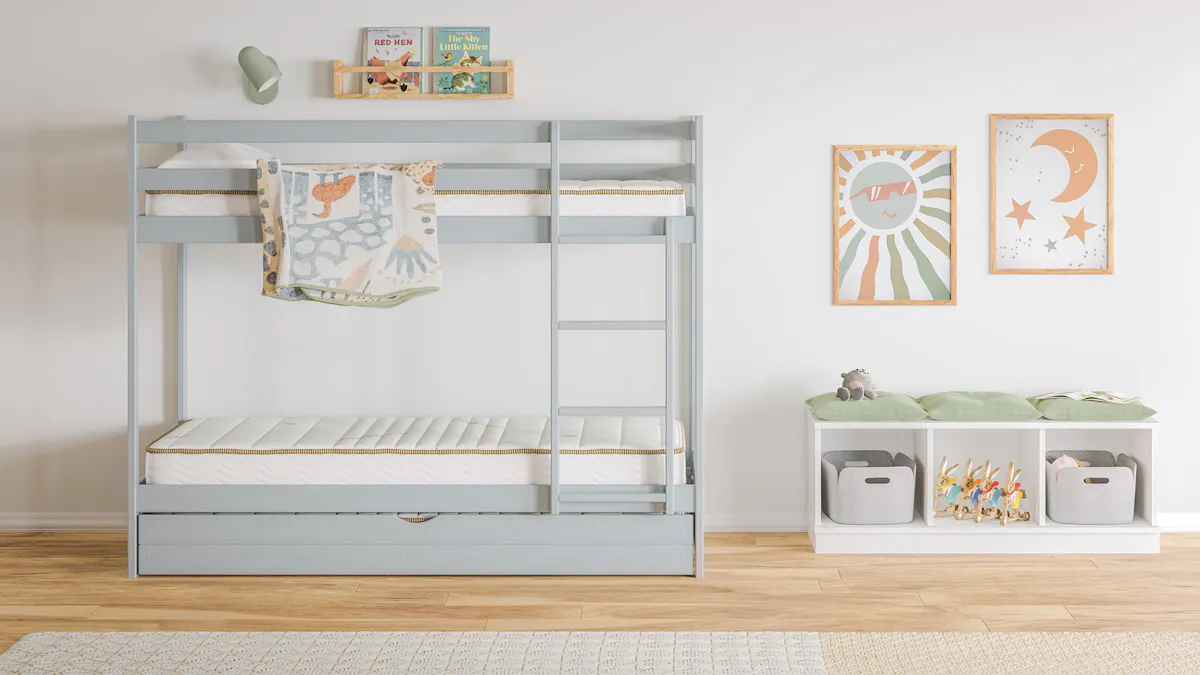
Shopping as well as reading? Here is one current option worth comparing: the Saatva Bunk Trundle Youth. Check today’s price, sizing and return terms on the official product page before you order.
Saatva Bunk Trundle Youth
- See the product page for full specs and current pricing
FAQ
Does a trundle mattress have to be thinner than the daybed mattress?
No. The two mattresses don’t have a fixed thickness relationship. The trundle mattress can match the 8-inch upper mattress only if the closed under-bed space has enough clearance for it.
Is exactly 8 inches of clearance enough for an 8-inch mattress?
I wouldn’t rely on an exact match. It leaves no breathing room for the mattress cover, bedding, frame hardware, or smooth movement, so a lower-profile mattress is the safer fit unless a new measurement shows more usable space.
Should I measure the trundle with sheets on it?
Measure the setup exactly as you plan to store it. If the protector and fitted sheet will stay on the mattress, include them in the completed stack; if all bedding will be removed, measure the bare mattress space.
Does a pop-up trundle need the same mattress thickness as the top?
Not necessarily. The lower mattress must fit beneath the daybed first, while the raised mechanism and both support heights determine whether the sleeping surfaces align. Measure the supports in both the closed and raised positions.
What should I do if I can’t find the daybed’s mattress limit?
Measure from the trundle’s support surface to the lowest overhead obstruction with the unit fully closed. Leave practical clearance rather than filling the entire gap, and ask the frame manufacturer to confirm the limit if hinges, braces, or unusual hardware make the measuring point unclear.