
 by
by Quick answer: Yes, it can be legal to sell a used mattress, but the answer depends on local rules, seller status, condition, disclosures, and any sanitation or labeling requirements.
- A one-off private sale may be treated differently from repeated commercial resale.
- A marketplace accepting the listing doesn’t prove the sale is lawful.
- Honest disclosures help, but they can’t cure a sale that local law prohibits.
Updated July 2026 · Reviewed for accuracy
You shouldn’t assume that every used mattress sale is legal, and you shouldn’t assume that every one is banned. The decisive rules can change with the sale location, the seller’s activity, the mattress’s condition, and the way it is described or treated.
My advice is simple: verify the rule that applies at the pickup or delivery location before publishing the listing. That small check is far safer than relying on what another seller did or what a marketplace allowed online.
The short legal answer
The word used doesn’t decide legality by itself. The real question is whether the specific transfer complies with the rules governing resale, sanitation, labeling, business activity, and truthful advertising in that jurisdiction.
That means a lawful sale in one place isn’t proof that the same transaction is permitted somewhere else. It also means the answer can differ between a household selling one unwanted mattress and a reseller acquiring mattresses for repeated commercial sales.
I’d separate the issue into two gates. First, determine whether the mattress may legally be resold in its present condition. Second, determine whether you must clean, treat, label, document, or describe it in a particular way before completing the sale.
The practical rule: Don’t list a used mattress until you can identify the governing jurisdiction, confirm whether your seller type matters, and understand any condition, treatment, or labeling requirements.
Written disclosures are valuable, but they aren’t a substitute for compliance. Calling an item “as is,” getting the buyer’s agreement, or lowering the price doesn’t automatically make an otherwise prohibited transaction lawful.
If you want an initial map of the issue, our guide to states where selling used mattresses may be restricted can help frame your search. Treat it as a starting point, then confirm the current rule through the appropriate state or local authority.
Which rules can control a used mattress sale?
A clean-looking surface isn’t the only issue a seller may need to resolve. Depending on the jurisdiction and transaction, the relevant questions can concern resale eligibility, sanitation, labeling, licensing, advertising, or waste-handling rules.
Start with state requirements, then check whether the county or city imposes an additional condition. Search official government pages for used bedding, secondhand bedding, mattress resale, sanitation, consumer affairs, and business licensing. If the wording is unclear, ask the responsible agency to identify the rule that applies to a private sale.
Be precise about the facts when asking. Say whether you are the original household owner, whether you sell used goods regularly, where the buyer will receive the mattress, and whether anyone has cleaned, altered, re-covered, or commercially treated it.
| Layer to check | What to verify | What isn’t enough |
|---|---|---|
| State or local law | Whether resale is permitted and whether treatment, tagging, or documentation applies | Seeing similar local listings online |
| Seller status | Whether occasional household sales and recurring resale activity are handled differently | Calling a business sale a private transaction |
| Marketplace policy | Whether the platform permits the listing and requires particular disclosures | Assuming platform approval is government approval |
| Condition and claims | Whether the description is accurate and any treatment claim can be supported | Using vague terms such as “sanitized” without documentation |
A marketplace’s rules and the law are separate checks. A platform can prohibit something the law would otherwise allow, and its automated listing process may fail to identify a transaction that local rules restrict. You need both forms of permission where both apply.
Consumer-protection concerns matter as well. Don’t conceal stains, odors, tears, structural damage, possible contamination, uncertain history, or treatment status. A buyer’s chance to inspect the mattress doesn’t excuse a false statement in the listing.
Private sellers and businesses face different questions
One mattress leaving a household and a recurring stream of resale inventory are different fact patterns. A regulator may consider the frequency of sales, where the items came from, how they were advertised, whether they were treated, and whether the seller presents the activity as a business.
Don’t assume that describing yourself as a private seller settles the issue. If you regularly acquire, refurbish, advertise, or resell mattresses, ask the relevant business-licensing or consumer-affairs office whether commercial secondhand-bedding requirements apply.
A genuine one-off seller should still check the local rules. Private status may affect which requirements apply, but it isn’t a universal exemption. The mattress’s condition and the truthfulness of the listing remain central concerns.
Facts to give the agency:
- Whether this is an occasional household sale or recurring activity
- Where the mattress will be picked up or delivered
- Whether it was purchased new or acquired secondhand
- Whether it has been repaired, re-covered, cleaned, or professionally treated
- Whether any original or added labels remain attached
Consignment doesn’t automatically remove these questions. Before leaving a mattress with a shop, ask who legally acts as the seller, who is responsible for required treatment or labels, and what proof the shop provides. Keep the answer in writing.
Giving the mattress away can also be a distinct transaction rather than an automatic loophole. A charity, reuse organization, building manager, or community group may have its own acceptance policy, and local health or waste rules may still affect what can be transferred.
How to verify the law before publishing a listing
The pickup or delivery location is the first fact to pin down. That location tells you which state and local rules to investigate, while the platform’s headquarters or the buyer’s online profile may have little to do with the physical transaction.
-
Identify the full transaction. Decide where the mattress is now, where ownership and possession will change, whether delivery crosses a jurisdictional boundary, and whether you are selling privately or as part of recurring activity.
-
Use official government pages. Look for the state or local department handling consumer affairs, public health, business licensing, secondhand goods, or solid waste. Our broader article on when a used-mattress sale can become illegal can help you identify the right questions, but the current government rule should control your decision.
-
Ask about the mattress specifically. “Used furniture” may be too broad a category. Ask whether the jurisdiction has a rule for used mattresses, used bedding, rebuilt bedding, or secondhand upholstered goods.
-
Clarify treatment and labeling. Ask whether cleaning or sanitation is required, whether a particular provider must perform it, whether proof must accompany the item, and whether a specific label is required before sale.
-
Check your seller status. Explain your sales frequency and sourcing honestly. Ask whether a license, registration, inspection, record, or other business obligation applies to your activity.
-
Save the answer. Keep the official webpage, written agency response, treatment record, photographs, and final listing. Rules and pages can change, so note when you checked them.
Useful wording for an agency inquiry: Explain that you plan to transfer a used household mattress at a stated location. Describe whether the sale is occasional or commercial, then ask which resale, sanitation, labeling, and licensing rules apply.
If an official page uses unfamiliar terms, don’t guess that your mattress falls outside them. Ask whether terms such as secondhand bedding, renovated bedding, or used bedding include the item you intend to sell.
I’d also avoid relying on an old forum answer, a seller’s social-media post, or a search-result snippet. Those can omit local rules, commercial-seller distinctions, amendments, or effective dates. Get as close to the governing text or responsible agency as possible.
How to describe and hand over the mattress responsibly
A useful listing identifies the mattress as used in its first line. Don’t bury that fact below flattering language, and don’t describe it as new merely because it received little use or still looks clean.
Describe only what you know. Include the known ownership history, general amount of use, visible wear, stains, odors, tears, sagging, repairs, storage conditions, and exposure to pets or smoke. If part of the history is unknown, say that directly.
Photographs should show the actual mattress in its current condition. Include clear views of the sleep surface, sides, underside, seams, labels, and any defect mentioned in the description. Don’t use a manufacturer’s pristine product image as the main evidence of present condition.
A responsible listing should make these points clear:
- The item is used
- The ownership and storage history is known, partly known, or unknown
- Visible wear and defects are disclosed
- Any cleaning or treatment claim is supported by a record
- The buyer may inspect the current condition before accepting it
Be especially careful with sanitation language. Ordinary household cleaning and a legally recognized treatment aren’t necessarily the same thing. Don’t say “professionally sanitized,” “certified,” “sterilized,” or “pest-free” unless you have reliable documentation supporting the exact statement.
For more help creating a clear, non-misleading listing, see our guide to advertising a used mattress for sale. The goal isn’t to make the mattress sound flawless. It’s to give the buyer enough accurate information to make an informed decision.
Before the handover, let the buyer compare the mattress with the photographs and description. Keep a copy of the final listing and any messages about condition or treatment. If you use a bill of sale, identify the parties, the item, the date, the agreed payment, and the disclosures provided.
An “as is” statement can document the agreed condition, but it shouldn’t be used to conceal a known problem or bypass a mandatory rule. A private agreement also can’t guarantee that the transaction complies with state or local law.
When you shouldn’t sell the mattress
Visible contamination or an unsupported treatment claim should stop the listing. So should an official rule that prohibits the transfer or imposes a requirement you can’t satisfy.
Don’t sell if you know or reasonably suspect that the mattress has an active pest problem, mold, significant bodily-fluid contamination, or another condition that makes honest and responsible transfer impossible. Covering a stain, adding fragrance, or wrapping the mattress doesn’t resolve the underlying issue.
You should also stop if a required label, treatment record, license, or inspection is missing and the responsible authority won’t confirm that the sale may proceed without it. The potential sale price isn’t worth creating a legal or health dispute.
Do not proceed if:
- The relevant authority says the transaction is prohibited
- You can’t meet an applicable treatment or labeling requirement
- The condition materially differs from the listing
- You would need to make an unsupported sanitation or safety claim
- The mattress has a known condition that you shouldn’t pass to another household
Donation isn’t the fallback for every unsellable mattress. Ask the intended recipient whether it accepts used mattresses in that condition and whether any documentation is required. If reuse isn’t appropriate, contact the local waste or recycling authority for the lawful disposal route.
Buyers considering a secondhand bed can use our used mattress buying guide to assess condition, history, and seller disclosures. As a seller, reading the same questions is useful because it shows what information a careful buyer will reasonably request.
My bottom line is firm: sell only after you have checked the current rule, can describe the mattress honestly, and can satisfy every applicable condition. If any of those pieces is missing, pause the sale.
ONE OPTION WORTH COMPARING
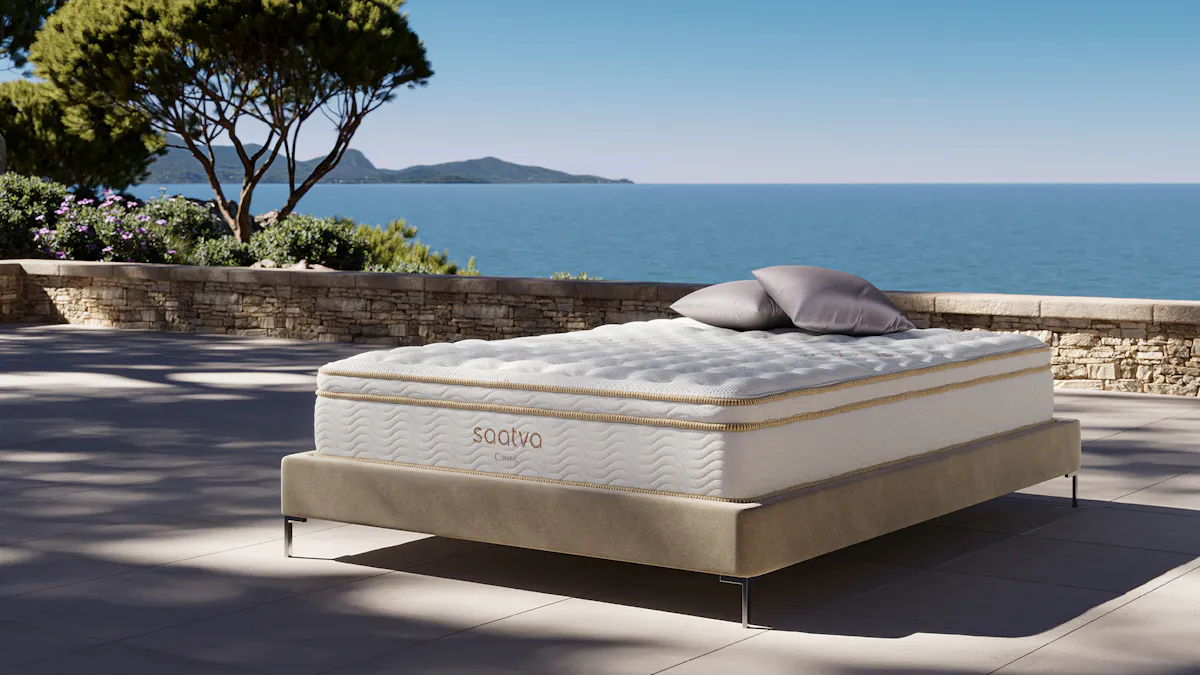
Shopping as well as reading? Here is one current option worth comparing: the Saatva Classic. Check today’s price, sizing and return terms on the official product page before you order.
Saatva Classic
- 365-night home trial and lifetime warranty, per saatva.com
- Handcrafted in the USA, free white-glove delivery
- Flexible financing available
FAQ
The recurring issue in these questions is that online permission, buyer consent, and legal permission aren’t interchangeable. Each transaction needs to be checked against the rules that apply where it takes place.
Is it legal to sell a used mattress in every state?
You shouldn’t assume a single rule applies everywhere. State and local requirements may differ based on seller status, mattress condition, sanitation, labeling, and the location of the transfer.
Check the current official guidance for the relevant jurisdiction before listing. If the published language is unclear, ask the responsible agency about your exact transaction.
Can I sell a used mattress on an online marketplace?
Only if both the marketplace rules and applicable law allow the transaction. The fact that a platform accepts or publishes a listing isn’t proof of legal compliance.
Read the platform’s current prohibited-items and disclosure policies, then complete the separate state and local law check. Remove the listing if either set of rules prohibits it.
Do I have to sanitize a mattress before selling it?
That depends on the rule governing the transaction. Ask whether treatment is required, what process qualifies, who may perform it, and whether a label or record must accompany the mattress.
Cleaning the surface at home shouldn’t be described as a legally compliant or professional sanitation process unless the applicable authority recognizes it and you can support the claim.
Can I give away a used mattress instead of selling it?
Possibly, but don’t assume that removing payment removes every restriction. The recipient may prohibit used mattresses, and local rules may still control transfer, sanitation, or disposal.
Confirm acceptance before transporting the item. If the mattress isn’t suitable or eligible for reuse, ask the local authority about the proper disposal or recycling route.
Does a bill of sale make the transaction legal?
No document can turn a prohibited sale into a lawful one. A bill of sale can record the parties, item, date, payment, condition disclosures, and treatment representations, but the underlying transaction still has to comply with applicable rules.
Use written documentation as evidence of an honest transfer, not as a substitute for checking the law. If you can’t verify that the sale is allowed, don’t complete it.