
 by
by Quick answer: If you already love your pillow, the most direct replacement is the same verified maker and model. Shopping fresh? Compare fill, shape, loft, cover and return terms before trusting a familiar name.
- Yawnder treats I Love Pillow and I Love My Pillow as separate labels that need comparison.
- Yawnder says the pillows it discusses use varied materials, including memory foam.
- Yawnder reports a 100-night trial for I Love My Pillow.
Updated July 2026 · Reviewed for accuracy
“I love my pillow” is an unusually slippery search. It can be a happy statement about the pillow on your bed, a search for the I Love My Pillow label, or shortened wording that leads to I Love Pillow or My Pillow. I’d resolve that identity first, because a near-match in name tells you very little about the construction inside.
What “I love my pillow” might actually mean
The difference between “I love my pillow” and “I love pillow” is one small word, yet Yawnder deliberately frames I Love Pillow and I Love My Pillow as labels to compare. That’s enough reason not to assume every similar-looking search result leads to the same pillow.
Capitalization won’t solve the problem. Written in lowercase, the phrase may simply mean that you want to replace a pillow you already enjoy. Written as I Love My Pillow, it may point to a product name. “Love my pillow” can also be a shortened query, while My Pillow introduces another name entirely.
One public search result is a Wikipedia company history for My Pillow, Inc., while Yawnder uses I Love My Pillow and I Love Pillow in its comparison language. I’d therefore treat those names as different until the manufacturer, model and seller information prove otherwise.
Identity check
- Read the full manufacturer name on the sewn-in tag.
- Match the exact model wording on the receipt or order email.
- Compare the fill description, cover and overall shape.
- Confirm that the retailer names the manufacturer, not just a marketplace seller.
- Save the care instructions if you’re trying to replace an older pillow.
If you already own the pillow, the label is more useful than its color or silhouette. Photograph the tag before the printing fades. An order history can be even better because it may preserve the exact product title and seller. A familiar outline alone can’t confirm what type of foam or other fill sits under the cover.
Separate the search phrases before shopping
A tag or order confirmation can settle what a name-based search leaves ambiguous. If neither is available, break the query into its possible meanings and verify each result instead of clicking the first familiar phrase.
| Search wording | What it may mean | What to verify |
|---|---|---|
| i love my pillow | A statement, a product-name search or an attempt to replace an existing pillow | Maker, model, fill and seller |
| i love pillow | A shortened phrase or the separate I Love Pillow label identified by Yawnder | Exact wording and manufacturer |
| love my pillow | A broad comfort query with no confirmed product identity | Whether the result names a specific product |
| My Pillow | Wording associated with My Pillow, Inc. in the Wikipedia company history | Company name and exact model |
| Japanese love pillow | A descriptive search that may surface different shapes and uses | Dimensions, fill, intended use and care label |
| Love pillow for couples | A use-case phrase rather than a complete construction specification | Shape, sleeping space and whether it suits both sleepers |
A query such as “i love my pillow Costco” adds a preferred retailer, but it doesn’t establish current availability or prove that similarly named listings are identical. Check the retailer’s current product page, then match its maker and construction wording against the item you intended to find.
The same issue appears when someone wants to recreate a memorable hotel bed. A hotel name is only the starting clue. Our guides to why hotel pillows feel comfortable and the bedding associated with Wyndham hotel pillows explain why identifying the actual pillow type matters more than chasing a general hotel label.
The Nut’s take: Search wording is a lead, not a specification. I won’t treat two pillows as equivalent until the maker, internal material and shape line up.
Comparing options? The Saatva Pillow is one category-matched product to investigate, not a documented winner — see the product note ↓
Read the construction before the marketing
Yawnder specifically says the pillows it discusses use varied materials, including memory foam. That tells you memory foam belongs in the conversation, but the words “memory foam” still don’t describe an entire pillow.
The first question is whether the internal material forms one continuous piece or can move within the case. A continuous piece keeps its molded geometry. Loose or movable fill behaves differently because its distribution can change. Neither format is automatically right for everyone, and a product name can’t tell you which feel you’ll prefer.
Shape comes next. A flat profile and a sculpted contour position the head differently even if both use related materials. Look at the side view rather than relying on a straight-on product photo. If there’s a raised edge, central recess or asymmetric surface, that geometry is part of the fit.
I also want to know whether the outer cover is removable, how the seams are finished and what the care label permits. The cover is the part closest to the sleeper, so fabric texture and cleaning instructions deserve more attention than decorative branding.
Construction details worth recording
- Internal form: continuous, movable or adjustable
- Surface shape: flat, curved, recessed or otherwise molded
- Profile: how high it sits after your head settles
- Cover: fixed or removable, plus the stated care method
- Closure: whether the design allows access to the fill
- Specification source: manufacturer page, packaging or law tag
Cooling language also needs context. Ask whether the named feature is in the cover, on the foam surface or within the internal design. A reference to gel, airflow or cooling fabric isn’t a substitute for a layer description. It tells you where to investigate, not how the whole pillow will feel in your room.
For durability, I look for information about the actual foam and the way the cover and closure are built. Without material detail, the word “memory foam” can’t support a useful durability comparison. On a pillow you already own, uneven rebound, persistent bunching, damaged seams and a failing closure are more informative than the logo.
Appearance is a separate issue from structure. If discoloration is the reason you’re thinking about replacement, read our explanation of why pillows turn yellow, then assess the care label and the pillow’s physical condition independently.
Match the loft and feel to your sleeping position
The useful loft is the height that fills the space between your head and the mattress in your normal sleeping position. That space changes with shoulder shape, body position and how far you settle into the mattress. A pillow that suits one bed may feel different after a mattress change.
For side sleeping, look at the gap created by the shoulder after the mattress compresses. The pillow should occupy that space without leaving the head visibly tilted toward the mattress or pushed away from it. A product’s unloaded height in a photograph won’t show how far it gives under your head.
For back sleeping, pay attention to whether the pillow supports the natural gap behind the neck without pushing the chin sharply toward the chest. With a contour, check which edge is intended to sit under the neck and whether rotating the pillow changes the effective height.
For stomach sleeping, reject any setup that visibly tips the face and chin upward. Start with less height and evaluate the compressed pillow, not its untouched shape. Combination sleepers should also notice whether the material returns to shape when they change positions or stays displaced.
A simple fit check
- Use the position in which you normally fall asleep.
- Let the pillow settle instead of judging it freshly fluffed.
- Check the angle of your head from behind or in a side photograph.
- Notice whether the fill holds, shifts or bunches as you turn.
- Repeat the check on your actual mattress rather than a sofa or floor.
Couples don’t necessarily need identical pillows, even if they share the same mattress. “Love pillow for couples” describes an intended audience, not each sleeper’s preferred loft or construction. Evaluate both people separately, especially if their usual positions or shoulder-to-mattress gaps differ.
Feel language can be slippery too. Softness describes how readily the surface yields, while support depends on what happens after the material compresses. I’d rather see a clear layer and shape description than a pile of comfort adjectives.
Use the reported trial as a decision window
Yawnder reports a 100-night trial for I Love My Pillow. That’s the only specific trial figure I’d rely on here, and I would still confirm the current terms with the exact seller before ordering.
A trial length doesn’t tell you whether an opened pillow qualifies for return, whether return shipping is charged or whether a marketplace seller follows the same policy as the manufacturer. Read those conditions directly. Save the product page and order confirmation so the policy attached to your purchase is easy to identify.
Use the decision window to answer focused questions. Does the compressed loft fit your usual position? Does the surface shape stay comfortable as you turn? Can you care for the cover in the manner stated on its label? Those observations are more useful than repeatedly asking whether the pillow feels “premium.”
Record before checkout
- The exact maker and model wording
- The seller responsible for the order
- The complete fill and shape description
- The current price and any separate delivery or return costs
- The trial, return and exchange conditions
- The cleaning instructions for both cover and core
Price needs the same discipline. Compare what is actually included rather than treating a higher price as proof of better foam. A removable cover, adjustable construction or a more suitable shape may matter to you, but only if the listing explicitly confirms that feature.
If you’re replacing a pillow you already love, factor in the risk of buying a near-match. A cheaper listing with vague manufacturer information may offer poor value if it isn’t the same construction. I’d pay more attention to identity and return eligibility than to a dramatic product title.
My verdict: choose the build, not the phrase
If your current pillow works for you, the exact verified replacement is the logical first choice. Start with the law tag, receipt or order history, then match the manufacturer, model, fill and profile. Don’t let a search result with nearly identical wording override those details.
If you’re shopping without an existing model to copy, treat “i love my pillow” as the beginning of the search. Yawnder’s distinction between I Love Pillow and I Love My Pillow shows why the name needs checking, while its memory-foam reference gives you only one part of the construction picture.
My bottom line is simple: buy for the fit you can verify. The right pillow should match your sleeping position, mattress and preferred material behavior. A catchy name can help you find a listing, but it can’t make that decision for you.
Who should keep searching?
- Anyone who can’t confirm the manufacturer behind a marketplace listing
- Anyone whose preferred loft conflicts with the pillow’s visible profile
- Anyone who needs washable components that the care label doesn’t confirm
- Anyone relying on the reported trial without checking the current seller terms
ONE OPTION WORTH COMPARING
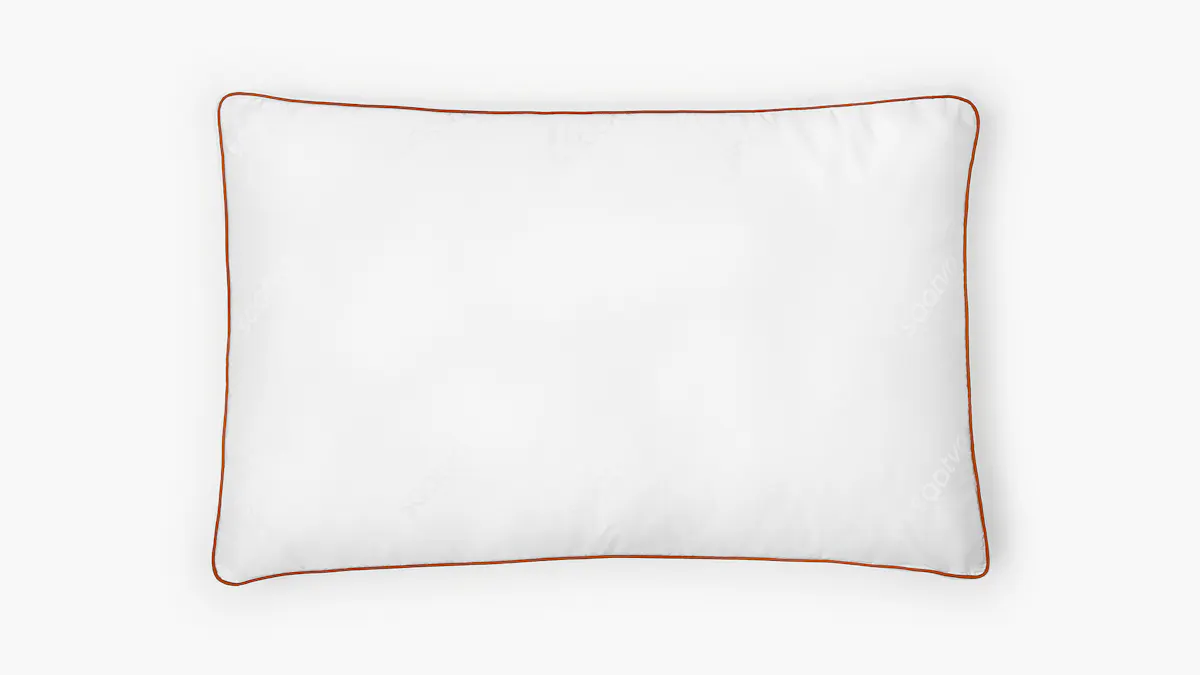
Shopping as well as reading? Here is one current option worth comparing: the Saatva Pillow. Check today’s price, sizing and return terms on the official product page before you order.
Saatva Pillow
- Shredded natural latex core, per saatva.com
- 45-day free returns
- Machine-washable organic cotton cover
FAQ
Are I Love Pillow and I Love My Pillow the same?
Don’t assume they are. Yawnder frames I Love Pillow and I Love My Pillow as labels to compare, so verify the manufacturer, exact model and fill before treating two listings as equivalent.
Does I Love My Pillow contain memory foam?
Yawnder says the pillows it discusses use varied materials, including memory foam. That doesn’t establish an identical build across every listing or model, so read the exact construction description attached to the pillow you’re considering.
Does I Love My Pillow have a 100-night trial?
Yawnder reports a 100-night trial for I Love My Pillow. Confirm the current policy with the exact seller because the return conditions matter just as much as the stated length.
Are Japanese love pillows and love pillows for couples the same thing?
Those are broad use-case phrases, not enough information to establish a shared maker or construction. Check the intended use, dimensions, shape, internal material and care instructions for each listing rather than matching them by the word “love.”
Can I buy I Love My Pillow at Costco?
A search for “i love my pillow Costco” doesn’t confirm current stock. Check Costco’s current listings and verify the named manufacturer, model and fill before assuming a similarly titled pillow is the product you meant.