

 by
The $0 habit that helped me finally sleep through the night was resetting tomorrow before I got into bed. I stopped treating my bedroom like a storage zone and started treating it like a landing place. The sheet helped, too, but the routine came first. That changed everything!
- Build the Nightly Shutdown
- The Sheet Reset
- Move the Phone Beyond Reach
- Three Light Sources, One Softer Evening
- Benjamin Moore White Dove and the Cold-White Problem
- Where Should the Rug Land?
- Create a Bedside Landing Zone
- Hang Curtains Above the Frame
- Use the Two-Wood Rule
- Calm Color, Less Repetition
- Keep a Night Basket for Tomorrow
- What Does a Bedroom Refresh Really Cost?
- Choose Soft Materials With Structure
- What Is Keeping the Room Awake?
- Layer Habit Stacking Instead of More Products
1Build the Nightly Shutdown
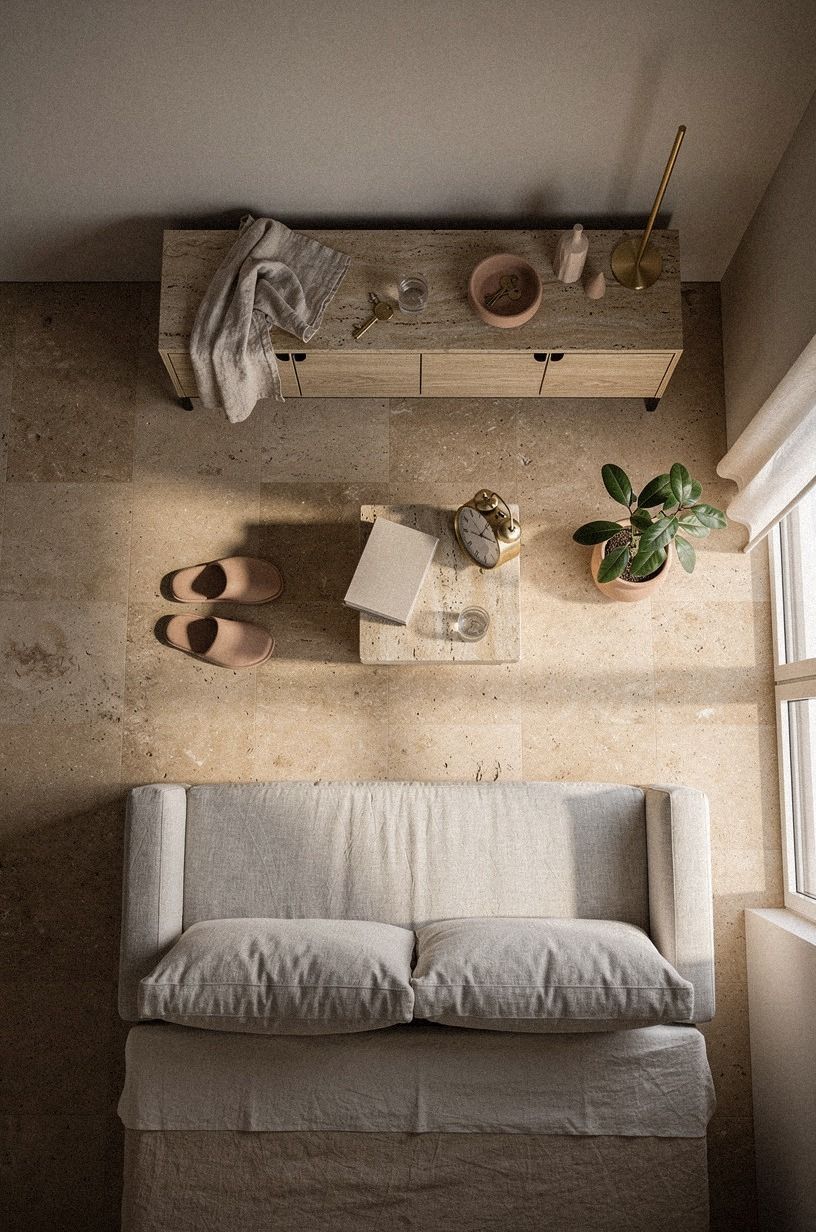
My sleep-deprived mom routine used to end with laundry on the chair, school papers on the dresser, and tomorrow’s worries circling my head. Now I do a quick visual reset before bed. Shoes go by the door, cups leave the nightstand, and anything that belongs downstairs gets carried down.
Your room doesn’t need to look styled. It needs to stop asking you questions.
A warm travertine catchall beside the dresser gives you one place for stray keys, glasses, and the little objects that collect during a busy day. I’d skip open shelving here.
It makes every unfinished task visible, and your brain doesn’t need a display of chores at midnight. The travertine keeps the room grounded against clay walls, linen bedding, and aged brass without demanding much from you.
This costs nothing if you already have a small stone dish or tray. I learned that after buying storage for things I could’ve simply put away. If you’re building a broader evening routine, our sleep habit stacking guide shows how one action can cue the next.
I also check the floor, the bed, and the first surface I’ll see when I wake up. Those three places carry more visual weight than the rest of the room. A two-minute reset can make the whole bedroom feel quieter!
2The Sheet Reset
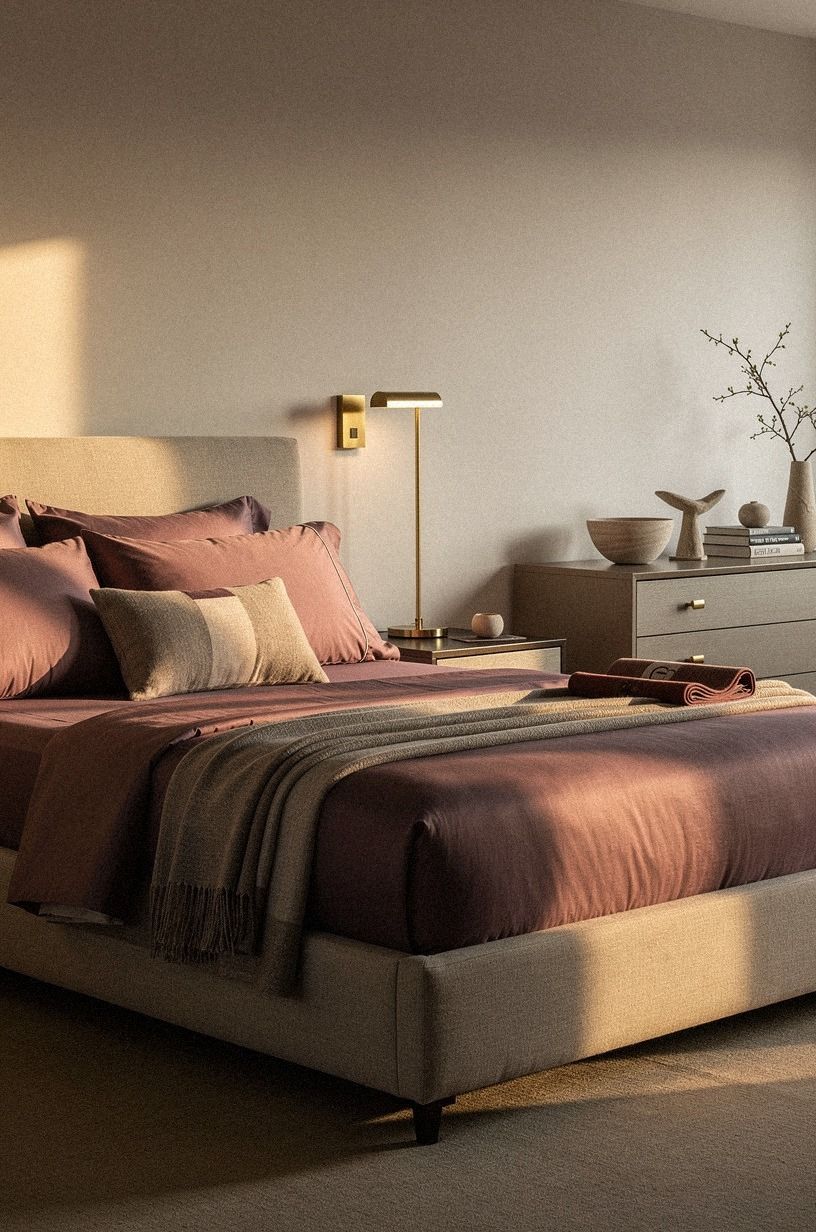
The sheet was the part I noticed physically. I changed from a rough, overheated setup to a percale cotton sheet with a cooler hand, then tested a grounding sheet because I liked the idea of making the bed feel more intentional. I won’t claim one fabric guarantees sleep, but your body can tell when the surface is clammy, scratchy, or too heavy.
I chose a grounding sheet that stayed smooth beneath the fitted sheet instead of one with thick seams. You don’t need a complicated stack.
A breathable fitted sheet, a light blanket, and one washable layer you can remove easily gave me more control. Unlacquered brass beside the bed develops a gentle patina that works beautifully with plum, gray, and rose-gold accents. If you’re curious about other small changes, read these small swaps for a healthier night’s sleep.
Start with the layer touching your skin. That’s where texture becomes obvious first.
A soft, calming bed can feel luxurious without looking fussy. Your best sheet is the one you’ll wash, remake, and want to climb into again.
I’d also check whether your sheet stays in place. A loose corner can create more nighttime irritation than an imperfect color choice. Look for deep pockets, a reliable elastic edge, and a fabric weight that suits your temperature.
3Move the Phone Beyond Reach
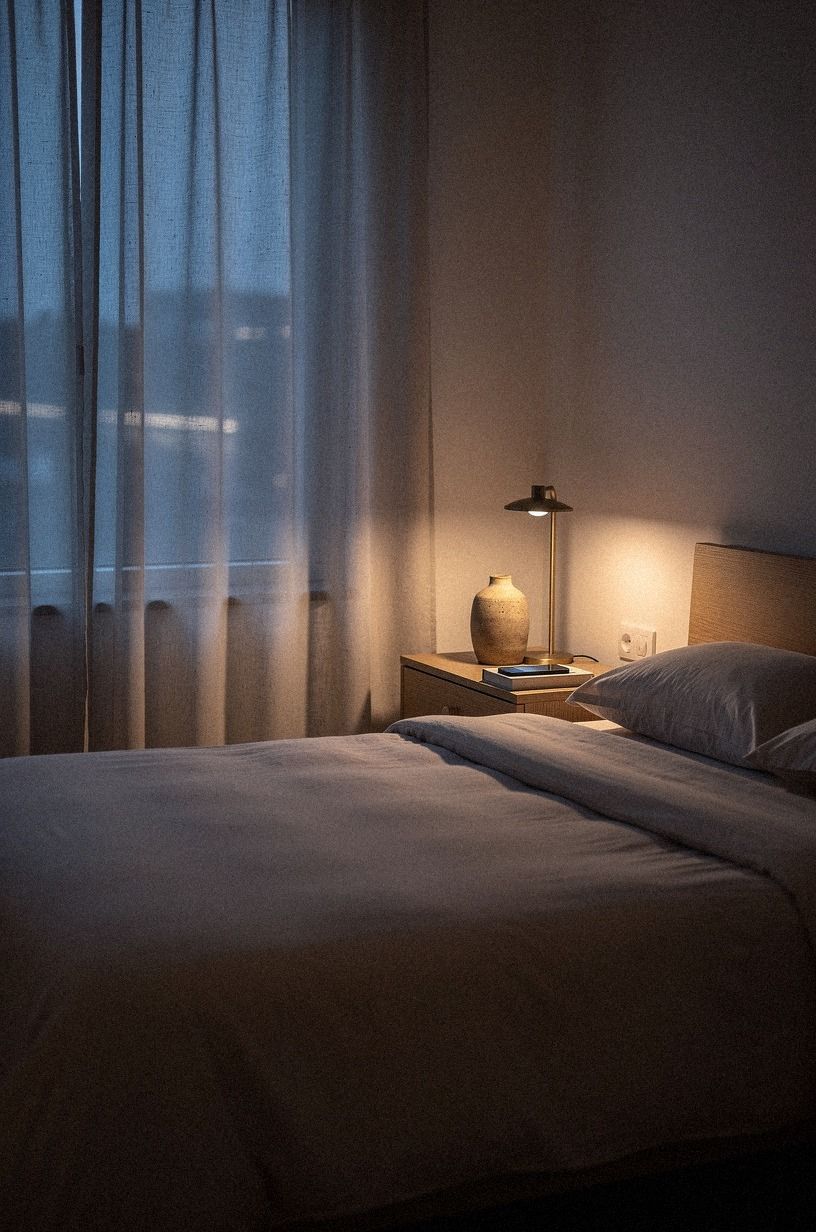
I used to charge my phone beside my pillow, which meant every buzz became my problem. Moving it across the room gave me a small barrier between your tired brain and the next message. A walnut charging dock on a dresser looks cleaner than a cord tangled beside your water glass, and you won’t reach for it without standing up.
This is where the $0 habit became practical. I didn’t buy an alarm clock.
I used an old phone, set the alarm, and left my main phone near the door. If you sleep through alarms or wake confused, our article on why you might sleep through your alarm may help you think through the pattern.
An oversized-chip terrazzo tray can hold your phone, glasses, and hair tie if you need a landing spot. Your nightstand should hold what helps you sleep. I’d skip the pile of chargers and receipts.
It turns a peaceful surface into a tiny office.
If you use your phone for emergencies, keep the volume on and place it where you’ll hear it without grabbing it automatically. That compromise worked for me. My room became softer because the screen stopped being the last bright thing I saw.
4Three Light Sources, One Softer Evening
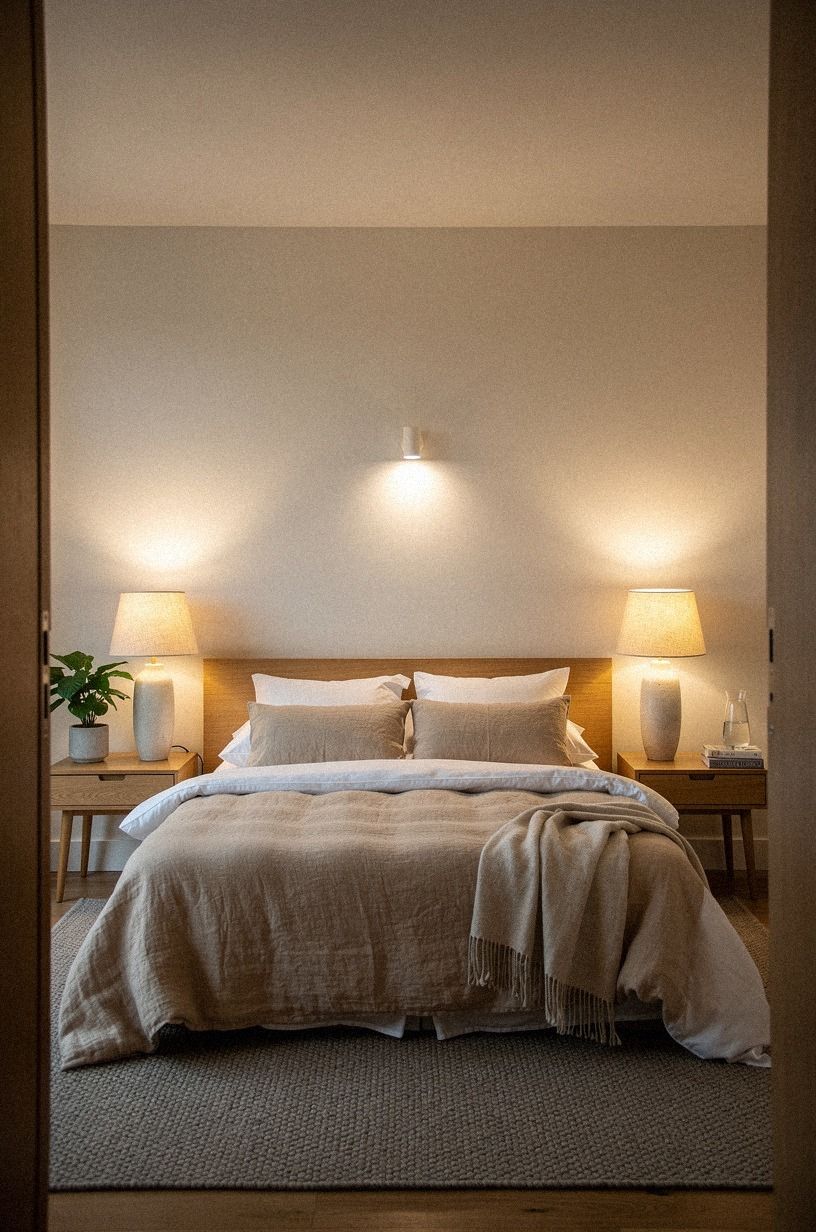
Your bedroom doesn’t need one harsh ceiling light doing every job. I use the three-source light stack: overhead light for cleaning, a task lamp for reading, and low ambient light for the hour before bed. That simple structure made my evenings feel less abrupt.
A gold linen-shaded table lamp beside your bed throws a warm pool across hand-applied Venetian plaster, while a small plug-in sconce gives you light without filling the whole room. You can keep the overhead fixture for practical work. I’d skip cool blue bulbs here because they make a soft room feel like a hallway.
The lamp doesn’t need to be expensive. A secondhand ceramic base with a new shade can look more collected than a matching set. If you’re changing several sleep cues at once, our good night sleep guide gives you another practical place to start.
For your final light, choose the dimmest option that still lets you walk safely. That last amber glow tells your body the day is narrowing, and your room feels intimate instead of brightly functional. It’s a small change with an immediate mood shift!
5Benjamin Moore White Dove and the Cold-White Problem
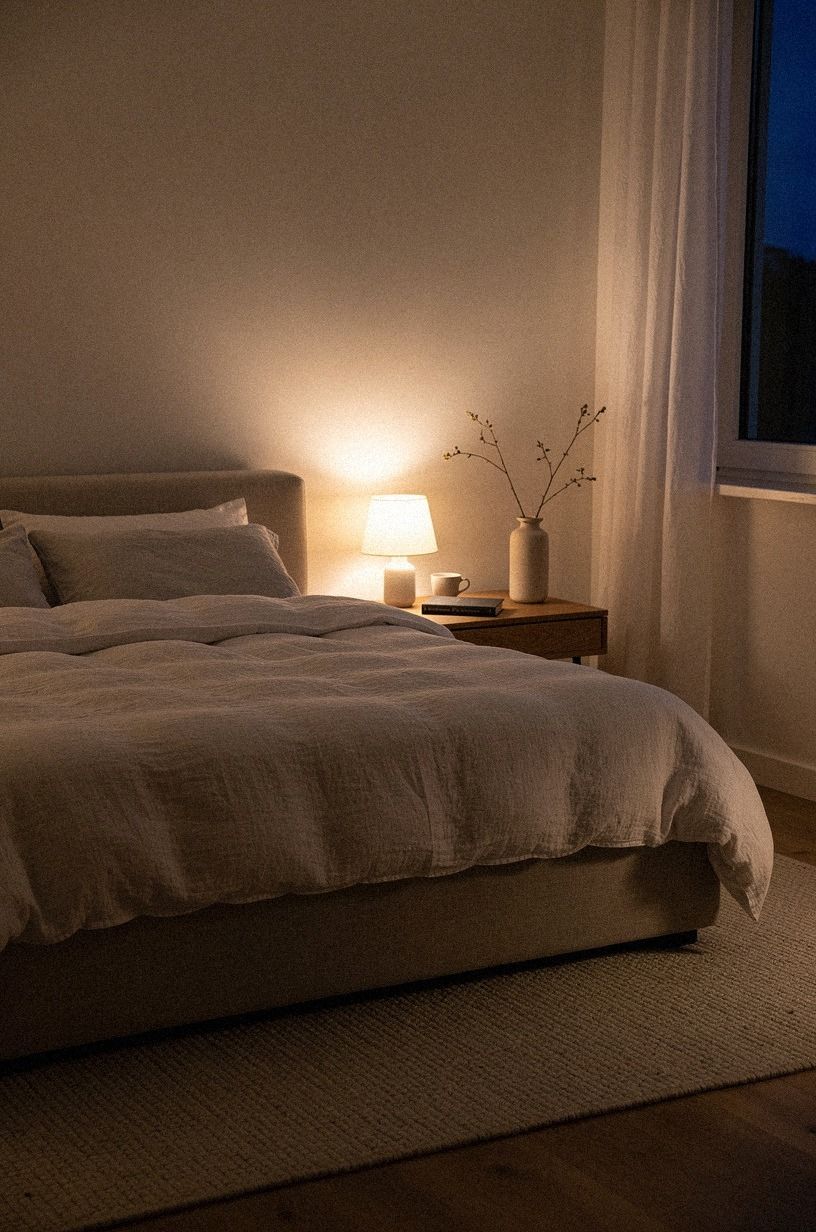
Cold white walls made my room feel bright in the wrong way. I tested Benjamin Moore White Dove OC-17 because it has enough warmth to soften shadows without turning yellow. If your room gets weak afternoon light, a gentler white can make the bedding and wood furniture feel more inviting.
For a moodier direction, Farrow & Ball Pigeon No. 25 brings a gray-green note that feels earthy beside cream linen. You don’t need to paint every wall to change the room. A single wall behind the bed can give your eye somewhere to settle, especially when your furniture is simple.
I wouldn’t choose the palest gray just because it seems safe. Sherwin-Williams Agreeable Gray SW 7029 is more forgiving than many cool grays, but test your sample in morning and evening light first.
Your paint can look calming at noon and flat by bedtime. Keep the sample up for a full day before deciding.
If painting isn’t possible, use a large shagreen wall panel or removable textile to break up the blank surface. I’ve made the mistake of choosing color from a tiny online square. Your wall is larger, your light is stranger, and the room deserves a real test.

6Where Should the Rug Land?
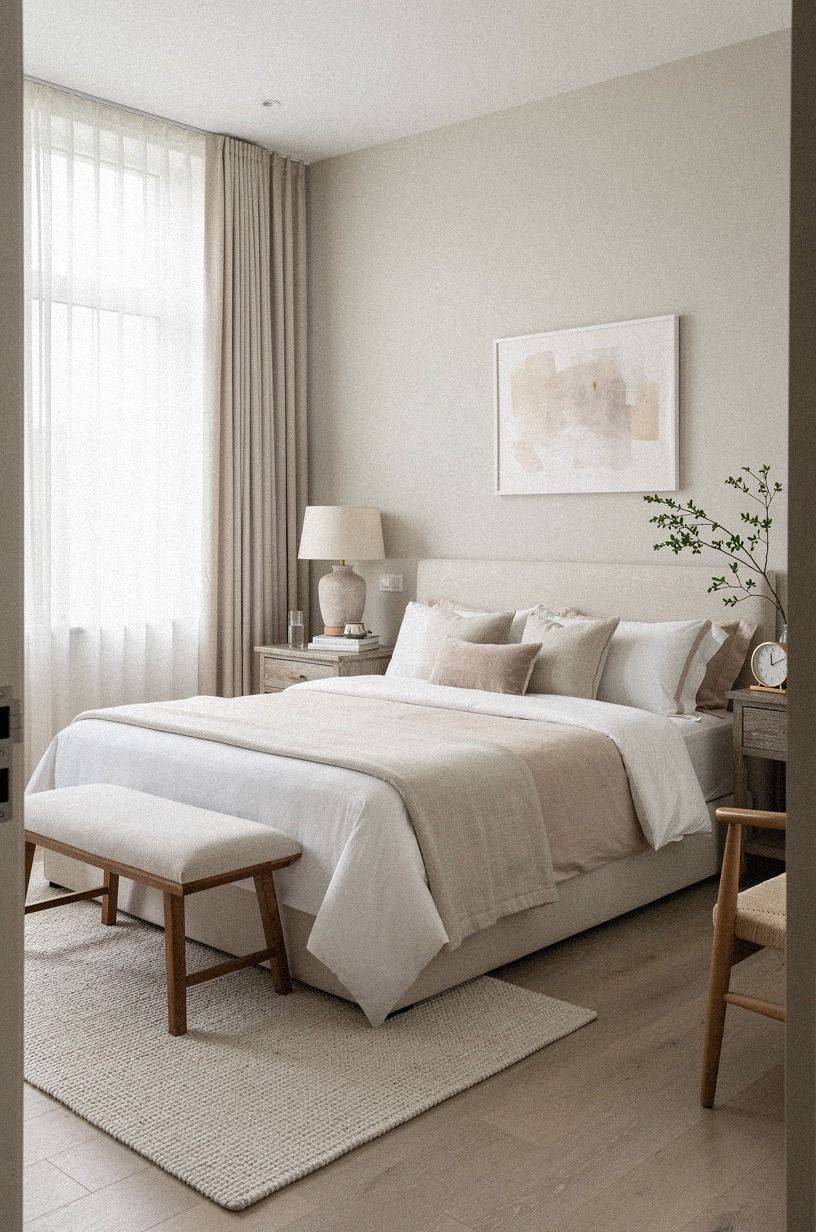
A rug makes the first step out of bed feel softer, but its placement matters more than the pattern. A washed Belgian linen rug in dusty rose can soften charcoal furniture and bring a quiet brass note into the room.
7Create a Bedside Landing Zone
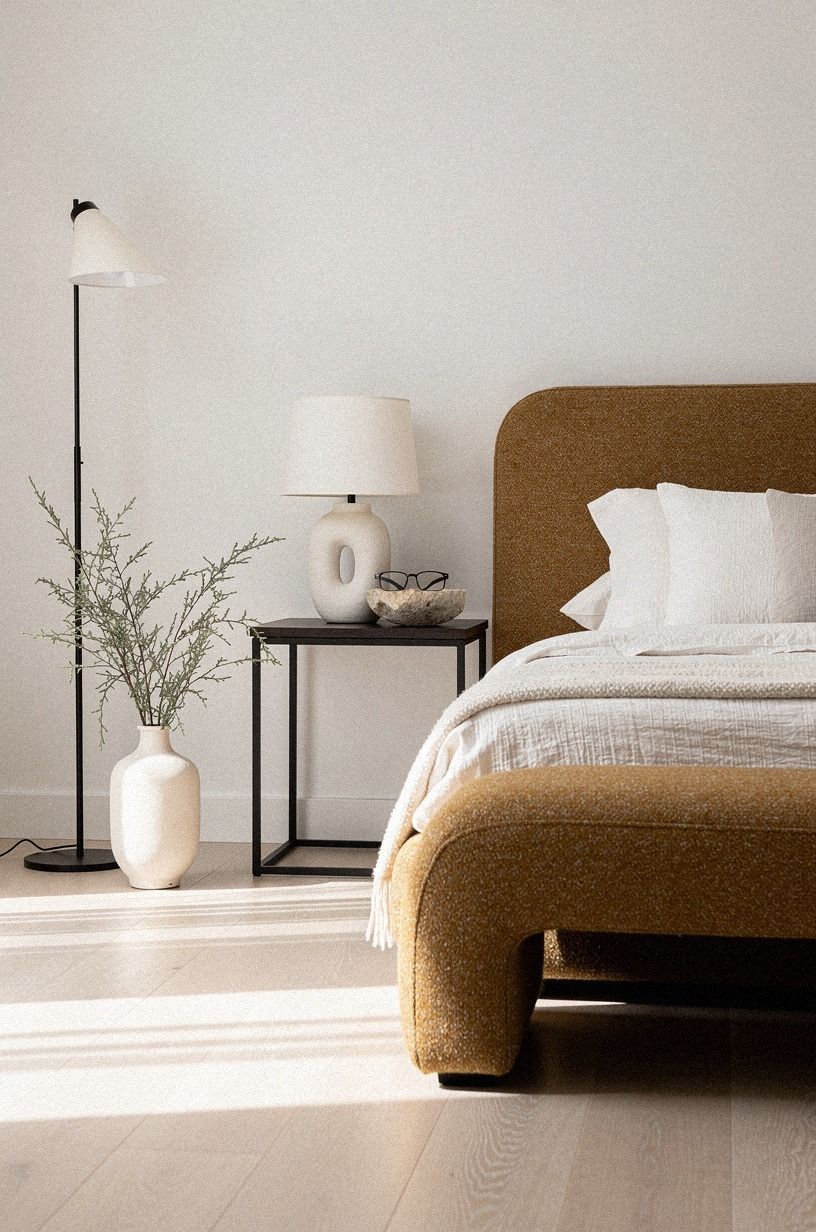
The bedside table used to be where every unfinished thought landed. I changed it to a small warm-white nightstand with one drawer and one clear surface.
Your water, glasses, book, and lamp can fit there. Everything else can wait until morning.
A camel bouclé tray keeps the small pieces together without making the surface look crowded. Put your lip balm, watch, and reading glasses inside it, then leave the rest empty. That empty space matters because your eye gets a break when you turn off the light.
If you don’t own a nightstand, use a sturdy stool or small wooden chair. You don’t need a matching pair, and I wouldn’t buy a bulky set just to make the room symmetrical.
A calm room can be slightly uneven. It often feels more lived-in that way.
If your bedroom collects clutter because you have nowhere to put it, pair this change with sleep habit stacking. Your evening cue might be setting the tray, placing your phone away, and turning on the lamp in the same order. Repetition makes the routine easier for you.
8Hang Curtains Above the Frame

Curtains changed the room more than I expected because they softened both the light and the hard window edges. Hang the rod 4 to 6 inches above the frame, then let the panels reach the floor. Your window will look taller, and the fabric can block the visual noise that keeps the room feeling unfinished.
I chose ivory Belgian flax linen curtains rather than heavy blackout panels. The linen lets in a muted morning glow, while a separate lining gives you more control.
If your room faces bright streetlights, prioritize function. No fabric choice is worth losing sleep over.
A copper curtain rod adds a warm note against midnight blue and ivory, while a slim Nero Marquina marble ledge brings in a little contrast through its white veining. I’d skip short curtains that stop at the sill. They make the room feel chopped in half, and your bed area loses some of its quiet height.
You don’t have to replace the whole window treatment. A tension rod and removable panels can work in a rental. If you like the idea of a small nighttime comfort object, you can also read about the night hat people wear for sleep.
9Use the Two-Wood Rule
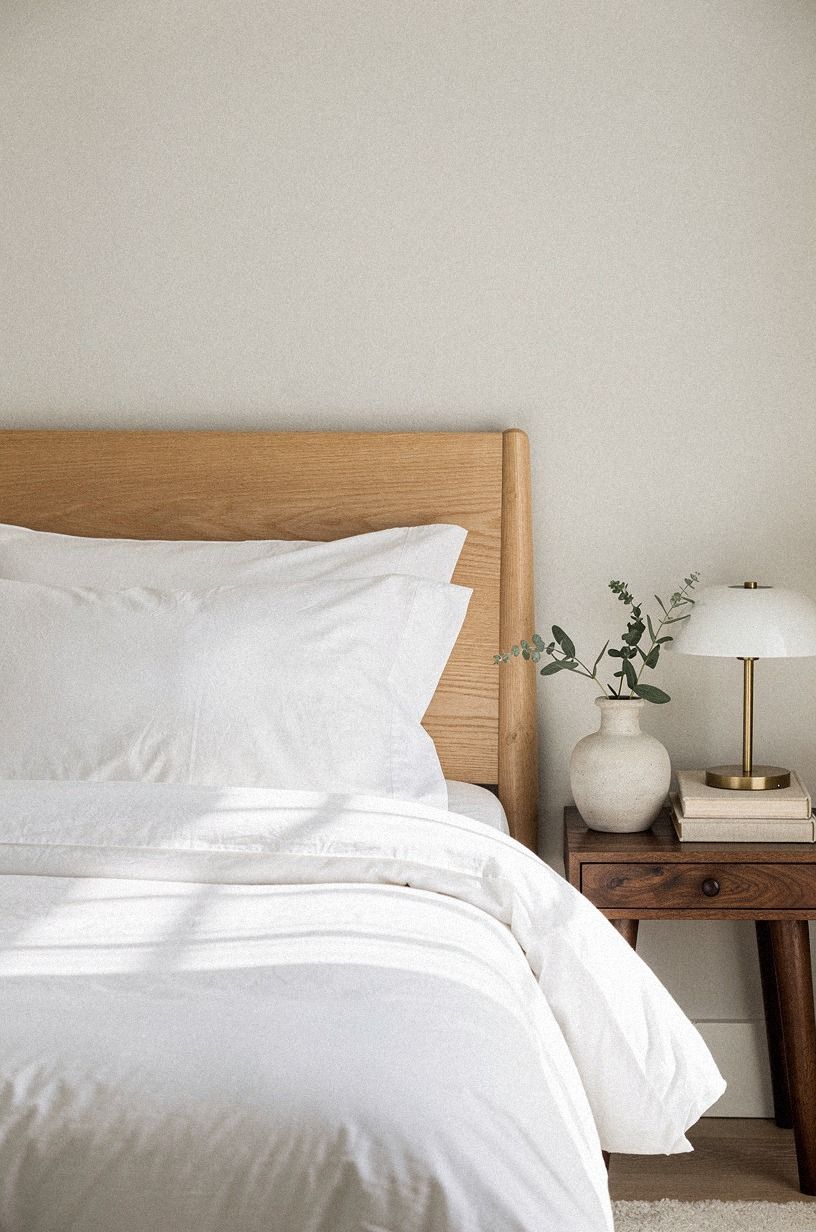
Too many wood tones made my bedroom look accidental. The two-wood rule keeps the palette focused: one dominant wood for large furniture and one supporting wood for smaller pieces. I used natural wood on the bed and a darker walnut tone on a stool, then stopped adding more.
A natural wood bed frame catches afternoon light in a way painted furniture doesn’t. Beside it, a deep-pile mohair velvet tray gives you contrast without making the room busy. Your wood doesn’t need to match perfectly, but it should share either warmth or grain direction.
I once tried to solve a dull room by adding another wood accessory. It only made the corner louder.
If you’re already using oak, pine, cane, and rattan, choose one material to remove before buying anything else. Your room will feel more refined when the grain has room to breathe.
Don’t assume every warm wood is automatically calming. Orange-toned laminate can fight with pink-beige walls, while a cerused finish may look too pale under cool bulbs. Test your pieces together at night, because your bedroom is where you live after sunset.
10Calm Color, Less Repetition

A restful bedroom doesn’t need one color repeated everywhere. Terracotta, stone, and olive can create a calmer mix, especially when a piece of Carrara marble adds a quiet surface with subtle gray veining.
11Keep a Night Basket for Tomorrow
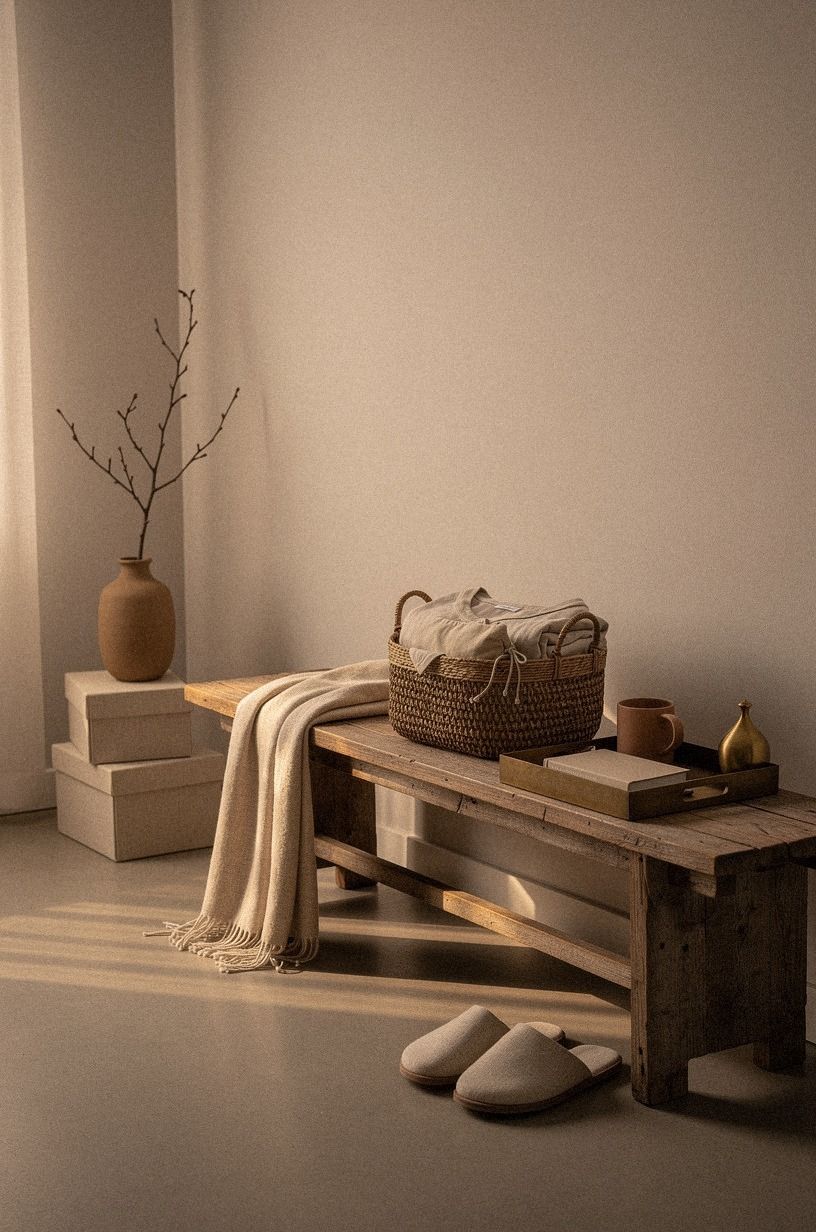
The most useful basket in my bedroom isn’t decorative. It’s a reclaimed weathered teak basket for tomorrow’s clothes, a book bag, and anything I need to carry downstairs in the morning. Your brain relaxes when those objects have a destination instead of floating around the room.
I keep one folded outfit on top, including socks, because that small choice removes friction before breakfast. You can use an open basket, a wooden peg rail, or the back of a chair if your space is tight. The point is to contain tomorrow without inviting tomorrow into bed.
The basket shouldn’t become a second laundry pile. Empty it each morning or give yourself one clear rule: only items leaving the room before noon belong there. I learned that my calming system stopped working when I used it to hide everything.
If food is part of your evening routine, keep the bedroom out of the snack circuit. Our guide to late-night eating and sleep offers another angle. Your room can support rest better when it isn’t also serving as an office, closet, and kitchen.
12What Does a Bedroom Refresh Really Cost?
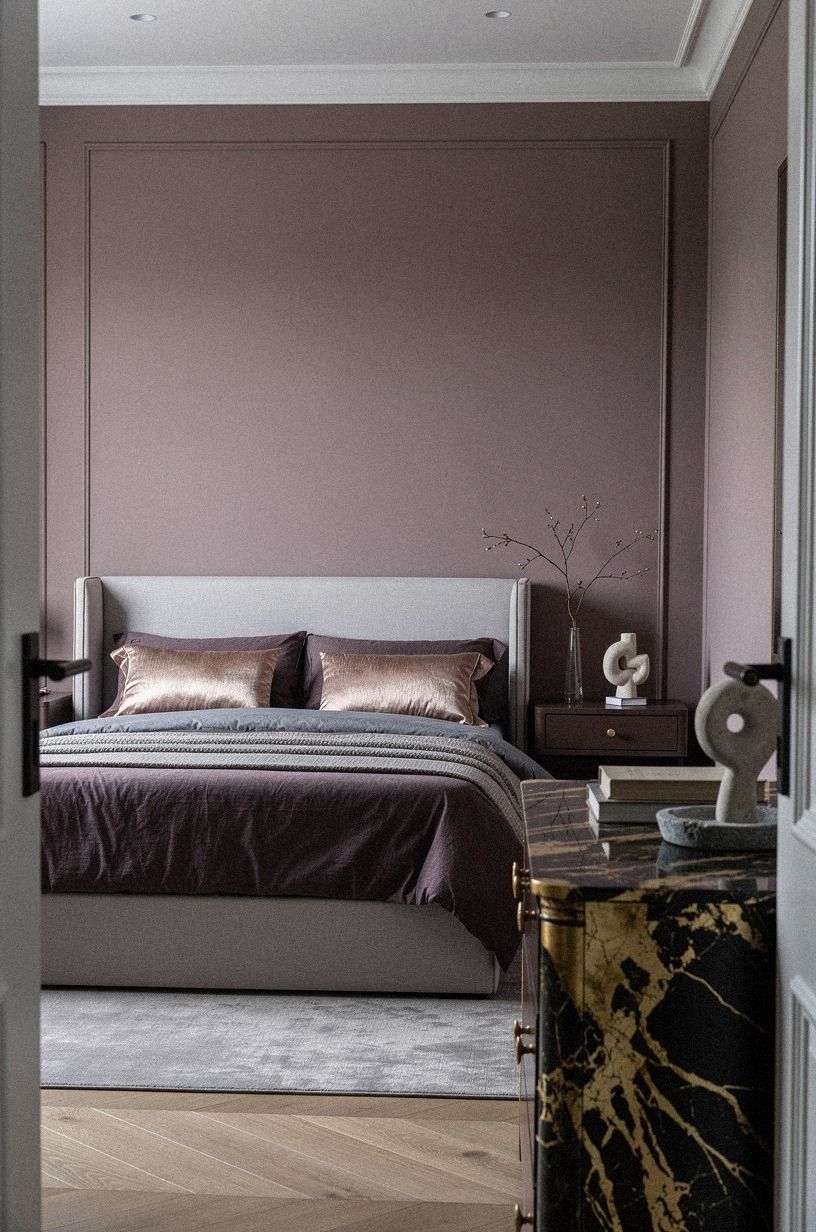
The $0 habit is free, but a full bedroom refresh can cost more than a new sheet. Plum, gray, and rose gold can look especially polished when a small piece of Calacatta marble brings in subtle gold veining.
13Choose Soft Materials With Structure
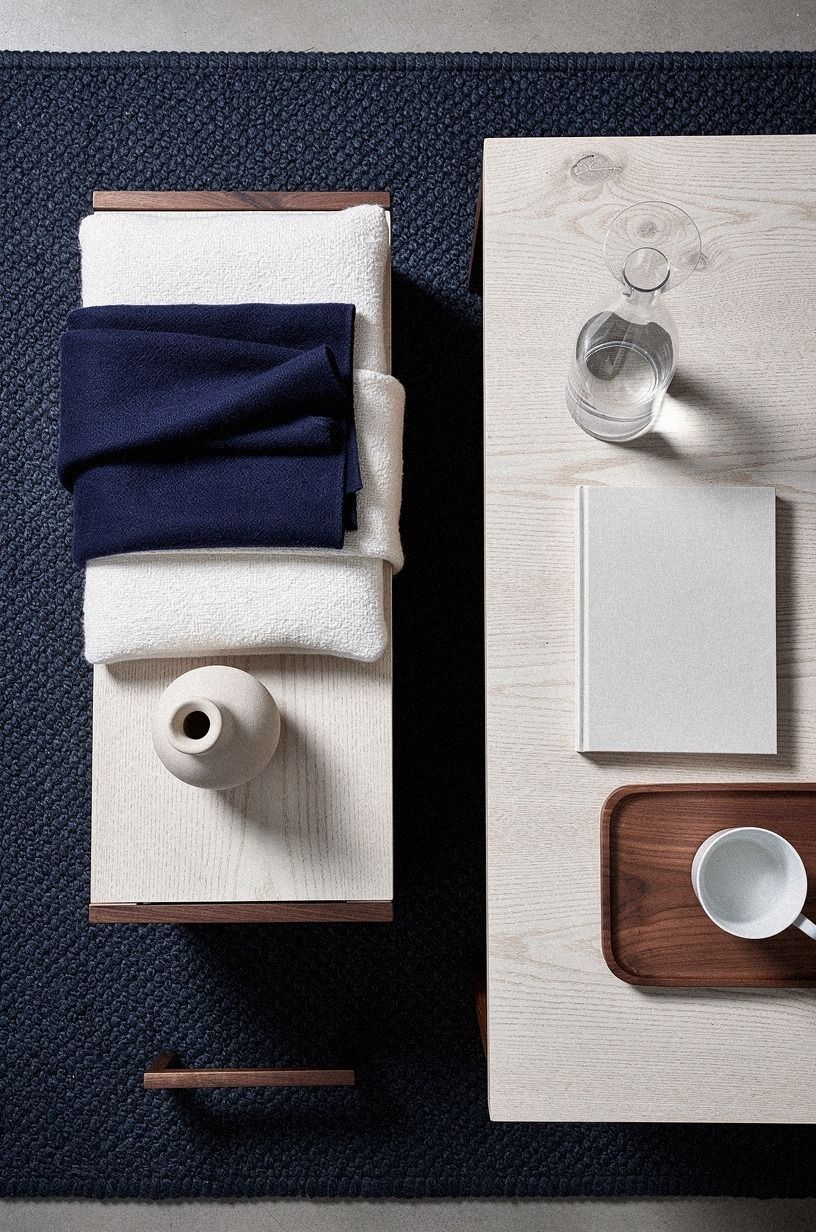
Soft doesn’t have to mean floppy. I like 600gsm Turkish cotton towels and throws because they feel substantial without turning the room into a pile of loose fabric. Your bed needs enough texture to feel welcoming, but you still need clear surfaces and airflow around it.
A navy mohair velvet pillow adds a gentle sheen beside washed linen, while a cerused white oak tray gives your hands something warm and dry to find on a cold morning. I prefer one rich texture and one dry texture together. Five fuzzy layers can feel heavy, and your room may start looking more like a prop than a place to sleep.
Washability matters. Choose a removable cover for anything near your face, especially if you have children, pets, or a habit of carrying snacks upstairs. A soothing bedroom shouldn’t become a maintenance project you avoid.
If you want to compare fabric and routine changes, keep small swaps for a healthier night’s sleep nearby. Your best material choice feels good, survives washing, and still looks inviting after a long week.
14What Is Keeping the Room Awake?
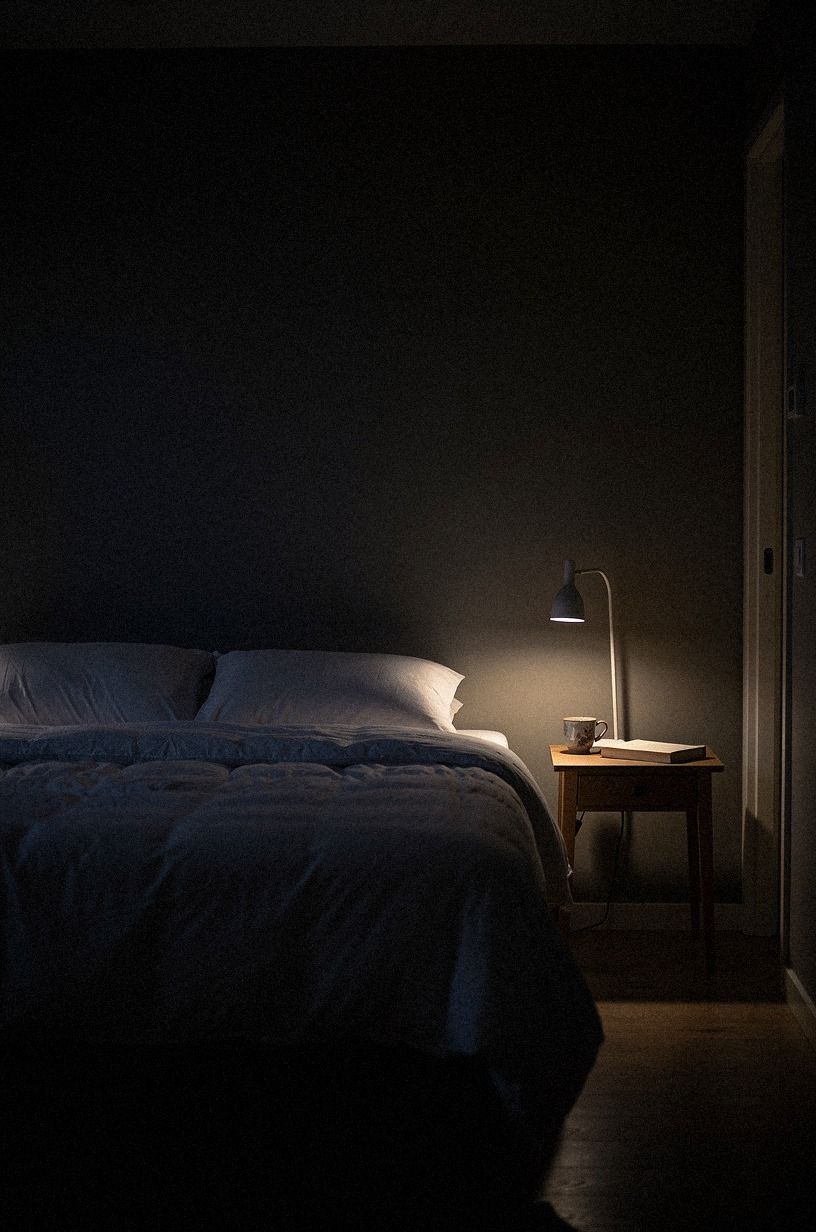
What if your bedroom isn’t the main problem, but the evidence of your day is? A small piece of backlit translucent onyx can bring an emerald, gold, and cream palette to life, but it won’t fix a room that still feels mentally unfinished.
15Layer Habit Stacking Instead of More Products

The strongest change was linking small actions until my body recognized the sequence. I put the cotton sheet flat, place my phone away, close the basket, dim the lamp, and read a few pages. Your routine doesn’t need to be elaborate to feel steady.
A book-matched walnut bedside table becomes the signal that the day is closing. Then the room, the sheet, and the quiet work together.
I wouldn’t keep buying sleep products every time one rough night happens. More objects can give you more decisions, and your tired brain needs fewer of those.
If you miss a night, you haven’t failed. Moms of three don’t get perfectly controlled evenings, and I don’t either. Start again with the free action that makes the biggest difference for you.
That might be moving your phone, clearing the bed, or changing the light.
For me, the room became calming when the habit came first and the styling supported it. You can make the same shift with what you own, then add a warm material or useful piece only when the need is clear.
Why the Free Habit Mattered More Than the Sheet
I wanted the sheet to be the answer because a product feels easier to point to. You can buy it, wash it, put it on the bed, and tell yourself the problem has been handled. But my restless nights weren’t caused by one fabric.
They came from carrying the whole next day into the bedroom.
The free habit was a closing ritual. I stopped at the doorway and asked what my eyes would find if I woke at 2 a.m.
A pile of laundry said unfinished. A glowing phone said available.
Papers on the floor said remember me. I didn’t need a showroom.
I needed fewer demands.
The sheet still mattered because comfort is physical. Long-staple cotton percale felt cooler than the old polyester blend, and the difference was immediate when I climbed into bed.
But I wouldn’t tell you that a grounding sheet will solve every sleep problem. Bodies are different, stress is real, and no bedroom purchase replaces medical care when you need it.
What I would tell you is to start with the free reset for a week. Put the phone away. Clear the bed.
Dim the room. Then decide whether the sheet, rug, or curtains solve a problem you can name.
That order saved me money and made the room feel more honest.
The best part wasn’t waking up with a styled bedroom. It was waking up without the same heavy feeling that I had forgotten something. Your room can support that feeling through light, texture, and storage, but the habit is what gives those choices a job.
The Questions I Get Asked Most
What is the best sheet for a busy mom who wants better sleep?
A breathable cotton percale sheet is the best starting point because it feels crisp, washes easily, and doesn’t require a complicated routine. I like IKEA cotton bedding for a budget option, while a linen or cotton-linen blend can feel softer over time. Your sheet should stay comfortable, washable, and easy to remake.
Where can I buy sleep-friendly bedroom pieces on a budget?
Look at IKEA, Wayfair, Target, Facebook Marketplace, and local thrift stores for solid wood nightstands, lamps, baskets, and rugs. I don’t use affiliate links, and this site is supported by display advertising rather than commissions. Your best savings usually come from buying one useful piece secondhand instead of several decorative items.
How much does a bedroom sleep makeover cost?
A small reset can cost $0 if you use what you own, while a broader refresh typically falls around $200 to $800 for paint, textiles, art, and organization. A wool rug may cost $400 to $1,500, so choose the item that fixes your biggest daily problem first.
Can I create a calmer bedroom on a budget?
Yes, and you can begin tonight! Move your phone away from the bed, clear the visible clutter, and switch off the overhead light.
Then look for a used basket, washable cotton sheet, or secondhand lamp. Your free changes matter because they reduce noise before you spend money.
Is this worth it in a small space?
Yes, because a small bedroom gives every object more influence. Use a slim oak nightstand, a wall-mounted lamp, and a rug that the furniture overlaps. Your room doesn’t need more furniture.
It needs fewer competing surfaces and a clear path from the bed to the door.
Is this a good idea for a rental?
Yes. Use removable hooks, a tension rod, peel-and-stick wallpaper, and a freestanding lamp instead of hardwired fixtures.
A linen-look removable shade can soften a rental bedroom without permanent changes. You can create a calmer routine with no drilling, no repainting, and no damage-deposit anxiety.
Where I’d Start First
If I had to pick one, I’d start with the nightly shutdown. It costs nothing, but it removes the unfinished tasks that kept my brain rehearsing tomorrow. Pin the reset for later and read our sleep habit stacking guide when you’re ready to build the next cue.