
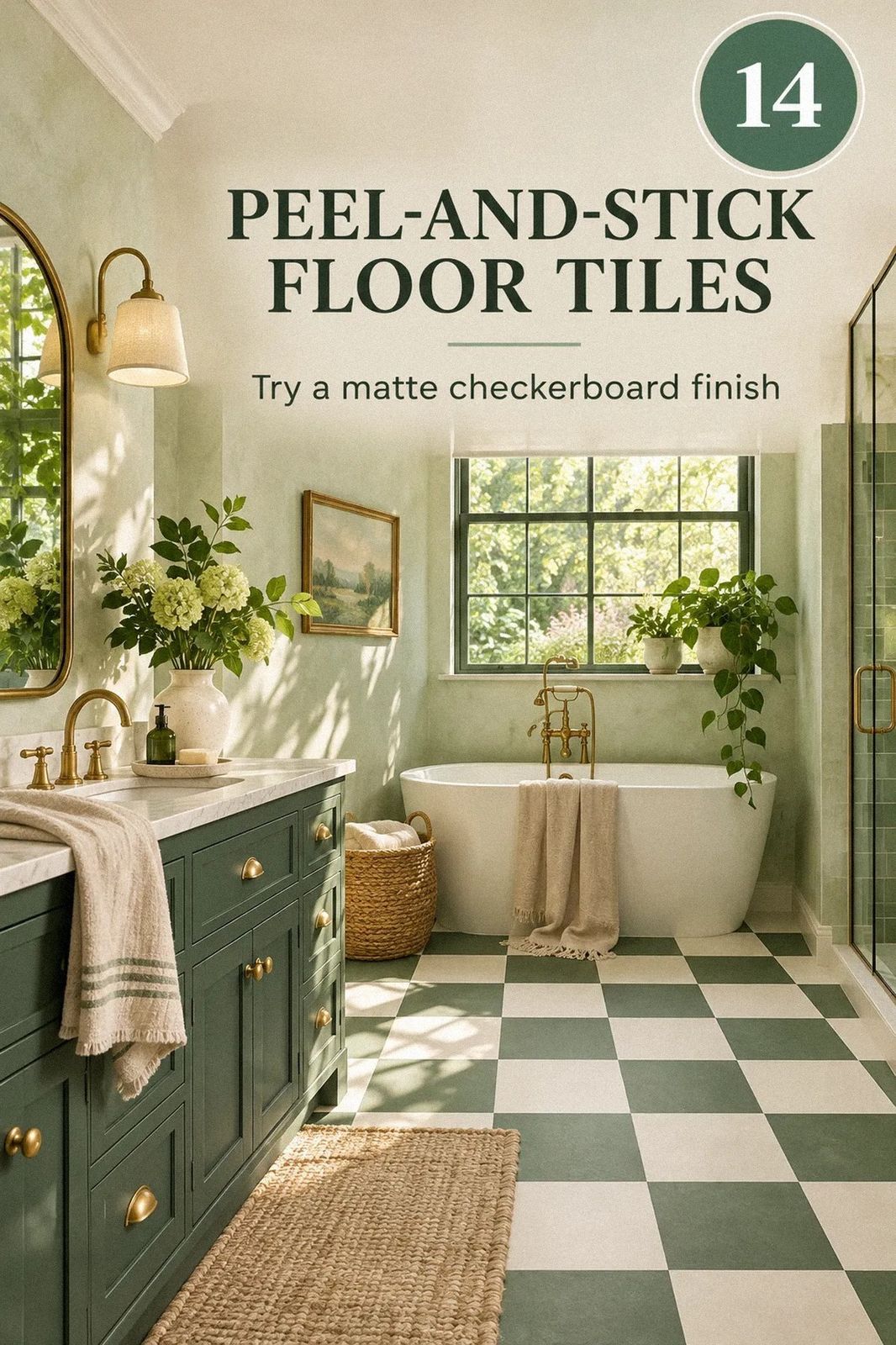
 by
Peel-and-stick floor tiles that do not lift at the corners start with a dry, flat subfloor, not a prettier pattern. I learned that after one bathroom floor curled up within a week. The fix was boring but effective: cleaning, smoothing, warming the adhesive, and pressing every edge. Your pattern comes second.
- Level the Floor Before Your Peel-and-Stick Floor Tile Rental
- Choose Vinyl Floor Tile Over Thin Foam Squares
- Build the Two-Pattern Rule With a Quiet Base
- Seal the Perimeter With the Dry-Edge Rule
- Swap Dark Grout Lines for a Small-Bathroom Grid
- Layer the Three-Height Light Stack Around the Tile
- Paint Around It With Benjamin Moore Chestertown Buff
- Anchor a Peel and Stick Floor Tile Rental Friendly Vanity
- Use a Checkerboard Without Making the Room Busy
- Float Warm Wood Over Cool Vinyl
- Frame the Tub With a Water-Safe Edge
- Ask: Can Peel-and-Stick Tiles Survive a Rental?
- Spend on Adhesion Over Decorative Extras
- Choose Peel-and-Stick Floor Tile That Does Not Lift
1Level the Floor Before Your Peel-and-Stick Floor Tile Rental
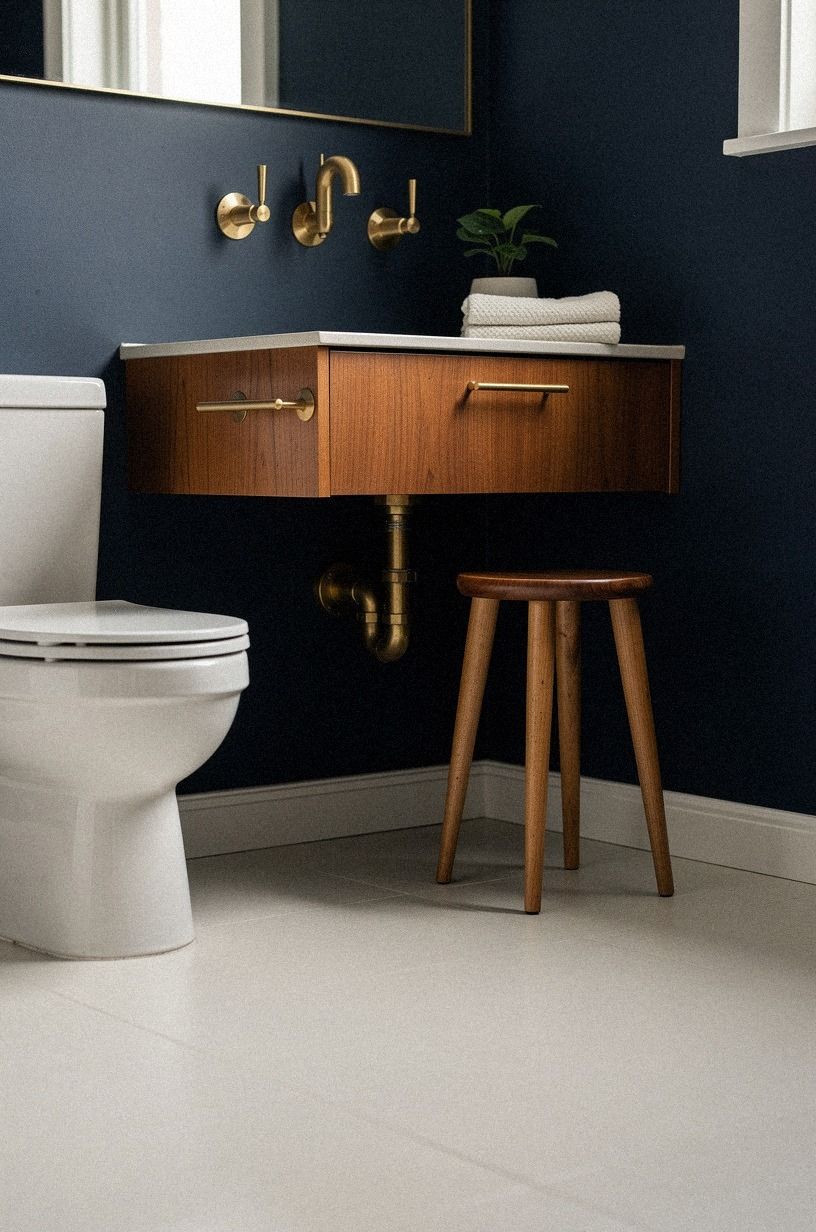
A flat floor gives your tiles a fighting chance. Fill shallow dips, scrape away paint ridges, and remove every crumb near the wall, because even a tiny bump can hold one corner above the adhesive. You’ll want a clean surface under self-adhesive vinyl, especially in a bathroom where loose dust mixes with humidity.
I use a long ruler to find high spots, then sand the stubborn ones. If you’re working over old ceramic, check whether the grout lines show through peel-and-stick tile before you begin. This guide on how to lay peel-and-stick tile over ugly ceramic tile can help you judge the depth before you spend money on a full box.
Don’t rush the drying stage. A floor can look clean while still holding moisture from mopping or patch compound.
Give the surface time to dry, then press a small test tile near the toilet or vanity. If it shifts when you push the edge, your floor needs more preparation.
That small test is worth it!
Typical bathroom update cost by tier:
The tile itself may be affordable, but surface preparation determines its value. Spending a little more time here can protect your budget later.
2Choose Vinyl Floor Tile Over Thin Foam Squares
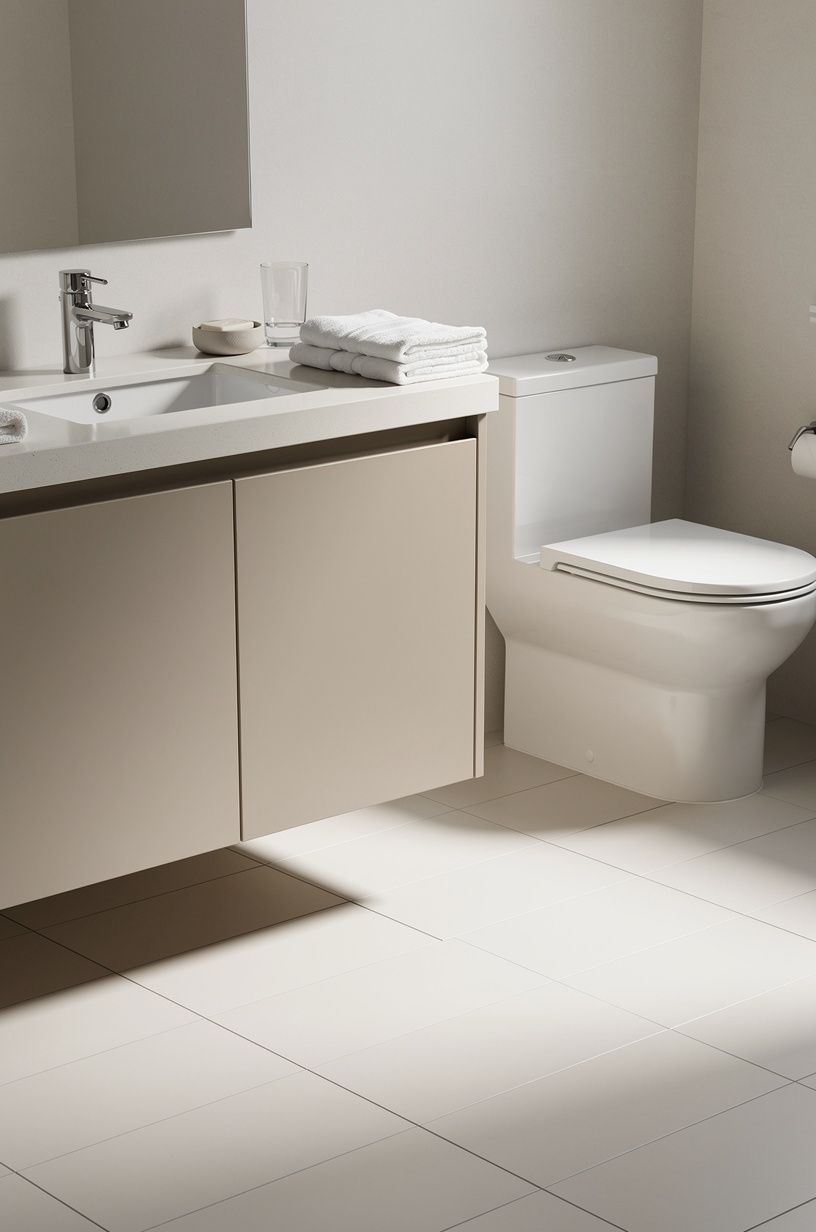
For a rental bathroom, I’d choose a firm peel-and-stick vinyl tile floor over soft foam squares every time. Vinyl keeps a cleaner edge, handles splashes better, and won’t telegraph every little dent underneath. Foam can feel forgiving at first, but its corners compress and rebound when you walk across them.
Look for a tile with a rigid backing and a surface that doesn’t feel rubbery or thin. You don’t need a luxury finish, but you do need enough body that the square won’t fold while you’re lining it up. If you’re covering a small room, keep the grain or printed direction consistent so the floor feels calm.
A matte oversized-chip terrazzo surface in sage green, warm cream, and natural wood tones usually offers better long-term value than a dramatic print with weak adhesive. Before you buy, check the return policy, tile thickness, and recommended subfloor. For more pattern ideas, browse peel-and-stick tile ideas for a renter-friendly bathroom and compare the visual scale with your actual room.
The losing option is a very thin tile with a glossy plastic face. It may look bright in the package, but it can curl when the room gets steamy. I’d rather have a quieter terrazzo finish that stays put than a striking pattern that makes you babysit every corner.
3Build the Two-Pattern Rule With a Quiet Base
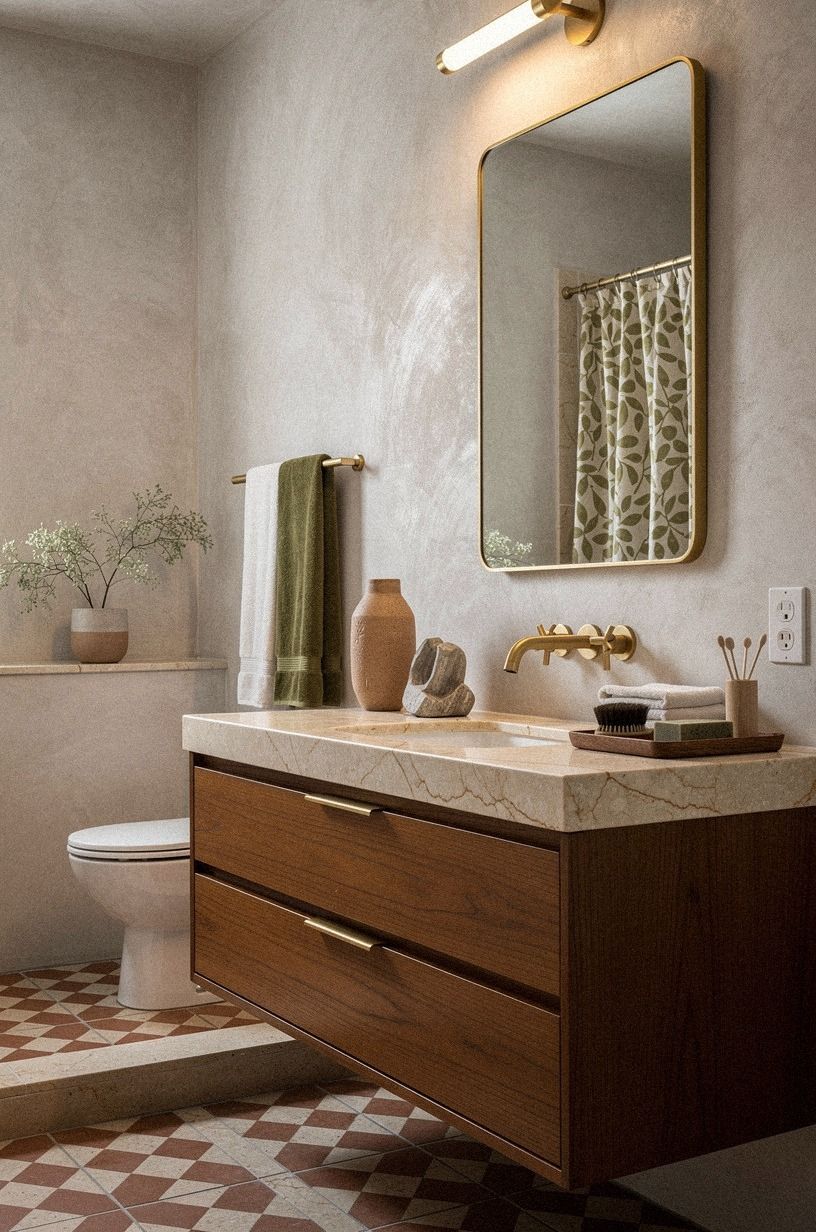
The Two-Pattern Rule keeps a small bathroom from looking like a sample board. Pick one floor pattern and one supporting pattern, then let the walls, shower curtain, and towels stay quieter. Your floor can be bold, but it shouldn’t compete with five other surfaces.
A terracotta floor works well beside warm stone and olive accents, especially against hand-applied Venetian plaster. If you’re using a busy tile, repeat one of its colors in the bath mat or art. That small connection makes the room feel intentional without forcing everything to match.
Take both samples into the room at different times of day. The cooler one may look crisp beside daylight but flat under a warm bulb. I’d skip a fake marble pattern with heavy gray veins here.
It often reads busier than the real thing and makes a rental bathroom feel visually chopped up.
For more restrained combinations, look through peel-and-stick tile ideas for bathrooms and fireplaces. The most elegant rental floors usually have one clear idea and several quiet supporting choices.
4Seal the Perimeter With the Dry-Edge Rule
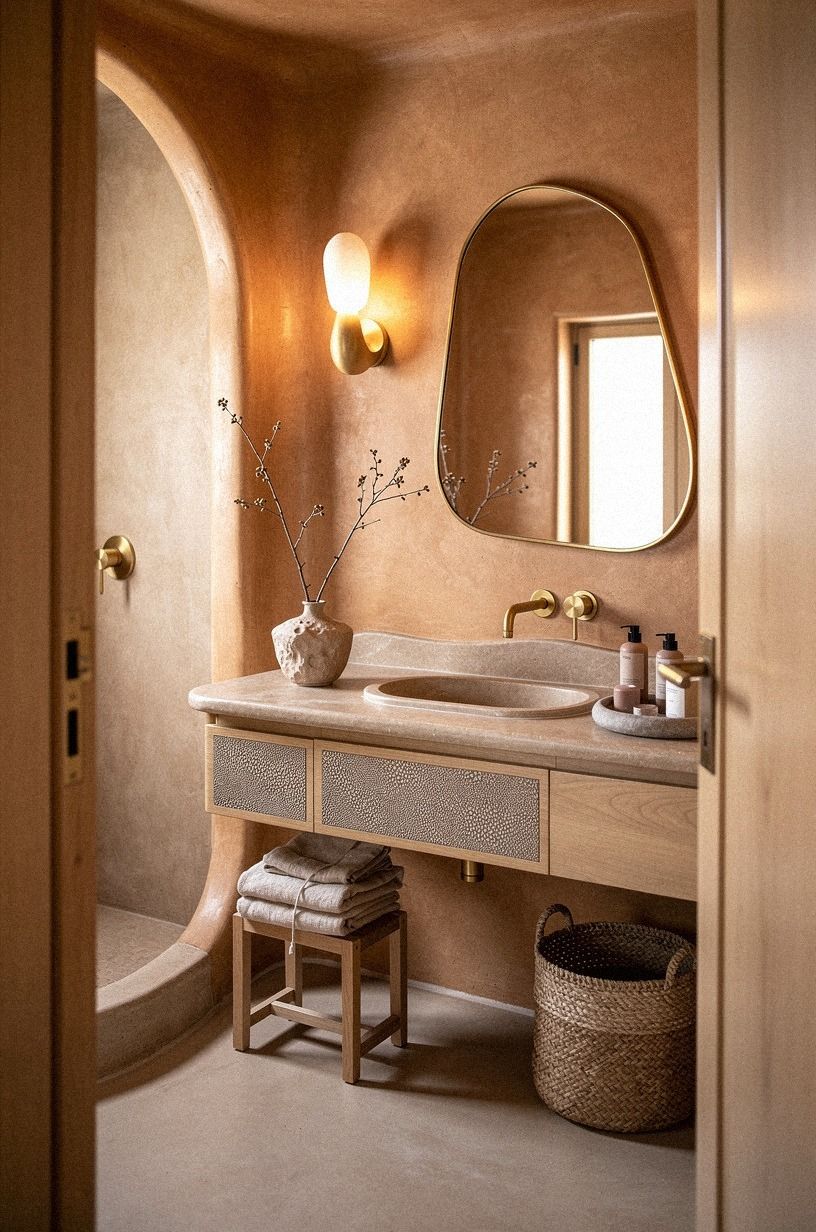
The Dry-Edge Rule is simple: keep the tile adhesive away from damp edges until the floor is fully installed and settled. Your toilet base, tub line, and wall corners deserve extra attention because water tends to collect there. A curled edge usually starts where moisture has found a gap.
Cut the perimeter pieces carefully, leaving the smallest practical reveal beneath trim or a removable quarter-round. A clay-toned tile with linen-colored variation can disguise a tiny cut better than a high-contrast checkerboard, especially beside aged brass and a small shagreen accent.
Before you press the final strip, wipe the wall and floor junction with a dry cloth. No spray cleaner.
No damp rag. Nothing fancy.
This is where careful prep protects the entire investment!
Don’t use permanent caulk if you’re renting and expect a clean exit. A removable edge treatment may be safer, depending on the landlord’s rules and the existing floor. You’ll want to test any product in a hidden spot first, since a “removable” label doesn’t guarantee that your old finish will come away untouched.
If you need more reversible ideas, compare peel-and-stick renter-friendly ideas that come off clean before choosing a perimeter treatment.
5Swap Dark Grout Lines for a Small-Bathroom Grid
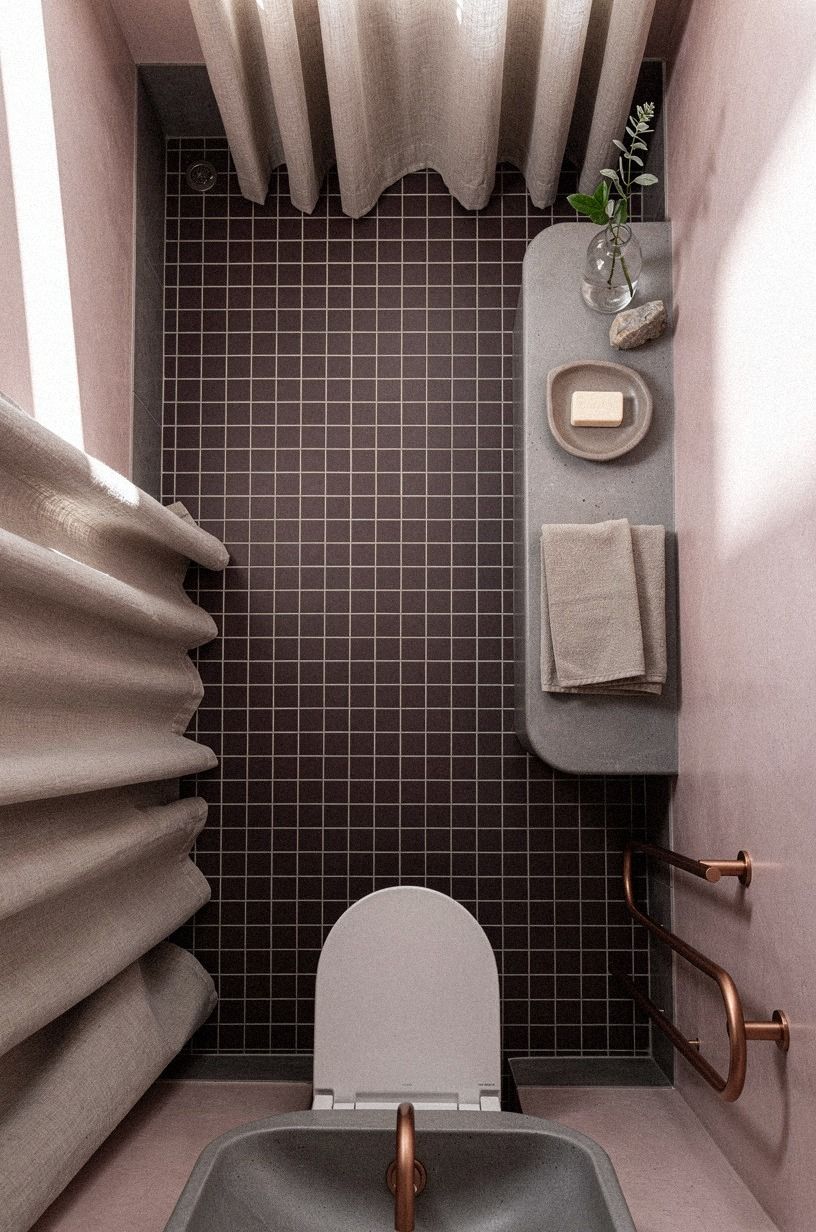
Dark grout lines create instant contrast, but a plum-and-gray bathroom can also make a narrow space feel smaller. Washed Belgian linen and a restrained rose-gold detail soften the grid without erasing its structure.
6Layer the Three-Height Light Stack Around the Tile
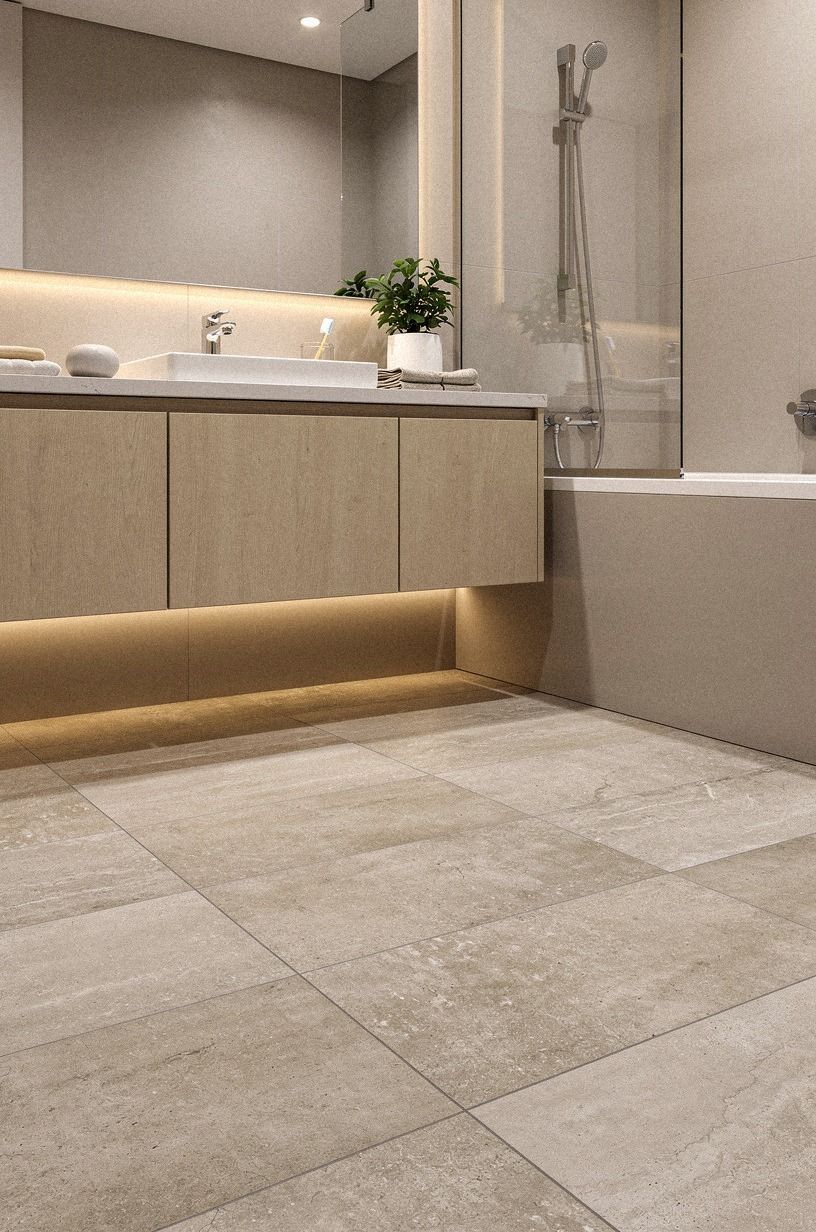
The Three-Height Light Stack gives your floor a softer setting. Use light at eye level, waist level, and low level so the tile isn’t carrying the entire mood of the room. A vanity sconce, a shaded lamp outside the splash zone, and a small night light can make the floor look warmer after sunset.
Your tile color will change under each bulb, so test a sample with the lights you already own. A creamy pattern may turn yellow beside a warm bulb, while cool gray can look blue. Walnut-toned hardware helps warm a pale floor, but I’d avoid matching every metal in the room too precisely.
A small lamp with an organic bouclé shade outside the wet zone can add a reassuring glow, while a low night light keeps the floor readable after dark. Browse peel-and-stick backsplash ideas that look real for useful color combinations, even if you are only borrowing the palette.
You’ll also need enough clear walking space to move around the toilet and vanity without catching a loose edge. A comfortable shower is 36 by 36 inches minimum, so keep your floor pattern aligned with the larger lines of the room instead of forcing a tiny cut into that zone.
7Paint Around It With Benjamin Moore Chestertown Buff
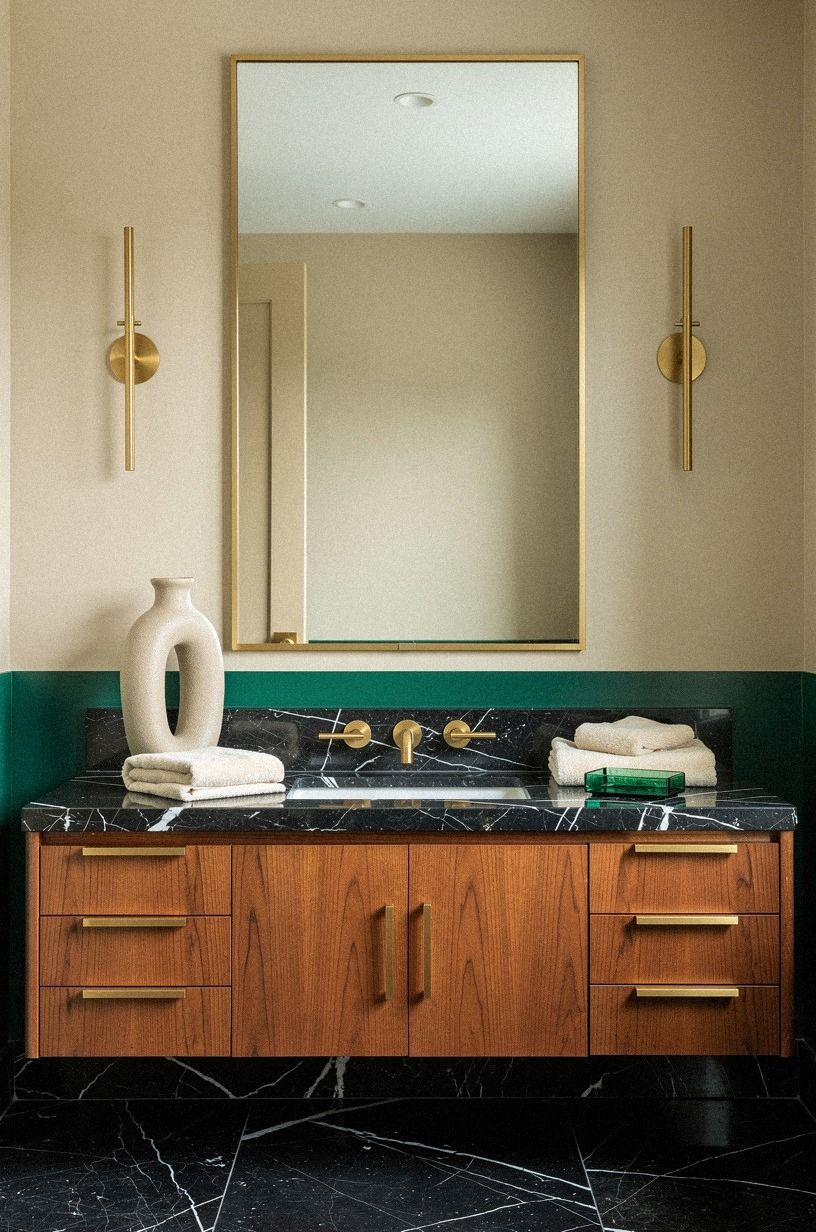
Paint can make a renter-friendly floor look custom, and Benjamin Moore Chestertown Buff HC-9 is a useful choice when your tile has cream or soft gold in it. With Nero Marquina black marble and white veins, it gives the floor a warm frame and keeps white fixtures from feeling stark. Your room will feel gentler without becoming beige everywhere.
I’d skip pairing a black marble-look tile with a blue-white wall unless the print clearly supports it. That contrast can make the floor look dirty, even when it isn’t. If you want a deeper mood, try Farrow & Ball Studio Green with warm cream trim and restrained gold accents.
But paint the wall before the floor if you can. You’ll avoid splatters, ladder scrapes, and the awkward need to protect every fresh tile with cardboard. If the floor is already down, use a low-tack cover and keep wet paint away from the seams.
Your corners need patience while everything cures.
For more budget-friendly color direction, revisit peel-and-stick tile ideas for a renter-friendly bathroom. A small amount of beautiful paint can make an inexpensive floor feel far more considered.
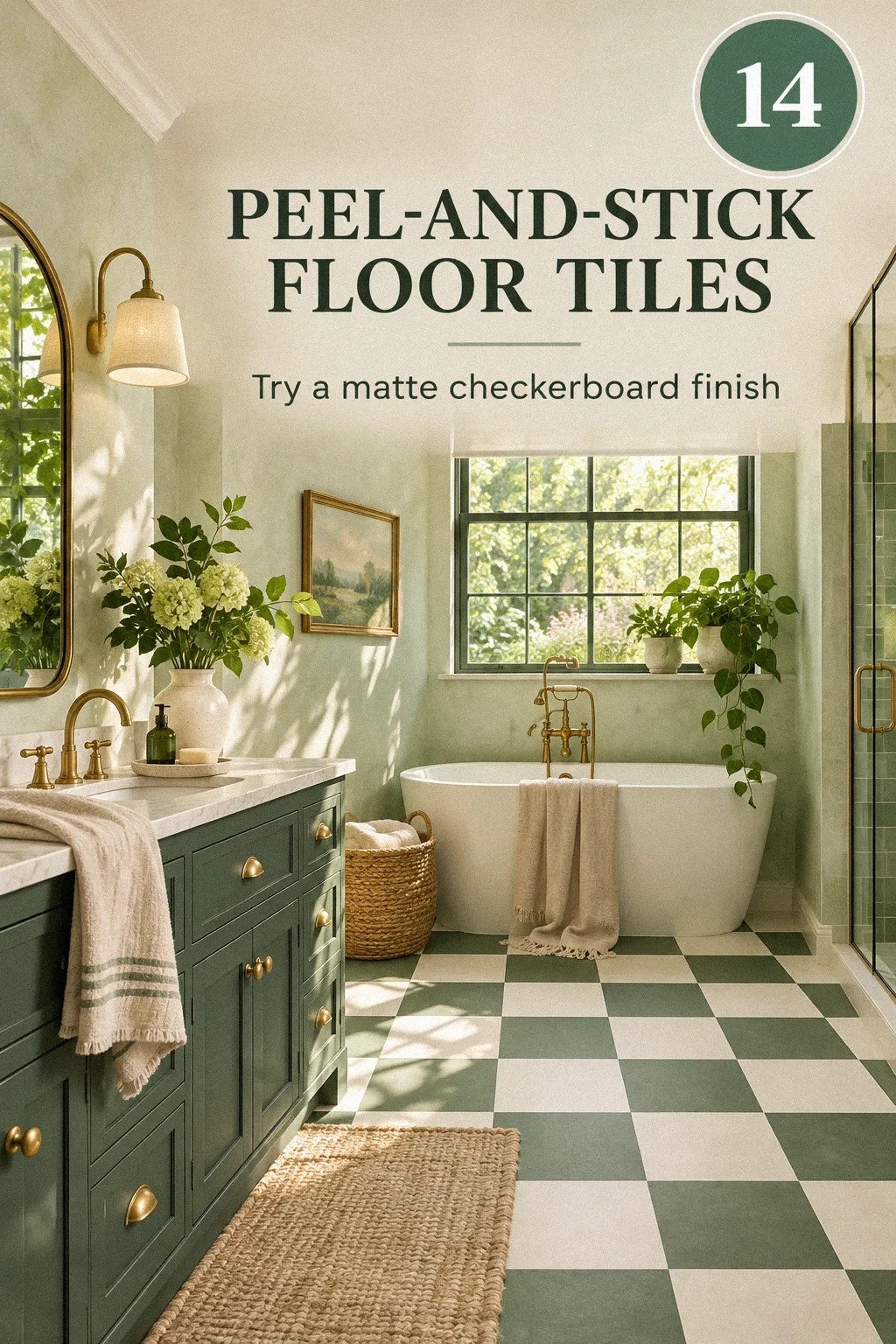
8Anchor a Peel and Stick Floor Tile Rental Friendly Vanity
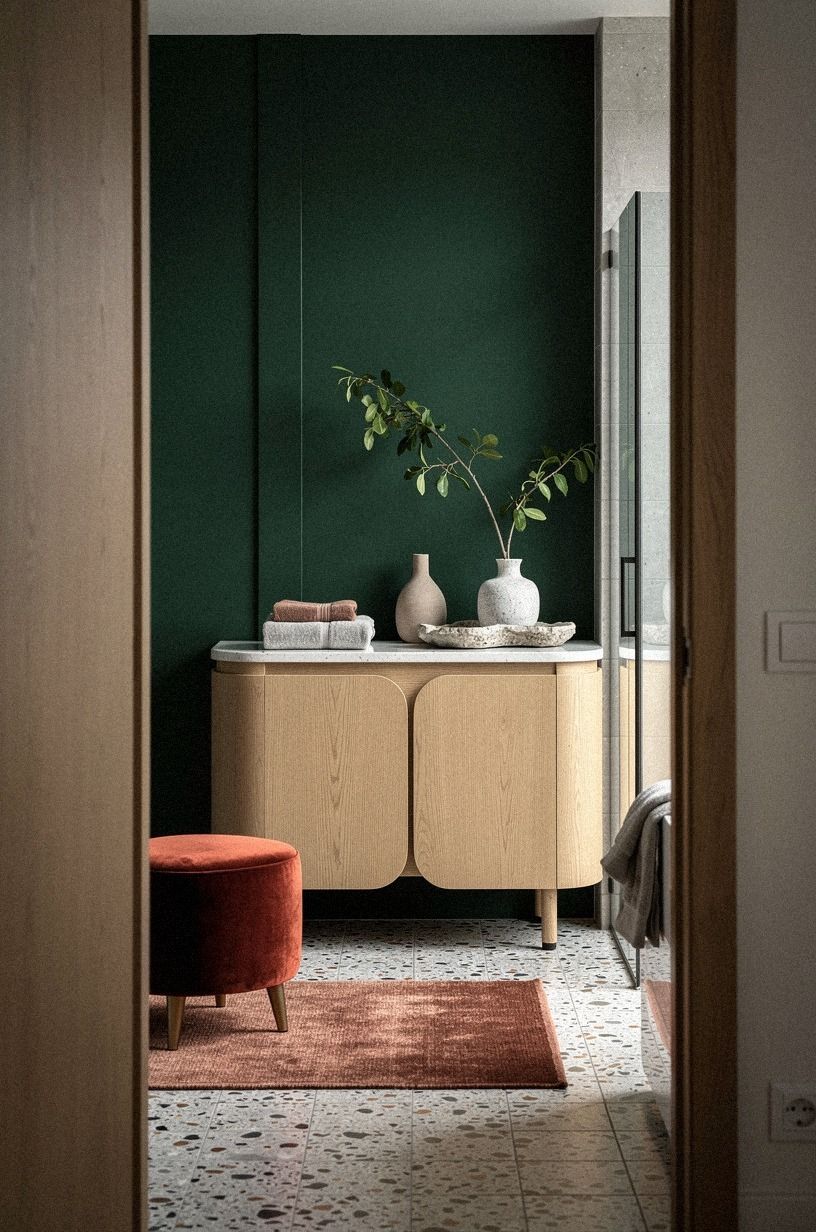
A vanity can hide an imperfect edge and give your floor a finished landing point. In a rental, a freestanding IKEA HEMNES vanity or another movable piece can create that effect without a built-in cabinet. Keep the legs visually light so you can still see enough floor to make the pattern feel deliberate.
Vanity height usually falls between 32 and 36 inches, so check how your tile pattern meets the cabinet before you commit. You don’t want a narrow sliver of tile showing beneath the front edge while a full square dominates the open side. Your cuts should look planned, even when the room wasn’t designed around them.
A floating cabinet can help a small bathroom feel airier, but I’d avoid drilling into tile unless your lease allows it. Instead, use a freestanding piece in natural oak with a deep-pile mohair velvet stool nearby. That tactile texture breaks up the hard surfaces and gives your eye somewhere warm to land.
If you’re weighing the cost of a new vanity, first see whether your existing one can work with a fresh paint color and new pulls. Related peel-and-stick tile ideas for bathrooms and fireplaces can also spark clever ways to connect hard surfaces without buying a matching set.
9Use a Checkerboard Without Making the Room Busy
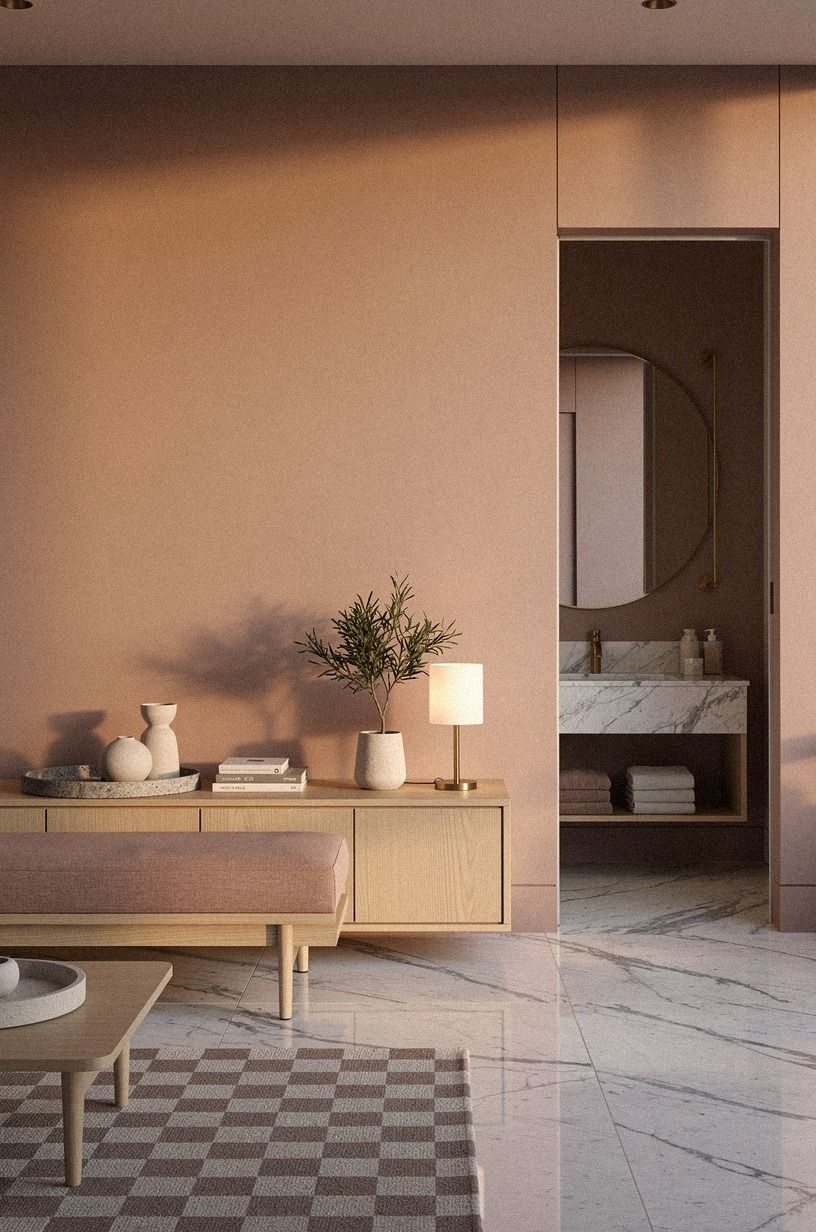
A checkerboard floor works best when the rest of the room stops competing. Dusty rose and charcoal can feel polished with Carrara marble’s subtle gray veining and a restrained brass detail.
10Float Warm Wood Over Cool Vinyl
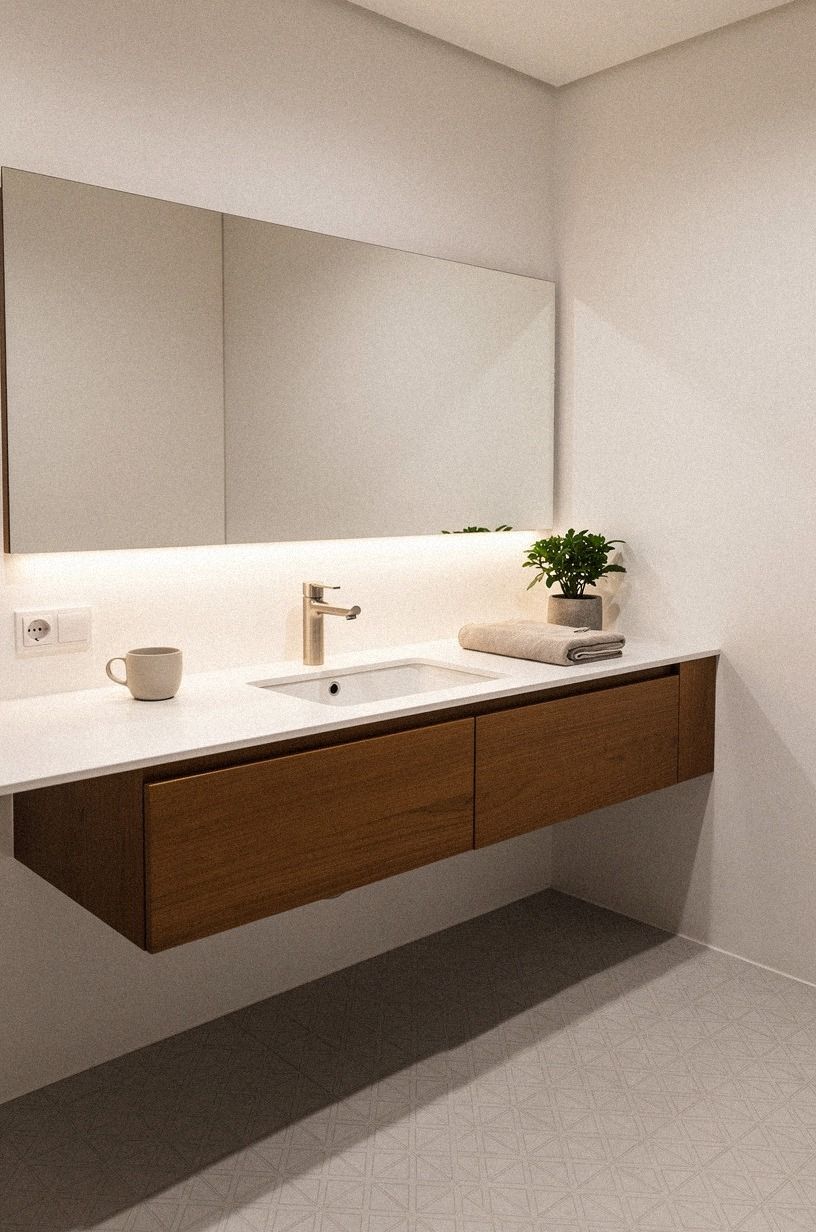
Warm wood accessories can stop a cool floor from feeling clinical. A stool, narrow shelf, or freestanding bath tray in reclaimed weathered teak gives your eye a soft counterpoint to gray vinyl. You don’t need a full wooden vanity to make the shift.
Keep wood away from standing water and give it enough clearance that you can mop beneath it. If your toilet clearance is tight, remember that 21 inches in front of the toilet is the minimum comfortable space. Your room may meet the measurement while still feeling crowded, so protect the walking path before adding decor.
I’d avoid glossy orange wood beside a faux marble floor. The finishes fight, and the room starts to feel like several renovations happened at different times. Weathered teak works better with warm white tile and black accents, especially when your towels repeat one small color from the room.
If you want a warmer result without replacing the floor, look at peel-and-stick backsplash ideas that look real for examples of soft wood, stone, and metal working together. That kind of restrained layering gives you more value than a pile of unrelated accessories.
11Frame the Tub With a Water-Safe Edge
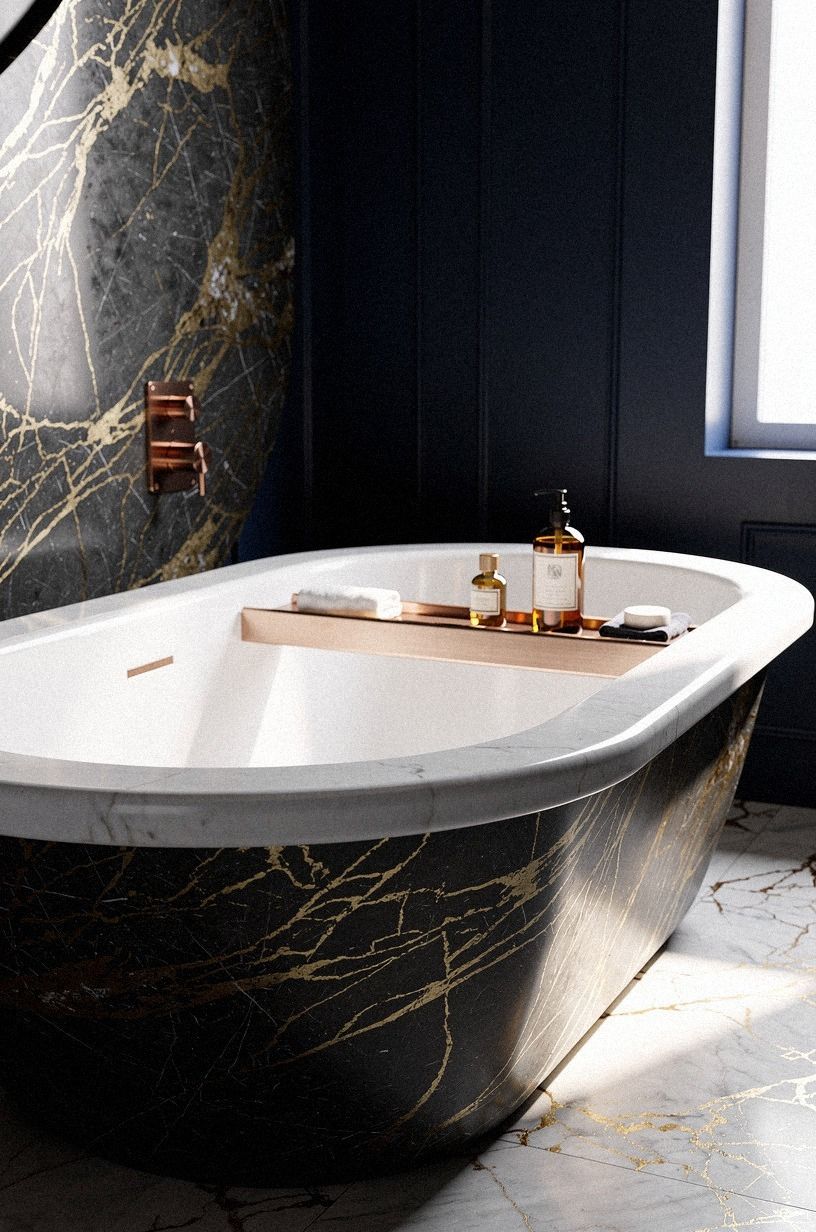
The tub wall is where a floor installation can look either polished or improvised. Midnight blue, copper, and ivory give the edge a composed direction, while Calacatta marble with gold veining keeps the transition bright.
12Ask: Can Peel-and-Stick Tiles Survive a Rental?
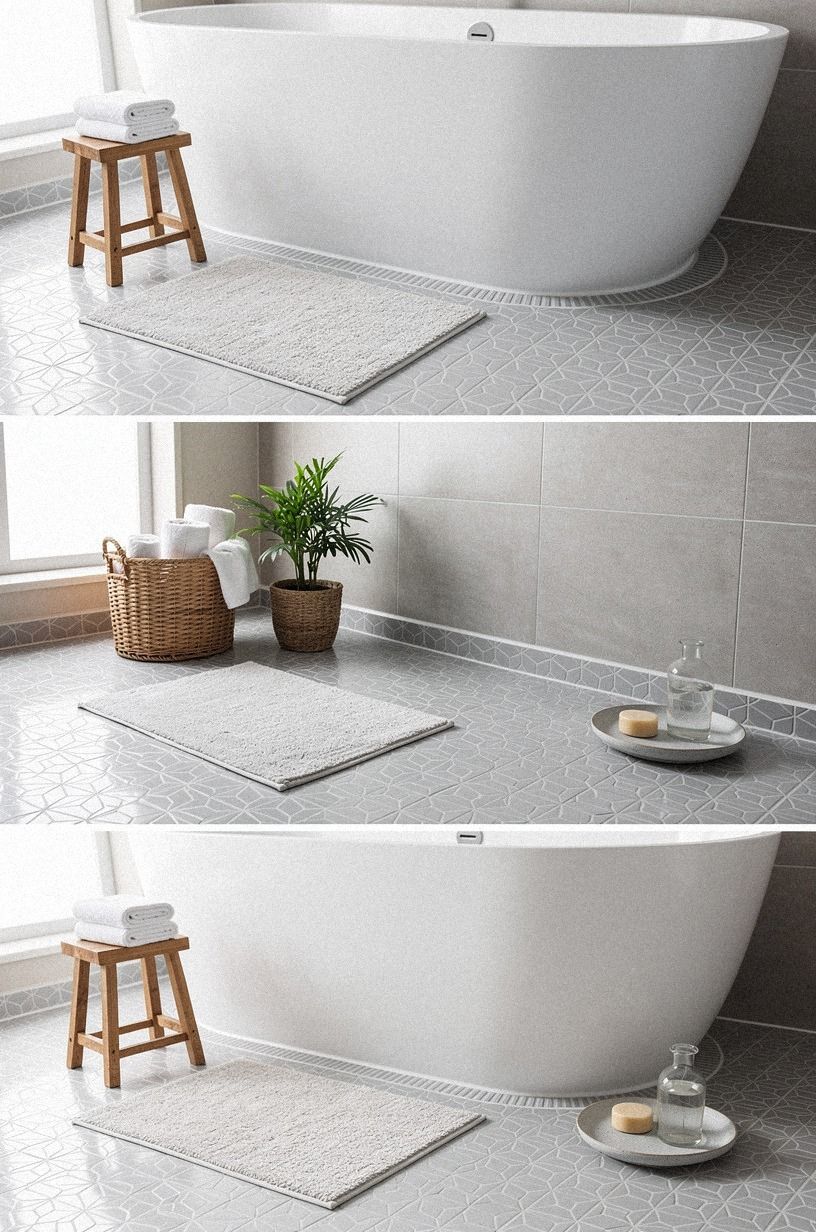
Yes, peel-and-stick tiles can work in a rental when the existing floor is sound, dry, and allowed by your lease. Your safest approach is a reversible installation over a stable surface, with careful corner pressure and no aggressive adhesive primer unless the landlord approves it.
Before you buy, read the lease and document the original floor. If you’re covering ugly ceramic tile, compare the grout depth and follow this guide to laying peel-and-stick tile over ugly ceramic tile. The tile may look flat while the grout still telegraphs through.
For a renter-friendly bathroom, I’d choose a low-contrast removable floor tile and keep a few spare squares stored flat. You’ll be glad you did if one piece gets damaged. And if the surface feels uncertain, test one tile in a hidden corner before committing the whole room.
You can also compare renter-friendly peel-and-stick ideas that come off clean before you decide whether the project is worth it. The right answer depends on the floor underneath, your lease, and how carefully you can control moisture.
13Spend on Adhesion Over Decorative Extras
The best place to spend your effort is the surface beneath the tile.
14Choose Peel-and-Stick Floor Tile That Does Not Lift
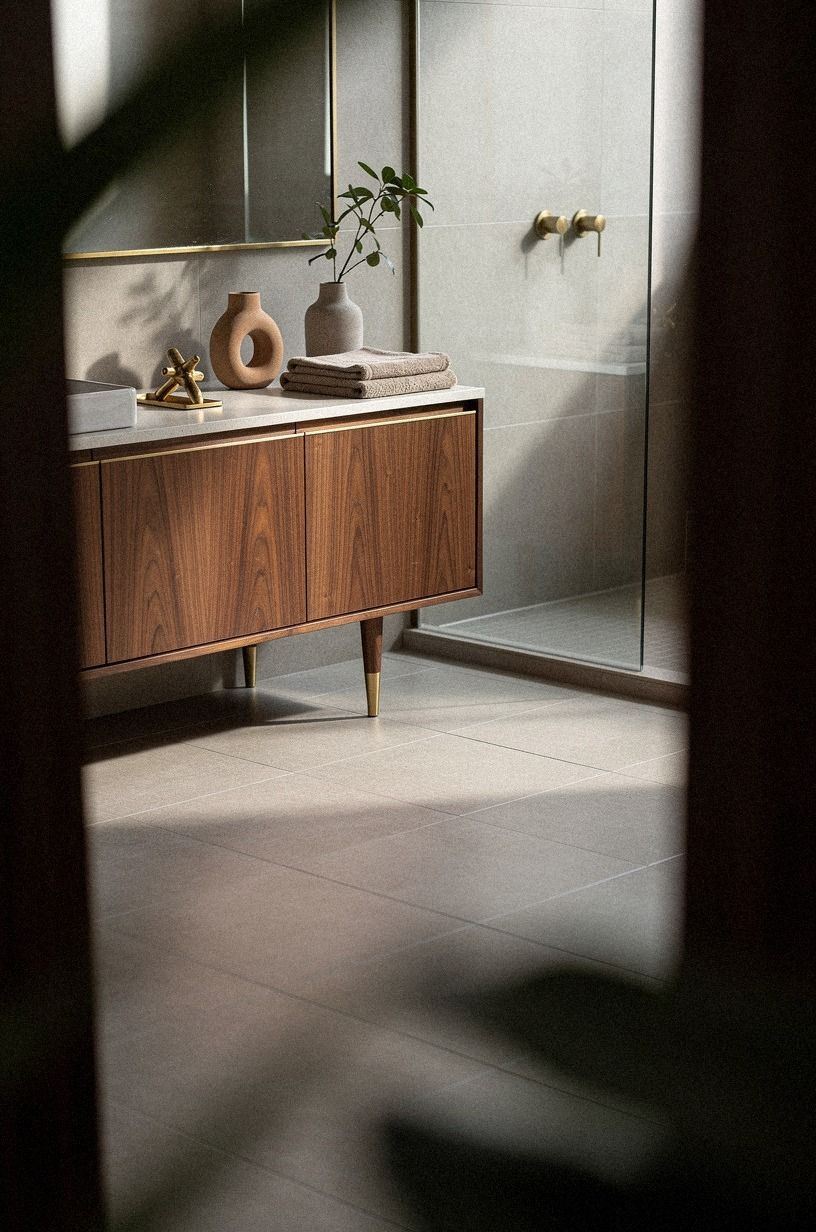
Start with the tile that suits your room’s light, traffic, and lease rules, not the one that looks most dramatic online. A calm clay-toned peel-and-stick square will usually give you more flexibility than a loud print, especially when your bathroom already has patterned shower tile.
Set every tile in place without removing the backing first. Check the doorway, toilet, vanity, and tub edges from where you’ll walk through the room.
If the layout leaves tiny strips everywhere, shift the whole field until the cuts feel balanced. You’ll save time and your floor will look less like a patchwork repair.
For more renter-friendly ideas, browse peel-and-stick tile ideas for a renter-friendly bathroom and peel-and-stick renter-friendly ideas that come off clean. I’d choose the least permanent method that still gives you firm edges. That’s the sweet spot.
The best buy is rarely the loudest tile. It is the one with a reliable backing, a believable surface, a manageable price, and a pattern you can live with after the novelty fades. That combination is what makes the project feel genuinely worth it.
What I Learned After Installing the Wrong Floor
I used to think the pattern was the main decision. It isn’t. The pattern is the part you notice first, but the subfloor is the part that decides whether you’ll still like the bathroom a month later.
My first attempt looked warm and graphic in the morning. By the next week, one corner had lifted near the tub, and every sock found it.
The repair taught me to slow down. I cleaned twice, let the floor dry, and checked the surface under the room’s changing light before opening a package. I also stopped treating every bathroom as if it needed a dramatic statement.
Farrow & Ball Hague Blue can bring depth to a vanity wall, but the floor doesn’t need to shout beside it.
I’d also spend less energy chasing a perfect material match. A soft terrazzo print, pale oak shelf, and aged metal mirror can work together even when they come from different places. What matters is the temperature and scale.
Your eye notices whether the pieces feel related, not whether every finish came from one collection.
The part I’d never skip now is the dry test. Lay the first rows out, walk across them, open the vanity doors, and check the toilet clearance.
A comfortable 21 inches in front of the toilet is useful, but the real test is whether you can move without stepping on an awkward seam. That practical pause is worth more than another hour of scrolling.
For another perspective on small rental upgrades, I’d save peel-and-stick tile ideas for bathrooms and fireplaces before shopping. Seeing several restrained combinations can make your own choices feel clearer.
A Few Things Worth Answering
What is the best peel-and-stick floor tile that does not lift at the corners for a small bathroom?
A rigid matte vinyl tile with a low-contrast pattern is the safest pick for a small bathroom. It hides minor dust, keeps the room calm, and won’t compete with the vanity. Test one tile first, especially near the tub, and choose a removable option if your lease requires it.
Where can I buy peel-and-stick floor tile pieces on a budget?
Look at IKEA, Wayfair, and Target, then check Facebook Marketplace or a local thrift shop for unopened boxes. Compare the backing, tile thickness, shipping cost, and return policy before buying. You can also browse peel-and-stick tile ideas for a renter-friendly bathroom for pattern direction.
How much does a peel-and-stick floor tile makeover cost?
A small makeover can run about $100 to $300 when you reuse the mirror, vanity, and textiles. Free improvements include cleaning, rearranging, dry-laying the pattern, and repainting with leftover paint. Your total depends on floor size, tile quantity, tools, and whether repairs are needed first.
Compare the full project cost, not just the box price, before deciding whether it offers good value.
Can I create a peel-and-stick floor tile bathroom on a budget?
Yes, and you can keep the room warm with three low-cost moves: clean the floor deeply, reuse your existing accessories, and paint one wall. A simple checkerboard often gives more impact than several small purchases.
Save spare tiles instead of spending the whole budget on extra decor. For more reversible ideas, see peel-and-stick renter-friendly ideas that come off clean.
Is peel-and-stick floor tile worth it in a small space?
Yes, when the floor is flat and dry. A small room needs fewer tiles, so careful preparation takes less time and the pattern can make the space feel more finished. Choose a pale grid, align it with the doorway, and use peel-and-stick backsplash ideas that look real for related color cues.
Is peel-and-stick floor tile a good idea for a rental?
It can be, provided your lease allows it and the existing floor is stable. Low-damage swaps include removable tile, a tension-rod curtain, and freestanding storage.
Document the original surface first, test one tile in an unseen spot, and avoid permanent adhesive near finished wood. If you are unsure about the existing surface, review how to lay peel-and-stick tile over ugly ceramic tile before making a purchase.
Where I’d Start First
If I had to pick one, I’d start with a dry, level subfloor. You can’t rescue lifting adhesive with a prettier pattern, but you can prevent the first curl with careful cleaning and firm corner pressure. Pin this floor plan for later and save the prep list before you shop.