
 by
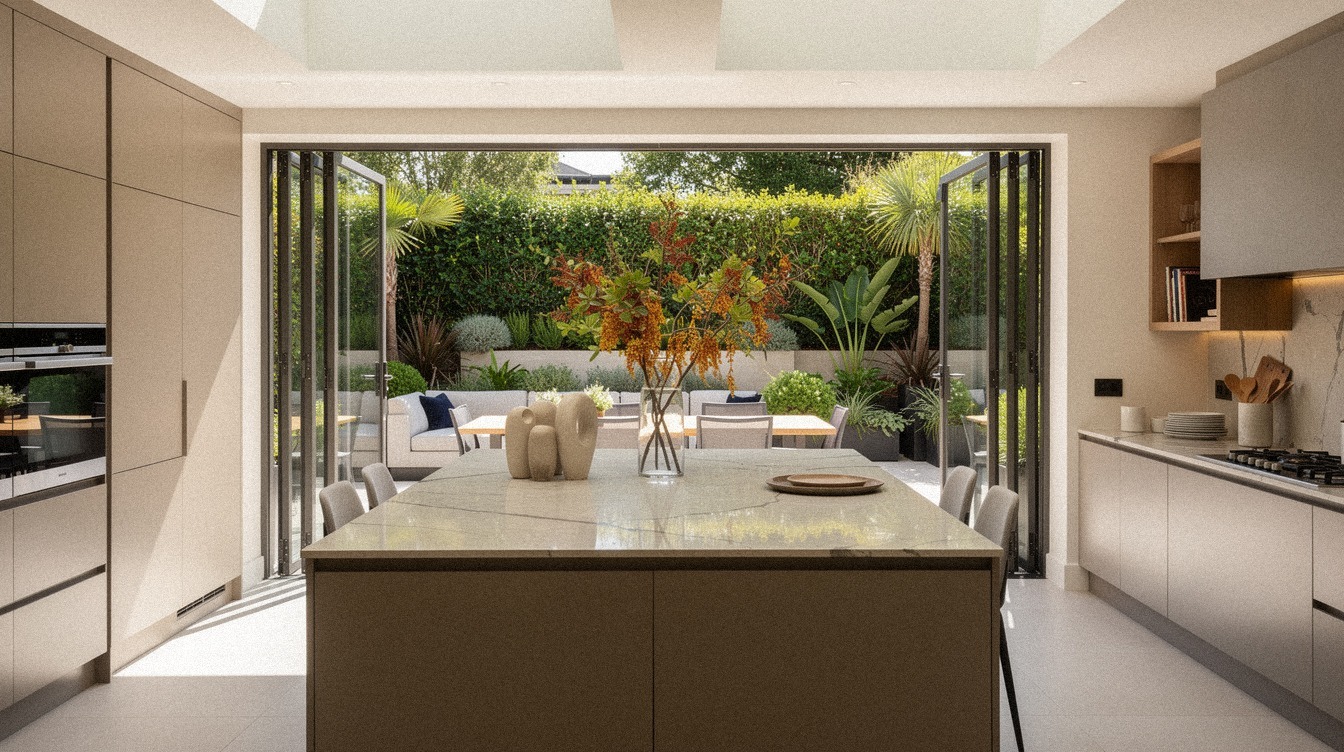
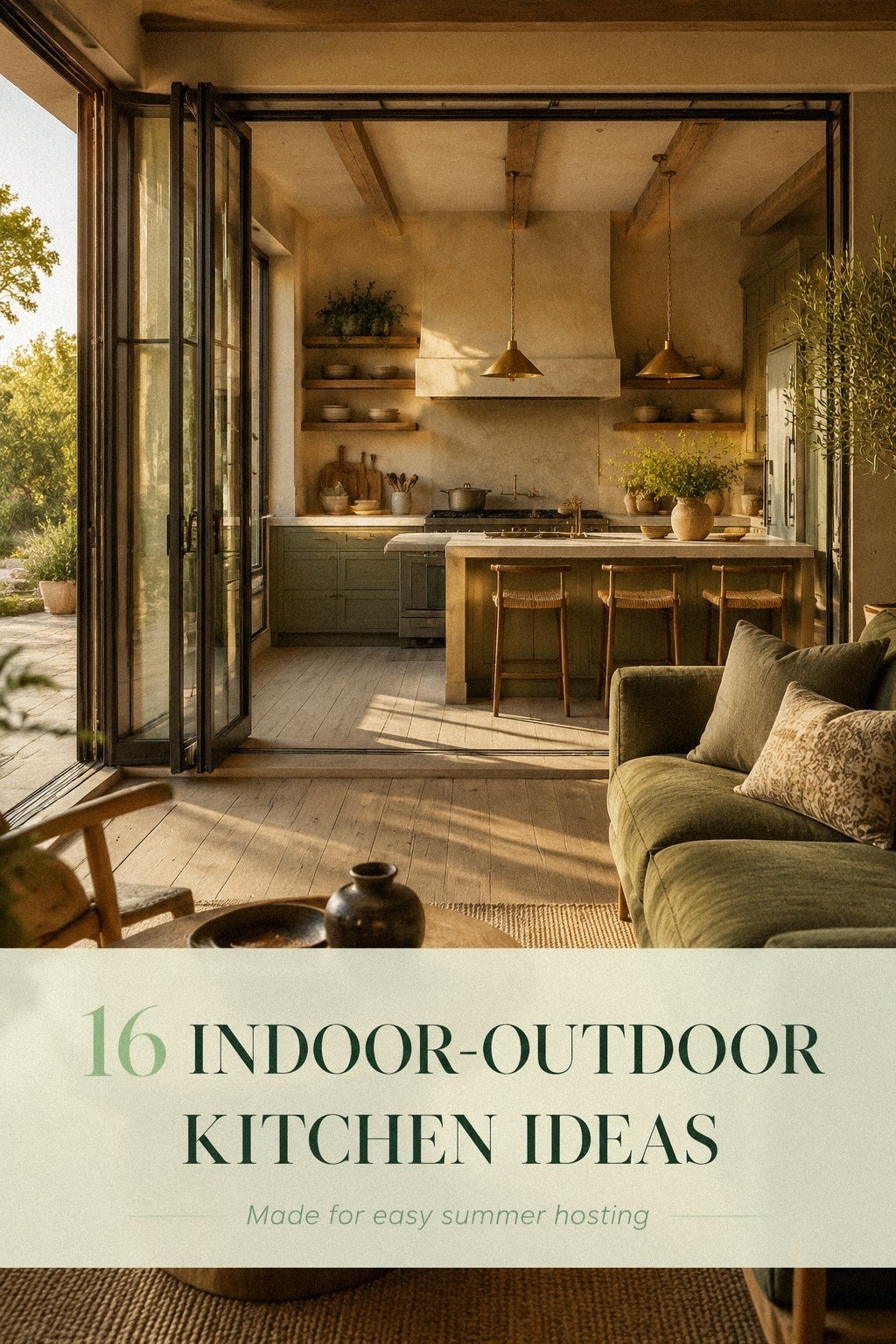
by Indoor-outdoor kitchen ideas work when your prep, serving, and seating lines read as one zone instead of two. I learned that the hard way after styling a back door like a border, and every party stalled there. Once I treated the threshold like part of the kitchen, the whole layout loosened up. That's the move, and the right surface material, a flagstone slab or a poured slab, usually makes it click.
- Open the wall with folding glass doors
- Run a prep counter through the window
- Install a pass through serving ledge
- Should the threshold floor match inside and out?
- Frame the view with black steel sliders
- Build a covered grill bay beside cabinetry
- What makes a rolling island actually worth it?
- Tuck bar stools under the exterior counter
- Repeat cabinet colors outside for flow
- Hang woven pendants over the breezeway
- Set a herb sink beside the doorway
- Wrap the patio kitchen in cedar screens
- Why concrete counters can carry both zones
- Use pocket doors to hide the outside kitchen
- Mount open shelves on the exterior wall
- Layer bistro lights over the dining spillover
1Open the wall with folding glass doors
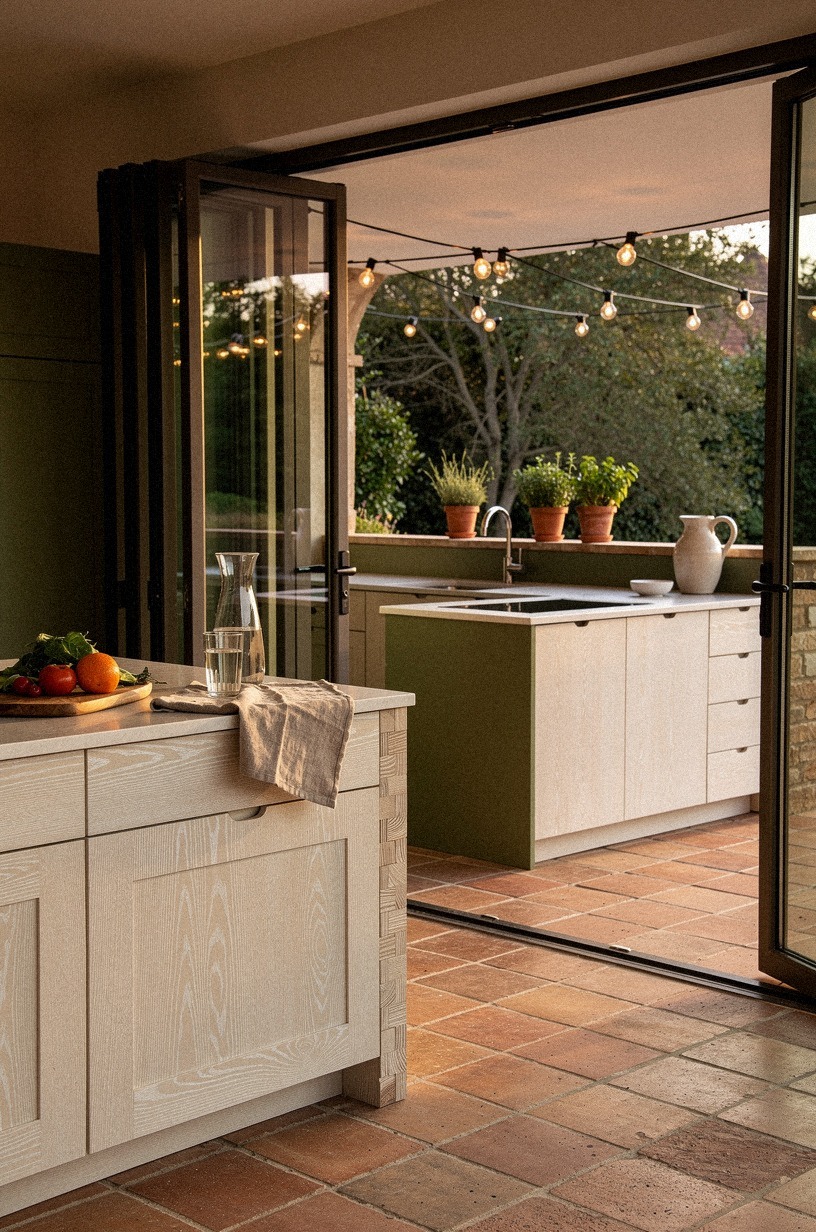
Start with the opening itself, because if your indoor kitchen still feels boxed in, no amount of outdoor styling will save it. Folding glass doors turn the room into one long entertaining lane, and you can feel it right away when the terracotta stone terrace lines up with your interior run. I like this move most when your inside cabinetry is calm and pale, because the wide opening does the drama for you.
You don't need flashy trim here. You need discipline. Match your door frame to a grounded wall color like Benjamin Moore White Dove OC-17, keep the sightline clear, and give yourself the full counter-to-table view the minute guests arrive.
The sightline is the show, so a matte black threshold strip at the door base does the same job a runner does in a hallway.
If you're working with a tighter footprint, the planning lessons in small outdoor kitchen ideas that maximize every inch help more than oversized furniture ever will.
And yes, I would skip divided panes. They break up the big reveal, and the big reveal is the point.
2Run a prep counter through the window
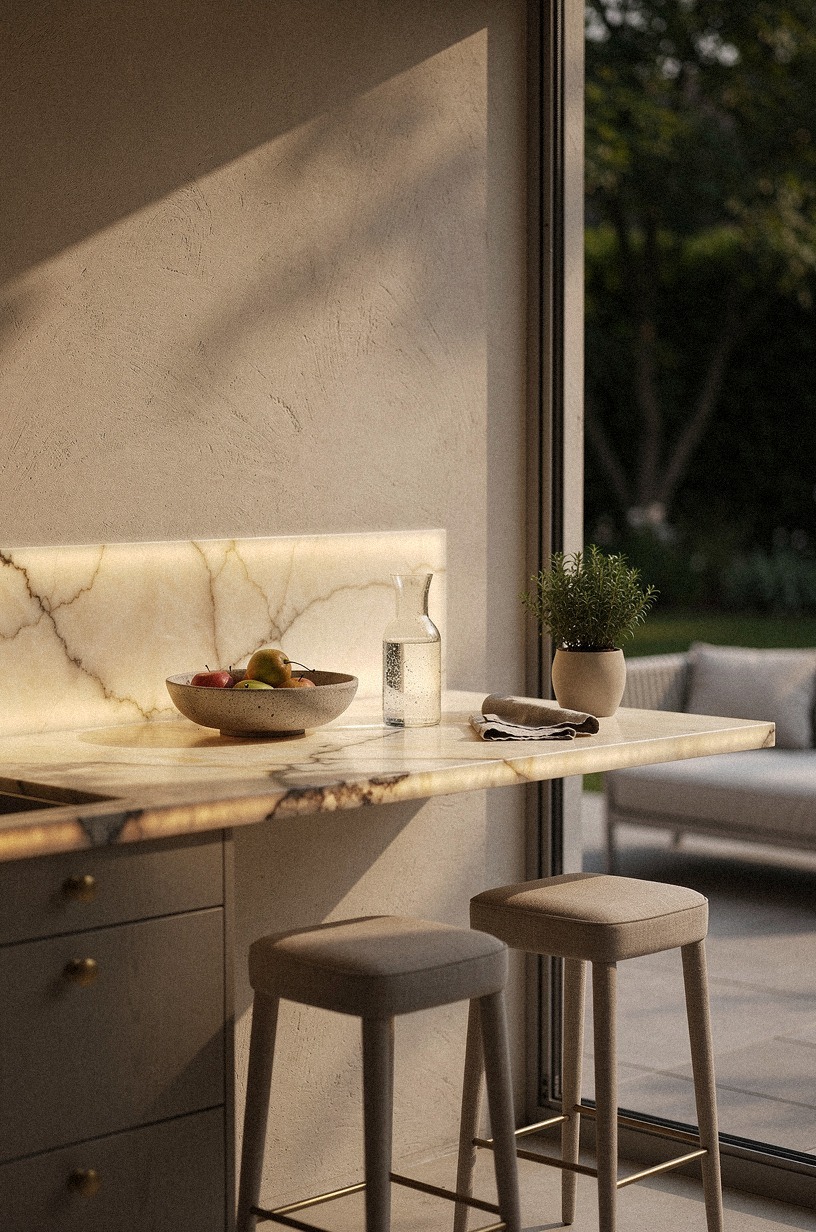
Push the counter through the opening so your eye reads one surface, not two separate kitchens. A through-window counter in translucent onyx catches backlight in a way plain quartz never will, and when you walk toward it from inside, the glow pulls you outside without shouting.
Keep the inside run at the standard 36 in counter height, then carry that exact level through the opening so trays don't bump and glasses don't tilt.
I made the mistake once of dropping the outdoor slab lower for "character," and it looked custom for five minutes before it became annoying at every dinner.
If you're mapping a kitchen outside the house with limited room, outdoor kitchen ideas for small backyards big function littl shows why level surfaces matter more than fancy extras.
But don't stop at the slab. Repeat the same edge profile on both sides, or your eye will catch the mismatch every single time!
3Install a pass through serving ledge
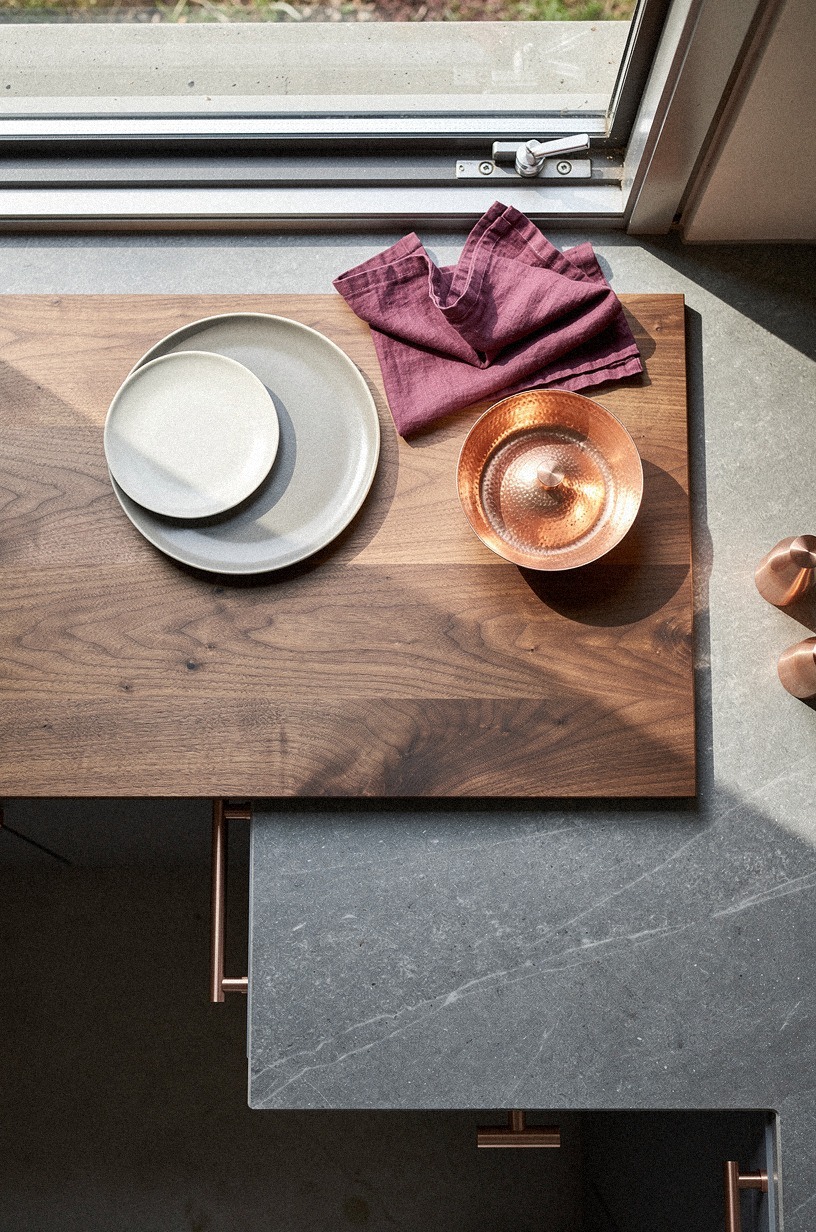
Think of the ledge as a landing strip, not a mini bar. A pass-through shelf in book-matched walnut gives you a place for plates, citrus, and pitchers while keeping the cook line free, and the overhead view works best when one edge stays mostly open instead of crowded with decor.
I like a narrower ledge than people expect, around the depth of a dinner plate plus a little breathing room, because a chunky top becomes a clutter magnet fast.
One hammered copper bowl. Stacked stoneware.
Linen napkins. That's enough.
If you want inspiration for the relaxed, useful look rather than a showroom look, 25 charming cottage kitchen ideas to inspire you gets the restraint right.
And if you're wondering whether a ledge can replace a full island, usually it can't. It wins when you need a pause point for serving, not a second prep station.
4Should the threshold floor match inside and out?
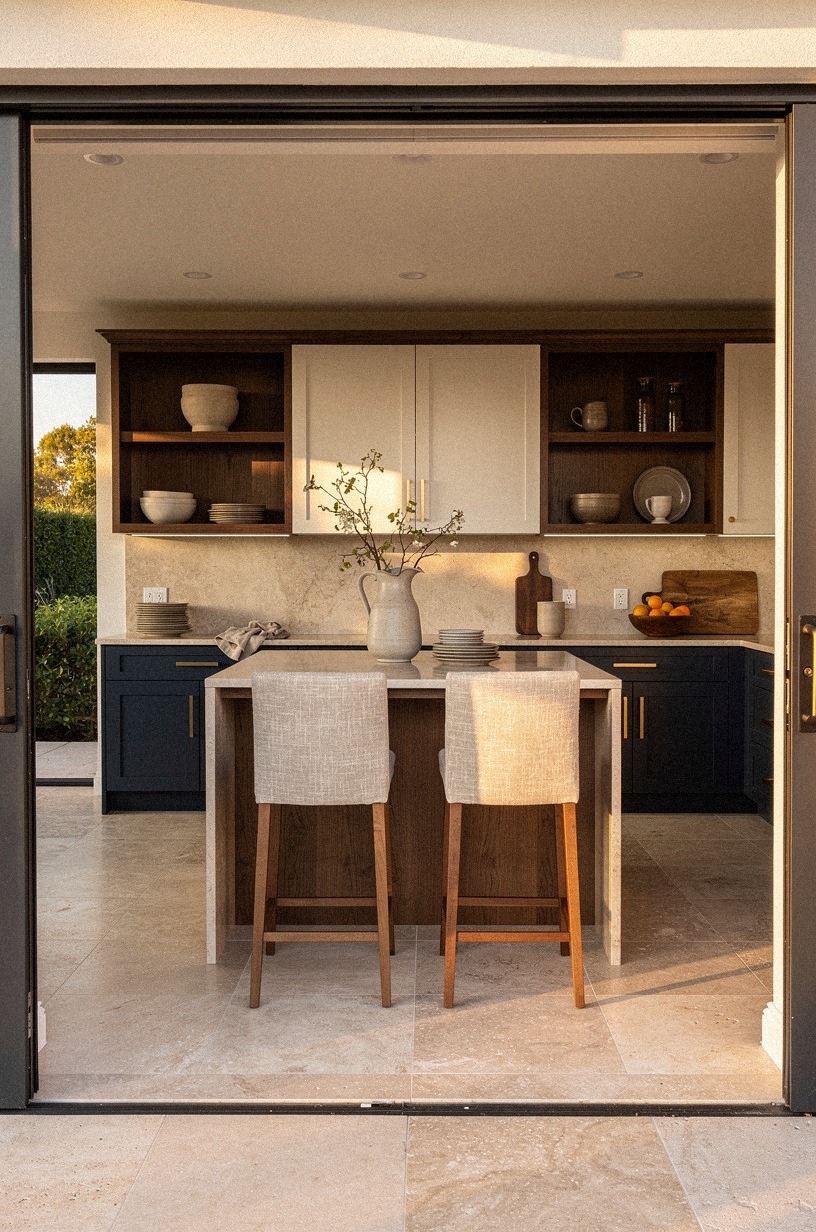
Yes, and the answer is carry the floor straight through the doorway so the threshold stops acting like a stop sign. Matching honed travertine inside and out makes the room feel longer, brighter, and calmer because your eye isn't interrupted by a material switch right where traffic is heaviest.
But this is where numbers matter. Leave the visual flow intact, but still protect function with grout and finish rated for outdoor use, especially if your patio catches rain.
I prefer a soft navy-and-white interior palette above stone like this because the floor already has movement; busy cabinetry would fight it.
For other layouts where the outdoor zone has to pull double duty with water or lounge areas, outdoor kitchen pool combos for the ultimate backyard shows how continuous flooring keeps the yard from feeling chopped up.
But don't fake this with two lookalike tiles. Close isn't close enough once sunlight hits both surfaces.
5Frame the view with black steel sliders
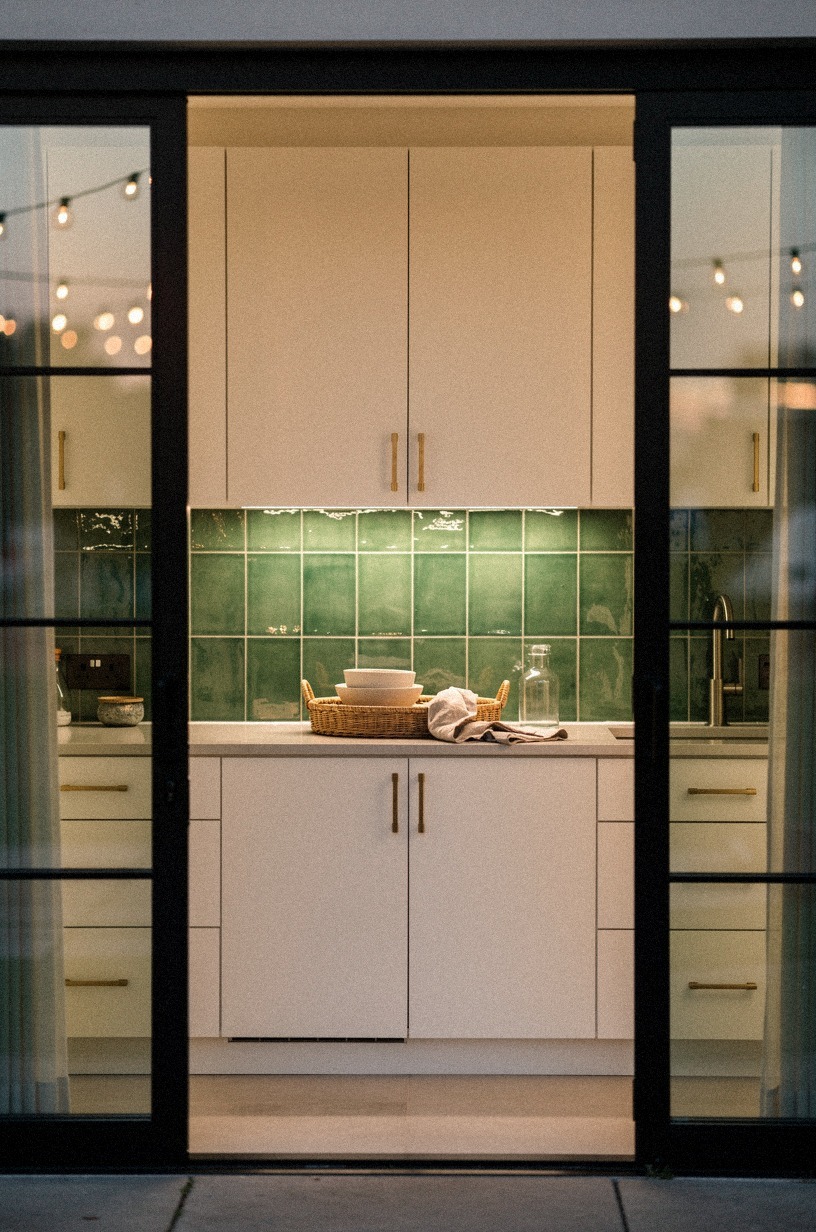
Use black steel sliders when you want the opening to feel crisp instead of beachy.
6Build a covered grill bay beside cabinetry
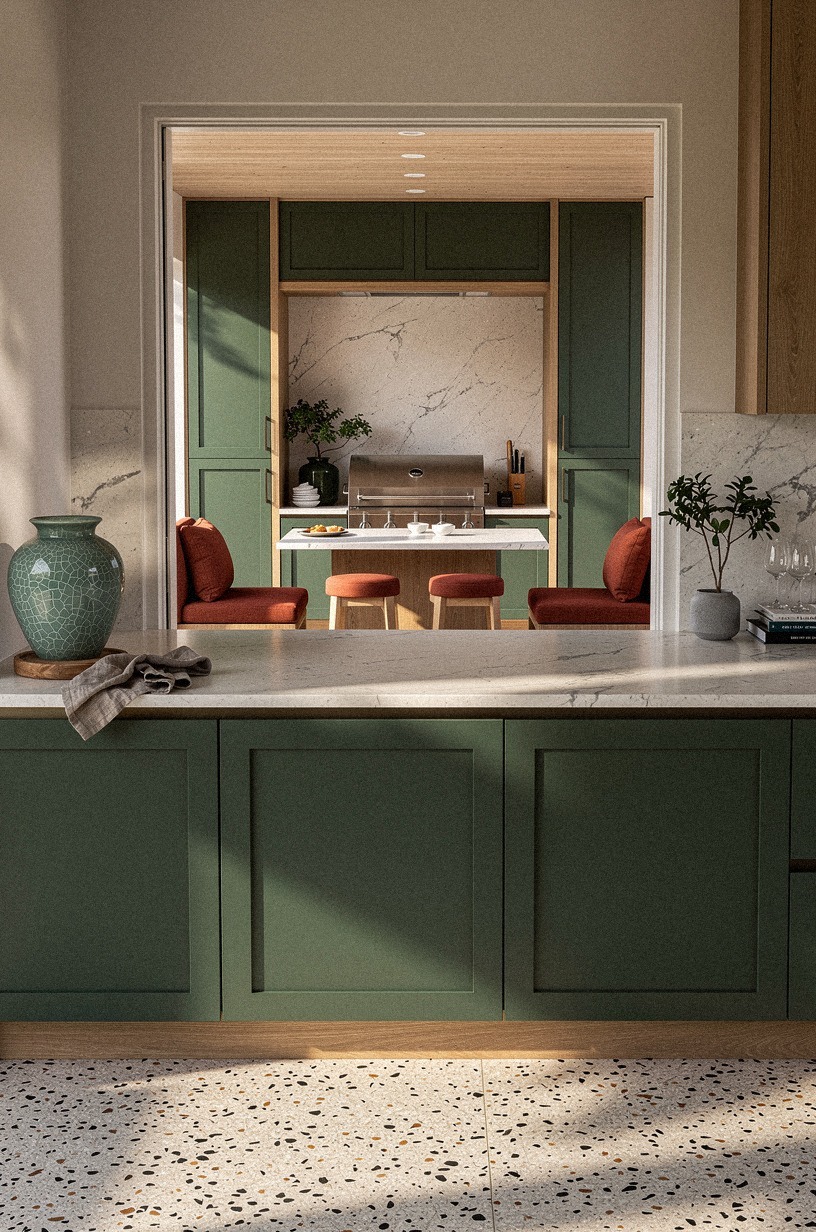
Give the grill its own alcove instead of letting it squat in the middle of the patio. A covered bay beside forest green cabinetry feels intentional, and the layered view from the interior doorway makes the outdoor station look built in to the same story as the main kitchen.
You want this zone to work like a secondary line cook area, so keep heat, tools, and cleanup contained. A vent hood or pergola cover, a landing shelf, and weather-safe drawers do more for you than a giant grill with nowhere to set a platter.
I learned that after trying to style around a freestanding monster that looked impressive and cooked well, but made serving awkward.
If your backyard zone needs to squeeze real function into a smaller envelope, small outdoor kitchen ideas that maximize every inch is the better model than oversized luxury installs.
And yes, your semi outdoor kitchen can still feel refined if the messy tools disappear behind matching fronts.
7What makes a rolling island actually worth it?
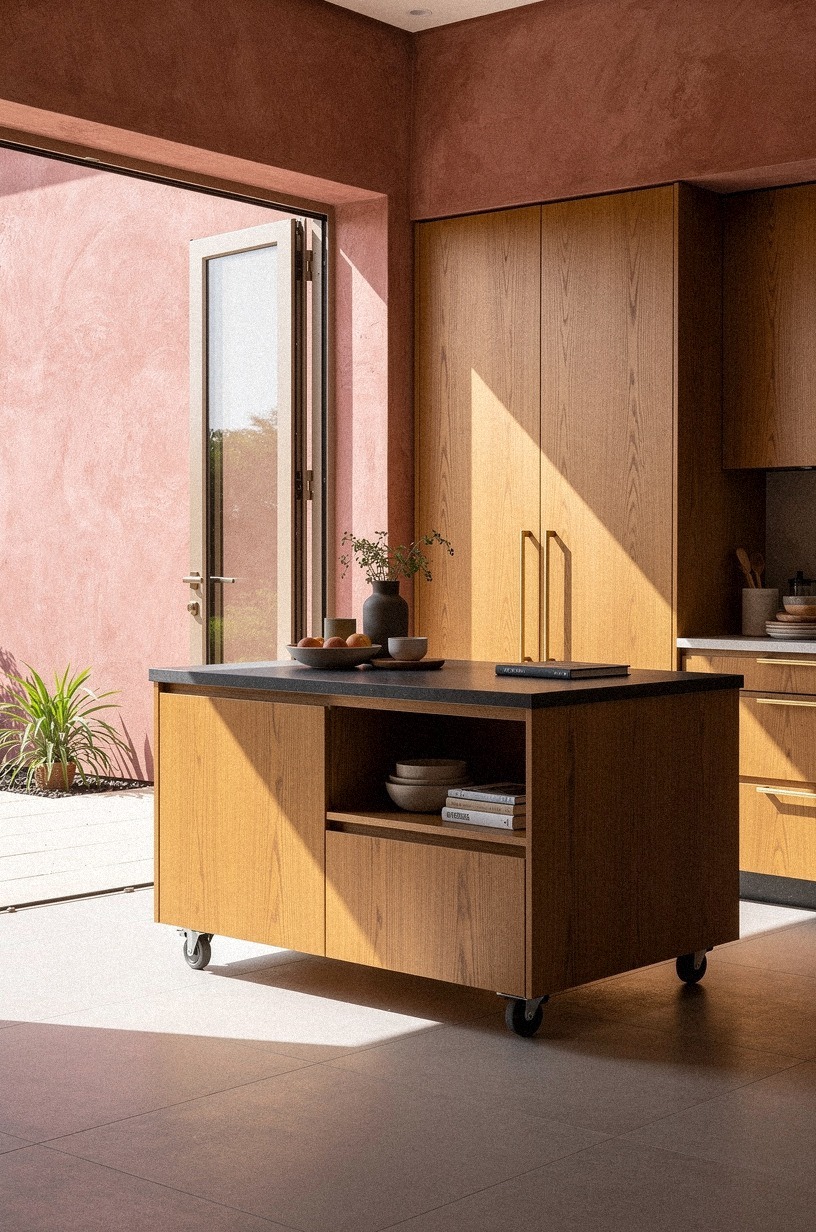
A weatherproof island on casters is what makes the whole setup host-friendly.
8Tuck bar stools under the exterior counter
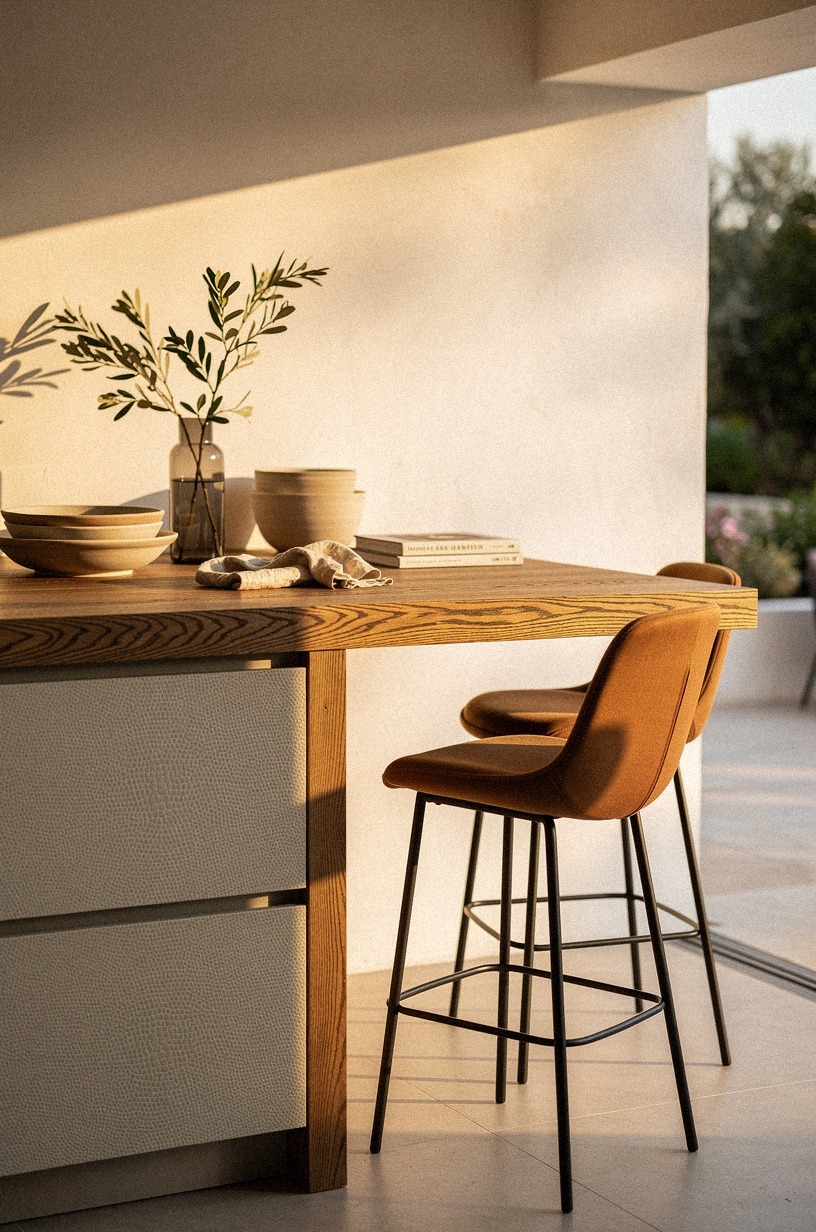
Use the outer counter as your social edge, then let the stools disappear when nobody's sitting there. Bar stools tucked fully under the overhang keep the serving bar looking calm from inside, and that quiet line is what makes the opening feel architectural instead of busy.
And this is one of those details people skip, then regret. You need stool seats that slide cleanly under the top, not chunky backs that jut into the walkway.
I like woven or powder-coated frames with a warm seat tone because they echo outdoor texture without screaming patio set.
For cushions, keep it spare: one durable Sunbrella linen blend pad if you need it, nothing puffier.
If you're styling an entertaining zone that spills farther out, best pillow for outdoor helps with fabrics that won't go sad after one damp night.
And honestly, four good stools beat six mediocre ones every time.
9Repeat cabinet colors outside for flow
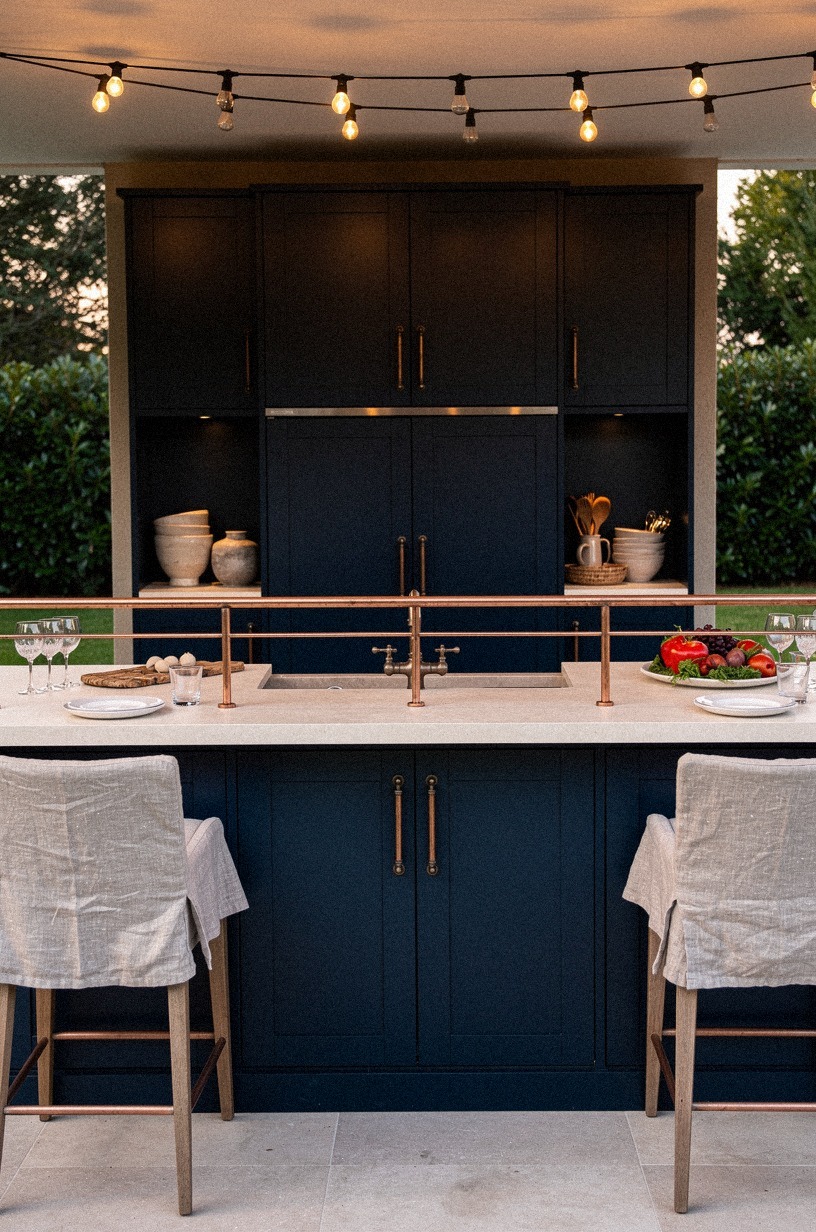
Repeat the cabinet color outdoors so the patio kitchen feels like the second chapter of the same room.
10Hang woven pendants over the breezeway
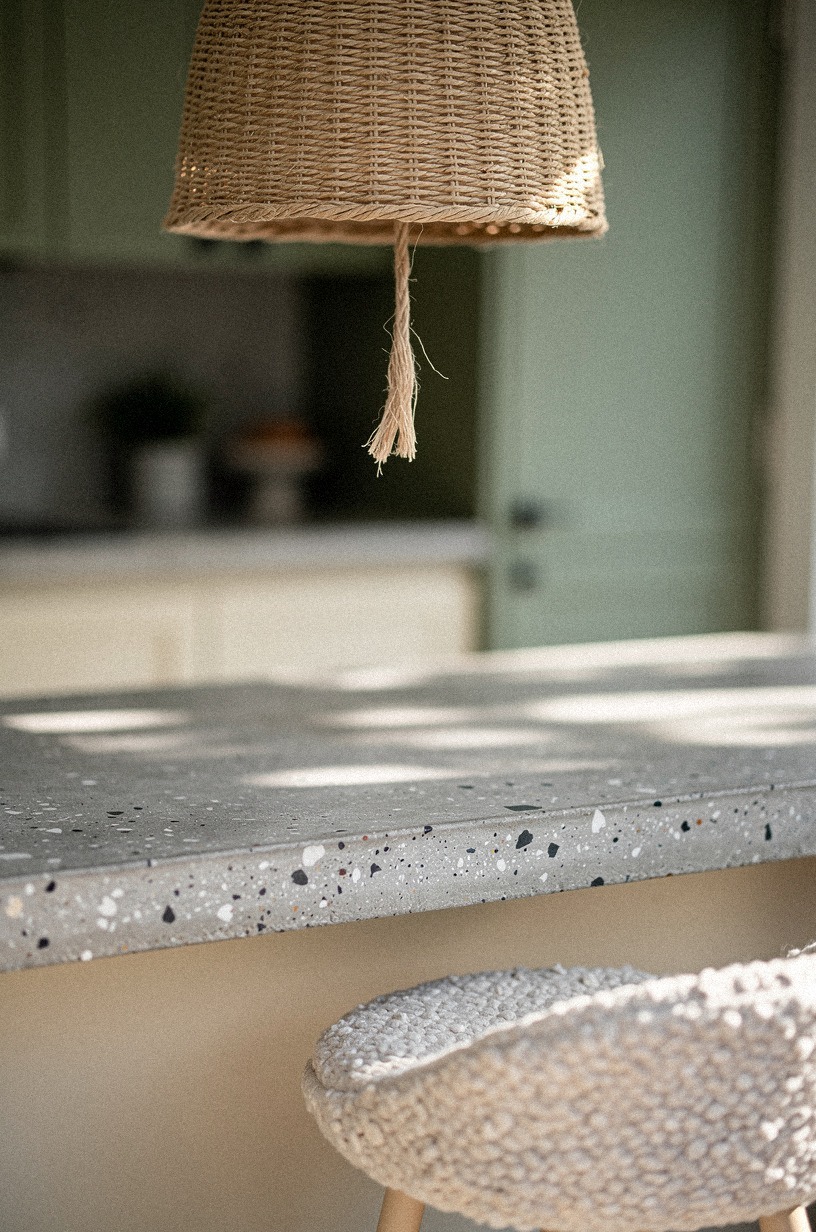
Light the breezeway like a room, because it is one. Woven pendants cast a broken, dappled pattern across sage cabinetry and the threshold floor, and that filtered glow is what makes the transition feel lived in at dusk instead of flat.
Here's my rule for this look: the Three-Height Light Stack. Pendants overhead, task light at counter level, and a low ambient source farther out by dining.
Once you layer those heights, the breezeway stops being empty air and starts feeling like part of the evening.
Use one generous pendant in natural rattan fiber rather than several tiny ones, especially if the opening is centered and symmetrical.
If your patio dining area keeps drifting visually away from the kitchen, outdoor kitchen pool combos for the ultimate backyard has the same lesson in a larger setting.
But please skip cold white bulbs. They kill the whole mood in seconds.
11Set a herb sink beside the doorway
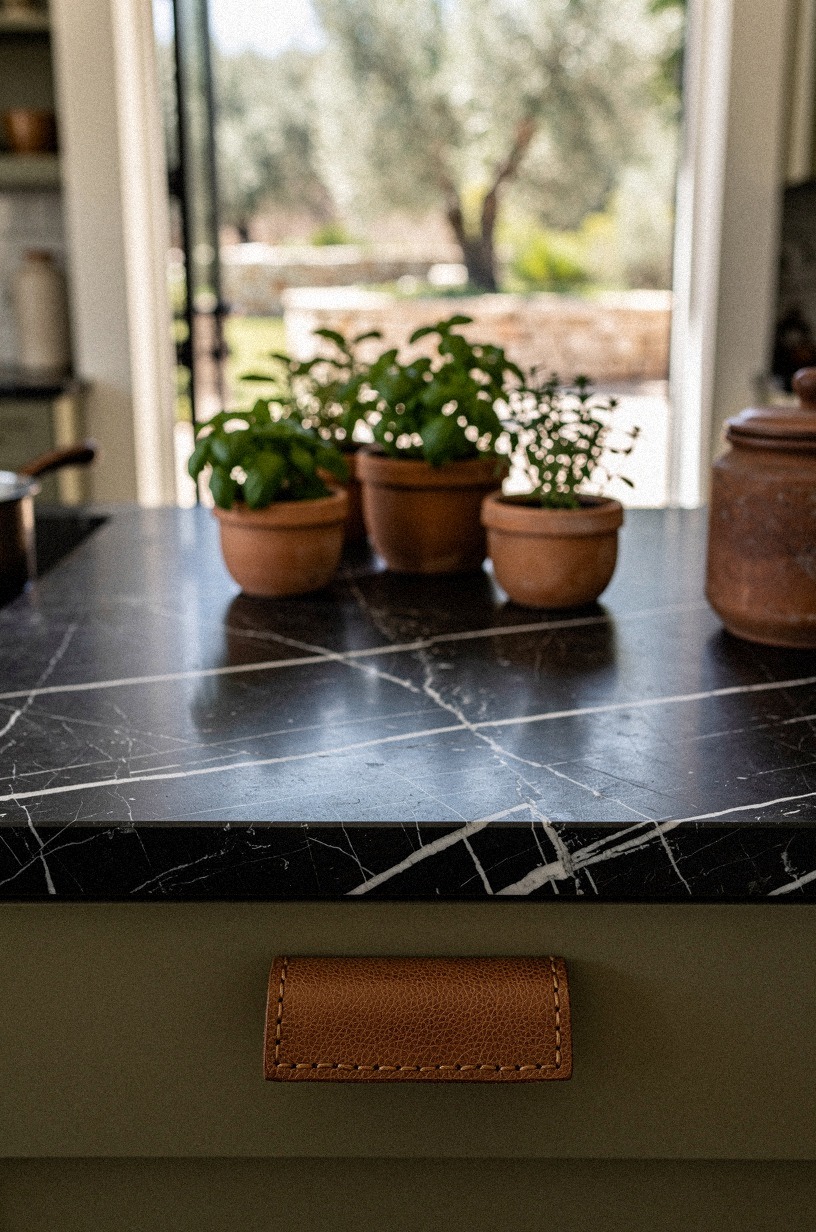
Put the small sink right where inside becomes outside, because that's where you trim basil, rinse citrus, and wash your hands after touching the grill. A herb sink beside the doorway, especially on Nero Marquina marble with sharp white veining, looks polished and saves steps you will absolutely notice once guests are over.
This doesn't need to be huge. A compact prep sink with a tight radius bowl is enough if you pair it with a narrow draining ledge and a terracotta herb rail nearby.
Standard backsplash spacing still matters here too: keep about 18 in between the counter and any shelf or upper element so the area doesn't feel cramped.
If you like the layered utility of tiny zones doing real work, small outdoor kitchen ideas that maximize every inch is worth a look.
Why walk wet herbs across the whole kitchen if the doorway prep zone can do that job for you?
12Wrap the patio kitchen in cedar screens
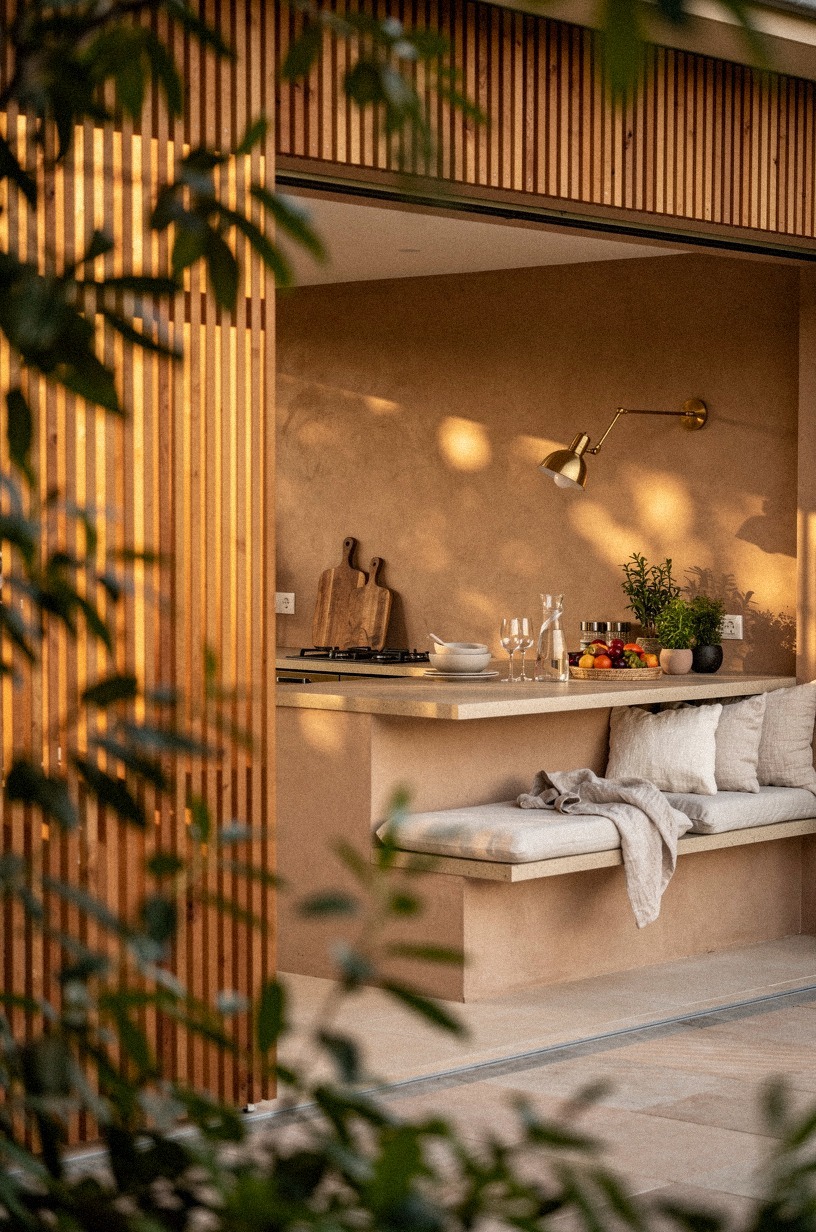
Use cedar screens when you want privacy without losing light.
13Why concrete counters can carry both zones
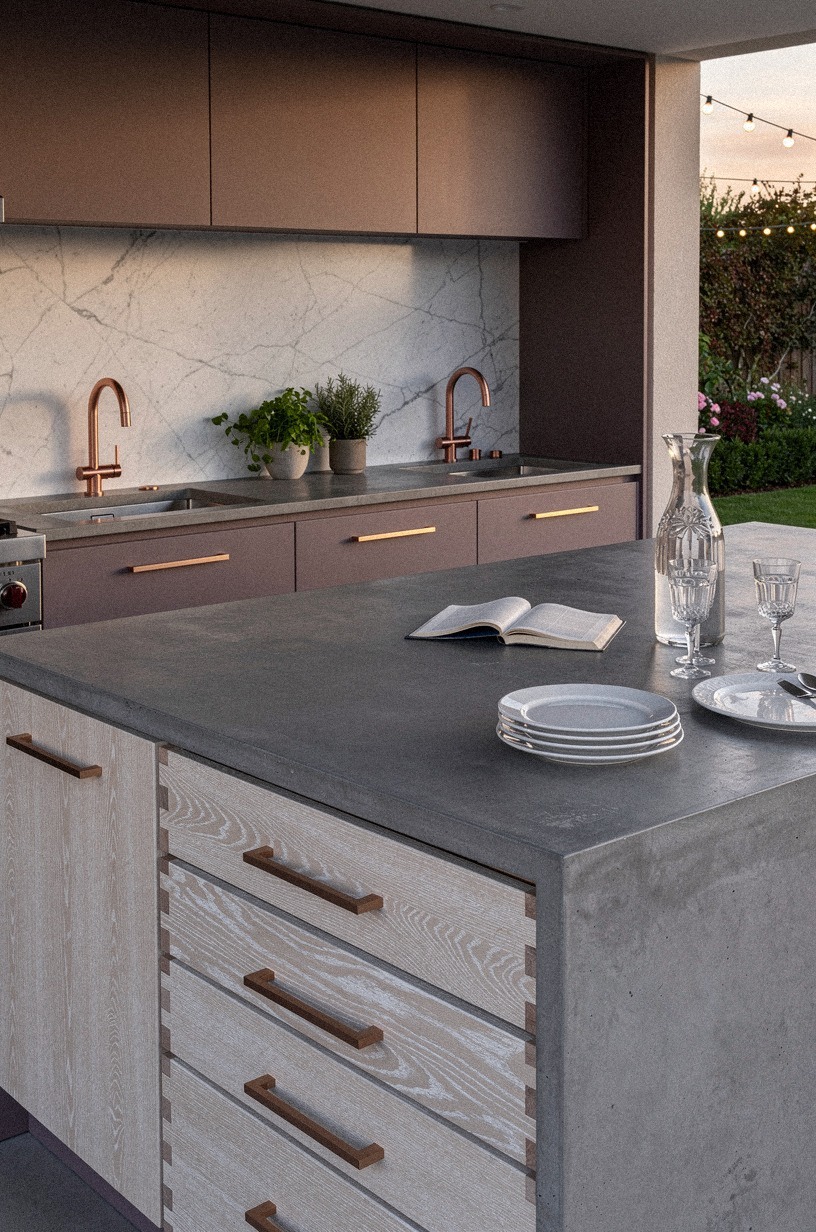
Poured concrete does that well because the soft grey run can move from plum-toned interior cabinetry to the outdoor section without looking fussy, and the diagonal view makes the continuity obvious the second you step back. You carry one counter material across the entire project when you want the strongest visual link, and concrete is the most forgiving choice for that job.
You do need to know what you're buying into. Concrete looks best with a little movement and age, so if you hate patina, choose something else.
I prefer it over faux-stone laminate in a mixed indoor-outdoor setup because the slight tonal variation feels honest, not printed.
A 2-inch thick pour with a pencil-rounded edge holds up best at the seam, because sharp edges chip outdoors within a season.
And if budget is your driver, compare the numbers before you fall for the mood alone:
If you're still deciding what kind of surface story suits a tighter remodel, 25 charming cottage kitchen ideas to inspire you helps with the warmer, less industrial end of the spectrum.
A natural clay tile reads softer than polished concrete if your kitchen leans cottage.
But concrete has to be detailed cleanly. A clumsy seam ruins the illusion fast.
14Use pocket doors to hide the outside kitchen
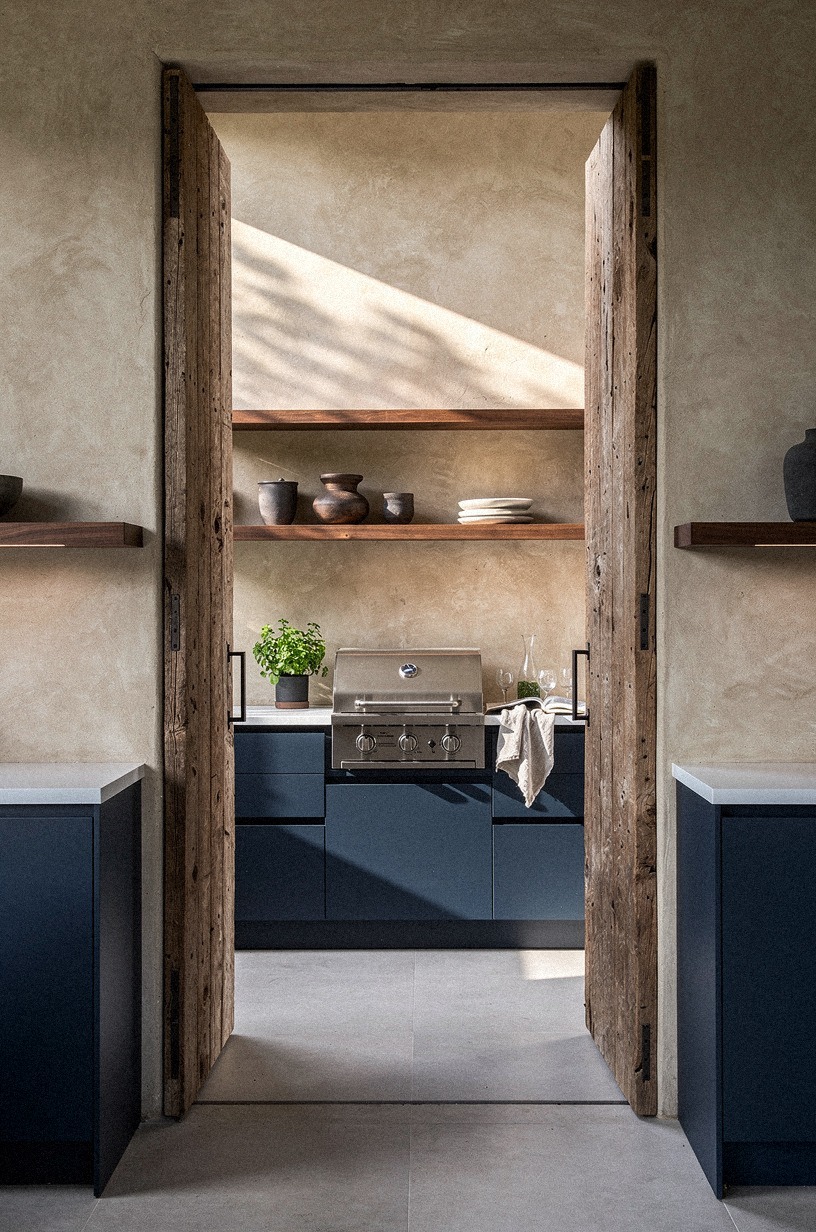
Hide the entire outdoor station when you're not entertaining, and the patio suddenly feels calmer on ordinary days. Pocket doors in reclaimed teak let the kitchen disappear behind a symmetrical opening, which is ideal if you want your yard to read as living space first and cooking zone second.
This is my favorite move for people who love order but hate visual clutter. You get all the function when the doors are open, then a quieter backdrop once the party is over.
Keep the hardware minimal and the grain visible, because teak already brings enough character.
If you want the hidden zone to feel intentional rather than like a utility closet, repeat one inside element, maybe a black pull or pale plaster tone, on the pocket system.
A Sherwin-Williams Accessible Beige SW 7036 wall behind the doors carries the eye gently instead of fighting the teak.
For another example of outdoor zones that need to transform quickly, outdoor sleeping gets the day-to-night logic right.
But don't use flimsy bifold shutters here. Pocketing fully away is what makes this feel magical.
15Mount open shelves on the exterior wall
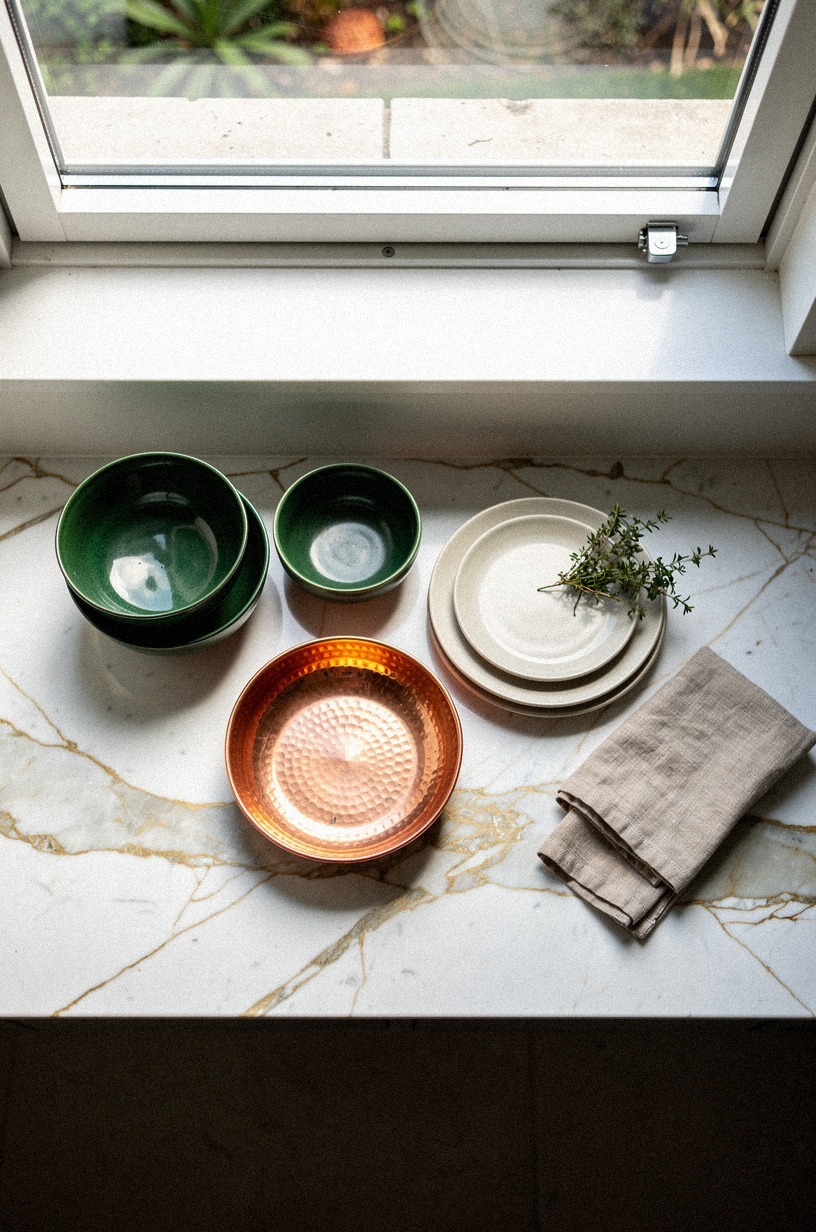
Open shelves work outside when they stay edited and low stress. Mounted against the exterior wall above a Calacatta Gold marble serving shelf, they create a calm backdrop for glasses, pitchers, and a few everyday pieces without turning the whole zone into a display case.
The overhead view tells you what matters: breathing room around the objects. I keep exterior shelves narrower than indoor ones and style them with things I'd happily grab during a party.
Ribbed tumblers. White platters.
One copper ice bucket. That's it.
If you're trying to get this same balance in a tiny backyard cooking setup, outdoor kitchen ideas for small backyards big function littl is a good reference because it favors usable storage over filler.
And yes, you should leave some shelf empty. Empty space is what keeps the marble shelf looking expensive.
16Layer bistro lights over the dining spillover
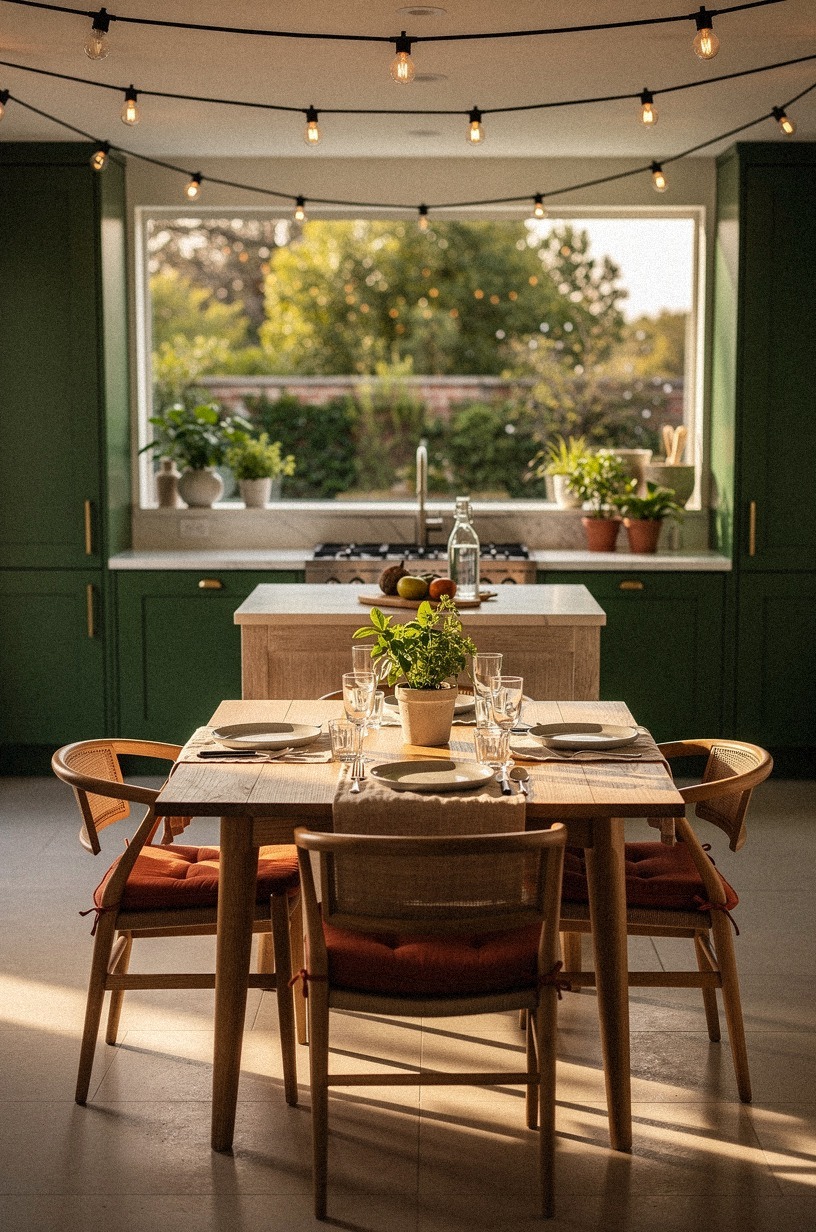
Pull the dining area into the kitchen story with bistro lights that stretch past the prep zone and over the spillover table. Once that warm line of bulbs sits above both areas, the kitchen and patio stop feeling like separate destinations and start acting like one long evening room.
I like this best when the lights are high enough to disappear from your eye line while still making a soft canopy at night.
Use fewer strands than you think, then let the glow reflect off stone, tabletops, and glass.
This is where warm white walls and a forgiving dining surface really matter.
If you're building a host-friendly yard around more than one feature, outdoor kitchen pool combos for the ultimate backyard shows how overhead lighting keeps the whole plan connected.
And once you get this right, you won't need much else. The evening mood arrives on its own.
The Rule I'd Use Before Knocking Down Anything
If you're deciding between a small tweak and a real remodel, I'd make that call based on traffic, not fantasy. That's the mistake I see most.
People picture the dramatic door opening, the pizza oven, the party photos, then ignore the boring part: where hands land, where trays turn, where someone can stand without blocking the cook. I did that once with a project that had a gorgeous opening and a terrible route to the outdoor table.
It photographed well. It hosted badly.
What changed my thinking was realizing that indoor-outdoor kitchens aren't really about outside cooking. They're about friction.
If your guests keep bunching at one door, if your drink station steals prep space, if your grill person gets marooned outside while everybody else stays in, the plan is wrong even when the materials are right. That's why I now start with three questions. Where do you chop?
Where do you set the platter down? Where do people linger when they're half helping and half talking?
Those answers tell you whether you need folding doors, a pass-through ledge, a doorway sink, or just better stools.
Money matters too, and I don't think every house deserves the expensive version. A cosmetic refresh in the $300 to $1,500 range can change a lot if your layout already works. New hardware, better lights, cleaner paint, one useful rolling island.
Done. But if your opening is too small or the outdoor zone has nowhere to land food, that's when a bigger spend starts making sense.
I would rather see you spend on width, lighting, and one honest surface than on shiny appliances you barely use.
And here's the part nobody respects enough: restraint. The best indoor-outdoor kitchen I've ever used wasn't the largest.
It just had one continuous counter, one place to sit, one place to grill, and one clear mood from inside to out. You could feel where to stand.
You could tell where the night was headed. That's what you're after. Not more stuff.
Better flow.
The Questions Worth Answering First
What is the best Indoor-Outdoor Kitchen Ideas for Seamless Entertaining for a small kitchen?
A pass-through ledge plus tuck-under stools is usually the best small-space combo because it gives you serving space without stealing floor area. I'd start there, then borrow compact layout ideas from small outdoor kitchen ideas that maximize every inch.
Clean lines. Fewer pieces.
Better flow.
Where can I buy Indoor-Outdoor Kitchen Ideas for Seamless Entertaining pieces on a budget?
Start with IKEA and Target Threshold for stools, carts, and simple lighting, then check Facebook Marketplace for teak carts or outdoor shelving. I also hunt secondhand for better materials at lower prices.
One solid piece. Two basic ones.
That's usually the smartest mix.
How much does a Indoor-Outdoor Kitchen Ideas for Seamless Entertaining makeover cost?
A light refresh usually lands around $300 to $1,500, and a more involved update often runs $3,000 to $12,000. Paint is the cheapest lever.
New doors, counters, and built-ins raise the bill fast. If you're cost-planning, outdoor kitchen ideas for small backyards big function littl helps you spend where it counts.
Can I create a Indoor-Outdoor Kitchen Ideas for Seamless Entertaining on a budget?
Yes, and the cheapest wins are usually the most visible. Paint the cabinets.
Add stools that tuck away. String bistro lights.
Use a rolling island instead of fixed construction. A weekend and a few hundred dollars can get you surprisingly far!
Is a Indoor-Outdoor Kitchen Ideas for Seamless Entertaining worth it in a small space?
Yes, because small spaces benefit most from shared function. When one counter handles prep, serving, and casual seating, your kitchen works harder without feeling fuller. I'd keep the pathway open and make sure you still have 42 in of clearance where people turn.
Is Indoor-Outdoor Kitchen Ideas for Seamless Entertaining a good idea for a rental?
Yes, if you choose reversible upgrades that fake permanence well. Try a rolling island, plug-in pendants, outdoor-safe stools, removable shelving, and paint-free textiles. For more low-commitment outdoor comfort, best pillow for outdoor is useful because fabric choice makes temporary setups feel thought through.
Where I'd Start First
If I had to pick one, I'd start with the pass-through serving ledge. It solves the dead zone at the threshold, and dead zones are what make these kitchens feel awkward. Pin that idea for later and browse 25 charming cottage kitchen ideas to inspire you for warmer material cues.