
 by
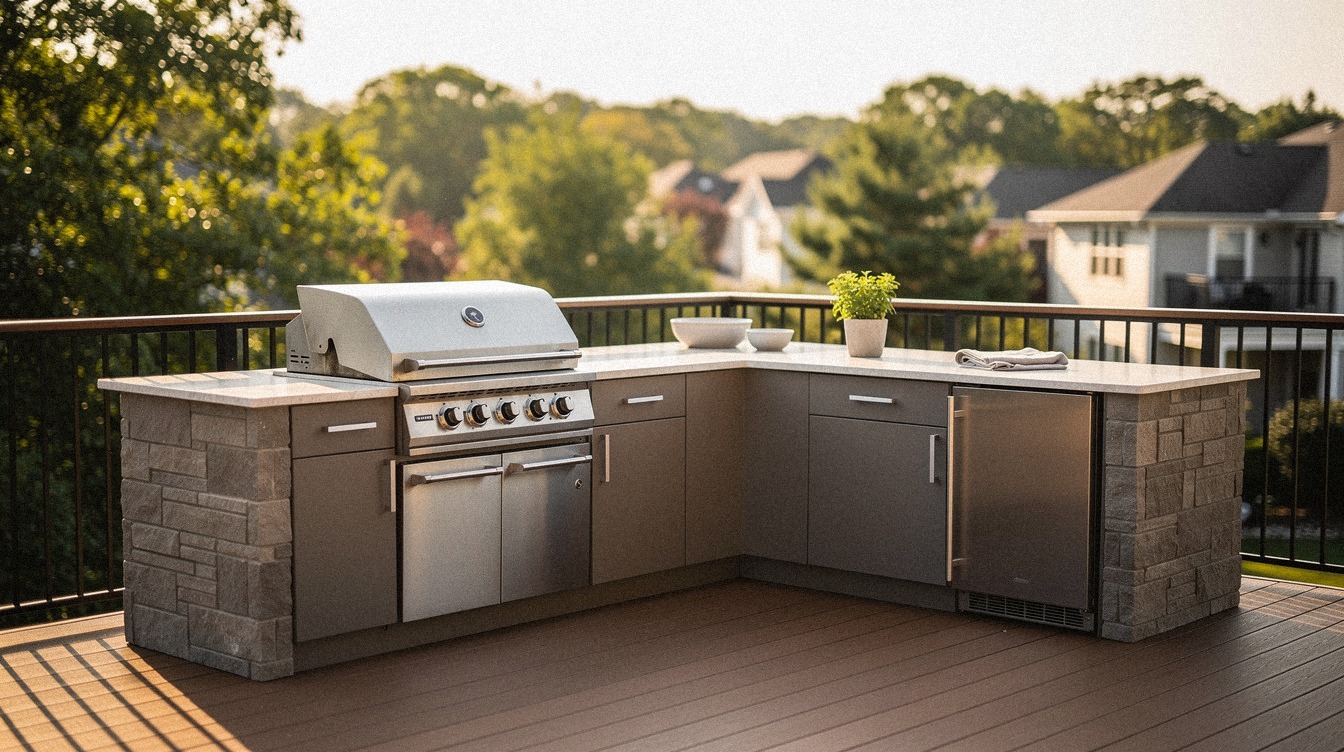
by How to build a deck outdoor kitchen without wasting space starts with three moves: check the structure, keep the cook line tight, and let one service lane do the hard work. I learned that after sketching a wider layout than my Douglas fir deck could carry. It looked generous on paper. In real life, it would have turned dinner into a sidestep routine.
Before You Start With the Rail-Hug Rule
If you are building on a deck, your smartest move is to treat one edge as the working edge and protect the center for movement. I call that the Rail-Hug Rule. It keeps the grill, sink, and prep line close enough to share one compact outdoor cooking space, and it stops the whole build from eating the dining zone.
Typical kitchen cost data still helps here because deck projects rise or fall on finish choices. A laminate worktop or peel-and-stick splash panel can carry a budget version; stone, lighting, and appliances push you into remodel territory fast. Use the table first, then scale your plan to what your deck and your budget can handle.
You also want the standard numbers in your head before you mark anything. Standard counter height lands at 36 in, and clear working space wants 42-48 in where people pass behind you. That is the difference between a patio kitchen that feels easy and one that keeps catching your hip on the stool backs.
- Start by mapping grill clearance from railing
- Should you put stone counters on a wood deck?
- Mark a straight utility chase under boards
- Anchor the grill on a fireproof landing
- Frame the cooking wall with cedar screens
- Run gas and water through one service lane
- Build a slim cabinet run along railing
- Install a stainless sink beside the prep zone
- Heat shields behind the grill: do they matter?
- Pergola or no pergola over the cook line?
- Hang task sconces above the deck counter
- Layer porcelain deck tiles under appliances
- Tuck a trash pullout beneath the prep counter
- Mount open shelves on the house wall
- Add a pass through ledge at the door
- Wrap bar seating around the outer rail
- Plant herb boxes beside the serving corner
- Finish with lanterns over the dining deck
1Start by mapping grill clearance from railing
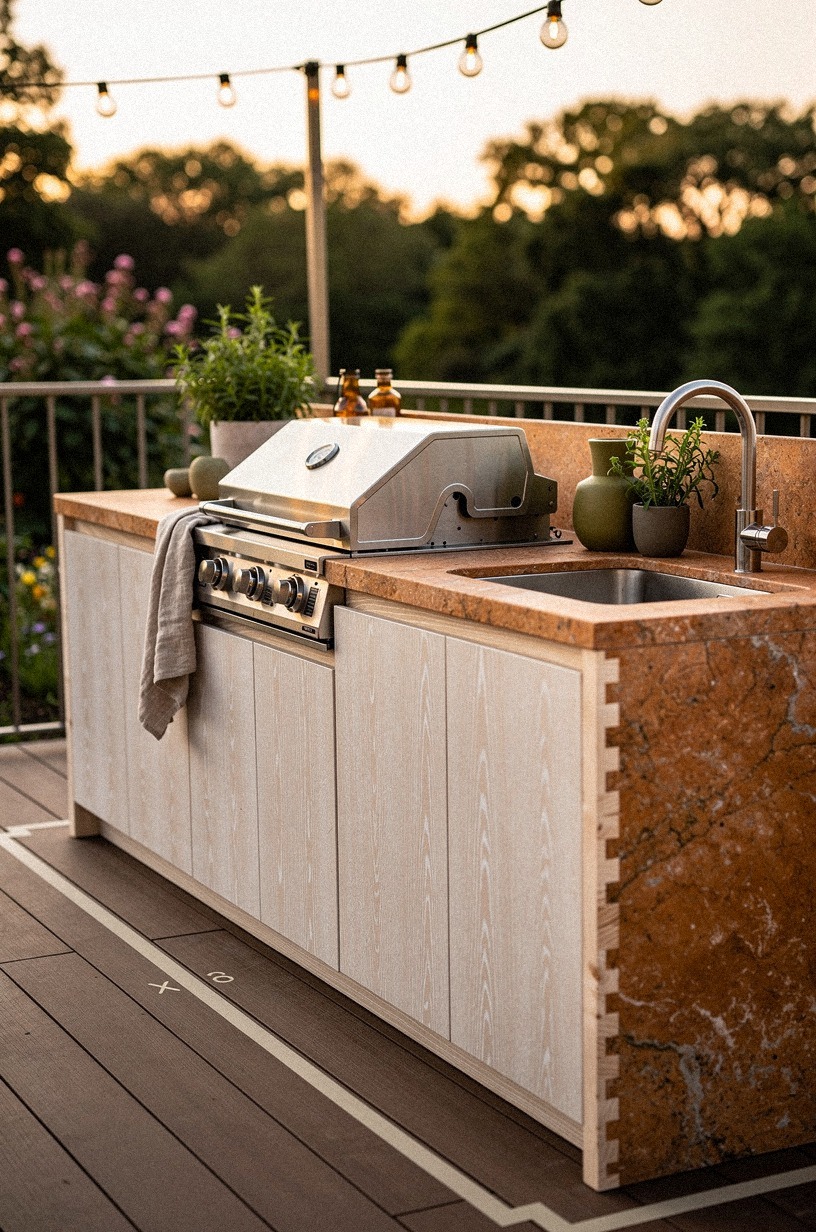
Set the grill first, then measure everything else from that point. On a deck, you don't have extra inches to waste, so I like a centered grill with the doors able to swing cleanly and the rail still breathing behind it. In the photo, the cerused white oak run keeps the prep line slim, and the stone counter gives you visual weight without making the zone look clumsy.
And tape the footprint on the boards before you buy a single cabinet. I use painter's tape and a scrap box cut to grill depth so you can walk around it and feel the squeeze. If your outdoor kitchen patio needs more ideas for tight layouts, this guide on small outdoor kitchen ideas that maximize every inch shows how narrow runs stay usable.
I'd keep at least one easy standing lane at the rail side, because nobody wants to twist past hot grates with a platter in hand.
2Should you put stone counters on a wood deck?
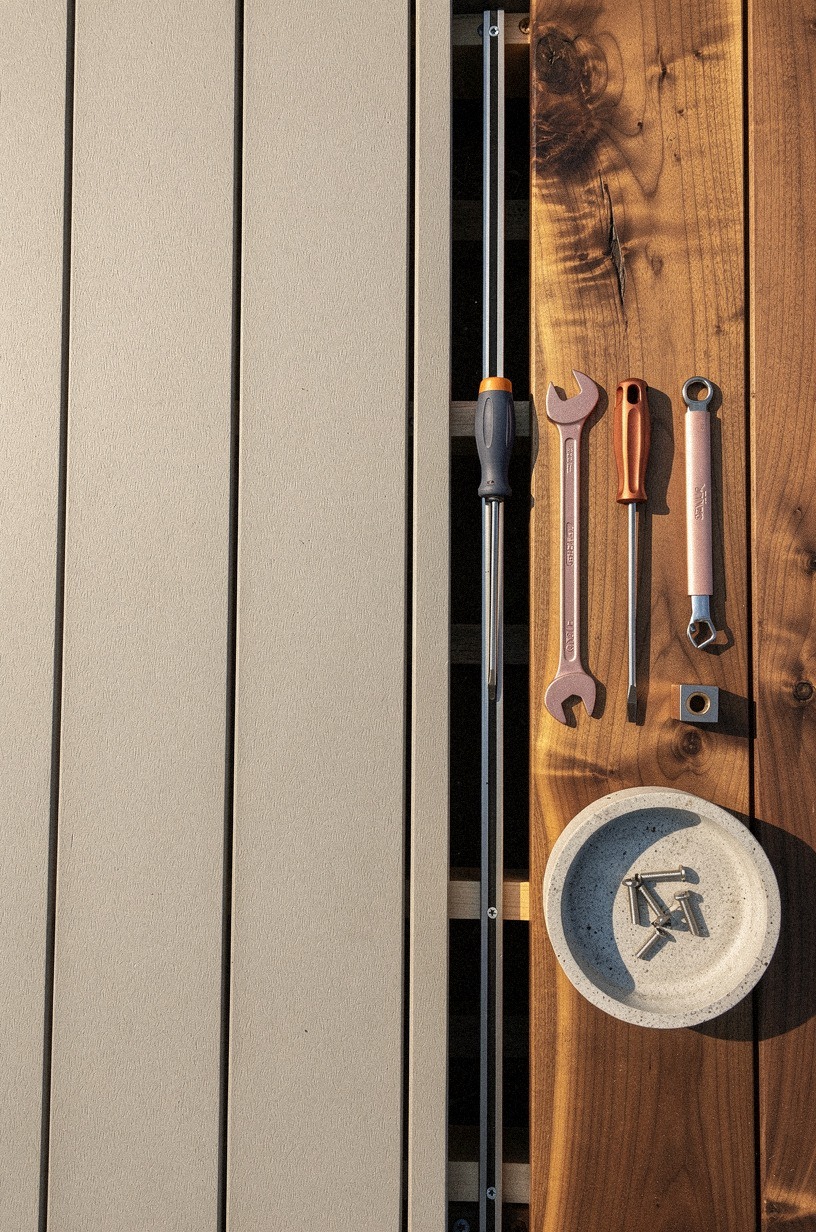
Stone looks rich, but weight is where deck projects get serious fast.
3Mark a straight utility chase under boards
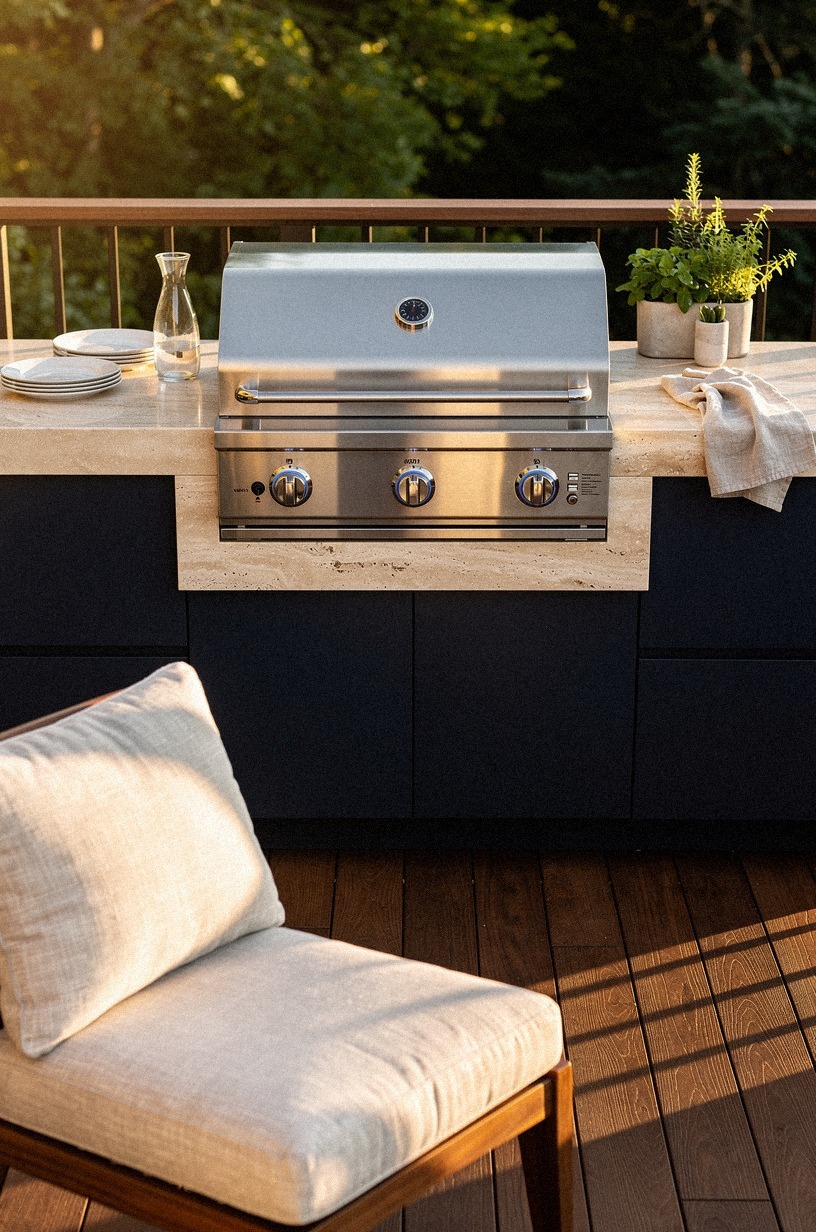
Lift the boards in one controlled strip and keep your service route boring. That's the whole move. A straight utility chase under the deck gives gas, water, and power one predictable path, and it makes future repairs far less dramatic than a zigzag run you can't trace a year later.
The photo's marked lane beside the grill plan is exactly what you want: direct, visible, and wide enough for clean fastening points. The whole underside reads as one calm, organized spine.
I like to mark both sides with chalk, then tag the start and finish so you do not forget where the line disappears under the cabinet run. If your outdoor kitchen with door connection is tight, the transition details in indoor outdoor kitchen ideas for seamless entertaining help a lot.
But do not let the chase wander to dodge one pretty board. Straight wins every time.
4Anchor the grill on a fireproof landing
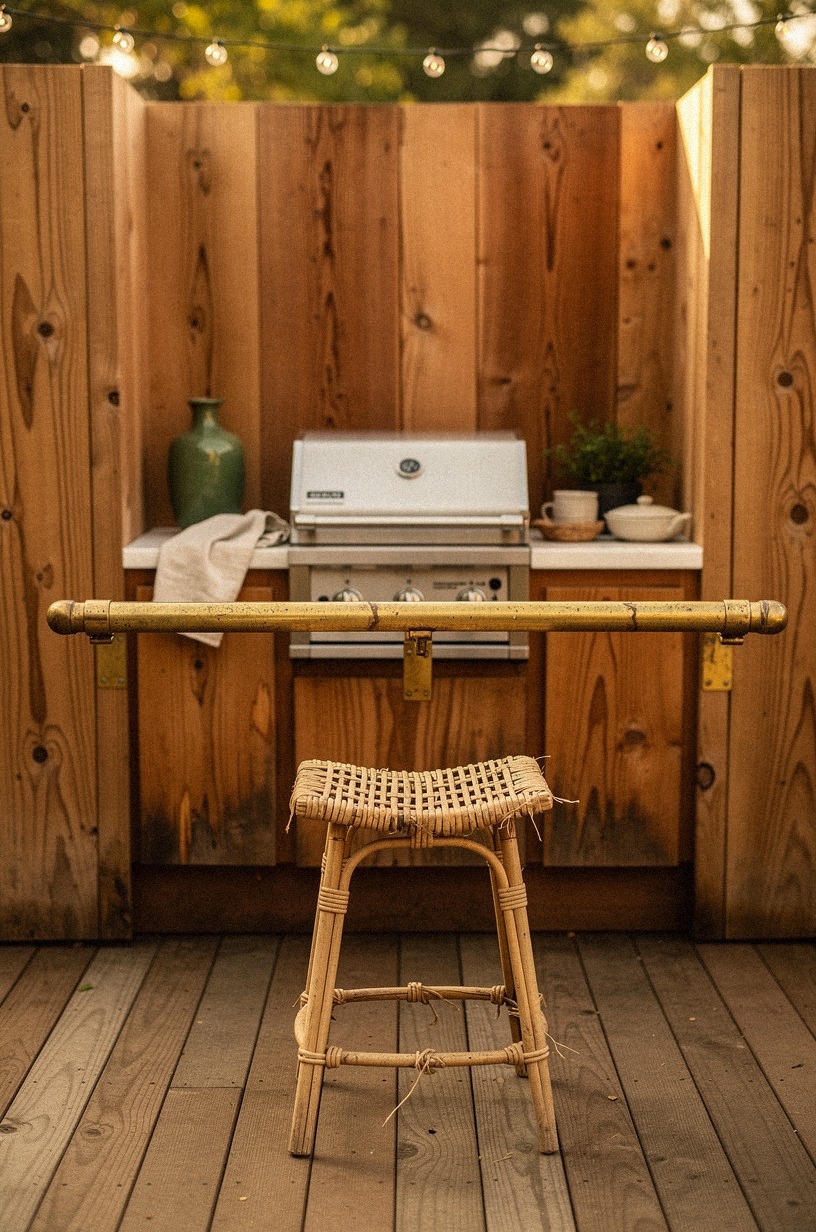
Start the hot zone with a landing that does not flinch. A honed travertine pad under the grill buys you heat tolerance, easier cleanup, and a visual break from the deck boards, which matters more than people think when grease starts flying. The navy, white, and walnut mix in the photo works because the fireproof surface reads deliberate, not patched in after the fact.
Keep the landing slightly bigger than the grill footprint so side heat and spills do not kiss bare deck boards. I like the look of stone that extends just enough to make the grill feel parked with intent, then let matching prep counters pull the line outward.
You can see similar zone definition in outdoor kitchen pool combos for the ultimate backyard, where hard surfaces stop the whole setup from feeling temporary. If I had to choose between a fancier grill and a safer landing, I'd buy the landing first.
No debate! That honed travertine pad stays cool under bare feet, and the heat tolerance is unbeatable.
5Frame the cooking wall with cedar screens
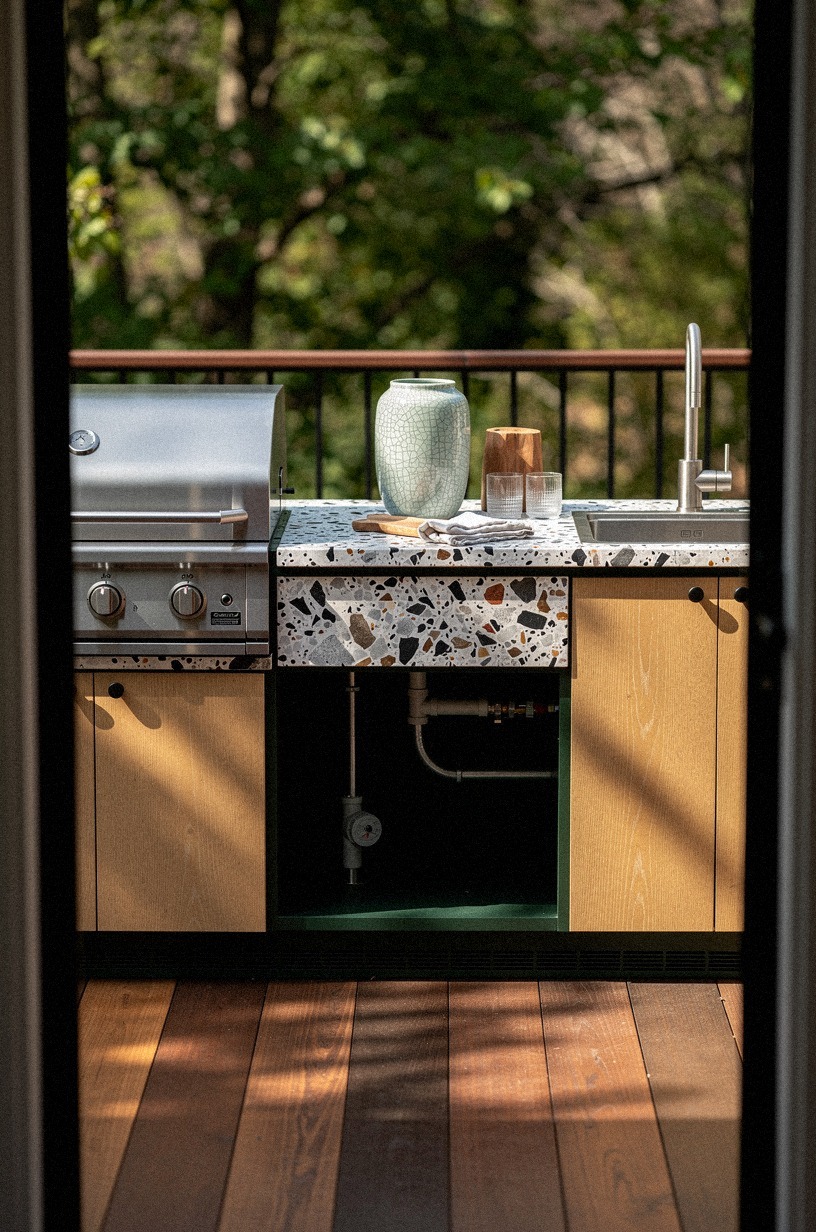
A compact cook line gets prettier the second you give it a backdrop. Cedar privacy screens frame the grill, hide neighboring clutter, and make the wall feel intentional without building full outdoor cabinetry. In the photo, the soft woven texture and the unlacquered brass rail details add age and calm, which is why the small footprint still feels finished.
You can stain cedar deep for mood, but I like leaving it warmer, almost honeyed, when the deck already has darker boards. If you want a color note, try Farrow & Ball Studio Green (No.93) on just the trim or side screen frame so the wood still reads first.
For more screened layouts, outdoor kitchen hot tub ideas for a resort style yard shows how partial walls keep sightlines open. And yes, a screen matters even on a narrow patio kitchen because it tells your eye where the kitchen stops.
6Run gas and water through one service lane
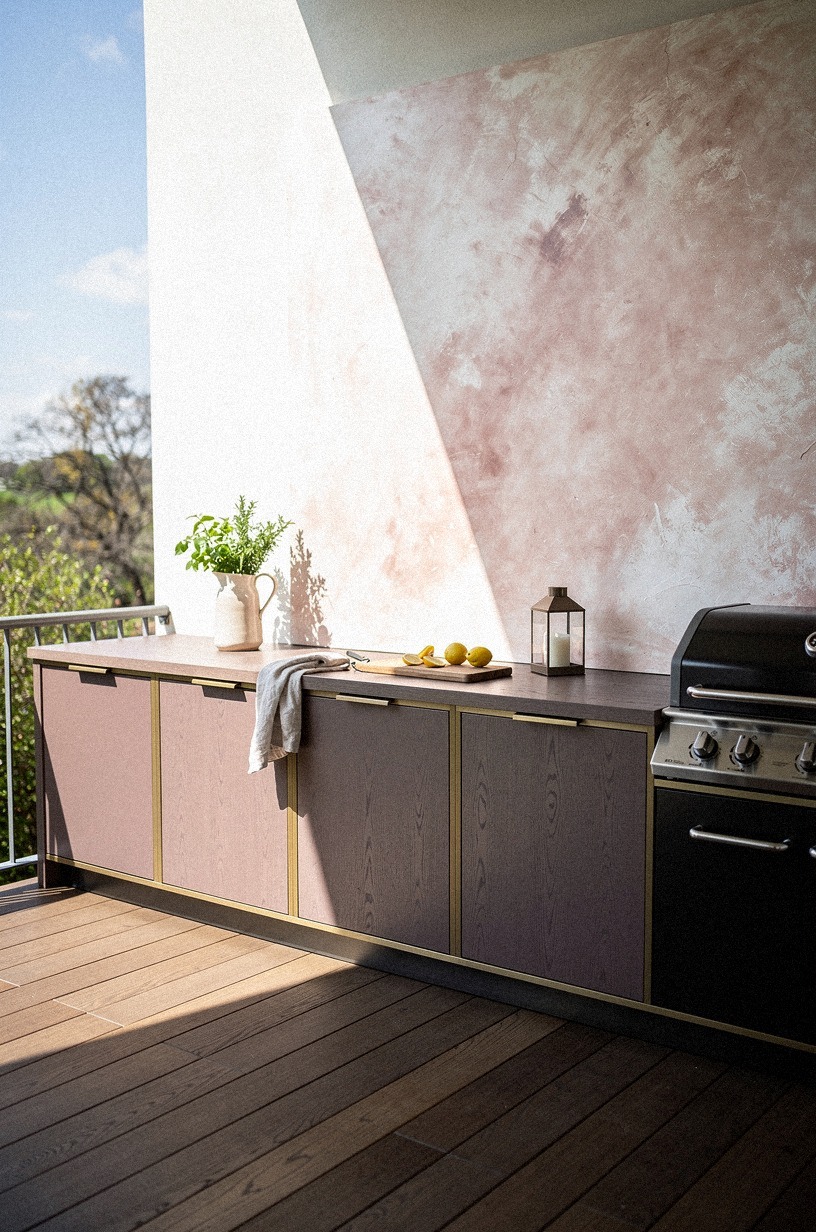
Once the chase is open, keep both lines together instead of inventing two separate routes. One service lane under the cook line is easier to protect, easier to label, and easier to access when something needs attention. The doorway view in the photo makes that logic obvious: grill, sink, and oven all share one clean spine.
I use a simple rule here, The One-Lane Rule. Put shutoffs where you can reach them without unloading the whole cabinet run, and group penetrations so the underside does not turn into a puzzle later.
If you're connecting an outdoor kitchen with door access to the house, indoor outdoor kitchen ideas for seamless entertaining is worth a look for flow planning. But do not split the utilities just because separate routes seem tidy on paper.
Under a deck, one disciplined lane is tidier.
7Build a slim cabinet run along railing
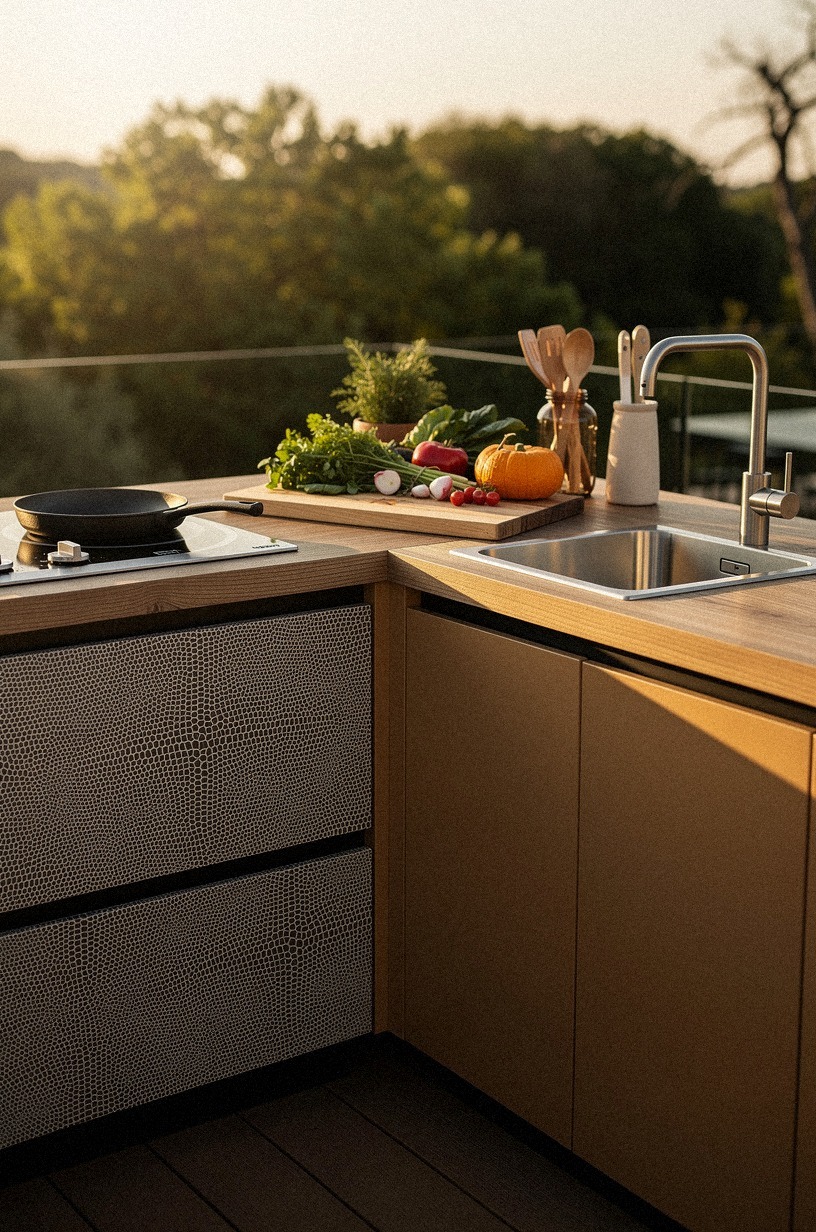
Go shallow before you go wide. A slim run along the railing gives you prep space without dragging the whole room inward, and it works especially well when the grill sits at one end. In the image, the long counter, the Venetian plaster panel, and the dusty rose note keep the line elegant instead of boxy.
But aim for cabinet depth that serves prep, not storage fantasy. I like a long, lean run with one drawer stack, one access panel, and open knee room where you do not need doors.
Sherwin-Williams Evergreen Fog (SW 9130) on the plaster panel or door fronts can soften a hard deck palette without fighting the wood. This post on small outdoor kitchen ideas that maximize every inch has more examples of shallow layouts that still feel generous.
And if you're tempted to build deep base units just because you can, do not. Bulk is the space thief here.
8Install a stainless sink beside the prep zone
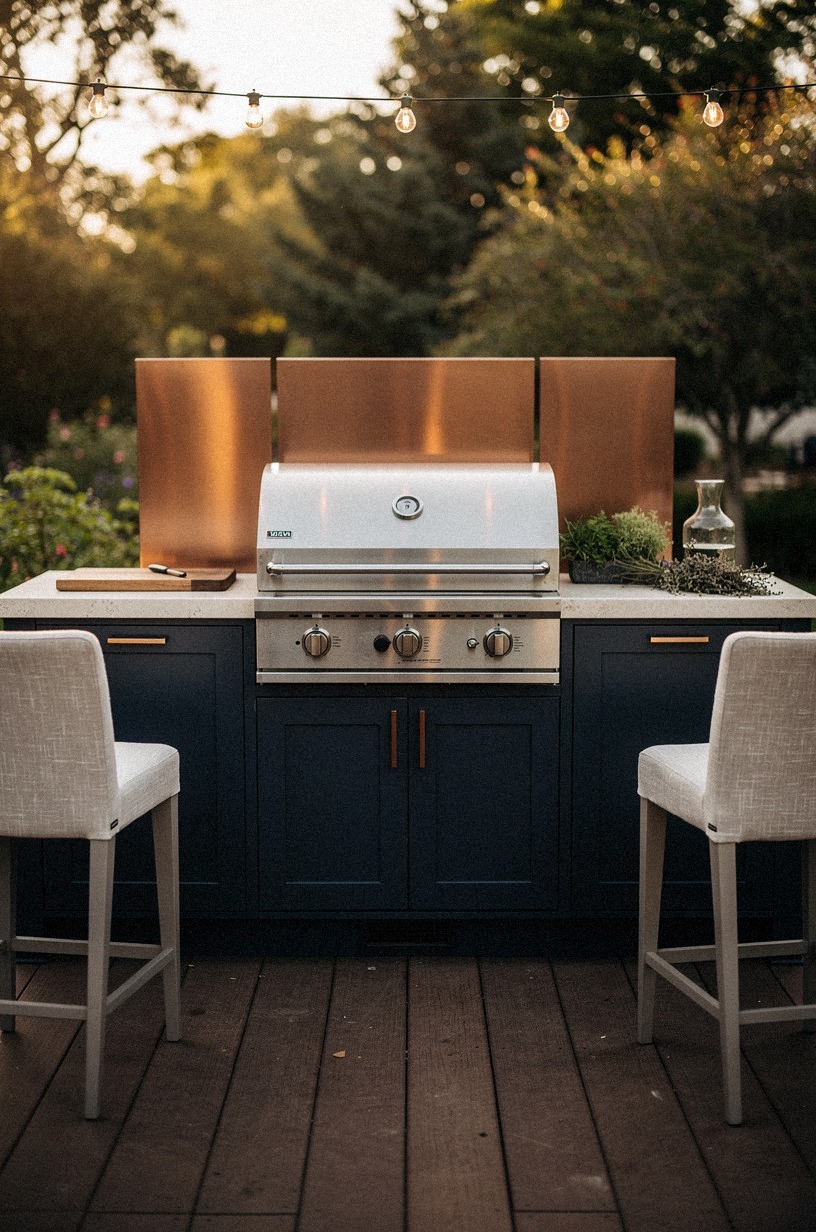
Keep the sink right where your knife hand wants it, next to prep, not stranded at the far end. A stainless sink beside the cutting area shortens every small task, from rinsing herbs to washing skewers, and it keeps your grill station from turning into a drippy triangle you keep crossing. The warm white, camel, and black mix in the photo gives the utility a softer edge.
I like a simple undermount or tight top-mount with no oversized apron drama. Pair it with a faucet finish that can handle weather and fingerprints, then let the drawer fronts do the visual work.
A narrow sink setup also plays well in outdoor kitchen ideas for small backyards big function littl because you still preserve landing space on both sides. If you're styling nearby seating, a teak piece like Article Lubek outdoor stool keeps the tone relaxed without reading like indoor furniture dragged outside.
9Heat shields behind the grill: do they matter?
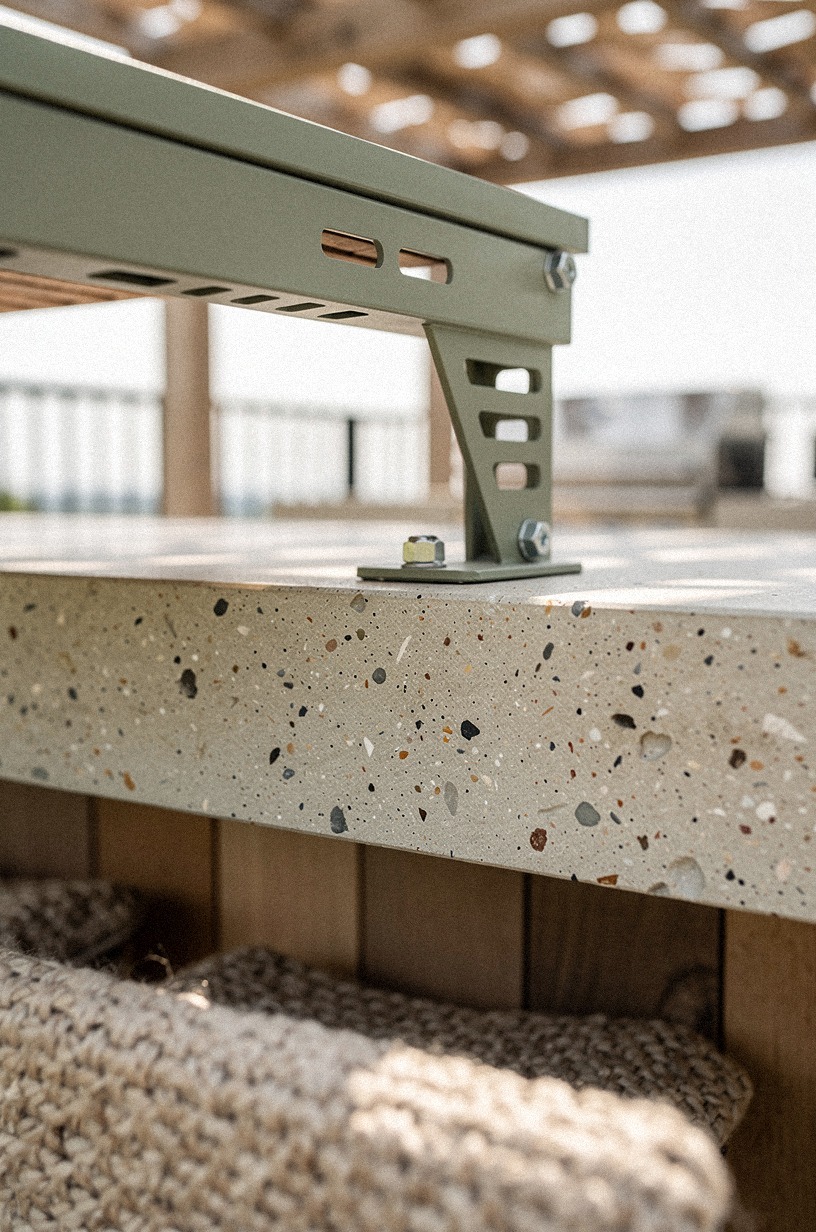
This is where you protect the wall and make the grill look more custom at the same time.
10Pergola or no pergola over the cook line?
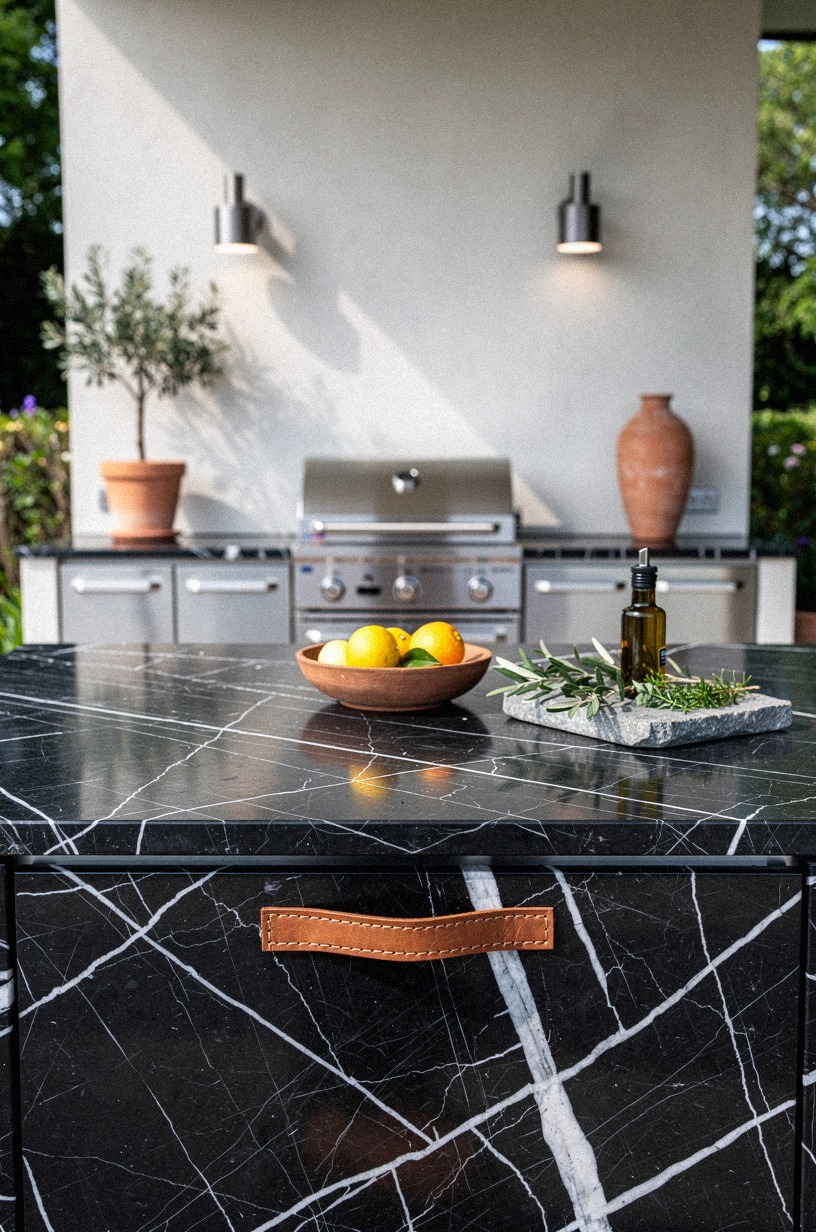
Overhead structure matters, but it needs to breathe. A vented pergola over the cook line defines the kitchen, gives you a place for lights, and stops the deck from feeling like scattered appliances on a platform. The close-up bracket shot works because you can read the build quality right away: solid joinery, visible hardware, and a concrete top with aggregate that looks made to live outside.
Keep the support layout clear of lid swing and smoke travel. I wouldn't crowd the grill with a heavy decorative roof if a lighter slatted top will do the job and vent better.
For entertaining flow that connects the cook zone to the rest of the deck, outdoor kitchen hot tub ideas for a resort style yard has useful examples of overhead structures that don't box you in. Short version.
Build shade, not a cave. The whole room feels calmer the second the structure lands overhead.
11Hang task sconces above the deck counter
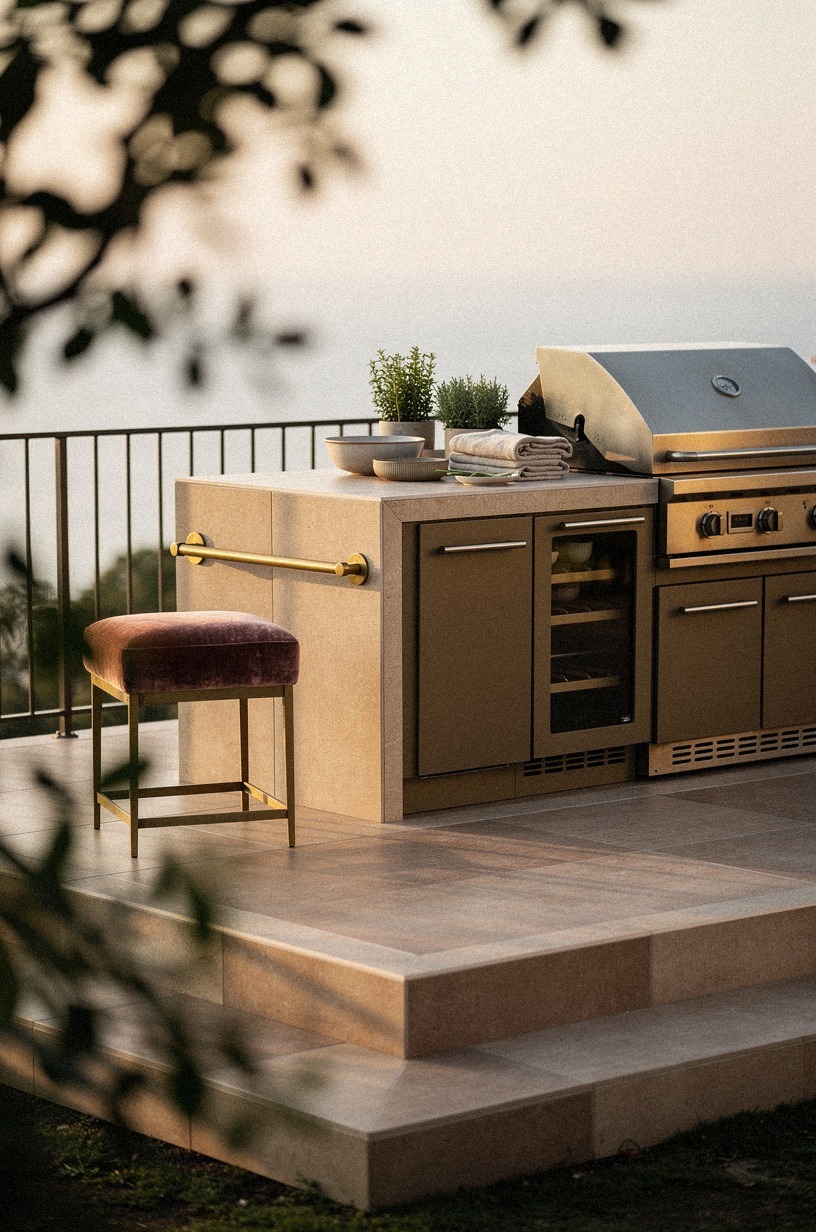
Good outdoor lighting isn't only mood, it's accuracy.
12Layer porcelain deck tiles under appliances
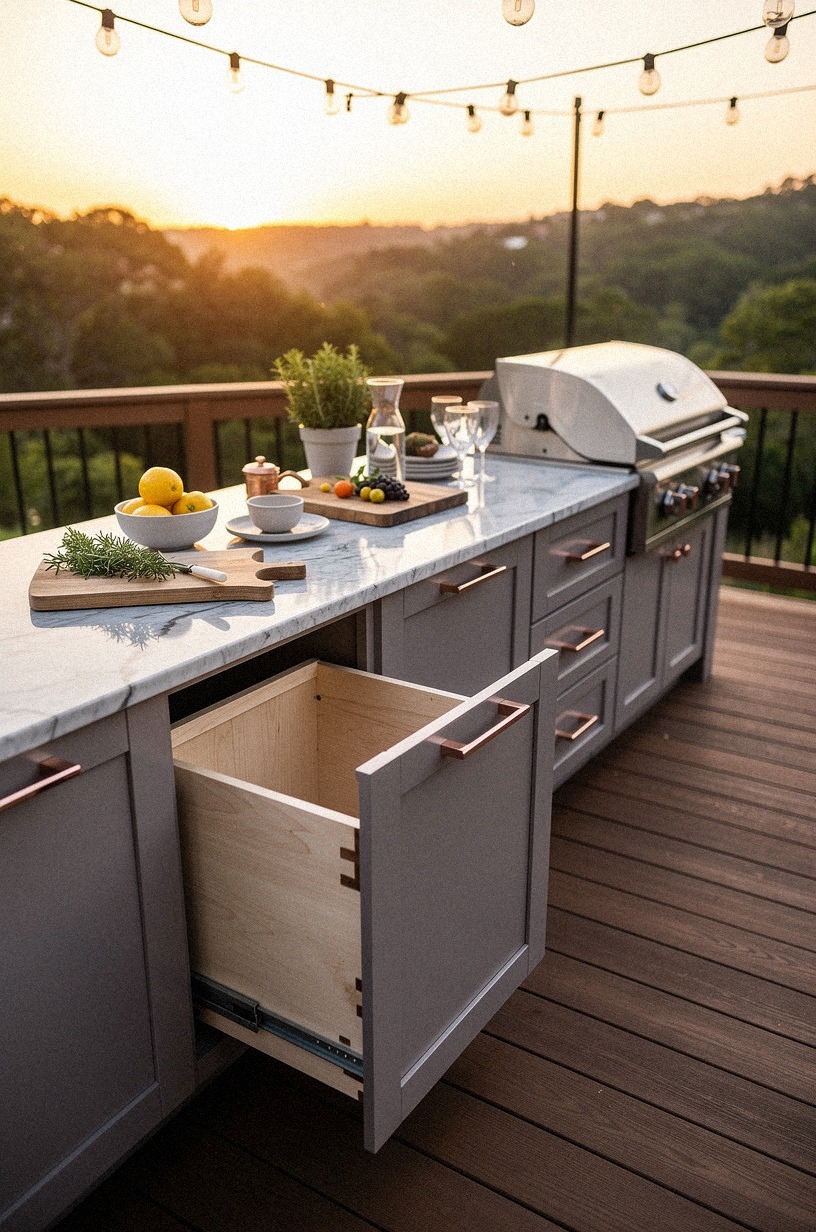
Porcelain deck tiles do two jobs at once: they give the appliance zone a harder, easier-clean surface, and they visually separate cooking from lounging without building a full platform. The leafy view in the photo is a good reminder that these projects should still feel garden-adjacent, not like an indoor kitchen dropped outside. The clay linen and aged brass notes keep the tile from feeling cold or sterile.
Use tile only where the work happens if budget is tight. That's often the smarter call than paving the whole deck, especially when your outdoor cooking space already has good boards elsewhere.
You can compare more compact surface strategies in small outdoor kitchen ideas that maximize every inch. And if you're choosing between tile and stone, I'd pick porcelain here because it keeps weight and maintenance more manageable while still looking sharp.
13Tuck a trash pullout beneath the prep counter
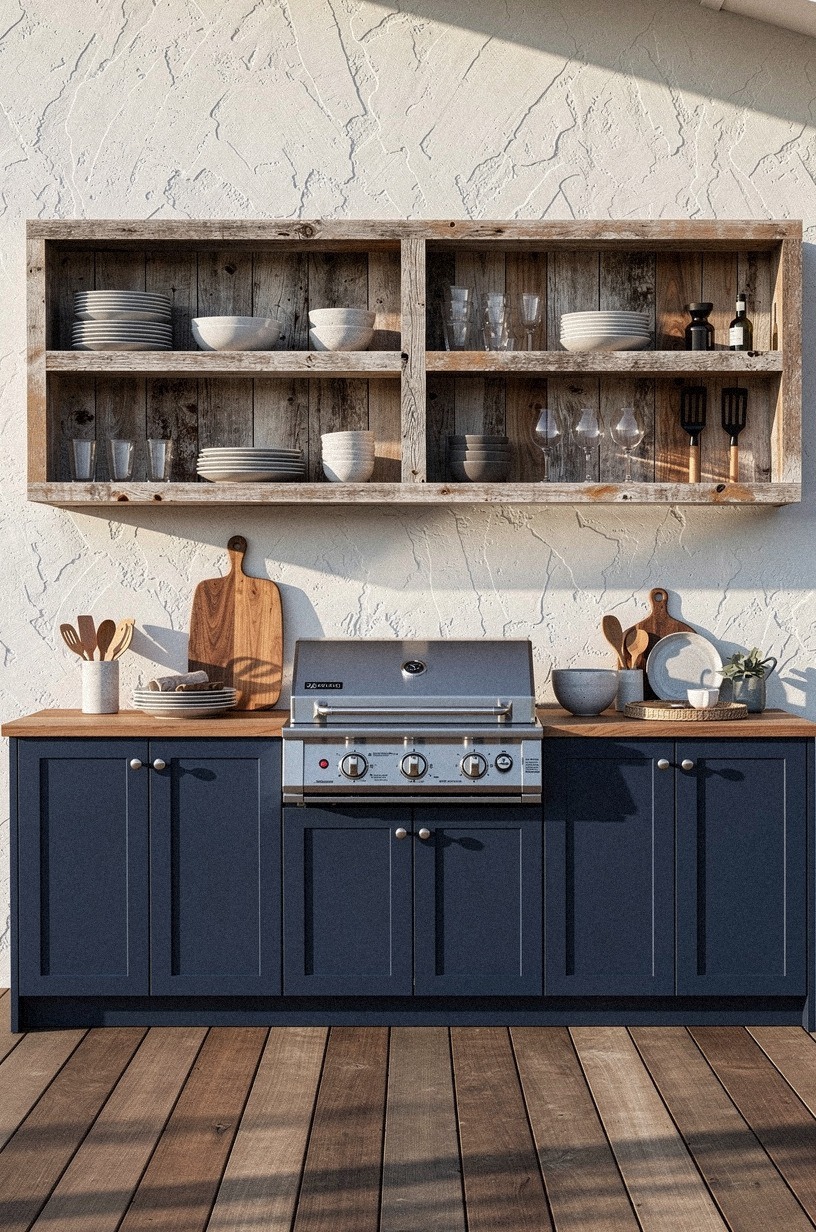
Trash placement decides whether your prep zone feels smooth or sloppy. A pullout right under the counter lets you scrape, trim, and wipe without pivoting across the whole deck, and the partly open drawer in the image shows exactly why it works. The Carrara marble top, plum grey cabinetry, and railing behind it still look clean because the mess has a hidden home.
You don't need a huge waste center. One pullout, one easy grab, and one liner you can change without kneeling forever is enough for most deck kitchens.
I like putting it beside, not under, the sink if the prep surface is the real workhorse. For more compact organization ideas, outdoor kitchen ideas for small backyards big function littl is packed with smart drawer placement.
Why carry scraps past the grill if you don't have to?
14Mount open shelves on the house wall
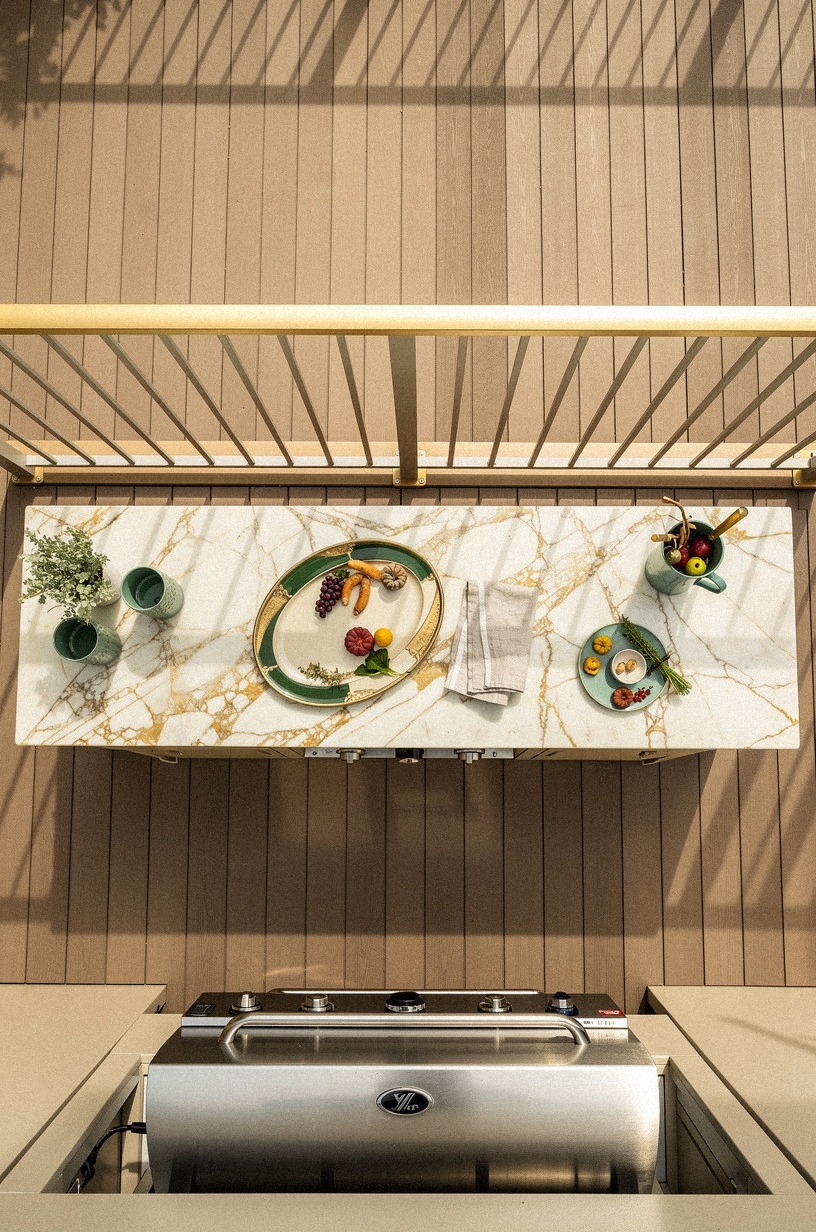
Use the house wall for the pieces you want close but not underfoot. Reclaimed weathered teak shelves above the counter keep dishes, oils, and grill tools visible, and they turn a blank wall into part of the kitchen without swelling the base footprint. In the photo, the navy, white, and walnut palette feels tighter because the storage lives vertically.
Keep the shelf depth modest so you don't crowd the walkway. I like one shelf for everyday pieces and a second for serving items, then a little breathing room between them rather than a stacked wall of stuff.
If you want the connected-inside-outside look, indoor outdoor kitchen ideas for seamless entertaining shows how open storage can echo the interior kitchen without copying it. And yes, fewer objects look better here. Edit harder than you think.
15Add a pass through ledge at the door
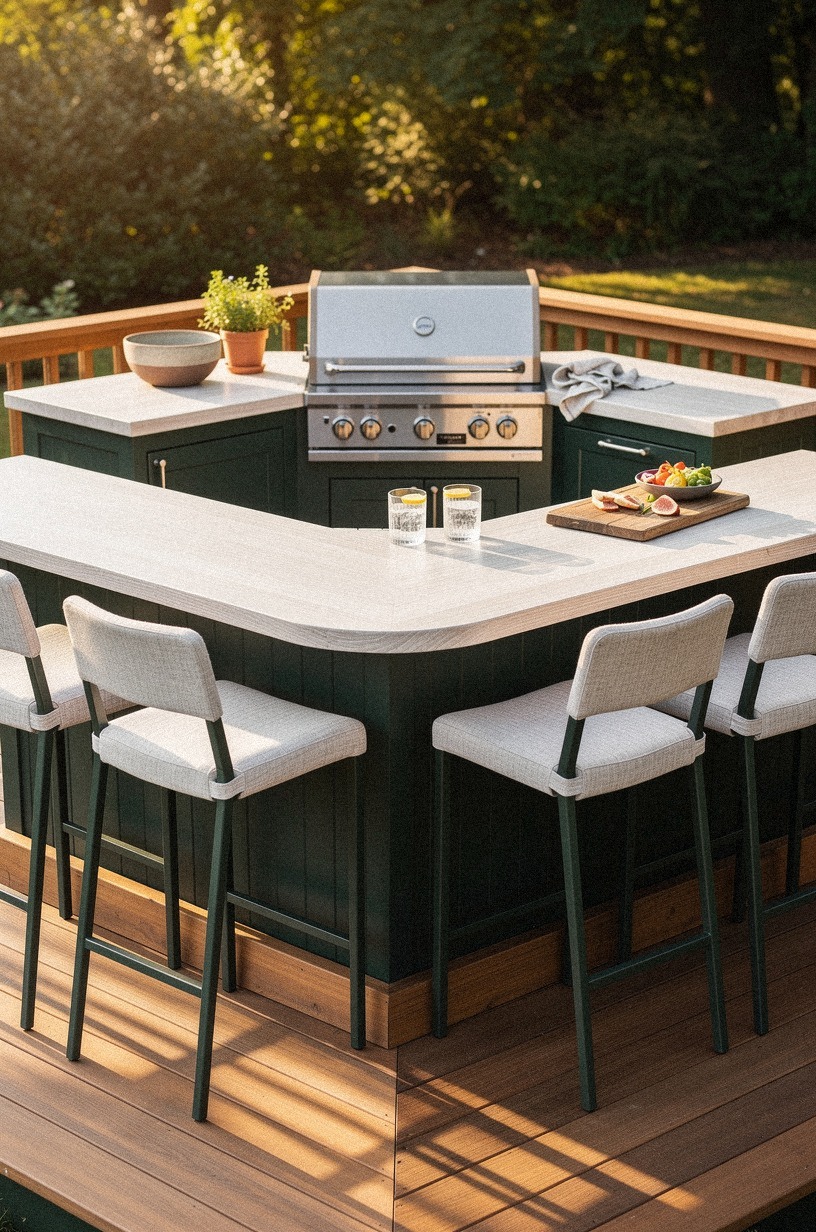
If the kitchen door lands near the deck, build the handoff point right there.
16Wrap bar seating around the outer rail
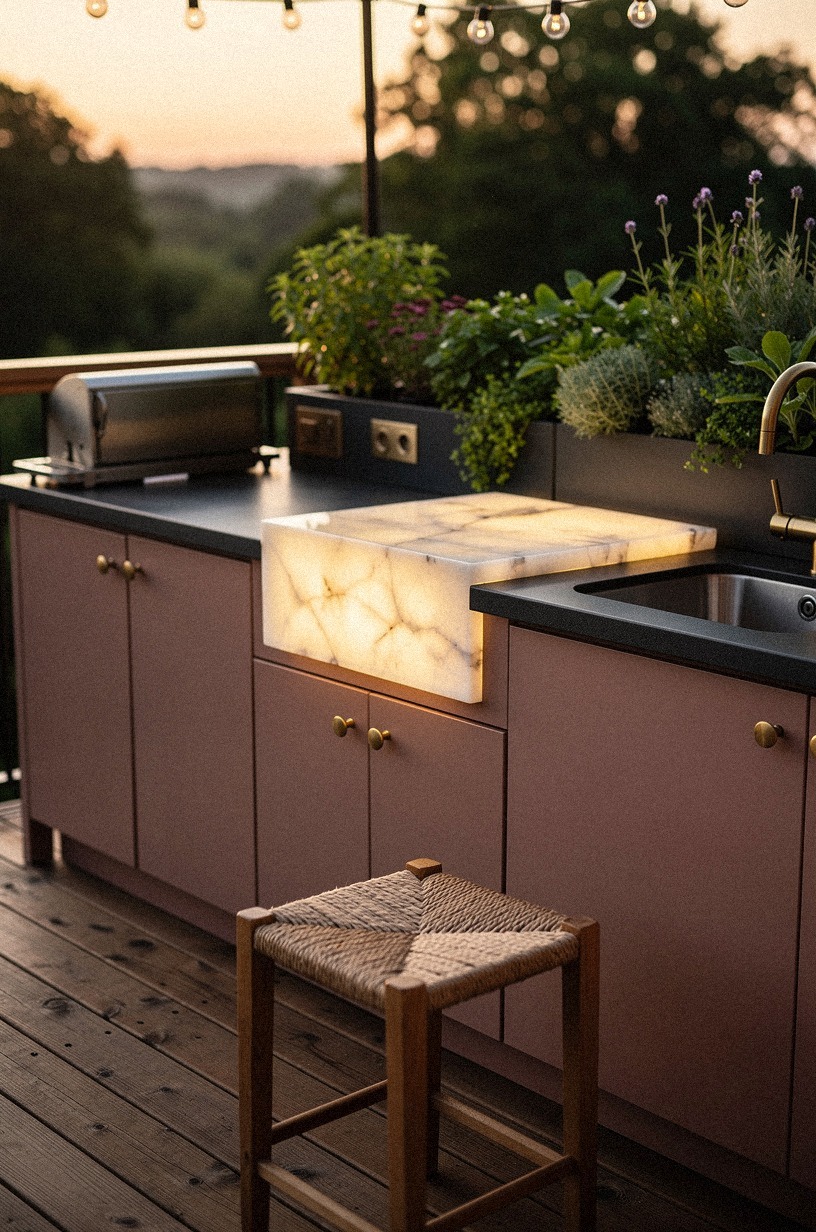
Seat people at the edge, not in the work lane. Wrapping stools around the outer rail keeps guests close enough to talk while you cook, but it leaves the center open so nobody is parked in front of the fridge, grill, or sink. The cerused white oak bar face in the image warms up the metal rail, and the forest green, rust, and neutral tones stop the setup from feeling like basic pool furniture.
I like stools with narrower footprints and a little back support so people stay put without sprawling. West Elm Portside bar stool or IKEA NÄMMARÖ bar chair are good references for that slimmer outdoor profile.
If you need more social layouts, outdoor kitchen pool combos for the ultimate backyard shows how rail seating preserves the view and the circulation. But don't wrap seating around the grill side. That turns conversation into crowd control.
17Plant herb boxes beside the serving corner
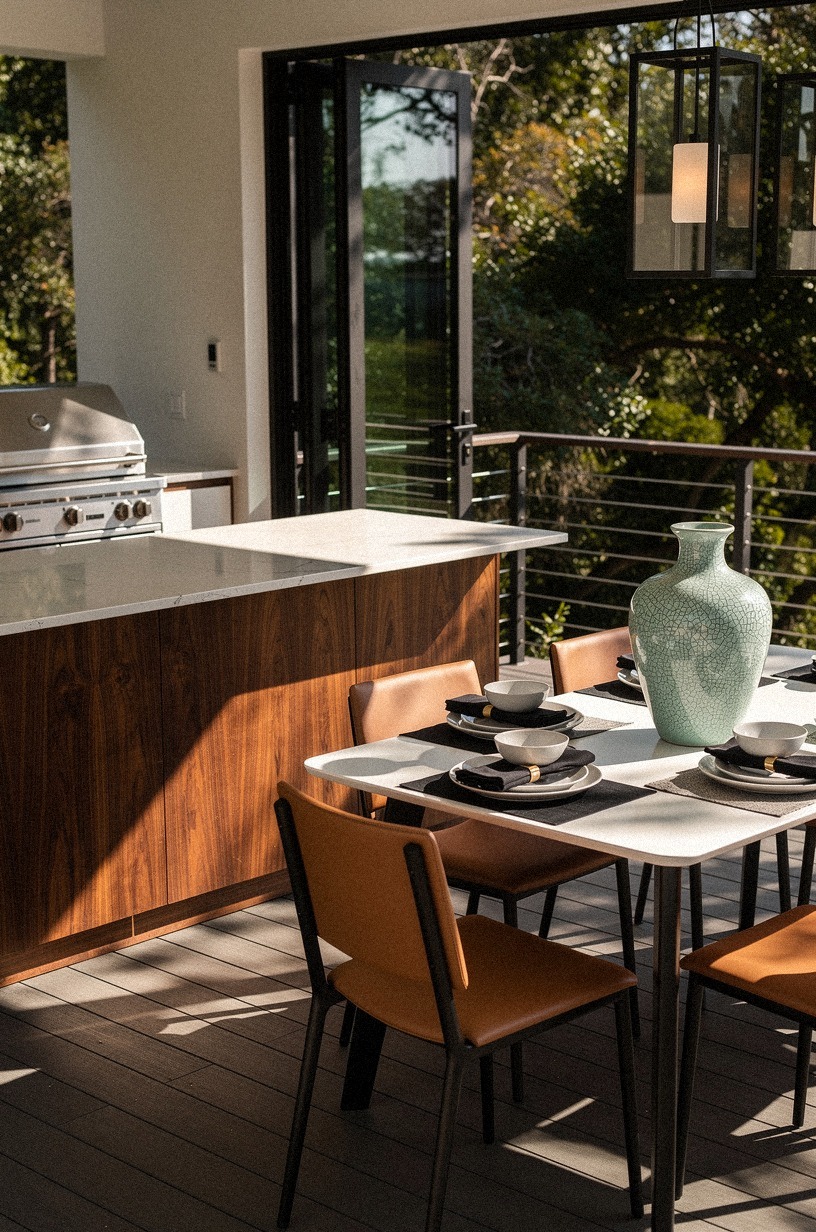
Herb boxes belong where serving happens, not hidden across the yard. Putting basil, rosemary, or thyme beside the counter gives you a useful finish and softens the hard materials without adding more furniture. In the photo, the dusty rose, charcoal, and brass accents stay balanced because the planting edge keeps the corner from feeling too rigid.
Use boxes tall enough that you can snip without crouching. I like weathered planters with drainage trays tucked below the line of sight, then one tough herb and one fragrant herb so the area earns its footprint.
If you're building a fuller outdoor room around the kitchen, outdoor sleeping is a surprising source of soft-material ideas that pair well with planted corners. And yes, a herb box does more than decorate.
It makes the kitchen smell alive.
18Finish with lanterns over the dining deck
Lanterns are the handoff from cook zone to stay-awhile zone. Once the grill line is set, hang or place lanterns over the dining side so the whole deck doesn't die the second the food lands. In the image, the book-matched walnut serving counter, warm white palette, and cracked texture details all read softer because the light belongs to the meal, not only the grill.
And I prefer lanterns with real visual weight over tiny pin lights that disappear after dusk. Put the brightest task light at the counter, then let lanterns cast the warm pull toward the table.
If you're shaping a bigger hosting deck, outdoor kitchen hot tub ideas for a resort style yard helps with zoning the relaxed side of the layout. This is the part guests remember.
Every time!
The One-Lane Rule That Keeps Deck Kitchens Honest
The biggest mistake people make with deck kitchens isn't choosing the wrong grill. It's trying to make the deck behave like a full backyard build when the structure is telling you to stay lean.
I've done the overdrawn sketch. Too much base cabinet, too much stone, too many little destinations for one cook to cover.
On paper it looked generous. Standing on the deck, it felt like I had built obstacles for myself.
What changed my mind was watching how people really use these spaces. You step out the door with a tray, turn once, set something down, rinse, prep, grill, and pass plates outward.
That's it. The work is linear.
So why keep designing deck kitchens like islands and peninsulas from an indoor remodel? A deck wants one disciplined lane, one landing zone, one social edge.
The shape is more like a galley than a showroom.
That doesn't mean it has to feel spare. The part that worked for me was spending my visual energy on surfaces and light instead of extra bulk.
A honed travertine landing. A cedar screen with a little age in it.
Task sconces where your hands need them, then lanterns where people sit. When you get those right, the kitchen feels richer because nothing is fighting for room.
Even a narrow run with a sink and trash pullout can feel generous if the center stays open and your sightline reaches the rail. The whole deck breathes.
I'd also be honest about what deserves money. Reinforcement, safe surfaces, and utility routing are worth it.
Decorative mass usually isn't. If your deck can support a stone counter, great, but I wouldn't force one in just to chase an expensive look.
Deck projects win when they respect physics first and style second. Then, once the bones are right, style lands harder than you expected.
Funny how that works.
The Questions Worth Answering First
What is the best How to Build an Outdoor Kitchen on a Deck (Ideas & Tips) for a small kitchen?
The best small-space move is a slim rail-side cook line with one compact sink and outer-edge seating. A tighter footprint works better than a bulky island because you keep the middle open. Think IKEA NÄMMARÖ seating, a shallow cabinet run, and one clear pass-through ledge by the door.
Where can I buy How to Build an Outdoor Kitchen on a Deck (Ideas & Tips) pieces on a budget?
Start with IKEA, Target Threshold, and Wayfair for stools, storage pieces, and basic lighting. Budget sourcing gets easier when you mix one new anchor with secondhand finds.
Facebook Marketplace for lanterns. Habitat ReStore for doors or shelf brackets.
One salvage yard stop for stone offcuts can change the whole build.
How much does a How to Build an Outdoor Kitchen on a Deck (Ideas & Tips) makeover cost?
Most deck-kitchen makeovers land somewhere from about $300 to $12,000, depending on whether you're painting and swapping hardware or adding utilities and counters. The free win is layout discipline. Keep one service lane, reuse the deck footprint, and skip extra cabinet depth you won't use.
Can I create a How to Build an Outdoor Kitchen on a Deck (Ideas & Tips) on a budget?
Yes, and you should start with the moves that change flow first. Low-cost upgrades include taping the layout before building, adding a cedar screen, and placing herb boxes at the serving corner. A porcelain tile work zone or a basic trash pullout can wait until the bones feel right.
Is a How to Build an Outdoor Kitchen on a Deck (Ideas & Tips) worth it in a small space?
Yes, especially when the space is small enough to force discipline. A compact deck wastes less walking, keeps your prep close to the grill, and makes lighting feel more dramatic at night. Keep seating on the outer rail and protect a 42-48 in movement lane behind the cook.
Is How to Build an Outdoor Kitchen on a Deck (Ideas & Tips) a good idea for a rental?
Yes, if you keep the structure reversible. Rental-friendly choices include freestanding prep tables, removable deck tiles, plug-in sconces, and herb boxes instead of built planters. I'd avoid cutting a new utility chase unless the owner signs off, but a slim grill zone can still look finished without permanent changes.
Where I'd Start First, The Fireproof First Rule
If I had to pick one step to start with, I'd anchor the grill on a fireproof landing. Heat is the one thing your deck can't negotiate with, and every later choice gets easier once the hot zone is fixed. Pin this and build out from the safe center.