
 by
by Quick answer: Shop by delivered cost, disclosed construction, and return terms. If your budget can stretch, the Saatva Classic is my premium upgrade to compare, not the inexpensive pick.
- According to Mattress Nerd, buyers don’t have to break the bank to find a high-quality mattress.
- Sleepiverse says its cheap-mattress guidance applies strict budget eligibility.
- Sleepiverse says it considers exact configurations and trial guidance, not just headline pricing.
Updated July 2026 · Reviewed for accuracy
Inexpensive mattresses for sale can be sensible buys, but the sale label proves very little. I judge value by the final delivered cost, the construction disclosed by the seller, and the protection available if the mattress feels wrong. A vague bargain is still a gamble.
What a low mattress price really tells you
The checkout total matters more than the large price printed on a sale banner. Before comparing two mattresses, put delivery charges, return transportation, restocking fees, and any required services into the same calculation. If a charge isn’t clear, ask the seller before paying.
I also separate price from value. Price is what leaves your account today. Value depends on whether the mattress suits its intended use, has understandable materials, and comes with terms you could realistically use. A cheap bed that can’t be returned may expose you to more risk than a slightly dearer option with a workable policy.
Ignore the crossed-out reference price until you know what it represents. Compare the current selling price with the current terms and exact configuration in your cart. Sleepiverse’s emphasis on exact configurations is useful here because a broad promotional headline doesn’t necessarily describe the option you selected.
- Confirm the exact mattress name and configuration.
- Calculate the delivered total before comparing sellers.
- Read the return process, including who pays for transportation.
- Check whether the item is new, clearance, open-box, or a floor model.
Materials and selling costs help explain why mattresses can cost so much, but a higher price doesn’t prove that every layer is better. The reverse is also true. A low price isn’t proof of weak construction. Disclosure is what lets me make a reasoned judgment.
Where genuine mattress savings can appear
Clearance is useful when the seller can explain why that exact mattress has been reduced. A discontinued cover, packaging change, or inventory decision may be harmless, but don’t invent the explanation yourself. Get the item’s condition and return status in writing.
Mattress Nerd says shoppers can find high-quality mattresses without breaking the bank. I agree with the underlying point, but “affordable” still needs a buyer-specific definition. A guest-room purchase, an interim bed, and an everyday mattress don’t carry the same consequences if the feel or durability disappoints.
Warehouse offers can be worth watching if you’re flexible about timing and available models. Our guide to warehouse-club sale timing covers that route in more detail. Availability can change, so compare what is actually purchasable rather than planning around a past promotion.
- New clearance: Ask why the mattress is reduced and whether normal return terms still apply.
- Direct online offers: Compare the live cart total and current manufacturer policy.
- Warehouse inventory: Verify the exact model rather than relying on a familiar brand name.
- Open-box or floor models: Confirm prior use, visible damage, warranty status, and return eligibility.
A countdown clock or dramatic sale badge isn’t construction evidence. If the offer pressures you to skip the product details or policy page, let it pass. Another low-priced mattress will be less costly than buying the wrong one under artificial urgency.
Buying routes compared by risk and transparency
The same headline price can come with very different levels of information and buyer protection. This is how I compare the main routes without assuming that one channel is always cheapest.
| Buying route | Possible advantage | What I would verify | Best suited to |
|---|---|---|---|
| Retail clearance | A reduced price on identifiable stock | Condition, model identity, and return exclusions | Buyers who can inspect details carefully |
| Direct online seller | Easy access to live product and policy pages | Delivered total and current return procedure | Buyers comfortable purchasing without a showroom visit |
| Warehouse club | A focused selection that may include sale inventory | Exact construction, availability, and seller terms | Flexible shoppers who can wait for a suitable option |
| Open-box or floor model | Item-specific markdown | Prior use, damage, warranty, and final-sale status | Buyers able to inspect the exact item |
| Marketplace listing | Broad access to low headline prices | Seller identity, manufacturer, construction, and returns | Careful buyers willing to validate every claim |
I prefer a clearly identified new mattress over a mystery model carrying a deeper-looking markdown. With an obscure marketplace brand, I treat every specification conditionally: the listing shows a feature, or the manufacturer states it. I don’t convert listing language into a verified fact.
Return access can outweigh a modest price difference. Read who handles the return, whether collection is available, and what condition rules apply after opening. A policy that sounds generous in a headline may still be impractical for your location or living situation.
Construction clues that protect a tight budget
A bargain foam mattress with no layer information gives me less durability evidence than one with a clearly described support core. The seller should identify the cover and comfort materials, say whether a transition layer exists, and explain what provides the main support.
Marketing phrases such as “luxury foam” or “advanced support” don’t tell me the foam density, coil design, or perimeter construction. If the manufacturer discloses density or coil gauge, those details give you a more precise basis for comparison. If it doesn’t, don’t estimate them from the mattress’s appearance.
- The material used in each functional layer.
- The type of support core, stated plainly.
- Whether the perimeter has separate reinforcement.
- Any density, coil, or zoning information the manufacturer actually publishes.
- A clear statement of the mattress’s condition and identity.
Thickness by itself isn’t a durability score. Without a layer breakdown, you can’t tell how much of the profile is cushioning, transition material, or structural support. I’d choose the better-documented build over the taller-looking mattress if every other buying condition were comparable.
Read the warranty for what it covers, not for how impressive its headline sounds. Look for exclusions tied to the foundation, visible impressions, transportation, and original ownership. These details should come from the manufacturer’s current warranty page for the exact model, not from a seller’s summary.
Comfort, cooling, motion, and edge support
I treat a “medium” firmness label as the seller’s description, not a universal measurement. Your preferred sleeping position, body build, and sensitivity to pressure all affect how that description may feel. With no reliable feel information, the return process becomes part of the buying decision.
Cooling claims need the same restraint. A breathable cover, airflow language, or coil core may explain the intended design, but those words don’t prove how warm a particular person will feel. I want a construction explanation and a workable return option, not a snowflake icon.
| Performance area | Useful evidence | Weak shortcut |
|---|---|---|
| Comfort | Layer materials and a clear firmness description | Assuming “plush” means the same across sellers |
| Cooling | An explanation of cover, foam, and airflow design | Treating cooling graphics as measured performance |
| Motion | Support-core design and recurring verified-owner reports | Assuming every foam or coil bed behaves alike |
| Edge support | Specific perimeter-construction details | Inferring reinforcement from mattress thickness |
Verified owner reviews are useful as reports to investigate, not as measurements. Look for repeated comments about the exact model and configuration. Give less weight to reviews that discuss delivery alone or fail to identify which mattress was purchased.
Edge support matters most if you regularly use the perimeter for sitting or sleeping. Motion behavior deserves extra scrutiny if movement from another sleeper bothers you. Neither quality can be confirmed from price, so use disclosed construction and current policy terms to manage the uncertainty.
Who should buy cheap and who should step up
My hard stop is missing information. I won’t call a mattress a value choice if the seller withholds its identity, internal build, delivered cost, or return rules. A transparent basic mattress is easier to recommend than a mysterious model wrapped in premium language.
- Set an all-in spending ceiling before browsing.
- Define the firmness range and support type you’re willing to consider.
- Compare the exact configuration placed in the cart.
- Reject listings that don’t identify their materials or seller.
- Read return and warranty terms before removing packaging.
Stay budget-first if the use case is flexible
A low-cost route can fit an occasional-use room, a temporary setup, or a buyer with broad comfort preferences. It also suits shoppers who find a clearly documented model with acceptable policies inside a firm spending limit. The key is accepting only the compromises you understand.
Consider spending more if replacement risk matters
Stepping up can make sense if bargain options repeatedly fail your construction, comfort, or policy requirements. Paying more isn’t automatically better, but broader material disclosure or a more workable ownership policy may justify the difference. Judge the evidence, not the prestige attached to the price.
- Lower immediate spending when the delivered total stays controlled.
- Good fit for flexible or occasional-use situations.
- Real value is possible when construction and policies are clear.
Budget-route limits
- Thin specifications make durability difficult to judge.
- Final-sale terms can turn a low price into a costly mistake.
- Comfort and performance claims may be hard to validate before delivery.
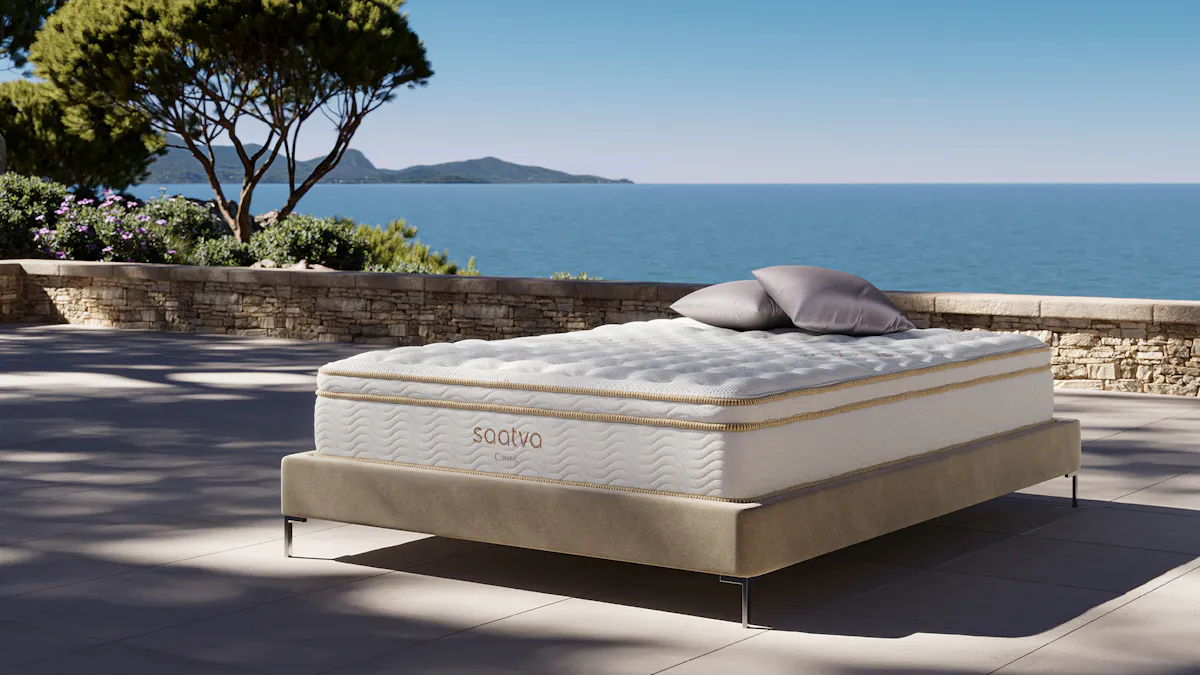
If the cheap options all fail those checks, the Saatva Classic is the premium-tier upgrade I’d compare. It isn’t the budget pick, and I wouldn’t use it to answer a hard price cap. Treat it as above-budget, then verify the live price and current terms on the official site.
PREMIUM UPGRADE TO COMPARE
If low-cost mattresses fall short on materials, comfort, or return terms, the Saatva Classic is the premium step-up worth comparing. It is not the budget pick, so check the current price and terms before deciding whether the extra spend makes sense.
Saatva Classic
- 365-night home trial and lifetime warranty, per saatva.com
- Handcrafted in the USA, free white-glove delivery
- Flexible financing available
FAQ
Are cheap mattresses automatically poor quality?
No. Mattress Nerd says buyers don’t have to spend heavily to find a high-quality mattress. I’d still require clear materials, a suitable feel description, and usable policies before calling any low-priced model good value.
How can I tell whether a mattress sale is genuine?
Judge the live selling price and delivered total, not the size of the claimed markdown. Confirm that the promotion applies to the exact configuration in your cart and that sale status hasn’t removed normal return protection.
Is clearance safer than buying from a marketplace seller?
Neither route is automatically safer. Clearance is easier to assess when the retailer identifies the exact mattress and explains its condition, while a marketplace offer needs especially careful checks of the seller, manufacturer, construction, and applicable policies.
Which mattress specifications matter most on a budget?
Start with the layer materials and support-core type. Foam density, coil construction, perimeter reinforcement, and zoning can add useful context when the manufacturer discloses them, but don’t estimate missing specifications from marketing terms.
Should I pay more for a premium mattress?
Only if the higher-priced option solves a requirement the bargain choices can’t meet and the extra cost fits your budget. Compare construction, delivered cost, and current ownership terms rather than assuming a premium label guarantees better sleep.