
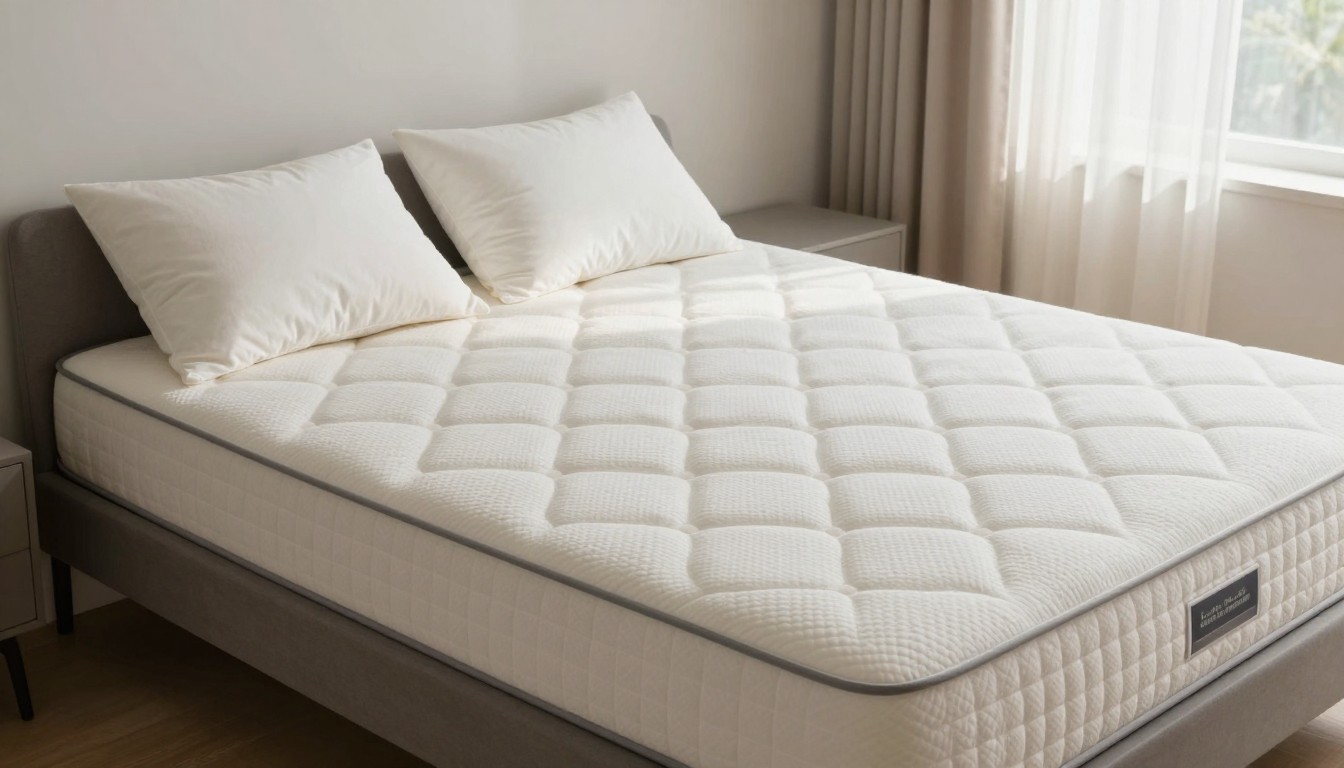
 by
by Quick answer: Start with one well-matched pillow. Use two only when their combined, settled height keeps your head and neck neutral without shifting or forcing an angle.
- Alpha Science’s posture guide ties pillow choice to sleep position.
- The guide focuses on spinal alignment rather than a fixed pillow count.
- One supportive pillow can create more working height than two soft pillows that compress.
Updated July 2026 · Reviewed for accuracy
One pillow is my starting recommendation, but the number itself doesn’t settle the question. Two thin pillows may sit lower than one firm pillow once you lie down. What matters is the shape and height supporting you in your normal sleeping position.
Why Pillow Count Matters Less Than Alignment
One firm, high-loft pillow can hold the head higher than a stack of soft pillows. That’s why counting pillows without considering their construction tells me very little. I look at “working loft,” meaning the height that remains after the head settles into the material.
Alpha Science’s posture guide frames the choice around sleep position and spinal alignment. That’s the useful approach. A pillow should fill the space between your head and the mattress without pushing your head sharply away from the natural line of your upper body.
The mattress changes that space too. If your shoulder and torso sink farther into the bed, your head starts closer to the mattress surface. On a less conforming surface, the gap may feel larger. The same pillow stack can therefore fit differently after a mattress change.
My rule: Don’t ask whether one pillow is automatically better than two. Ask whether the settled setup holds your head comfortably without making you tuck your chin, tilt sideways or keep rearranging the fill.
Support and softness aren’t interchangeable. A pillow can feel plush at first contact while still holding considerable height beneath the head. Another can feel dense in your hands but flatten substantially under weight. Judge the position it creates, not how thick it looks at the foot of the bed.
A second pillow also introduces another seam and another moving layer. That can be useful when both pillows are thin and stable. It can be frustrating when the top pillow slides, folds or settles at an angle.
One or Two Pillows for Each Sleep Position
Side, back and stomach positions leave different amounts of space between the head and the mattress. Alpha Science’s posture guide makes sleep position the deciding variable, which is more sensible than prescribing the same pillow count to everyone.
| Sleep position | Sensible starting setup | What to check | When to adjust |
|---|---|---|---|
| Side | One pillow with enough settled height | Head stays level rather than leaning toward or away from the mattress | Add or remove height if the head visibly tilts |
| Back | One moderate or easily shaped pillow | Chin isn’t pushed hard toward the chest | Reduce the stack if the head is driven forward |
| Stomach | One low pillow, or consider no head pillow | The pillow doesn’t add an obvious upward bend while the head is turned | Remove height if the stack feels steep |
| Combination | One responsive or moldable pillow | The pillow remains usable after changing position | Avoid an unstable stack that separates as you move |
For side sleeping, the pillow has a more obvious gap to fill because the shoulder sits between the head and the bed. Start with one pillow that holds the head level after compression. If your head leans down toward the mattress, the working loft may be too low. If it leans toward the ceiling, it may be too high.
Back sleeping usually calls for a less dramatic profile. Look at the chin rather than the pillow label. If a tall stack presses the chin noticeably toward the chest, I’d remove height. If the head drops back and the position feels unsupported, a different loft or shape may fit better.
Stomach sleeping deserves particular care because the head is commonly turned to one side. Stacking pillows can add a steep upward angle. A low pillow may make more sense, and some sleepers may prefer the setup discussed in this guide to sleeping without a pillow.
Useful distinction: “Two pillows” can mean two pillows stacked under your head or one head pillow plus another used elsewhere for positioning. Only the stacked arrangement increases head height.
Combination sleepers have a different problem. A carefully arranged stack may work in one position and separate after a turn. I’d favor a single pillow that can accommodate those changes unless two thin pillows remain stable through normal movement.
If you want a broader breakdown of pillow count and placement, see my guide to how many pillows you should sleep with. The key is to count functions, not just objects on the bed.
When Sleeping With Two Pillows Makes Sense
Two pillows work when they create a controlled stack rather than a wobbly tower. The arrangement can be reasonable if neither pillow alone supplies the required settled height, but their combined profile does.
The lower pillow should provide a stable base. The upper pillow should stay centered instead of creeping toward the headboard or folding around the edge beneath it. If you wake up repeatedly rebuilding the stack, that’s strong practical evidence that the arrangement isn’t stable enough for you.
Two moldable pillows may also let you adjust separate areas. You might keep more fill beneath the neck area while allowing the head area to settle. That benefit disappears if the materials migrate unpredictably or the pillows have shapes that don’t sit together cleanly.
A two-pillow stack earns its place if:
- Both pillows remain aligned after you settle.
- The combined height matches your usual sleeping position.
- The top layer doesn’t slide or create a hard ridge.
- You aren’t folding one pillow simply to compensate for weak support.
A second pillow used away from the head is a separate choice. One pillow can support your head while another helps you maintain a preferred body position. In that case, you’re sleeping with two pillows in total, but your head and neck are still resting on a single support surface.
I wouldn’t add a second head pillow just because the first feels soft. Softness describes the initial feel. The real question is whether the first pillow retains enough useful height once compressed. If it does, another layer may create unnecessary elevation.
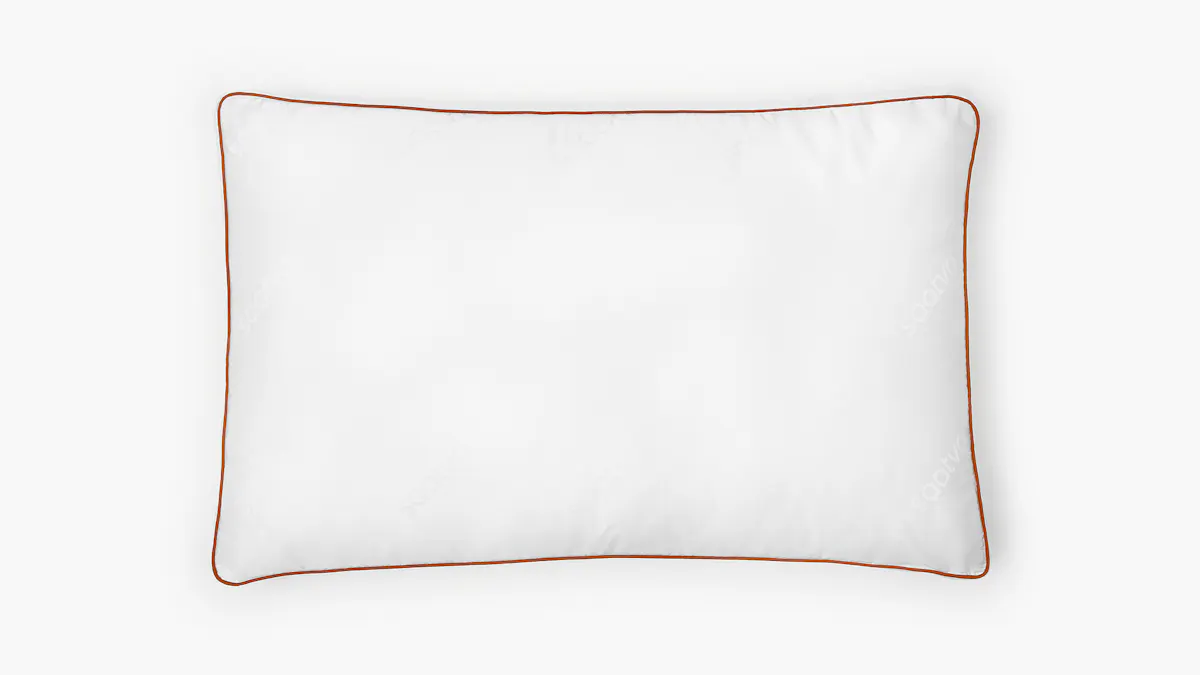
Comparing options? The Saatva Pillow is one category-matched product to investigate, not a documented winner — see the product note ↓
Why One Pillow Is Often the Cleaner Setup
One pillow gives you a continuous support surface with no gap between layers. That makes the setup easier to assess. If the height is wrong, you know which component needs to change.
A single pillow also removes the sliding and rotation that can occur in a stack. This matters most with smooth covers, rounded edges or pillows that differ greatly in shape. One appropriately selected pillow can be more consistent than two poorly matched ones.
The single-pillow approach only works if the pillow suits your body, sleep position and mattress. “Use one” doesn’t mean forcing yourself to keep a flat or exhausted pillow. It means choosing one support layer that creates the profile you were trying to build with two.
Don’t confuse simplicity with low loft. A single pillow may be thin, full or adjustable. The count stays the same while the construction does the real work.
Placement matters as much as count. The pillow should support the area it’s meant to support rather than sitting so high on the bed that only part of your head reaches it. My guide to the best way to sleep with a pillow covers the practical positioning details.
I’d also avoid constantly folding a single pillow in half to manufacture height. Folding creates a concentrated ridge instead of an even profile. If that’s the only way the pillow feels usable, its normal construction probably isn’t matching your needs.
How Pillow Construction Changes the Answer
Loft before use isn’t the same as loft under the head. Construction determines how much a pillow compresses, how readily its fill moves and whether its shape returns after pressure is removed. Those differences explain why pillow count is such an unreliable shortcut.
| Construction style | What I’d examine | Effect on pillow count |
|---|---|---|
| Solid core | How much the complete core yields and whether its profile suits your position | One may be enough if the core supplies the right working loft |
| Loose or adjustable fill | Whether fill shifts away from the areas needing support | Adjusting one pillow may be cleaner than adding another |
| Soft fiber or down-like fill | The settled height rather than the fluffy, unloaded appearance | Two thin layers can work, but only if the stack stays even |
| Clumped or worn fill | Flat areas, lumps and failure to regain a usable shape | Adding another pillow may hide the problem without fixing it |
A solid core behaves as one unit. If its height and contour fit, a second pillow can make the setup abruptly taller and introduce an awkward transition between layers. If the core is too high, placing it over another pillow obviously won’t solve the problem.
Loose fill is more moldable. That can help you shape a single pillow around the head and neck, but the result depends on where the fill settles. Before stacking another pillow beneath it, redistribute or adjust the existing fill and reassess the working height.
Soft fiber and down-like fills can appear substantial while unloaded, then settle into a much lower profile. Two such pillows may produce a suitable combined height, but appearance alone won’t tell you. Build the stack, lie in your normal position and examine the actual angle.
Construction check: Pressing a pillow briefly with your hand isn’t enough. Your head rests across a broader area, and loose fill can move sideways. Make the decision after settling into your normal position.
Age and condition matter too. A pillow with persistent clumps, hollow spots or an uneven edge won’t become predictable merely because another one sits underneath it. If the structure no longer holds a usable shape, this guide to what to do with old pillows explains the next options.
Pillowcases can affect how a stack behaves as well. If the upper pillow moves easily across the lower one, the combined height may change during the night. A setup that looks aligned before bed isn’t useful if its layers won’t remain together.
How to Choose Your Setup Without Guessing
Changing one variable at a time gives you a clearer answer than piling on extra bedding. Start with your usual mattress, sleeping position and one pillow. Let the material settle before judging its height.
- Use your normal position. A setup evaluated on your back may not answer the question if you spend most of the night on your side.
- Check the settled profile. Look for an obvious sideways tilt, a chin forced toward the chest or a steep upward head angle.
- Notice active adjustments. Repeatedly folding, pulling or bunching the pillow suggests its normal shape isn’t doing the job.
- Add the second pillow only if height is missing. Use the thinner, more stable arrangement first.
- Compare the complete setups. Keep the option that remains aligned and comfortable without constant rebuilding.
A side-view photo taken in your normal position can make a large tilt easier to spot, although it isn’t a medical assessment. A partner can also check whether your head appears roughly continuous with your upper body rather than sharply angled.
Pay attention to stability as well as initial comfort. A soft stack may feel inviting when freshly arranged but require frequent repositioning. I’d choose the setup that keeps its useful shape with the least intervention.
If neither arrangement works, the answer may not be “more pillows.” One could be too tall while the other is too flat, leaving no good combination. A different construction or adjustable fill may give you finer control without increasing the stack.
My final answer: One pillow is the better starting point because it’s stable and easier to fit. Sleep with two under your head only if their combined working loft creates better alignment and the stack stays securely in place.
Don’t keep a visibly poor setup because a universal rule says your position “requires” a certain count. Pillow number is only a rough label. Settled height, shape and stability decide whether the arrangement actually fits.
ONE OPTION WORTH COMPARING
Shopping as well as reading? Here is one current option worth comparing: the Saatva Pillow. Check today’s price, sizing and return terms on the official product page before you order.
Saatva Pillow
- Shredded natural latex core, per saatva.com
- 45-day free returns
- Machine-washable organic cotton cover
FAQ
Is sleeping with two pillows bad for your neck?
Not automatically. Two pillows become a poor fit if the stack pushes your head into an obvious angle, separates during sleep or makes you keep adjusting your position. Persistent pain, numbness or other concerning symptoms warrant guidance from a qualified healthcare professional rather than more pillow experiments.
Should a side sleeper use one pillow or two?
I’d start with one pillow that fills the space created by the shoulder after both the mattress and pillow compress. Two thinner pillows are reasonable if one can’t create the needed working height and the combined stack remains level and stable.
Is one pillow enough for a back sleeper?
One can be enough if it supports the head without pressing the chin sharply toward the chest or letting the head fall into an uncomfortable position. A second pillow isn’t automatically more supportive; it mainly adds height and another moving layer.
Should a stomach sleeper use no pillow?
A low pillow or no head pillow may be worth considering if a normal pillow creates a steep upward angle while your head is turned. The right choice still depends on the mattress, the pillow’s compression and the position you actually maintain.
Does a pillow used between the knees count as a second pillow?
It counts toward the total number of pillows, but it doesn’t change the height beneath your head. One head pillow plus a separate positioning pillow is fundamentally different from stacking two pillows under the head.