
 by
by Quick answer: Yes, it can be okay if you're comfortable, but Sleep Foundation says the position may strain the neck and lower back. A thin pillow and supportive mattress may reduce discomfort.
- Sleep Foundation says stomach sleeping isn't necessarily bad.
- Mattress Clarity reports that 16% of adults sleep on their stomachs, making it the least common position.
- Health says changing to a side or back position might help relieve discomfort associated with stomach sleeping.
Updated July 2026 · Reviewed for accuracy
I wouldn't call stomach sleeping automatically bad. The real question is whether your pillow and mattress keep you comfortable or leave your neck and lower back complaining by morning.
Sleep Foundation says the position may cause strain for some people, not everyone. If it feels fine, you don't need to panic. If it hurts, there are sensible adjustments to try.
Is it okay to sleep on your stomach?
Only 16% of adults sleep on their stomachs, according to Mattress Clarity. That makes it the least common sleeping position, but rarity alone doesn't make it wrong.
My answer is conditional: stomach sleeping can be okay when you fall asleep comfortably and don't wake with position-related neck or lower-back discomfort. Sleep Foundation reaches a similarly measured conclusion, saying stomach sleeping isn't necessarily bad but may increase strain in those areas.
The position deserves another look if discomfort appears overnight, is worse in the morning, or repeatedly seems tied to sleeping face down. Health says stomach sleeping can strain the neck and spine, while changing to a back or side position might help relieve those effects.
I wouldn't force a comfortable sleeper to change solely because stomach sleeping has a bad reputation. I also wouldn't ignore a repeatable pattern of discomfort. How your body responds matters more than the position's label.
A simple decision rule
- If you're comfortable through the night and on waking, monitor rather than worry.
- If your neck feels strained, reassess how far the pillow lifts your head.
- If your lower back feels strained, pay attention to how the mattress supports your middle.
- If adjustments don't help, try beginning the night on your side or back.
Persistent or worsening pain needs individual attention because a sleep-position guide can't identify its cause. A qualified clinician can assess symptoms that extend beyond ordinary positional discomfort.
Why your neck and lower back may complain
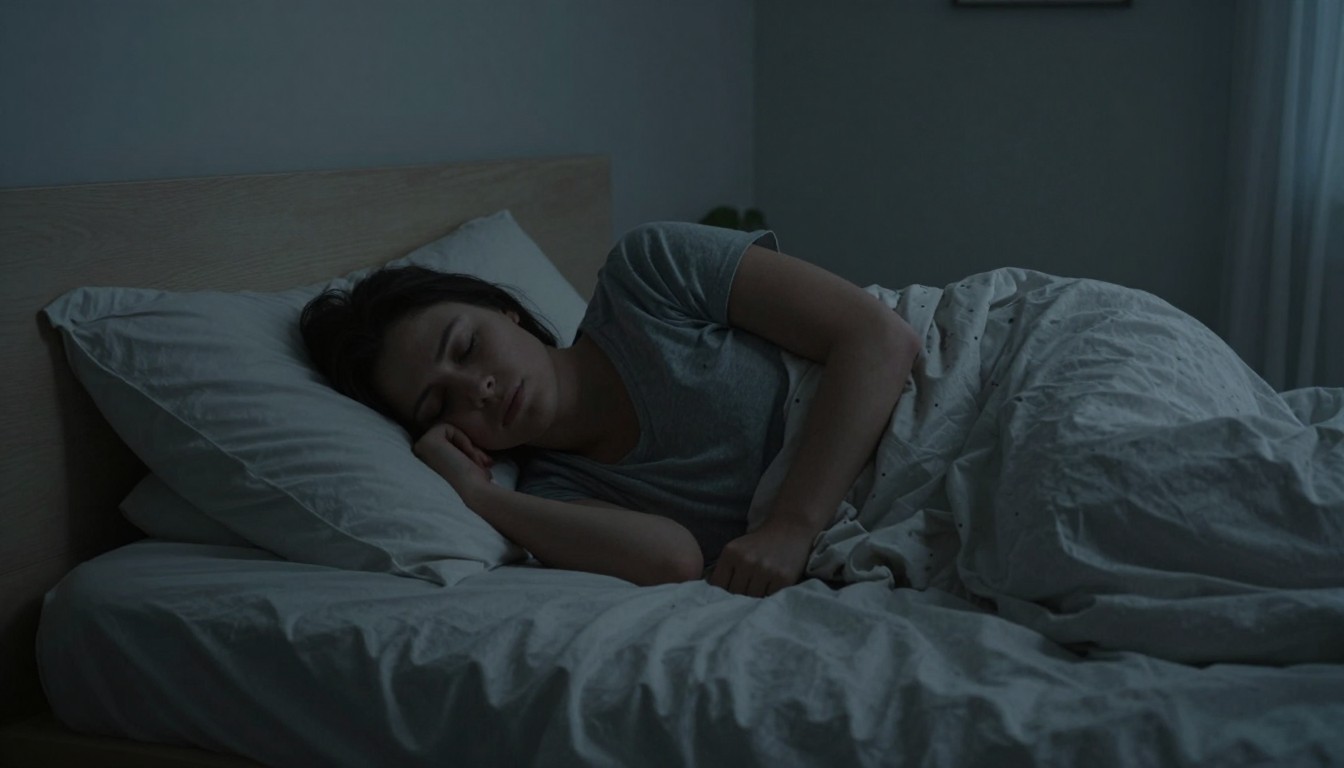
A stomach sleeper usually rests with the chest facing down and the face turned to one side. That geometry makes the head and torso interact with the bed differently than they do in a side or back position.
The pillow is the clearest variable. A thick pillow raises the head farther from the mattress while the face remains turned. In my view, that added height is often the first thing worth questioning because Sleep Foundation specifically suggests a thin pillow, or no pillow, to help reduce discomfort.
The mattress affects the other end of the setup. If the midsection feels as though it's dropping well below the chest and legs, the body isn't receiving even support. Sleep Foundation recommends a supportive mattress for stomach sleepers, particularly when lower-back discomfort is an issue.
| What you notice | What may be happening | What to consider |
|---|---|---|
| Your head feels pushed upward | The pillow may be adding more neck bend than feels comfortable | Try a thinner pillow, or no pillow if that remains comfortable |
| Your middle feels much lower than your chest | The mattress may not feel supportive enough through the torso | Reassess the mattress and its underlying support |
| Discomfort appears after sleeping face down | The position or setup may be aggravating symptoms | Health suggests trying a side or back position |
| You remain comfortable overnight and afterward | The position isn't producing an obvious comfort problem | Keep monitoring rather than changing out of fear |
This table is a comfort filter, not a diagnostic tool. It helps separate a pillow-height problem from a mattress-support problem and both from a position that simply doesn't agree with you.
Verywell Health describes stomach sleeping as less favorable for the neck and spine because it can contribute to pain symptoms. That doesn't mean every stomach sleeper will hurt. It means the position leaves less room for a poor setup.
How to make stomach sleeping more comfortable
The first adjustment I'd make is reducing unnecessary pillow height. It's simple, costs nothing if you already own a thinner pillow, and directly follows Sleep Foundation's recommendation.
- Start with the head pillow. Try a thinner option and notice whether your head feels less elevated. Sleep Foundation also says sleeping without a head pillow may help, but only keep that setup if it feels comfortable.
- Assess support through your torso. Lie in your normal position and notice whether your midsection feels markedly lower than your chest and legs. The goal isn't to create a perfectly rigid line. It's to avoid a pronounced dropped feeling through the middle.
- Compare bedtime comfort with morning comfort. A position can feel relaxing while you're drifting off yet be associated with discomfort on waking. Change one part of the setup at a time so you can tell which adjustment matters.
- Use another position if discomfort continues. Health says switching to the side or back might relieve the side effects associated with stomach sleeping. You don't earn anything by staying in a position that repeatedly feels worse.
Keep the experiment focused
Don't replace the pillow, mattress, and sleep position all at once. Start with pillow height, then assess mattress support, then consider changing positions. A focused approach makes your own comfort response easier to read.
The bed's foundation also deserves a visual check if the mattress feels uneven or poorly supported. For a separate look at that part of the setup, see this under-mattress support guide.
Don't treat a foundation adjustment as a promise to resolve pain. The useful question is narrower: does the complete bed feel stable and supportive in your normal sleeping position?
I also wouldn't chase an unfamiliar sleep posture just because it appears ideal on paper. First make the low-risk adjustments suggested by the named sources. Then let your comfort, especially how you feel on waking, determine whether the position remains workable.
What to look for in a pillow and mattress
Sleep Foundation highlights two practical variables for stomach sleepers: a thin head pillow and a supportive mattress. Those descriptions are more useful than blindly shopping by a firmness label.
The pillow should limit unnecessary head lift
I wouldn't prescribe one exact pillow height for every person. The useful standard is whether the pillow pushes your head noticeably upward while your face is turned.
A thin pillow may reduce that lift. No pillow is another option mentioned by Sleep Foundation, but it isn't a command. If removing the pillow makes your face, head, or neck less comfortable, that setup isn't helping you.
Material labels matter less here than the finished height under your head. A fluffy pillow that compresses substantially may feel different from a dense pillow with a similar appearance, so judge the position you actually settle into rather than the pillow on its own.
The mattress should support the middle of your body
Supportive doesn't automatically mean the hardest surface you can find. I use the word to describe a bed that doesn't leave the stomach sleeper feeling as though the middle of the torso has dropped away from the rest of the body.
There still needs to be enough surface comfort for lying face down to feel tolerable. The balance matters. A mattress can feel firm at first contact yet still provide poor support through the middle, while another can feel comfortable at the surface without creating that dropped sensation.
Use these questions as your setup filter
- Does the pillow push my head sharply upward?
- Does my midsection feel much lower than my chest and legs?
- Am I comfortable while settling down and after waking?
- Does a thinner pillow or different position reduce the problem?
A marketing label can't answer those questions for you. Sleep Foundation's guidance supports the general direction, thin at the head and supportive beneath the body, but your comfort response determines whether a particular setup works.
If you're considering a mattress change, don't turn “supportive” into a demand for an uncomfortably hard bed. Focus on how the full sleep surface behaves beneath your usual position, including the mattress and its base.
Should you switch to your side or back?
Health says moving to a side or back position might help relieve the effects of stomach sleeping. Verywell Health also encourages learning to switch positions when stomach sleeping contributes to neck or spinal discomfort.
I'd consider switching if stomach sleeping repeatedly coincides with neck or lower-back discomfort, especially after you've addressed an overly thick pillow and obvious support problems. That's a practical response to a pattern, not an admission that you were sleeping “wrong.”
You can begin the night in the alternative position that feels most natural. Set up your pillow for that position and return to it when you notice you're face down. I wouldn't promise that a specific habit or accessory will control how you sleep because the named sources don't establish one guaranteed method.
My take: Switch because your present position creates a consistent comfort problem, not because stomach sleeping carries a negative label. A position that feels neutral is different from one that repeatedly aggravates symptoms.
If you're reassessing sleep more broadly, our guides to sleep in your 50s and sleep in your 60s keep those wider questions separate from this specific position issue.
Changing positions isn't a substitute for personal medical guidance when pain persists or worsens. It is simply one reasonable comfort adjustment supported by Health and Verywell Health.
My bottom line on stomach sleeping
If you sleep on your stomach and wake feeling comfortable, the position isn't automatically a problem. Sleep Foundation explicitly says stomach sleeping isn't necessarily bad, though it may increase neck and lower-back strain for some people.
If discomfort does show up, check the setup in a sensible order. Reduce unnecessary pillow height. Assess whether the mattress supports your torso. Compare how you feel before sleep and after waking. Try a side or back position if the pattern continues.
I wouldn't buy a new sleep product before identifying which part of the setup seems wrong. A pillow-height issue and a mattress-support issue aren't the same problem, even if both can make stomach sleeping feel uncomfortable.
Final answer: Yes, sleeping on your stomach can be okay. Keep the position if it's comfortable, adjust the pillow and support if it isn't, and consider your side or back when face-down sleeping repeatedly causes strain.
FAQ
Is sleeping on your stomach bad every night?
Not automatically. Sleep Foundation says stomach sleeping isn't necessarily bad, but it may increase strain on the neck and lower back for some people. Your repeatable comfort response matters more than the fact that you use the position nightly.
What kind of pillow is suitable for a stomach sleeper?
Sleep Foundation suggests using a thin pillow or no pillow to help reduce discomfort associated with stomach sleeping. I prefer the option that limits unnecessary head lift without making your face or neck less comfortable.
Can a mattress make stomach sleeping more comfortable?
Sleep Foundation says choosing a supportive mattress may help reduce discomfort. Look for a surface that doesn't leave your middle feeling markedly lower than your chest and legs, while still remaining comfortable at the surface.
Should I force myself to stop sleeping on my stomach?
I wouldn't force a change if you're comfortable and don't notice a problem. If the position repeatedly aggravates neck or lower-back discomfort, Health says switching to a side or back position might help relieve those effects.
How common is stomach sleeping?
Mattress Clarity reports that 16% of adults sleep on their stomachs, making it the least common sleeping position. Being in the minority doesn't make the position inherently wrong, but it does make stomach-specific pillow and support advice especially relevant.