
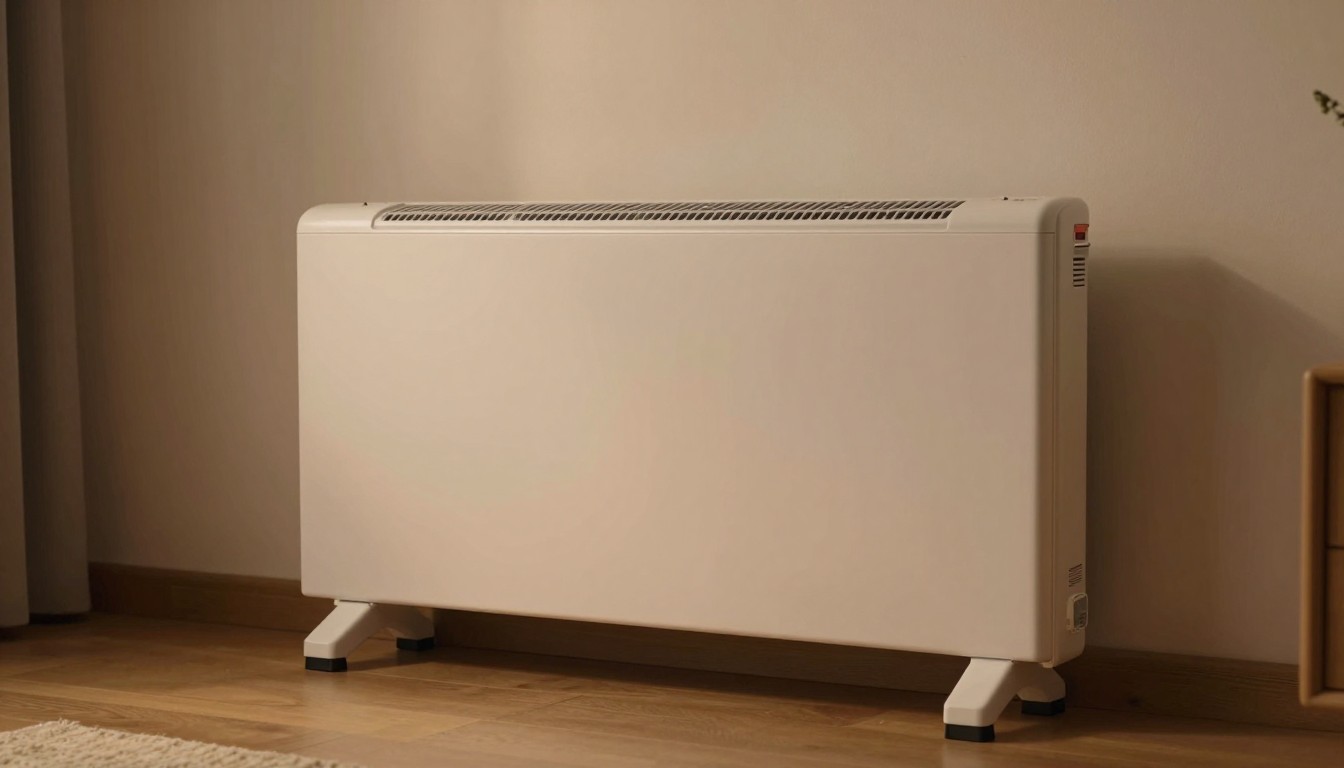
 by
by Quick answer: No. I’d switch the space heater off before sleeping. Amerisleep’s safety guide says fire-safety experts, heater manufacturers, and emergency responders agree that portable heaters should be turned off before sleep.
- Amerisleep reports a consistent recommendation from fire-safety experts, heater manufacturers, and emergency responders.
- The guide identifies household fire as a risk of leaving a space heater running overnight.
- It also includes carbon-monoxide poisoning among the potential dangers and says switching the heater off protects the household.
Updated July 2026 · Reviewed for accuracy
No, I don’t consider it safe to sleep with a space heater on. The problem isn’t simply that the heater stays warm. It’s that you’re no longer awake to watch it, reconsider the setup, or react if something changes.
Amerisleep’s safety guide gives the clearest rule: turn the heater off before you sleep. I’d apply that rule regardless of how cold the bedroom feels or how reassuring the heater’s controls appear.
Why my answer is no
One action settles this question: switch the heater off before falling asleep. According to Amerisleep, fire-safety experts, heater manufacturers, and emergency responders agree on that recommendation.
The distinction between “running normally right now” and “safe to leave on while I’m unconscious” matters. A heater may appear steady while you’re awake, but that observation doesn’t cover the hours when nobody is actively monitoring it. I wouldn’t treat a quiet evening of normal operation as proof that overnight use is acceptable.
Amerisleep identifies fire and carbon-monoxide poisoning as potential consequences. Those outcomes are serious enough that I don’t need to invent a probability or promise that an incident will occur. The safer choice is already available: use the heater only while awake, then turn it off before sleep.
The Nut’s rule: If a heating plan depends on a portable heater continuing to run after you lose the ability to supervise it, change the plan before bedtime.
“Safe” shouldn’t mean that nothing bad happened the last few times. It should mean the setup follows the applicable instructions and the broad safety advice supplied by the people who make and respond to heating equipment. On the overnight question, Amerisleep reports that their advice points in the same direction.
What changes once you fall asleep
The key change is supervision. While awake, you can notice that the room feels different, check the heater, read its controls, or switch it off. Once asleep, you’ve removed yourself from that decision loop.
That’s why I wouldn’t make exceptions based solely on a low setting, a quiet fan, or a reassuring indicator light. Those details may describe how the heater is operating, but they don’t make you awake. They also don’t override the manufacturer’s instructions for your exact model.
| Situation | My safety-first response |
|---|---|
| You’re awake and able to monitor the heater | Follow the model-specific operating and placement instructions. |
| You’re getting ready to sleep | Switch it off before falling asleep. |
| The heater type or instructions are unclear | Don’t guess that overnight operation is acceptable. |
| The room cannot remain comfortable without portable heat | Address the room or primary heating problem instead of running the heater during sleep. |
A timer or automatic control doesn’t change my answer. If the heater’s manual allows a feature, use it only as directed, but don’t reinterpret that feature as permission to ignore the broader turn-it-off-before-sleep rule reported by Amerisleep.
The same reasoning applies if another person in the home is asleep while you remain awake. Amerisleep frames switching the heater off as a decision that protects everyone in the household. I’d consider who is exposed to the setup, not just who turned the heater on.
Fire and carbon monoxide aren’t the same risk
Amerisleep’s guide identifies two separate concerns: fire and carbon-monoxide poisoning. The phrase “space heater” alone doesn’t tell you how each concern applies to your particular appliance, so the model label and manufacturer’s instructions matter.
I wouldn’t assume that every portable heater has the same energy source, operating requirements, or warnings. I also wouldn’t assume that a heater is suitable for overnight use merely because it’s marketed for a bedroom. Product placement and intended room don’t erase the advice to turn it off before sleep.
For fire risk, the practical question is whether you’re following every operating and placement condition specified for the heater while remaining awake to monitor it. For carbon-monoxide risk, don’t infer anything from the heater’s appearance or from the generic product category. Identify the exact appliance and follow its instructions.
Check before using any space heater:
- Can you identify the exact model and its energy source?
- Do you have the manufacturer’s current operating instructions?
- Does your setup satisfy every stated placement and use restriction?
- Will the heater be switched off before anyone falls asleep?
If you can’t answer those questions, uncertainty isn’t a reason to improvise. It’s a reason not to operate the heater until you can confirm what you have and how its manufacturer says it should be used.
This article also can’t replace the instructions for a specific appliance. The firm conclusion I can draw from Amerisleep’s published safety guidance is narrower and more useful: don’t leave a space heater running while you sleep.
A safer bedtime heating routine
The cutoff point should be sleep itself. If you use a portable heater to make the bedroom comfortable while you’re awake, build switching it off into your bedtime routine rather than relying on yourself to remember after becoming drowsy.
I’d use this sequence:
- Identify the heater. Read the label and locate the instructions for that exact model. Don’t borrow assumptions from a different-looking or similarly named heater.
- Follow its operating rules while awake. That includes every manufacturer direction concerning where and how the appliance may be used.
- Choose a clear stopping point. Switch the heater off before you fall asleep, in line with the expert consensus reported by Amerisleep.
- Confirm the change. Make checking that the heater is off part of the final room check before sleep.
- Fix recurring cold separately. If the bedroom depends on a portable heater every night, investigate the room or primary heating arrangement instead of normalizing overnight operation.
A control panel can make operation more convenient, but convenience isn’t the question. The question is whether the heater remains on while you’re asleep. If it does, the setup conflicts with the safety rule given in Amerisleep’s guide.
Don’t let the routine drift: “I’ll turn it off later” is a weak plan once you’re already tired. Set the stopping point before getting into bed and keep it consistent.
I’d also avoid replacing the manufacturer’s directions with broad internet advice about settings or placement. Different appliances can have different instructions. Follow the exact documentation for yours, while treating “off before sleep” as the non-negotiable endpoint.
If your bedroom won’t stay warm
A room that becomes uncomfortably cold every night needs a longer-term answer. Leaving a portable heater on while you sleep may feel like the simplest workaround, but it leaves the underlying heating problem untouched and conflicts with Amerisleep’s safety recommendation.
Start by separating the room problem from the heater decision. Ask whether the primary heating system is working as intended, whether the room loses warmth unusually quickly, and whether the issue should be raised with a landlord, building manager, or qualified heating professional. Those questions point toward a durable fix without pretending that a portable appliance is an overnight heating system.
Practical alternatives to consider:
- Warm the bedroom while you’re still awake, then switch the heater off before sleep.
- Use ordinary, non-powered bedding and sleepwear appropriate for the room.
- Have persistent room-heating problems assessed by the responsible property contact or a qualified professional.
- Choose another safe sleeping arrangement if the room cannot be used comfortably without unattended portable heat.
Don’t substitute one poorly understood heating product for another. If you consider any powered bedding or different heater, treat it as a separate appliance with its own instructions rather than assuming it solves the overnight-safety issue.
Sometimes discomfort is the real barrier to settling down, and extra room heat is only a workaround. If pain or restricted movement is affecting your setup, our guides to sleeping with arthritis and sleeping with a sprained ankle offer more focused bedtime ideas. Neither changes the rule about switching off the space heater.
If you’re forced to choose between an uncomfortable room and an unattended heater, I wouldn’t quietly accept either condition as normal. Stop using the heater during sleep and seek a safer way to make the room usable.
The bottom line
Sleeping with a space heater on isn’t a risk I’d recommend taking. Amerisleep reports that fire-safety experts, heater manufacturers, and emergency responders agree that these heaters should be turned off before sleep, with fire and carbon-monoxide poisoning named among the concerns.
Use the heater only according to its model-specific instructions while you’re awake. Then switch it off before falling asleep. If the room can’t remain comfortable without it, solve the heating or sleeping-space problem rather than treating overnight portable heat as the default.
Final answer: Warm the room while you’re awake if needed, but don’t sleep with the space heater running. Turning it off is the clear safety-first choice.
FAQ
Can I sleep with an electric space heater on?
I wouldn’t. Amerisleep’s safety guide reports a broad recommendation to turn space heaters off before sleep, and it doesn’t present an overnight exception based simply on the heater being described as electric.
Does a timer make overnight space-heater use safe?
A timer doesn’t change my answer because the heater would still operate while you’re asleep. Use any timer only as the manufacturer directs, then make sure the heater is off before you fall asleep.
What if my heater has an automatic shutoff feature?
An automatic feature isn’t permission to ignore the operating instructions or the turn-it-off-before-sleep rule reported by Amerisleep. I’d treat it as one feature of the appliance, not as a substitute for awake supervision.
Is carbon monoxide a concern with every space heater?
The Amerisleep guide includes carbon-monoxide poisoning among the potential hazards, but the generic term “space heater” doesn’t establish how that risk applies to every model. Check the appliance’s energy source, label, and manufacturer instructions rather than guessing.
What should I do if a space heater is my only heat source?
Use it only while awake and in accordance with its instructions, then turn it off before sleeping. If the room can’t remain usable without unattended portable heat, contact the responsible property manager or a qualified heating professional and arrange a safer sleeping option in the meantime.