
 by
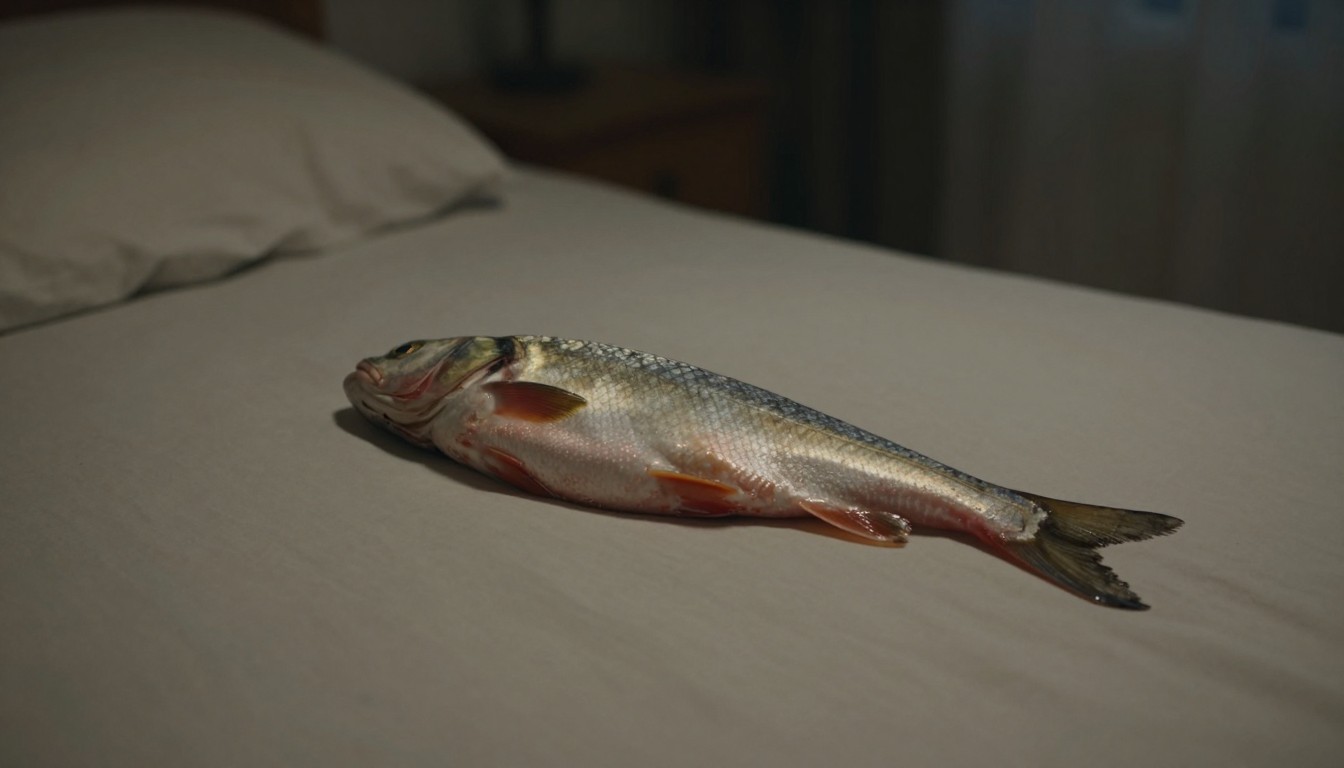
by Quick answer: Don’t assume a motionless fish is dead. Watch the gill covers for repeated movement, compare the posture with its normal rest, then try a gentle familiar cue. No product is required.
- Anglers Advantage Guide Service treats observable signs as the way to distinguish sleep from death.
- That guide also addresses waking a sleeping fish without causing injury.
- How Do You Know If Your Fish Is Dying or Sleeping? calls its immediate check a “5-second gill test.”
Updated July 2026 · Reviewed for accuracy
Stillness alone can’t tell you whether a fish is dead or sleeping. I’d start with breathing, continue with quiet observation, and avoid touching the fish until the evidence is much clearer.
There’s also a third possibility: the fish may be alive but unwell or reacting to something in the aquarium. That’s why this needs to be a calm process of elimination, not a snap judgment based on where the fish is resting.
Check the gills before touching the fish
A repeating movement around the gill covers is the clearest immediate evidence that the fish is alive. The published emergency guide How Do You Know If Your Fish Is Dying or Sleeping? describes this initial breathing check as a “5-second gill test.” I’d use that as a quick screen, not as permission to declare the result from one poor viewing angle.
Watch from the side of the aquarium with the lighting steady. Focus on the area just behind the head. You’re looking for a repeated opening-and-closing motion, not the whole body drifting with the filter current.
If you see consistent gill movement, the fish isn’t dead. That observation doesn’t prove it’s merely sleeping, however. A living fish can still be inactive for another reason, so compare the rest of its behavior with what’s normal for that individual.
| What you observe | What it tells you | What to do next |
|---|---|---|
| Repeated gill-cover movement | The fish is alive | Observe its posture and response without touching it |
| No movement visible from one position | The result is uncertain | Change your viewing angle and watch again |
| Body moving only with the water | The movement may be passive | Keep looking specifically at the gill covers |
| Purposeful repositioning | The fish is responsive and alive | Stop trying to wake it and continue quiet observation |
A lack of obvious motion deserves more checking, not rougher handling. Reflections, decorations, the fish’s position, and water movement can all make a subtle area hard to see. Observe from another side before moving to the next step.
Read the posture in context
A fish resting in its usual nook is less alarming than the same posture appearing suddenly in an unfamiliar place. The useful comparison isn’t a generic photograph online. It’s the fish’s own established behavior at that point in the aquarium’s routine.
Ask what was happening just before you noticed it. Was the aquarium following its normal light and feeding schedule? Has this fish used the same resting place before? Is it the only fish behaving differently? These observations won’t diagnose the cause, but they can separate a familiar rest pattern from a new problem.
Position by itself is weak evidence. A fish near the bottom isn’t automatically dead, and a fish elsewhere in the tank isn’t automatically healthy. Gill movement and purposeful response carry more weight than location alone.
My evidence order:
- First, look for repeated gill movement.
- Next, compare the posture with the fish’s usual resting pattern.
- Then, look for a response to an ordinary, non-contact cue.
- Finally, inspect the aquarium for anything that has changed.
If breathing is visible and the posture resembles the fish’s normal rest, give it space. Our guide to how aquarium fish sleep provides broader background on resting behavior, while the guide to how long fish sleep addresses the timing question in more detail.
Those background questions are different from an immediate welfare check. Curiosity about whether fish dream can wait until you’ve confirmed that the fish is breathing and responding normally.
Try a gentle wake-up check
Movement outside the aquarium is a better starting cue than contact with the fish. Anglers Advantage Guide Service specifically frames the task around rousing a sleeping fish without causing injury, and I’d interpret that conservatively: use the aquarium’s familiar routine, not force.
Stand where the fish normally sees you and approach as you usually do. Watch for a small but purposeful response, such as a change in position or movement that isn’t explained by the current. Don’t demand a dramatic reaction, because the question is whether the fish responds at all.
- Watch quietly first. Give yourself a clear side view of the head and gill covers.
- Use a familiar cue. Approach the tank in the ordinary way rather than creating a new source of noise or vibration.
- Let the normal routine continue. If the aquarium is approaching its usual active period, observe what happens as that routine unfolds.
- Stop after a response. Purposeful movement confirms that the fish is alive. Repeated stimulation adds no useful information.
Don’t poke the fish, shake the aquarium, chase it with a net, or keep tapping the glass. A wake-up check should begin with observation and familiar cues, not physical force.
A fish that responds and then returns to the same position may simply be resting. Keep watching its breathing and compare its later behavior with its normal pattern. There’s no benefit in repeatedly waking a fish once you know it’s alive.
No response keeps the question open. It doesn’t, by itself, establish death. Recheck the gills from another angle and examine the aquarium before deciding what has happened.
Check the aquarium for a wider problem
A stopped filter, silent aeration equipment, or an unexpected heater display can change the meaning of an inactive fish. Inspect every piece of equipment fitted to the aquarium and confirm that it appears to be operating in its usual way.
Look at the other fish as well. If several fish have changed behavior at the same time, I’d treat the shared environment as the immediate concern rather than assuming that several animals happened to fall asleep together. That pattern still doesn’t identify the cause, but it tells you where to focus.
Think through recent changes. New water, a changed maintenance routine, added livestock, unfamiliar substances near the tank, or an unusual feeding event all deserve attention. Don’t make a large blind adjustment simply because the fish looks inactive. First establish what changed and use the instructions for your aquarium equipment or water-testing products.
| Aquarium observation | Why it matters | Cautious response |
|---|---|---|
| Equipment isn’t operating normally | The inactivity may be connected to the setup | Follow the equipment maker’s troubleshooting instructions |
| Several fish are behaving differently | A shared condition deserves attention | Check the aquarium conditions and seek species-specific advice |
| A recent change preceded the behavior | The timing gives you a useful lead | Review exactly what changed before taking corrective action |
| Everything appears normal | The cause remains unresolved | Continue observing or contact an aquarium professional |
If you use a water-testing kit, follow its manufacturer’s directions and interpret the result against reliable guidance for the fish you keep. A reading without species and setup context can be misleading. Avoid guessing at treatments or adding substances simply to see whether the fish reacts.
Visible breathing means the fish is alive even if the wider problem is unclear. Keep it in water, minimize disturbance, and contact a knowledgeable aquarium professional or aquatic veterinarian if the behavior remains concerning.
What to do when death seems possible
No visible gill movement from more than one viewing angle, no purposeful response to a familiar cue, and an unfamiliar posture together raise serious concern. Even then, I’d pause before handling the fish. Water flow can create passive movement, while a poor viewing angle can hide the area you need to see.
Run through the checks again calmly. Focus on the gill covers, distinguish water-driven drifting from deliberate movement, and make sure the aquarium’s normal operation hasn’t been interrupted. If you see any repeated breathing motion, treat the fish as alive.
A fish can also be alive without behaving normally. Don’t force the situation into a simple sleeping-or-dead choice if the evidence points to life but the fish remains unresponsive or unusually positioned. That’s the point to seek prompt, species-specific help rather than experimenting with a treatment.
Pause before removal if:
- You can see any repeated gill-cover movement.
- The fish makes a purposeful movement.
- The view of the head is obstructed.
- Water current makes the body appear to move.
- You’re still uncertain after the calm checks.
If death is reasonably confirmed, follow local aquarium or veterinary guidance for safe removal and disposal. If you can’t confirm it, ask an aquarium professional or aquatic veterinarian to help. Uncertainty is a good reason to get another informed opinion, not a reason to poke, squeeze, or otherwise test the fish physically.
My verdict
Repeated gill movement settles the most urgent question: the fish is alive. From there, compare its position with its normal rest, try one gentle and familiar cue, and check the aquarium for anything that has changed.
If there’s no visible breathing or purposeful response after careful observation from different angles, death becomes more plausible, but don’t rely on posture alone. Treat any breathing fish as alive, minimize handling, and seek qualified help when its condition remains unclear.
FAQ
Can a dead fish look like it’s sleeping?
Yes, the two can look similar from a distance because both may involve complete stillness. Check the gill covers for repeated breathing motion and look for a purposeful response before drawing a conclusion.
Do sleeping fish still move their gills?
A living fish continues to breathe, so repeated gill-cover movement is evidence that it isn’t dead. The emergency-guide source describes the immediate breathing check as a “5-second gill test,” but I’d repeat the observation from another angle if the movement is hard to see.
Should I tap the glass to wake my fish?
I wouldn’t use tapping as the first check. Watch the gills and use a familiar, non-contact cue outside the aquarium instead, then stop once you see a purposeful response.
Is a fish lying on the bottom dead?
Not necessarily. Location alone is weak evidence, so compare the posture with that fish’s normal rest and give more weight to breathing and purposeful movement.
How long should I wait before deciding?
The sources supplied for this topic don’t establish a universal waiting period for every fish. Begin with the sourced “5-second gill test,” repeat your observation calmly from another angle, and seek qualified help if breathing and responsiveness remain uncertain.