
 by
by Quick answer: No. A low pillow isn’t shown to improve facial symmetry, and I wouldn’t choose one for that promise. Pick pillow height for your sleep position, neck comfort, and stable support instead.
- Vogue Arabia reports that online creators claim years of one-sided sleep can affect the face, but a circulating claim isn’t proof.
- Sleep Foundation says sleeping without a pillow may benefit some sleepers and focuses on who is most likely to find it comfortable.
- A low pillow can still leave one cheek against the surface if you sleep on your side.
Updated July 2026 · Reviewed for accuracy
If you’re asking, “is sleeping on a low pillow better for face symetry,” the useful distinction is pillow height versus sleep position. They aren’t the same thing.
A lower pillow changes how far your head is raised. It doesn’t automatically stop your cheek from touching the pillow, keep you on your back, or alter an established facial difference.
My verdict is simple: choose a low pillow only if it supports the position in which you comfortably sleep. Don’t treat low loft as a cosmetic fix.
Does a low pillow improve facial symmetry?
A low pillow controls head elevation, not the direction your face points. A side sleeper can use an extremely thin pillow and still spend the night with one cheek against the surface. A back sleeper may have little cheek contact even with a fuller pillow.
Vogue Arabia reports that some online creators blame years of sleeping on one side for facial asymmetry. That establishes that the concern is circulating online. It doesn’t establish that switching to a lower pillow will reverse an existing difference or make facial features more symmetrical.
Sleep Foundation’s discussion of sleeping without a pillow also takes a suitability-based approach. It says some people find pillow-free sleep advantageous and considers which sleepers may benefit. It doesn’t present pillow removal as a facial-symmetry method.
The key distinction: A pillow can change head support and facial contact. That doesn’t mean it can reliably change facial structure. Those are separate claims, and the cited sources don’t connect low loft with improved symmetry.
“Low” is also relative. A pillow that barely raises one person’s head may feel substantial to someone whose mattress lets the shoulders and upper body sink farther. Fill softness, compression, body shape, and sleeping position all affect the final head angle.
That’s why I wouldn’t shop by the word low alone. I’d look at what the pillow does after your head settles into it.
Facial contact matters more than pillow height
The direct variable is where your face rests. If your cheek presses into fabric while you’re on your side, lowering the pillow doesn’t remove that contact. It only changes the height and angle at which the contact occurs.
A temporary fabric line or flattened-looking area after sleep shows that the skin touched and compressed against a surface. By itself, that observation doesn’t demonstrate a lasting change in facial symmetry. Lighting, expression, camera angle, and the distance from a mirror can also make small differences look more pronounced.
A lower pillow could even work against the intended goal if it makes a sleeper turn, curl, or roll in search of comfort. The outcome depends on the position actually maintained during sleep, not the position intended at bedtime.
Separate these questions before changing your pillow:
- Does your cheek remain against the pillow?
- Does the pillow let your head rest without an obvious upward or downward tilt?
- Can you stay comfortable without repeatedly repositioning?
- Are you trying to reduce surface contact, or expecting a lasting change in facial shape?
Back sleeping offers the clearest mechanical route to reducing cheek contact because the face generally points away from the bed. Even then, pillow height needs to suit the sleeper. A pillow that feels too high or too low can make the position difficult to maintain.
Social-media advice often skips that distinction. TikTok content cited in the search results claims that arranging two pillows can prevent rotation, relieve tension, and improve sleep quality. Those claims don’t establish that extra pillows improve facial symmetry, and adding pillows without considering their placement can change support in unpredictable ways.
The broader sleep setup matters too. Wikipedia’s overview of sleep describes a dark, clean, peaceful environment as part of better sleep hygiene. A cosmetic concern shouldn’t crowd out the basics that help make the bed comfortable and the room restful.
Low pillow, no pillow, or regular loft?
The same low pillow can behave very differently under a back, side, or stomach sleeper. Position creates the starting geometry, while the mattress and pillow determine how the head settles.
| Sleep position | What a low pillow changes | Facial-contact implication | Main limitation |
|---|---|---|---|
| Back | Raises the head less and may feel flatter under the neck and skull. | Cheeks usually have little direct pillow contact while the position is maintained. | Low loft isn’t automatically comfortable for every body shape or mattress. |
| Side | Fills less of the space created by the shoulder. | One cheek can remain directly against the pillow regardless of loft. | A pillow that compresses too far may leave the head noticeably tilted. |
| Stomach | Adds less lift beneath the head. | The face may still turn into the sleep surface, so contact remains. | Less loft doesn’t remove the need to rotate the head. |
| Mixed position | May suit one position better than another. | Contact changes as the sleeper moves between the back and sides. | A single fixed loft has to accommodate several head angles. |
For a side sleeper, the shoulder naturally creates space between the head and mattress. A very low pillow fills less of that space. Whether it feels supportive depends partly on how deeply the shoulder sinks into the mattress and how much the pillow compresses.
Stomach sleepers may prefer less lift because the head is already turned. That still isn’t a facial-symmetry strategy. The cheek or side of the face may continue to contact the pillow or mattress.
Sleeping without a pillow is the far end of the low-loft idea, but it isn’t universally better. Sleep Foundation says some people find advantages in going without one and evaluates suitability by sleeper. Our separate guide to sleeping without a pillow explains the practical tradeoffs in more detail.
My construction take: Judge the working loft after the fill compresses, not the pillow’s unloaded appearance. A soft pillow that looks tall may settle lower than a thin but firm design.
Comparing options? The Saatva Pillow is one category-matched product to investigate, not a documented winner — see the product note ↓
How to choose pillow height without chasing a cosmetic claim
Start with the position you actually maintain, not the one you hope to adopt. If you routinely wake on your side, buying an unusually low pillow because back sleeping reduces facial contact doesn’t mean you’ll remain on your back.
Once settled, your head shouldn’t appear sharply forced toward the mattress or pushed far away from it. The goal is a position you can relax into without repeatedly folding, stacking, or pulling the pillow into shape.
Use this pillow-height checklist:
- Begin in your normal sleep position and let the fill compress fully.
- Notice whether your head feels tipped rather than comfortably supported.
- Check whether the pillow stays under the intended area instead of bunching or sliding.
- If facial contact concerns you, observe whether changing loft actually removes that contact.
- Change one part of the setup at a time so you can tell what affected comfort.
Contoured pillows deserve extra attention because turning one around can change the support more than expected. If you use a shaped design, our guide to which way a neck pillow goes for back sleeping explains how orientation affects the setup.
Side sleepers should be especially cautious about sacrificing support to chase less facial pressure. A lower pillow won’t stop cheek contact if the body remains on its side. If the broader aim is a steadier side-sleeping position, a pillow between the knees changes lower-body positioning rather than pretending the head pillow can solve everything.
Fill behavior matters as much as the loft label. Loose fill may shift away from the head, foam may retain its shape more consistently, and any soft material can compress under weight. Those differences can change the working height without changing the description printed on the packaging.
I’d also ignore vague beauty language unless the seller explains exactly what the pillow changes. “Supports beauty sleep” and “promotes symmetry” don’t tell you whether the pillow keeps you on your back, limits cheek contact, or simply uses a smooth cover.
A sensible way to check your own sleep setup
Keep the rest of the bed familiar while changing pillow height. If you replace the pillow, mattress topper, sleep position, and bedtime routine together, you won’t know which change affected your comfort or facial contact.
Settle naturally rather than posing rigidly on your back. Notice where your cheek, jaw, and forehead touch the pillow. Then notice whether the position remains comfortable enough that you aren’t immediately tempted to roll over.
If you compare how your face looks after sleep, use the same room, lighting, expression, and viewing angle. A different phone distance or stronger side lighting can exaggerate small visual differences. Even a consistent photograph can only document appearance at that moment; it can’t prove that a pillow changed underlying facial structure.
A realistic sign of success: You’ve reduced direct cheek contact while remaining comfortable and sleeping normally. A promise that a low pillow will reshape or permanently balance the face goes beyond what Vogue Arabia or Sleep Foundation establishes.
Don’t use rigid objects, tight restraints, or an unstable stack of pillows to force a position. If back sleeping doesn’t feel natural, the pursuit of symmetry isn’t a good reason to turn the bed into a positioning device.
A clean pillowcase and a calm bedroom are more defensible priorities than searching for a magic loft. Wikipedia’s sleep overview supports a peaceful, clean environment as part of sleep hygiene, while none of the named sources establishes a specific pillow height for changing facial symmetry.
Pay attention to the quality of the claim, too. Advice based on a creator’s before-and-after image can’t control for expression, light, angle, makeup, or normal day-to-day variation. It may generate a useful question, but it doesn’t settle the answer.
My verdict on low pillows and face symmetry
I wouldn’t buy a low pillow specifically to make my face more symmetrical. The credible conclusion from the cited material is narrower: sleep position changes how the face contacts the bed, while pillow-free or low-pillow sleep may suit some people better than others.
A low pillow makes the most sense if you already sleep comfortably with little head elevation, particularly while lying on your back. Its possible advantage is less material beneath the head, not a demonstrated ability to correct facial asymmetry.
I’d skip the low-loft experiment if it leaves your head noticeably tilted during side sleep, makes you keep rearranging the pillow, or encourages more turning. Comfort and stable support are better selection criteria than an unsupported cosmetic promise.
Bottom line: Back versus side sleeping matters more for cheek contact than low versus high loft. Choose the pillow that supports your real sleeping position. Treat any facial-symmetry benefit as unproven.
If a facial difference appears suddenly, persists, or concerns you for reasons beyond appearance after sleep, don’t try to diagnose it through pillow changes. Ask a qualified professional for individual guidance.
ONE OPTION WORTH COMPARING
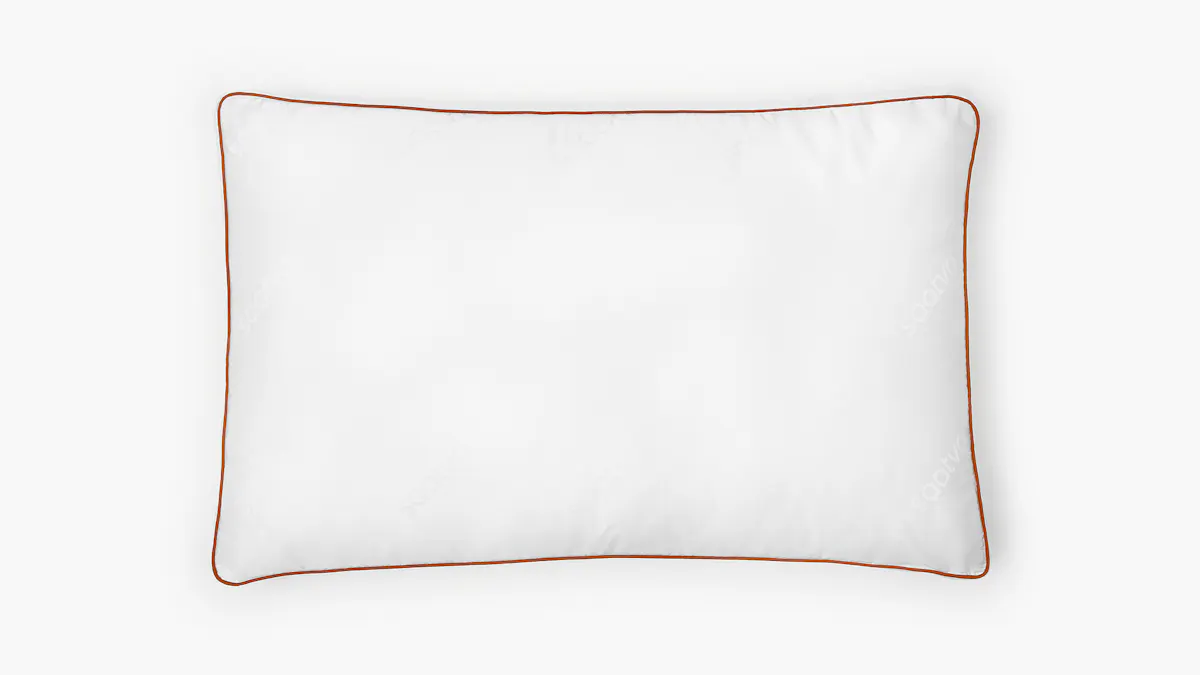
Shopping as well as reading? Here is one current option worth comparing: the Saatva Pillow. Check today’s price, sizing and return terms on the official product page before you order.
Saatva Pillow
- Shredded natural latex core, per saatva.com
- 45-day free returns
- Machine-washable organic cotton cover
FAQ
Can sleeping on a low pillow make my face more symmetrical?
There’s no support in the named sources for claiming that a low pillow makes an established facial difference more symmetrical. It may alter your head angle, but your sleep position still determines whether one side of your face rests against the bed.
Is back sleeping better for facial symmetry?
Back sleeping generally creates less direct cheek contact because the face points away from the mattress. That makes it a more logical position for reducing overnight facial pressure, but it doesn’t prove that back sleeping will reshape the face or reverse asymmetry.
Does sleeping on one side permanently change the face?
Vogue Arabia reports that online creators make this claim, but the fact that a warning is popular doesn’t prove permanence or establish cause. A morning crease or temporary difference also shouldn’t be treated as evidence of lasting structural change.
Is sleeping without a pillow better than using a low pillow?
Not universally. Sleep Foundation says some people find advantages in sleeping without a pillow and evaluates who may benefit, which means suitability depends on the sleeper and position. Pillow-free sleep also doesn’t guarantee that the face will avoid contact with the bed.
How can I tell if my pillow is too low?
In side sleep, the head may appear to drop toward the mattress instead of resting comfortably over the body. In any position, repeated pillow folding, constant repositioning, or waking discomfort suggests that the setup deserves reconsideration, regardless of any facial-symmetry goal.