
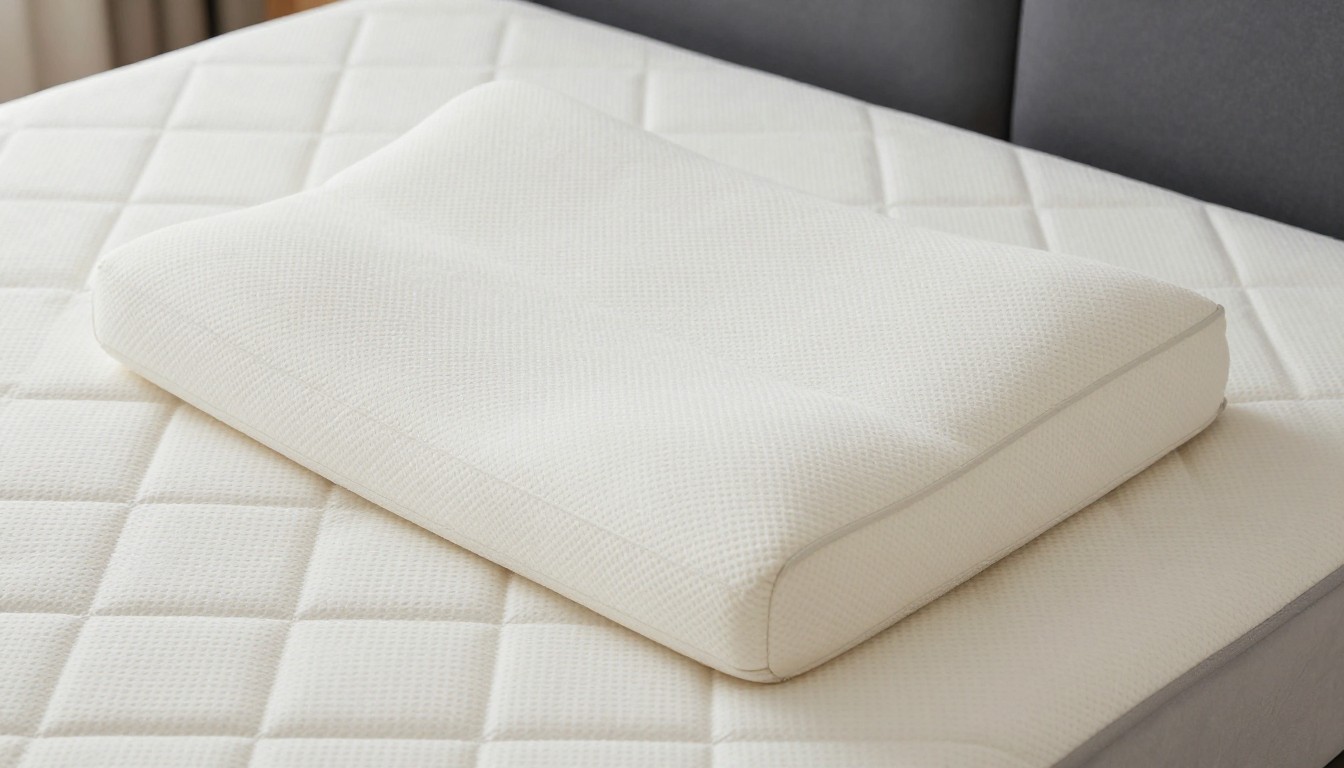
 by
by Quick answer: Usually no. A broad, gradual wedge supporting the upper torso is my comfort-first choice; a wedge is a poor fit if it creates pressure, forces a bend, or worsens discomfort.
- PillowGuides says correct wedge use is generally not bad for the back.
- PillowGuides flags incorrect height and pre-existing spinal conditions as possible causes of discomfort.
- Forbes Vetted says pillow support should match your sleep posture, body type, and individual needs.
Updated July 2026 · Reviewed for accuracy
A wedge pillow isn’t inherently bad for your back. The real issue is whether its slope supports your torso as one continuous surface or leaves your spine bent around an awkward transition. I’d judge it by the position it creates and how your body feels, not by the support claims on its label.
When a wedge pillow can become bad for your back
A wedge creates a fixed slope between the mattress and your upper body. That slope can feel supportive when your shoulders and torso rest on it evenly, but it can become uncomfortable when only your head reaches the raised section.
PillowGuides gives the same basic verdict: sleeping on a wedge is generally not bad for your back when it’s used correctly. The source also identifies incorrect pillow height and pre-existing spinal conditions as reasons some sleepers may experience discomfort.
The lower edge deserves particular attention. If that edge finishes directly beneath a part of your back that’s sensitive to pressure, the wedge can feel less like a gradual incline and more like a ridge. Sliding down the slope can compound the problem by repeatedly pulling you out of the position you chose.
My rule: The wedge should support a continuous area of your body. It shouldn’t prop up your head while leaving your shoulders below it, and its lower edge shouldn’t feel like a pressure bar beneath your back.
A wedge also isn’t a treatment for an unexplained back problem. It’s a positioning tool. If the new position consistently makes you feel worse, that’s enough reason to stop using it rather than trying to force an adjustment.
How the wedge’s shape changes your sleeping position
The thick end of a wedge raises one part of the body while the tapered end meets the mattress. Where your shoulders, hips, and head sit along that slope matters more than the wedge’s appearance.
With your upper torso centered on the wedge, the change in height is spread across a larger area. Put only your head near the top, and the bend becomes concentrated around the neck and upper back. That head-only setup is essentially a tall pillow arrangement, not full upper-body support.
The transition at the tapered end matters just as much. If your hips remain on the mattress while your torso rises, the two surfaces need to meet without creating a pronounced hinge beneath your middle or lower back. I’d move or remove any wedge that makes one small area carry most of the pressure.
| Setup | What it does | What I’d change |
|---|---|---|
| Head on the wedge, shoulders below it | Concentrates the bend near the neck and upper back | Move farther onto the slope or choose a shape that supports more of the torso |
| Shoulders and torso centered | Distributes the incline across a broader area | Check that the lower edge doesn’t create a distinct pressure point |
| Body repeatedly sliding downward | Changes your position and can make you brace against the slope | Try a less aggressive incline or a more stable surface |
| Extra pillows stacked at the top | Adds another bend above the wedge | Use only the head support needed to avoid a forced neck position |
Your sleep position determines whether the wedge fits
A back sleeper, side sleeper, and stomach sleeper meet the same slope in different ways. Forbes Vetted says pillow support should suit sleep posture, body type, and individual needs, which is why one wedge setup can’t be treated as universally correct.
Back sleeping
Back sleepers have the simplest path to continuous support because both shoulders can rest squarely on the slope. Center your torso and check that any separate head pillow isn’t pushing your chin sharply toward your chest. Our guide to orienting a neck pillow for back sleeping explains why pillow direction and contour placement matter.
Side sleeping
A side sleeper needs enough usable surface to keep the torso from rolling off the edge. The head pillow also has to fill the space between the head and sloped surface without forcing the neck upward. If lower-body positioning feels awkward, treat that as a separate setup question; this guide to sleeping with a pillow between your knees covers that arrangement.
Stomach sleeping
I’d be most cautious with a torso wedge for stomach sleeping. Raising the upper body while the pelvis remains flat can create an obvious change in position, while turning the head adds another variable. If you can’t settle without twisting or bracing, the wedge isn’t serving you.
Combination sleeping
A fixed wedge may feel restrictive if you change positions frequently. Moving from your back to your side can put a shoulder near the edge or move the tapered transition to a different part of your torso. The wedge has to remain comfortable in the positions you actually use, not just the one in which you first lie down.
Position check: Lie in your normal sleep posture while fully awake. If you immediately need to brace, scoot, twist, or stack more pillows to feel settled, the shape or incline probably isn’t a good match.
Comparing options? The Saatva Pillow is one category-matched product to investigate, not a documented winner — see the product note ↓
Signs that your wedge setup is the problem
A repeatable before-and-after pattern is the clearest practical clue. If discomfort appears with the wedge, fades after you remove it, and returns when you try the same setup again, I wouldn’t ignore that pattern.
Watch the position itself rather than waiting for a dramatic symptom. A wedge can be wrong for you even if the problem is simply that you never feel settled or keep waking in a different place on the slope.
Common signs of a poor setup include:
- A distinct pressure point where the tapered edge meets the mattress
- Your chin being pushed toward your chest
- Your head tipping backward because the top lacks suitable support
- Sliding down until your shoulders are partly off the wedge
- Bracing with your legs or tightening your body to stay in place
- Needing several additional pillows to make the slope tolerable
- Back discomfort that becomes more noticeable after using the wedge
Don’t assume discomfort is a necessary adjustment period. A new surface can feel unfamiliar, but persistent pressure or a forced bend isn’t something I’d push through. Remove the wedge and return to a setup that feels stable.
PillowGuides specifically cautions that people with pre-existing spinal conditions may experience discomfort from the wrong wedge arrangement. If you have a diagnosed condition, recent injury, or persistent pain, generic pillow advice isn’t enough; ask a qualified healthcare professional whether an inclined position is appropriate for you.
How I’d choose and set up a wedge pillow
The most sensible starting point is a gradual slope that supports the intended part of your torso without feeling excessive. There’s no universal correct height in the information available, and I wouldn’t trust a one-size-fits-all recommendation that ignores your body and mattress.
Construction still matters even without chasing a precise specification. The wedge needs to retain a consistent slope under your weight, while its surface should be comfortable enough that you don’t feel a hard ridge or sink into a hollow.
Features I’d inspect before buying:
- Usable support area: It should accommodate the shoulders and upper torso, not just the head.
- Gradual transition: The tapered edge shouldn’t feel abrupt against your mattress.
- Shape retention: The slope shouldn’t collapse unevenly beneath the heavier parts of your body.
- Stable surface: A slippery cover or unstable base can encourage you to slide.
- Compatible head support: The wedge and head pillow should work together without creating a second sharp bend.
- Return terms: Read the seller’s current policy because comfort and fit can’t be confirmed from a listing alone.
For setup, place the thick end toward the head of the bed and let the tapered end point toward your hips. Lie down with your shoulders on the sloped surface, then adjust your position until the lower edge no longer feels concentrated beneath one part of your back.
Add a separate head pillow only if the space beneath your head actually requires it. More padding isn’t automatically more supportive. If an extra pillow pushes your head forward, removes your contact with the wedge, or creates another obvious hinge, it’s working against the purpose of the gradual slope.
- Check your position while awake and relaxed.
- Make sure both shoulders remain supported in your normal posture.
- Notice where the wedge meets the mattress.
- Remove unnecessary stacked pillows.
- Stop if the arrangement produces or increases discomfort.
Your mattress changes the feel of the transition, too. A wedge sitting on a deeply compressing surface may meet your body differently from the same wedge on a more stable surface. That doesn’t make either mattress wrong; it means the two pieces have to function as one sleep setup.
Who should consider a wedge, and who should skip it?
A wedge is worth considering if you specifically want your upper torso on an incline and can keep your shoulders, back, and head comfortably supported along that slope. It makes the most sense for someone who can remain centered without sliding or fighting the shape.
A wedge may fit if you:
- Prefer a raised upper-body position
- Can keep your shoulders and torso on the slope
- Feel no concentrated pressure at the lower edge
- Remain stable in your usual sleep position
I’d skip it if you:
- Use it only beneath your head
- Repeatedly slide or roll off the support area
- Need excessive pillow stacking to get comfortable
- Notice new or increasing back discomfort
I’d also pause before experimenting if you already have a diagnosed spinal condition. PillowGuides identifies pre-existing conditions as a possible reason a wedge may be uncomfortable, and individualized guidance is more useful than guessing at the right position.
My verdict stays simple: sleeping on a wedge pillow is not automatically bad for your back. It becomes a poor setup when the slope is too abrupt for you, supports only your head, creates a pressure point, or leaves you feeling worse.
ONE OPTION WORTH COMPARING
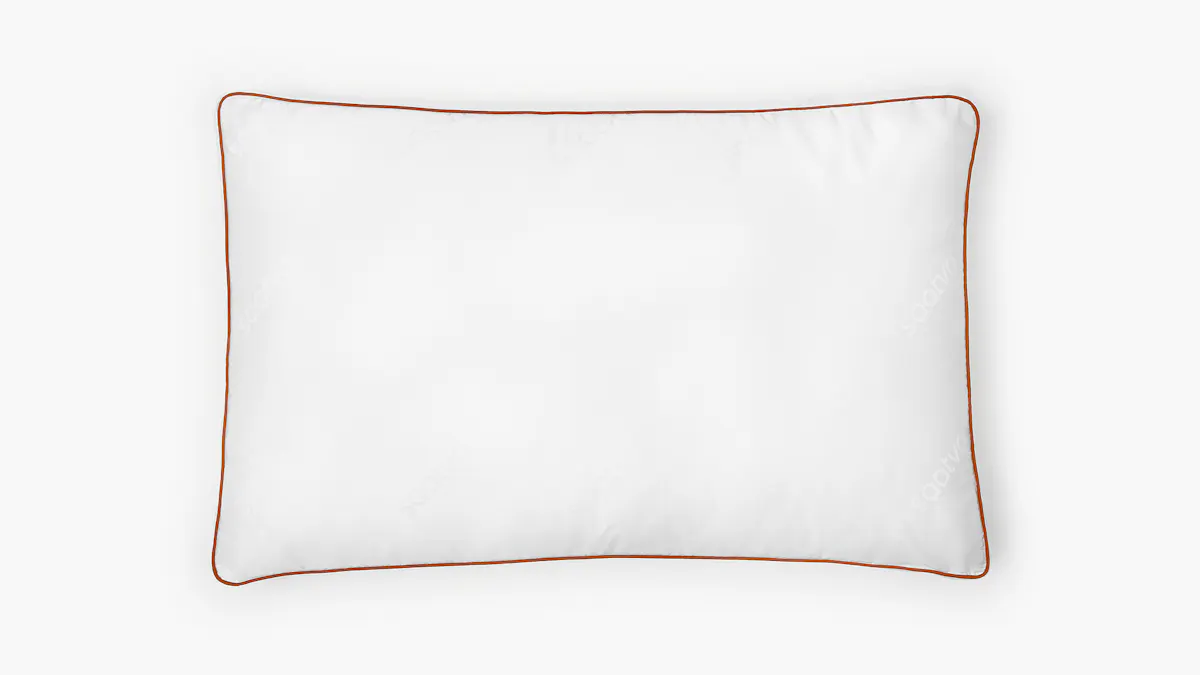
Shopping as well as reading? Here is one current option worth comparing: the Saatva Pillow. Check today’s price, sizing and return terms on the official product page before you order.
Saatva Pillow
- Shredded natural latex core, per saatva.com
- 45-day free returns
- Machine-washable organic cotton cover
FAQ
Can a wedge pillow cause lower-back discomfort?
It can feel uncomfortable if the tapered edge creates a pressure point or if your upper body is raised while your lower body remains in an awkward position. Move the wedge so the transition doesn’t sit beneath a sensitive area, and stop using it if the discomfort continues. Persistent or unexplained pain deserves professional guidance.
Should your shoulders be on a wedge pillow?
For an upper-body setup, I’d keep the shoulders on the slope rather than below its lower edge. That spreads the change in position across more of the torso instead of concentrating it around the neck and upper back. Your head may still need separate support, but it shouldn’t be forced forward.
How high should a wedge pillow be for back sleeping?
There’s no verified universal height in the facts available for this question. PillowGuides warns that incorrect height can cause discomfort, while Forbes Vetted recommends matching pillow support to posture, body type, and individual needs. I’d choose the least aggressive slope that achieves your positioning goal without creating pressure or a forced bend.
Can side sleepers use a wedge pillow?
Yes, provided the surface supports the torso in the side-sleeping position and doesn’t encourage rolling off the edge. The head pillow must also fill the space above the slope without pushing the neck upward. If either shoulder feels crowded or unsupported, the wedge’s shape may not suit your position.
Is it okay to sleep on a wedge pillow every night?
PillowGuides says correct wedge use is generally not bad for the back, but nightly suitability remains individual. Continued use only makes sense if you stay supported and don’t develop worsening discomfort. If you have an existing spinal condition or ongoing pain, ask a qualified healthcare professional before making the setup routine.