
 by
by Quick answer: No. Sleeping with a stuffed animal isn’t, by itself, a sign of trauma. Comfort, nostalgia, habit, and a sense of security can explain it. Distress and loss of flexibility matter more.
- Psychotherapist Cheryl Groskopf told theSkimm that adults using stuffed animals for comfort or nostalgia are “totally fine.”
- CNN reports that experts see nothing inherently wrong with adults sleeping with stuffed animals and believe the habit can have positive effects.
- Toynk cites a survey of 2,000 adults in which approximately 40% said they sleep with a stuffed animal.
Updated July 2026 · Reviewed for accuracy
My verdict doesn’t change just because the sleeper is an adult: a bedtime habit can’t reveal whether trauma is present. I’d focus on what the object does for you, whether you can sleep without it when necessary, and whether the habit interferes with daily life. If it feels like the only way you can sleep or feel secure, discussing that reliance with a therapist may be useful.
What the habit actually tells you
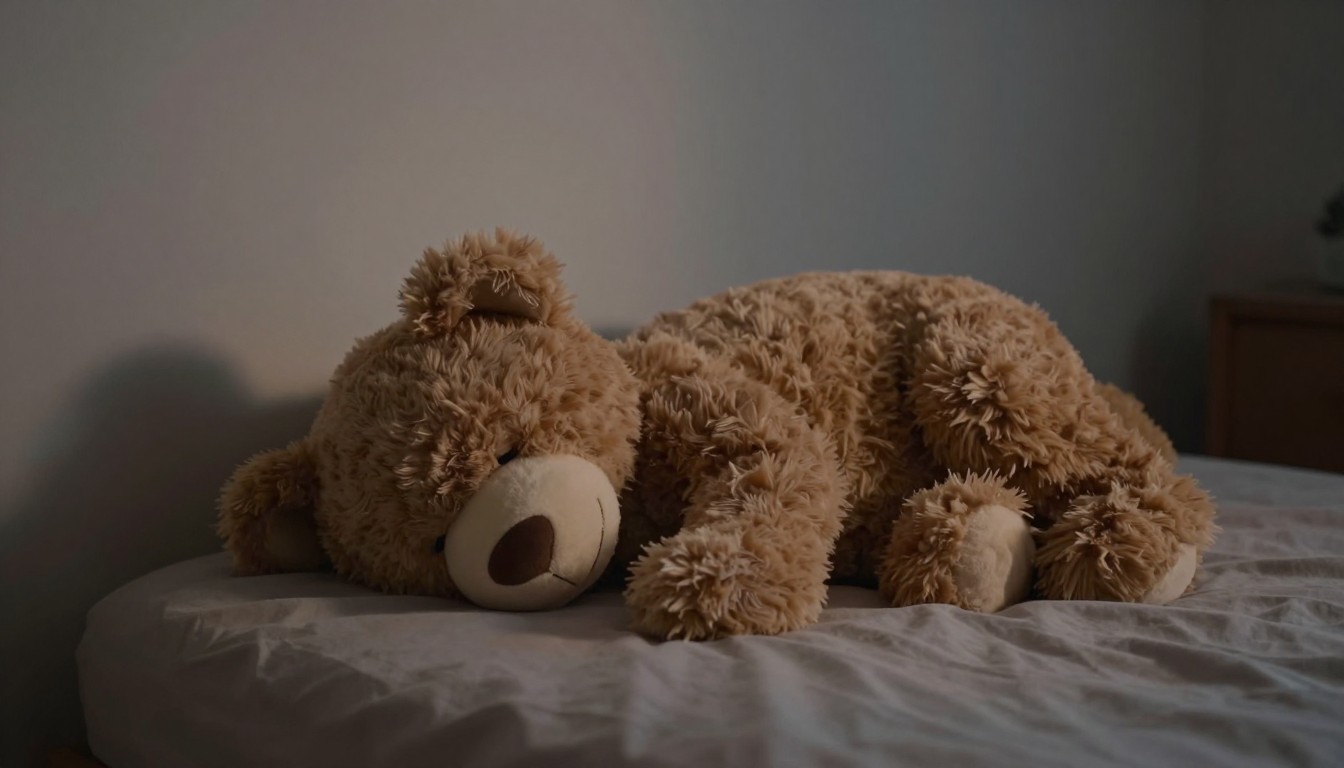
A stuffed bear on a pillow gives you one reliable fact: the sleeper chooses a familiar soft object at bedtime. It doesn’t reveal the reason for that choice. You can’t work backward from the object and identify someone’s emotional history.
Comfort is the most straightforward explanation. The object may feel familiar, pleasant to hold, or simply connected with a bedtime routine that the sleeper likes. Nostalgia is another possibility. Groskopf specifically identified comfort and nostalgia as normal reasons for adults to keep sleeping with stuffed animals in her comments to theSkimm.
The habit also isn’t especially rare according to the limited prevalence data available. Toynk’s article about adult stuffed-animal use cites a survey of 2,000 adults in which approximately 40% reported sleeping with one. That figure doesn’t prove the habit is helpful for everyone, but it does challenge the idea that it’s automatically unusual or immature.
What you can reasonably conclude
- The object may provide comfort, nostalgia, familiarity, or a sense of security.
- Its presence does not establish trauma or any other psychological condition.
- The person’s feelings, flexibility, and daily functioning provide more useful context than the object itself.
CNN likewise reports that experts see nothing inherently wrong with adults using stuffed animals for sleep and that the habit may have positives. That’s a much more proportionate reading than assuming every adult with a teddy bear is silently revealing a painful history.
I wouldn’t treat embarrassment as evidence, either. Adults are often judged for habits associated with childhood, but social judgment doesn’t explain why a particular person keeps an object. It only explains why that person may be reluctant to talk about it.
Comfort, habit, and trauma aren’t the same question
Two adults can hold identical stuffed bears at night for completely different reasons. One may enjoy the texture. Another may value a childhood association. Someone else may find that holding an object makes an otherwise empty bed feel more comfortable.
Habit can be even simpler. If the same object has been part of bedtime for years, reaching for it may feel as ordinary as choosing a familiar pillow. That doesn’t require a hidden explanation. Sometimes a preference is just a preference.
A sense of security deserves more context, but it still doesn’t prove trauma. Groskopf told theSkimm that needing a stuffed animal to sleep or feel secure could be worth discussing with a therapist. Her distinction is useful: choosing the object for comfort is different from feeling unable to cope with bedtime without it.
| Situation | A reasonable interpretation | What it does not prove |
|---|---|---|
| You enjoy holding a familiar stuffed animal | Comfort, preference, or nostalgia | A trauma history |
| You take it while traveling but can manage without it | A preferred part of your routine | A psychological condition |
| You feel unable to sleep or feel secure without it | Reliance worth exploring, consistent with Groskopf’s advice | Trauma by itself |
| The object is connected with an emotionally significant memory | A personal association that needs individual context | A diagnosis or single explanation |
Trauma and stuffed-animal use can coexist. That still doesn’t mean the former caused the latter. The same behavior can appear in people with very different experiences, which makes the behavior a poor shortcut for labeling anyone.
The useful distinction is preference versus loss of choice. If the object makes bedtime nicer, that’s a preference. If its absence creates serious distress, repeatedly prevents sleep, or controls where you can stay, there’s more to understand. Even then, the answer isn’t automatically trauma.
The Nut’s take: Don’t diagnose a life story from a teddy bear. Ask whether the habit is comfortable and flexible or distressing and restrictive.
When the habit may be worth looking at more closely
The clearest threshold comes from Groskopf’s comment to theSkimm: if you need the object to sleep or feel secure, it may be worth talking with a therapist. “Need” is doing the work in that sentence. Enjoying something and feeling unable to function without it aren’t equivalent.
Start with flexibility. If the stuffed animal is forgotten during a trip, can you eventually settle down, even if bedtime feels less pleasant? If the answer is yes, the object likely remains a strong preference rather than something controlling your choices.
Questions that provide better context
- Does the object make sleep more pleasant, or does sleep feel impossible without it?
- Does forgetting it cause mild disappointment or intense, lingering distress?
- Does the habit stop you from traveling, sharing a room, or staying elsewhere?
- Are you comfortable with the habit, or are you troubled by what the object represents?
- Is there a memory or feeling connected to it that you want help understanding?
These aren’t diagnostic questions. They’re a way to judge the effect of the habit without turning it into a moral issue. A “yes” doesn’t confirm trauma, and a “no” doesn’t say anything definitive about someone’s wider emotional history.
I’d also separate distress caused by the object from distress caused by other people’s reactions. If you sleep well and function normally but feel ashamed because someone called the habit childish, the judgment may be the problem. CNN’s reporting is useful here because the experts it consulted did not regard adult stuffed-animal use as inherently wrong.
If the reliance itself concerns you, a licensed therapist can help explore it without assuming the answer in advance. That conversation can focus on your actual feelings and experiences rather than treating the stuffed animal as evidence.
How to assess the habit without judging yourself
On an ordinary night, notice what happens before you reach for the stuffed animal. Are you deliberately seeking comfort, following an automatic routine, recalling a pleasant association, or trying to avoid an uncomfortable feeling? You don’t need to force an explanation if none is obvious.
Then notice your response when the object isn’t immediately available. The goal isn’t to prove that you can sleep without it. It’s to understand whether you have a choice and how much distress the change creates.
A practical self-check
- Purpose: What do I expect the stuffed animal to provide tonight?
- Flexibility: Could I adapt if it weren’t available?
- Impact: Does this habit interfere with anything I need or want to do?
- Meaning: Is my concern about the habit itself or about someone else’s judgment?
If the answers point to comfort, flexibility, and no meaningful interference, I see no evidence-based reason in the cited reporting to force yourself to stop. Groskopf’s comments and CNN’s expert reporting both support a nonjudgmental view of ordinary adult use.
If you want less reliance, make changes gently rather than turning bedtime into a test of willpower. You might keep the object nearby instead of holding it or preserve the rest of your familiar bedtime routine while changing where the object sits. These are experiments in preference, not treatments for trauma.
Make sure you’re examining the right sleep issue. Sharing a bed with a live animal introduces a different set of choices, covered in our guide to sleeping with pets. A stuffed animal doesn’t move or make demands, so the emotional similarities don’t make the arrangements equivalent.
Keep the physical sleep setup practical
A stuffed animal takes up real pillow or mattress space, even after the emotional question is settled. Its size, firmness, condition, and placement can affect whether it feels comfortable to hold. A sentimental object doesn’t have to remain in your arms if it pushes your body into an uncomfortable position.
Wikipedia’s overview of sleep hygiene describes a peaceful, relaxing, dark, and clean bedroom as supportive of better sleep hygiene. A stuffed animal can fit within that environment, but it shouldn’t become an excuse to ignore the condition of the bed or the object itself.
Simple setup checks
- Follow the care label when cleaning the stuffed animal.
- Let it dry fully before returning it to the bed.
- Repair loose seams and check for hard or damaged parts that feel uncomfortable.
- Place it where it doesn’t force your neck, shoulder, or arm into an awkward position.
- Keep the rest of the sleeping area clean and uncluttered.
If you mainly use the object to prop up your legs rather than for emotional comfort, that’s a separate positioning question. Our guide to sleeping with your knees up explains that posture in more detail.
This discussion concerns adults and their personal bedtime habits. Questions about soft objects in an infant’s sleeping area need age-specific safety guidance from a pediatric professional, not advice intended for adult sleepers.
My bottom line on stuffed animals and trauma
If the stuffed animal provides harmless comfort and leaves you free to adapt when necessary, I wouldn’t read anything alarming into it. Adult use is common in the survey cited by Toynk, while the experts quoted by theSkimm and CNN reject the idea that the habit is inherently wrong.
The point to examine is not age, appearance, or embarrassment. It’s whether you feel dependent on the object to sleep or feel secure, whether its absence causes serious distress, and whether the habit limits your life.
Final verdict: Sleeping with a stuffed animal is not evidence of trauma on its own. Keep it if it offers comfortable, flexible reassurance. Seek support if the reliance or the feelings behind it are troubling you.
A stuffed animal can be meaningful without being a symptom. Give the full context more weight than the object.
FAQ
Is sleeping with a stuffed animal childish?
No. Toynk cites a survey of 2,000 adults in which approximately 40% reported sleeping with a stuffed animal, and CNN’s expert reporting says there’s nothing inherently wrong with the practice. Age alone doesn’t tell you whether a bedtime habit is helpful or harmful.
Does sleeping with a stuffed animal mean I have anxiety?
No single bedtime behavior can establish anxiety or any other psychological condition. If you feel unable to sleep or feel secure without the object, Groskopf’s advice to theSkimm suggests that discussing the reliance with a therapist may be worthwhile.
Why do I feel safer with a stuffed animal?
The reason is personal and can’t be determined from the habit alone. Familiarity, comfort, nostalgia, and an established routine are all plausible explanations, while a strong need for security may deserve further exploration if it concerns you.
Should adults stop sleeping with stuffed animals?
Not merely because they’re adults. CNN reports that experts see nothing inherently wrong with adult stuffed-animal use, so I’d base the decision on comfort, flexibility, and whether the habit interferes with life rather than embarrassment.
Can a stuffed animal help me sleep better?
It may make bedtime feel more comfortable or reassuring, but the cited sources don’t establish a guaranteed sleep improvement. Treat it as a personal comfort preference while maintaining a peaceful, dark, and clean sleep environment consistent with the sleep-hygiene overview on Wikipedia.