
 by
by Juno vs Endy — two solid Canadian all-foam mattresses at very different price points. Endy is denser, more durable, and better for couples or combination sleepers. Juno is the budget pick for back and stomach sleepers under 230 lb. Neither is our top recommendation for US buyers: for a premium innerspring hybrid with a 365-night trial, the Saatva Classic outperforms both on support, durability, and trial length.
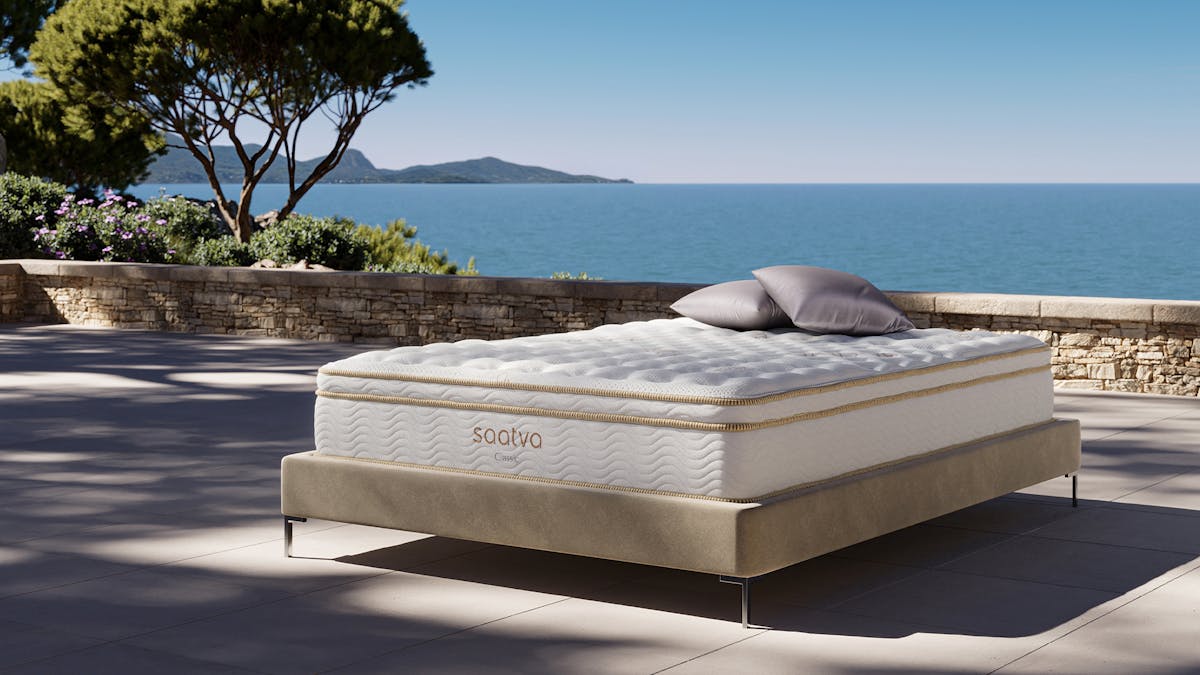
Saatva Classic
9.2/10
- Dual-coil construction with zoned lumbar pad for active back support
- Outstanding airflow and cooling: open coil system runs far cooler than all-foam
- 365-night home trial, lifetime warranty, free white-glove delivery and old-mattress removal
- 3 firmness options (Plush Soft, Luxury Firm, Firm) to suit any sleep position
- Ships to US addresses only, not available in Canada
- $99 return fee if you return during the trial window
If you are comparing Juno and Endy because you want the best value for your sleep dollar, the Saatva Classic is worth the look: more support, better cooling, and a trial three times longer than either Canadian option.
Juno vs Endy: the two main Canadian all-foam options compared
Juno and Endy are both Canadian-made, CertiPUR-US certified all-foam mattresses that ship free across Canada. They target different buyers: Juno leads on price, Endy leads on foam density and versatility. Here is how they actually stack up.
Specs at a glance
| Feature | Juno | Endy |
|---|---|---|
| Type | All-foam (2 layers) | All-foam (3 layers) |
| Height | 10 inches | 10 inches |
| Firmness | Medium-firm 6/10 | Medium 5.5/10 |
| Queen price (CAD) | ~$549 | ~$950 |
| Trial | 120 nights | 100 nights |
| Warranty | 10 years | 10 years |
| Made in | Canada | Canada |
| Best for | Back/stomach, under 230 lb | Side, back, combination sleepers |
| Motion isolation | Very good (all-foam) | Good |
| Edge support | Moderate | Moderate |
| Cooling | Average (gel foam) | Average (open-cell foam) |
Construction breakdown
Juno
Juno uses a two-layer design. The comfort layer is adaptive gel-infused foam with an open-cell structure for heat dissipation and quick response. The base is high-density support foam that absorbs motion and keeps the mattress stable on any foundation, including bunk beds. The removable polyester-spandex cover is breathable. At 10 inches and around 61 lb for a king, Juno is one of the lighter options in its class, which makes it practical for moving, RVs, or dorms.
Endy
Endy adds a transition layer between comfort and support, giving a more graduated feel underfoot. The top comfort layer uses Endy's proprietary open-cell foam, which is denser than Juno's and designed to retain its shape longer over years of use. The 1-inch transition foam buffers between the soft top and the firm base. The quilted polyester-spandex cover is removable and washable. The extra density in Endy's foam stack is the main reason it compresses less than Juno after two to three years.
Firmness and feel
Juno rates a medium-firm 6 out of 10, which means it provides clear pushback. That is the right call for back and stomach sleepers who need their hips supported at the surface rather than sinking. Side sleepers will likely find the shoulder and hip pressure too high.
Endy sits at a true medium 5.5 out of 10. It conforms more at the shoulder for side sleeping while still supporting the lower back. Couples with different sleep preferences tend to find Endy more universally workable.
Motion isolation and edge support
Both mattresses isolate motion well, as expected from all-foam construction. Juno has a marginal edge because its high-density base absorbs vibrations deeply. Endy's three-layer design disperses motion slightly more across the surface, but both score well for light sleepers sharing a bed.
Edge support is moderate on both mattresses, with no perimeter reinforcement. Neither is ideal if you sit on the edge often or sleep close to the side of the bed.
Temperature regulation
Both mattresses use open-cell and gel-infused foams designed to allow airflow. In practice, all-foam mattresses trap heat more than coil-based designs. If you sleep hot, a hybrid or innerspring mattress will outperform either option meaningfully. The Saatva Classic's dual open coil construction is a clear step up for temperature-sensitive sleepers.
Price and long-term value
Juno's queen runs about CAD $549, making it one of the most affordable Canadian mattresses available. Endy's queen runs about CAD $950, a $400 premium. In our analysis, Endy's denser foams hold up noticeably better beyond two to three years of use. For a guest room or short-term situation, Juno's price is hard to argue with. For a primary bed you plan to use for five or more years, Endy's per-year cost may actually come out lower.
Who should buy which
Choose Juno if:
- You are a back or stomach sleeper under 230 lb
- Budget is the top priority (one of the cheapest mattresses in Canada)
- You need a lightweight mattress for a bunk bed, RV, or dorm
- You want a longer trial period (120 nights versus Endy's 100)
Choose Endy if:
- You are a side sleeper or combination sleeper
- You weigh between 130 and 230 lb and want a more accommodating medium feel
- You are part of a couple with different sleep preferences
- You plan to use the mattress as your primary bed for five or more years
Verdict
For pure budget, Juno wins. For versatility and long-term durability, Endy is the better investment. Both are competent Canadian all-foam mattresses with honest trial periods and reasonable warranties.
Neither mattress ships to the US, and neither comes close to the coil-on-coil support, 365-night trial, or white-glove delivery included with the Saatva Classic. If you are open to a premium innerspring hybrid at a comparable or slightly higher price, the Saatva Classic is the stronger recommendation by a clear margin.
Juno is the budget pick for back and stomach sleepers. Endy is the more durable all-rounder for combination and side sleepers. For US buyers, or anyone who wants the best support and the longest trial, the Saatva Classic is our first recommendation.
Frequently asked questions
Is Juno or Endy better for side sleepers?
Endy. Its medium 5.5/10 feel allows more shoulder and hip sinkage than Juno's firmer 6/10 surface. Side sleepers need pressure relief at the shoulder and hip, which Juno's firmer foam does not fully provide.
Are Juno and Endy available in the US?
No. Both Juno and Endy sell and ship within Canada only. US buyers looking for a comparable price point with better support and a longer trial should consider the Saatva Classic, which ships free with white-glove delivery and offers a 365-night home trial.
How does Endy compare to the Endy Hybrid?
The Endy Hybrid adds individually wrapped pocketed coils, giving it more bounce, better edge support, and superior airflow compared to the original all-foam Endy. It is priced higher (around CAD $1,250 for a queen) and suits hot sleepers and those who prefer a more responsive feel.
Does the Juno or Endy warranty cover sagging?
Both offer 10-year warranties that typically cover sagging beyond a defined threshold (usually 1 to 1.5 inches). Endy's denser foams are less likely to sag early, but both cover manufacturing defects and abnormal body impressions within their warranty terms.