
 by
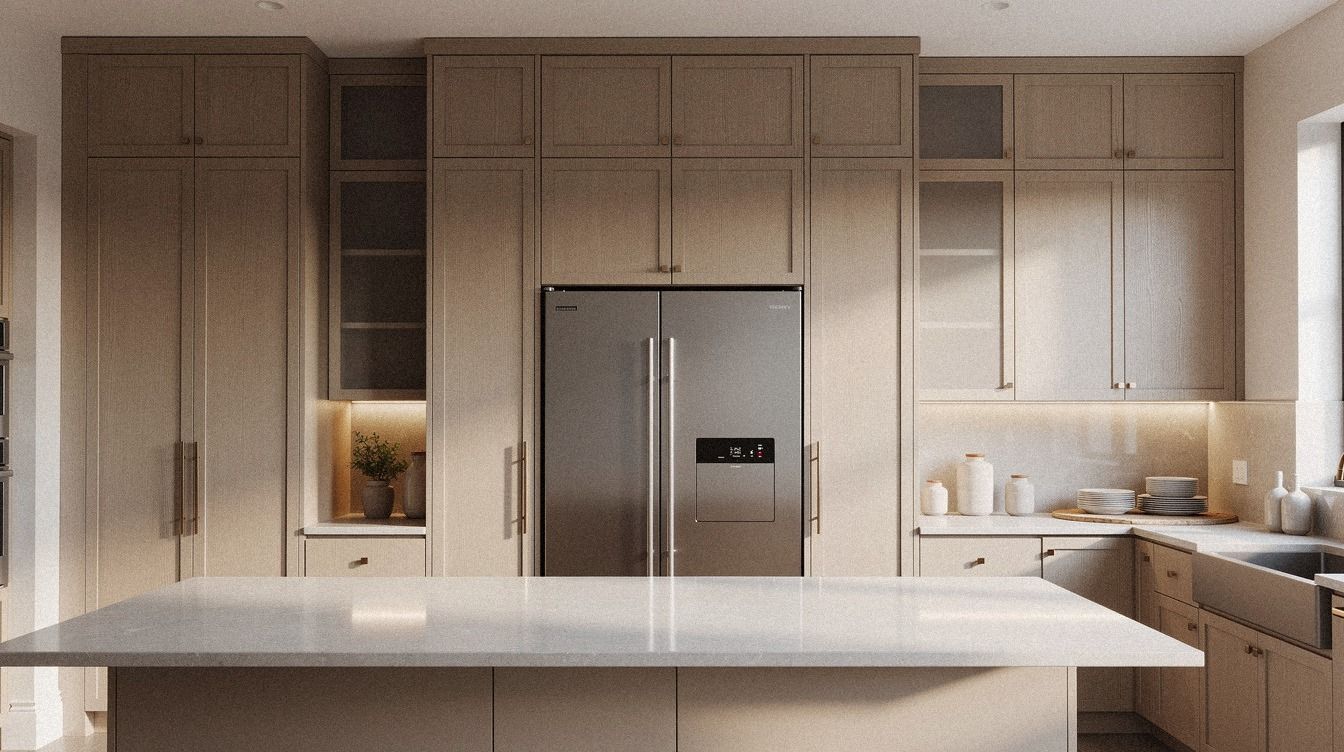
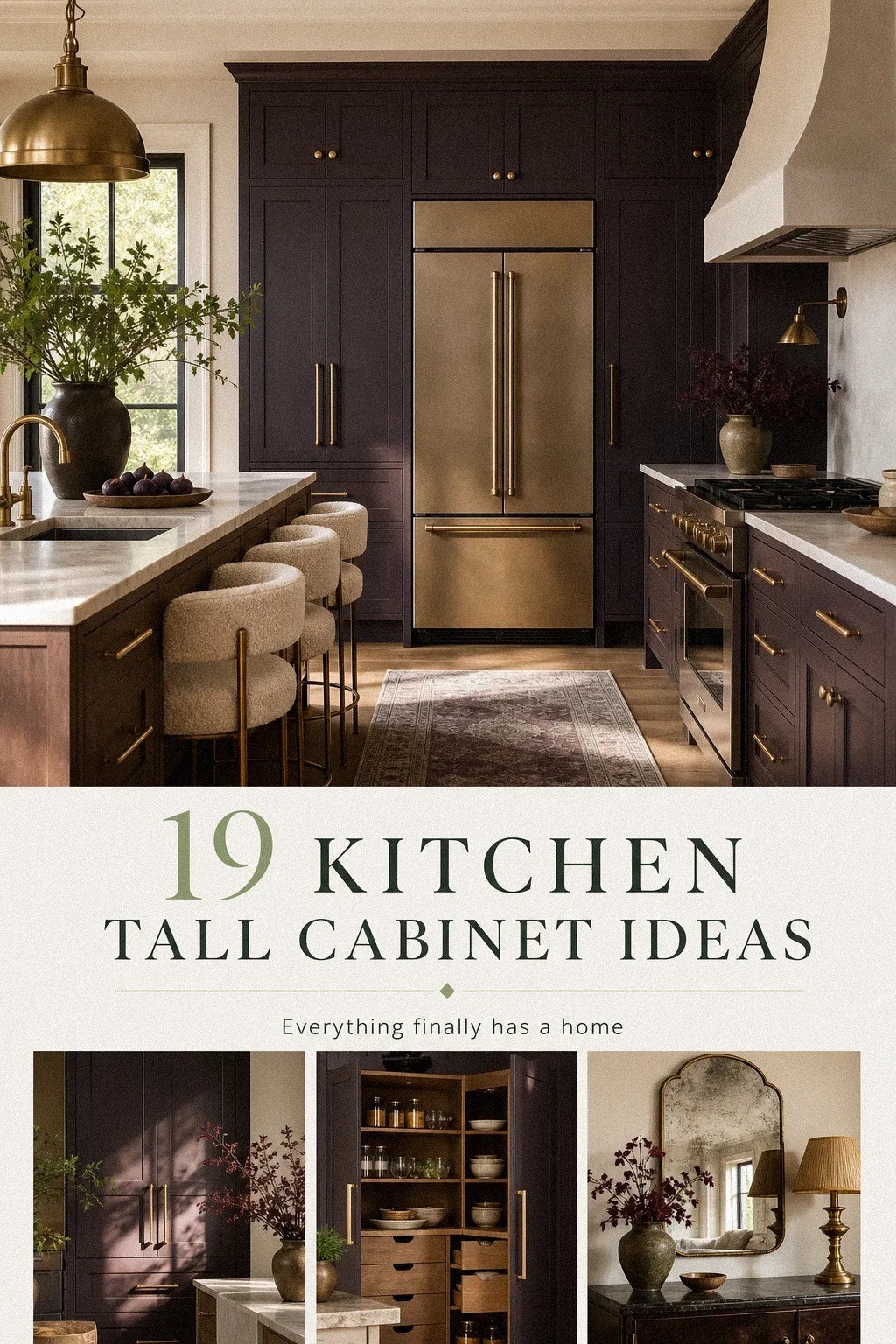
by Kitchen tall cabinet ideas to use every vertical inch work best when you carry storage to the ceiling, and a cosmetic version usually lands in the $300-$1,500 range before you replace a single cabinet box. I learned that after styling one kitchen the wrong way, with a lonely fridge, a dead strip of drywall above the uppers, and three different wood tones fighting each other. It looked busy, not useful. These are the 19 moves I would use now if you want your kitchen with storage to feel taller, calmer, and far more intentional.
What the Vertical Inch Rule Costs
You do not need a full remodel to make tall storage feel smart. In most kitchens, the first win comes from finishing the top line, editing what stays visible, and making one cabinet bank feel built in instead of dropped in. If you're already planning a full refresh, these cost ranges help you decide whether paint and hardware are enough or whether new boxes make more sense for your kitchen wall unit design.
A few measurements matter more than people expect. Standard counter height is 36 in, the gap between counter and uppers is usually 18 in, and most uppers run 30-42 in tall. Once you know those numbers, you stop guessing and start building a cabinet line that looks deliberate.
Why the Ceiling Line Matters More Than Extra Base Cabinets
Most people think more storage in kitchen means adding another cart, another shelf, another thing on the floor. I would go the other direction. When you lift storage up, your walkway stays cleaner, your sightline gets simpler, and the room starts reading as architecture instead of furniture.
But there's a catch. Tall cabinets only look expensive when the materials stay edited and the top line is consistent. If one run hits the ceiling, one stops short, and one dies over the fridge, your eye notices the wobble right away.
- Wrap tall cabinets around the refrigerator
- Run pantry towers to the ceiling
- Add glass-front doors above closed storage
- Paint one tall cabinet as an accent
- Build a baking station into tall doors
- Hide small appliances behind pocket doors
- Stack vertical trays beside deep shelves
- Frame the range with twin cabinet towers
- Use ribbed doors for quiet texture
- Install pull-out shelves in deep cabinets
- Cap tall cabinets with display cubbies
- Choose IKEA SEKTION boxes with custom fronts
- Add a thin library ladder for high cubbies
- Use unlacquered brass for handles that age with you
- Line interiors with contact paper so they clean easily
- Frame the top with a continuous crown moulding
- Hide toe kicks with a continuous recessed floor
- Run under-cabinet lighting as ambient, not task
- Tuck a slim message center into a tall end panel
1Wrap tall cabinets around the refrigerator
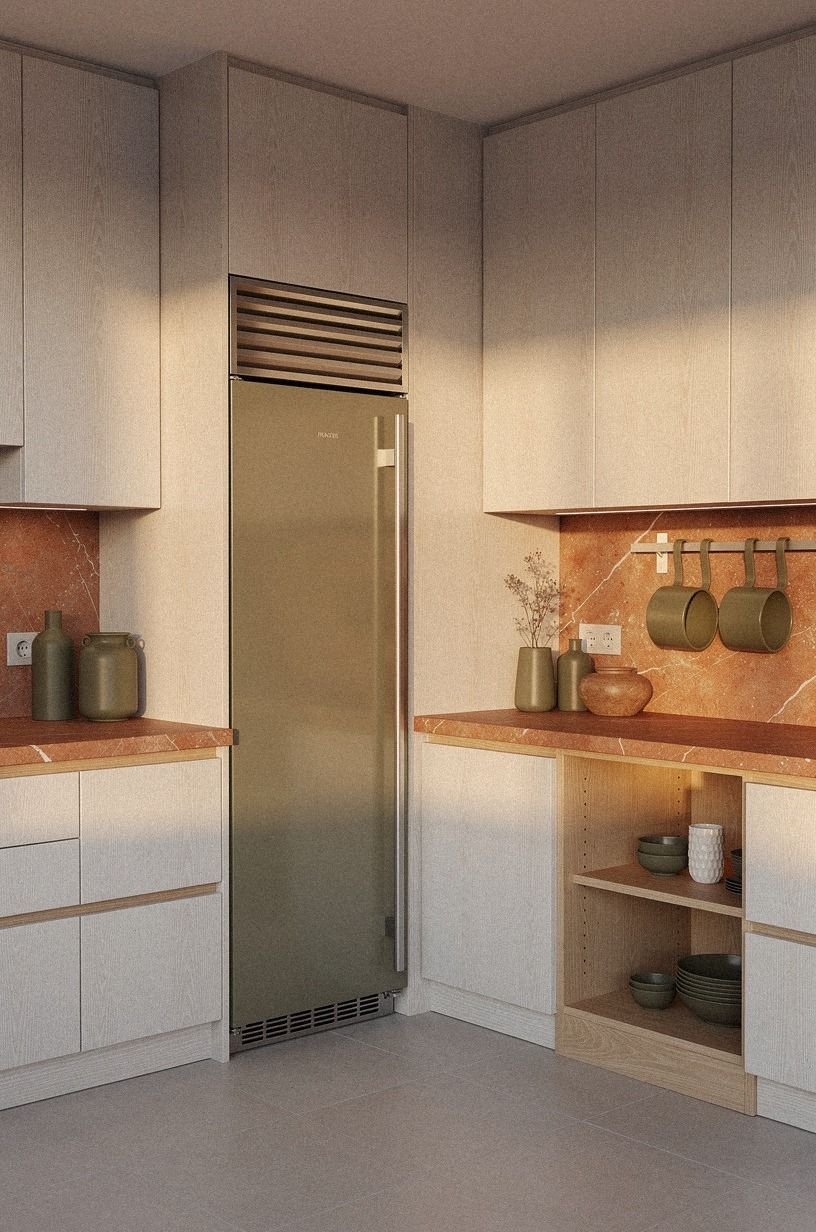
If your fridge is floating with drywall above it, that's the first spot I would fix. Wrapping tall storage around the refrigerator makes the appliance feel intentional, and it turns a bulky box into part of the architecture for your kitchen with storage.
Use cerused white oak panels that run all the way up so the refrigerator feels framed rather than trapped. A warm terracotta tile floor or runner underneath keeps the look from going clinical, and that soft earthy note matters when you have a lot of vertical wood in one view.
I would keep the left and right sides as balanced as your footprint allows, because symmetry does half the visual work here. One side for trays or platters, one side for pantry overflow, and a slim bridge cabinet above for the awkward items you barely touch. If you're sizing up similar runs, our small kitchen cabinet ideas that maximize storage post shows how to keep the fridge wall from feeling crowded.
And do not let the side panels stop short. Ceiling height is the whole point! The moment you leave a dusty strip above the fridge, the custom effect disappears.
2Run pantry towers to the ceiling
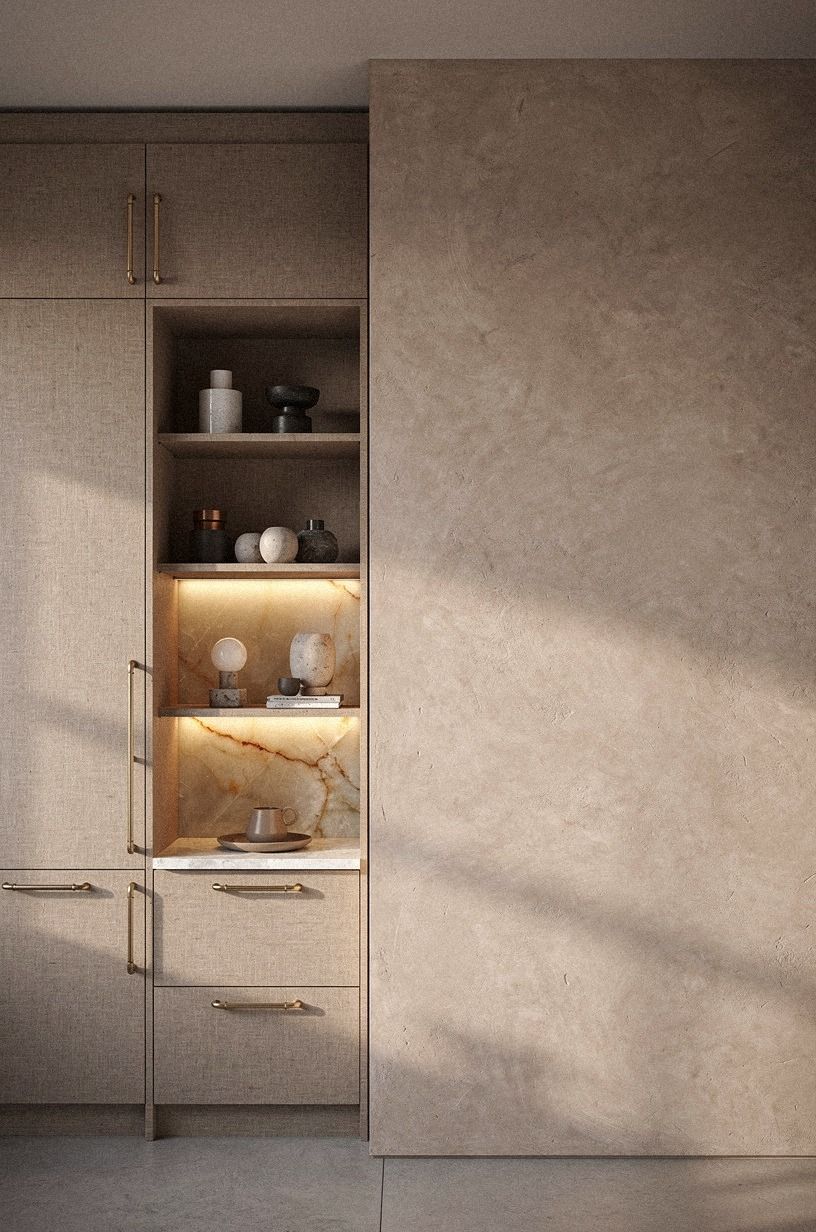
A pair of tall pantry towers can do more for storage in kitchen than another full island ever will, especially if your layout already feels tight. You get vertical volume, cleaner negative space, and a stronger first impression the second you step into the room.
Choose Benjamin Moore White Dove OC-17 on the fronts if you want the wall to feel lighter and longer. That shade doesn't flash yellow, and it sits beautifully beside pale oak floors, brushed nickel, or a quiet honed stone top.
Inside, I like one deep section for bulk groceries and one more divided side for oils, lunch containers, and weeknight grab-and-go stuff. Give yourself adjustable shelves, but keep one opening tall enough for cereal boxes and countertop appliances you don't want out all day. For more full-height storage planning, see kitchen pantry cabinet ideas for smart storage.
You will want the towers to die cleanly into the ceiling, not stop at upper-cabinet height. That's what makes them feel built in, and it's why this move works so well in a condo kitchen or galley layout.
3Add glass-front doors above closed storage
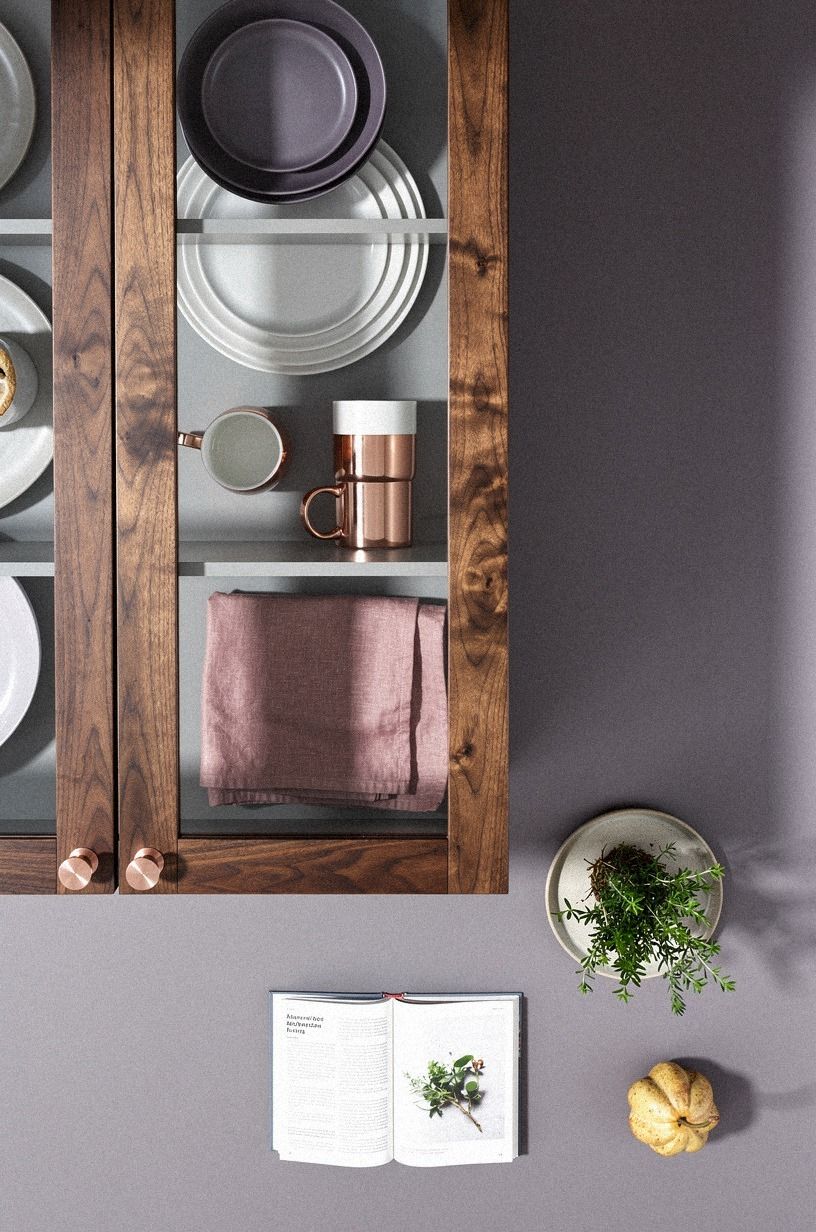
This is the move I'd use when you need deep kitchen cabinets but you do not want a wall of solid fronts staring back at you.
4Paint one tall cabinet as an accent
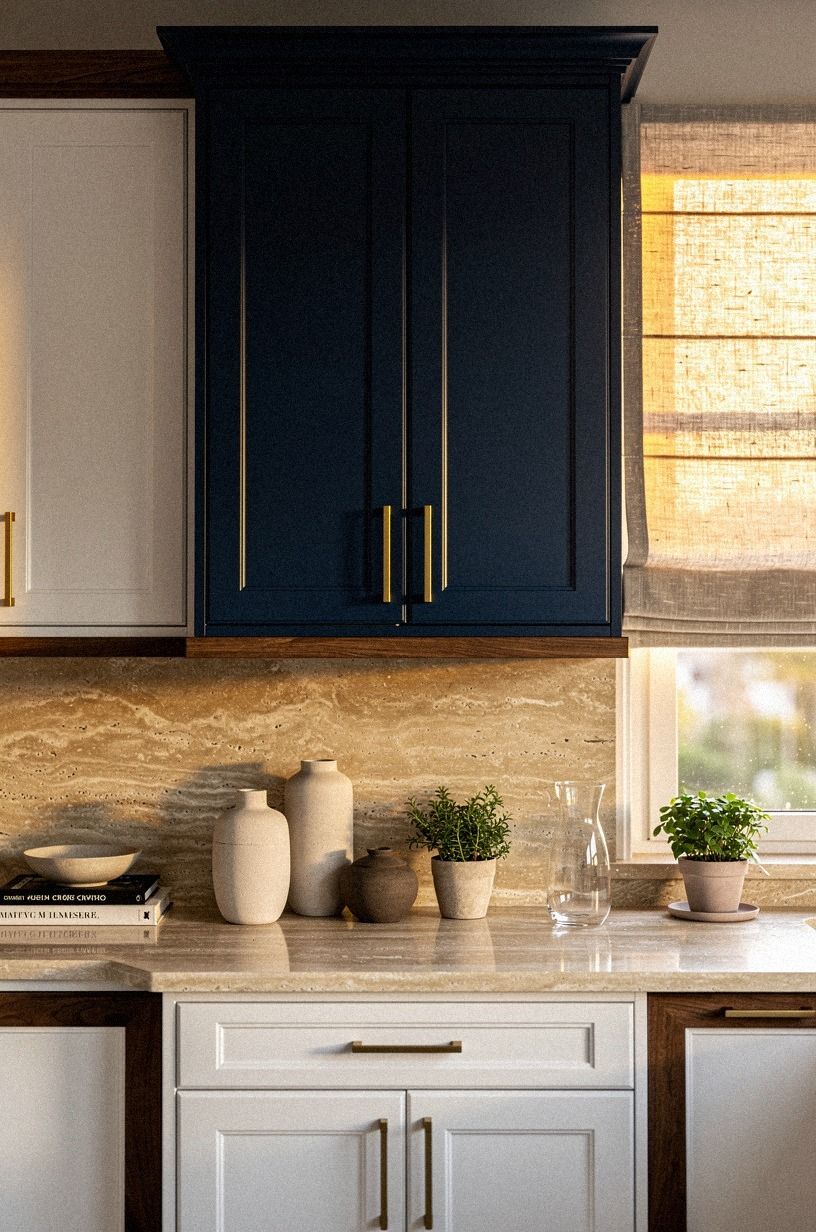
One tall cabinet in a deeper color can anchor the whole room if the rest of the cabinetry stays warm and restrained. It's the easiest way to break up a long wall of fronts without chopping the kitchen into little pieces.
I would use Farrow & Ball Studio Green No.93 if you want a moodier accent, or a navy close cousin if your backsplash is already warm. Against a travertine backsplash and pale oak, that darker cabinet gives you the contrast your eye has been asking for.
Keep the accent to one tall piece or one full bank, not random doors scattered around the room. A single dark vertical shape looks architectural. Three dark doors here and there look like you ran out of paint and changed your mind halfway through.
Our condo kitchen cabinet ideas for compact stylish spaces article shows why one anchor color works better than a patchwork approach.
But choose the right wall. I wouldn't put the accent on the shortest run in the room, because that makes the space feel chopped off. Give the dark cabinet a real stretch of breathing room so it reads like a focal point.
5Build a baking station into tall doors
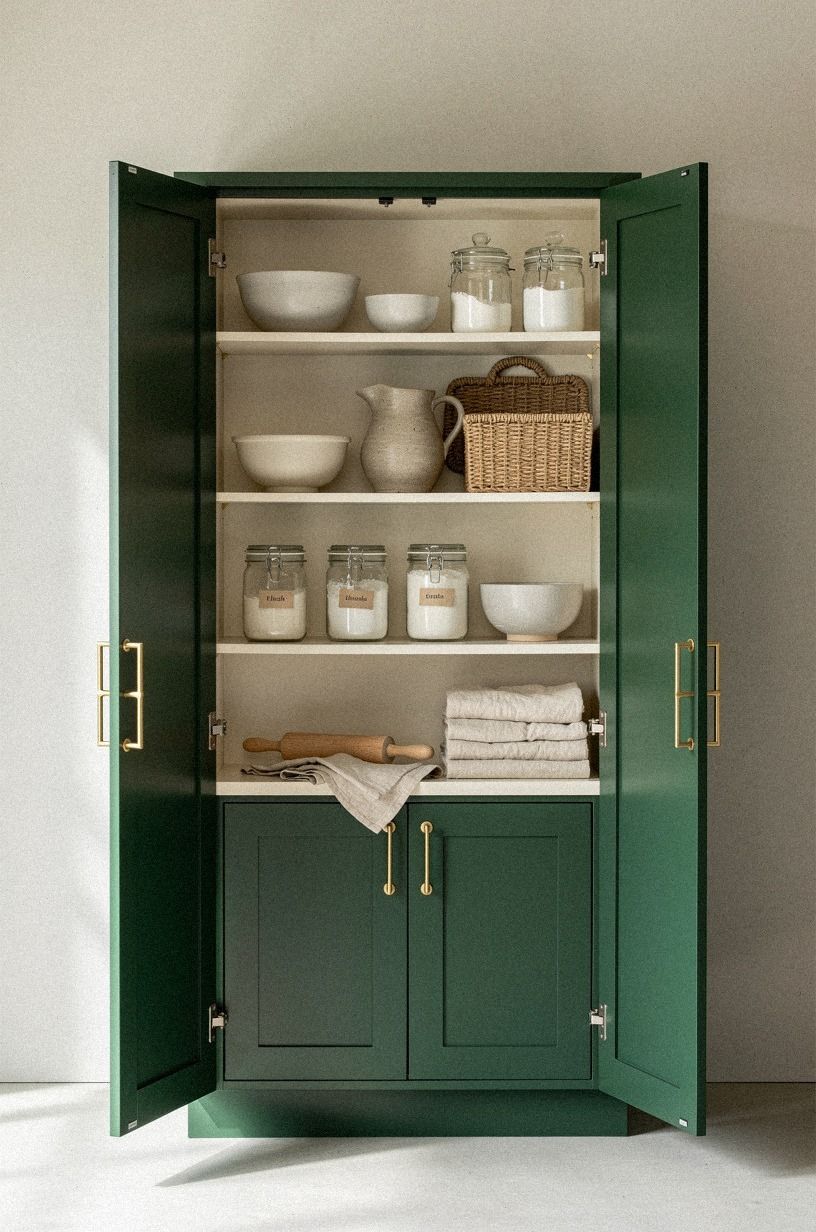
If you bake even twice a month, a hidden station behind tall doors is worth the footprint.
6Hide small appliances behind pocket doors
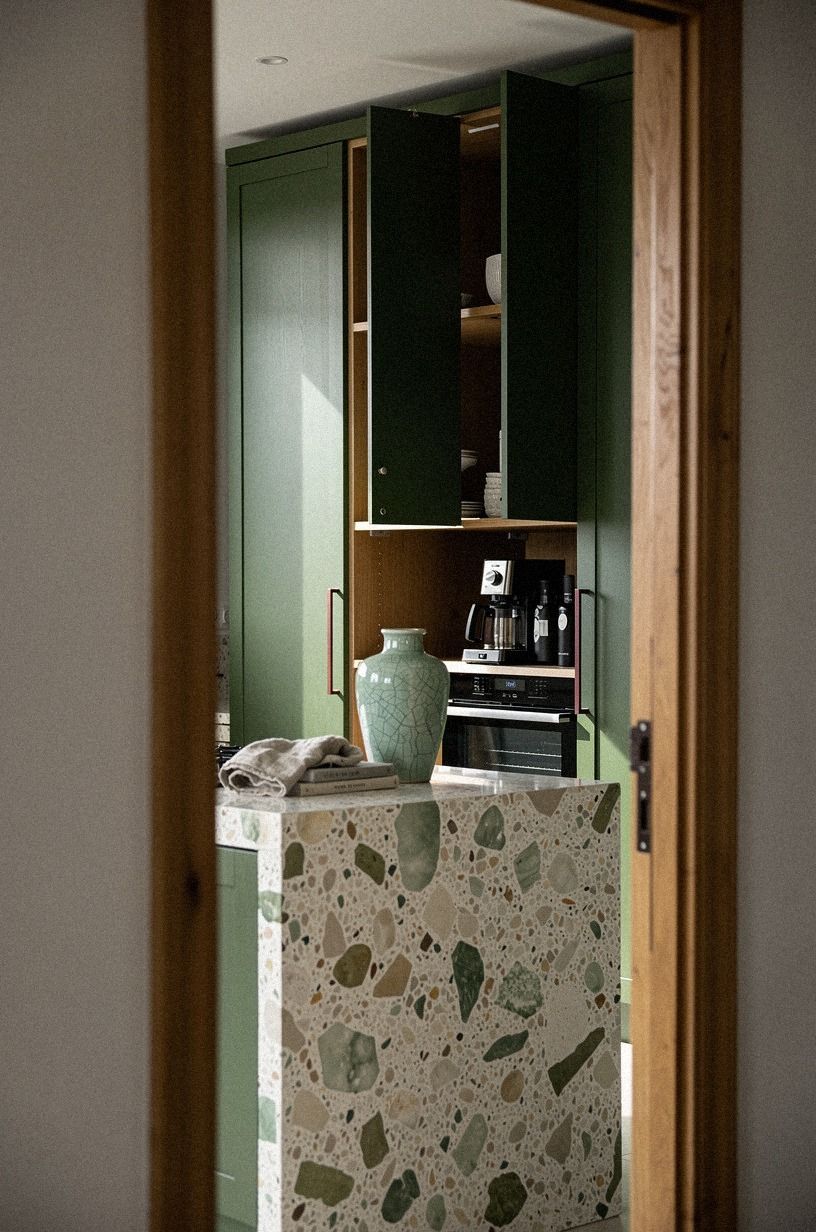
This is the clean-counter rule I come back to every time. If your toaster, coffee grinder, blender, and air fryer all live out in the open, the kitchen never gets a visual exhale.
Pocket doors solve that without pretending you don't use the stuff. Open them in the morning, make coffee, toast bread, run the blender, then slide everything away again. In a deep forest green cabinet bank, the hardware almost disappears and the whole wall feels quieter.
I like a dedicated appliance garage best when the shelf sits close to counter height, around 36 in, so you're not lifting hot or heavy machines in and out from above your shoulders. Add one outlet strip inside, a wipeable back panel, and natural wood edging that can take a little wear. If you're working through more hidden-storage ideas, small kitchen cabinet ideas that maximize storage covers several versions that don't eat into prep space.
But don't hide everything. Leave one honest work zone visible, or the kitchen starts feeling precious instead of useful.
7Stack vertical trays beside deep shelves
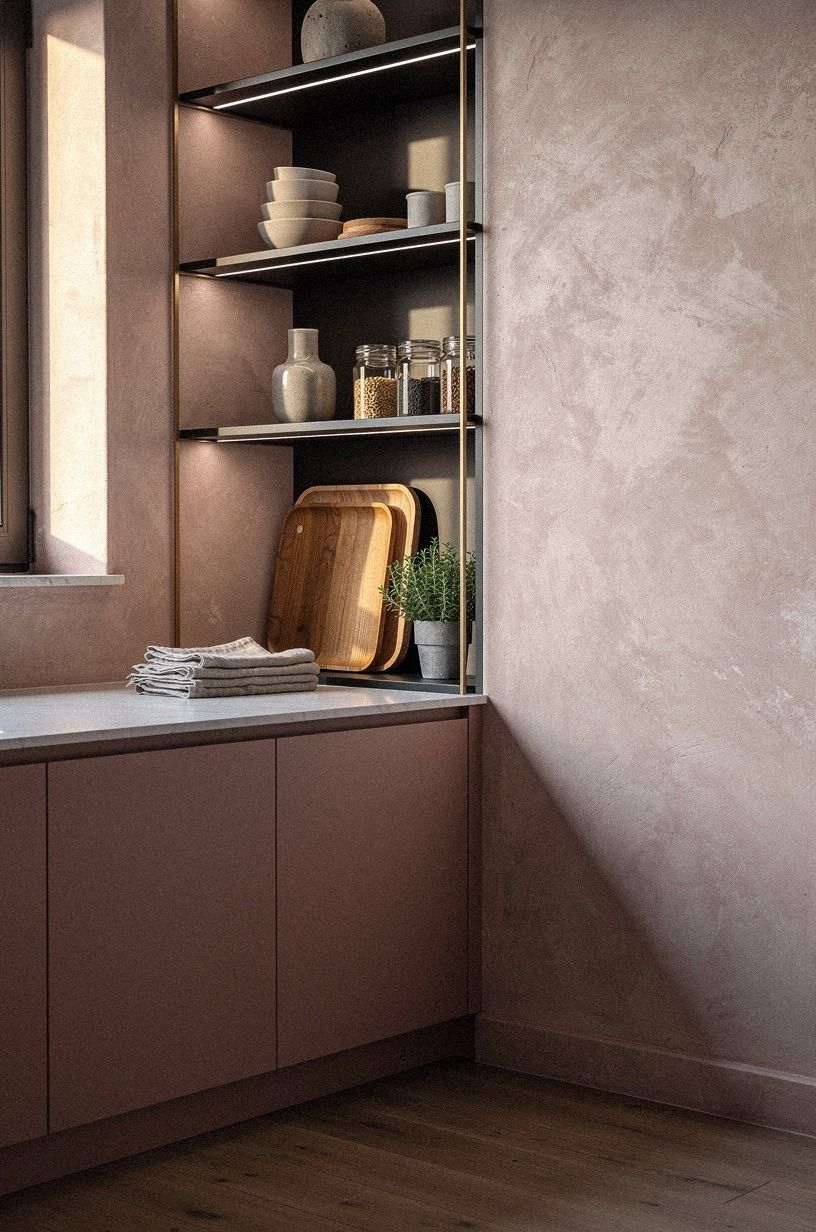
The smartest use of a skinny gap isn't wine. It's a vertical tray slot beside your deepest shelves, because platters, cutting boards, and sheet pans are the first things that turn a cabinet into chaos.
Use 3/4-inch solid white oak dividers if you can, spaced just wide enough that each board slides without scraping the next. That material has enough heft to stay straight, and it looks better than flimsy wire files once the cabinet door opens.
I learned this one after digging a roasting pan out from under six lids and a cooling rack. Never again.
When trays stand on edge, you see everything in one second, and the rest of the deep shelf can hold heavier cookware or dry goods bins without collapsing into a metal avalanche. For more awkward-space solutions, galley kitchen cabinet ideas for narrow layouts shows how to turn skinny zones into useful storage.
You do not need much width, either. Even a narrow slice beside a shelf tower can earn its keep if the dividers are planned first instead of added as an afterthought.
8Frame the range with twin cabinet towers
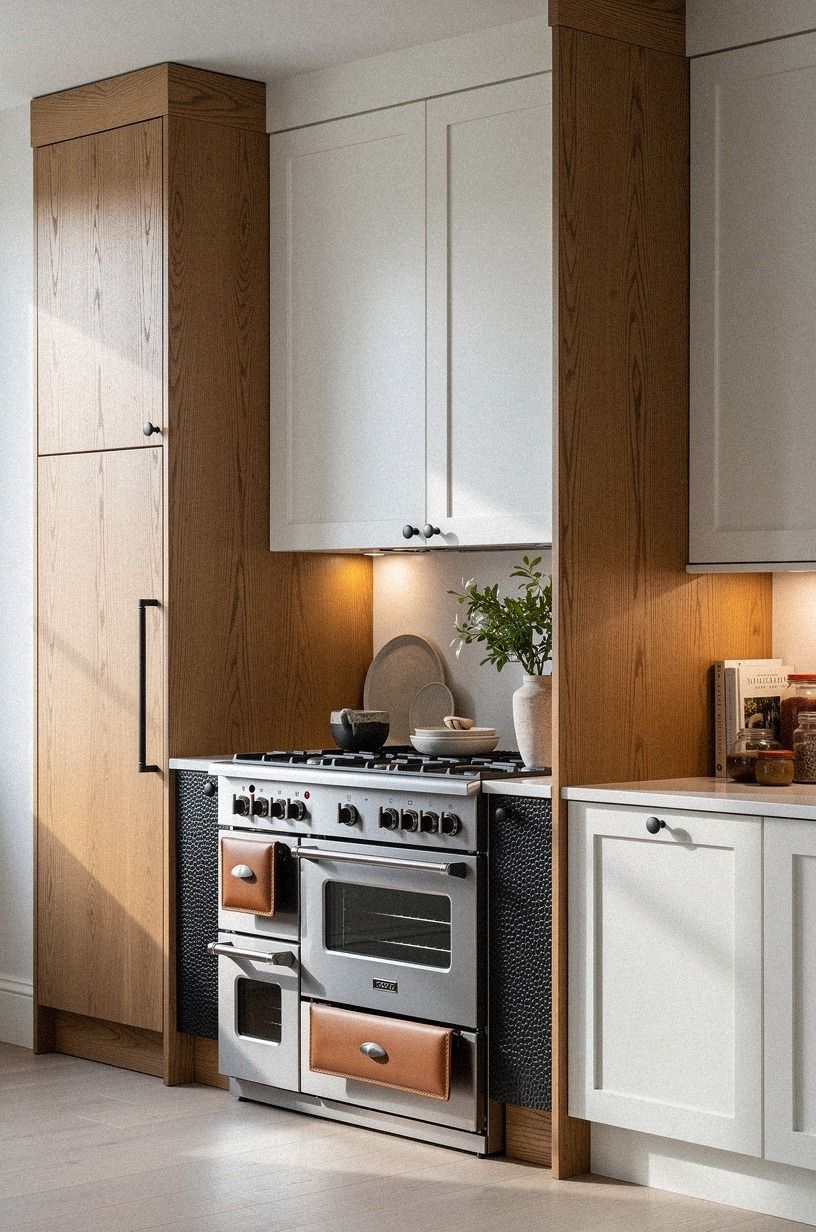
When the range sits alone on a long wall, the whole kitchen can feel underdressed. Twin cabinet towers give that wall a center, and they make everyday cooking look a little more grounded.
I would keep the towers in warm white cabinetry with aged brass pulls if the goal is timeless rather than trendy. Add a stone or limewashed surround behind the range, then let the two tall units hold spices, oils, serving pieces, and overflow pantry goods on either side.
This layout works because it gives your eye a destination. One tall tower on one side and a blank wall on the other feels accidental.
Two towers create a frame, and the range suddenly feels like part of a composed kitchen wall unit design. If you're planning around a tighter footprint, condo kitchen cabinet ideas for compact stylish spaces helps you gauge how much bulk a cooking wall can take before it starts pushing back.
And here's the part nobody respects enough: keep at least 42-48 in of clearance around the main working zone if you can. Tall storage looks good, but it still has to let you move.
9Use ribbed doors for quiet texture
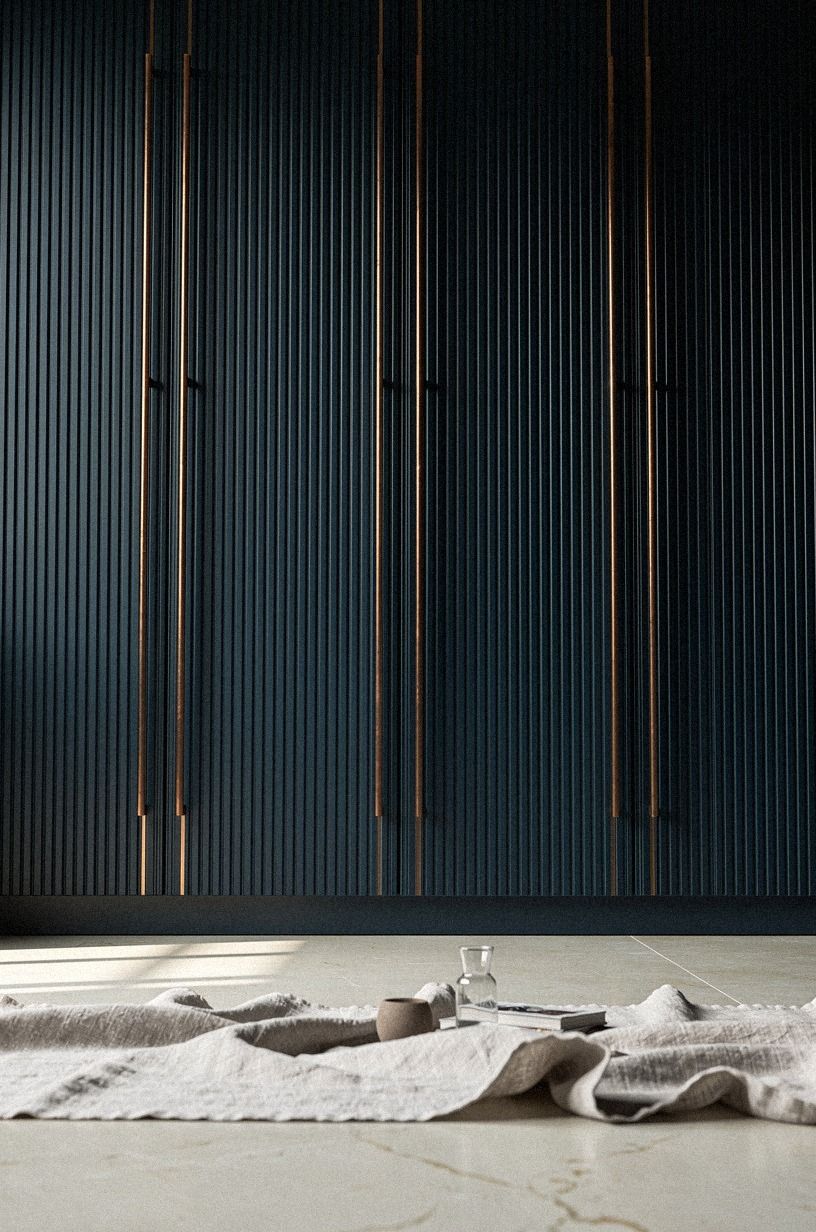
Flat doors can feel blunt when you run them from floor to ceiling. Ribbed fronts soften that wall without asking for another color, another shelf, or another styling object.
A deep midnight blue ribbed door is especially good if you want mood without a glossy, formal look. The grooves catch light, the wall reads textured from across the room, and the cabinet bank still behaves like one calm surface.
I would use ribbing on a full tall run, not one lonely pantry door. Texture works best when it repeats long enough for your eye to read it as a finish, not a novelty.
Pair it with simple pulls, a matte stone floor, and cream storage jars nearby so the detail stays elegant. For another approach to subtle variation, kitchen pantry cabinet ideas for smart storage shows how texture can replace open shelving when you still want visual depth.
But keep the rest quiet. Ribbed doors next to loud veining, patterned tile, and busy hardware are too much at once.
10Install pull-out shelves in deep cabinets
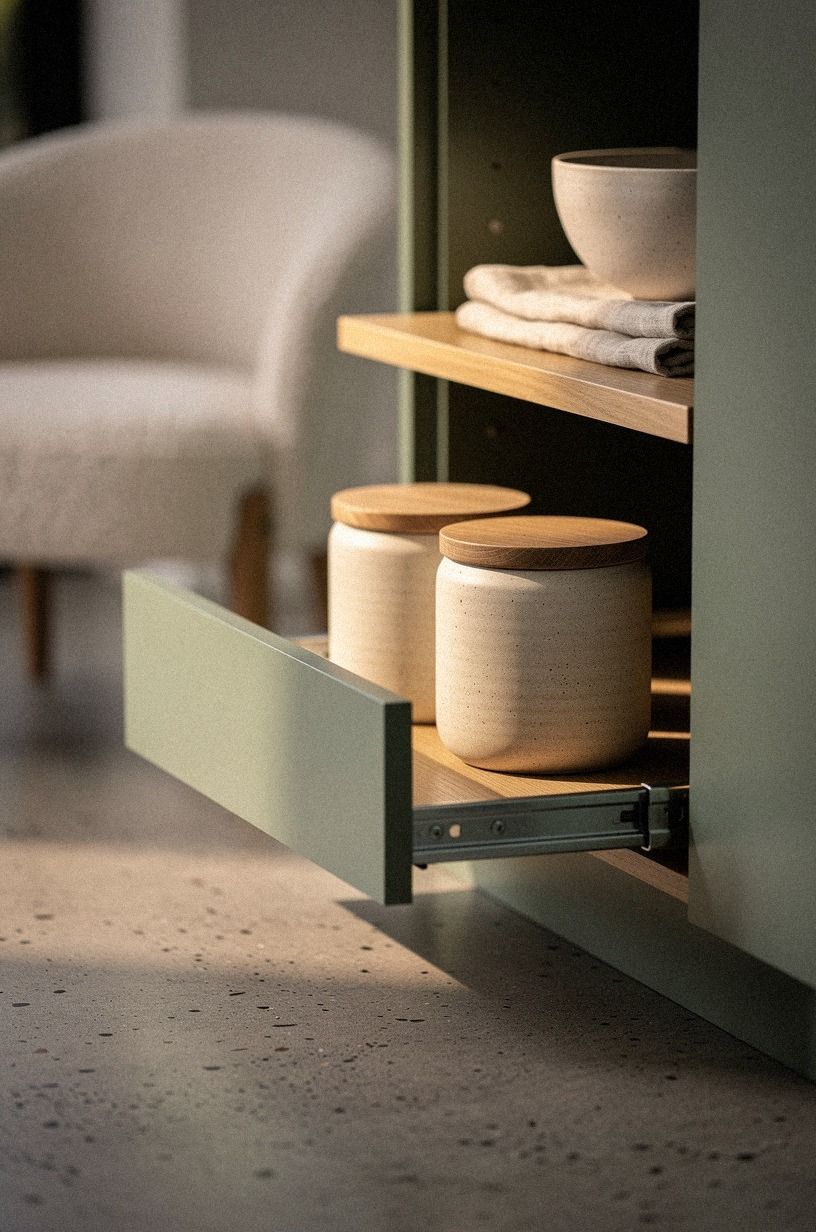
Deep kitchen cabinets are only useful if you can reach the back without kneeling on the floor and guessing. Pull-out shelves fix that in a day, and they make a tall cabinet feel twice as intelligent.
I love them in a sage green cabinet because the sliding shelf edge becomes part of the look instead of a hidden utility detail. Add warm cream storage jars, natural oak edging, and suddenly the practical move feels tailored.
Give your heaviest shelves to small appliances and bulk staples, then keep lighter everyday items higher up. A smooth full-extension slide matters here. Cheap hardware wobbles, and once it wobbles, you stop using the system you paid for.
If you're sorting out what belongs in the deepest zones, small kitchen cabinet ideas that maximize storage breaks down a few cabinet categories that keep retrieval easy.
And measure the shelf depth around handles and door hinges before ordering inserts. I've made that mistake once, and I wouldn't do it again.
11Cap tall cabinets with display cubbies
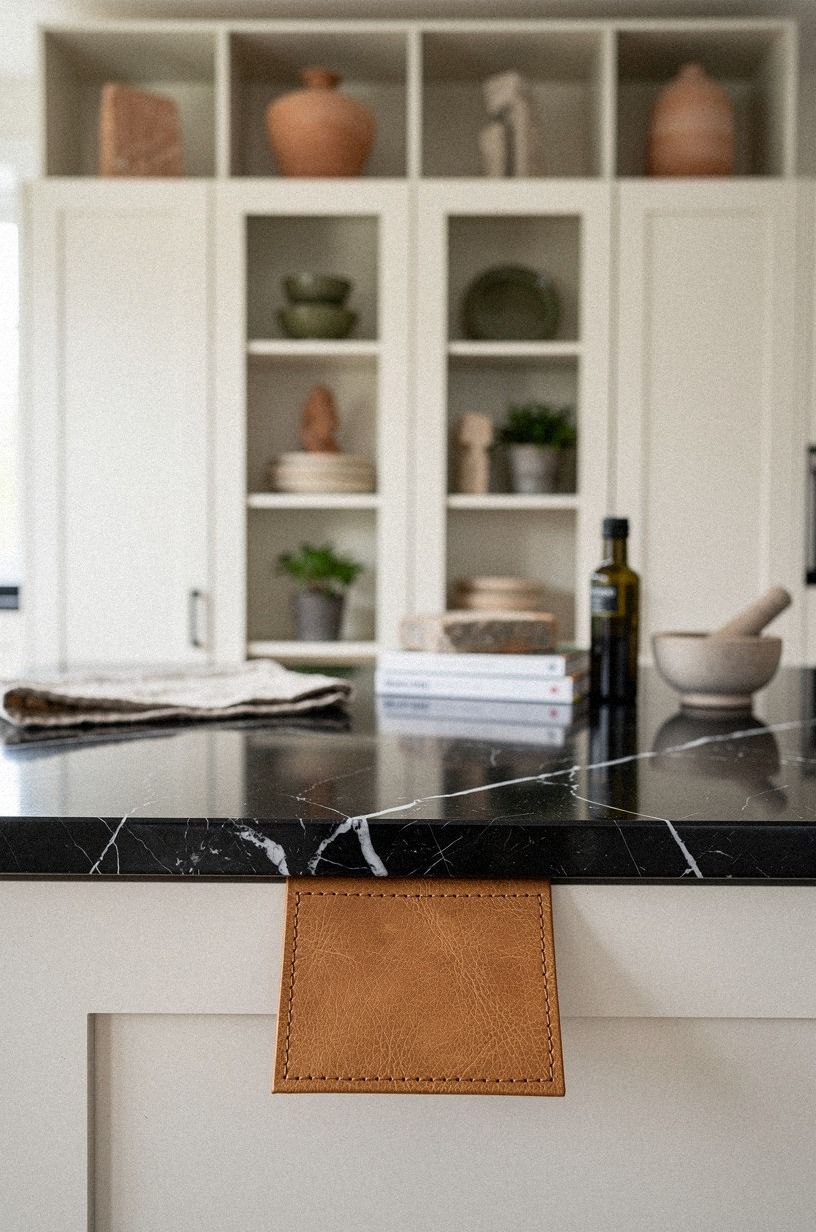
Display cubbies at the very top can finish a cabinet wall beautifully if the rest of the room is already disciplined. They're not there for junk. They're there to keep a ceiling-height run from feeling abrupt.
Over a darker surface like Nero Marquina marble, the upper cubbies can hold pale ceramics, a couple of vintage baskets, or one line of cookbooks with creamy spines. That's enough. The contrast between the black stone below and the light objects above makes the whole wall feel layered.
I would only do this when the lower storage is already closed and hard-working. If your counters are cluttered and your open shelves are packed, adding display cubbies on top just gives the clutter another floor.
But in a calm kitchen, they can be the finishing move that makes the cabinetry feel custom. For a smaller-room version, condo kitchen cabinet ideas for compact stylish spaces shows how to style the top line without making it dusty or fussy.
You should be able to name every object up there in one breath. If you can't, there's too much.
12Choose IKEA SEKTION boxes with custom fronts
The honest shortcut to a custom-looking tall cabinet wall is IKEA SEKTION boxes dressed up with Semihandmade fronts, IKEA AXSTAD matte doors, or a local cabinet shop.
13Add a thin library ladder for high cubbies
Once cabinets run past 8 ft, the top shelf becomes a graveyard for things you use twice a year. A slim library ladder solves that without making the kitchen feel like a 1900s library.
Mount a brass or matte black rail a few inches below the ceiling, with a slim rolling library ladder from Wagner or a similar brand. The hardware floats, doesn't take floor space, and turns those upper cubbies into real working storage instead of decoration.
I would keep the rail in unlacquered brass so it develops a soft patina, or matte black if the rest of the hardware reads modern. Make sure the rail is anchored into studs, not just drywall, and that the ladder rolls smoothly without catching on the cabinet fronts below. For more high-ceiling storage moves, our high ceiling kitchen ideas covers what to do with all that vertical real estate.
And don't put everyday dishes up there. If you have to climb, it stays out of reach more than you'd think.
14Use unlacquered brass for handles that age with you
If you're going to the trouble of running cabinets to the ceiling, cheap hardware is the part that gives the whole thing away.
15Line interiors with contact paper so they clean easily
Plywood cabinet interiors look rough once you start sliding heavy pots around. A roll of Maplestory beige linen contact paper or a KitchnStove cream peel-and-stick shelf liner lines the inside walls in an afternoon and wipes clean in seconds.
I would line the back wall, the underside of every shelf, and the bottom of every tall cabinet. The finish holds up to damp sponges and a quick wipe, and it costs about $20 in paper for an entire tall wall. If you've already got a sticky residue from a previous owner, a pass with Goo Gone and a microfiber cloth gets the surface ready.
For something more architectural, consider beadboard MDF panels painted in Benjamin Moore Pale Oak OC-20 for the back wall of glass-front uppers. The texture adds depth without asking for any extra styling. Our contact paper cabinet refresh post covers both quick and pretty versions.
And skip the glossy clear liner. It shows every fingerprint and lifts at the edges within a year.
16Frame the top with a continuous crown moulding
The fastest way to make stock cabinets read custom is one piece of continuous crown moulding running across the whole wall. The trim hides the seam where the cabinet meets the ceiling, and it gives the eye a finished line to land on.
I'd run a 4-in poplar crown in a BM White Dove OC-17 match, with a simple stepped profile rather than anything ornate. The trim costs about $4-$8 per linear foot in poplar, and a weekend of miter cuts and caulk will set the whole wall off. For more trim options, our kitchen crown moulding ideas post walks through the profiles that age well.
Skip the MDF versions at home improvement stores if you can. MDF swells in steamy kitchens and shows every paint flaw. Poplar takes paint cleanly and holds a sharp edge.
And take the time to scribe the back of the crown to the ceiling. A wavy ceiling line under straight trim looks worse than no trim at all.
17Hide toe kicks with a continuous recessed floor
The dark gap at the bottom of a tall cabinet is one of the first things your eye picks up.
18Run under-cabinet lighting as ambient, not task
Most kitchens get under-cabinet lighting wrong by making it too bright and too cool. For tall cabinet walls, you want the lighting to wash the lower cabinets with warm light and let the upper cabinetry fade into a soft shadow.
I'd run 12-V warm-white LED strip at 2700K behind the bottom edge of the upper tall cabinets, not under the wall cabinet lip. That bounce-light reads as ambient, washes the counter in a soft glow, and leaves the upper glass fronts feeling moody instead of museum-lit. Use a Lutron Diva dimmer so the same strip can move from morning bright to midnight low.
Skip the cool white and the blue-tinted LEDs. They make pale oak look grey and cream ceramics look dirty. For more warm-light planning, our warm kitchen lighting guide covers the bulb temps and the layering.
And don't point the strip directly at the counter. Aim it at the back wall so the light bounces and reads as ambient, not task.
19Tuck a slim message center into a tall end panel
The end panel of a tall cabinet run is wasted square footage if you leave it flat.
The Two-Wood Rule Keeps Tall Kitchens Calm
Tall cabinets can go wrong fast because people assume more height means more impact. It doesn't.
More height means more responsibility. I learned that in a kitchen where I mixed walnut stools, orange oak cabinets, black shelves, and a pale floor because each piece looked good on its own. Together, the room felt restless.
You couldn't settle your eye anywhere.
Now I use what I call the Two-Wood Rule. Pick one main wood for the cabinets or floor, then one supporting wood that shows up lightly in stools, trays, or shelf edging.
That's it. If your tall cabinet wall is cerused white oak, let the second note come from a warmer board, a vintage chair seat, or even a cutting board stack.
You don't need a third species trying to prove it belongs.
The same restraint applies to color. One painted tall unit in Sherwin-Williams Evergreen Fog SW 9130 can feel fresh and lived in.
Three painted zones in different shades start looking like you were testing samples and forgot to stop. And with full-height cabinetry, every choice repeats farther up the wall, so mistakes echo louder than they do on base cabinets.
I also think people overspend in the wrong places here. They'll price out custom fronts, then leave awkward dead space above the refrigerator or skip pull-outs in the deepest cabinets. I'd reverse that.
Spend on the things that change daily use. Full-extension slides.
Better shelf planning. Panels that finish the top line.
If the room functions beautifully, it will almost always look more expensive too.
One more thing. Tall storage isn't about making your kitchen look bigger for a photo. It's about making the room easier to live with at 7:10 on a Wednesday when groceries need a home and your counters can't take one more appliance.
That's why these cabinet moves last. They don't just photograph well.
They relieve pressure.
And here's the rule I keep coming back to: pick one warm metal, one cool metal, one strong paint, one supporting paint, and one calm wood. That's the whole palette for a tall kitchen. If you've used six metals and four wood species by the time you're done, the room will tell on you.
What makes one tall kitchen feel more expensive than another?
It's almost never the cabinet boxes. It's the discipline around the cabinets.
The kitchens that read as custom usually have one wood, one strong paint, one warm metal, and a clear top line that runs unbroken to the ceiling. The kitchens that read as busy usually have three wood tones, two competing metal finishes, and a fridge gap with drywall above it.
If you're staging a tall wall for a future sale or just want it to feel calmer, start by editing what you see. Move the second wood tone out of the room, swap one set of mixed metal hardware for a single finish, and run crown moulding across the whole bank. Those three moves alone will change how the whole space reads.
A Few Things Worth Answering
What is the best Kitchen Tall Cabinet Ideas to Use Every Vertical Inch for a small kitchen?
The best small-kitchen move is a ceiling-height pantry tower or a fridge wrap, because both give you real storage without taking more floor. If you like modular options, IKEA SEKTION pieces are worth a look. For layout help, see small kitchen cabinet ideas that maximize storage.
Where can I buy Kitchen Tall Cabinet Ideas to Use Every Vertical Inch pieces on a budget?
Start with IKEA, Target Threshold, and Wayfair for inserts, jars, and hardware, then check Facebook Marketplace for solid wood cabinets or hutches you can repaint. Good secondhand bones beat flimsy new pieces. If you're outfitting a pantry wall, kitchen pantry cabinet ideas for smart storage can help you prioritize.
How much does a Kitchen Tall Cabinet Ideas to Use Every Vertical Inch makeover cost?
A cosmetic version usually costs about $300 to $1,500, while a fuller refresh often lands around $3,000 to $12,000. The free move is editing what stays out on the counters and using the height you already have.
Paint and hardware go farther than people think! Shelf inserts do too!
Can I create a Kitchen Tall Cabinet Ideas to Use Every Vertical Inch on a budget?
Yes, and you don't need custom millwork. Start with peel-and-stick backsplash, add shelf risers inside tall cabinets, and group your everyday pieces into a cleaner zone. One painted cabinet plus better inserts can change the whole read of your kitchen.
Is a Kitchen Tall Cabinet Ideas to Use Every Vertical Inch worth it in a small space?
Yes, because a small room benefits more from vertical storage than a large one does. Keeping the floor open makes the kitchen feel easier to move through, and that visual relief matters. In a narrow room, galley kitchen cabinet ideas for narrow layouts is a smart next read.
Is Kitchen Tall Cabinet Ideas to Use Every Vertical Inch a good idea for a rental?
Yes, if you focus on removable upgrades. Tension-shelf inserts, peel-and-stick backsplash, labeled jars, and freestanding tall pantry pieces can give you the same vertical logic without permanent changes. I would avoid drilling until you've checked the lease, but renter-friendly storage can still look polished.
Where I'd Start If I Only Did One Thing
If I had to pick one, I'd start with wrapping the cabinets around the refrigerator. That dead space always makes a kitchen feel cheaper than it is. Pin that move for later and then read kitchen pantry cabinet ideas for smart storage before you size the rest of the wall.