 by
by Quick answer: A memory foam mattress sinking in the middle usually points to a weak base or a tired foam core. I’d first inspect the support underneath, then consider the Saatva Classic if replacement makes more sense.
- A center dip that feels deeper than the rest of the bed is not the same as normal contouring.
- Foundation flex can create or worsen the feeling that the mattress is pulling you inward.
- Thicker support layers and denser foams generally hold their shape better over time.
Updated July 2026 · Reviewed for accuracy
If your memory foam mattress is sinking in the middle, don’t start by blaming the comfort layer. The foundation, frame support, and foam core all deserve a hard look. A mattress should contour around you, but it should not make the middle of the bed feel like a trough.
My blunt take: fix the support system first. If the bed beneath the mattress is sound and the center still feels noticeably softer than the sides, the foam itself may be past its useful comfort life or simply too soft for how you sleep.
Start With the Difference Between Contouring and Sagging
Memory foam is built to let your body settle in. That close contour is the point. It can feel unfamiliar if you are used to springs or firmer foam, especially around the hips and shoulders. But a mattress that lets your midsection sink farther than the rest of you is giving a different signal.
Normal contouring is temporary and broadly even. You lie down, the surface molds around pressure points, and it recovers after you get up. A middle sag is more localized. The center feels weaker than areas near the sides, or you roll inward even when you are trying to stay in place.
I pay attention to what happens when the mattress is unloaded. A visible impression that lingers after you get up suggests a material or support problem. A bed that looks level but collapses only under your body can still have a real issue, often below the mattress rather than inside it.
The useful distinction: plush memory foam can allow deep pressure relief. A center section that is distinctly softer, lower, or harder to climb out of is not merely a plush feel.
Heat can also complicate the picture. Memory foam responds to warmth and may feel softer after it has absorbed body heat. That can make a close-fitting bed seem deeper later in the night. Still, heat-related softening should not create a permanent middle valley or leave you feeling the frame beneath you.
A Weak Foundation Can Make the Middle Feel Worse
The area under the center of the mattress carries a lot of load. If a platform flexes, slats bow, or the frame lacks dependable central reinforcement, the mattress above it has no stable surface to work against. That can mimic a failed foam core.
Strip the bed down and inspect the structure. Look for bowed slats, gaps, cracked wood, loose hardware, or a center support that no longer reaches the floor firmly. A foam mattress needs a flat, stable base. If the support surface sags, the foam will follow it.
Then compare how the mattress feels in different spots. Lie near the center, then near each side. The goal is not identical comfort, because your body position changes, but a dramatic difference is telling. If the middle feels much lower while the sides remain steady, check whether the base flexes in the same area.
A solid platform can be the cleanest way to rule out a slat problem. If you use slats, they should provide consistent support across the bed rather than leaving the foam to bridge wide open spaces. The frame should also support the center, not just the perimeter.
Quick inspection list
- Check whether the frame has reliable middle support.
- Look for slats that bow or shift under pressure.
- Make sure the mattress sits on a level surface.
- Inspect the base before replacing a mattress that appears to sag.
This is the least glamorous part of the diagnosis, and it is often the part people skip. I wouldn’t. Replacing a mattress without correcting a flexing base can leave you with the same frustrating center sink all over again.
Comparing options? The Saatva Classic is the pick we keep coming back to — see the final verdict ↓
The Foam Core Is Usually the Next Suspect
Once the foundation is level and sturdy, focus on what is inside the mattress. Memory foam is generally used near the top for contouring, while firmer foam underneath is meant to stop your body from dropping too deeply. The relationship between those layers matters more than a soft top label.
A durable design needs enough supportive material beneath the memory foam to keep the comfort layer from bottoming out. If the transition and base layers are too weak, the top can feel pleasant at first but allow too much sink through the hips and torso. That is where many sleepers notice the middle of the bed first.
Foam density matters for long-term shape retention. Denser memory foam generally resists deep, premature softening better than lighter material. The same is true of the support foam below it: a substantial core helps the mattress keep a more even surface as it ages.
Body weight and sleep position change the demand placed on those layers. A sleeper who puts more load through the midsection needs firmer support there. A softer bed may still work for someone lighter or someone whose pressure points need more cushioning, but it has less room for error if the foundation is not excellent.
That is why “memory foam” is not enough information on its own. The material can feel wonderfully pressure-relieving or frustratingly unstable depending on how much support sits below it. I’d rather see a well-supported comfort layer than a very thick soft layer with nothing substantial beneath it.
Why the Center Can Sink Before the Rest of the Bed
The middle is where people commonly lie, sit, and shift position. Repeated loading in that zone can reveal a weak core sooner than less-used areas. It does not mean every central dip is caused by wear, but it explains why an uneven feel often shows up there first.
Edge construction can affect how a center sag feels, too. Weak edges may let the entire sleep surface feel less contained. You might perceive that as rolling toward the center, even if the middle itself is only slightly softer. A stable perimeter helps the whole mattress feel more composed.
Non-uniform support is another possibility. If the core is softer through one section than another, your body notices it quickly. You may wake with your hips lower than your shoulders, find that changing sides helps, or feel as if the mattress has a preferred spot that you cannot avoid.
| What you notice | Likely place to inspect | What it can mean |
|---|---|---|
| The center drops more than the sides | Frame and foundation | Flex beneath the mattress or uneven core support |
| You feel too deeply hugged around the hips | Comfort and transition layers | The mattress may be too soft for your needs |
| The bed feels lower after sitting in the same spot | Core and base surface | Localized wear or unstable support underneath |
| The surface feels softer later at night | Foam response and room conditions | Warmth may be amplifying the foam’s contouring feel |
The key is to separate a sensation from a structural failure. Some memory foam is meant to feel enveloping. But if that sensation is strongest in one spot, is worsening, or leaves you unsupported, I would treat it as a problem worth solving rather than something to adapt to.
What to Do Before You Replace the Mattress
Take the mattress off the foundation and inspect both surfaces in good light. You are looking for obvious dips, broken parts, and anything that makes the support uneven. A simple check can save you from spending on a replacement before you know what failed.
Next, rotate the mattress if the manufacturer permits it. Rotation will not repair damaged foam, but it can help distribute use more evenly when the mattress is designed for it. Do not flip a one-sided memory foam mattress unless its manufacturer specifically says it is reversible.
If the base is compromised, repair or replace it before judging the mattress again. Give the mattress a chance to rest on a stable surface. If the center remains substantially softer or visibly indented after that change, the core is a more likely culprit.
Don’t use a topper as a structural fix. A topper can alter surface comfort, but it cannot restore support from a sagging foam core or a bending foundation. It may even make an already soft middle feel deeper.
Document what you find. Clear photos of a persistent indentation and of the mattress on its proper foundation can be useful if you need to ask the manufacturer about coverage. Read its policy closely, because visible impressions and support requirements are often relevant to a claim.
For more context on how different all-foam builds can vary, see my notes on the Spa Sensations by Zinus memory foam mattress and the Sleepy’s Curve plush memory foam mattress. The label tells you the material category. The support system tells you whether that category works for your body over time.
How I’d Choose a Replacement That Resists Mid-Bed Sink
A replacement should begin with support, not cooling jargon or a plush cover. I would look for a construction with a clearly supportive base, a meaningful transition between the comfort layer and core, and edges that do not make the surface feel loose or unstable.
If you like memory foam’s pressure relief but dislike the stuck-in-the-middle sensation, prioritize a design that balances contouring with upward support. You want the surface to yield around shoulders and hips while the lower layers keep your spine from dropping into a hammock shape.
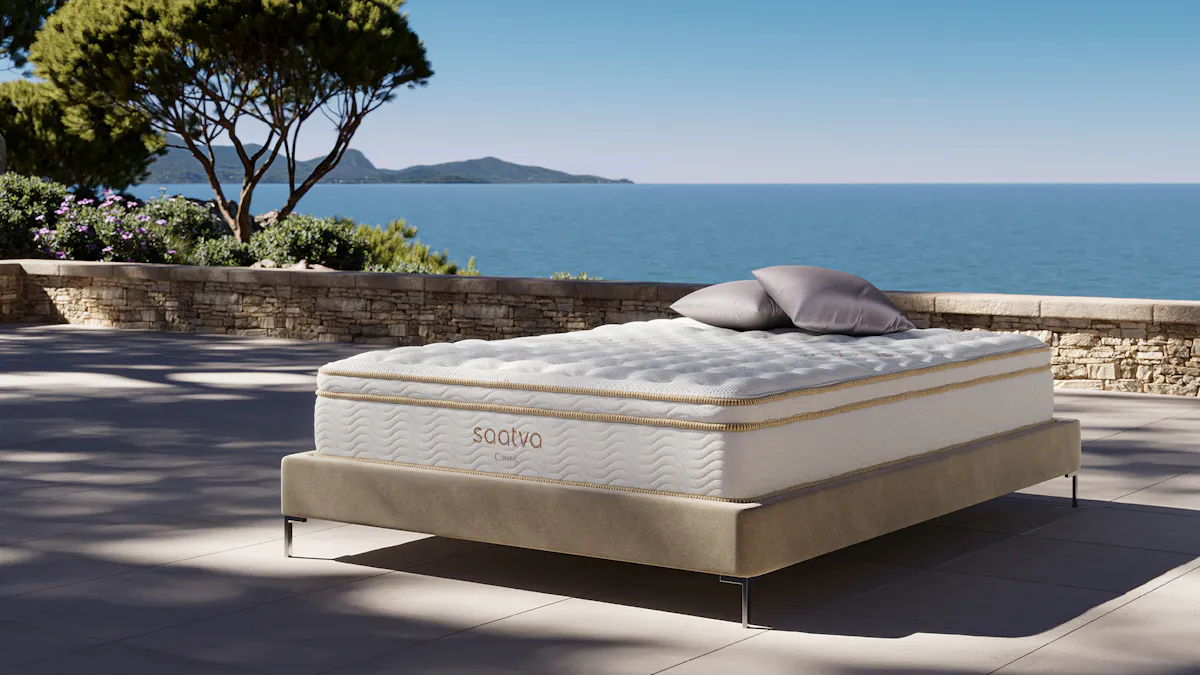
The Saatva Classic is the alternative I’d consider if the root problem is a foam bed that lacks pushback. It uses a different construction approach from an all-foam mattress, which may suit sleepers who want a more supported middle and easier movement. It sits in the premium tier, so check the current price on the official site before deciding.
Material transparency matters here. I want to know what provides the contour, what slows the descent into the mattress, and what does the heavy lifting underneath. If a brand makes those roles hard to understand, I see that as a reason to slow down rather than assume the bed will stay supportive.
You can also compare the basic construction logic in my coverage of the Simmons Beauty Sleep memory foam mattress and the Simmons eight-inch memory foam mattress. A mattress is not durable because it is foam. It is durable when its foam layers and its base work together.
Who Should Act Now, and Who Can Wait
Act now if you can feel the foundation, wake up feeling as if your hips have settled lower than the rest of you, or see a persistent central impression. Those are signs that the bed may not be delivering even support. Start with the base, then move to a warranty conversation or replacement decision if the mattress remains uneven.
You can wait and monitor if the bed only feels softer after warming up, returns to a level surface when unloaded, and remains supportive through the night. Some contouring is inherent to memory foam. The deciding issue is whether the support beneath you stays consistent.
I would not keep trying to compensate with pillows, toppers, or a new sleep position if the middle is plainly failing. Those workarounds can hide the problem for a while, but they do not rebuild a fatigued foam core or straighten a weak foundation.
FAQ
Is sinking in the middle normal for a memory foam mattress?
Some contouring is normal because memory foam is designed to respond to body pressure. A clearly softer middle, a persistent indentation, or a feeling that you are rolling inward points to something beyond ordinary contouring.
Can a bad bed frame make a foam mattress sag?
Yes. A frame or foundation that flexes in the middle can make the mattress feel as though its core has failed. Inspect the slats, platform, connections, and center support before assuming the mattress itself is the only problem.
Will a mattress topper fix a center sag?
No. A topper may change the feel at the surface, but it cannot restore lost support in the foam core or correct a sagging base. A soft topper can make excessive sinkage more noticeable.
Why does the mattress feel softer in the middle at night?
Memory foam can feel softer as it warms from body heat, which can deepen its contouring sensation. If the middle alone becomes much softer or remains low after the mattress cools, inspect the support system and foam core.
Should I rotate a memory foam mattress with a middle dip?
Rotate it only if the manufacturer permits rotation. That may help distribute future wear, but it will not repair damaged foam or an unstable foundation. Check the base first, then judge whether the mattress still provides even support.
My Verdict
A memory foam mattress sinking in the middle is usually a support problem, either below the mattress or inside it. Check the frame before you replace anything. If the base is solid and the center still swallows your hips, stop treating it as normal memory foam feel and choose a mattress built to hold you up as well as cushion you.
FINAL VERDICT
Before you settle: if memory foam mattress sinking middle is what brought you here, the Saatva Classic is the value pick on this page — more home-trial and warranty coverage than the alternatives covered here. Confirm current price, dimensions and terms on the official product page before ordering.
OUR CATEGORY-MATCHED PICK · UP TO $625 OFF
Saatva Classic
- 365-night home trial and lifetime warranty, per saatva.com
- Handcrafted in the USA, free white-glove delivery
- Flexible financing available