
 by
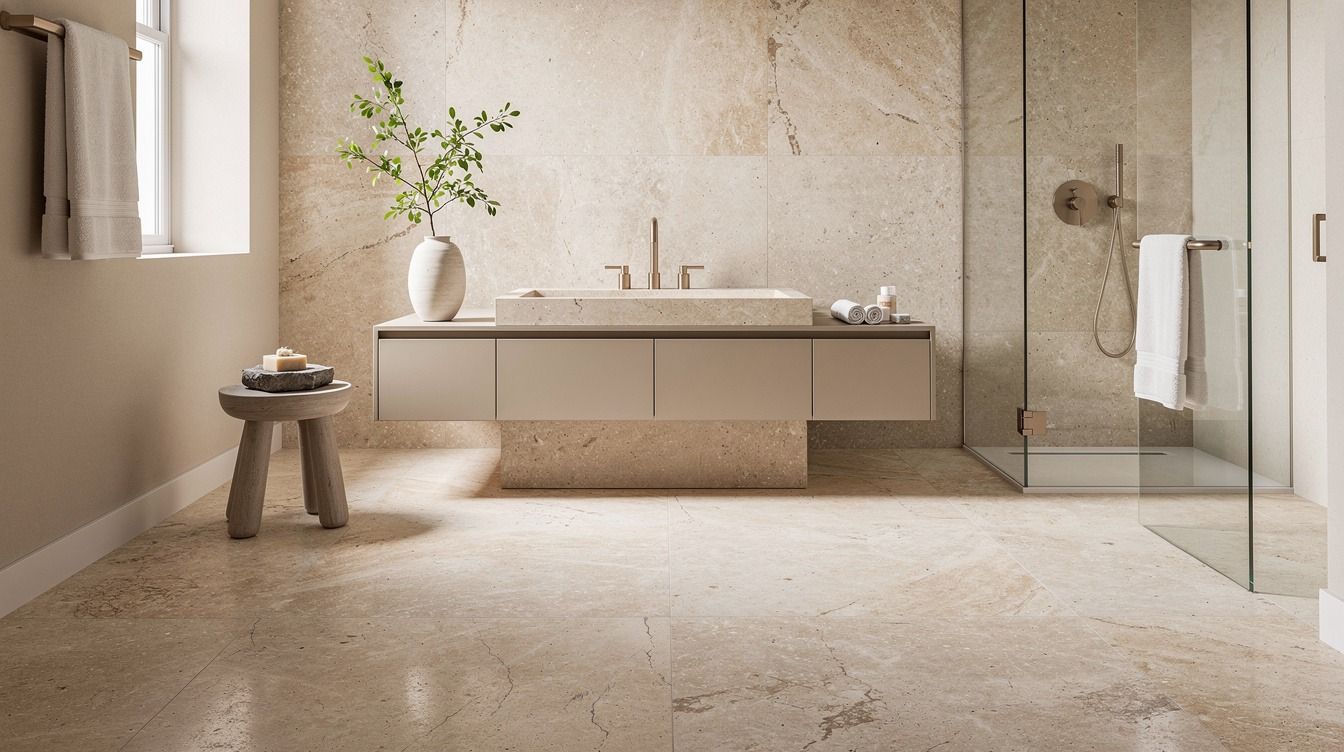
by A limestone bathroom can make a hard-working bath feel softer, warmer, and more settled without jumping straight to the cold shine of marble. I did this makeover after one winter of stepping onto a floor that felt flat and echoey at 6 a.m. The room was not ugly. It just never exhaled, and the honest cost of not changing it was another year of mornings I dreaded.
Here's what it looked like before
Before I touched it, my bathroom had the full safe-builder package: bright white walls, a vanity that sat at a standard 34-inch vanity height, and a tub that measured the usual 60x30 inches but still looked strangely skimpy against the wall. The floor tile was pale, cool, and a little pink in the wrong light, so every brass sample I brought in looked forced. You know that feeling when a room is technically clean but never restful?
That was this room every single morning.
I kept trying surface fixes first. New towels.
Better bulbs. A thrifted mirror.
Nothing held because the hard finishes underneath were fighting me. Reading through venetian plaster bathroom ideas for soft luminous walls and limewash bathroom ideas for soft cloudy textured walls helped me name the real problem: the room needed warmth in the shell, not just prettier accessories sitting on top of it.
That clarity alone was worth it.
- Choose honed limestone for the main floor
- Run limestone slabs behind the vanity
- Set a limestone ledge above the tub
- Wrap the shower niche in one stone
- Pair limestone walls with unlacquered brass
- Use tumbled limestone around the bathtub
- Build a floating vanity from pale limestone
- Add a limestone bench inside the shower
- Keep grout lines thin and warm gray
- Frame the mirror with limestone trim
- Carry limestone halfway up the walls
- Mix limestone tile sizes underfoot
- Soften limestone with linen cafe curtains
- Set a limestone sink on oak drawers
- Repeat limestone on the shower curb
- Warm the stone with low wall sconces
- Finish with one rough limestone accent
1Choose honed limestone for the main floor
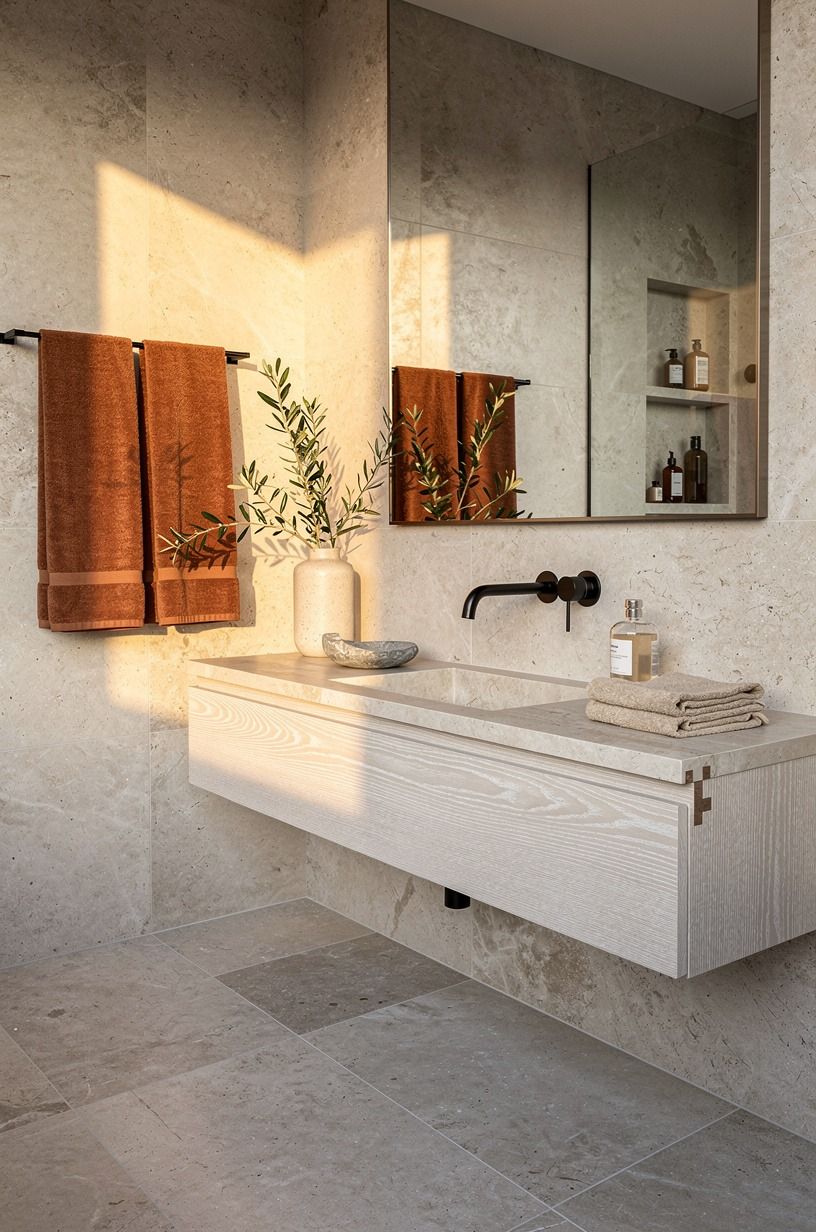
I started with the floor because you feel it before you notice anything else. Honed limestone tile gave me the soft, powdery finish I wanted without the glare that polished stone throws back at you first thing in the morning.
If you are planning a limestone in bathroom update, this is the move that changes the whole room fastest because the floor touches every other choice you make after it. Budget-wise, a honed limestone floor usually runs $15 to $35 per square foot installed, and it pays back in warmth every single morning.
The Mapei Keracolor U unsanded grout in warm gray was my partner here.
The diagonal layout in my room mattered too. It let the wide floor read calmer from the doorway, and the warm gray-beige tone stopped the walls from feeling chalky.
I would not use a glossy lookalike here. The low-sheen surface is the whole point, especially when you step out barefoot and want the room to feel grounded instead of slippery. If you love quieter, hand-finished surfaces, this soft cloudy wall guide lands in the same emotional zone.
That is the whole win!
2Run limestone slabs behind the vanity
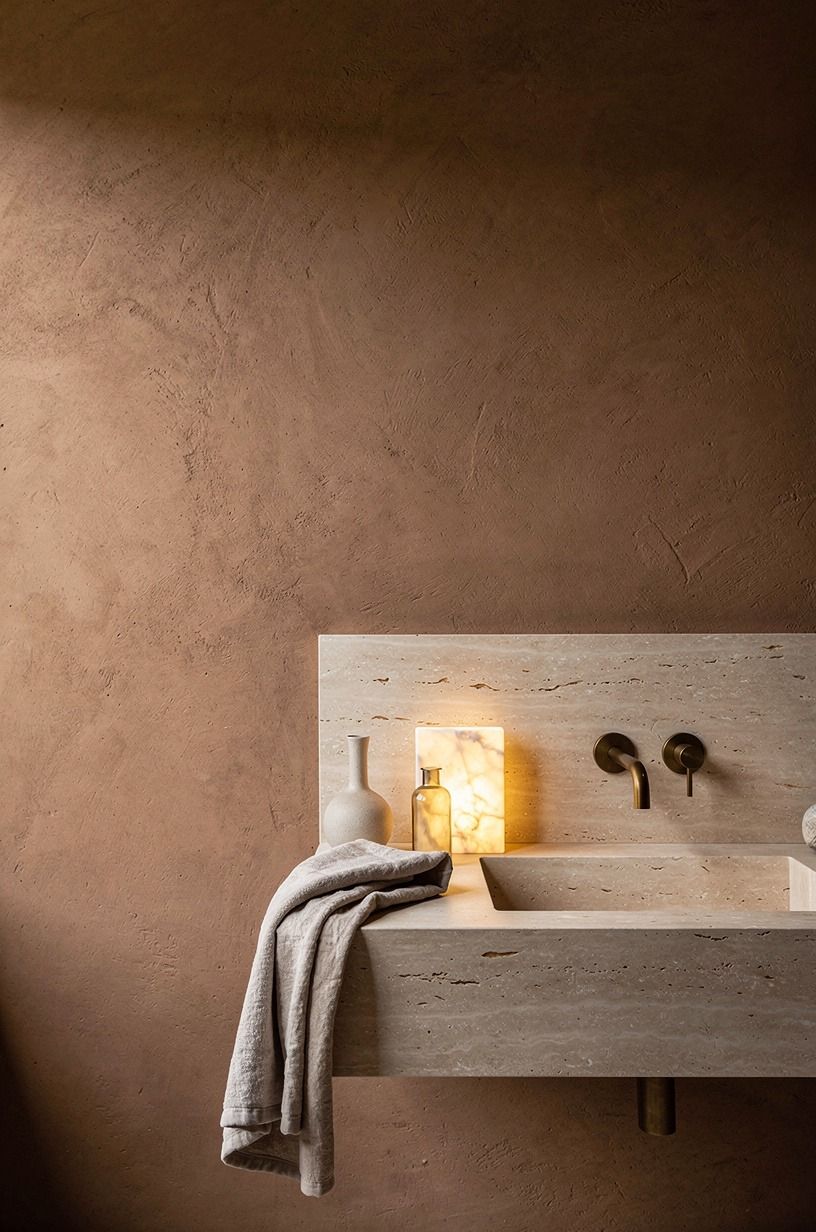
Once the floor was right, the vanity wall looked too chopped up to keep. Running full limestone slabs behind the sink made the whole first-person approach into the room feel calmer because your eye is not catching seam after seam before you even set down your toothbrush.
You get one pale, continuous field instead of a backsplash trying to shout over the mirror and the faucet. The value is real here: slabs run $50 to $100 per square foot, but you save on the grout and trim you'd otherwise buy.
This is where I stopped pretending more trim would help. It would not.
The slab needed to read as one quiet plane, especially with a centered sink and a faucet in unlacquered brass. If you're choosing between tile and slab on this wall, I'd skip the busier option unless you already have simple floors.
The stone bathroom looks richer when one surface stays broad and still, which is the same lesson I pulled from handmade glossy bathroom tile ideas.
3Set a limestone ledge above the tub
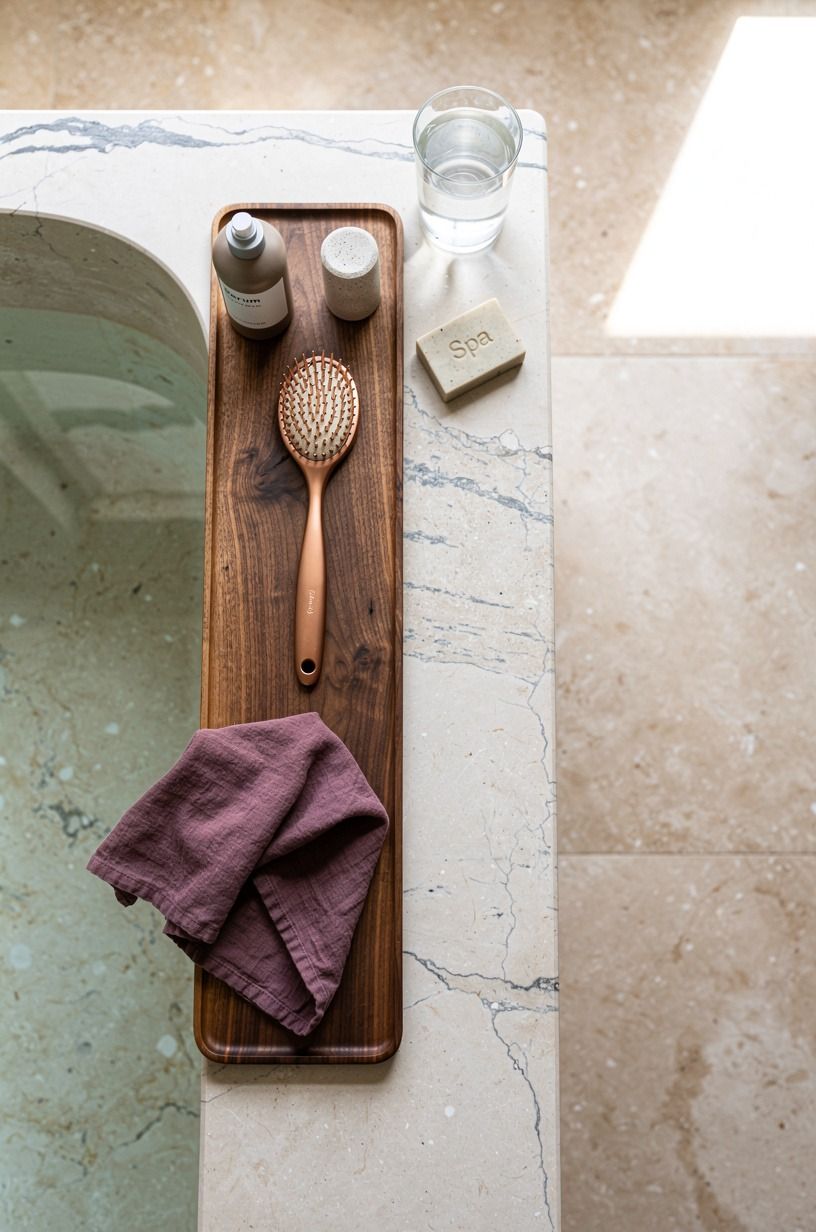
The tub wall was where I almost got too decorative. I thought I wanted art, but a simple limestone ledge above the tub gave me the better answer because it kept the wall useful without breaking the soft stone line.
If you have a standard 60x30-inch tub, a ledge like this helps the wall feel intentional instead of blank, and you do not have to crowd the tub deck itself. You'll get the best value if you size it to your tub's footprint and skip the floating shelves.
I kept the styling spare on purpose. One candle, one soap dish, one folded Belgian flax linen cloth.
That's enough. Too many bottles and the ledge turns from architecture into storage, which kills the calm right away.
And if you use the tub at night, you want a place for one small ritual item without balancing it on the rim. My warm bath before bed notes changed how I think about that corner, because the room should support the routine, not interrupt it.
4Wrap the shower niche in one stone
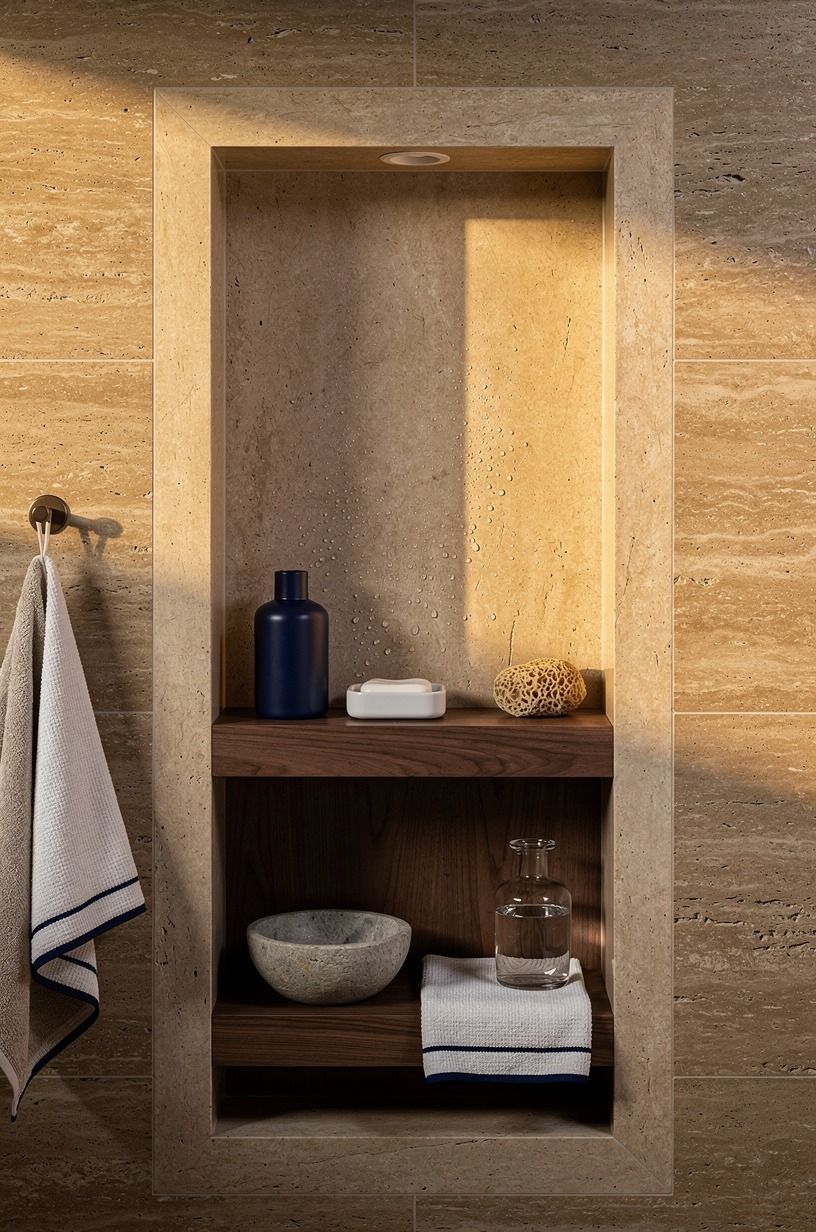
The shower niche taught me that a limestone bathroom does not need contrast in every recess.
5Pair limestone walls with unlacquered brass
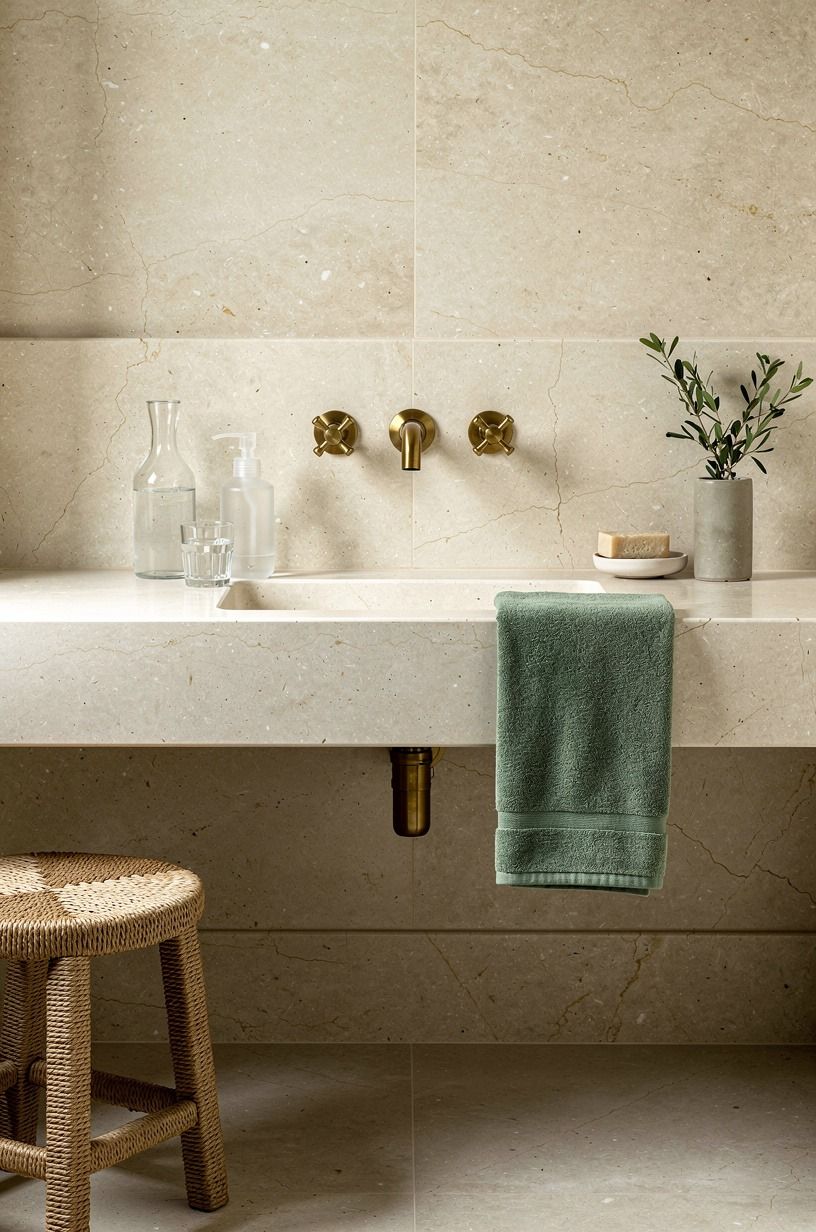
This was the moment the room stopped feeling timid. Limestone walls with unlacquered brass fixtures have enough contrast to feel warm, but not enough to turn fussy if your bath is small.
You get pale stone, soft metal, and a glow that changes through the day. If you're worried brass will look too yellow, the flatter limestone keeps it honest.
The brass cost was real: about $120 to $450 per faucet, but the warmth it adds is the kind of upgrade you feel every day.
I tested brushed nickel first and it was the wrong kind of quiet. Clean, yes. Memorable, not at all.
Brass gave the frontal view a little tension, which the room needed. And because the metal will patina, the limestone bathroom won't look frozen at the exact moment you installed it.
For wall color around the stone, I kept looking at Farrow & Ball Hague Blue No.30 in sample form, then backed away because deep paint would've broken the soft envelope I wanted. The better companion was the warmer restraint I found in soft luminous plaster baths.
6Use tumbled limestone around the bathtub
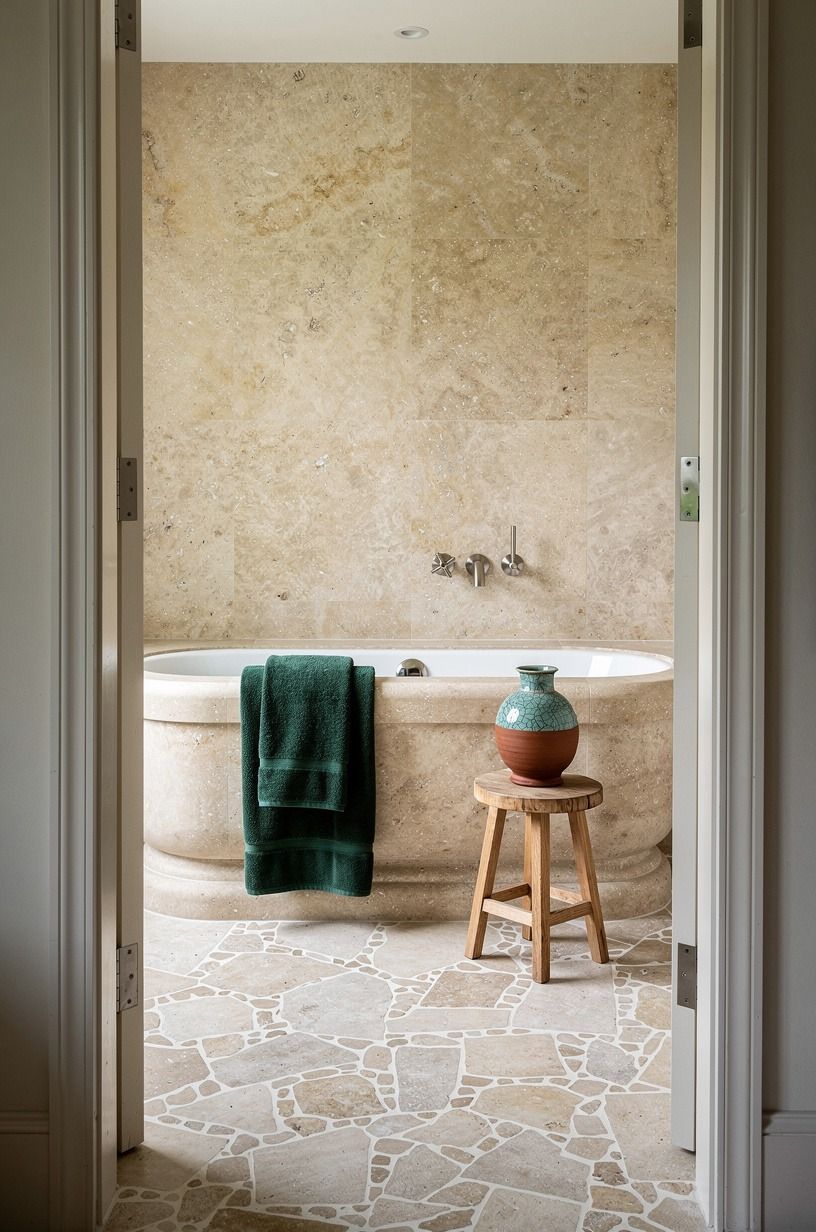
Around the tub, I didn't want the sharper edge of honed slabs again.
7Build a floating vanity from pale limestone
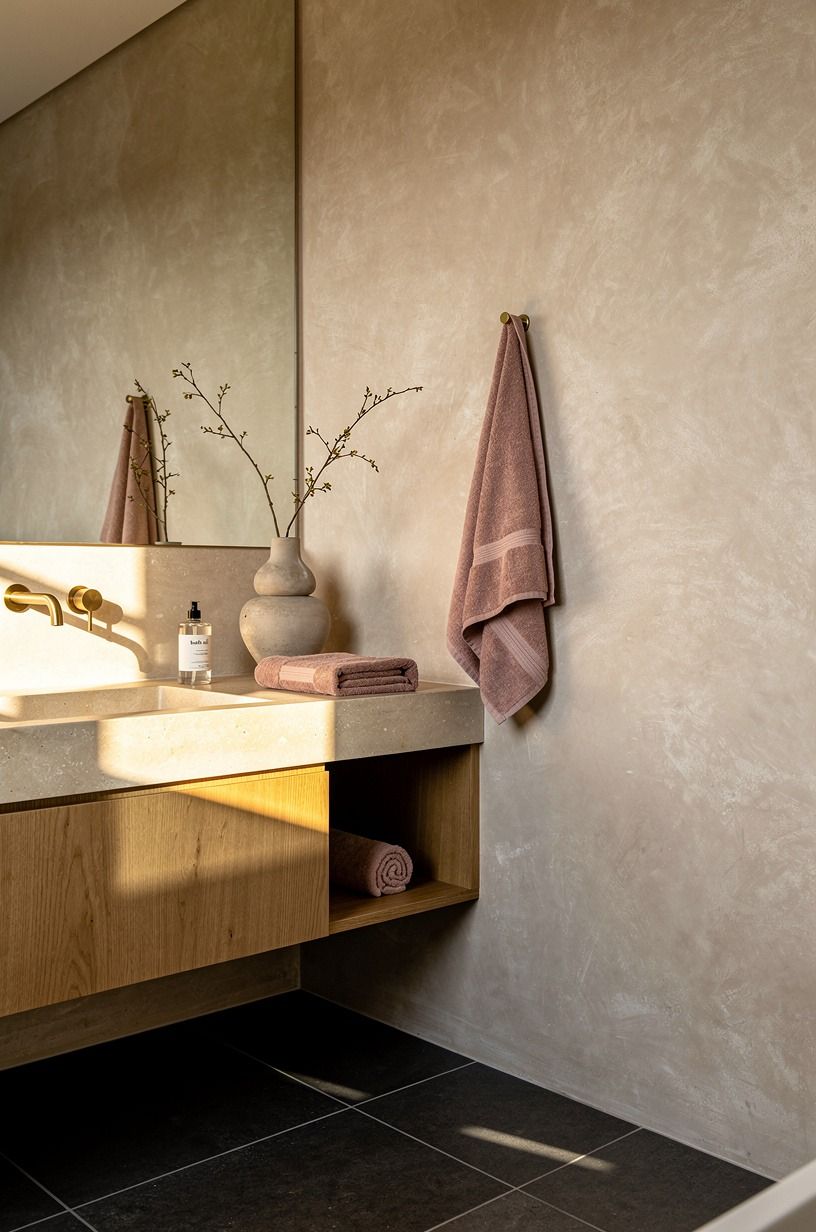
The floating vanity was the single biggest visual upgrade because it opened the floor and let the limestone run wall to wall underneath. A pale limestone vanity with a shadow gap looks lighter than a leggy wood cabinet, even though the stone itself is substantial.
If you're working with a tight footprint, that visual lift matters more than people think. A custom floating limestone vanity typically lands between $1,800 and $4,500, and it changes how the whole room reads.
I kept the height close to the comfortable 32 to 36 inch range so it still worked every day, then let the slab thickness do the drama. What surprised me was how clean the room felt once the floor stayed visible.
You see more stone, more light, more air. I wouldn't pair this move with a bulky mirror or loud hardware.
The whole point is the quiet, expansive corner-to-corner read, which reminded me of the softness in organic modern rooms with pale oak and warm texture.
8Add a limestone bench inside the shower
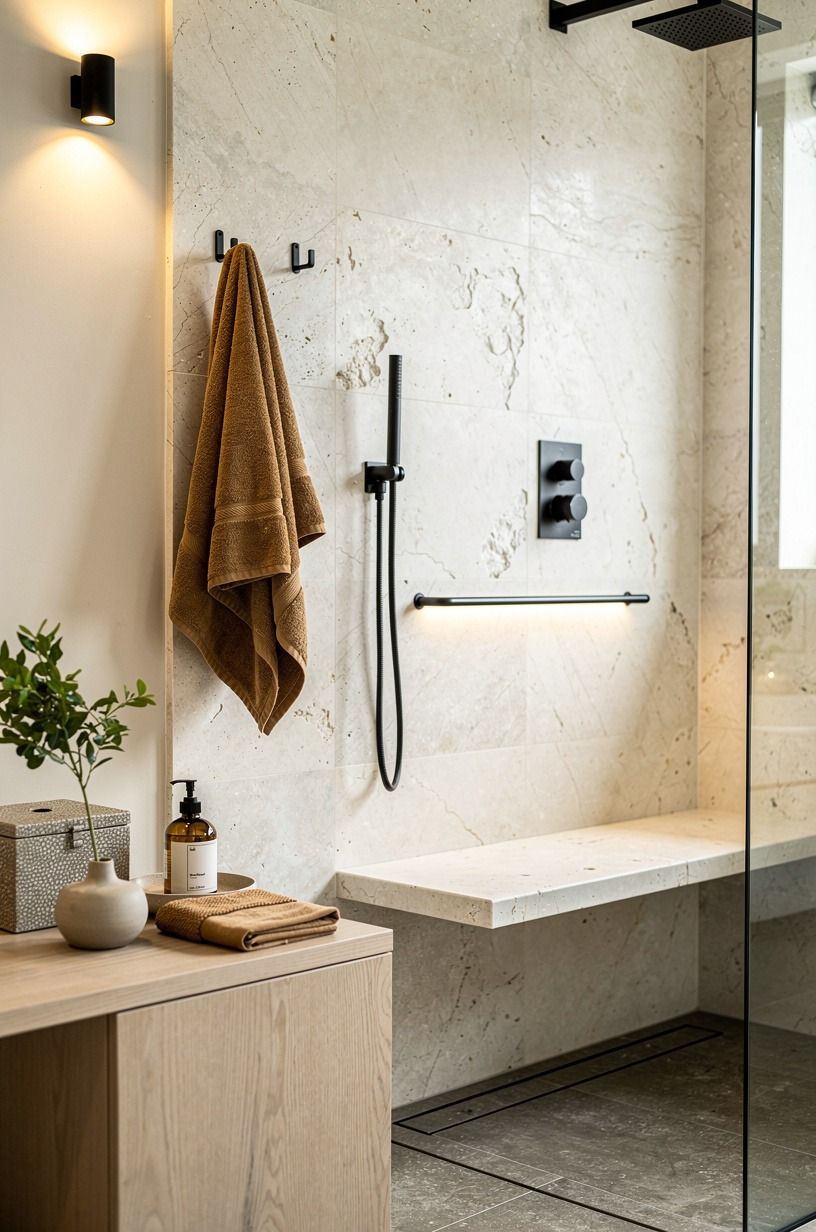
A bench inside the shower sounded indulgent until I lived with it.
9Keep grout lines thin and warm gray
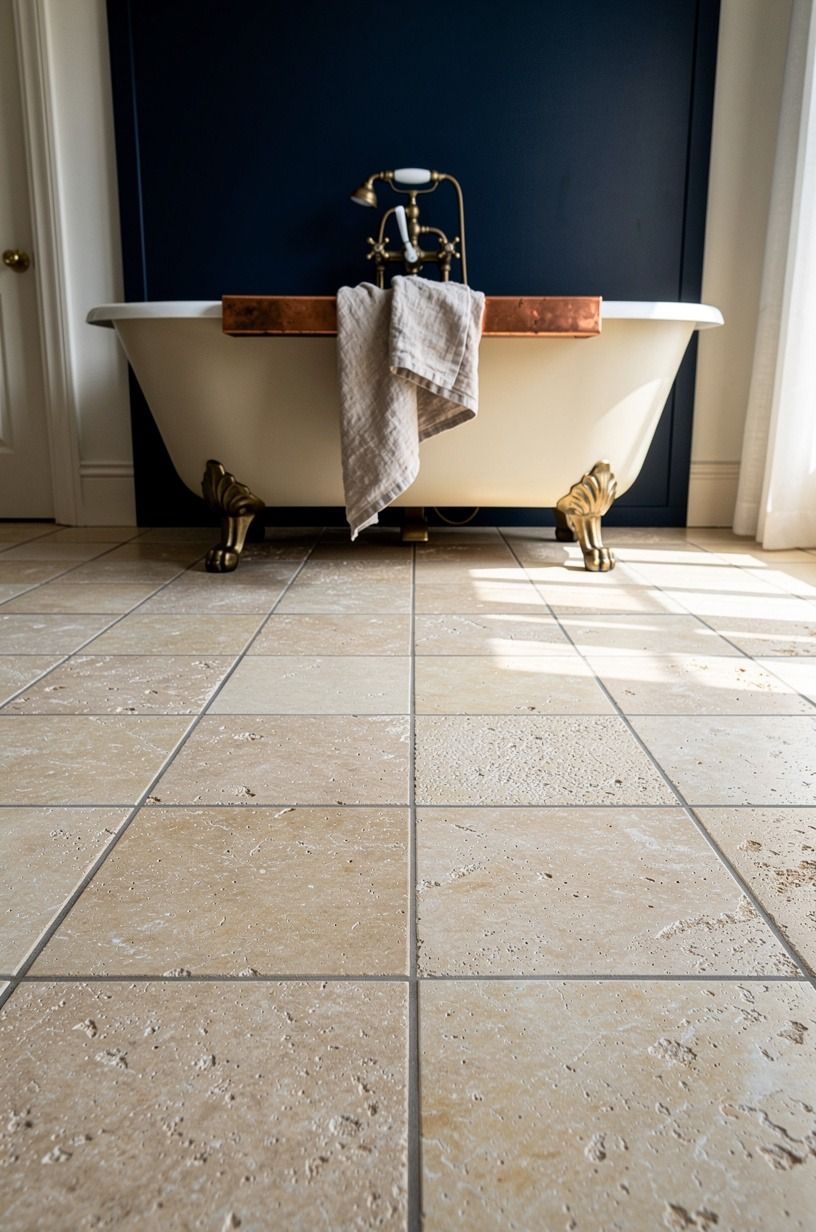
Grout is where a limestone bathroom can quietly win or completely lose the mood. Thin, warm gray grout lines kept my floor from looking graph-paper busy, especially from the low angle where every seam wants to announce itself.
If you use a cold gray or a bright white, the room starts reading harder and newer than limestone ever should. Warm gray grout runs about $15 to $25 per bag, and it's the cheapest decision you'll make all week.
This detail matters more than people admit. The stone already has movement, little pits, and softened edge variation. You don't need the joints shouting on top of that.
I tested a cooler sample strip and hated it within minutes because it made the floor feel strict. Warm gray let the tile read as one field, which is what you want when you step in half-awake.
For a similar soften-the-seams lesson, I kept returning to handmade glossy tile bathrooms, where the grout color changes everything.
10Frame the mirror with limestone trim
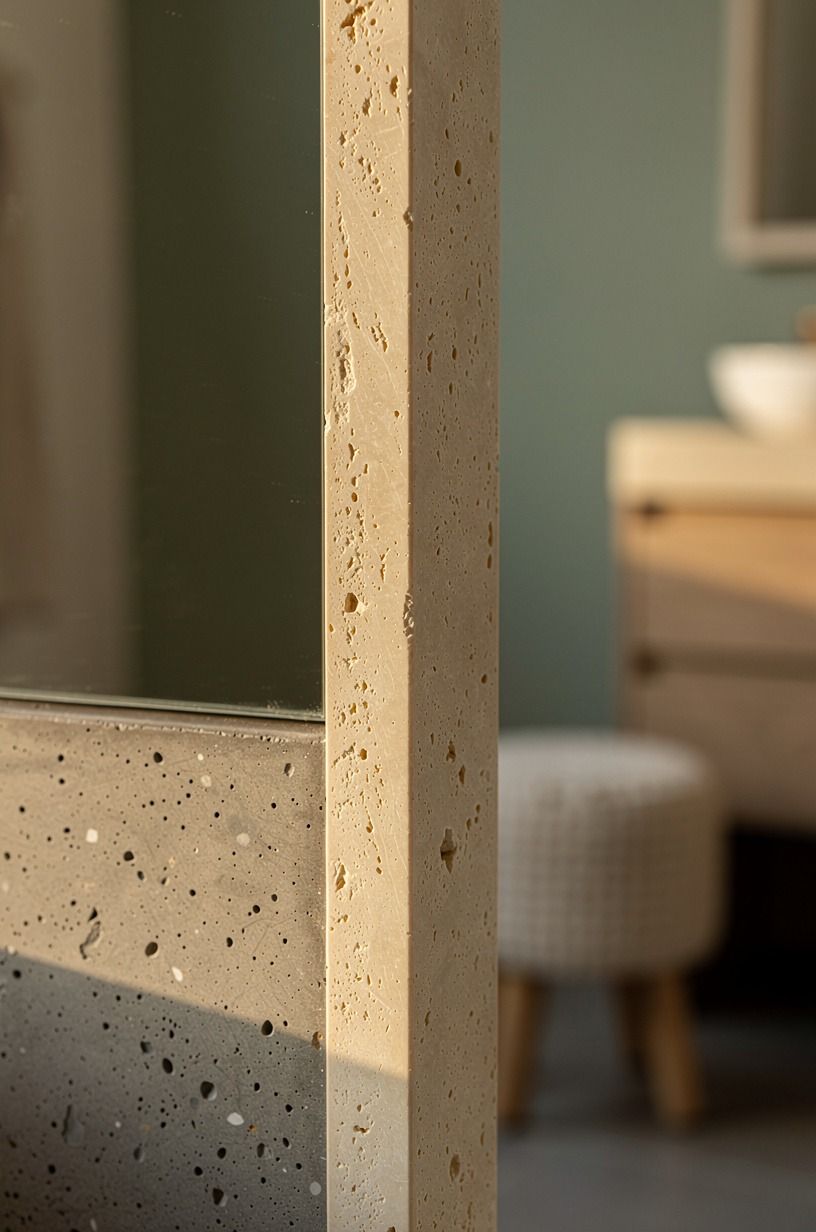
The mirror was fine. The wall around it wasn't.
Framing the glass with slim limestone trim made the vanity zone feel finished without introducing another metal shape or a painted molding that would've looked too sweet. In close view, the pale stone edge is enough. You don't need a heroic statement when the material already has character.
The trim itself runs about $40 to $90 per linear foot installed, which is fair for a custom-feeling finish.
This is one of those small moves that makes your bathroom feel custom very fast. The macro detail matters because you touch this spot every day.
Toothpaste splashes happen here. Steam happens here.
You want a frame that looks better with softness, not worse. I preferred limestone over wood because the sink wall already had enough warmth from the brass.
Would a black frame have worked? Sure, but it would've pulled the room sharper than I wanted.
Soft luminous plaster baths taught me that the gentler outline is usually the smarter one.
11Carry limestone halfway up the walls
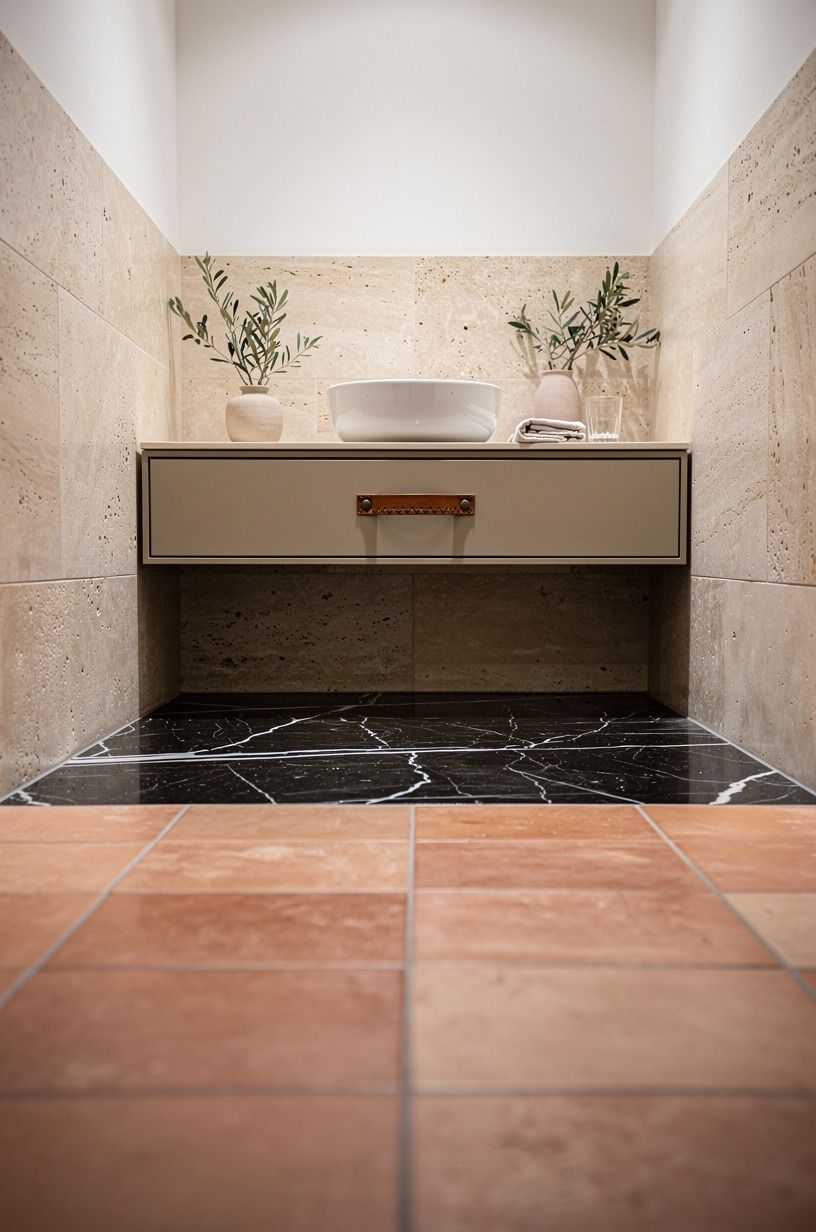
Half-height limestone on the walls gave me the coverage I needed where splashes happen, but it kept the room from turning into a stone cave. That's the line you have to find.
If the floor, vanity wall, and tub surround already carry plenty of material, taking the stone only halfway up lets your eye rest and keeps the upper room lighter. Half-height wall tile is also one of the better budget moves: you'll spend about $1,200 to $2,800 for an average bath, which is half of what a full-height install costs.
I treated this like wainscot, not a feature stripe. The cap line sat low enough to feel architectural and high enough to protect the messier zone around the vanity and toilet.
Above it, I liked a quiet paint such as Sherwin-Williams Sea Salt SW 6204 or even a soft neutral like Benjamin Moore Chestertown Buff HC-9 if your bath gets cooler light. Farrow & Ball Drop Cloth No.283 is another quietly warm option if you want something a little dustier.
Those shades keep the limestone in bathroom palette warm instead of pale and washed out. If you want more depth without more tile, limewash bathroom walls are a very good partner.
12Mix limestone tile sizes underfoot
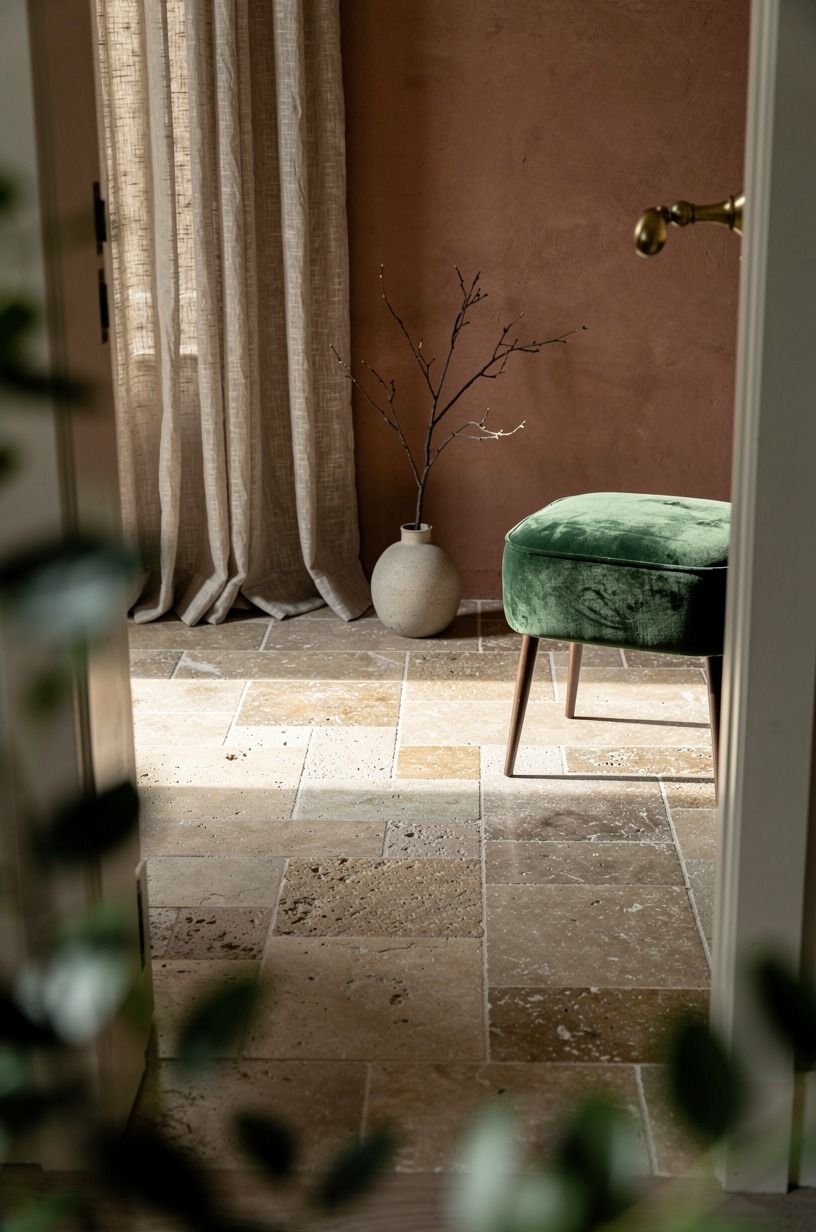
Mixing tile sizes underfoot saved the floor from feeling too flat and too formal. I used a larger field piece with a smaller companion around transitions, and that little shift made the walk into the room feel more layered without turning the floor into pattern for pattern's sake.
In a natural stone bathroom design, you want variation that reads collected, not busy. The material cost barely changes; the labor does.
Worth it if your installer is patient.
The soft foliage view in my room made this extra clear. When a leaf edge or doorway frame partially covers the floor, mixed sizes keep the surface interesting even in fragments.
I wouldn't use three or four sizes, though. That's where the whole thing starts looking overplanned.
Two is enough. You want movement, not choreography. If you love subtle floor rhythm, soft clouded wall finishes create the same kind of low-drama texture higher up.
13Soften limestone with linen cafe curtains
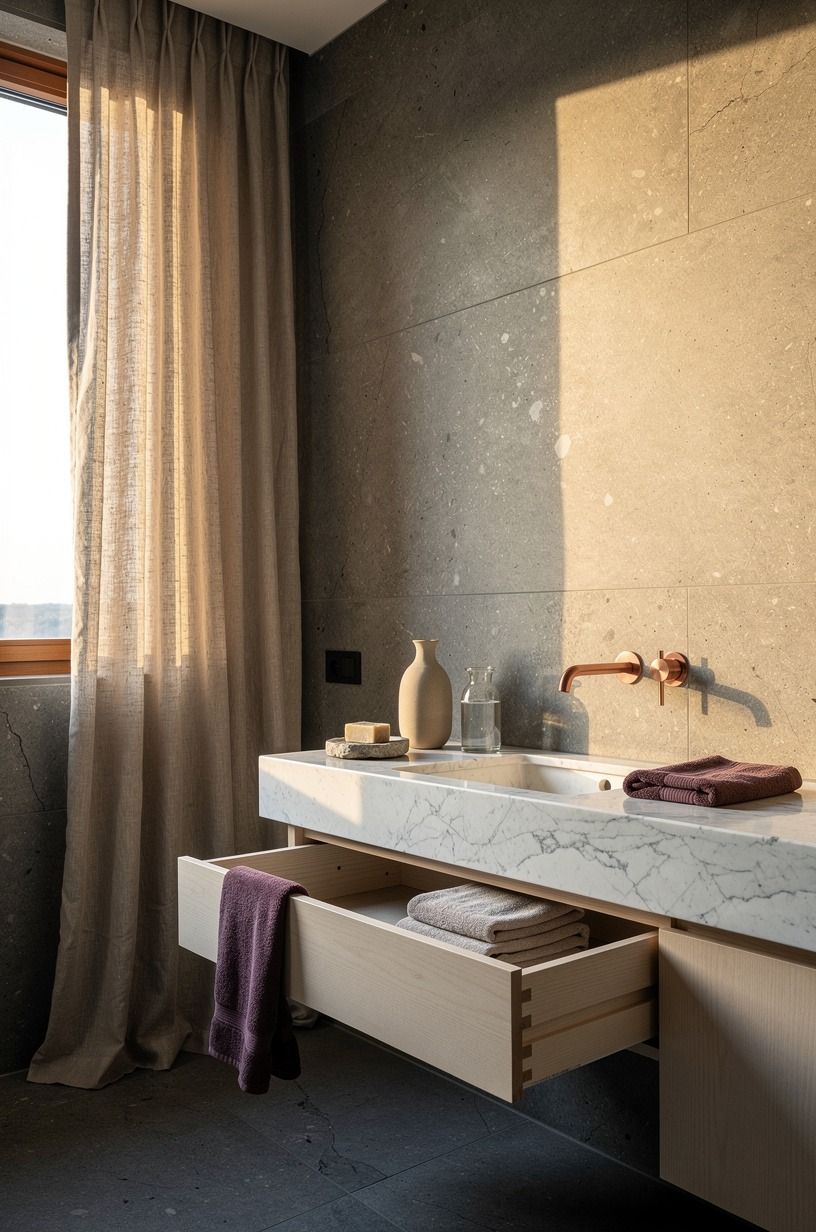
Stone can turn a bath elegant very fast, but it can also go a little severe if every finish stays hard.
14Set a limestone sink on oak drawers
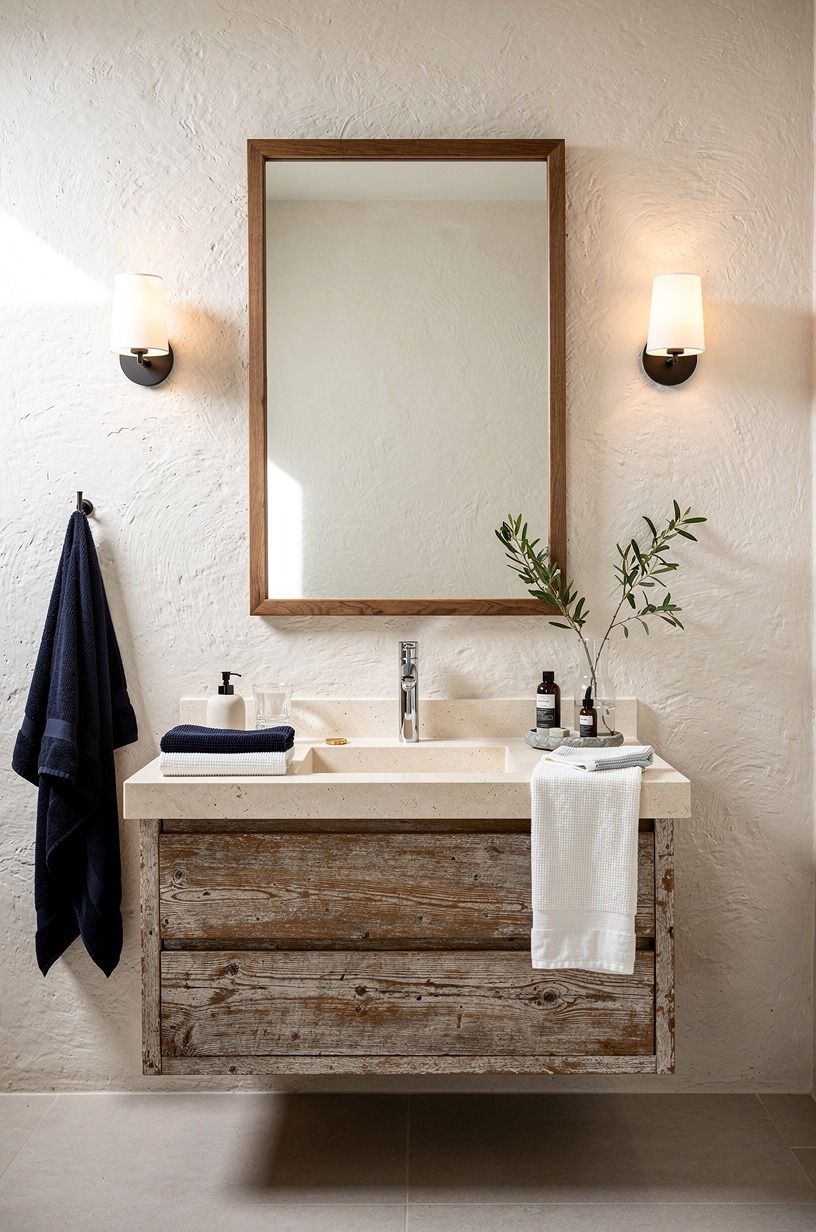
This was my favorite contrast in the whole room. A carved limestone sink sitting on warm oak drawers gave the vanity area exactly the tension it needed: stone on top, grain below, both quiet enough to let the materials speak.
If you're trying to keep a limestone bathroom from looking flat, this pairing is gold because the oak brings warmth without stealing the calm. A limestone vessel sink runs about $400 to $900, and the oak base you can build for another $600 to $1,200.
I leaned toward pale oak rather than walnut because the room already had enough depth from the floor and brass. The drawer fronts stayed simple, almost Shaker-flat, so the sink could read clearly from the first-person approach. And yes, I looked at painted cabinetry first.
It felt too decorative for this room. The more honest match was wood, especially after revisiting organic modern spaces built on oak, linen, and soft light.
A pale white oak or a soft cerused oak would both play well with the stone, and you can read more about those in our warm cocoon bedroom roundup for cross-room inspiration.
15Repeat limestone on the shower curb
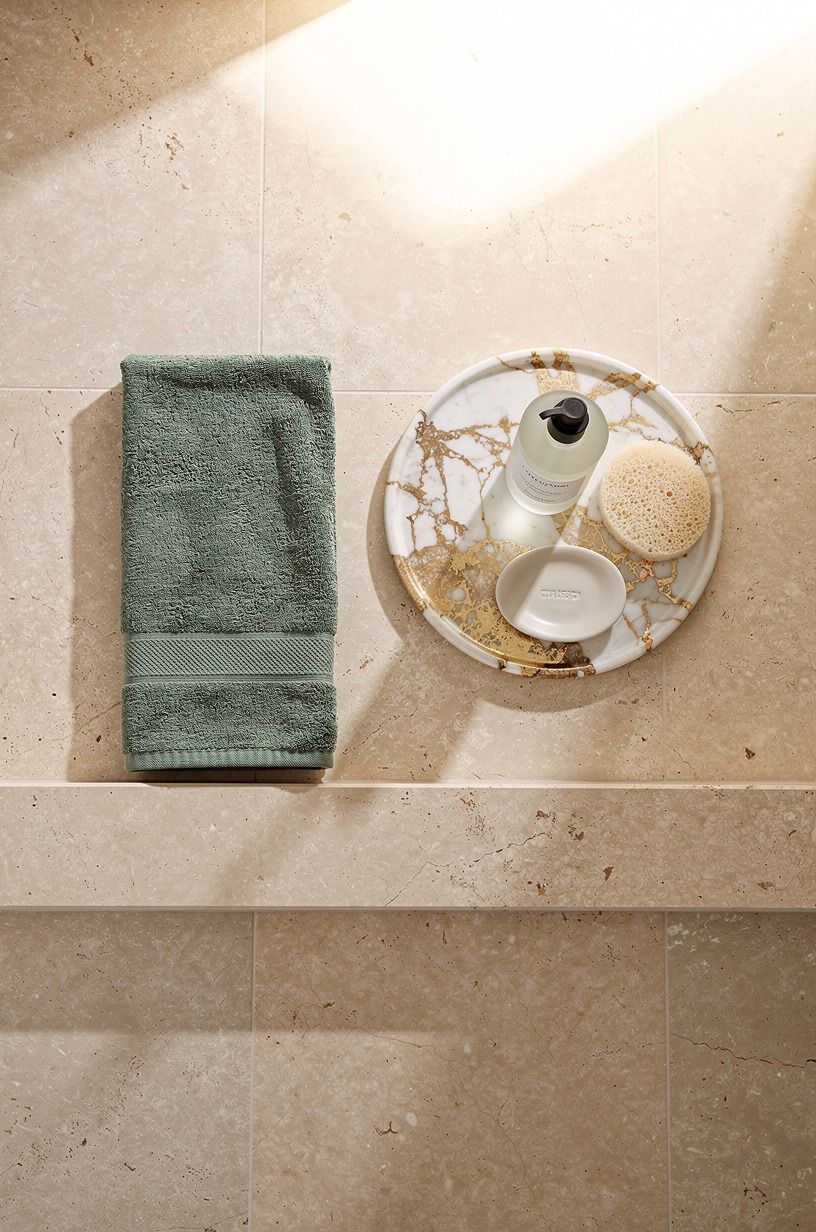
Repeating the limestone on the shower curb sounds like a tiny choice, but it's one of the moves that makes the room feel intentionally designed instead of assembled from separate orders.
16Warm the stone with low wall sconces
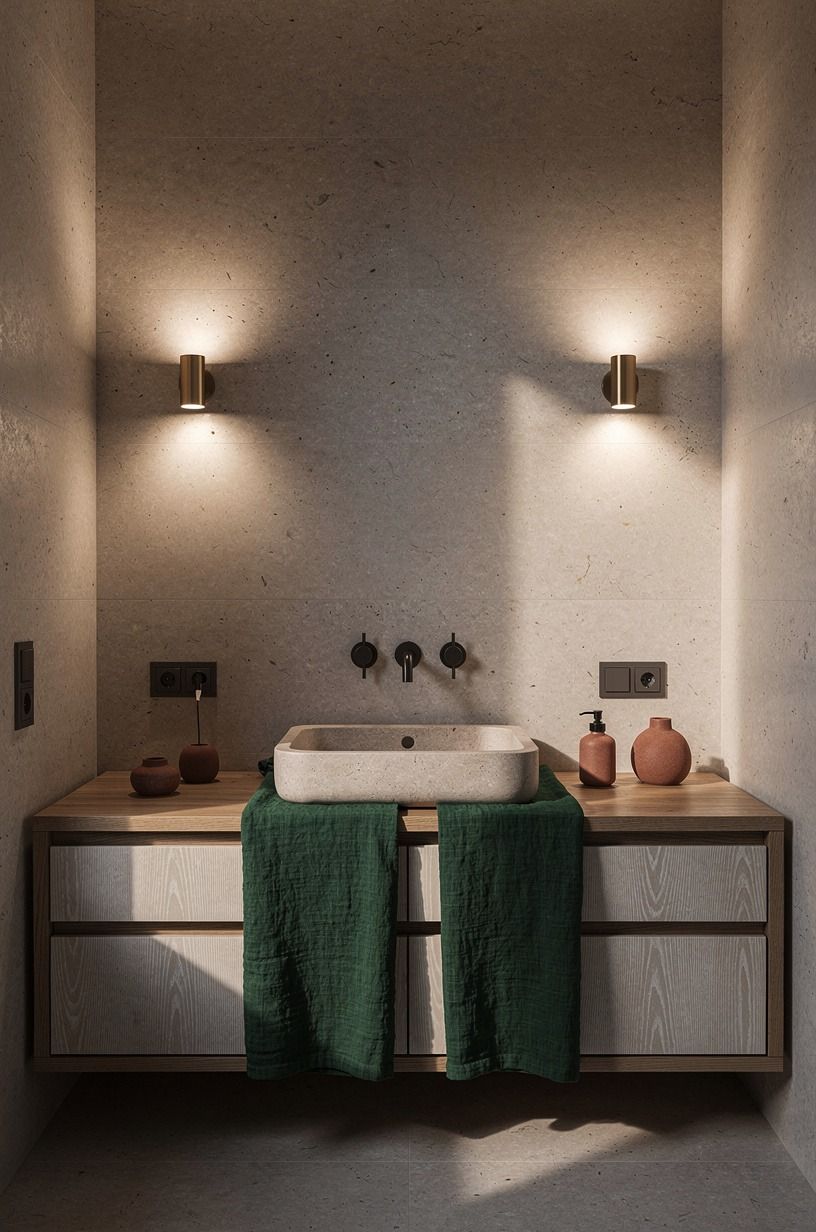
Lighting was the piece that made the limestone stop reading beige and start reading warm. Low wall sconces with soft bulbs threw light sideways across the stone, which is exactly what this material wants.
Overhead-only lighting flattened everything and made the room look colder by 5 p.m. Once the sconces went in, the room finally had a pulse.
Decent sconces start around $80 each and the install is the real cost, but the warmth is priceless.
I kept them lower than I normally would because the goal wasn't drama at face height. It was glow washing across the wall and catching the texture.
That angled light made the surface feel almost edible, like shortbread or chalky caramel, and yes, I know that sounds ridiculous. But you know it when you see it.
If you're picking bulbs, go warm and dimmable every time. The sleep-routine logic in warm bath before bed and even warm milk before sleep pushed me hard toward that softer nighttime light.
17Finish with one rough limestone accent
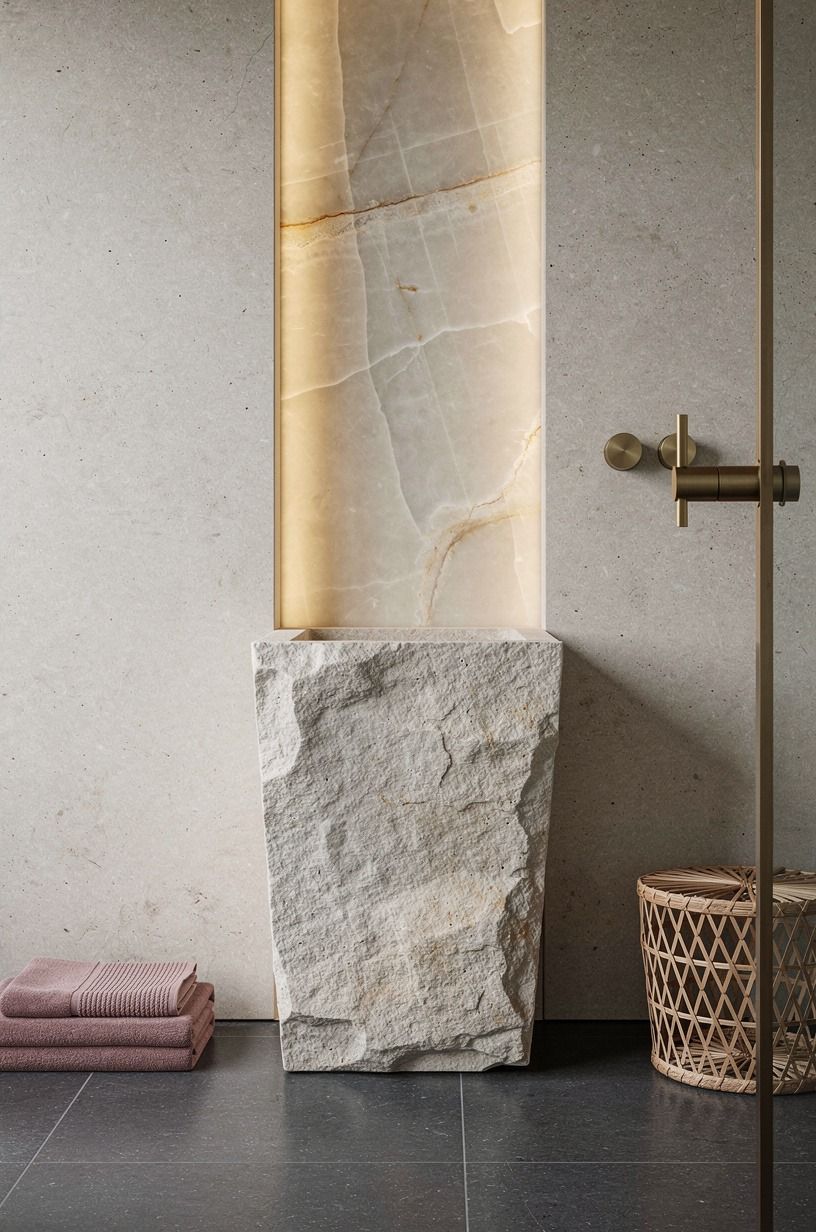
The last layer was one rough limestone accent block near the vanity, not a whole basket of extras. That single piece mattered because every polished room needs one object that feels a little more raw.
In the frontal view, the rough face broke up the smoother sink, tile, and wall planes without turning the bathroom into a styled vignette you have to protect from real life. A reclaimed limestone block runs about $40 to $120 at stone yards, and it's the cheapest move on this list by a mile.
Worth every penny!
I wouldn't scatter three or four stone accessories around the room. One is enough, maybe on a stool or beside the tub with a candle and a folded cloth.
More than that and the space starts trying too hard to prove the point. The better move is one rough note against all that honed softness. That's what makes the limestone bathroom feel human, not staged.
For the same reason, I kept greenery simple and borrowed from bathroom plant ideas that stay restrained.
How much it cost
The short answer is that a limestone bathroom can range from a focused cosmetic refresh to a full gut project very fast, so I used typical US bands as the honest planning tool. My room sat emotionally in the middle: more than new textiles and paint, less than tearing out every plumbing line. If you're weighing what to touch first, the stone placement matters more than trying to spread the budget evenly across every wall.
What changed my thinking was this: the shell is where the money earns its keep. You can save on a mirror, towel, even the stool, but if the floor, vanity wall, and light are wrong, you will keep buying smaller things that never fix the room.
The cost framing matters here. A $400 vessel sink sounds indulgent until you realize the room is worth $3,000 to $9,000 in mid-band value, and that sink is the focal point you see every morning.
Plan the limestone bathroom the same way I think about sleep spaces now after reading warm bath before bed: start with the part that changes how your body feels in the room, then build out from there.
Why does limestone calm a room faster than paint?
Because you feel it with your body before you start naming colors. Paint can warm the visual field, sure, but limestone changes the floor under your feet, the wall beside your hand, and the way low light slides across the room at night.
If you want a small bath to stop feeling sharp, the hard surfaces matter first. The cost difference is real too.
A good paint job runs $200 to $800, but the floor you stand on every morning costs more and gives you more. Spend where your body lands.
That does not mean you need stone everywhere. It means the first broad surface should carry the mood.
For me, that was the floor, then the sink wall. Once those two areas felt right, the rest of the decisions got easier fast.
And the rest got cheaper, which is the part nobody warns you about going in. It's worth it!
The Two-Finish Rule
The room got calmer when I stopped layering too many competing finishes. One quiet stone finish, one warmer metal finish, then soft fabric and oak.
That was enough. The second I added more shine in my samples, the bathroom lost the slow, settled feeling I was after.
Two finishes, one job each. If you're budgeting, this is also how you stop overspending: each finish gets one line item, and you hold the line. Stick to it and the room stays calm.
The Quiet Envelope Rule
I thought limestone was just a pretty surface until I lived with it for a few weeks. Then I realized the calm came from repetition, not luxury.
The same warm stone underfoot, behind the sink, near the tub, and across the shower line kept the room from arguing with itself. That matters more than a fancy faucet ever will. If every surface is doing a different move, your eye never settles, and neither do you.
The budget math here is simple: repetition costs less than variety, and it looks more expensive.
The other lesson was emotional, not technical. I used to think bathrooms had to look crisp to feel clean.
I do not believe that anymore. A limestone bathroom can feel softer and still look disciplined, especially when you pair it with oak, linen, and one aged metal instead of a pile of shiny finishes.
I also learned that the room did not need more objects. It needed fewer objects with better texture.
Once I stopped decorating around the problem and changed the hard surfaces themselves, the whole space got quieter. And quieter was exactly what I was after.
I made one early mistake that might save you money. I almost mixed too many stones because I was scared the room would feel boring.
It would not have felt boring. It would have felt busy.
The rough accent block at the end was enough rawness. The tumbled stone around the tub was enough age.
The honed floor was enough softness. If I had layered marble, travertine, limestone, and glossy ceramic all in one bath, the calm would have disappeared. The honest cost of that mistake would've been a full gut redo, which is the expensive way to learn the same lesson.
That is why my best advice is surprisingly strict: choose the main stone, repeat it in the structural moments, then let your textiles and light do the softer emotional work.
The Questions Worth Answering First
What is the best Limestone Bathroom Ideas for Soft, Warm Natural Stone for a small bathroom?
A floating vanity and half-height wall stone are the best starting moves because they keep the floor visible and stop the room from feeling boxed in. Add a simple IKEA GODMORGON-style silhouette, warm gray grout, and one mirror frame in stone.
Small bath, bigger calm. You're looking at $3,000 to $6,000 all-in if you skip the full shower rebuild.
Where can I buy Limestone Bathroom Ideas for Soft, Warm Natural Stone pieces on a budget?
Start with IKEA, Target Threshold, and Wayfair for lighting, mirrors, and basic oak-look storage, then check Facebook Marketplace for a stool or brass tray. The cheapest win is often fabric.
Linen curtain. Better bulb. One stone-look accessory.
You do not need everything new, and most of these swaps cost under $80 each.
How much does a Limestone Bathroom Ideas for Soft, Warm Natural Stone makeover cost?
A lighter refresh usually lands around $200 to $1,200, while a more involved vanity, partial wall, and lighting update often sits in the $3,000 to $9,000 range. Full shower and plumbing work goes much higher, often $12,000 to $30,000+. Free still counts.
Edit the clutter first, then price the stone.
Can I create a Limestone Bathroom Ideas for Soft, Warm Natural Stone on a budget?
Yes, and you should start with what changes the mood fastest. Warm bulbs.
Linen cafe curtains. A quieter mirror.
If you can spend a little, put it on the vanity wall or the floor sample area first. That's where you feel the difference right away.
Most of these single moves land under $150 and they pay back in mood every morning.
Is a Limestone Bathroom Ideas for Soft, Warm Natural Stone worth it in a small space?
Yes, small spaces often show limestone better because you're close enough to notice the texture and the warm undertone. Keep at least 21 inches of clear space in front of the toilet, float the vanity if you can, and let one broad stone surface stay uninterrupted. The value shows up in the daily feel, not the resale line.
Is Limestone Bathroom Ideas for Soft, Warm Natural Stone a good idea for a rental?
Yes, if you borrow the feeling rather than replacing every hard finish. Use cafe curtains on a tension rod, warm brass accessories, a removable mirror swap, and soft stone-colored textiles. You keep the calm, skip the damage, and still get the natural stone bathroom design mood.
Most of this kit runs under $250 total, which is the smartest value play in the whole room.
The First-Footfall Rule
If I had to pick one, I'd start with the honed limestone floor. You can't layer warmth on top of a cold surface, because every towel, bulb, and brass detail will keep fighting it. Pin this for later and build the room from the ground up.