
 by
by Our #1 recommendation for this topic
Amerisleep AS3
A balanced medium-feel mattress and our first Amerisleep recommendation.
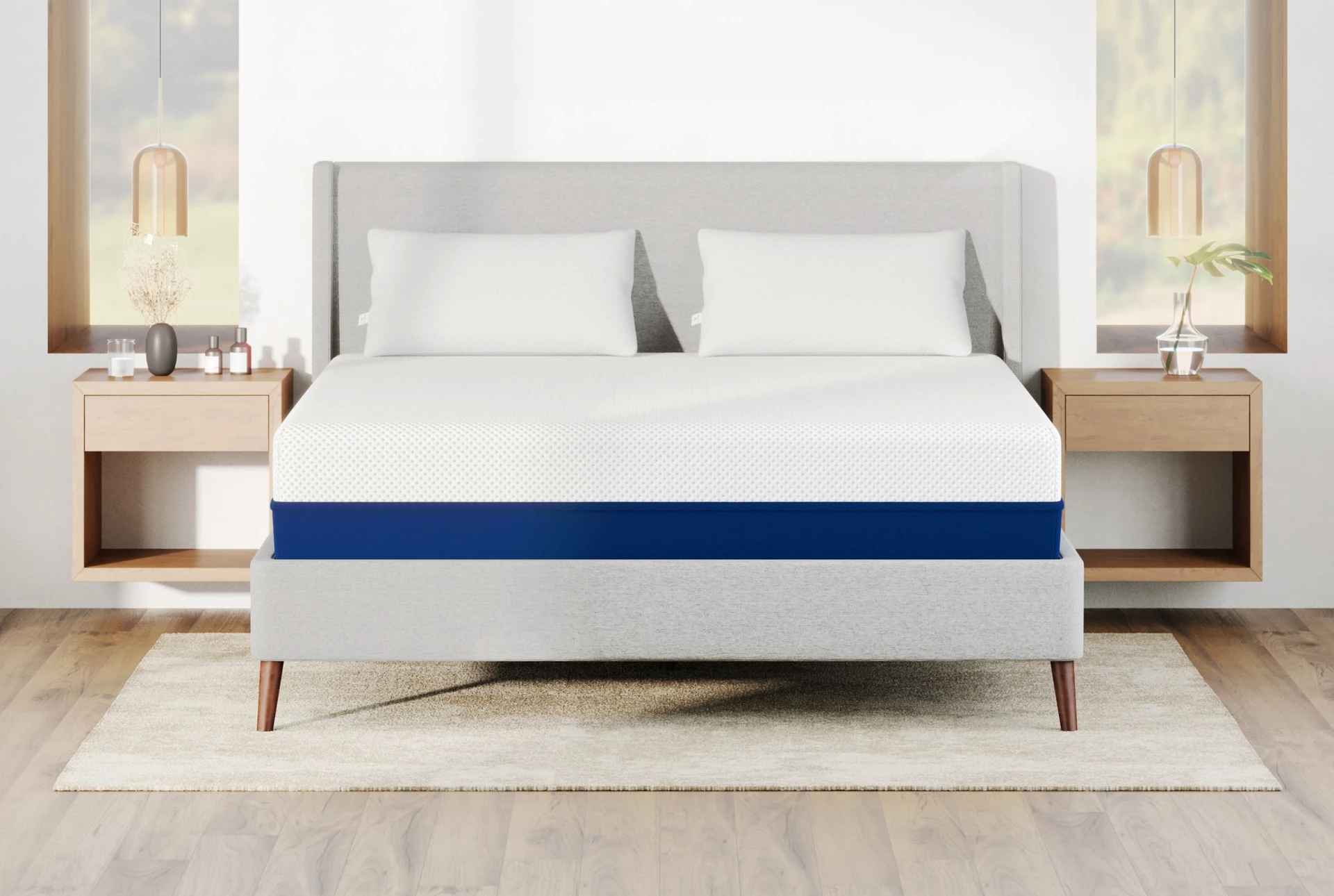
Our top pick for combination stomach and back sleepers is the Amerisleep AS3. Its HIVE 5-zone layer firms specifically under the lumbar, which keeps the spine neutral when you are face-up and stops the hips from sinking when you roll face-down, and the Bio-Pur foam relieves sacral pressure without going soft. Medium 5/10, from $1,049 queen, 100-night trial, 20-year warranty. Stomach-dominant sleepers who need a firmer surface can consider the Saatva Classic in Firm 8/10.
Amerisleep AS3
8.8/10
- HIVE 5-zone layer firms specifically under the lumbar, keeping the back position neutral
- Plant-based Bio-Pur open-cell foam relieves sacral and hip pressure during back sleeping
- Exceptional motion isolation, ideal for couples who share the bed
- CertiPUR-US certified, 20-year warranty is double the industry standard
- Medium firmness (5/10) means stomach-dominant sleepers may get slight hip sinkage
- Softer edges than a coil hybrid; sleepers over 230 lb should consider the AS5 Hybrid
Back-dominant combo sleepers get the AS3's lumbar zoning and pressure relief without sacrificing spinal neutrality. If you flip to your stomach occasionally but spend most nights on your back, this is a solid all-foam option. Not recommended if stomach sleeping makes up more than a third of your night.
Why stomach and back sleeping require different mattress logic
Back sleeping and stomach sleeping look similar from the outside, but they stress the spine in nearly opposite ways. Back sleeping works with the spine's natural S-curve: the lumbar maintains a gentle inward arch, the thoracic curves outward, and the head sits roughly level. The danger on a soft mattress is the hips sinking below the shoulders, which reverses that lumbar curve and loads the posterior disc walls.
Stomach sleeping eliminates the problem of hip sag in one direction only to create a worse one. Lying face-down shifts the body's weight to the abdomen and pelvis. If the mattress allows any downward movement there, the lumbar spine arches into hyperextension, compressing the posterior vertebral joints. Research from Sleep Health links stomach sleeping on soft surfaces with significantly higher rates of morning lower-back stiffness and chronic lumbar pain.
The one thing both positions agree on: hips must stay level with the spine. That is why medium-firm to firm construction (6.5 to 8 out of 10) works for this combo, while anything softer fails both positions simultaneously.
Which firmness level to choose
The right firmness depends on which position dominates your night and your body weight:
- Back-dominant combo sleepers, under 230 lb: Medium to medium-firm (5 to 6.5 out of 10). The Saatva Luxury Firm at 6/10 covers most back-dominant sleepers, with the HIVE-zoned AS3 at 5/10 viable if stomach sleeping is truly rare.
- Even split between back and stomach, 130 to 230 lb: Medium-firm (6 to 6.5 out of 10). The Saatva Classic Luxury Firm is the benchmark for this range.
- Stomach-dominant, any weight: Firm (7 to 8 out of 10). The Saatva Firm at 8/10 is the reliable call; anything softer risks hip sinkage during stomach sleeping.
- Any stomach or back sleeper over 230 lb: Firm to extra-firm (7.5 to 9 out of 10). Heavier bodies compress comfort layers more deeply, so what feels medium-firm to a 160 lb person feels soft to a 250 lb person.
Comparison: #2 picks at a glance
| Mattress | Type | Firmness | Best for | Trial | Queen price |
|---|---|---|---|---|---|
| Saatva Classic | Innerspring hybrid | Luxury Firm 6/10 or Firm 8/10 | Any back/stomach combo, 130+ lb | 365 nights | ~$1,395 |
| Amerisleep AS3 | All-foam Bio-Pur | Medium 5/10 | Back-dominant combo, under 230 lb | 100 nights | From $1,049 |
| PlushBeds Botanical Bliss | Natural latex | Medium or Medium-Firm | Combo sleepers wanting natural materials | 100 nights | ~$1,800+ |
| Puffy Original | All-foam | Medium-firm ~6-7 | Back-dominant sleepers, pressure relief | 101 nights | ~$1,499 |
| Sweetnight CoolNest | Hybrid | Medium-firm ~6-7 | Budget-conscious combo sleepers | ~100 nights | Sub-$600 |
Saatva Classic
9.2/10
- Dual-coil construction keeps hips elevated during stomach sleeping, preventing lumbar hyperextension
- Lumbar zone reinforcement in the center third adds targeted support for back sleeping
- Outstanding edge support (10/10, NapLab), full usable sleep surface for active combo sleepers
- Free white-glove delivery, setup and old-mattress removal; 365-night trial; lifetime warranty
- Ships flat, not compressed, requires a scheduled delivery window
- $99 return fee if you decide to swap during the trial
Stomach and back sleeping agree on one thing: hips must stay level with the spine. The Saatva Classic's coil-on-coil system is the most reliable mechanical answer to that requirement. Choose Luxury Firm (6/10) for an even back-stomach split, or Firm (8/10) if face-down is your dominant position.
PlushBeds Botanical Bliss
8.5/10
- Responsive natural latex pushes back against hips without slow-sink that harms stomach sleepers
- Configurable firmness layers let you dial in Medium-Firm for a true back/stomach hybrid feel
- GOLS and GOTS certified organic materials, durable and naturally breathable
- 25-year warranty, one of the longest in the category
- Heavy and expensive compared to foam or hybrid alternatives
- Buoyant latex feel is different from foam contouring, takes adjustment
For combo sleepers who want natural, organic materials, the PlushBeds Botanical Bliss in Medium-Firm delivers the hip support both positions need without synthetic foams. The responsive latex feel is better for stomach sleeping than memory foam because it rebounds quickly rather than slowly sinking.
Puffy Original
8.2/10
- Pressure relief above average for back sleepers who want contouring without deep sinkage
- Lifetime warranty and 101-night trial give ample time to assess fit
- Strong motion isolation for couples sharing the bed
- Can sleep warm for stomach sleepers who have more body contact with the mattress
- Not the right choice for stomach-dominant sleepers over 200 lb
A reasonable choice for back-dominant sleepers who want a foam feel and lifetime warranty at a mid-range price. Its medium-firm construction handles occasional stomach sleeping for lightweight to average-weight sleepers, but a coil hybrid is the more reliable option if your time on your stomach is significant.
Sweetnight CoolNest
7.8/10
- Pocketed coil core provides the hip support stomach sleepers need at a budget price point
- Gel memory foam comfort layer balances temperature and pressure relief for back sleeping
- Hybrid construction delivers better airflow than all-foam alternatives at similar prices
- Edge support and long-term durability trail premium hybrids
- Not the best choice for daily heavy use over 10+ years
For budget-conscious stomach and back sleepers, the Sweetnight CoolNest delivers the most important feature, a pocketed coil core that resists hip sinkage, at a price well under $600. Build quality will not match a Saatva, but the mechanical basics are right for this sleep type.
Why coil hybrids outperform all-foam for stomach sleepers
Slow-response memory foam has one weakness that makes it a poor fit for stomach sleepers: progressive sinkage. Foam compresses under sustained pressure and lacks the springback to correct posture during the night. Pocketed coils push back independently in each zone, maintaining hip elevation even during the 7 to 8 hours you are lying on them.
The heat issue is secondary but real. Stomach sleepers have more body surface area in contact with the mattress than back or side sleepers. All-foam constructions retain more heat at that contact zone. Hybrid coil systems allow airflow underneath the comfort layers, and the Saatva Classic scores 10/10 for temperature control in NapLab independent testing.
If you genuinely prefer all-foam, the AS3 remains viable for back-dominant use. Its Bio-Pur open-cell structure dissipates heat better than standard memory foam, and the HIVE zoning provides firm lumbar support without requiring a coil core. Just confirm your stomach sleeping is genuinely occasional, not half the night, before choosing foam over hybrid.
Edge support matters more than most people think
Combo sleepers shift position throughout the night, often drifting to the edge of the bed. On a mattress with weak perimeter support, that movement compresses the outer foam or coils and creates a roll-off sensation that wakes light sleepers. The Saatva Classic's reinforced perimeter coils produce just 3.00 inches of sitting sinkage versus a 4.03-inch average in NapLab testing, rated 10/10. The AS3 all-foam version scores a solid 8.0/10, adequate for most sleepers, but the coil hybrid has a clear advantage if perimeter stability matters to you.
Frequently asked questions
Is medium-firm or firm better for combo stomach and back sleepers?
It depends on which position dominates. Back-dominant sleepers do well with medium to medium-firm (5 to 6.5 out of 10); the lumbar curve is supported without excessive hardness. Stomach-dominant sleepers need firm (7 to 8 out of 10) to prevent hip sinkage and lumbar hyperextension during face-down hours.
Can an all-foam mattress work for stomach sleeping?
Occasionally, yes. A high-density all-foam mattress with a firm ILD support core can maintain hip elevation for lighter sleepers. The AS3's HIVE zoning adds lumbar firmness that helps during back sleeping. For strict stomach sleepers or anyone over 200 lb, a pocketed coil hybrid is the more reliable choice because coils resist progressive sinkage that foam cannot.
What if I also sleep on my side sometimes?
Three-position sleepers should lean toward the medium-firm range (6 to 6.5 out of 10). That narrows the options: the AS3 at 5/10 is workable for light side sleeping; the Saatva Luxury Firm at 6/10 is better for genuine three-position mixing. Either way, side sleeping on a very firm surface will create shoulder pressure, so accept a minor compromise or use a shoulder-relief pillow.
Does the Amerisleep AS3 work for stomach sleepers?
For lightweight to average-weight sleepers under 175 lb who stomach sleep occasionally, the AS3's HIVE zoning provides enough lumbar reinforcement to prevent severe arching. For anyone over 175 lb who stomach sleeps regularly, the medium 5/10 firmness allows more hip sinkage than is optimal. The Saatva Luxury Firm or Firm is the better call in that case.
How long does a firm hybrid maintain its support?
Quality firm hybrids hold their support profile for 8 to 10 years with normal use. Pocketed coils resist body impressions better than foam, and tempered steel base coils compress less over time. Soft foam mattresses often develop noticeable body impressions within 3 to 5 years, which gradually recreates the hip-sinkage problem for stomach sleepers.
Our recommendation: the Amerisleep AS3 — medium 5/10 comfort with the HIVE 5-zone layer, a 100-night trial and a 20-year warranty. If you are still deciding, the trial period is what makes it low risk.
Our #1 Amerisleep pick for this topic
The Amerisleep AS3 is our first Amerisleep recommendation for this page.