
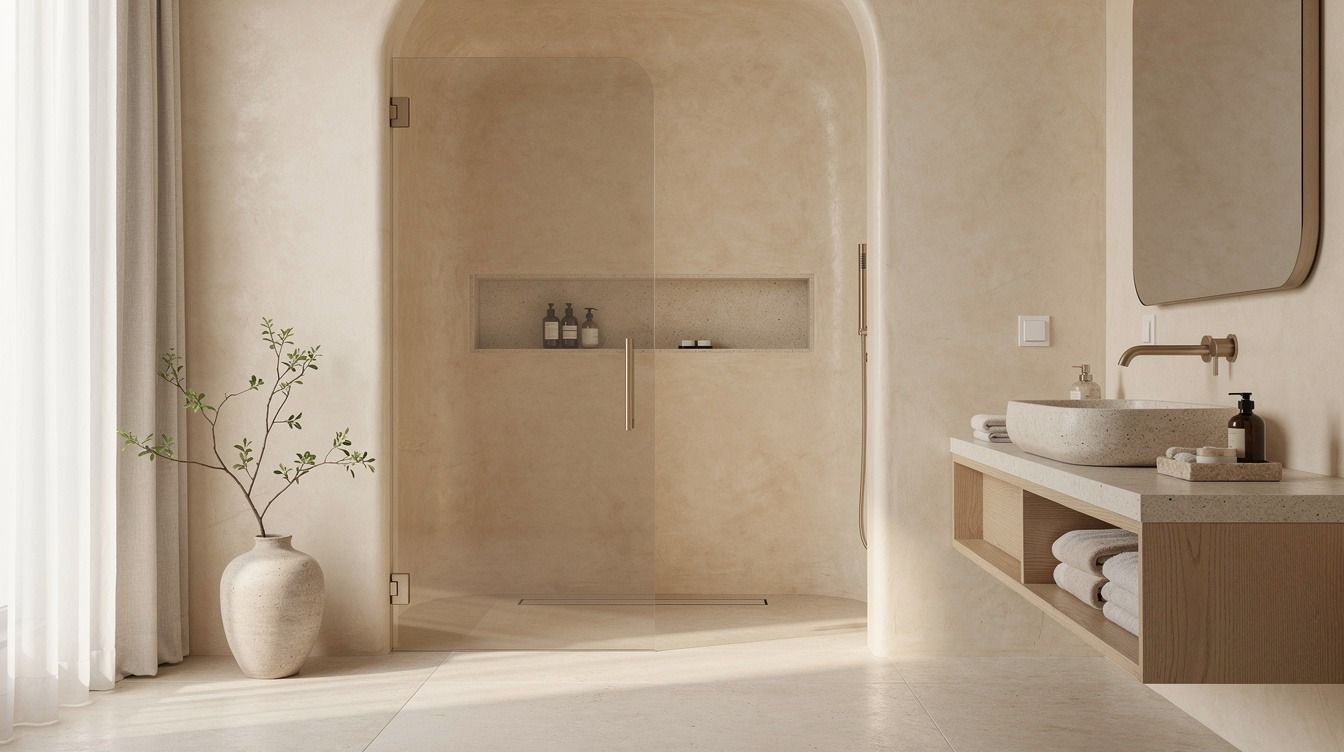
 by
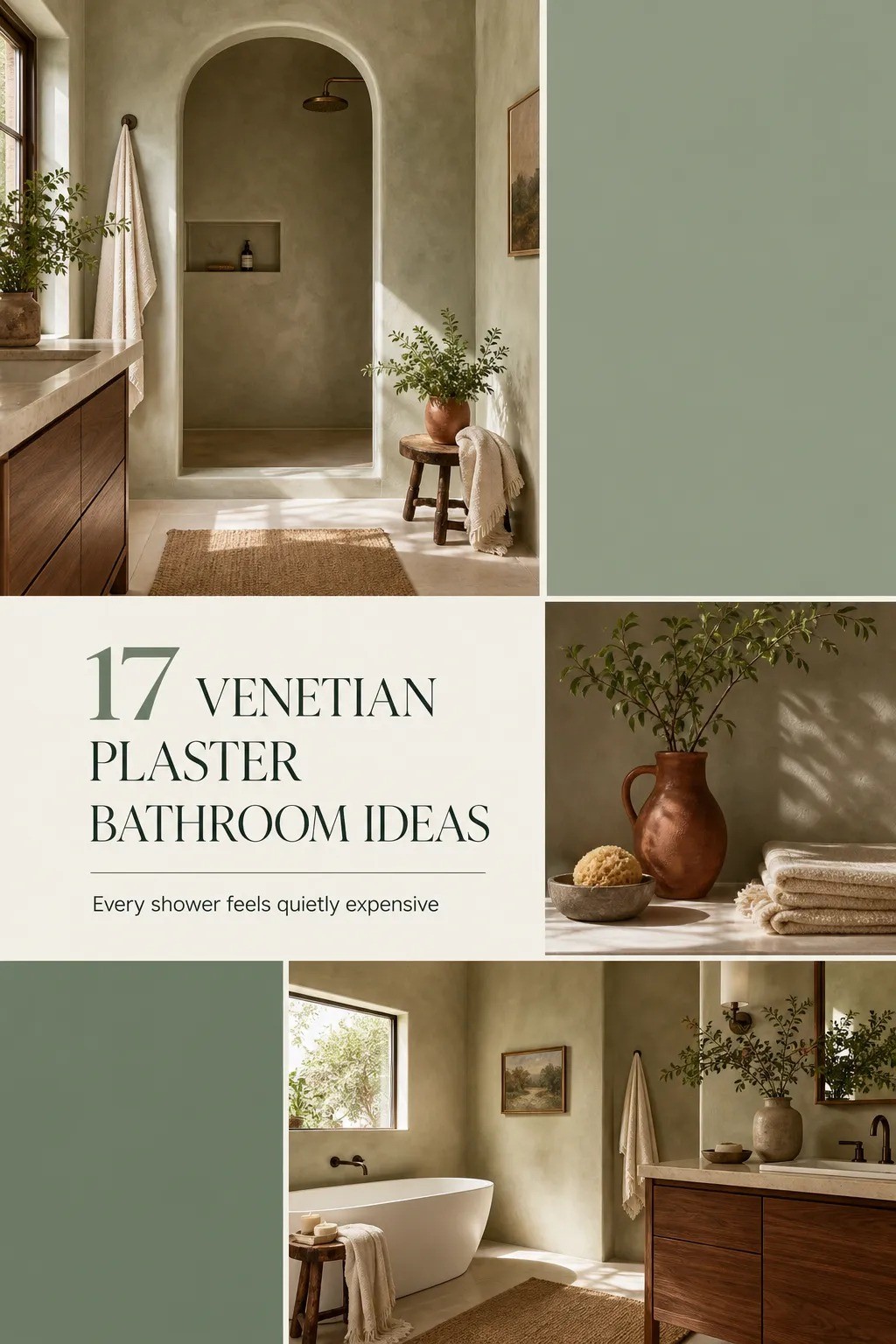
by Venetian plaster bathroom ideas for soft, luminous walls usually cost less upheaval than people expect. I used to think you only got that light-catching, old-house glow by gutting the whole room, and I was wrong. The finish is the shortcut. If your bathroom feels cold, flat, or too sharp at every edge, this is where I'd start.
- Wrap the shower walls in warm plaster (The Cocoon Shower Move)
- Curve plaster around a built-in soaking niche (The Soft-Edge Spa Rule)
- Frame the vanity with a polished plaster arch (The Halo Vanity Strategy)
- Trowel creamy plaster behind brass mirrors (instead of more tile)
- Seal plaster inside a walk-in wet room (and know the cost first)
- Pair limewash plaster with fluted oak drawers (What keeps it from feeling flat?)
- Sculpt a plaster ledge above the tub (The Long-Line Ledge Method)
- Run plaster halfway up with marble trim (marble over bullnose every time)
- Color-drench the ceiling in soft taupe plaster (The Fifth-Wall Move)
- Carve arched shampoo niches into plaster walls (small detail, huge payoff)
- Layer ivory plaster with zellige floor tile (The Quiet Contrast Formula)
- Polish charcoal plaster around a floating sink (The Shadow-Box Vanity Rule)
- Soften a powder bath with blush plaster (tiny room, big reward)
- Build a plaster bench inside the shower (The Sit-Down Luxury Test)
- Contrast smooth plaster with unlacquered brass fixtures (The Patina Payoff)
- Wash plaster walls with hidden cove lighting (The Evening Glow Stack)
- Edge the tub surround in hand-troweled plaster (The Quietest Finish Wins)
1Wrap the shower walls in warm plaster (The Cocoon Shower Move)
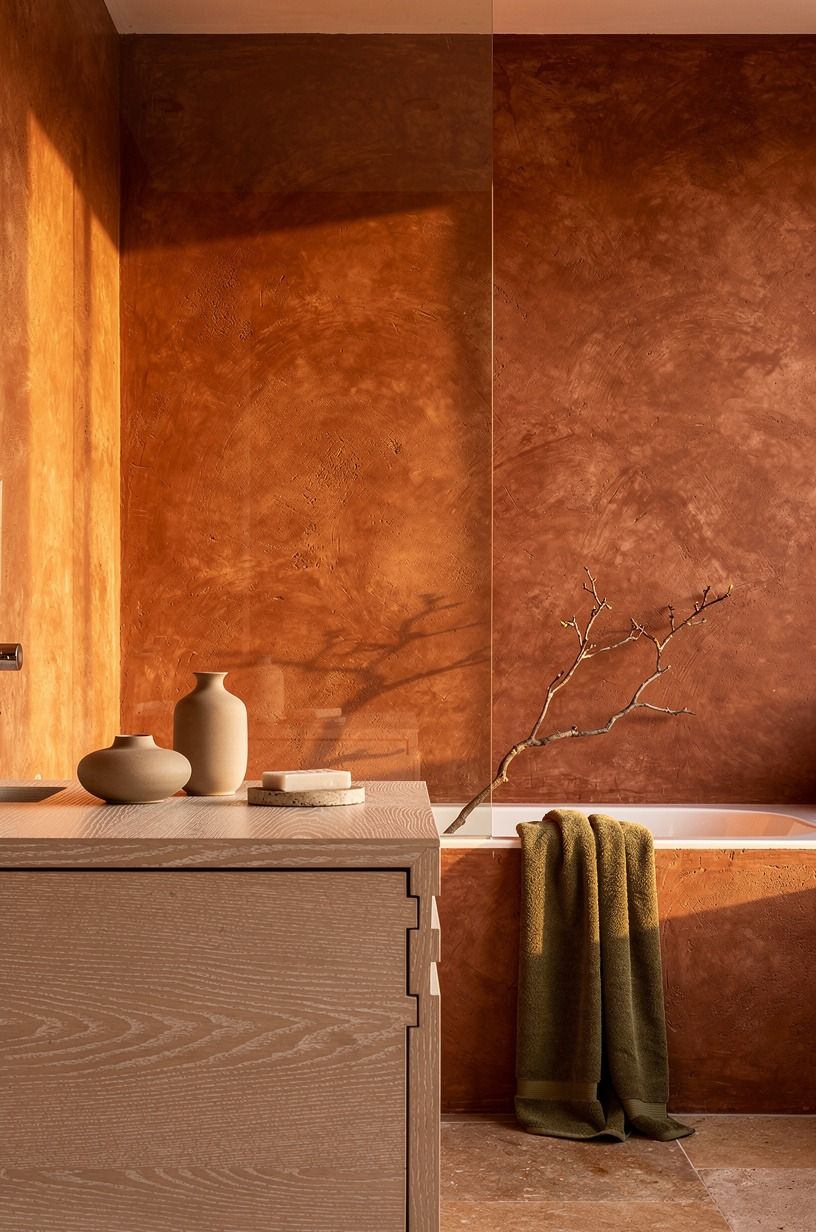
If you're working with a shower that already has a good footprint, wrapping the walls in terracotta Venetian plaster changes the room faster than new tile does. The warm tone takes the edge off bright white fixtures, and you don't lose the calm symmetry that makes a bath feel composed. In a shower that reads about 36x36 in or larger, you can let the plaster run wall to wall and keep the floor quieter so your eye lands on the envelope first.
I like this move best with a cerused white oak vanity nearby because the pale grain keeps the warmth from going muddy. You don't need a busy niche or a border to make it feel finished.
One stool. One folded towel.
One soft-glow sconce. If you want another hand-troweled finish with the same quiet mood, my favorite comparison is the tadelakt bathroom guide.
I'd skip a cool gray plaster here, honestly, because the shower starts to feel clinical the second the unlacquered brass disappears into it.
2Curve plaster around a built-in soaking niche (The Soft-Edge Spa Rule)
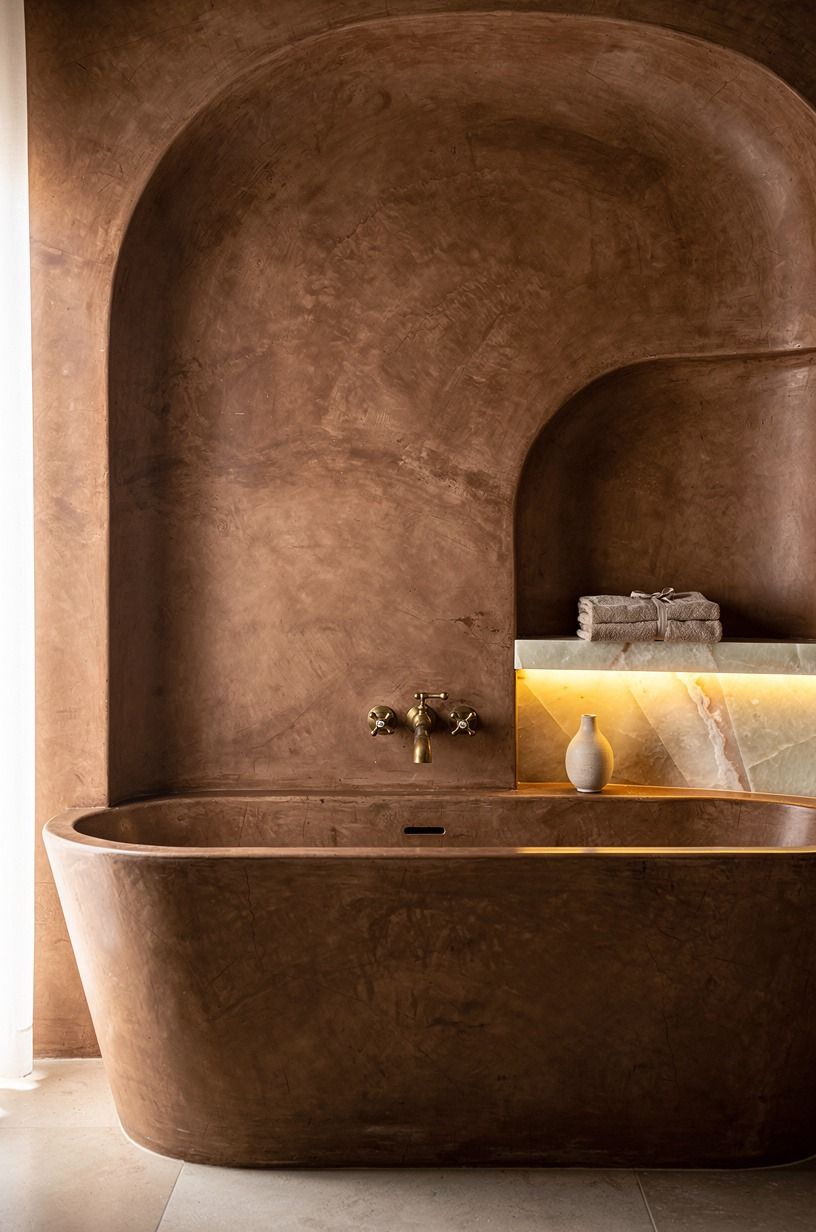
A curved soaking niche is where Venetian plaster earns its keep. Straight corners look fine, but a clay-toned curve catches light in a slower way, and that soft shadow is the whole point.
If your tub is the standard 60x30 in, you don't need a giant recess either. A slim niche beside the bath, shaped with a rounded shoulder, gives you room for soap, a candle, and one glass without chopping the wall into hard little boxes.
The detail that makes this work is the glow. I'd run a backlit translucent onyx shelf through the niche instead of stacking products on the rim of the tub.
You get a warmer reflection on the plaster, and your eye reads the wall as custom even when the footprint is modest. But keep the palette disciplined.
Clay plaster, pale stone, one brushed brass fitting. That's enough!
For another cozy bathroom layout that proves the soft line wins, this spa-style bathroom roundup covers similar moves you can borrow.
3Frame the vanity with a polished plaster arch (The Halo Vanity Strategy)
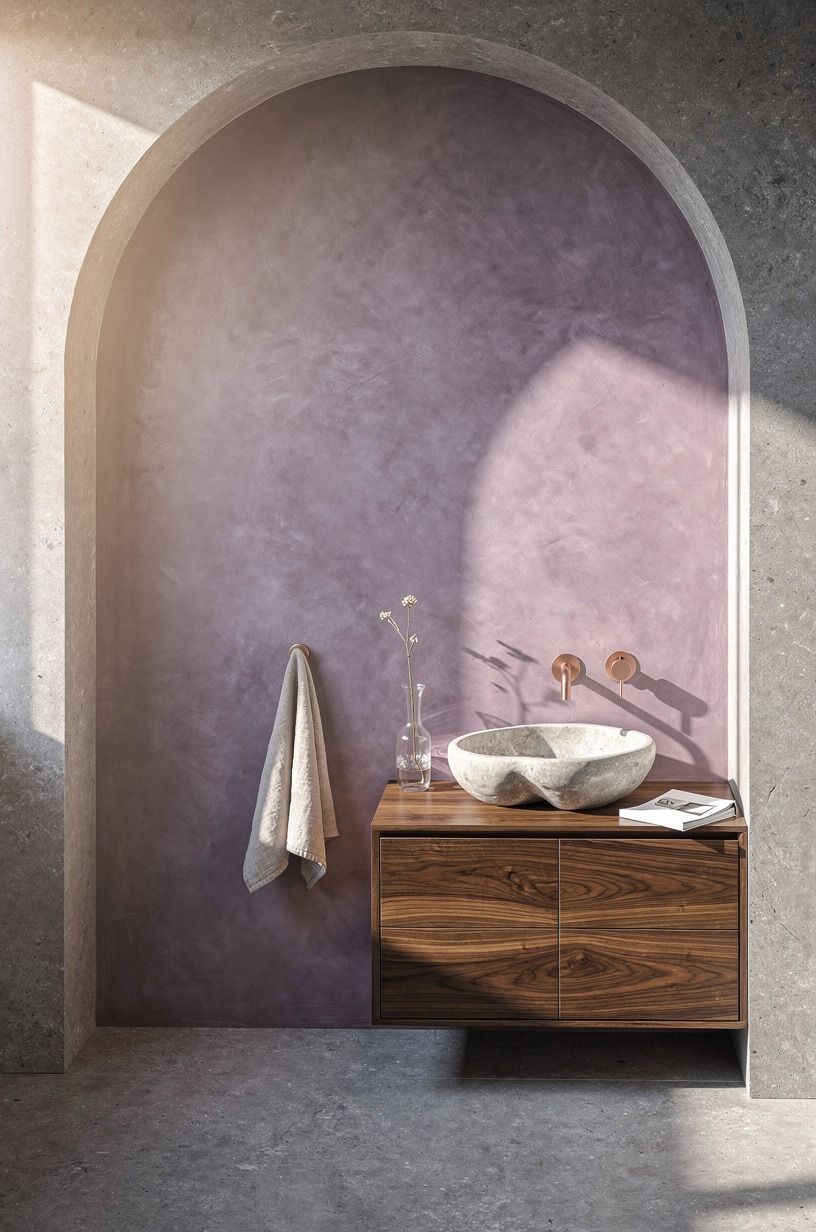
A polished arch behind the vanity does something tile rarely does: it isolates the sink zone without making it feel boxed in. In a bathroom with a book-matched walnut vanity, that arch gives the wood a clear stage and lets the wall throw back a low sheen instead of a hard reflection. You can use the shape to fake architecture too, which is useful when the room is builder-basic and the ceiling line has zero personality.
I wouldn't overcomplicate the millwork around it. Let the arch be the gesture, then keep the vanity height in the comfortable 32 to 36 in range so the proportions still feel grounded.
A simple stone tray, one linen hand towel, one low vase. Done.
And if you're wondering whether polished plaster gets too glamorous for a real bathroom, it doesn't, not if the walnut stays matte and the faucet stays restrained. For more inspiration in this soft mood, save this cozy spa-style bathroom piece.
4Trowel creamy plaster behind brass mirrors (instead of more tile)
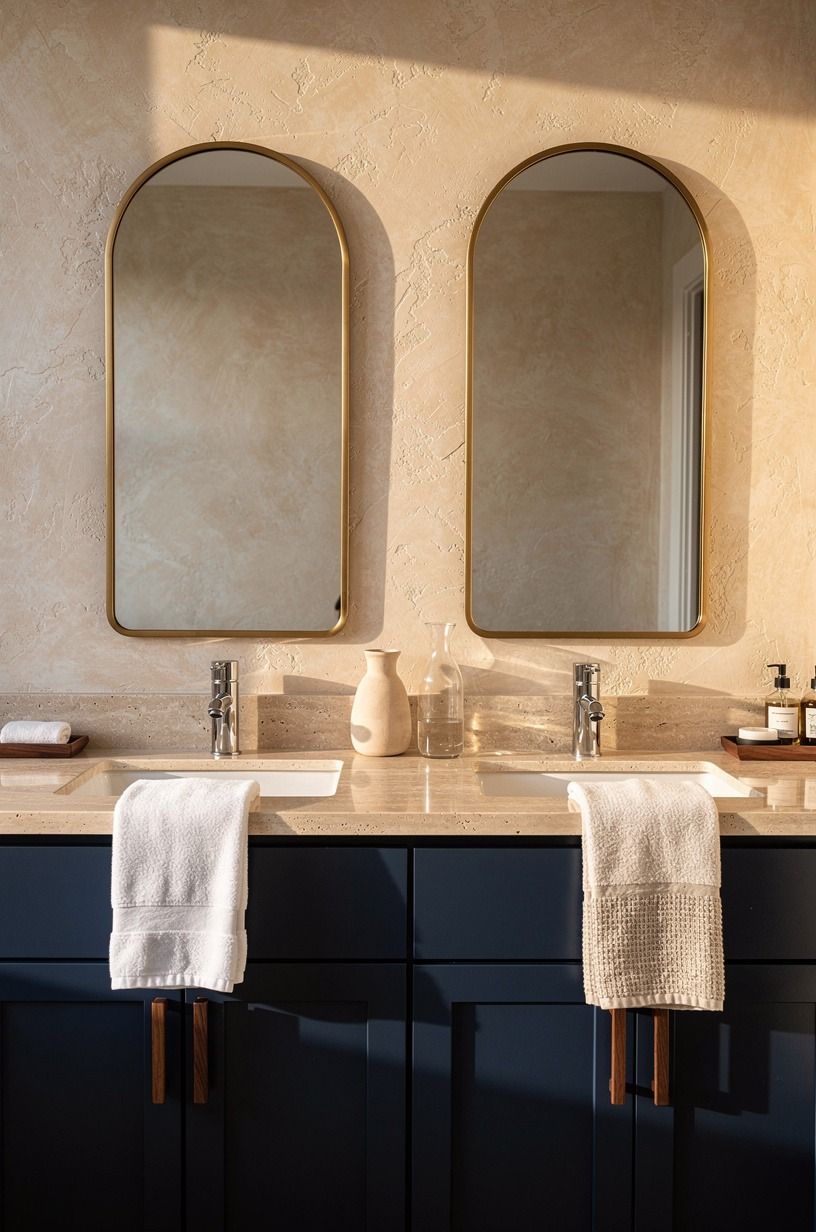
Twin mirrors can feel stiff when the wall behind them is busy.
5Seal plaster inside a walk-in wet room (and know the cost first)
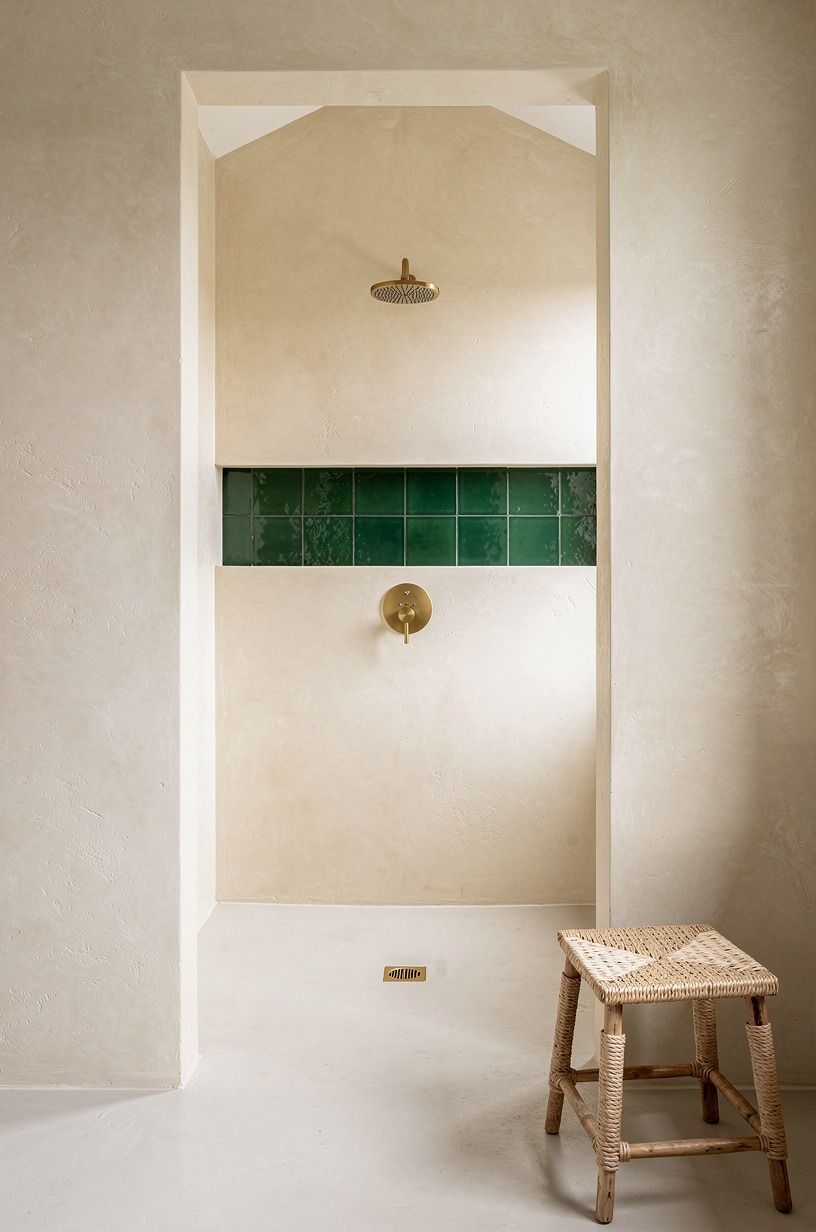
Yes, you can use Venetian plaster inside a wet room, but only if the sealing system is specified for it and installed well. That's the non-negotiable part.
In an airy walk-in shower, cream plaster looks calm because the joints disappear, and that makes a modest footprint feel more open. If your shower zone is around the comfortable 36x36 in minimum, the unbroken wall plane matters even more because every visual break eats space.
I wouldn't spend your money in the wrong order, though. Seal first, then decide whether the vanity, tile, or lighting even needs a redo. These typical US ranges help you keep the finish in context:
A sealed plaster wet room beside unlacquered brass fixtures often gives you the expensive feeling before the expensive line item. Worth it! That's why I'd compare it against this spa-style bathroom roundup before I picked more tile.
6Pair limewash plaster with fluted oak drawers (What keeps it from feeling flat?)
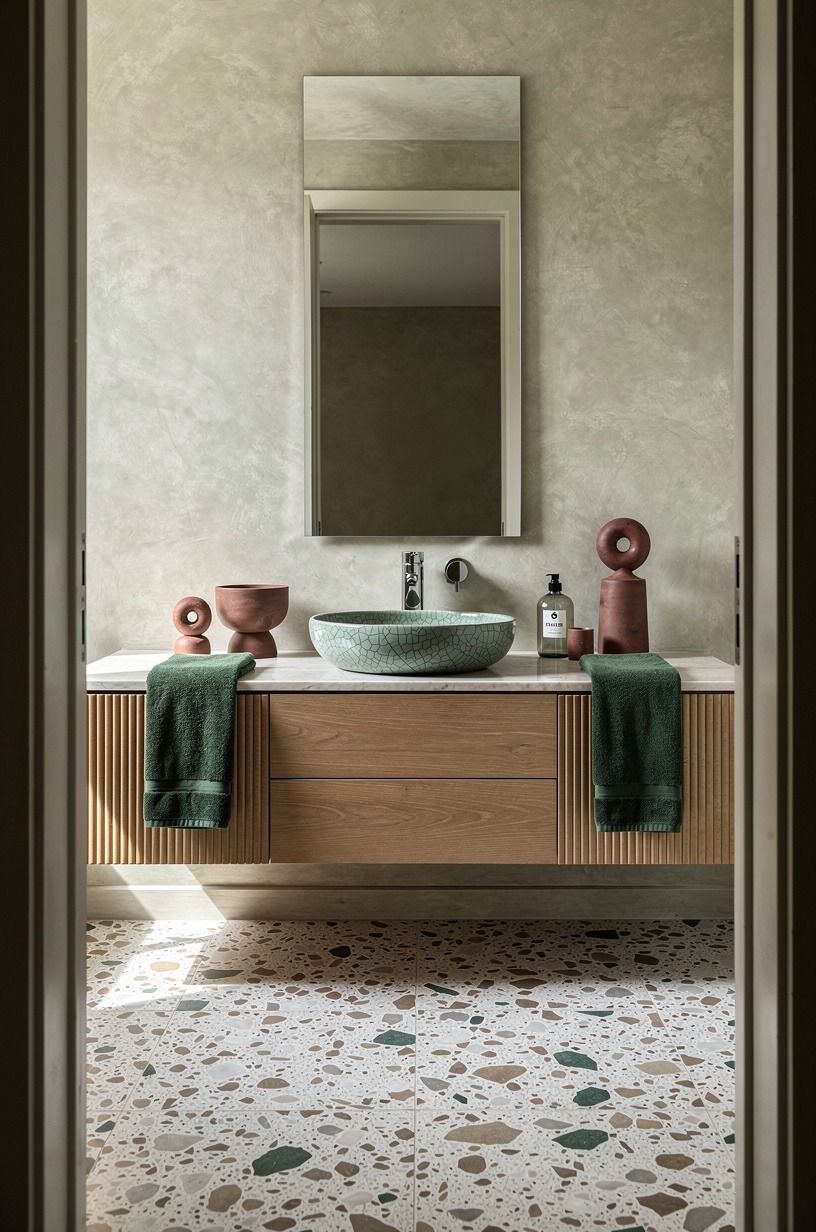
When the wall finish is soft and matte, you need something with a little rhythm below it.
7Sculpt a plaster ledge above the tub (The Long-Line Ledge Method)
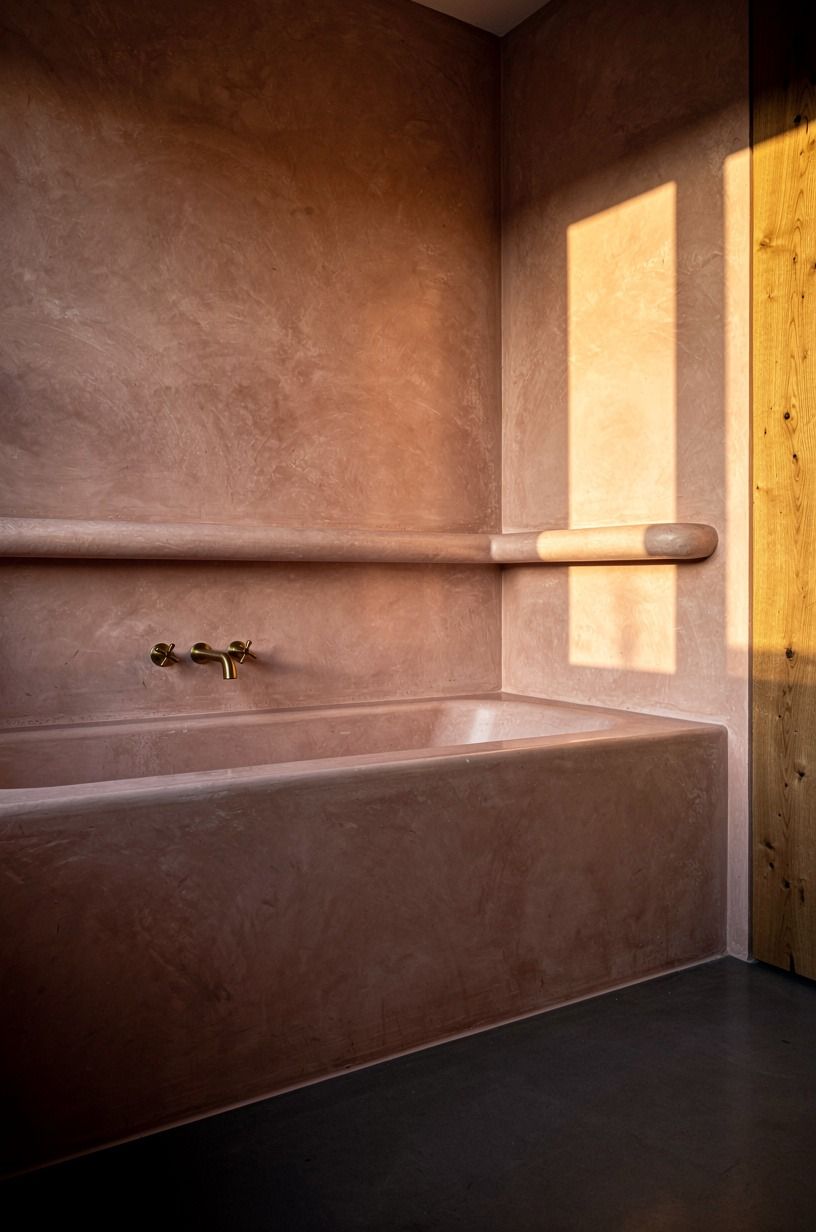
A long ledge above the tub gives plaster a job beyond being pretty. It becomes storage, composition, and shadow line in one move.
Over a standard 60x30 in bath, I like the ledge to run nearly wall to wall so the whole scene feels intentional instead of pieced together. In dusty rose plaster, that horizontal line looks especially good against a darker floor because the contrast makes the wall seem even more luminous.
You don't need to style it like a boutique hotel. A clay bowl, a small stack of washcloths, maybe one candle in aged bronze.
That's plenty. I learned this the hard way after overfilling a ledge once, and the room looked fussier with every object I added.
Save the visual rest for the eye, not the styling. You can always strip back to almost nothing and the ledge still reads as designed.
8Run plaster halfway up with marble trim (marble over bullnose every time)
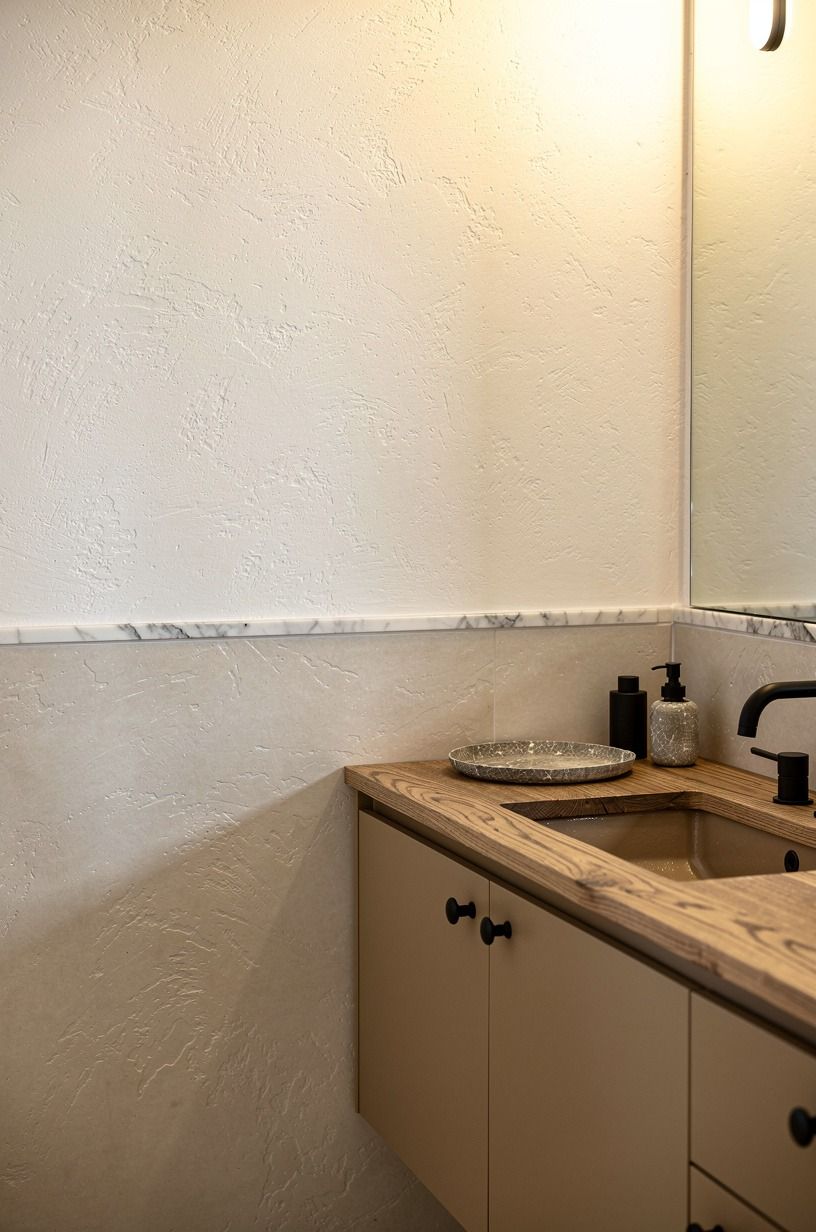
Half-height plaster is a smart call when you want softness but still need a visual stop.
9Color-drench the ceiling in soft taupe plaster (The Fifth-Wall Move)
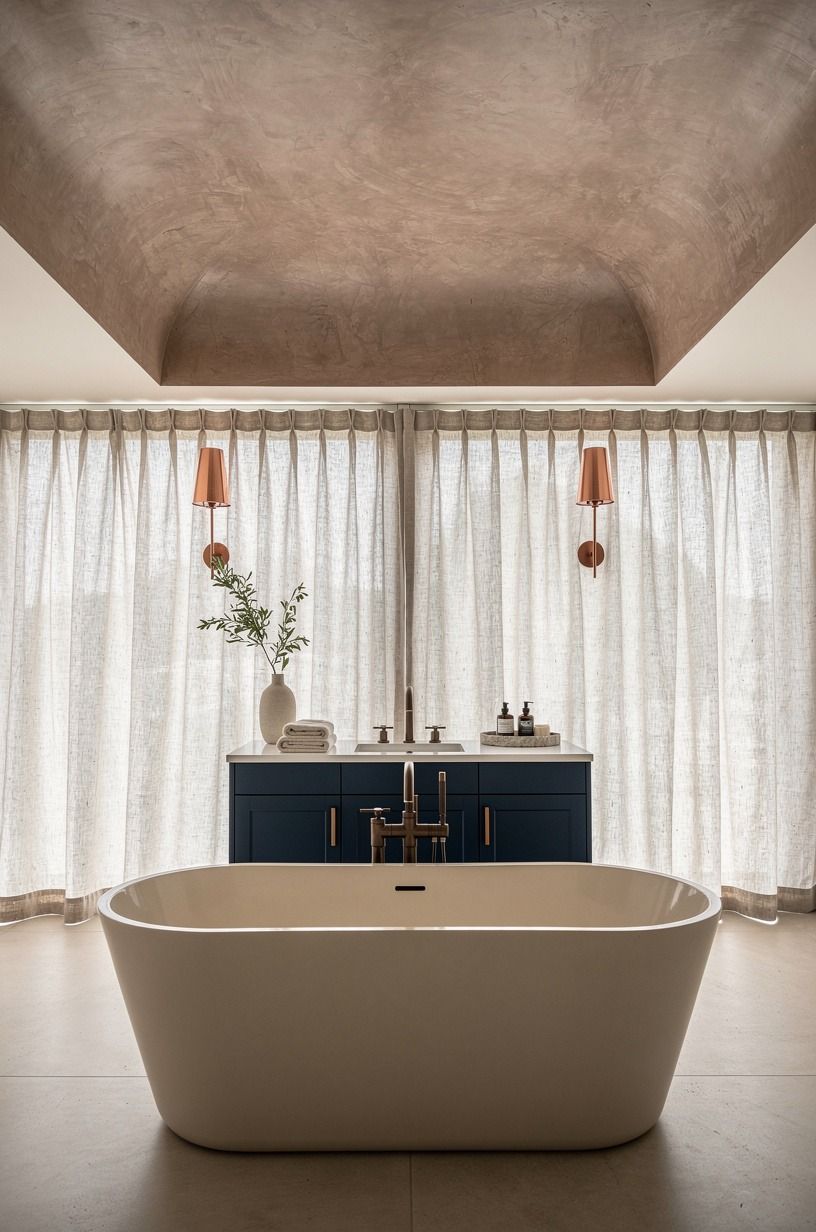
Most bathrooms stop at the wall and leave the ceiling looking like an afterthought. Big mistake.
When you color-drench the ceiling in soft taupe plaster, the room reads taller and calmer because your eye isn't hitting a white lid at the top. This works especially well in a bathroom with a dark vanity, like a midnight oak cabinet, because the ceiling becomes part of the mood instead of a separate zone.
Keep the rest disciplined. A centered vanity, warm bulbs, and one metal finish are enough to let the fifth-wall idea land.
If you have a north-facing bathroom, I'd test something close to Farrow & Ball Hague Blue No.30 in the adjoining space rather than going cooler inside the plaster room itself. Why fight the softness you came here for?
A Belgian linen curtain does more for this look than a heavy valance would. This cozy bathroom layout guide shows how a quiet top plane changes the whole room.
10Carve arched shampoo niches into plaster walls (small detail, huge payoff)
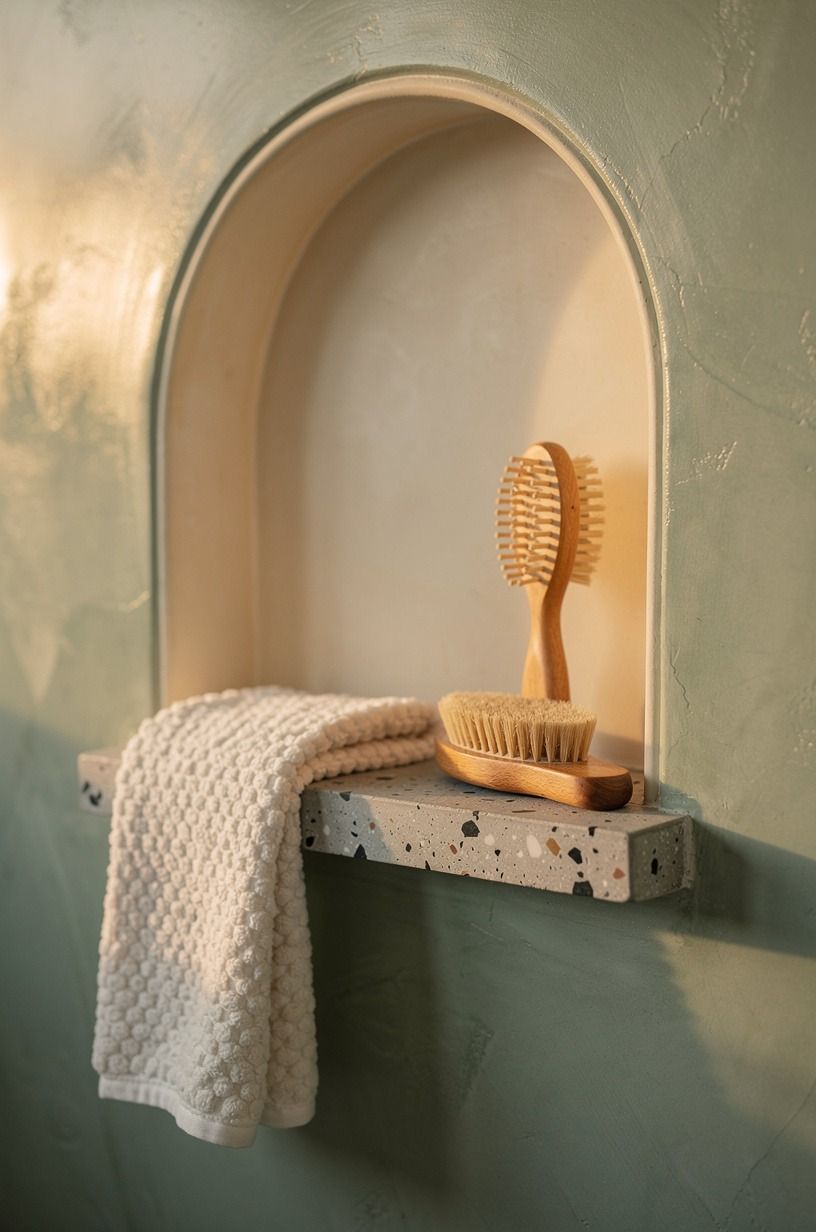
An arched niche is one of those details you notice without knowing why the room feels better. In sage plaster, the curve reads handcrafted, and that matters because bathrooms can go sterile so fast.
I like the edge of the arch kept in a warm cream tone so the niche doesn't disappear completely. You still want that little outline when the light hits it.
A wood bath brush and a single bottle in the opening are enough to make the detail feel lived in.
Size the niche for what you use, not what looks dramatic on a mood board. Too deep, and products start shouting at you.
Too shallow, and the arch becomes useless. I usually prefer one good niche over three tiny ones, and I'd absolutely keep the rest of the shower wall simple. A niche deeper than 4 inches is a waste of wall.
For more curves in this mood, save this spa-style bathroom piece.
11Layer ivory plaster with zellige floor tile (The Quiet Contrast Formula)
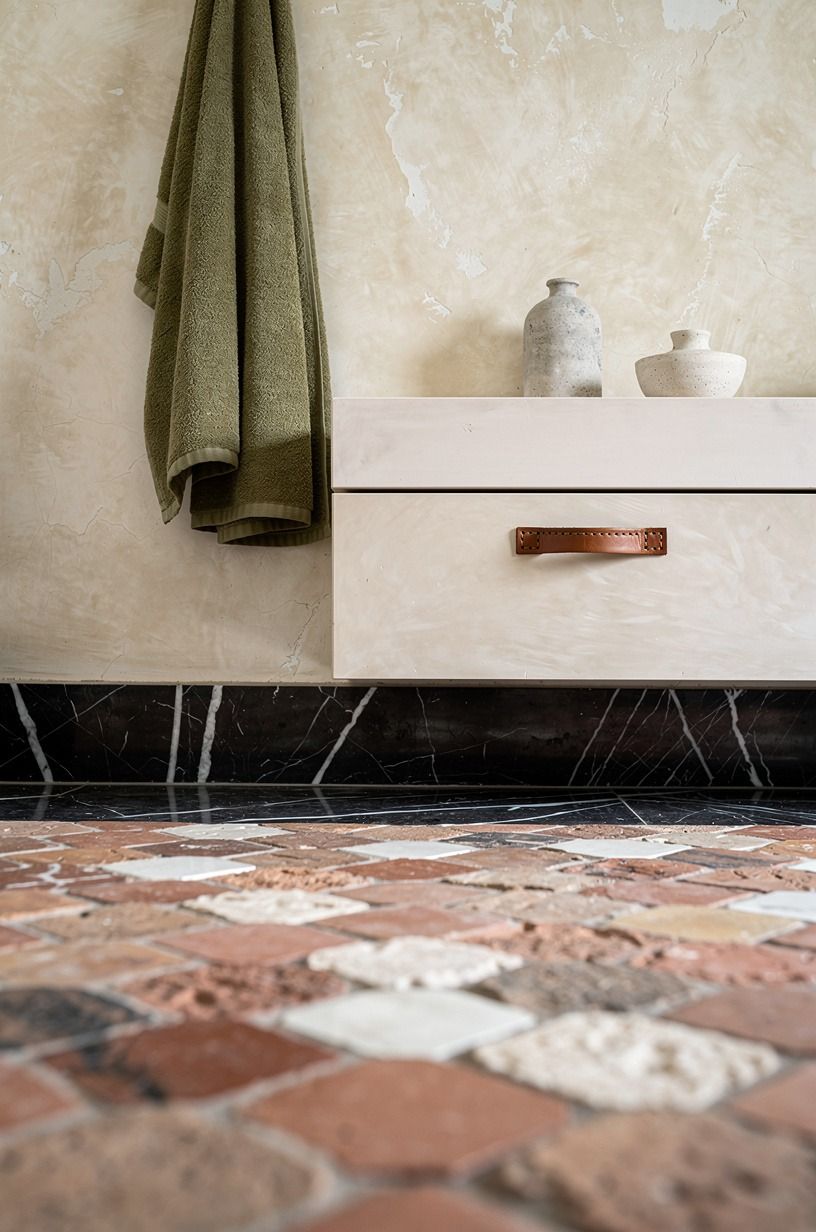
I'd build the palette from the floor up.
12Polish charcoal plaster around a floating sink (The Shadow-Box Vanity Rule)
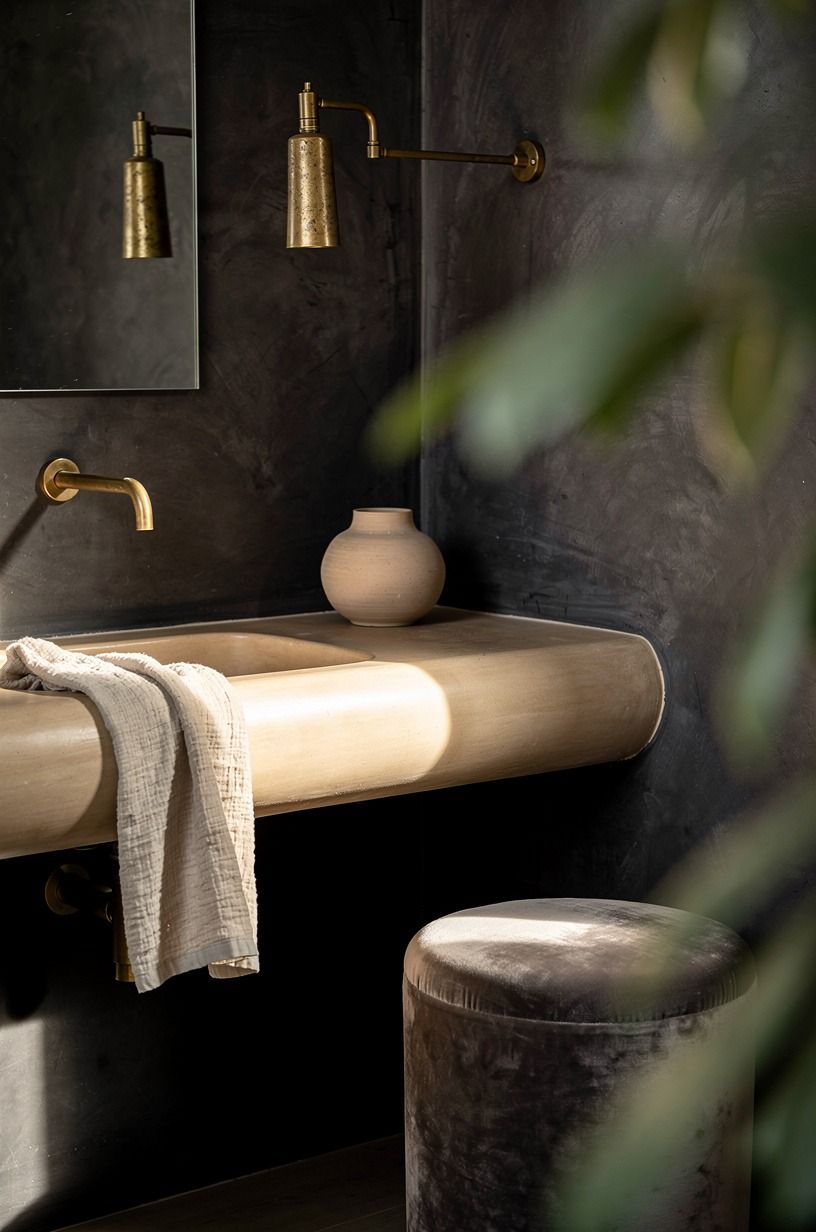
Dark plaster around a floating sink is bold, but it doesn't have to feel oppressive. The key is lift.
When the sink floats and the floor keeps running underneath, a charcoal wall feels grounded instead of heavy. I love this look with a floating limestone basin and one clay vessel because the matte and polished surfaces bounce off each other in a way plain painted drywall just can't.
Through a little foreground foliage, the room reads collected, not severe.
Be picky with metal here. Aged brass is warmer against charcoal than chrome, and the patina keeps the whole scene from sliding into showroom mode.
I made the mistake once of using bright polished nickel in a dark plaster bath, and it looked cold by 3 pm every day. Never again.
Skip the polished chrome in dark bathrooms. It will look harsh by mid-afternoon, every afternoon.
For a softer cousin to this deep finish, I still point people toward this tadelakt bathroom texture guide.
13Soften a powder bath with blush plaster (tiny room, big reward)
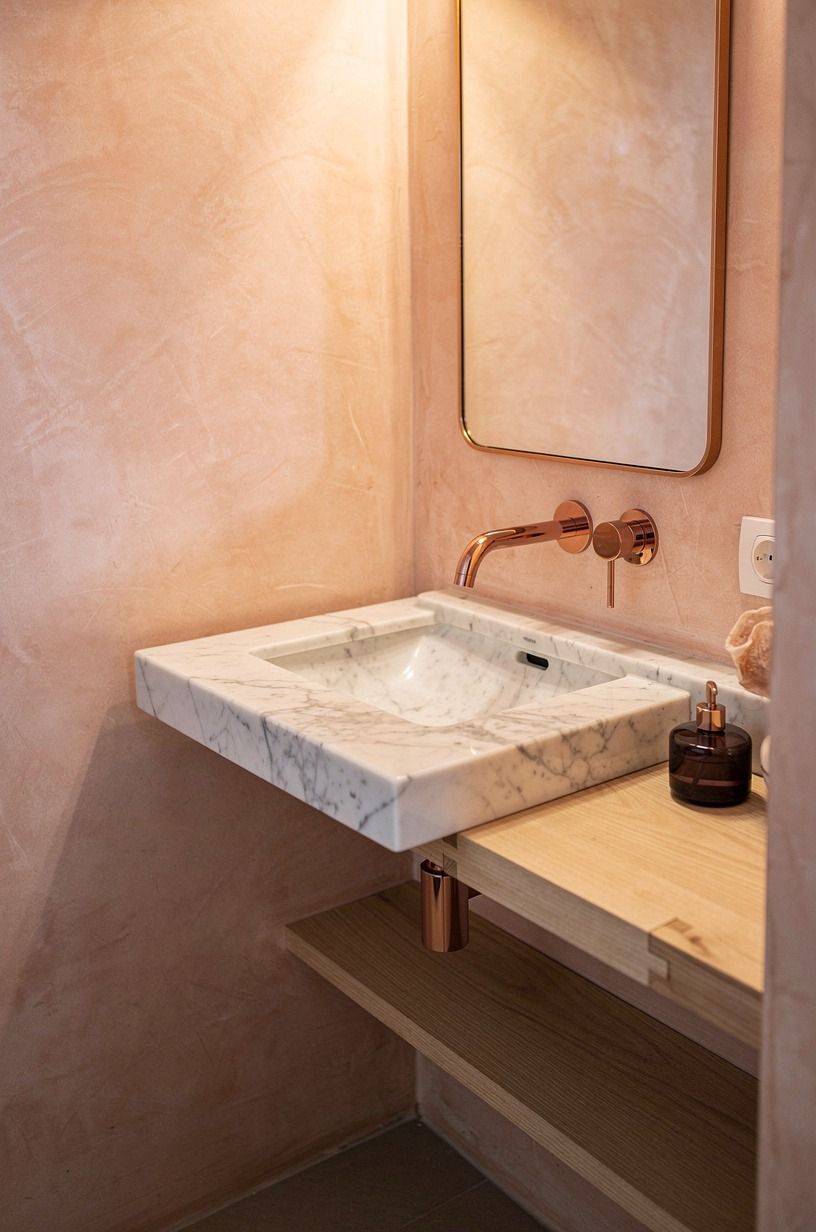
A tiny powder room is the best place to take a color risk because the commitment is small and the payoff is immediate! Blush plaster wraps a compact room in a way regular paint rarely does, especially when the sink is something crisp like a Carrara marble basin with subtle gray veining. The softness makes guests linger for a second, and that pause is usually the sign you've done something right.
You don't need much else. In a narrow room, I'd keep the mirror simple and the hardware warm so the plaster stays the star.
A little contrast from a darker floor helps too. If you're balancing warm pink against cooler stone, a nearby swatch like Benjamin Moore Chestertown Buff HC-9 can keep the whole palette from going sugary.
If you're adding a powder-room mood on a budget, this spa-style bathroom roundup is full of small-bath moves you can borrow.
14Build a plaster bench inside the shower (The Sit-Down Luxury Test)
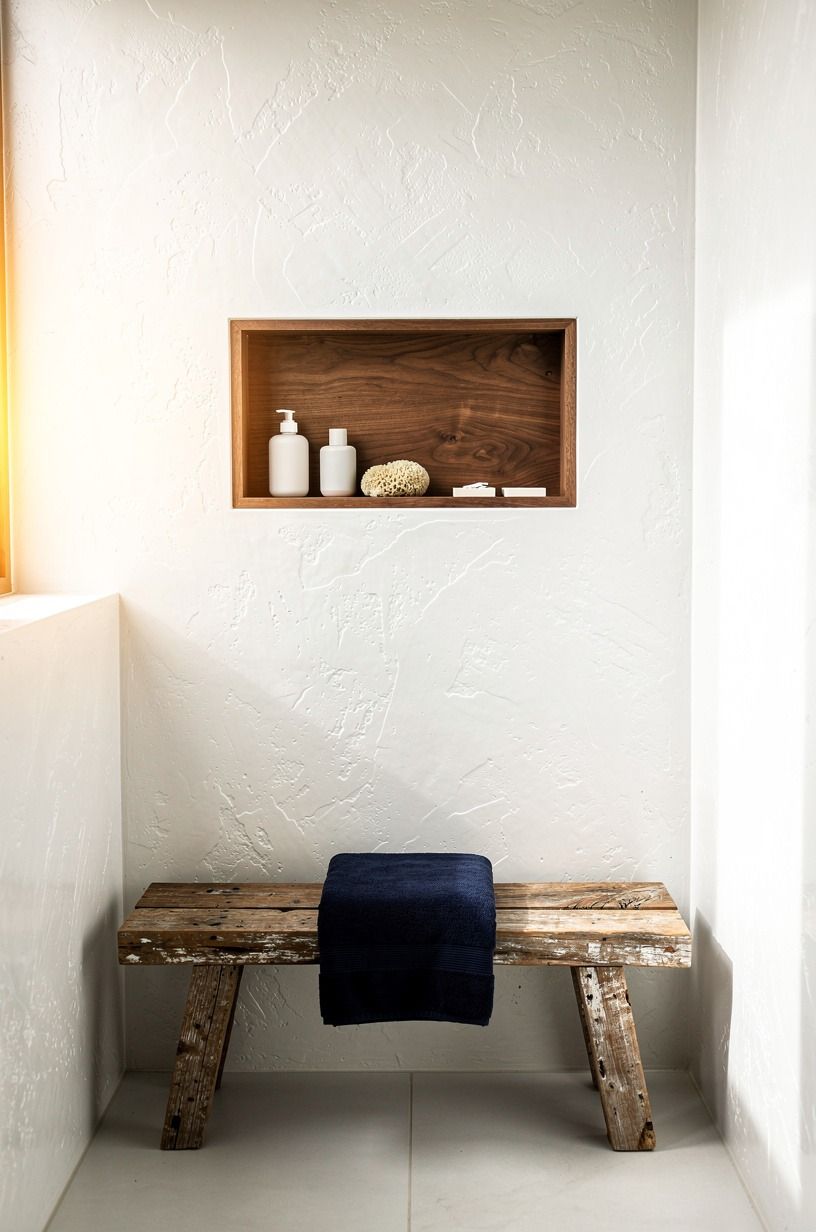
If a shower has room for a bench, build it in and finish it in the same plaster as the wall.
15Contrast smooth plaster with unlacquered brass fixtures (The Patina Payoff)
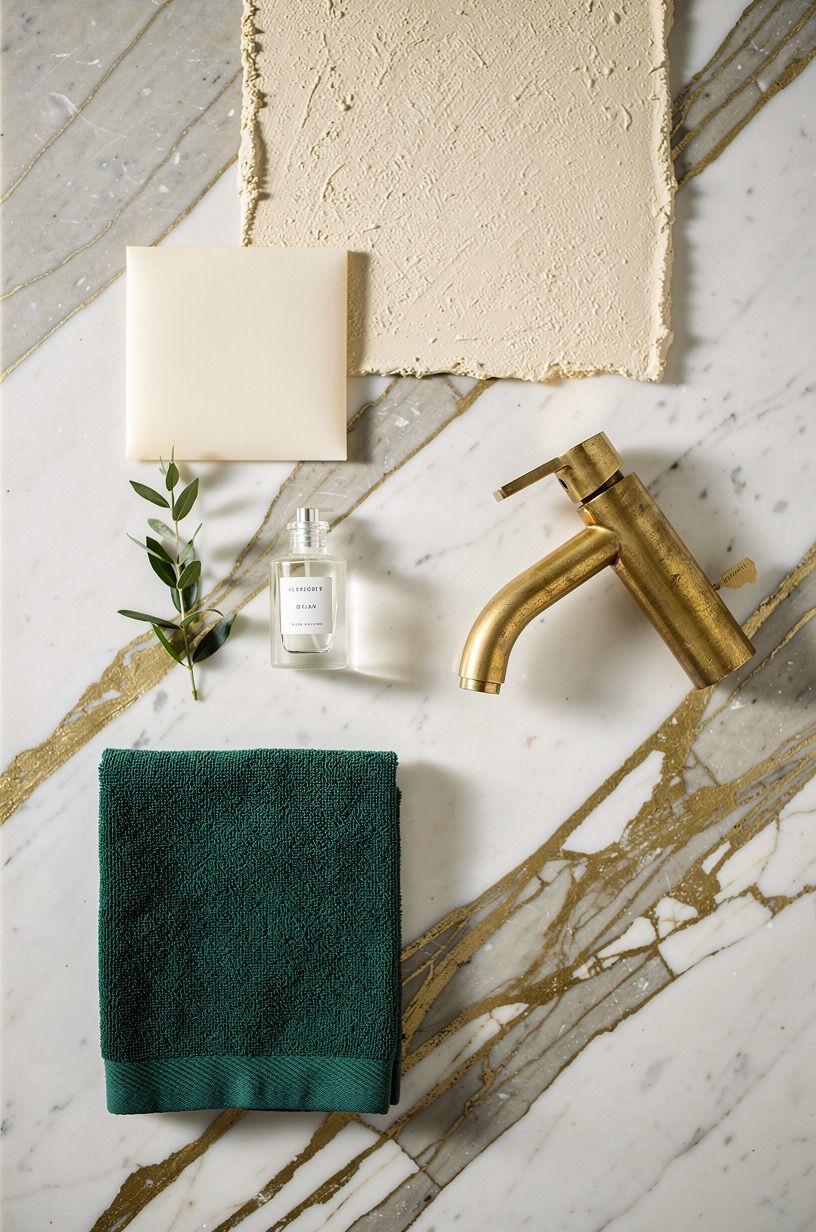
Smooth plaster and unlacquered brass belong together because one finish diffuses light while the other catches it. On a Calacatta marble vanity slab with gold veining, brass feels especially right because the tones already have a conversation going. You don't need ornate shapes either.
A simple faucet, clean mirror, and one brass tray let the material contrast do the work. The more minimal the composition, the more luxurious the room reads.
This pairing only sings if the brass is allowed to age. I'd skip lacquered bright gold every time.
It stays too fixed, and fixed is the opposite of what makes plaster interesting. Let the faucet darken a little.
Let the wall keep its cloudiness. That is the charm.
If you want another bathroom where metal patina looks even better over time, this tadelakt bathroom inspiration page makes the case well.
16Wash plaster walls with hidden cove lighting (The Evening Glow Stack)
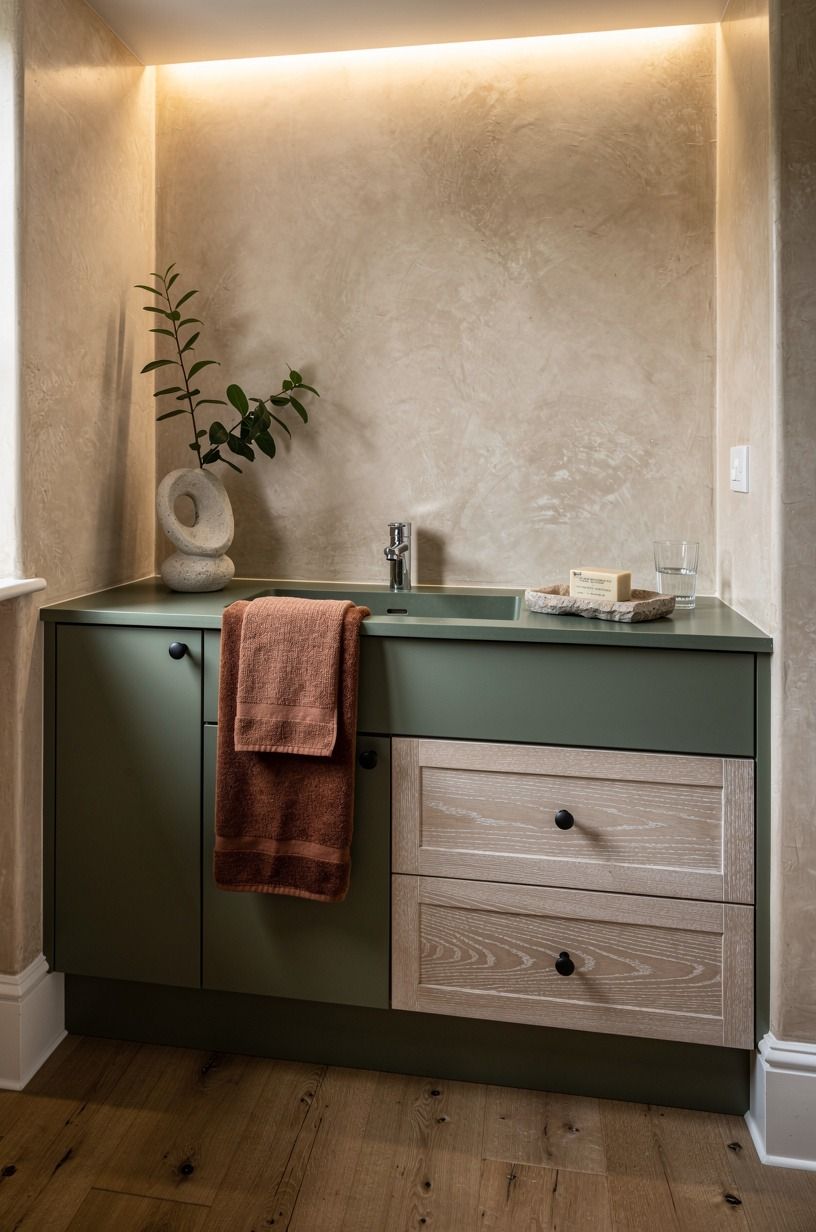
Hidden cove lighting is what turns plaster from nice to unforgettable at night. During the day, the finish already has movement.
After dark, a soft wash from above makes every trowel mark feel intentional. I like this move over a forest green vanity because the deeper base color makes the glowing wall seem even lighter. A room that felt flat at noon suddenly gets depth by dinner.
Worth it!
You don't need harsh downlights everywhere if the cove is doing its job. In fact, I'd reduce them.
One ceiling wash, one task light at the mirror, one tiny accent reflection off aged brass hardware. That's the three-height light stack I come back to again and again.
And if you've been torn between tile and a hand-troweled finish, this cozy spa-style bathroom piece helps you think about how light will hit the surface before you commit.
17Edge the tub surround in hand-troweled plaster (The Quietest Finish Wins)
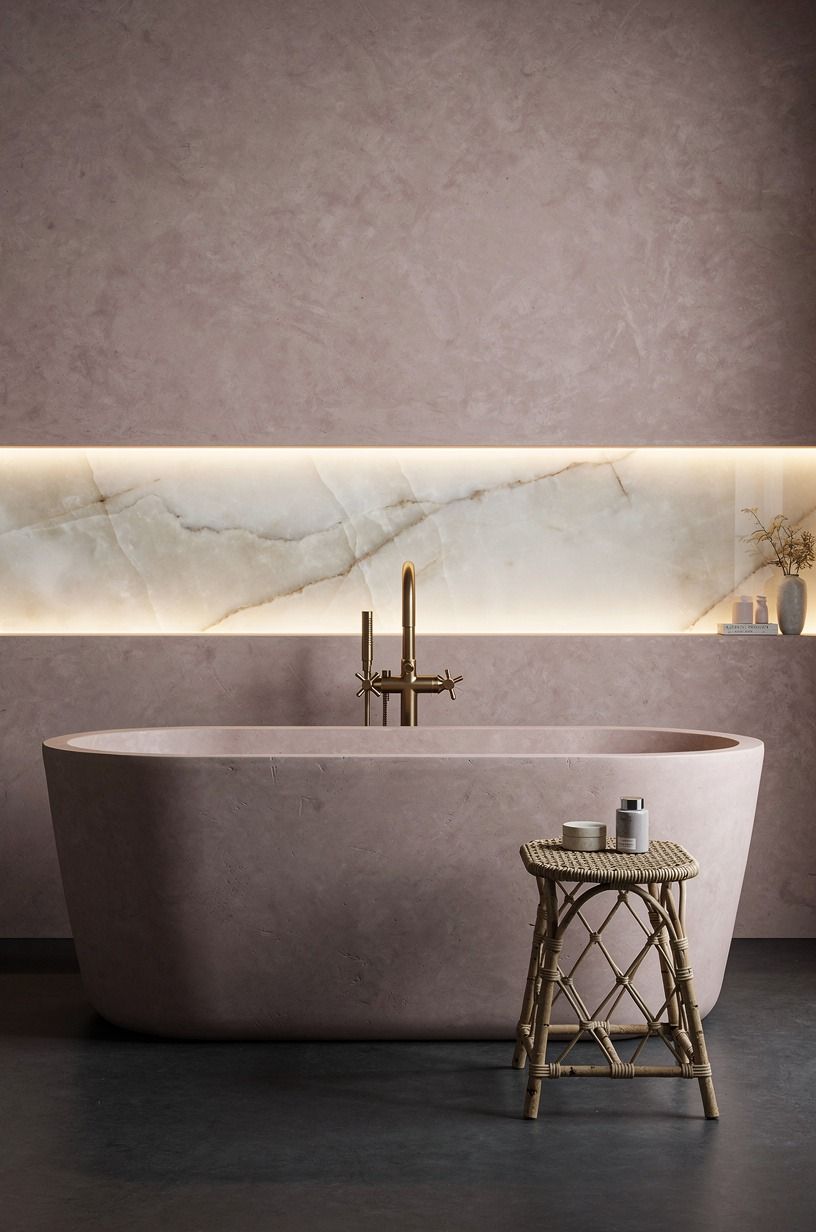
A tub surround edged in hand-troweled plaster feels calmer than stacked tile because nothing interrupts the line of the bath. In dusty rose, especially with generous negative space nearby, the surround looks softer and more architectural at the same time.
I like this in rooms where you want the tub to feel like part of the wall rather than a separate insert. A soft finish does that beautifully.
You can still bring in stone, but I'd keep it secondary. One pale slab, one linen towel, one rounded vessel, then let the wall hold the mood.
And if your first instinct is to frame the tub with more trim, I'd resist it. The whole appeal is that it doesn't beg for attention. It just glows.
For more quiet ideas like this, here's the spa-style bathroom collection I keep returning to.
Why this finish feels current right now
What Venetian plaster gets right in a bathroom is restraint. That's the part I think people miss when they chase the look by buying prettier mirrors or more expensive sconces. The finish isn't interesting because it's trendy.
It's interesting because it removes the fussy lines that make a bathroom feel over-explained. When every wall is broken into little decisions, you notice the decisions.
When the wall reads like one quiet surface, you notice the light, the brass warming up, the oak grain, the steam. Much better.
I've also changed my mind on how much contrast a bathroom needs. I used to push for more of it. Dark grout. Sharper edges.
Louder hardware. And sometimes that works, sure, but the rooms I remember now are the ones that feel settled the second you step in.
A plaster bathroom does that without begging for attention. It makes a builder-grade vanity look more thoughtful.
It makes a modest 32-inch sink setup feel custom. It makes one decent faucet look like enough.
You stop fighting the room and start living in it.
The honest part? Venetian plaster isn't the cheapest finish in the room, and it's not always the best DIY idea either. But if you want the biggest emotional shift without a full renovation, it's one of the smartest places to spend. I'd put it above replacing decent tile.
I'd put it above buying a fancier mirror. And I'd absolutely put it above stuffing the room with decor to fake warmth. Softness is doing the heavy lifting here, not stuff. The finish is doing the work your accessories couldn't.
That's why the look feels grown up. It's edited.
It lets your bathroom breathe.
A Few Things Worth Answering
What is the best Venetian plaster look for a small bathroom?
The best move for a small bathroom is plaster on the main wall plus one simple vanity in pale oak. Soft continuity makes the room feel wider.
Think IKEA HAVBÄCK proportions, one mirror, one warm sconce, and no extra trim fighting the wall. I'd skip the half-height tile wainscot here, it chops the room right where it needs to breathe.
Where can I buy the pieces on a budget?
Start with IKEA, Target Threshold, and Wayfair for the mirror, stool, towels, and simple hardware. Budget control comes from buying fewer things, not cheaper things.
Facebook Marketplace. A secondhand wood stool.
One good brass-look faucet. That's enough.
For the wall finish itself, I'd call two plastering contractors and ask about sample boards before you commit.
How much does a Venetian plaster bathroom makeover cost?
A cosmetic version usually runs about $200 to $1,200, and a fuller mid-range refresh can land around $3,000 to $9,000. The free part is editing what you already own.
Remove clutter. Rehang the mirror.
Restyle the ledge. Then spend where the wall finish shows. Don't budget plaster like paint.
It's a craft finish, and the labor matters more than the material.
Can I create this look on a budget?
Yes, and you can get surprisingly far. Cheap wins first. Warm towels. Better bulbs.
A limewashed paint look on the dry walls. One secondhand stool. One brass-toned faucet if yours is tired. But I'd save true plaster for the zone your eye hits first.
The rest can be paint done right, and that's a fraction of the cost. Honest take: most of the budget goes to labor, not the bag of plaster.
Is this finish worth it in a small space?
Yes, especially in a small bathroom. Worth it lands harder in tight rooms because fewer grout lines make the footprint feel calmer. Keep at least 21 in clear in front of the toilet, let the vanity float if you can, and don't interrupt the wall with busy shelving.
Skip the half-tile wainscot. It eats more space than you'd think.
Is Venetian plaster a good idea for a rental?
Yes, with limits. Rental-friendly softness comes from mimicry, not permanent work.
Removable sconces. A tension shower curtain mounted high.
Peel-and-stick mirror frames. Better linens.
A warm paint color where allowed. Save the true plaster for the place you own.
Most landlords won't blink at paint, but a troweled finish is a real conversation to have before you do it.
Where I'd Start First
If I had to pick one, I'd start with the shower walls in warm plaster. That's where hard surfaces usually make a bathroom feel cold, and you can't soften the room later with accessories alone. Pin that idea for later and compare it with this tadelakt bathroom guide.