
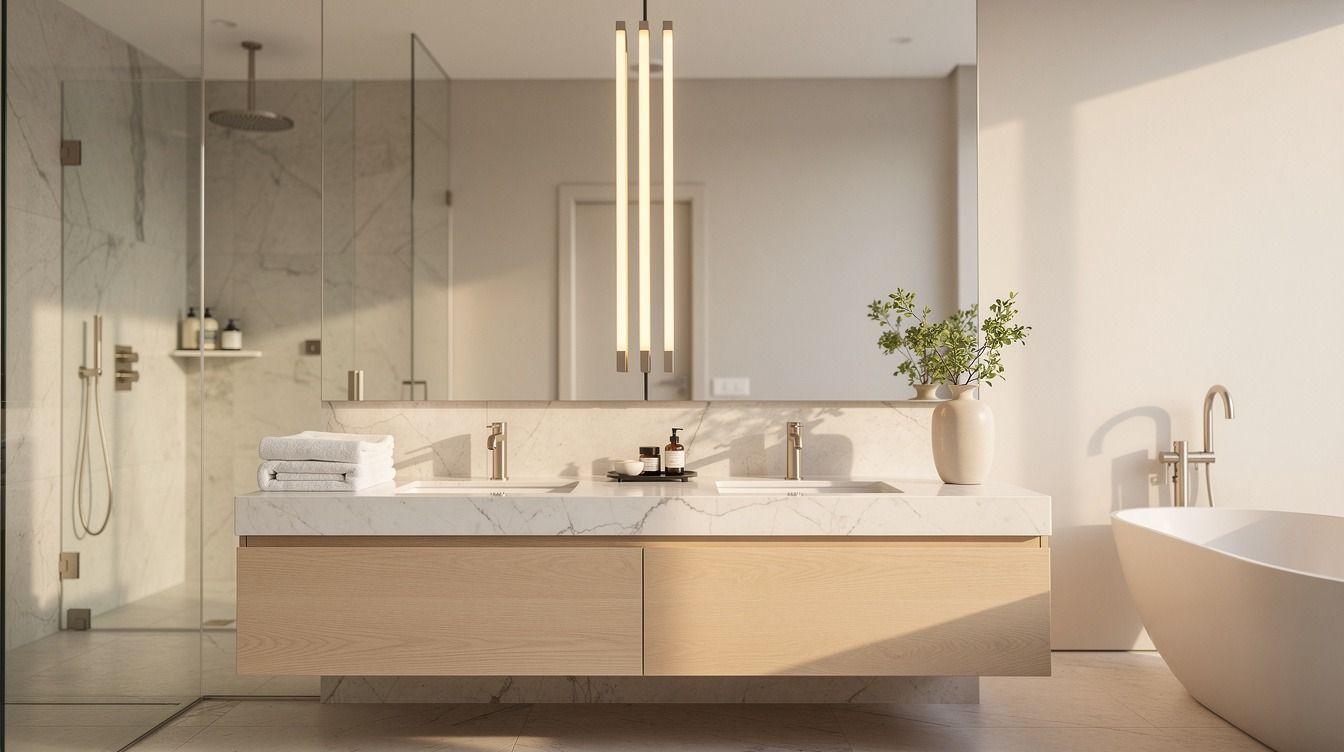
 by
by A luxury master bathroom for a five-star feel at home is mostly order, not money: light first, then walls, then touchable texture, then one calm place for your eye to land. I've redone two primary baths and helped friends rescue three more, and the pretty ones never came from buying faster. They came from slowing down. If your bathroom feels fine but not special, don't panic. You're probably six moves away, not a full gut job.
Before you start: budget, mess, and the order that saves you
Decide what kind of project this is before you buy a single towel. A cosmetic refresh can live in the $200 to $1,200 zone, while moving plumbing is where budgets go to lie down.
If you're renting, keep every change reversible and lean on textiles, lighting, and hardware. If you own, paint and lighting still give you the fastest win.
Use these typical US ranges as guardrails, not gospel. Labor swings hard by city, and older homes love surprises. I always pad 15 percent because bathrooms hide weird plumbing like it's a hobby.
Keep the work in this order: plan, light, walls, vanity zone, shower or tub, storage, textiles, styling. Don't shop decor before the bulbs are right. That's how good rooms turn flat.
- Start with the Three-Height Light Stack
- Do you want spa calm or hotel polish?
- Paint the ceiling before you argue about tile
- Choose honed stone over shiny porcelain
- Build a vanity zone that behaves like furniture
- Swap the faucet before the vanity
- Frame the mirror like it matters
- Use the Two-Texture Rule in the shower
- Keep grout quiet and let tile do the talking
- Float open storage, but only where it stays dry
- Add a Dry Landing Zone beside the tub
- Warm the floor where bare feet decide everything
- Hang towels like room service might judge you
- Mix old and new so the room stops feeling purchased
- Instead of more decor, edit the counter
- Bring in one living thing that can take the steam
- Scent the room lightly, never like a gift shop
- Finish with night mode, not more stuff
1Start with the Three-Height Light Stack
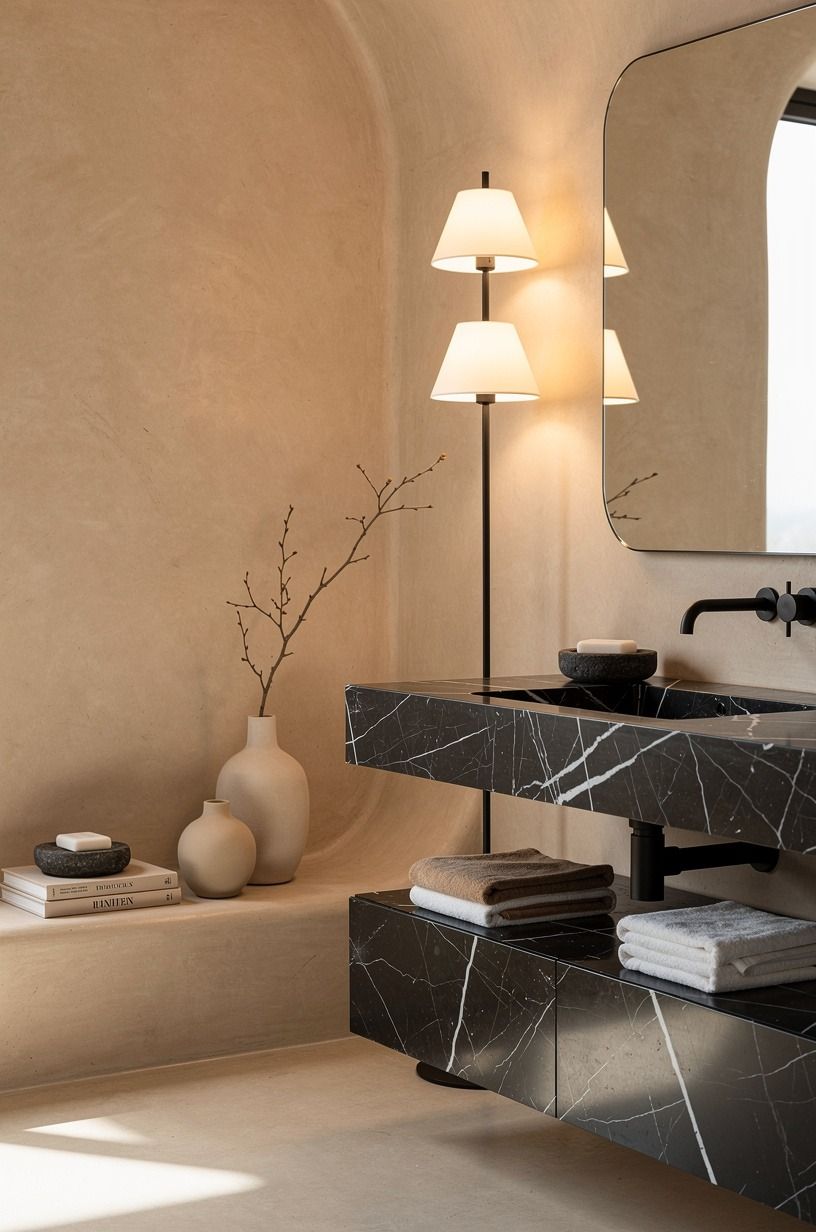
Hotel baths feel expensive because light arrives from three places: ceiling, face, and low accent. You don't need recessed cans everywhere.
You need layers that flatter skin and make tile look deep instead of shiny. Put overhead on a dimmer, add sconces near eye level, then sneak a small lamp or LED glow where shadows get grumpy.
At the mirror, aim for fixtures around 60 to 66 inches off the floor, give or take your height. Warm bulbs around 2700K are kind; cool white makes everybody look mildly ill.
I'm ruthless here. If your vanity light casts nose shadows, no marble can save you.
Cheap move: swap bulbs before fixtures. Better move: a pair of matte black sconces with opal glass against a warm white wall. If you're planning the whole suite mood, peek at these luxury master bedrooms that feel like a five-star suite and borrow the same lighting logic.
2Do you want spa calm or hotel polish?
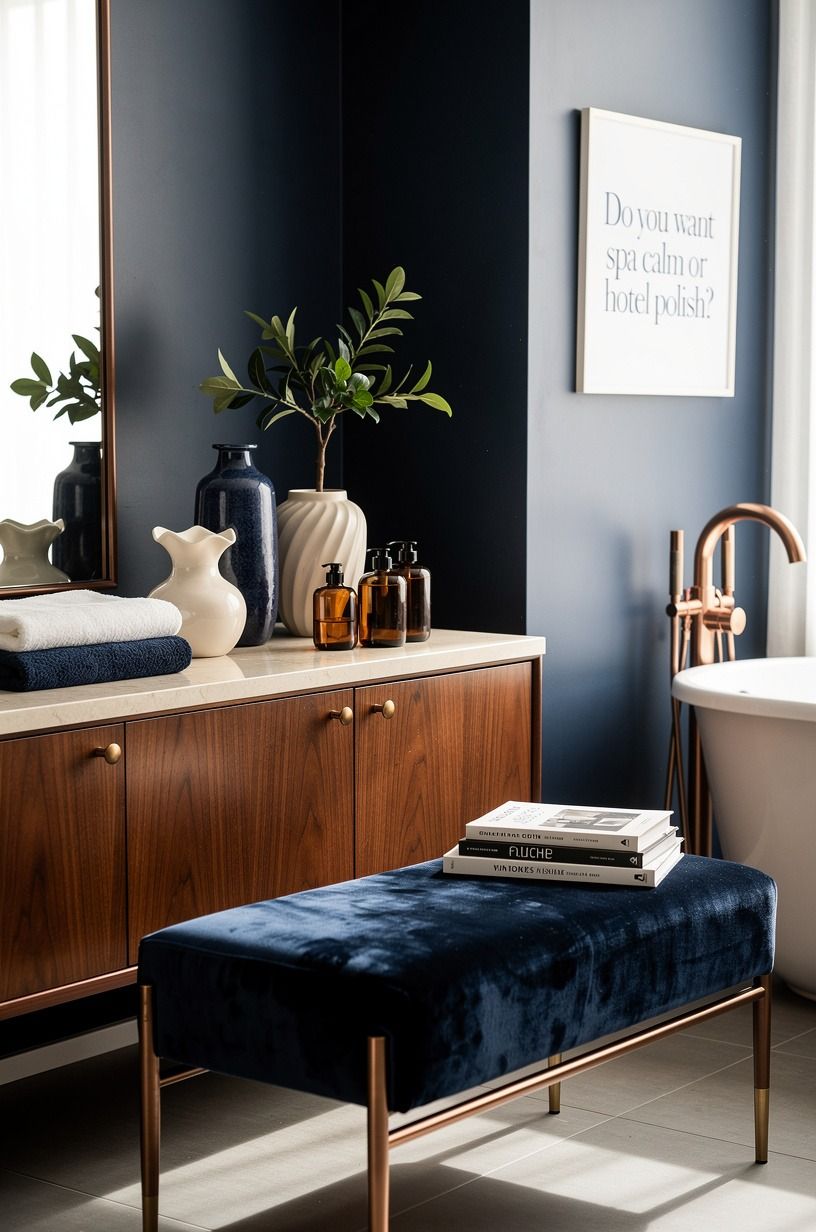
Pick one lane before paint. Spa calm is soft, matte, pale, and quiet.
Hotel polish is darker, glossier, sharper, with metal that catches light. Both can feel rich.
Mixing them halfway is how you get a bathroom that's trying too hard and still feels cold.
For spa calm, think Sherwin-Williams Sea Salt SW 6204, limewash-look walls, white oak, and towels with some slub. For hotel polish, think Farrow & Ball Hague Blue No.30, warm copper accents, and ivory towels stacked like room service is downstairs. I'd avoid the middle beige swamp unless your architecture is doing heavy lifting.
Say it out loud: "This room is calm" or "this room is tailored." Then every choice gets easier. When you drift, you'll feel it fast.
3Paint the ceiling before you argue about tile
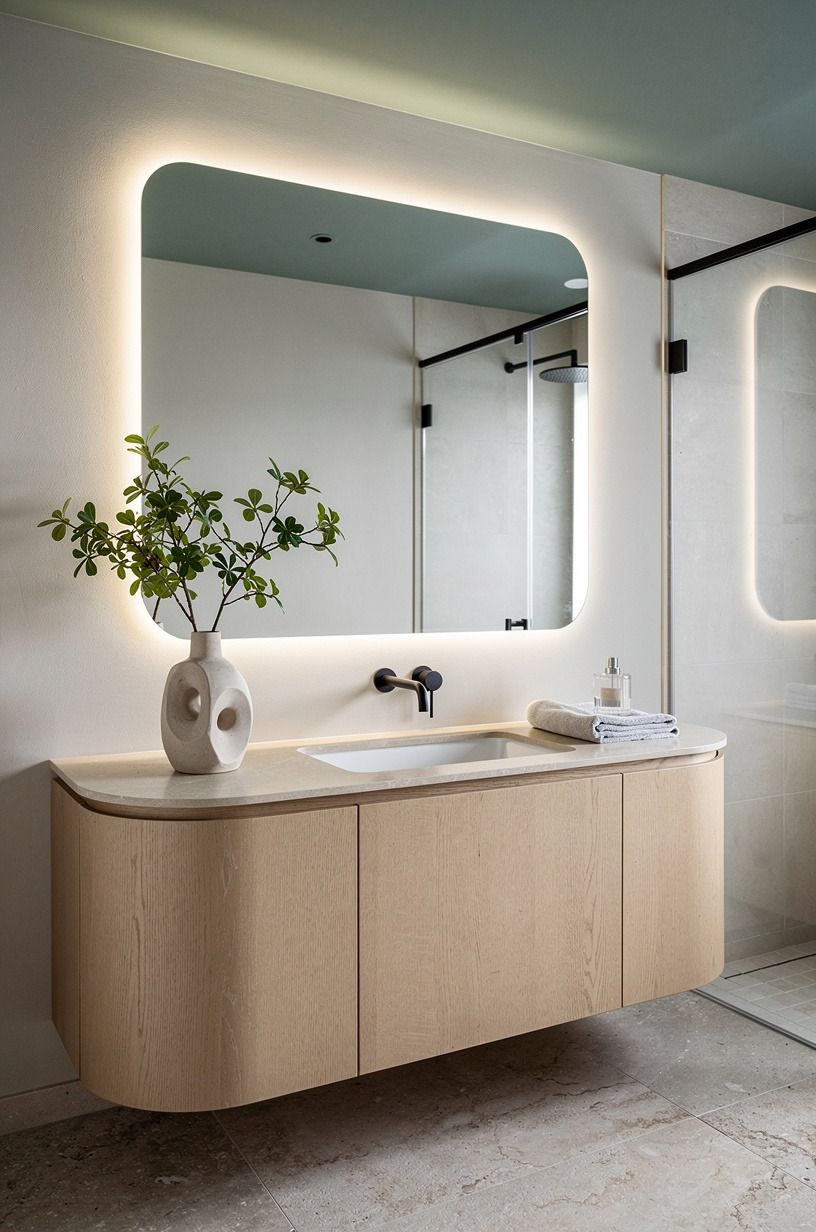
People stare at floor samples for weeks and ignore the giant surface above them.
4Choose honed stone over shiny porcelain
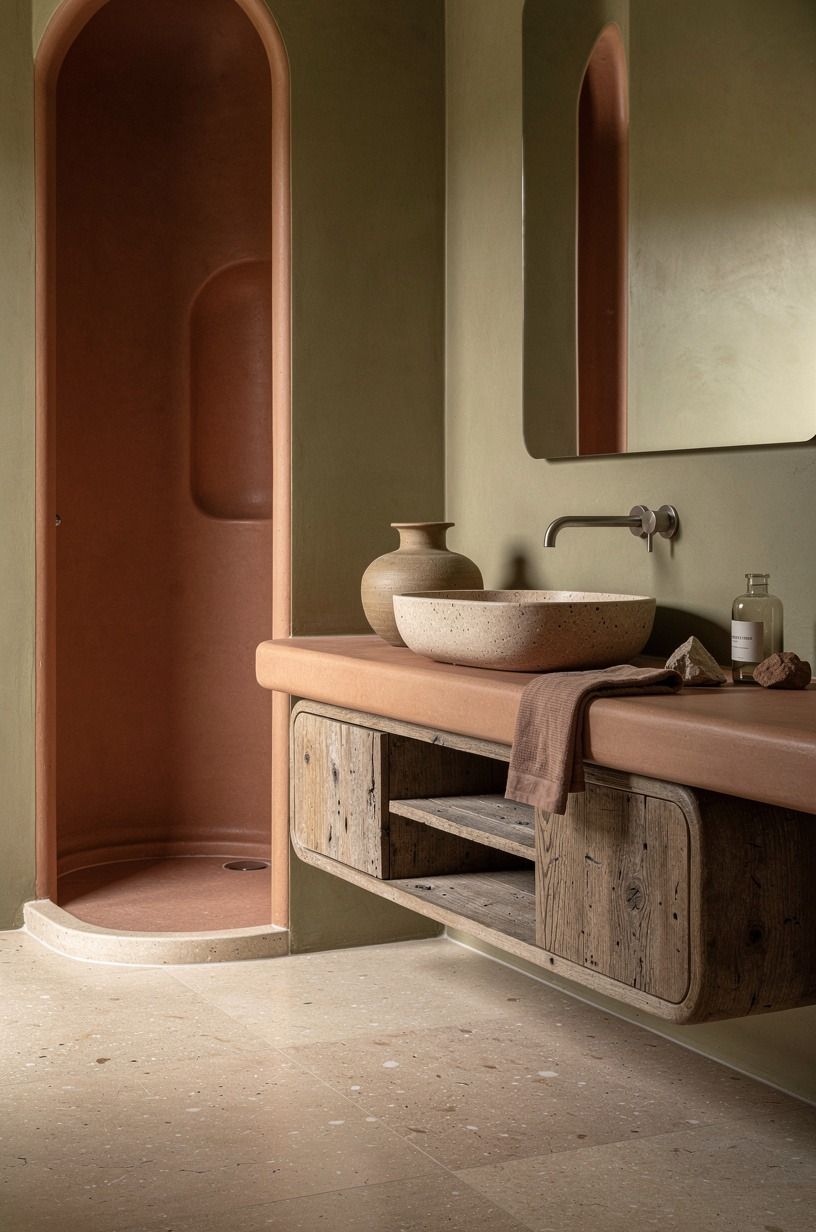
Glossy porcelain can look clean in a showroom and slippery-cheap under warm light at home. Honed finishes hold fingerprints less, glare less, and feel older in a good way. If you want one material to carry the luxury load, make it the surface your hand touches or your bare foot lands on every morning.
For counters, honed limestone with a soft matte finish is gorgeous if you accept patina. If you don't accept patina, choose quartz with a quiet vein and stop apologizing. For floors, porcelain that mimics limestone is practical, but pick a matte finish and rectified edges so the grout lines stay calm.
A standard tub is often 60 by 30 inches, so a tiny floor can be fully tiled for less than you'd fear. Spend where feet land. Save where splashes are rare.
5Build a vanity zone that behaves like furniture
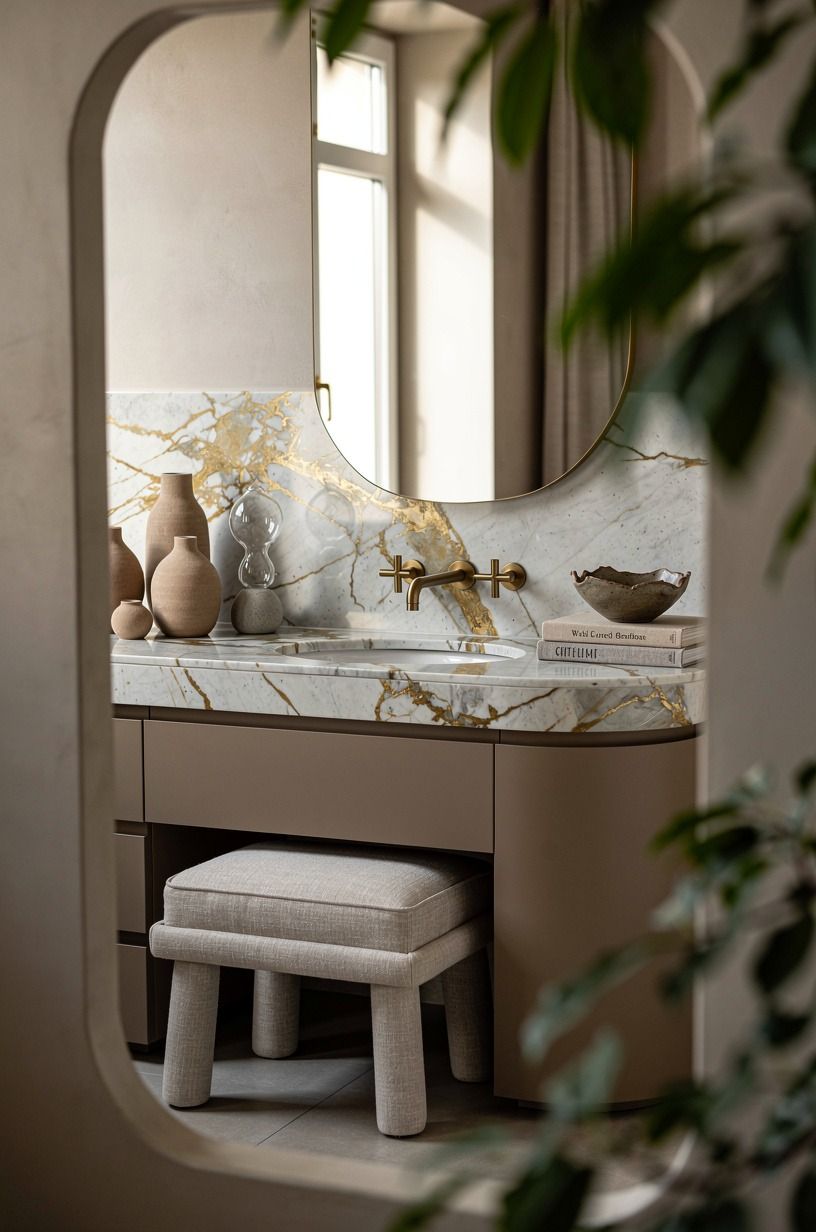
A five-star bath never looks like everything came from one plumbing aisle.
6Swap the faucet before the vanity
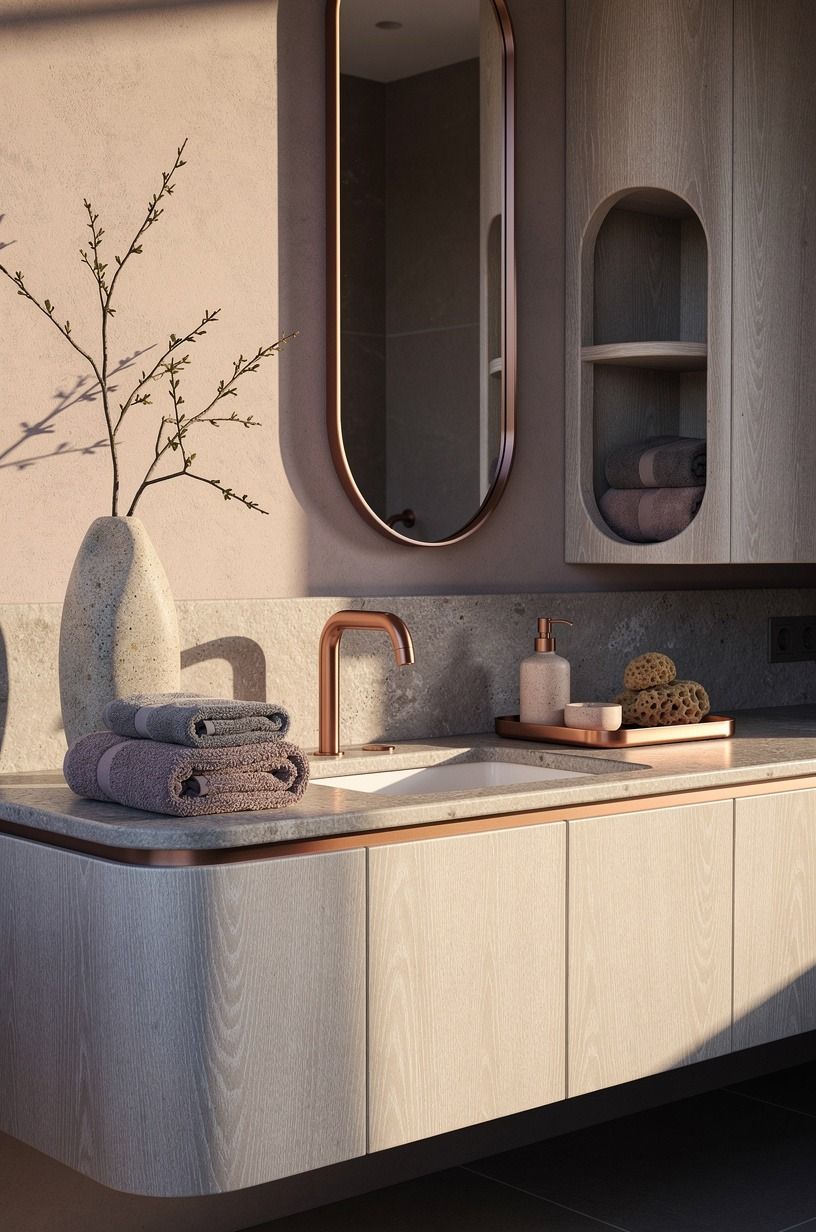
If you can only change one metal thing, change the faucet. It's the handshake of the bathroom. A tired chrome faucet makes a decent vanity feel rented; a weighted rose gold faucet against grey stone makes a plain sink feel chosen.
A typical rose gold faucet runs about $120 to $450, and you can feel the difference in the handle. Match metals loosely, not perfectly.
Rose gold with soft grey tones is fine. Rose gold with orange-gold builder trim is not.
Keep finishes within two families and your eye relaxes.
Install is DIY-friendly if shutoff valves cooperate. If they're crusted shut, call a plumber before you make a indoor pond. Real talk: a $220 faucet installed correctly looks richer than a $700 faucet leaking into particleboard.
7Frame the mirror like it matters
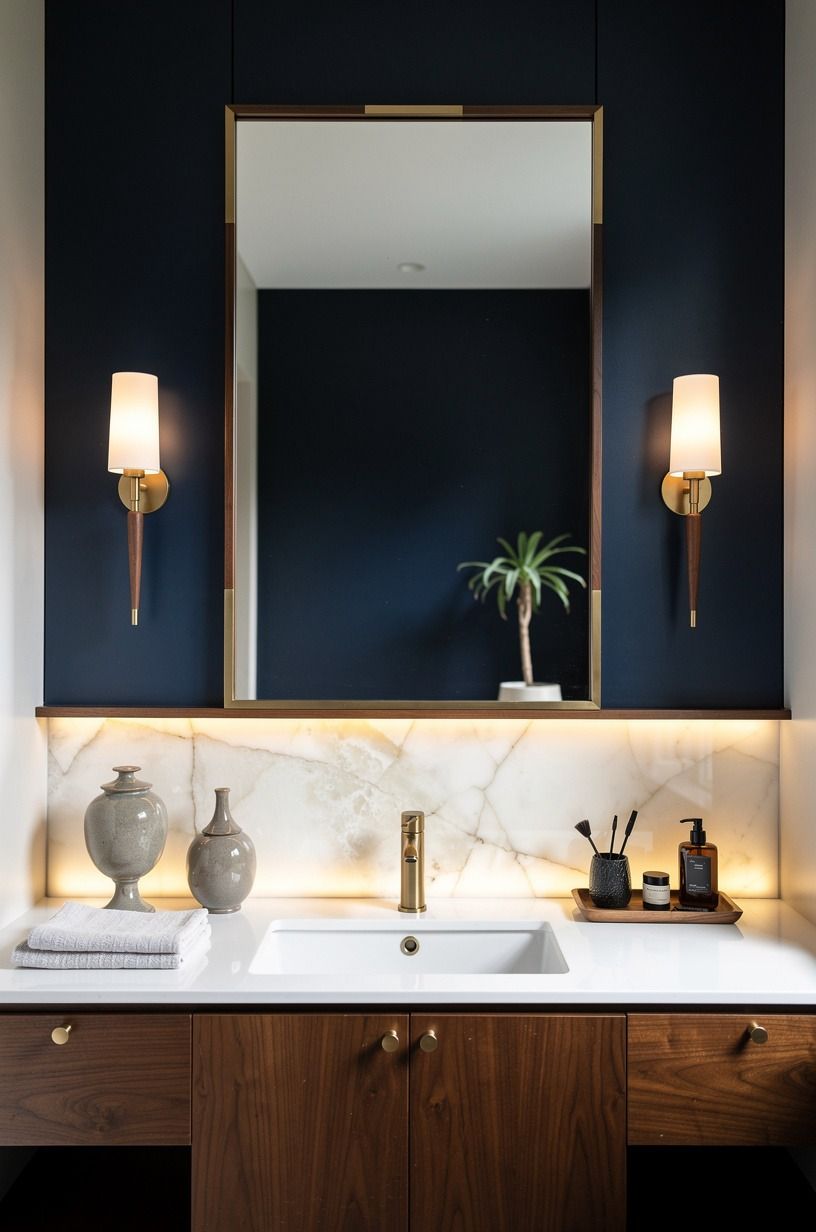
The mirror is usually the biggest shiny object in the room, so treat it like art, not equipment. A thin black frame feels modern.
A warm walnut frame softens tile. A softly backlit mirror leans hotel lobby in the best way.
Pick one and commit.
If your mirror is glued to the wall, don't rip it down on a Tuesday because a reel told you to. Add a frame kit around it, or layer a smaller framed mirror over a clean wall if the layout allows. In rentals, lean a tall mirror near the vanity only if kids, pets, and elbows won't test gravity daily.
Proportion rule: mirror width should sit inside the vanity width, not spill past it like it's trying to escape. Leave 4 to 8 inches of breathing room and the wall looks intentional.
8Use the Two-Texture Rule in the shower
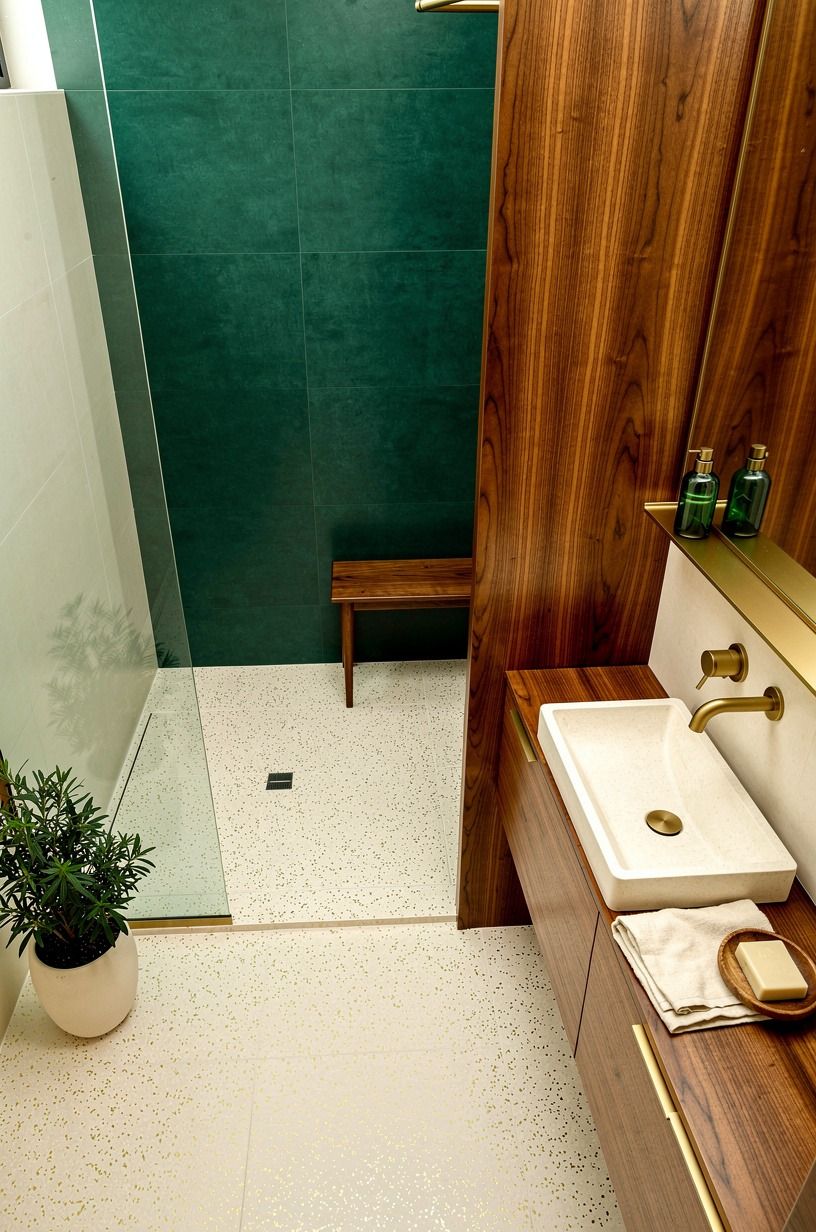
Luxury showers aren't busy. They're edited.
Use one hero texture and one supporting texture, then stop. Hand-glazed emerald zellige with warm cream grout is enough.
Add pebble floor, patterned niche, three trims, and a waterfall edge, and the room starts yelling.
A comfortable shower starts around 36 by 36 inches, though bigger is easier for elbows and mood. If you're tiling, put money inside the shower where water tests your work daily.
Subway tile at $2 to $10 per square foot can look sharp with a narrow grout joint and a confident layout. Zellige at $15 to $35 per square foot belongs where light hits.
My strong opinion: skip the giant faux-spa rain panel if pressure is weak. A smaller head that works beats a ceiling plate that sighs.
9Keep grout quiet and let tile do the talking
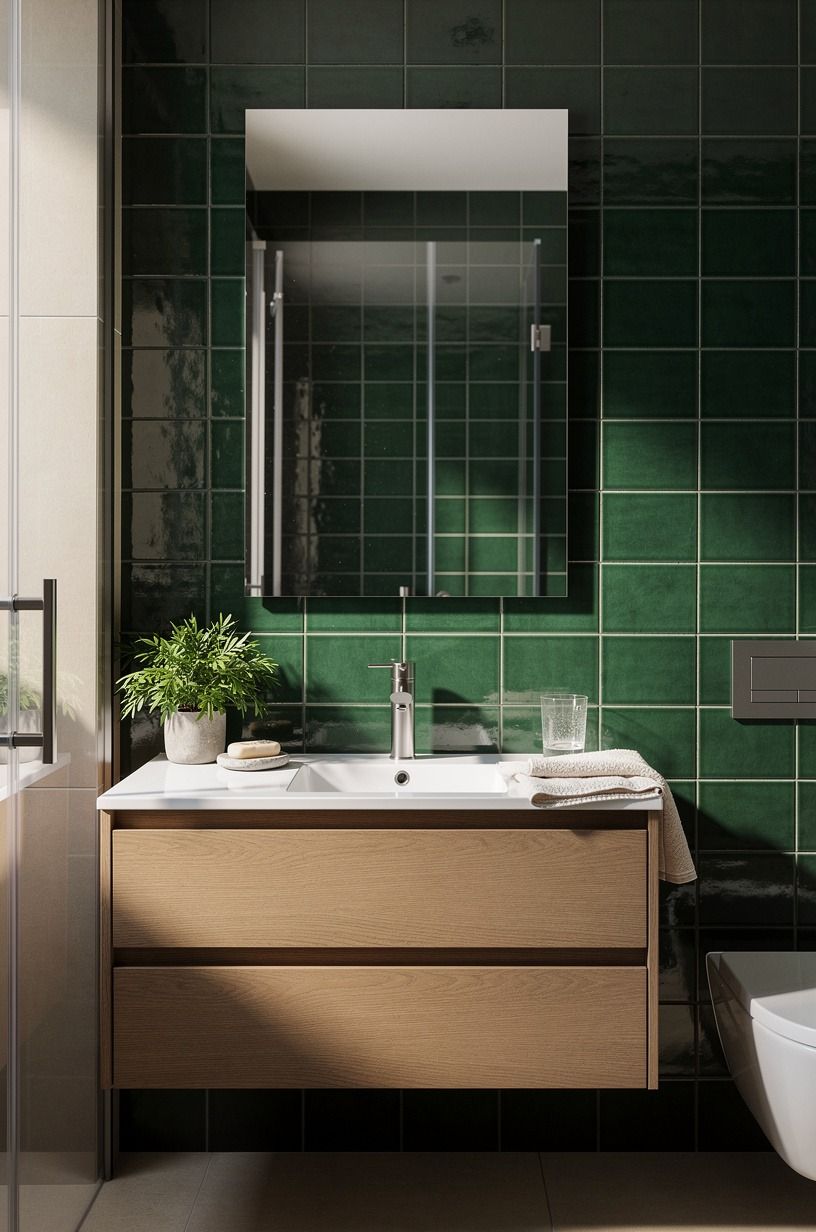
Grout is the part nobody saves on Pinterest, then everybody notices at 7 a.m. High contrast grout can be graphic and fun, but in a master bath it often turns walls into graph paper. Softer grout lines read calmer and hide a little life.
With white tile, try warm white or pale gray grout. With deep green zellige, a bone grout keeps the glaze shiny instead of making each tile a postage stamp. Dark floors with dark grout are forgiving, but too dark can feel cave-adjacent if the room is small.
Seal cementitious grout if your product calls for it. I didn't once, and a pink hair dye incident became archaeology. Sealed first, cried less.
If you're pairing bath and bedroom palettes, steal cues from mansion bedrooms that feel like a five-star hotel suite and keep the contrast low.
10Float open storage, but only where it stays dry
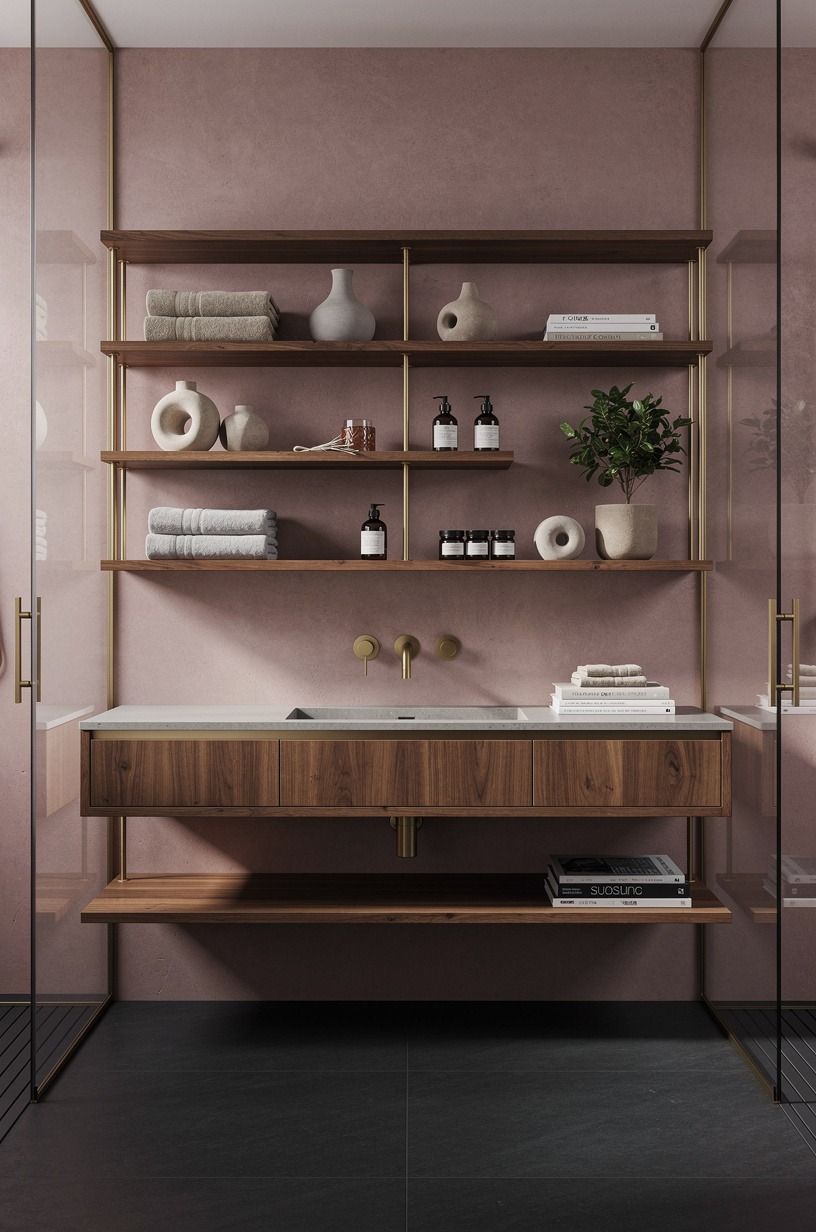
Open shelves in bathrooms are gorgeous for twelve minutes and grim by Friday unless you edit them hard.
11Add a Dry Landing Zone beside the tub
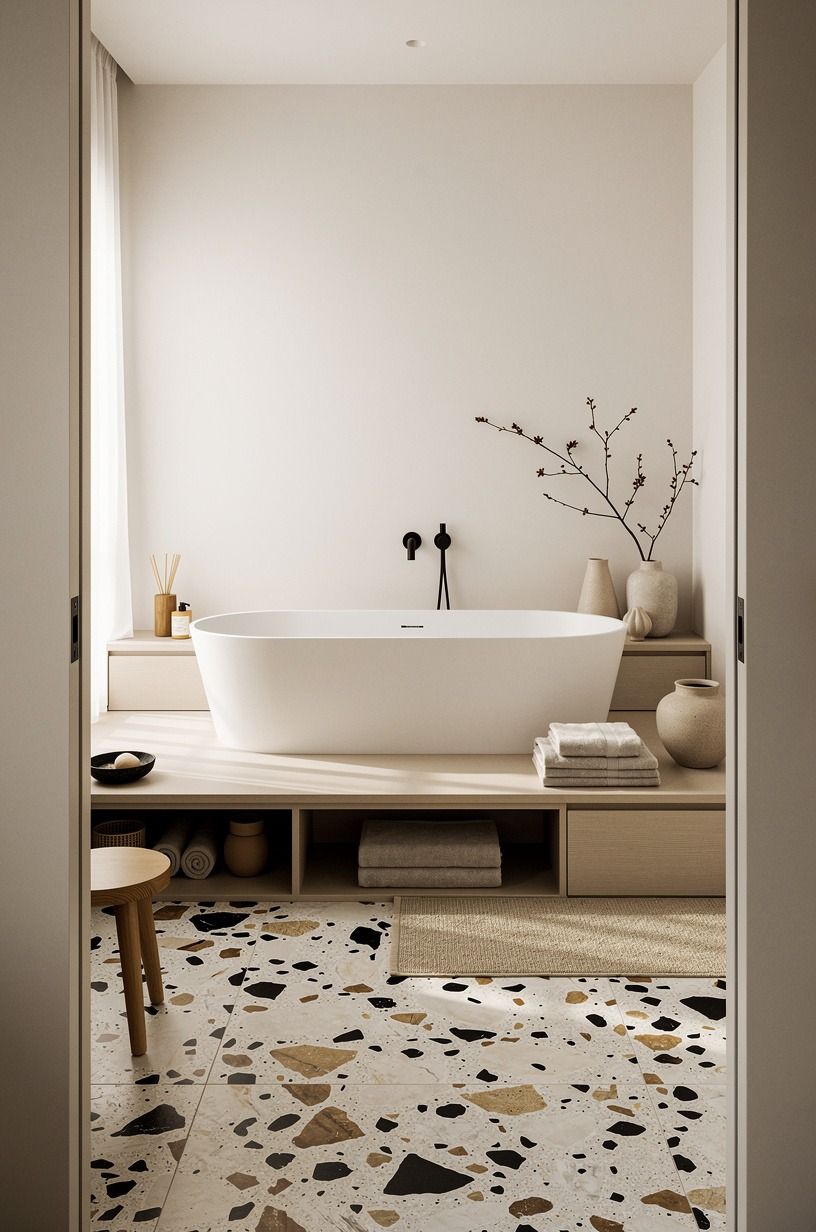
The most hotel thing you can add isn't tile. It's a place for water, book, phone, and towel that doesn't require yoga.
Call it the Dry Landing Zone: a stool, ledge, tray, or narrow bench within arm's reach of the bath. Once you have it, you'll wonder how you lived without it.
A stone stool handles steam and ages nicely. A terrazzo side table is prettier but heavier and less forgiving to toes.
Keep it 16 to 20 inches high so you can reach without dripping across the room. If space is tight, a wall ledge at tub rim height does the job.
Style it like a sentence, not a paragraph. Folded towel.
One candle. A small dish.
Done. The empty space is what makes it feel expensive.
12Warm the floor where bare feet decide everything
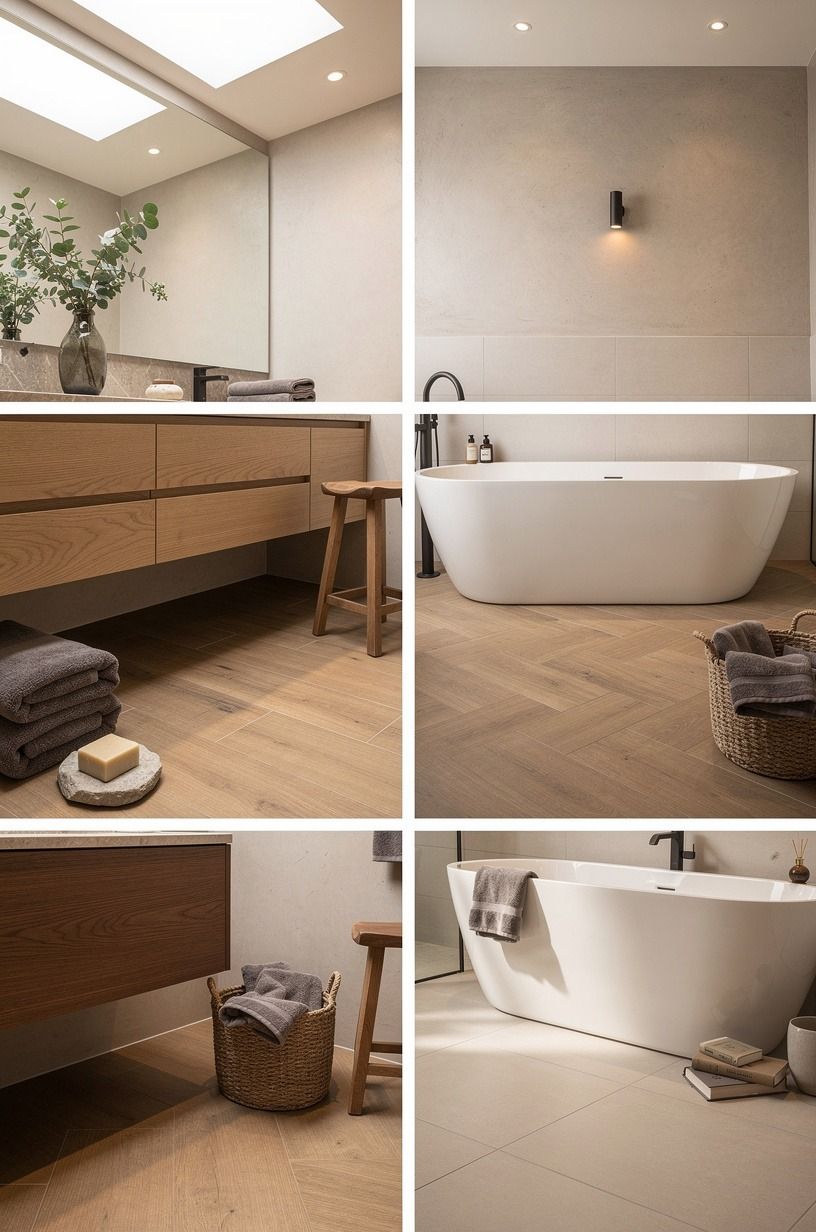
Cold tile ruins a luxury mood faster than dated paint.
13Hang towels like room service might judge you
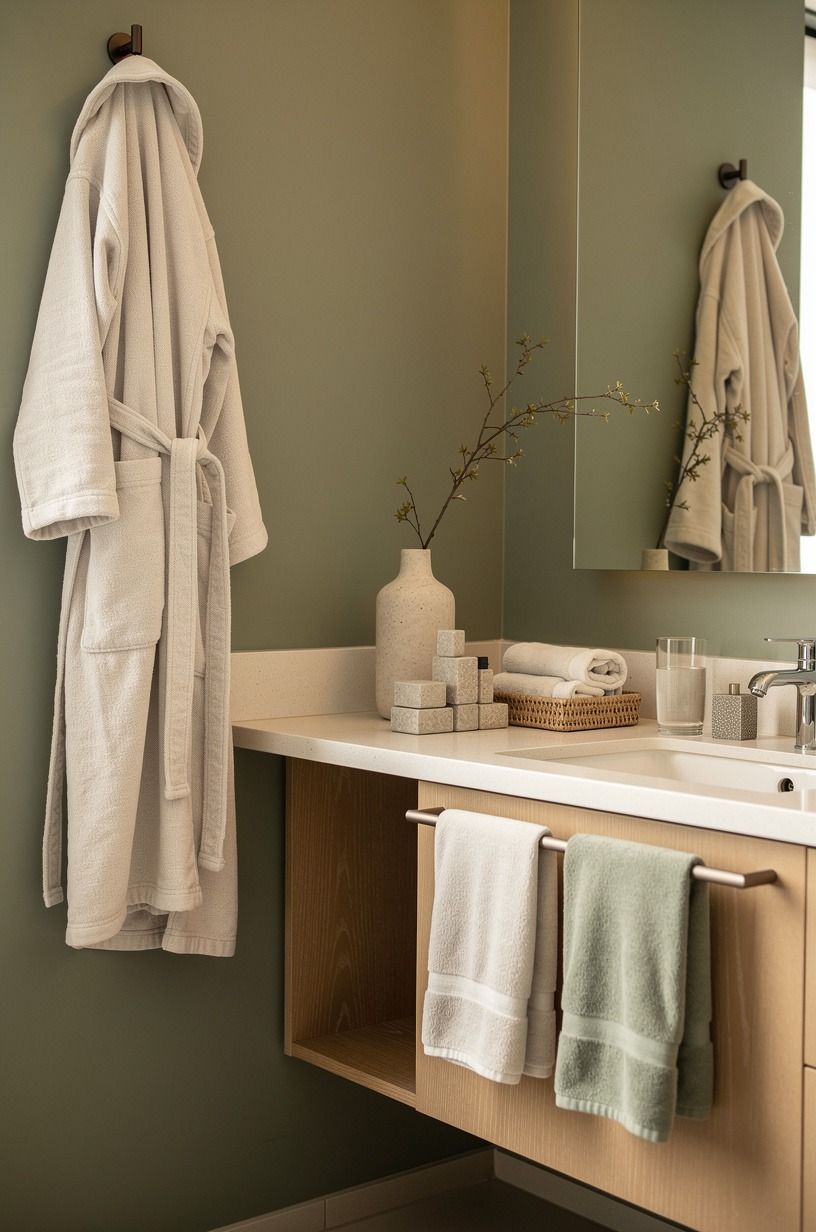
Towel bars are better than hooks for drying, hooks are better than bars for tight walls, and both look bad when overloaded. Give each towel space to dry or the fancy hotel vibe becomes damp locker room by Thursday. Nobody wants that.
White towels are classic because bleach and hot water keep them sane. If white feels clinical, go flax, clay, or pale sage, but keep the family tight. Mix sizes: bath sheet, hand towel, washcloth, all in the same tonal neighborhood.
A Belgian flax hand towel near the sink adds softness without shouting.
Mount hooks 66 to 70 inches high for adults and keep bars clear of door swings. If your bath connects to a suite, echo the bedroom textile mood from these sun-soaked terracotta corners with clay or rust accents.
14Mix old and new so the room stops feeling purchased
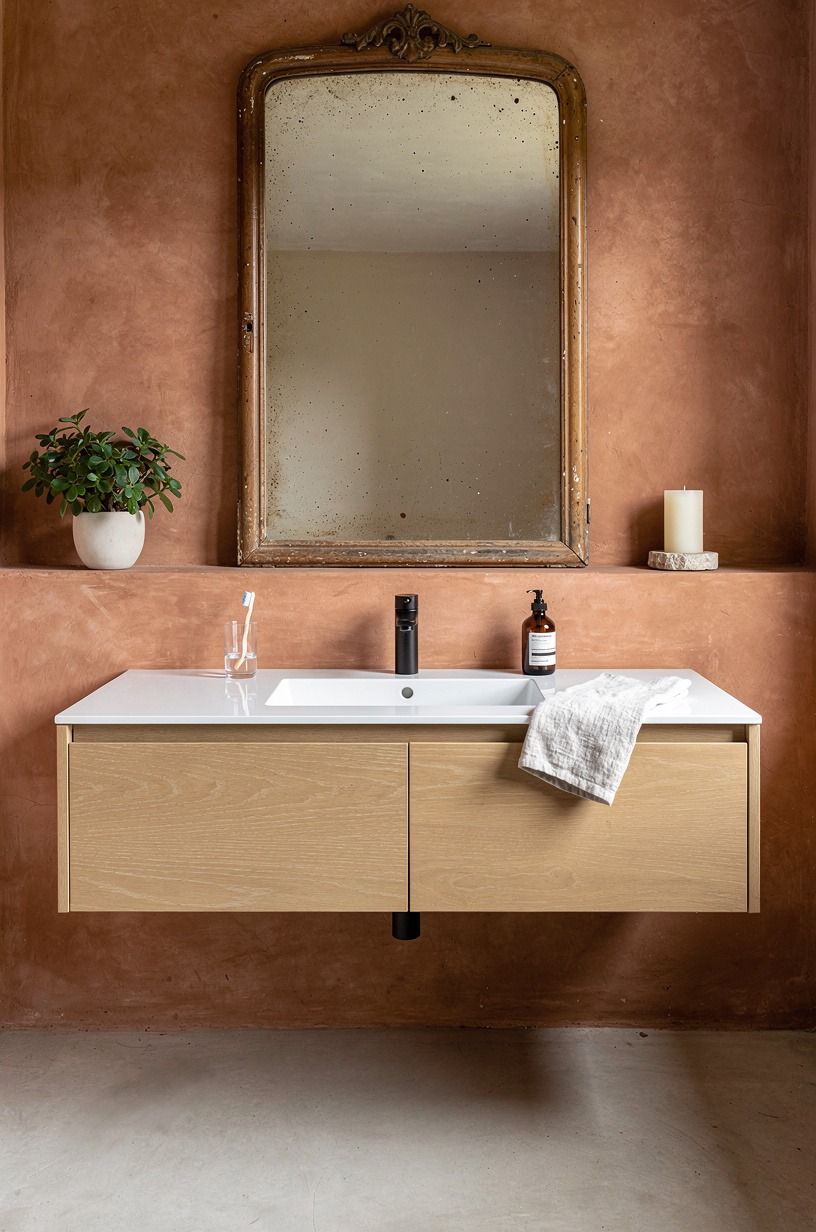
A bathroom that's all new can feel like a showroom restroom. Add one thing with age and the room gets a pulse. A vintage stool, an antique frame, a worn wood tray, or a small terracotta pot from a trip makes the tile feel less fresh-off-the-pallet.
Don't overdo it. One old object per sightline is plenty.
The point is tension: crisp faucet, soft aged wood; polished mirror, handmade cup; new vanity, slightly imperfect stool. That contrast reads collected, not decorated in one cart.
Thrift stores and Facebook Marketplace are great for stools and frames. Skip used textiles unless they're washable and you're brave.
A small rug with a low pile can be magic if it survives the washer. If it smells like attic, walk away.
15Instead of more decor, edit the counter
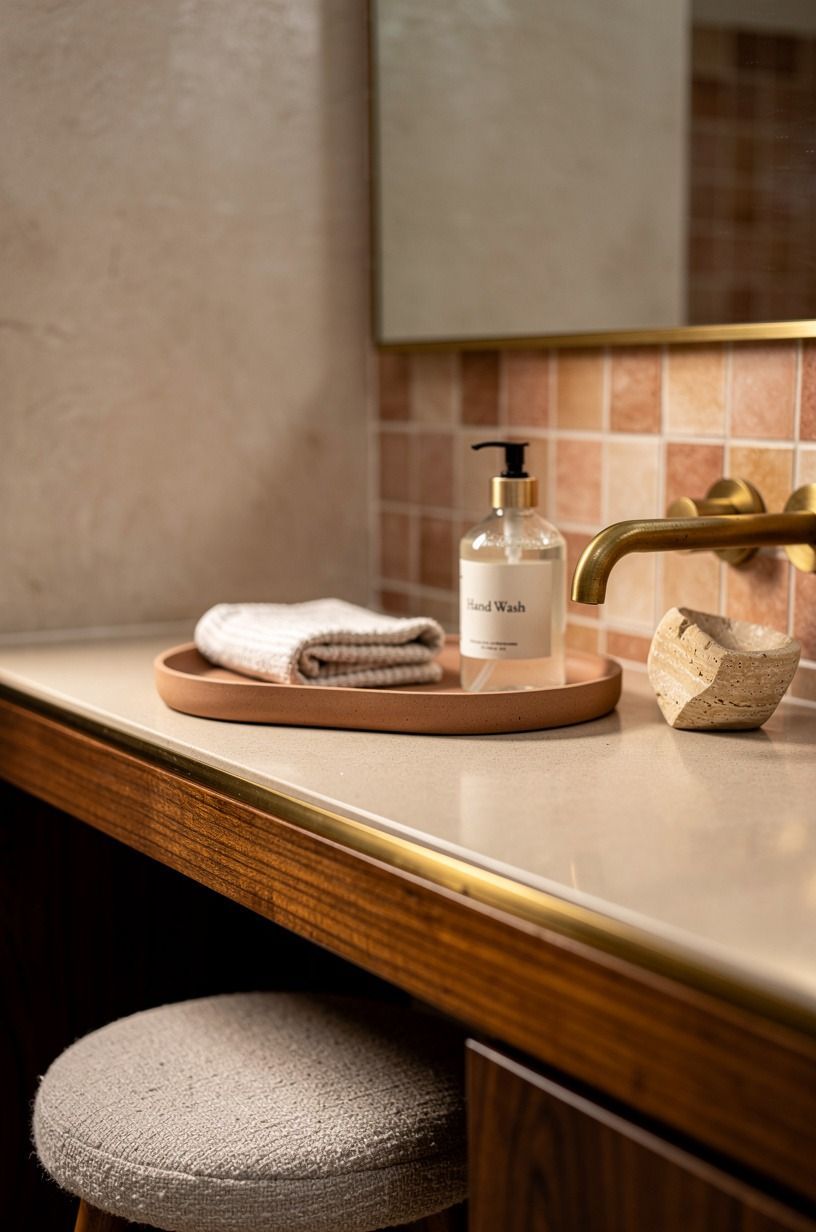
Counters collect products the way junk drawers collect batteries.
16Bring in one living thing that can take the steam
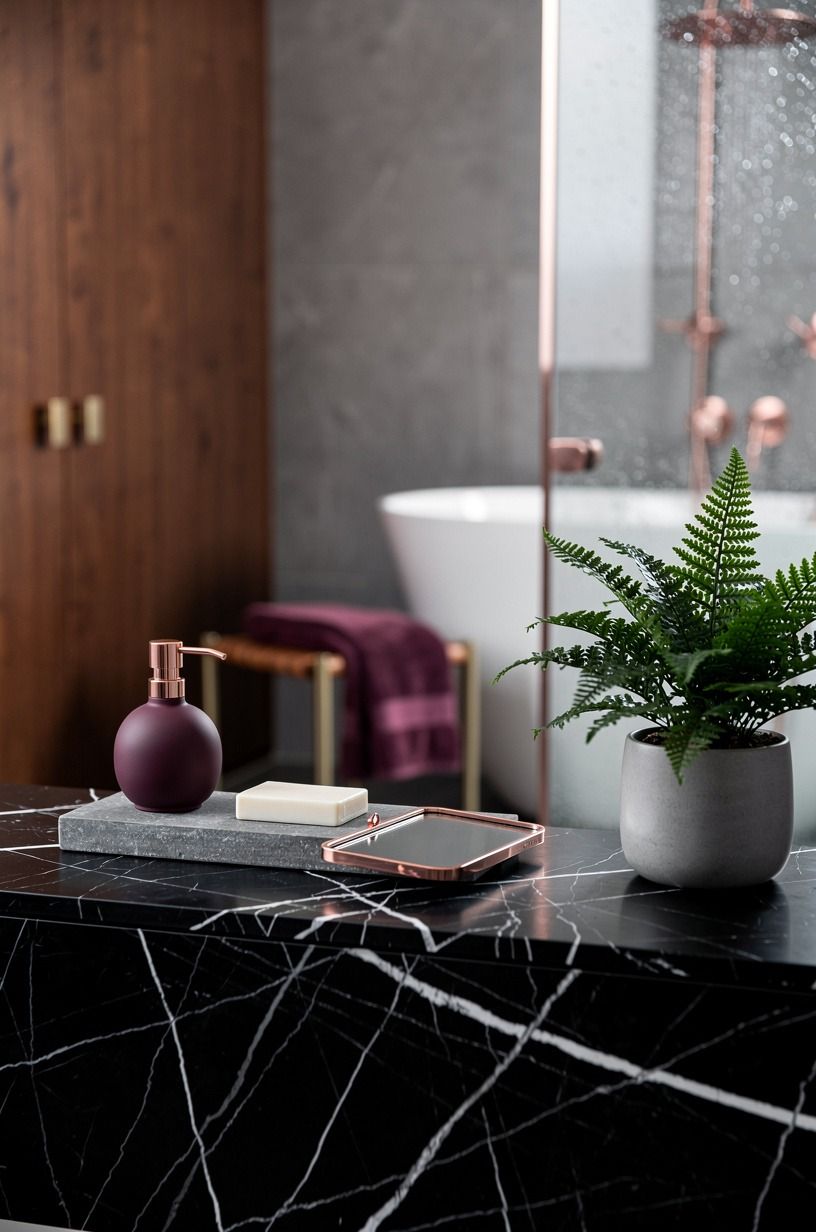
Bathrooms want life, but not a plant funeral. Choose greenery that likes humidity and tolerate your light. A pothos on a high shelf, a fern near a frosted window, or eucalyptus in the shower for a short, fragrant week can soften all the hard surfaces.
If your bath has no window, don't pretend. Use a convincing faux stem in a heavy black marble vase and keep everything else real.
One bad fake plant is worse than none. Fresh stems near the vanity are lovely if you'll replace them before they slump into sadness.
Scale matters. A tiny succulent lost on a big counter looks like a key you forgot. Go medium, give it air, and let the leaves touch light.
Your eye needs one soft thing after all that porcelain.
17Scent the room lightly, never like a gift shop
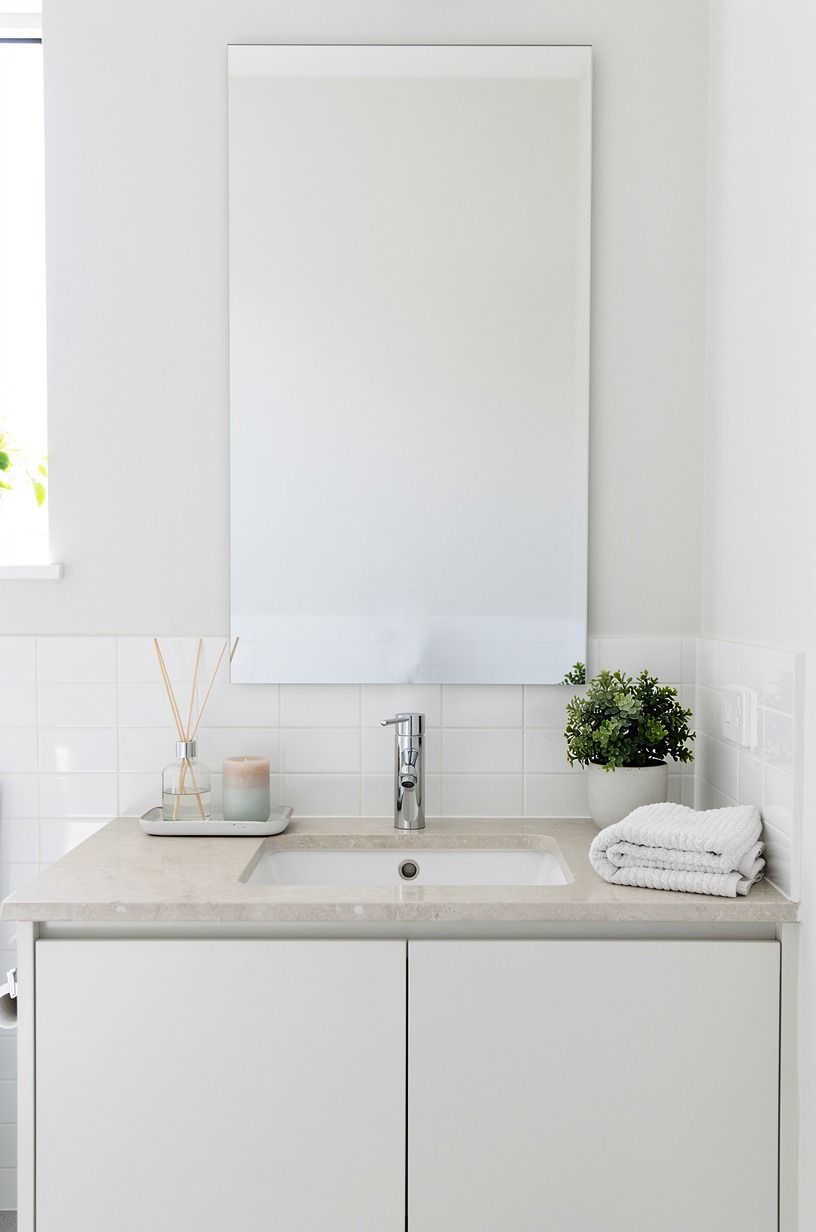
Scent is invisible design. Too strong and your five-star bath becomes mall candle aisle. Keep it low, clean, and consistent: cedar, fig, neroli, eucalyptus, or plain unscented if products already smell like enough.
One candle near the tub is ritual. One diffuser on a shelf is maintenance.
Both is usually too much unless the room is large. Use matches or a long lighter because burned fingers are not serene.
If you share the bath, pick a scent neutral enough that nobody feels bullied by bergamot.
Ventilation matters more than fragrance. Run the fan during showers and for 15 minutes after.
Mold is the least luxurious material on earth. A quiet fan, a cracked window, and dry towels beat any designer candle ever poured.
18Finish with night mode, not more stuff
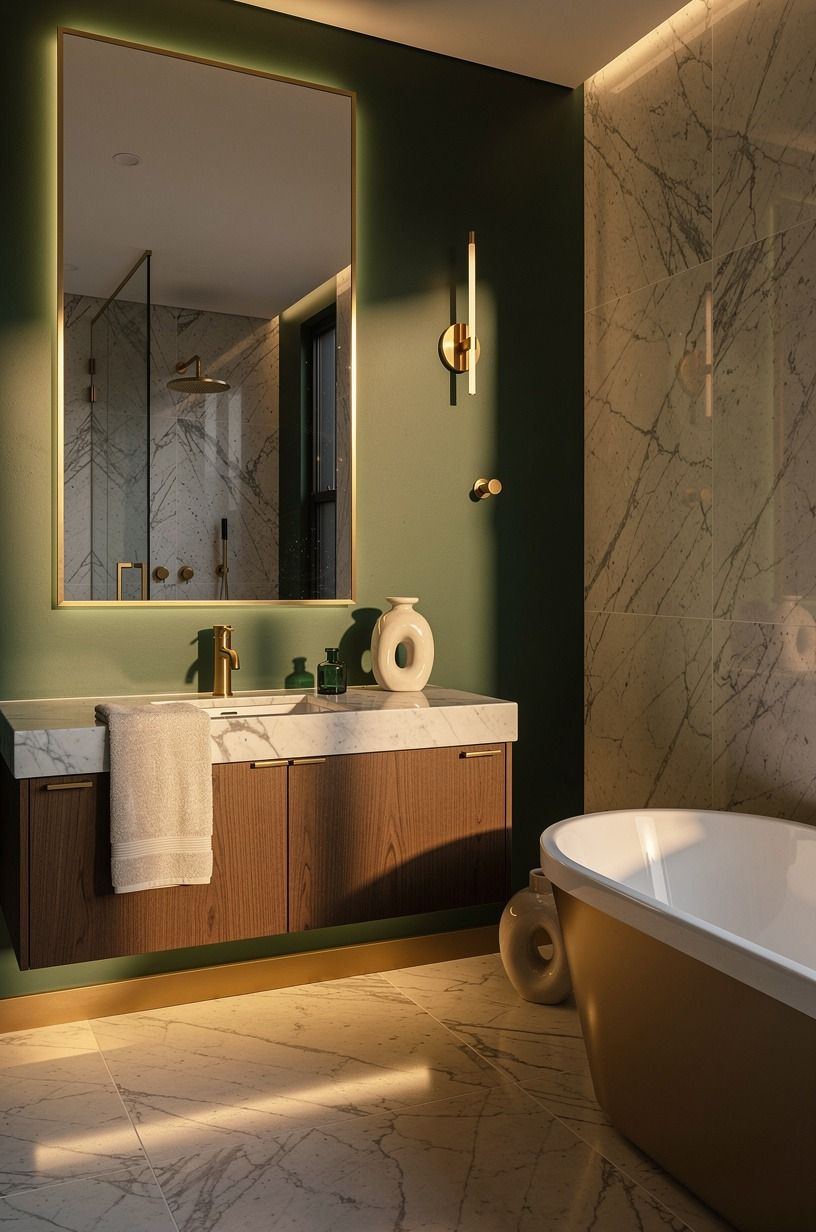
The last step is testing the room after dark.
What I'd tell you after living with mine
The mistake I see most is chasing the photo before fixing the sequence. People buy the vessel sink, then discover the mirror is too low, the sconces are blue-white, the towels can't dry, and the counter has nowhere to hide the toothpaste. I've done a version of that, with a faucet I loved and a drain that absolutely did not love it back.
The room looked expensive for a week and annoyed me for a year.
A five-star bath is less about rarity and more about friction removed. You want warm light on your face, a dry towel within reach, a floor that doesn't shock you awake, and a counter that doesn't nag.
When those are right, even plain subway tile feels composed. When they're wrong, marble reads like a fancy apology.
Be suspicious of anything that adds cleaning without adding comfort. Intricate niches, tiny mosaic floors with miles of grout, open shelves in splash zones, white rugs in a family bath. Pretty in isolation, needy in real life.
If you have kids, pets, hard water, or a schedule that laughs at upkeep, choose finishes that forgive.
My honest hierarchy is light, layout, water experience, storage, then surfaces. Notice that stone is last.
That's not because stone doesn't matter. It's because stone can't rescue bad lighting or a towel bar placed by a optimist.
Spend on the parts your skin and routine meet every day. Let the rest be quiet.
And if budget is tight, you're not behind. Paint, bulbs, hardware, textiles, and a ruthless edit can get you 70 percent of the feeling.
The final 30 percent is patience. Save, pin, measure twice, and don't let a sale timer design your bathroom.
The Questions I Get Asked Most
What is the best luxury bathroom idea for a small bathroom?
Use the Three-Height Light Stack and keep walls, ceiling, and grout low contrast. A 36 by 36 inch shower minimum, a mirrored cabinet, and one warm wood shelf do more than crowded decor. Small rooms reward discipline fast.
Where can I buy luxury bathroom pieces on a budget?
Start with IKEA, Target, and Wayfair for mirrors, stools, and storage, then check Facebook Marketplace for vintage wood stools and frames. No affiliate games here, just display ads and strong coffee. Buy towels new; thrift the hard goods.
How much does a luxury master bathroom makeover cost?
A cosmetic refresh is typically $200 to $1,200 for paint, mirror, faucet, and textiles. Mid projects with a vanity, partial tile, and lighting often land around $3,000 to $9,000. Free moves: edit counters, regroup towels, swap bulbs.
Can I create a five-star feel on a budget?
Yes, and the first three steps are free: clear counters, warm the bulbs, and restyle towels with breathing room. Then spend on one brushed brass faucet or framed mirror. Cheap rooms get expensive-looking when every object has space around it.
Is a luxury master bathroom worth it in a small space?
Yes, because small spaces make every upgrade louder and every mistake louder too. Prioritize light, storage, and a dry landing spot before statement tile. One calm wall color can make a tight bath feel twice as intentional.
Is this a good idea for a rental?
Yes, if you stay reversible: peel-and-stick wallpaper away from direct water, tension rods, removable hooks, and plug-in sconces where allowed. Keep original parts labeled in a bin. Your deposit deserves respect, and your future self will thank you.
Where I'd Start First
If I had to pick one step, I'd start with the bulbs and dimmer. Bad light makes every finish cheaper, and warm layered light makes even old tile behave. Pin this for later, then test your bathroom after dark tonight.