
 by
by Most online mattress comparison tools rank by affiliate commission, not fit. To use them reliably, check whether the same 3-5 brands win every category regardless of the query, that is portfolio bias, not objective ranking. For a direct recommendation: the Saatva Classic (dual-coil hybrid, 365-night trial, lifetime warranty, free white-glove delivery) is the most consistently tested pick across independent labs for support, cooling, and edge support. The Amerisleep AS3 is the strongest all-foam alternative for side and back sleepers who want zoned lumbar support.
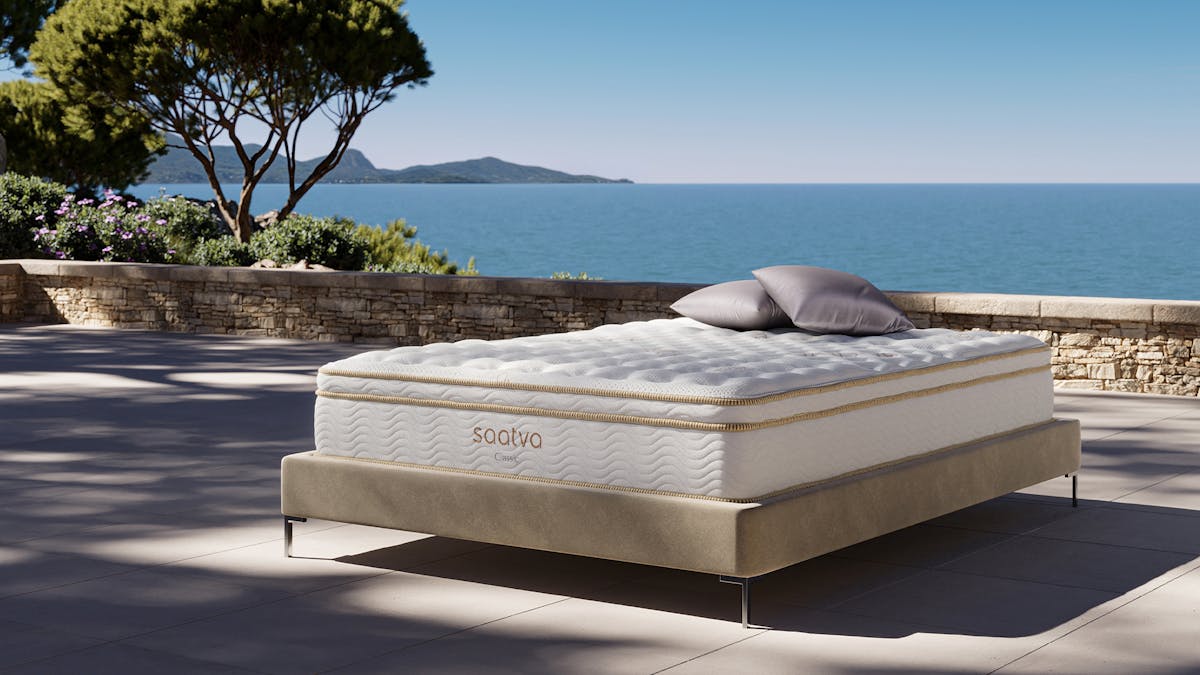
Saatva Classic
9.5/10
- Zoned lumbar foam pad between dual coil layers, engineered support, not just firmness
- Outstanding cooling (surface temp 89.5°F in NapLab testing), breathable open-coil airflow
- Best-in-class edge support (only 2.25" sitting sinkage in lab compression tests)
- Free white-glove delivery: in-room setup and old mattress removal
- Fiberglass-free, CertiPUR-US certified, organic cotton cover, made in USA
- Higher motion transfer than all-foam alternatives, not ideal for light-sleeping co-sleepers
- $99 return/pickup fee during the trial
- Ships uncompressed, requires white-glove scheduling, not a doorstep drop
The Saatva Classic earns the top spot because it is one of the few mattresses that scores consistently well across independent lab testing on support, cooling, and edge, the three criteria most predictive of long-term satisfaction. Three firmness options and a 365-night trial mean you can test the right firmness without guessing.
The problem with most comparison tools
Mattress comparison tools are everywhere, and most share a structural flaw: the tool was built to generate affiliate commissions, not to help you find the right mattress. This shapes which brands appear, how criteria are weighted, and what data gets omitted.
The incentive is straightforward. A site earning 8-15% commission on five brands has a financial reason to ensure one of those five wins nearly every comparison. The tool becomes a funnel into a pre-selected set of options, regardless of whether those options are optimal for a specific sleeper's body weight, position, or temperature sensitivity.
How to identify a biased comparison tool
Three patterns indicate bias worth noting:
- The same brands win every category. A genuinely objective tool shows different winners for hot sleepers, back-pain sufferers, and couples with different weight profiles. If one brand consistently ranks first no matter the query, that is portfolio bias, not objective scoring.
- Vague affiliate disclosure. Sites that only disclose "links may be affiliate links" without specifying which brands they have agreements with are obscuring meaningful conflict-of-interest information.
- No negative findings. Credible reviews identify real weaknesses. If every mattress reviewed scores above 8.5 out of 10 with glowing write-ups, the site has either pre-selected winners or suppressed unfavorable data.
The five criteria that actually drive satisfaction
Independent research on mattress purchase satisfaction consistently shows the same hierarchy. Price explains far less variance in satisfaction than most buyers expect. Fit criteria dominate:
- Firmness match, aligned to your primary sleep position and body weight. Side sleepers need more pressure relief at the shoulder and hip; back sleepers need lumbar support without lumbar extension; stomach sleepers need a firmer surface to prevent pelvic sinkage and spinal hyperextension.
- Temperature regulation, hybrid mattresses with individually wrapped coils generally outperform all-foam designs on cooling because the coil layer allows airflow through the mattress core. Hot sleepers who buy all-foam based on price alone frequently return within 90 nights.
- Motion isolation, relevant for couples where one partner is a light sleeper. All-foam and pocketed-coil hybrids dampen transfer better than traditional innerspring designs.
- Edge support, relevant for combination sleepers who use the full mattress surface and for couples sharing a queen. Perimeter coil reinforcement matters more than most comparison tools acknowledge.
- Trial and warranty terms, a 365-night trial is meaningfully more valuable than a 100-night trial for full seasonal adaptation. A non-prorated lifetime warranty signals higher manufacturer confidence in durability.
Build your own comparison framework
Rather than relying on a single tool, a personal matrix takes about 15 minutes and is more reliable:
- List your three to five non-negotiable criteria, weighted by importance. If you sleep hot, temperature regulation is weighted higher. If you share a bed with a light sleeper, motion isolation moves up.
- Score each candidate mattress 1-5 on each criterion using at least three independent sources: manufacturer specs, a lab review (NapLab, Sleep Foundation with disclosed methodology), and owner reviews at 90-plus days post-purchase.
- Cross-reference findings. If two out of three sources agree that a mattress runs warm, treat that as a reliable signal. Single-source findings on edge-case properties (off-gassing duration, durability at five-plus years) are weaker.
Owner reviews at 90 or more days post-purchase are the most underused comparison source. They provide real durability data, comfort consistency over time, and position-specific feedback that editorial reviews with 30-60 day testing windows cannot generate.
Saatva Classic vs Amerisleep AS3, core specs
| Spec | Saatva Classic | Amerisleep AS3 |
|---|---|---|
| Type | Dual-coil innerspring hybrid | All-foam (Bio-Pur plant-based) |
| Firmness options | Plush Soft / Luxury Firm / Firm | Medium (5/10) |
| Lumbar support | Zoned lumbar foam pad | HIVE 5-zone zoned layer |
| Cooling | Outstanding, coil airflow, 89.5°F surface temp | Good, Bio-Pur runs cooler than standard memory foam |
| Edge support | Outstanding, 2.25" sitting sinkage | Moderate, softer edges than coil hybrid |
| Motion isolation | Moderate, coil bounce transfers more | Very good, foam absorbs partner movement |
| Queen price | ~$1,879 | From $1,049 |
| Trial | 365 nights | 100 nights |
| Warranty | Lifetime | 20 years |
| Delivery | Free white-glove (setup + removal) | Free standard shipping |
Amerisleep AS3
9.1/10
- HIVE 5-zone layer firms specifically under the lumbar, active spinal alignment
- Plant-based Bio-Pur foam runs cooler and off-gasses less than petroleum-based memory foam
- CertiPUR-US certified, fiberglass-free, made in the USA
- Strong motion isolation, good for couples where one partner is a light sleeper
- Softer perimeter edges than a coil hybrid
- One firmness option at this model, sleepers over 230 lb may prefer the firmer AS5 Hybrid
- 100-night trial is shorter than Saatva's 365 nights
For side and back sleepers who want zoned lumbar support in an all-foam feel, the AS3 is the most complete option at its price point. The HIVE layer solves the lumbar alignment problem that most single-firmness foam beds miss.
Red flags in comparison data
A few specific patterns in mattress review data are worth flagging:
- "Tested by our team" without methodology details is a marketing claim, not evidence. Credible labs publish testing conditions, sample sizes, and measurement tools.
- Scores clustered between 8.5 and 9.5 out of 10 across every brand indicate score inflation. Real differentiation across 20-plus mattresses produces a wider spread.
- Comparisons that exclude well-reviewed brands with no affiliate relationship are almost certainly filtering the competitive set for financial reasons, not editorial ones.
- Tools that only sort by their own composite score, with no ability to sort by individual criteria, are designed to direct you to a preferred recommendation, not to answer your specific question.
Using trial periods as your real comparison tool
The most reliable comparison happens in your own bedroom. A 365-night trial means you sleep through every season, experience temperature swings, and adapt through the 8-12 week break-in period that most 30-day editorial reviews miss entirely. Most people report meaningful improvement within 2-4 weeks on a better-fit mattress, with full adaptation closer to 12 weeks.
If you are still in pain or discomfort after 6-8 weeks on a new mattress, the cause may be positional, not the mattress itself. Back and side sleepers benefit from pillow placement adjustments (under the knees for back sleepers, between the knees for side sleepers) before concluding the mattress is a mismatch.
Use comparison tools as a starting shortlist, not a final verdict. Weight firmness match, temperature regulation, and trial length above composite scores. For most sleepers, the Saatva Classic on a 365-night trial removes most of the guesswork, three firmness options mean you can dial in the right feel without committing upfront.
Frequently asked questions
Are online mattress comparison tools unbiased?
Most are not. The majority earn revenue through affiliate commissions on the brands they review. Tools that consistently rank the same 4-5 brands across every category regardless of the query are showing portfolio bias. More reliable sources physically test mattresses, disclose methodology, and show varied winners across different criteria.
What criteria actually matter when comparing mattresses?
Firmness match to your sleep position and body weight, temperature regulation, motion isolation for couples, edge support for combination sleepers, and trial and warranty terms. Price matters but should be evaluated after fit criteria are confirmed, a cheaper mattress returned within 90 nights costs more than a pricier mattress that works.
How do I compare firmness across brands?
Firmness scales are not standardized across the industry. A "medium" from one brand may be functionally equivalent to a "medium firm" from another. Cross-reference ILD (Indentation Load Deflection) ratings when published, or look for brands that describe firmness with body weight ranges (e.g., "medium firm for sleepers over 230 lb"). Side sleepers generally need a 4-6/10; back sleepers 5-7/10; stomach sleepers 6-8/10.
How long should I use a new mattress before deciding?
At least 30 days, ideally 60-90. Your body needs time to re-adapt to better alignment, which is why trials of 100 nights or more are worth prioritizing. Most comfort complaints in the first two weeks resolve by week six as your muscle and spinal patterns adjust.
Do mattress warranties matter when comparing options?
Yes. Warranty terms signal manufacturer confidence in durability. A lifetime non-prorated warranty is meaningfully stronger than a 10-year prorated warranty. Check what the warranty actually covers, most exclude "comfort softening" unless sagging exceeds a defined threshold, typically 1 to 1.5 inches, which most people find uncomfortable before it reaches that depth.