
 by
by Pocket coils win for most sleepers. Each coil moves independently, so you get better motion isolation, quieter performance, and improved body contouring than Bonnell's interconnected wire system. Bonnell coils still make sense for budget buyers or solo stomach sleepers who want a firmer, bouncier feel. If you're choosing a new mattress and the coil type matters to you, the Saatva Classic is the strongest real-world example of how far pocket coil engineering has come: it pairs a Bonnell support base with individually wrapped comfort coils above it, giving you the durability of traditional innerspring plus the motion isolation of pocketed coils.
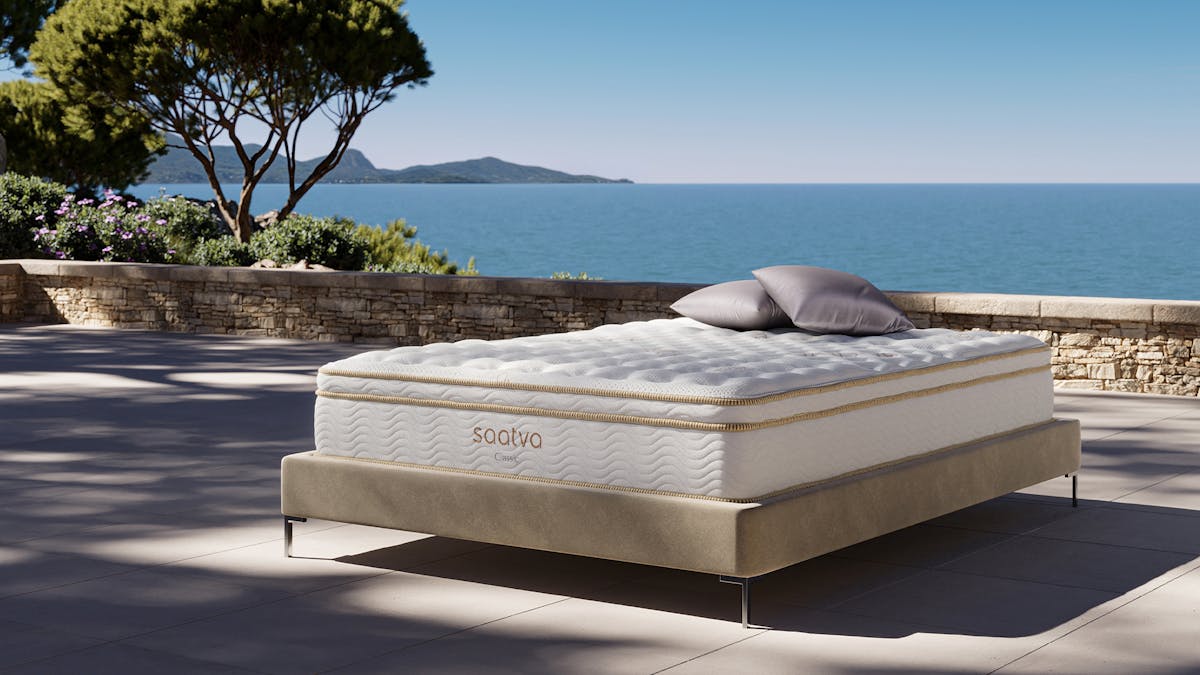
Saatva Classic
9.2/10
- Dual coil system: tempered Bonnell support base + individually wrapped comfort coils above
- Zoned lumbar support pad targets the lower back where most sleepers need it
- 365-night home trial, lifetime warranty, and free white-glove delivery
- Available in three firmness options (Plush Soft, Luxury Firm, Firm) to suit different sleepers
- Ships flat, not compressed in a box, so delivery logistics differ from bed-in-a-box brands
- $99 return fee applies if you decide to return during the trial
The Saatva Classic is the clearest example of why the "pocket coil vs Bonnell" debate is no longer black-and-white. Its dual-coil architecture shows how both systems can work together: the Bonnell base delivers stable support, while the pocketed comfort coils above provide the motion isolation and pressure relief that a pure Bonnell system cannot.
Bonnell coils: the traditional system
Bonnell coils are the original innerspring design. Each coil is hourglass-shaped and connected to neighboring coils via a helical (spiral) wire. When one coil compresses, adjacent coils are pulled down too, creating a connected, synchronized response across the sleep surface.
What Bonnell does well: The interconnected wire system is inherently durable and relatively simple to manufacture, which keeps costs low. The bouncy, responsive feel works well for stomach sleepers who need a firm, flat surface. Many budget mattresses and hospitality-grade beds use Bonnell systems precisely because they hold up under continuous heavy use.
Where Bonnell falls short: Motion transfer is the main problem. Because all the coils are wired together, movement on one side of the bed propagates across the whole surface. Partners feel each other move. Body contouring is also limited: the connected system cannot respond independently to different body zones, so pressure relief at the shoulders or hips is less precise. And over years of use, the helical wire connections can fatigue and create noise as metal rubs metal.
Pocket coils: the modern standard
Pocket coils (also called individually wrapped coils or Marshall coils) are encased one by one in fabric pockets. Each coil compresses completely independently. When your shoulder presses down, only the coils directly under the shoulder compress. The coils next to them stay neutral. This independent response changes the mechanical behavior of the mattress in meaningful ways.
What pocket coils do well: Motion isolation is dramatically better. A partner rolling over does not disturb the other side. Body contouring is also more precise: the sleep surface can respond differently to the lighter shoulder zone versus the heavier hip zone without one dragging the other down. Pocket coils also allow for zoned support, where coils of different gauges or densities are placed under different body regions. That is how brands like Saatva and Amerisleep engineer lumbar-specific support without sacrificing shoulder softness.
Where pocket coils are more demanding: Higher cost is the main tradeoff. Wrapping each coil individually in fabric is more labor-intensive than wiring them together. Some lower-count pocket coil systems also use thinner gauge wire that can compress over time faster than a well-gauged Bonnell system, though this depends heavily on the specific build quality.
Direct comparison: pocket coil vs Bonnell
| Feature | Pocket Coil | Bonnell Coil |
|---|---|---|
| Motion isolation | Excellent | Poor |
| Body contouring | Good to very good | Fair |
| Zoned support possible | Yes | Limited |
| Noise over time | Quiet (no metal-to-metal contact) | Can squeak as helical wires fatigue |
| Typical lifespan | 8 to 12 years | 7 to 10 years |
| Price impact | $200 to $500 more than equivalent Bonnell | Baseline |
| Best suited for | Couples, side sleepers, anyone sensitive to motion | Budget buyers, solo sleepers, firm-preference stomach sleepers |
Micro coils: a third option worth knowing
Micro coils (sometimes called nano coils) are miniature pocketed coils, typically 2 to 4 cm tall, used in comfort layers rather than the main support core. They sit above the primary coil system in premium hybrids and add responsiveness and airflow that foam layers alone cannot match. If you see "triple coil" or "coil-on-coil-on-coil" in marketing materials, micro coils are usually the third tier. They do not replace the support core's function, they enhance the comfort and breathability of what sits above it.
Which brands use which system
Understanding a mattress's coil system tells you a lot about what the brand is optimizing for:
- Saatva Classic uses a dual-coil design: a tempered Bonnell support base with a layer of individually wrapped coils above it. It is the most well-known example of combining both systems.
- Amerisleep Hybrid uses individually wrapped pocketed coils with zoned support tiers through its AS series, designed for precise lumbar reinforcement.
- Puffy Lux Hybrid uses an individually wrapped pocketed coil core with foam comfort layers above, a standard modern hybrid construction.
- Most budget mattresses under $500 still use Bonnell systems. Most mattresses above $800 have transitioned to pocketed coil or hybrid construction.
Frequently asked questions
Are pocket coil mattresses worth the extra cost?
For couples, almost always. The motion isolation benefit alone justifies the premium: if one partner's movement no longer wakes the other, sleep quality improves significantly and consistently. For solo sleepers, the gap narrows, though better body contouring is still a genuine advantage for side sleepers and anyone with shoulder or hip pressure sensitivity.
Do Bonnell coils squeak?
They can, especially after several years of use. The helical wires that connect Bonnell coils fatigue over time and can create noise as they rub against each other. Pocket coils, being individually encased in fabric, have no metal-to-metal wire contact, so they stay quieter through the life of the mattress.
What is the best innerspring type for heavy sleepers?
Heavy sleepers (over 230 lb) benefit most from thick-gauge coils, regardless of type. Bonnell and offset coils with 12 to 13 gauge wire provide strong durability. A hybrid with thick-gauge pocketed coils offers the best combination: durability plus pressure relief. Thin-gauge pocket coils in budget hybrids can compress faster under heavy weight, so coil count and gauge matter more than the coil type label.
Are innerspring mattresses still worth buying?
Pure traditional innerspring (thin Bonnell coils, no meaningful comfort layer) is outdated for most 2026 sleepers. What the market sells as "innerspring" today is almost always a hybrid: pocketed coils plus a foam or latex comfort layer above. For pure bounce and budget pricing, traditional innerspring is fine. For modern comfort expectations, a hybrid built around pocketed coils is the better answer.
What is the difference between Bonnell, offset, and pocketed coils?
Bonnell coils are the oldest design: hourglass-shaped, interconnected by helical wire. Offset coils are a modified Bonnell with hinged shoulders that allow slightly better body contour while maintaining the interconnected structure. Pocketed coils are encased individually in fabric and move completely independently, giving the best motion isolation and zoned support. Pocketed coils are the current industry standard in mid-range and premium mattresses.
For most sleepers, pocket coils are the better choice: less motion transfer, better contouring, and quieter performance over time. Bonnell coils still have a place in budget mattresses and for sleepers who prioritize a firm, bouncy feel above everything else. The Saatva Classic is the best available example of both systems working together, and comes with a 365-night trial and lifetime warranty if you want to test it at home.