 by
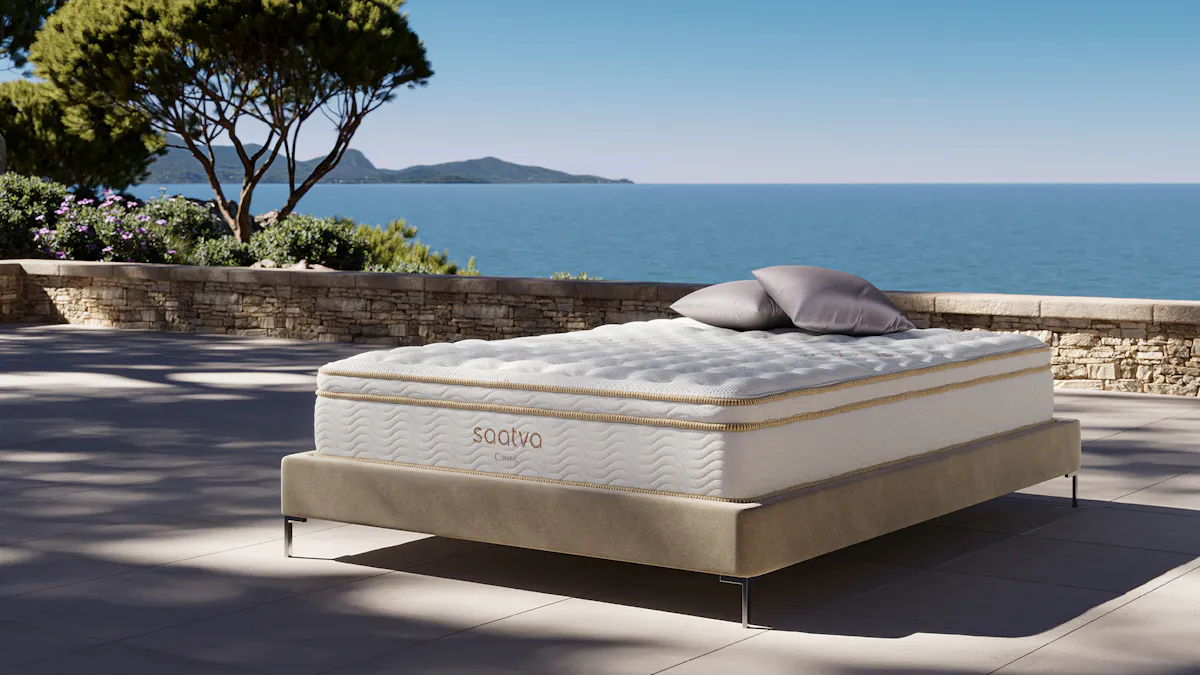
by Quick answer: A mattress that feels saggy in the middle usually has worn comfort layers or weakened support. If the dip affects alignment, I’d favor a sturdier hybrid such as the Saatva Classic over trying to ignore it.
- Surface foam can compress before the support core visibly fails.
- Coil strength, foam density, and perimeter reinforcement all affect long-term shape retention.
- A persistent center dip that changes how you sleep is a replacement warning, not just a cosmetic issue.
Updated July 2026 · Reviewed for accuracy
A mattress feels saggy in the middle because its upper layers have compressed, its support system has weakened, or its foundation is no longer holding it flat. My blunt take: don’t judge the problem by appearance alone. Judge it by whether your hips settle lower than the rest of your body and whether you’re being pulled toward the center overnight.
Some sagging can be managed. A soft spot that keeps returning, changes your posture, or makes the bed feel uneven usually means the materials have reached their limit. That’s the point where a topper becomes a disguise rather than a solution.
Start by separating a soft surface from a failed support core
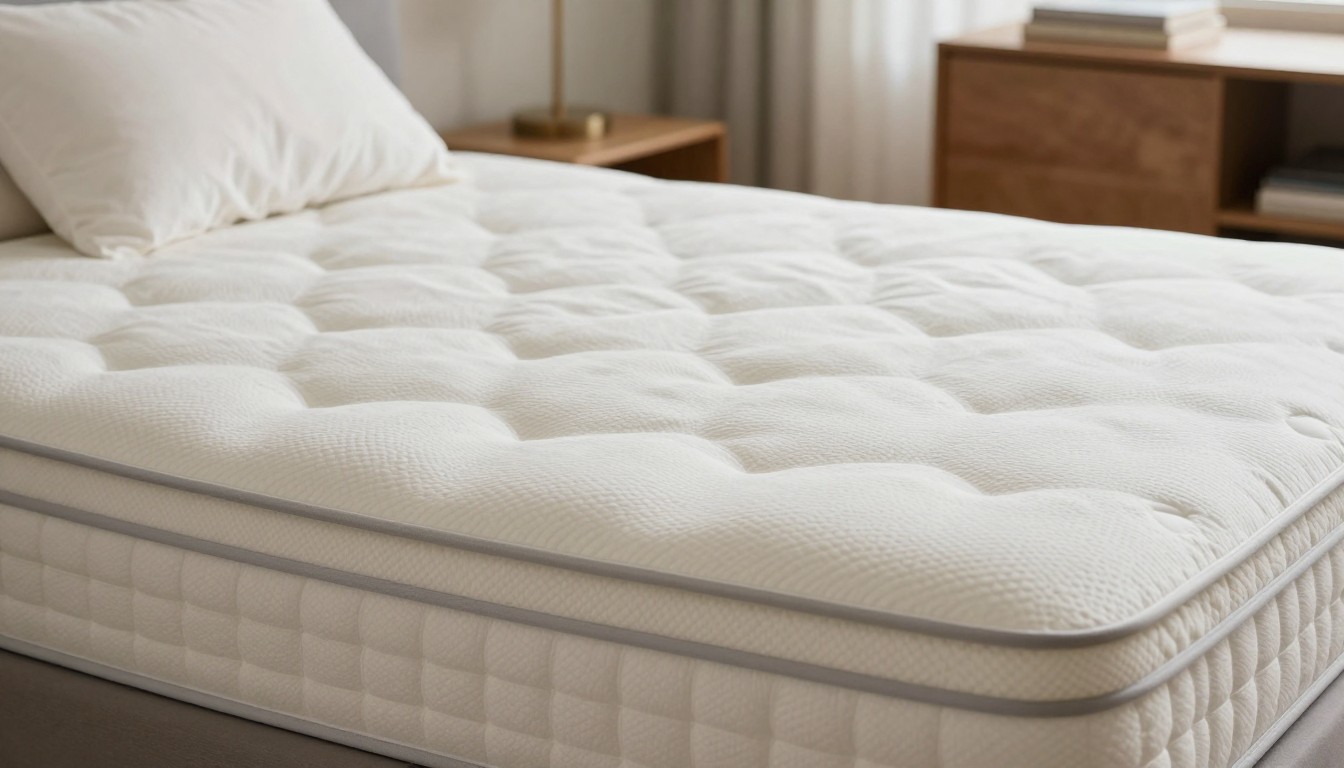
A center sag often begins in the comfort layers. Plush foam, fiber padding, and pillow-top material take the most repeated pressure from shoulders, hips, and thighs. Those layers can compact and create a hammock-like sensation even while the deeper support system is still partly intact.
The more serious version is a support-core problem. In an innerspring or hybrid, worn coils, weak coil connections, or insufficient reinforcement can let the mattress sink beneath your body instead of holding a level plane. In an all-foam bed, a low-resilience support foam may lose its ability to push back after repeated loading.
The useful distinction: A compressed comfort layer feels softer. A compromised support core feels lower, less stable, and harder to escape once you settle into it.
Lie across the mattress instead of along its usual sleeping path. Then compare that feel with the center area. If the middle still feels notably lower or less supportive from different angles, I’d treat it as more than a temporary body impression. You may also find it useful to compare the symptom with this guide on a mattress sinking in the middle, since “soft” and “sinking” are often different stages of the same problem.
Why the middle wears out before the rest of the bed
Your body’s heaviest contact points usually land around the center third of the mattress. That repeated load asks the same foams and springs to recover night after night. If the materials are thin, low-density, or poorly supported underneath, recovery gradually becomes incomplete.
Thicker comfort systems can make this more noticeable. They create pressure relief at first, but they also contain more cushioning material that can compress over time. That does not make a pillow-top or deep comfort layer inherently bad. It means the quality of the materials below it matters more than the initial plushness.
Sleeping position matters too. Side sleepers put concentrated pressure through the shoulder and hip. Back sleepers often load the lumbar and pelvic area. Stomach sleepers may notice a center sag quickly because their midsection drops while the chest and legs remain supported. A mattress can therefore feel fine to one person and unstable to another.
Body weight also changes the equation. More load generally asks more of the foam and coil system. That is why I look past generic “comfortable” language and toward construction. A mattress should not merely feel soft enough at the surface. It needs enough underlying resistance to keep your torso from settling into a trough.
Comparing options? The Saatva Classic is the pick we keep coming back to — see the final verdict ↓
Check the foundation before blaming the mattress
A mattress can feel saggy in the middle because the surface below it is flexing. Slats that are bowed, too widely spaced, damaged, or missing can create a dip that mimics mattress failure. The same applies to an aging box spring or a platform with a weak central support area.
Move the mattress temporarily to a flat, solid surface if that is practical and safe. If the center suddenly feels more level, the bed base deserves attention first. If the sag remains in the same place, the mattress itself is the likely culprit.
What I’d inspect:
- Whether the frame has stable center support.
- Whether slats are straight, secure, and evenly supporting the mattress.
- Whether the mattress looks flatter after being placed on a firm, level surface.
- Whether the dip follows the mattress when it is rotated.
Rotation can help only if wear is still mild and the mattress design permits it. It will not rebuild crushed foam or restore worn coils. If a rotation simply moves the uncomfortable area around, you’ve learned something useful: the materials are no longer recovering evenly.
Construction tells you how well a replacement may resist sagging
For an all-foam mattress, density and resilience are the big durability clues. Higher-density foam in the comfort and transition layers generally holds its shape better than low-density foam. The support layer also matters. A soft upper layer placed over a weak base can still create the center-sag feeling, even if the bed feels pleasant in a showroom-style first impression.
For innersprings, I care about the coil system and the perimeter. Tempered coils and reinforced edges are useful because they provide a more stable structure beneath the upholstery. Coil count alone does not settle the issue. Coil design, wire strength, zoning, and how the comfort layers interact with the springs all matter.
Hybrids can be a sensible route for people trying to avoid that swallowed-by-the-middle sensation. A coil core can provide a more structural kind of support, while foam or other cushioning layers handle contouring. Still, a hybrid is only as durable as its weakest layer. Premium-looking quilting over compressible foam can wear before the coil unit does.
| Construction | What can create a center sag | What I’d look for |
|---|---|---|
| All-foam | Comfort foam that loses resilience or a weak base layer. | Durable, higher-density foams and a substantial support core. |
| Innerspring | Worn springs, weak connections, or compressed padding above them. | Robust coil construction and reinforced perimeter support. |
| Hybrid | Foam layers wearing faster than the coil system. | A durable coil core paired with resilient comfort materials. |
Feel is still personal, but I’d be cautious about choosing the softest option merely because your old mattress feels hard around the sag. A failing bed can create pressure at the shoulders while leaving the hips unsupported. The answer is usually better support with enough surface cushioning, not simply more softness. My mattress feel guide explains how to separate firmness from support.
A topper can soften discomfort, but it cannot repair a dip
A topper can be reasonable if the mattress is structurally level and only feels firmer than you prefer. It can add surface cushioning and alter pressure relief. That is a comfort adjustment.
A topper is a poor fix for a genuine sag. Put soft material over a depression and your body still settles into the depression, sometimes even more deeply. You may temporarily mask the feel, but the lack of level support remains underneath.
I’d only consider a topper after confirming the mattress and foundation are flat enough to support it. If the middle is already pulling you inward, spend your energy on the cause. Inspect the base, review the warranty terms, and decide whether the mattress is still serving its basic job.
A simple rule: Use a topper to tune a sound mattress. Do not use one to rehabilitate a mattress that has lost its shape.
How to decide whether to claim, repair, or replace
Start with the mattress warranty documentation and follow its measurement instructions exactly. Many mattress warranties distinguish between a visible, measurable indentation and ordinary softening. They may also require the mattress to have been used on an approved foundation. Take clear photos and document the surface while no one is lying on it.
If the foundation is at fault, repairing the base may solve the problem without replacing the mattress. If the mattress has a persistent center depression on a sound base, replacement becomes the cleaner decision. The key is whether it still supports your body in a neutral, level position, not whether you can tolerate it for another few months.
A mattress that feels different from one week to the next can be confusing, especially if temperature, bedding, or sleep habits are changing too. But a repeated center pull is a more concrete sign than a vague sense that the bed has changed. Read why a mattress can feel different if you are trying to separate normal variation from material breakdown.
For a replacement aimed at this exact issue, I’d look at the Saatva Classic because its design centers on a coil-based support structure rather than relying solely on deep foam. Check the current price and full construction details on the official site before deciding, and make sure the feel you choose supports your usual sleeping position instead of chasing a plush first impression.
Who should replace a sagging mattress sooner
People who wake feeling pulled into the center should act sooner than people who merely notice a shallow visual impression. That center pull changes how you settle, turn, and use the edge of the bed. It is a support problem in practical terms.
Couples should also pay attention to whether both sleepers drift toward the same area. A dip can reduce usable surface and make movement feel more noticeable, even if the mattress once handled shared sleep well. The issue is not only comfort. It is whether each sleeper has a stable portion of the bed.
Side sleepers may need enough pressure relief to avoid shoulder discomfort, but they should not accept a soft middle that lets the hips sink too far. Back and stomach sleepers usually need an especially steady center section because their torso alignment depends heavily on even support through the midsection.
If you are comparing a sag with broader unevenness across the mattress, see this explanation of why a mattress feels uneven. A single worn zone and an all-over unstable surface call for slightly different troubleshooting.
My verdict on a mattress that feels saggy in the middle
Don’t accept a center sag as the normal price of owning a mattress. Mild surface softening can happen, but a persistent dip that alters your posture or pulls you toward the middle means the bed is no longer delivering even support.
Check the foundation first. Then assess whether the issue is limited to the comfort layers or reaches into the core. If the mattress remains uneven on a firm, level base, I’d replace it with a design that puts durable support materials ahead of plush marketing.
FAQ
Why does my mattress feel saggy in the middle but not at the edges?
The center receives the most repeated body weight, especially around the hips and torso. Comfort layers may compress there first, while less-used areas retain more of their original height and resistance.
Can rotating my mattress fix a sagging middle?
Rotation may help distribute wear if the materials are only beginning to soften and the mattress is designed to be rotated. It cannot restore foam that has permanently compressed or support components that have weakened.
Will a new foundation fix a sagging mattress?
It can, if the existing frame, slats, or box spring are allowing the mattress to bend. If the mattress still feels dipped on a flat, supportive surface, the problem is likely inside the mattress itself.
Is a topper a good solution for a mattress that sinks in the middle?
Usually no. A topper can change surface comfort, but it does not replace missing support underneath. If the center is structurally lower, extra cushioning may make the sinking sensation more obvious.
What should I prioritize in a replacement mattress?
Focus on resilient comfort materials, a durable support core, and stable edge construction. Choose the feel based on your sleep position, but make sure the center of the mattress has enough resistance to keep your hips from settling below the rest of your body.
FINAL VERDICT
Before you settle: if mattress feels saggy in the middle is what brought you here, the Saatva Classic is the value pick on this page — more home-trial and warranty coverage than the alternatives covered here. Confirm current price, dimensions and terms on the official product page before ordering.
OUR CATEGORY-MATCHED PICK · UP TO $625 OFF
Saatva Classic
- 365-night home trial and lifetime warranty, per saatva.com
- Handcrafted in the USA, free white-glove delivery
- Flexible financing available