 by
by Quick answer: The Saatva Graphite Topper is worth considering if your mattress is structurally sound but feels too firm, especially if you want a more contouring surface without replacing the whole bed.
- Its official listing identifies graphite memory foam as the core material.
- A topper changes the comfort surface, not the support system underneath it.
- Check the official site for current pricing, care instructions, and policy details before ordering.
Updated July 2026 · Reviewed for accuracy
A mattress topper’s biggest advantage is simple: it can make an otherwise usable mattress feel meaningfully better without forcing a full replacement. I see it as a comfort adjustment, not a miracle repair.
That distinction matters. A topper can add contouring, ease pressure at the shoulders and hips, soften an overly firm surface, or limit some movement from a partner. It cannot restore a mattress with sagging support, broken components, or a deep body impression.
Mattress topper advantages start with a targeted comfort change
A topper sits above your mattress, so it changes what your body encounters first. That makes it useful for a bed that feels too hard at the surface but still holds your spine in a sensible position.
For side sleepers, the main benefit is usually extra give around the shoulder and hip. Those are the areas most likely to feel jammed against a firm comfort layer. Back sleepers may use a topper to reduce pressure without abandoning the underlying support that keeps the midsection from sinking too far.
I’d focus on the problem you’re trying to solve, not on the idea that thicker is automatically better. More cushioning can be welcome on a punishingly firm mattress. On a mattress that already lets your hips drop, extra softness may only magnify the issue.
The useful mindset: a topper fine-tunes the top of the bed. It does not rebuild the mattress below it.
This is why toppers can be a practical purchase for a guest room, a recently bought mattress that missed the comfort mark, or a bed that remains supportive but no longer feels inviting. You are changing a single layer of the sleep system rather than replacing every part of it.
Material decides whether you get contouring, bounce, or airflow
Memory foam is the material I’d consider when pressure relief is the priority. It responds to body weight and creates a closer cradle around the body, which can take the sharp edge off a firm mattress. That same close contact can feel warm to sleepers who already retain heat.
Graphite-infused and gel-infused foam are built around that trade-off. The goal is to preserve the pressure-relieving character of foam while helping heat move away from the immediate sleep surface. I would treat cooling language as a design feature, not a promise that any foam topper will feel cold all night.
Latex takes a different route. It tends to feel more buoyant and responsive than memory foam, so you get cushioning without as much of the slow, close hug. That can suit people who dislike the sensation of sinking in or who change positions often.
Coconut coir and hybrid builds are more specialized. Coir is generally chosen for a firmer, more ventilated character, while hybrid toppers combine a comfort material with a more structured base. The construction matters because it tells you whether the topper is trying to soften, stabilize, or simply alter the surface feel.
Material shortcut
- Memory foam: closer contouring and better isolation of movement.
- Latex: springier cushioning with easier repositioning.
- Cooling covers and infused foams: a useful consideration for warm sleepers, but not a substitute for breathable bedding and a comfortable room.
- Hybrid or firmer natural fills: less dramatic contouring, with a more stable surface character.
There is no universally “best” topper material. The right one depends on whether you need relief from pressure, less motion disturbance, a firmer sensation, or a surface that feels less heat-trapping.
Comparing options? The Saatva Graphite Topper is the pick we keep coming back to — see the final verdict ↓
Pressure relief is useful, but support still comes from the mattress
The most convincing reason to add a topper is discomfort at the pressure points while the mattress still feels level and stable. In that situation, a comfort layer can give the shoulders and hips somewhere to settle without changing the mattress core.
That can be especially helpful for a side sleeper whose current mattress feels unyielding. A contouring topper spreads body weight over a broader surface instead of concentrating it at the shoulder and hip. A back sleeper may prefer a gentler change, since too much plush material can make the pelvis feel less supported.
For couples, foam and latex can also reduce the sharpness of movement across the bed. A topper will not erase every disturbance, particularly on a very responsive mattress, but it can add a buffer between sleepers and the movement below.
The limit is structural. If the mattress has a visible dip, an unstable edge, recurring back discomfort from poor alignment, or springs that have lost their job, I would not try to solve it with more material on top. That is a replacement conversation, not a topper conversation.
A topper can stretch the useful life of a mattress
A topper is often a cost-conscious way to postpone a larger purchase. If the mattress beneath it remains supportive and hygienic, refreshing the comfort surface can make the bed feel worth keeping.
It also creates flexibility. You can make a firm mattress gentler for a new sleep position, adapt a guest bed to a visitor who prefers more cushioning, or change the feel of a mattress without committing to a permanent alteration.
That flexibility is why I like toppers for a mattress that is merely imperfect. They are less compelling for a mattress that is plainly worn out. Covering a failing bed with foam may create a short-lived plush sensation, but it does not address the reason the mattress stopped supporting you.
Good candidate for a topper: your mattress feels too firm or lacks pressure relief, yet its surface is flat and its support still feels dependable.
Poor candidate for a topper: your mattress is sagging, damaged, severely uneven, or no longer keeps your body comfortably aligned.
A clean protective layer can also help you preserve the mattress surface from day-to-day wear. It should still be cared for as its own item. Check whether its cover is removable, follow the manufacturer’s cleaning guidance, and let it air out after unpacking if the product instructions call for it.
Fit and bedding can make or break the experience
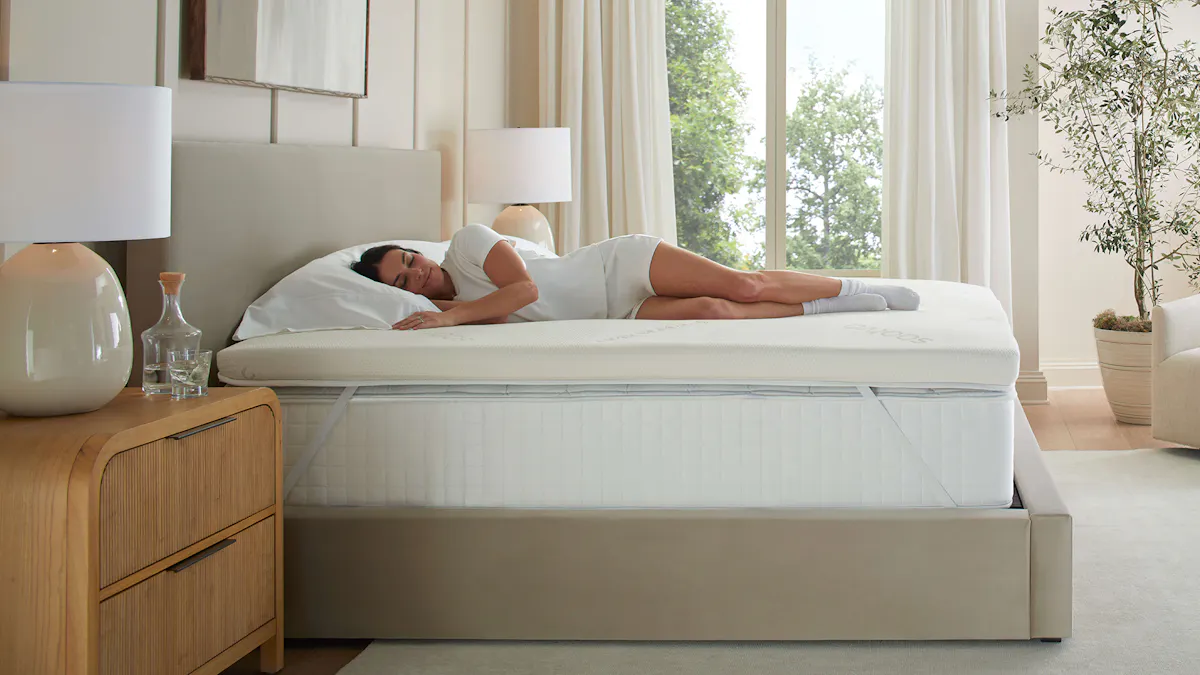
A topper that shifts around is irritating, even if the material itself is excellent. Before buying, confirm that the topper matches the mattress size and look for corner straps, elastic, grippy fabric, or another method that keeps the layer from migrating under the sheets.
Sheet depth deserves the same attention. Adding a topper increases the total height of the bed, and fitted sheets that were already tight may pull loose at the corners. This is a boring detail until you are remaking the bed every morning.
If you are considering a substantial comfort layer, read our guide to the thickest mattress topper options before assuming more height is the right answer. A taller topper changes both the feel and the practical fit of the bed.
Natural materials need their own scrutiny. Wool can regulate the immediate sleep environment differently from foam and has a distinct, cushioned feel rather than a deep body cradle. Our wool mattress topper guide explains where that material makes sense and where it may not.
Choose the advantage you actually need
If you wake with sore shoulders or hips on a mattress that otherwise feels solid, prioritize contouring. Memory foam is the obvious construction to investigate because it is designed to conform more closely under body weight.
If you sleep warm, prioritize airflow and a cover or foam formulation built to manage heat. Latex and breathable covers are often more sensible starting points than simply adding the softest possible foam. Your protector, sheets, duvet, and bedroom temperature will still influence the result.
If you share the bed and react to every turn, focus on materials that absorb movement rather than rebound sharply. If you want easier movement and a less enveloping feel, a responsive material may fit better than slow-moving foam.
For a firmer feel, be careful. A soft topper cannot firm up a weak mattress core. A more structured topper can make the surface feel less plush, but it cannot turn a sagging bed into a supportive one.
My buying rule: identify the single annoyance you notice most at bedtime or on waking. Then choose the construction that addresses that annoyance, rather than buying a topper with every possible feature.
Where the Saatva Graphite Topper fits
The Saatva Graphite Topper makes the most sense for someone seeking the contouring character of memory foam with a cooling-minded material approach. Per the manufacturer’s product listing, it uses graphite memory foam, so its natural lane is softening a firm surface and easing pressure where the body meets the mattress.
I would consider it for a mattress that is supportive but lacks comfort at the top. I would skip any topper, including this one, if the real issue is a failing mattress foundation or persistent sagging. Check the official site for the current price, availability, care instructions, and policy terms.
If you are weighing natural cushioning against foam contouring, our wool mattress topper review offers a useful material comparison point. The important question is not which material sounds more premium. It is which surface behavior your current mattress lacks.
FAQ
What are the main mattress topper advantages?
The main advantages are changing surface comfort, adding pressure relief, reducing some motion transfer, and helping a still-supportive mattress feel usable for longer. The material determines whether that change feels contouring, springy, firm, or more breathable.
Can a mattress topper fix a sagging mattress?
No. A topper may make a sagging bed feel temporarily softer, but it cannot rebuild lost support or remove an existing dip. If your body is settling into an uneven surface, the mattress itself is the problem.
Is memory foam or latex better for a topper?
Memory foam is usually the better fit if you want close contouring and less noticeable movement from a partner. Latex is often preferable if you want a quicker response, more bounce, and less of a sinking sensation.
Will a topper make me sleep cooler?
It can help if you choose a breathable construction or cooling-focused materials, but no topper works in isolation. Bedding, mattress protectors, room temperature, and the underlying mattress all affect how warm the bed feels.
How do I know whether to buy a topper or replace my mattress?
Buy a topper if the mattress remains flat, stable, and supportive but feels too firm or uncomfortable at the surface. Replace the mattress if it has sagged, feels structurally worn, or no longer supports your body comfortably.
The bottom line
A mattress topper is a smart fix for a comfort problem, not a structural one. Pick the material around the issue you want to solve, check fit and care details before ordering, and do not ask a comfort layer to rescue a mattress that has reached the end of its useful life.
FINAL VERDICT
Before you settle: if mattress topper advantages is what brought you here, the Saatva Graphite Topper is the value pick on this page — the strongest trial-and-return terms of the options covered here. Confirm current price, dimensions and terms on the official product page before ordering.
OUR CATEGORY-MATCHED PICK
Saatva Graphite Topper
- Graphite-infused memory foam, per saatva.com
- 180-night trial
- Secure anchor bands, fits deep mattresses