
 by
by Our Top Pick for This Issue
The Saatva Classic addresses this directly — its individually wrapped coils and dual-sided construction deliver consistent feel across sleep positions, durable long-term performance, and a 365-night home trial.
One side of the mattress feels softer. There’s a slight ridge down the middle. Your sleeping position shifts you toward the edge every night. Uneven mattress feel has a small number of specific causes, and identifying which one applies determines whether you need a repair, a foundation replacement, or a warranty claim.
The Three-Step Diagnosis Test
Step 1: Test the Foundation First
Remove the mattress and set it aside. Inspect the foundation directly:
- Press firmly on the foundation surface at 6–8 points across the full area
- Look for broken slats, sagging center support, or box spring internal collapse
- Check slat spacing — anything over 3 inches is insufficient for foam mattresses
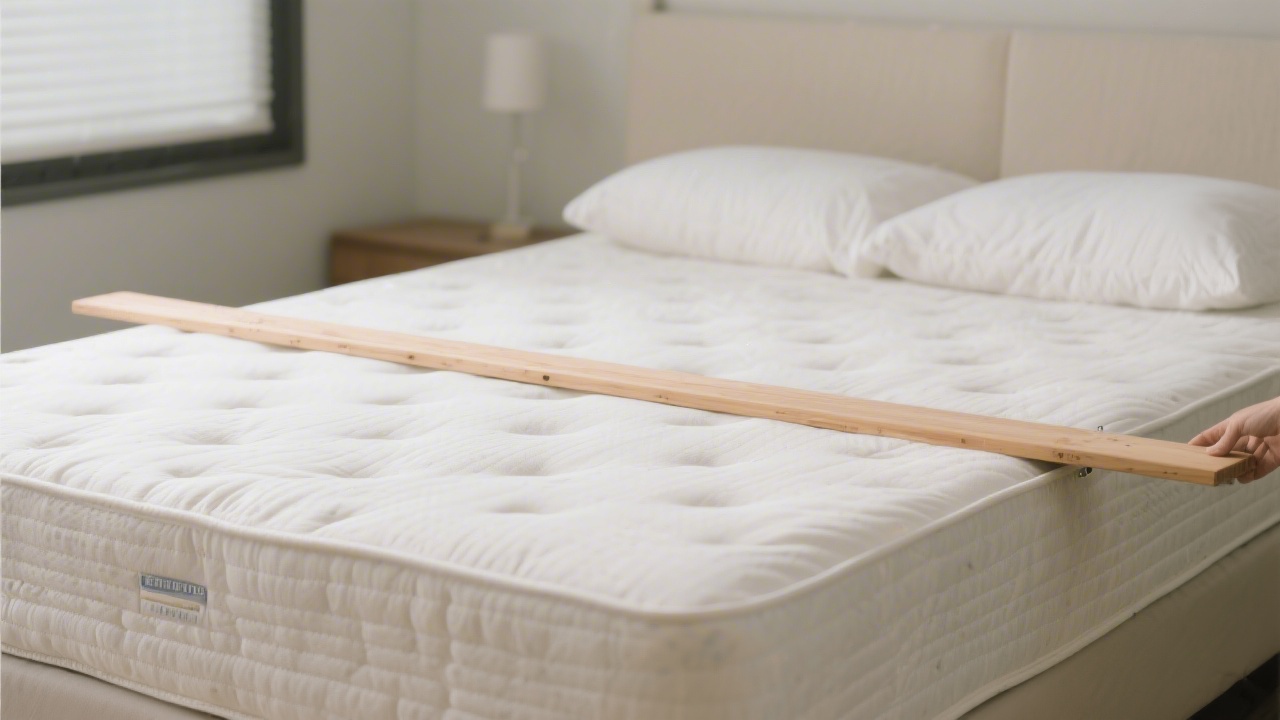
- Place a long straight edge (a 4-foot level or board) across the surface to detect sag
If you find foundation issues: place the mattress on the floor and sleep on it for 2 nights. If the unevenness disappears, your foundation was the sole cause.
Step 2: Test the Mattress on a Flat Surface
Place the mattress directly on a hard, flat floor. Press across the surface systematically. Check for:
- Areas that compress more easily than others
- A visible sag or ridge when the mattress sits flat
- Asymmetric firmness between the two sleeping zones (left vs right)
If unevenness is present on a flat floor, the issue is in the mattress itself — not the foundation.
Step 3: Measure the Impression
Place a straight edge across the suspected uneven area and measure the depth of any depression with a ruler. This number determines your warranty options:
- Under ¾ inch: Within normal wear tolerance; likely not warranty-eligible
- ¾ to 1 inch: May qualify under some warranties; contact manufacturer
- Over 1 inch: Typically qualifies as a warranty defect in most major mattress brands
Causes of Uneven Mattress Feel
Differential Wear
If two people share the mattress and sleep at different weights or positions, the heavier side compresses faster. Over 3–5 years, this creates asymmetric firmness. Rotating the mattress head-to-foot is the only prevention; once asymmetric compression is permanent, there’s no fix.
Foundation Failure
The most fixable cause. A broken or sagging foundation is the #1 cause of unevenness in mattresses under 5 years old. Check this first before assuming the mattress is the problem.
Manufacturing Defect
Foam density inconsistencies from the factory occasionally cause one zone to compress faster than others. This typically manifests in the first 6–18 months. It’s rare but real, and most warranties cover it if the impression exceeds threshold measurements.
Broken Innerspring Torsion Bars
In traditional innerspring mattresses, broken or fatigued coil torsion bars in one zone create a localized soft spot. You can usually feel the resistance difference by pressing firmly across the surface with your palm. Generally not warrantable but may be repairable by a specialty mattress shop.
What’s Fixable vs What’s Not
| Cause | Fixable? | Fix |
|---|---|---|
| Foundation sag/damage | Yes | Replace or repair foundation |
| Wide slat spacing | Yes | Add slats or replace frame |
| Differential wear | No | Rotate to slow; replace eventually |
| Manufacturing defect | Warranty | Document and claim |
| Broken coil torsion bar | Sometimes | Specialty repair or replace |
Related Reading
- Lumpy Mattress: Causes and Fixes
- How Mattress Feel Changes Over Time
- Why Does My Mattress Feel Different?
- Hybrid vs Traditional Coil
Our Top Pick for This Issue
The Saatva Classic addresses this directly — its individually wrapped coils and dual-sided construction deliver consistent feel across sleep positions, durable long-term performance, and a 365-night home trial.
Frequently Asked Questions
How do I tell if uneven mattress feel is the foundation or the mattress?
Place the mattress on the floor and sleep on it for two nights. If the unevenness disappears on the floor, your foundation is the cause. If it persists on a flat hard surface, the issue is in the mattress itself.
What impression depth qualifies for a warranty claim?
Most major mattress brands set the threshold at 1 inch (2.5 cm) of body impression measured under no load. Some premium brands use ¾ inch. Measure by placing a straight edge across the surface and measuring the deepest point. Document with photos.
Can a mattress topper fix an uneven mattress?
A topper can mask minor unevenness (less than ½ inch) by adding a conforming layer on top. It cannot fix significant sagging or asymmetric compression — those physical differences transmit through any topper thickness. Toppers are a temporary comfort solution, not a structural fix.
My new mattress feels uneven after 3 months. Is it defective?
Possibly. Check the foundation first (most common cause in new mattresses). If the foundation checks out and the unevenness is present on a flat floor, document it and contact the manufacturer. Manufacturing defects showing within 6 months are typically covered under warranty.
How often should I rotate my mattress to prevent uneven wear?
Every 3 to 6 months. Rotate head-to-foot (not flip, unless the mattress is specifically double-sided). More frequent rotation in the first year helps establish even compression patterns before they become permanent.