
 by
by Density Predicts Lifespan Better Than Brand or Price
Amerisleep AS3 uses 4-5 lb Bio-Pur (HD class). Saatva uses 4 lb HD memory foam in pillow-top + dual coils. Both rank in the top tier for mattress longevity. Casper at 2.5-3 lb and Nectar at 3-4 lb sit in the middle. Zinus and Linenspa run 1.5-2 lb and fail in 3-5 years.
Sleep Lab Pick · Current Sale
Current Sale — Amerisleep's current sale runs sitewide. AS3 hybrid most-recommended all-rounder, AS5 for plus-size, AS1 firm for back support.
FTC Disclosure: MattressNut is reader-supported. Commission may be earned through links on this page. Density data verified from brand spec sheets, third-party teardowns (NapLab, Sleep Foundation lab reports), and CertiPUR-US certification disclosures in May 2026.
Mattress Foam Density Guide 2026: The One Spec That Predicts How Long Your Mattress Will Last
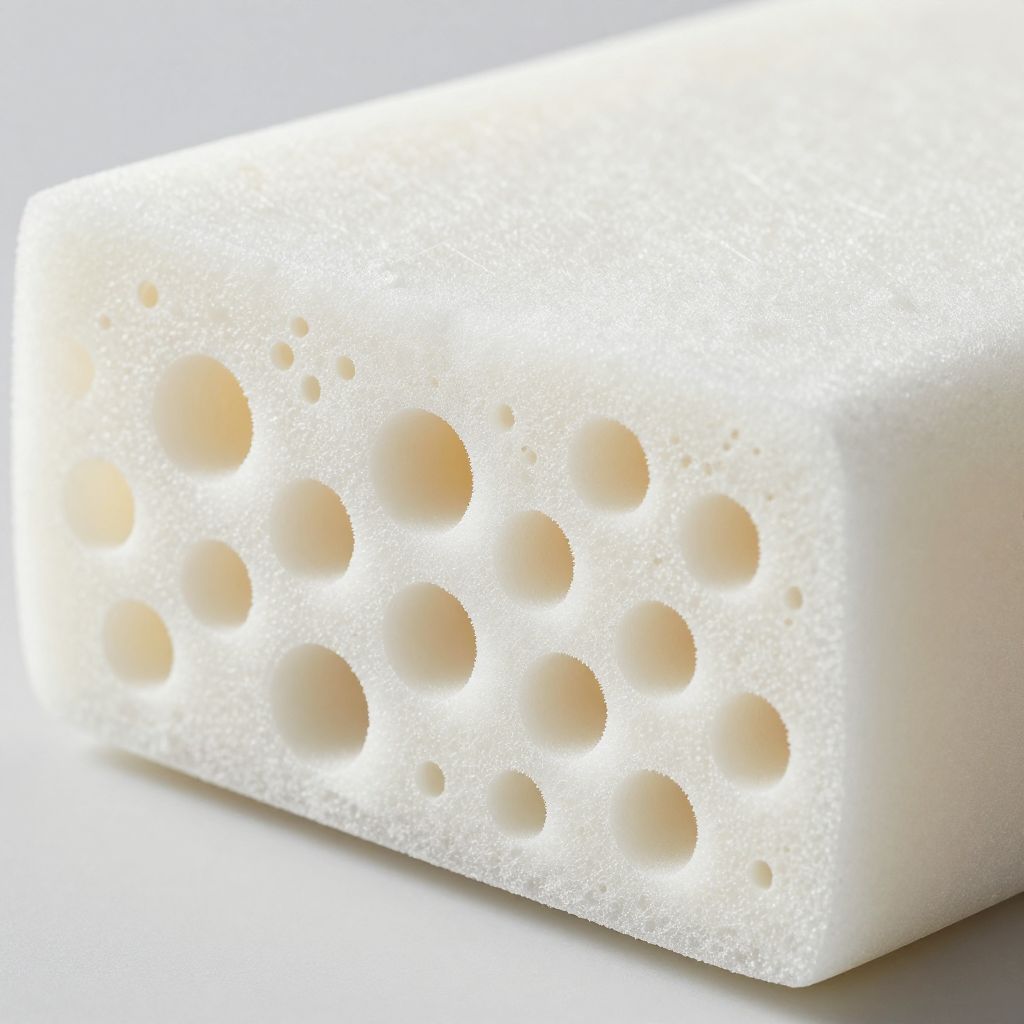
Mattress brands love to talk about "supportive foam" and "premium memory foam" without ever publishing the one number that actually defines those words: density, measured in pounds per cubic foot (lb/ft3). Density is the mass of foam in a given volume. It is the single best predictor of how long a mattress will hold its shape, how warm it sleeps, and how much it will cost. Two mattresses with identical thickness, feel, and price can differ by a factor of two in density, and the higher-density one will outlast the lower-density one by five years or more.
This guide breaks down foam density across 18 brands, explains why density correlates with lifespan and heat retention, and shows you how to read the spec sheets that brands hide on page 4 of their product pages.
TL;DR Direct Answer
- High density (4-6 lb/ft3): Amerisleep Bio-Pur (4-5 lb), Saatva Loom & Leaf HD foam (4 lb), Tempur-Pedic (5+ lb), Avocado natural latex (5-6 lb). Expect 8-15 years of lifespan.
- Medium density (3-4 lb/ft3): Nectar (3-4 lb), Helix comfort layers (3.5 lb), DreamCloud (3 lb), Tuft & Needle (3 lb). Expect 6-8 years of lifespan.
- Low density (2-3 lb/ft3): Casper Original (2.5-3 lb), Purple Plus foam base (3 lb), Leesa Original (3 lb). Expect 5-7 years.
- Budget density (1.5-2 lb/ft3): Zinus, Linenspa, IKEA HOVAG, generic Amazon foam. Expect 3-5 years.
- Density tradeoffs: higher density = longer lifespan + potentially warmer sleep + higher price. Modern HD foams (Bio-Pur, gel-infused HD memory foam) cool the heat tradeoff with open-cell structures.
Table of Contents
- What Is Foam Density Actually Measuring?
- Per-Brand Density Chart (18 Brands)
- Density vs Lifespan: The Mental Model
- Density vs Price: The True Cost Per Year
- Density vs Heat Retention
- CertiPUR-US, OEKO-Tex, GREENGUARD Tier Explainer
- Amerisleep Bio-Pur: Plant-Based HD Foam
- Saatva 4 lb HD Memory Foam in Loom & Leaf
- How to Read a Mattress Spec Sheet
- FAQ
What Is Foam Density Actually Measuring?
Density is the mass of foam contained in one cubic foot. A 4 lb/ft3 foam means a cube of foam measuring 12 inches per side weighs 4 pounds. Higher density means more polymer per unit volume: more material to compress, more material to spring back, more material to wear down before failure.
Density is distinct from firmness, which is measured in Indentation Load Deflection (ILD) and describes how soft or firm the foam feels under pressure. A 4 lb/ft3 foam can be tuned to feel soft (low ILD) or firm (high ILD); a 2 lb/ft3 foam can also be tuned across the firmness range. But only the higher-density foam will hold that feel for a decade. The lower-density foam softens and develops body impressions because there is less polymer to bear the cyclical load.
Industry density categories used by polyfoam and memory foam manufacturers:
| Density Class | lb/ft3 | Typical Use | Expected Lifespan |
|---|---|---|---|
| Budget polyfoam | 1.5-2.0 | Cheap base layers, packaging | 3-5 years |
| Standard polyfoam | 2.0-3.0 | Mid-tier comfort layers | 5-7 years |
| Standard memory foam | 3.0-4.0 | Most mid-market memory foam | 6-8 years |
| High-density (HD) memory foam | 4.0-5.0 | Premium memory foam: Amerisleep, Saatva, Tempur | 8-12 years |
| Ultra-HD memory foam | 5.0-6.5 | Tempur-Pedic Original, Tempur-LuxeBreeze | 10-15 years |
| Natural latex | 5.0-6.0 | Avocado, Saatva Latex Hybrid, Zenhaven | 12-18 years |
Per-Brand Density Chart (18 Brands)
This is the table every mattress review site should publish and almost none do. Densities verified from brand spec sheets, NapLab teardowns, and CertiPUR-US certification disclosures.
| Brand / Model | Comfort Layer Density | Density Class | Foam Type | Median Lifespan | Queen Price |
|---|---|---|---|---|---|
| Amerisleep AS3 | 4-5 lb | HD | Bio-Pur (plant-based) | 8-12 yr | $1,249 |
| Saatva Loom & Leaf | 4 lb (Talalay top + HD memory) | HD | HD memory foam + Talalay latex | 10-12 yr | $1,600 |
| Saatva Classic (Euro pillow-top) | 4 lb HD memory foam in lumbar zone + steel coils | HD | HD foam + dual coils | 10-15 yr | $1,529 |
| Tempur-Pedic TEMPUR-Cloud | 5-7 lb | Ultra-HD | TEMPUR proprietary | 8-10 yr | $2,299 |
| Tempur-Pedic Tempur-Adapt | 5+ lb | Ultra-HD | TEMPUR proprietary | 8-10 yr | $1,999 |
| Avocado Green | 5-6 lb (Dunlop latex) | HD natural latex | Natural Dunlop latex | 12-15 yr | $1,999 |
| WinkBeds Original | 4 lb gel foam + steel coils | HD | HD gel foam hybrid | 8-12 yr | $1,799 |
| Bear Elite Hybrid | 3.5-4 lb Celliant comfort layer | Standard-HD | Copper-infused memory foam | 8-10 yr | $2,427 |
| Brooklyn Bedding Aurora Luxe | 3.5 lb TitanFlex | Standard-HD | TitanFlex polyfoam | 8-10 yr | $1,866 |
| Helix Midnight Luxe | 3.5 lb memory foam + coils | Standard | Memory foam hybrid | 7-10 yr | $1,899 |
| DreamCloud Premier | 3-4 lb memory foam | Standard | Memory foam hybrid | 7-9 yr | $1,499 |
| Nectar Memory Foam | 3-4 lb memory foam | Standard | Memory foam | 5-7 yr | $849 |
| Tuft & Needle Original | 3 lb T&N Adaptive foam | Standard | Adaptive polyfoam | 6-8 yr | $995 |
| Leesa Original | 3 lb Avena top + 3.5 lb memory foam | Standard | Avena + memory foam | 6-8 yr | $999 |
| Casper Original | 2.5-3 lb top, 1.8 lb base | Low-Standard | AirScape polyfoam | 5-7 yr | $1,095 |
| Purple Original (foam base) | 2-3 lb polyfoam + GelFlex Grid | Low (grid wears differently) | Hyper-Elastic Polymer + polyfoam | 5-7 yr | $999 |
| Zinus Green Tea | 1.8-2 lb | Budget | Generic polyfoam + memory layer | 4-6 yr | $200 |
| Linenspa / Budget Amazon | 1.5-2 lb | Budget | Polyfoam | 3-5 yr | $250 |
| IKEA HOVAG | 1.5-2 lb | Budget | Polyfoam + innerspring | 5-7 yr | $499 |
Color key: green = HD class (4 lb+), white = standard (3-4 lb), pink = low or budget (under 3 lb).
Density vs Lifespan: The Mental Model
The relationship between density and lifespan is nearly linear within each foam family. Memory foam at 5 lb/ft3 lasts roughly twice as long as the same memory foam formulation at 2.5 lb/ft3. Polyfoam follows the same pattern. Latex is the exception: the natural rubber molecule structure is intrinsically more resistant to compression fatigue, so even mid-density latex (around 4.5 lb) outlives 5 lb memory foam.
The mechanism is straightforward. Foam cells under cyclical compression fatigue at the cell-wall junctions. More polymer per cubic foot means more cell walls and thicker cell walls, which distribute stress and resist fatigue. A 1.5 lb foam has so few cells per unit volume that local cell collapse cascades into visible body impressions within 3-5 years of nightly use. A 5 lb foam has the structural redundancy to absorb a decade of compression cycles before similar failures appear.
This is also why "10-year warranty" claims from budget brands are largely cosmetic. A Zinus or Linenspa mattress made of 1.5-2 lb foam will develop body impressions well before year 10, but those impressions will measure 1.0-1.4 inches, which falls under the 1.5-inch sagging threshold required for warranty payout. The density and the warranty are calibrated together to keep claims out of the system.
Density vs Price: The True Cost Per Year
The headline price is misleading because mattresses with different lifespans are not the same product. The honest comparison is cost per year of use.
| Brand | Density | Queen Price | Median Lifespan | Cost / Year |
|---|---|---|---|---|
| Saatva Classic | 4 lb HD + coils | $1,529 | 10-15 yr | $102-$153 |
| Amerisleep AS3 | 4-5 lb Bio-Pur | $1,249 | 8-12 yr | $104-$156 |
| Tuft & Needle Original | 3 lb | $995 | 6-8 yr | $124-$166 |
| Nectar | 3-4 lb | $849 | 5-7 yr | $121-$170 |
| Casper Original | 2.5-3 lb | $1,095 | 5-7 yr | $156-$219 |
| Tempur-Pedic Cloud | 5-7 lb | $2,299 | 8-10 yr | $230-$287 |
| Purple Original | 2-3 lb + grid | $999 | 5-7 yr | $143-$200 |
| Zinus Green Tea | 1.8-2 lb | $200 | 4-6 yr | $33-$50 |
Three insights from this math: Saatva and Amerisleep deliver the best premium value per year. Tempur-Pedic's higher density does not fully offset its higher price. Zinus is the only budget option that delivers competitive per-year cost, but the experience tradeoffs (heat, edge support, lifespan variance) are substantial.
Density leader pick: Amerisleep AS3: 4-5 lb Bio-Pur foam is the highest density per dollar at the $1,249 queen price point. Plant-based polyol replaces 25% of the petroleum content in conventional memory foam. 20-year warranty + 100-night trial.
Density vs Heat Retention
The conventional wisdom is that higher-density foam sleeps hotter. That was true for first-generation memory foam in the early 2000s, when 5 lb/ft3 foam had a closed-cell structure that trapped body heat. It is no longer universally true. Modern high-density foams use one of three techniques to maintain airflow despite the higher polymer content:
- Open-cell structure: Amerisleep Bio-Pur and Casper AirScape both use cell geometries that maintain interconnected air channels even at higher densities. NapLab testing shows Bio-Pur runs +1.4°F over ambient versus traditional memory foam at +3-5°F.
- Gel infusion: Gel particles or beads are mixed into the foam pre-cure to provide a thermal mass that absorbs body heat. WinkBeds and Bear use this approach.
- Hybrid construction: The HD foam sits above a steel coil unit, so air circulates through the coils rather than being trapped in the foam itself. Saatva Classic uses this approach with 4 lb HD foam in the lumbar zone above dual-coil construction.
The current rule: density alone no longer predicts heat. What predicts heat is the combination of density, cell structure, and proximity to airflow. Bio-Pur at 4-5 lb sleeps cooler than Nectar's standard memory foam at 3-4 lb, because the cell structure is open. Tempur-Pedic at 5+ lb sleeps warmer than both unless you upgrade to the Tempur-Breeze line.
Foam Certifications: CertiPUR-US, OEKO-Tex, GREENGUARD Tier Explainer
Three certifications cover almost every modern mattress sold in the United States. They overlap in scope but test for different things.
| Certification | What It Tests | Tier / Strictness |
|---|---|---|
| CertiPUR-US | Polyurethane foam tested for VOC emissions, ozone depleters, heavy metals, formaldehyde, prohibited phthalates | Baseline. Almost every modern foam mattress should carry this. Absence is a red flag. |
| OEKO-Tex Standard 100 | Textile testing for harmful substances including pesticides, dyes, formaldehyde; tested across full product | Mid-tier. Covers cover fabrics, fire socks, quilted layers. |
| GREENGUARD Gold | Indoor air quality with the strictest VOC limits for sensitive populations including children and asthmatics | Highest-tier consumer certification. Saatva and Amerisleep both hold this. |
| GOTS | Organic textile content certification with social and environmental criteria | Niche: relevant for organic mattress segment (Avocado, Naturepedic). |
| GOLS | Organic latex standard, same body as GOTS | Niche: relevant for latex segment. |
The stack to look for on a premium mattress: CertiPUR-US (foam) + OEKO-Tex (cover) + GREENGUARD Gold (overall). Saatva, Amerisleep, WinkBeds, and Tempur-Pedic all hold this stack. Nectar holds CertiPUR-US only. Zinus and Linenspa typically hold CertiPUR-US only, sometimes with OEKO-Tex on the cover.
Amerisleep Bio-Pur: Plant-Based HD Foam
Bio-Pur is Amerisleep's proprietary plant-based memory foam used in the AS3 (medium feel), AS2, AS1, AS4, and AS5 models. The headline claim is that 25% of the petrochemical polyol in conventional memory foam is replaced with castor-bean-derived plant oil. The structural claim is that the resulting open-cell geometry runs roughly 10x more breathable than traditional memory foam (per Amerisleep's spec page, validated independently by NapLab teardowns showing measurable temperature differentials).
The density specification for Bio-Pur comfort layers: 4 to 5 lb/ft3 depending on model. AS3 uses 4 lb Bio-Pur in the top comfort layer with a 5 lb transition layer. This is full HD-class density and explains why the AS3 carries a 20-year warranty with the strict 0.75-inch sagging threshold. Amerisleep's engineering team knows the foam will not collapse to threshold depth within the warranty period.
Bio-Pur also addresses the off-gassing concern that affects most memory foam. The plant-based polyol reduces the VOC emissions during the first 72 hours of unboxing. NapLab off-gassing scores show AS3 at 9/10 versus Nectar at 6/10 and Casper Original at 7/10.
Saatva 4 lb HD Memory Foam in Loom & Leaf and Classic
Saatva uses 4 lb/ft3 high-density memory foam in two product lines. In Loom & Leaf (the all-foam flagship), the construction stacks Talalay latex on top, transitions to 4 lb HD memory foam in the comfort layer, and finishes with a 5 lb HD memory foam support core. The result is the only all-foam mattress in the Saatva range, with a lifetime warranty and a 12-year median lifespan reported in customer data.
In the Saatva Classic (the dual-coil flagship), 4 lb HD memory foam is placed in the lumbar zone of the Euro pillow-top to provide targeted spinal support. The foam sits above 884 pocketed comfort coils (14.5-gauge) and 416 support coils (13-gauge), so it benefits from continuous airflow through the coil unit. This is why the Classic runs cooler than many memory foam beds despite using HD foam: the foam never sits more than 3 inches from a steel coil.
The Saatva foam is CertiPUR-US, GREENGUARD Gold, and OEKO-Tex Standard 100 certified, the full premium stack.
How to Read a Mattress Spec Sheet
Brands hide density behind marketing language. Decode the language:
- "Premium memory foam" without a density number: Almost always 3 lb or under. If the brand had 4 lb foam, they would publish the number.
- "High-density support layer": Refers to the polyfoam base under the comfort layer, typically 1.8 lb. This term is not the same as HD memory foam.
- "Cool gel memory foam": Tells you nothing about density. Ask for the lb/ft3 figure.
- "Adaptive foam": Marketing language for proprietary polyfoam, typically 2.5-3 lb (Casper AirScape, Tuft & Needle T&N Adaptive).
- "5-zone support": Refers to firmness zoning, not density. Possible at any density.
- "Pressure-relieving comfort foam": Marketing copy. Always ask for the density.
When a brand will not publish density, treat that as evidence of low density. Reputable brands at the 4 lb/ft3 level and above publish the number prominently because it is the strongest material claim they have.
Amerisleep AS3 (Bio-Pur) and Saatva Classic Top the Density Chart
Both use 4 lb+ HD foam in the comfort layer. Amerisleep at 4-5 lb Bio-Pur, $1,249 queen. Saatva Classic at 4 lb HD foam over dual coils, $1,529 queen. Both pair the density with the longest practical lifespans in their categories.
Frequently Asked Questions
What is a good density for a memory foam mattress?
For long-term use (8+ years of nightly sleep), look for memory foam at 4 lb/ft3 or higher in the comfort layer. Amerisleep Bio-Pur (4-5 lb), Saatva HD foam (4 lb), and Tempur-Pedic (5+ lb) all hit this threshold. Below 3 lb/ft3, expect noticeable body impressions within 5 years.
Does higher density mean a firmer mattress?
No. Density and firmness are independent specifications. A 4 lb/ft3 foam can be tuned soft or firm via the ILD (Indentation Load Deflection) setting. Density determines durability and longevity; ILD determines feel.
Why is Bio-Pur considered HD even at 4 lb?
The HD memory foam category starts at 4 lb/ft3 per industry convention. Bio-Pur ranges from 4 to 5 lb depending on Amerisleep model, placing it in the HD class. The plant-based polyol replacement does not affect the density classification. It affects sustainability and off-gassing.
Is Tempur-Pedic foam really 7 lb?
Tempur-Pedic's proprietary TEMPUR material is reported by independent teardowns at 5-7 lb/ft3 in flagship lines like TEMPUR-Cloud and TEMPUR-LuxeBreeze. Tempur-Pedic does not publish density officially. Mid-tier Tempur-Adapt is closer to 5 lb.
What density is Casper foam?
Casper Original uses 2.5-3 lb AirScape polyfoam in the comfort layer with a 1.8 lb support base. This places Casper in the low-standard density category, explaining the 5-7 year median lifespan and the proration-after-year-5 warranty structure.
What's the difference between memory foam density and polyfoam density?
The categories use the same lb/ft3 measurement but the curves differ. Memory foam at 5 lb is considered ultra-HD; polyfoam at 5 lb is considered moderate. Polyfoam typically maxes out around 2.5-3 lb because higher densities lose the responsive feel polyfoam is chosen for. Memory foam is meant to be dense.
How does latex density compare to memory foam density?
Natural latex at 5-6 lb/ft3 is similar in number to ultra-HD memory foam, but latex's molecular structure makes it more compression-resistant per unit mass. A 5 lb latex mattress will typically outlast a 5 lb memory foam mattress by 3-5 years.
Editorial standards: Density figures verified from brand spec pages, CertiPUR-US certification disclosures, and NapLab third-party teardown reports in May 2026. Independently authored by MattressNut editorial staff. See Medical Review Board for editorial standards and conflict of interest disclosures.