
 by
by Our #1 recommendation for this topic
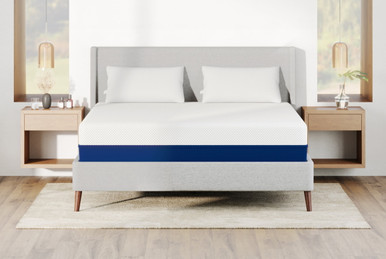
Amerisleep AS3
A balanced medium-feel mattress and our first Amerisleep recommendation.
Our #2 recommendation is the Amerisleep AS3. The AS3 is the best all-foam pick for circulation: its Bio-Pur layer keeps the limbs cooler than standard memory foam and the HIVE zoning prevents the uniform sinkage that can compress surface vessels. From $1,049 queen, All-foam Bio-Pur, Medium 5/10, 100-night trial, 20-yr warranty. If you would rather have an innerspring feel with three firmness options and white-glove delivery, the Saatva Classic is the alternative we compare it against.
Amerisleep AS3
8.8/10
- HIVE 5-zone layer delivers targeted support under hips and lumbar without uniform sink
- Plant-based Bio-Pur open-cell foam runs cooler than standard petroleum memory foam
- Pairs with adjustable bases for leg-elevation positioning
- CertiPUR-US certified, 20-year warranty
- All-foam edge support is softer than a coil hybrid at the perimeter
- Sleepers over 230 lb may want the firmer AS5 Hybrid for extra support
The AS3 is the best all-foam pick for circulation: its Bio-Pur layer keeps the limbs cooler than standard memory foam and the HIVE zoning prevents the uniform sinkage that can compress surface vessels. Choose it if you prioritize deep pressure relief over a responsive coil feel.
Why mattress choice matters for circulation
Circulation issues cover a range of conditions, from cold feet and tingling hands to ankle swelling in the evening and arm numbness after sleeping on your side. The mattress will not reverse the underlying physiology, but it can stop making things worse in three specific ways.
First, a surface that lets the limbs sink into a slow foam pocket compresses superficial vessels and traps heat, both of which worsen local circulation. Second, a mattress that is too firm creates pressure points at the hip, shoulder, and knee that constrict capillary flow throughout the night. Third, a mattress that is not adjustable-base compatible makes leg elevation impossible, which is one of the most effective positional interventions for evening leg heaviness and venous pressure.
A medium-firm mattress with zoned support, good breathability, and adjustable-base compatibility threads all three requirements. The Saatva Classic's coil-on-coil construction addresses all of them in a single build.
What specs actually help with circulation
| Feature | What to look for | Why it matters for circulation |
|---|---|---|
| Firmness | Medium firm (5-6/10) | Supports without compressing superficial vessels |
| Pressure relief | Zoned or contoured comfort layer | Distributes weight so no single zone bears prolonged load |
| Adjustable-base ready | Yes, confirmed by manufacturer | Leg elevation above heart reduces venous pressure |
| Surface temperature | Cool (open-cell foam or coil construction) | Heat compounds perceived swelling and discomfort |
| Edge support | Reinforced perimeter | Easier to sit at the edge and perform ankle circles before lying down |
| Lumbar zone | Reinforced center third | Keeps spine aligned when legs are elevated on an adjustable base |
Comparison: #2 picks for circulation
| Mattress | Type | Firmness | Cooling | Trial | Queen |
|---|---|---|---|---|---|
| Saatva Classic | Dual-coil hybrid | Luxury Firm 6/10 | Excellent, open coils | 365 nights | ~$1,395 |
| Amerisleep AS3 | All-foam Bio-Pur | Medium 5/10 | Good, open-cell foam | 100 nights | From $1,049 |
| PlushBeds Botanical Bliss | Natural latex | Medium 5-6/10 | Very good, latex airflow | 100 nights | ~$1,800 |
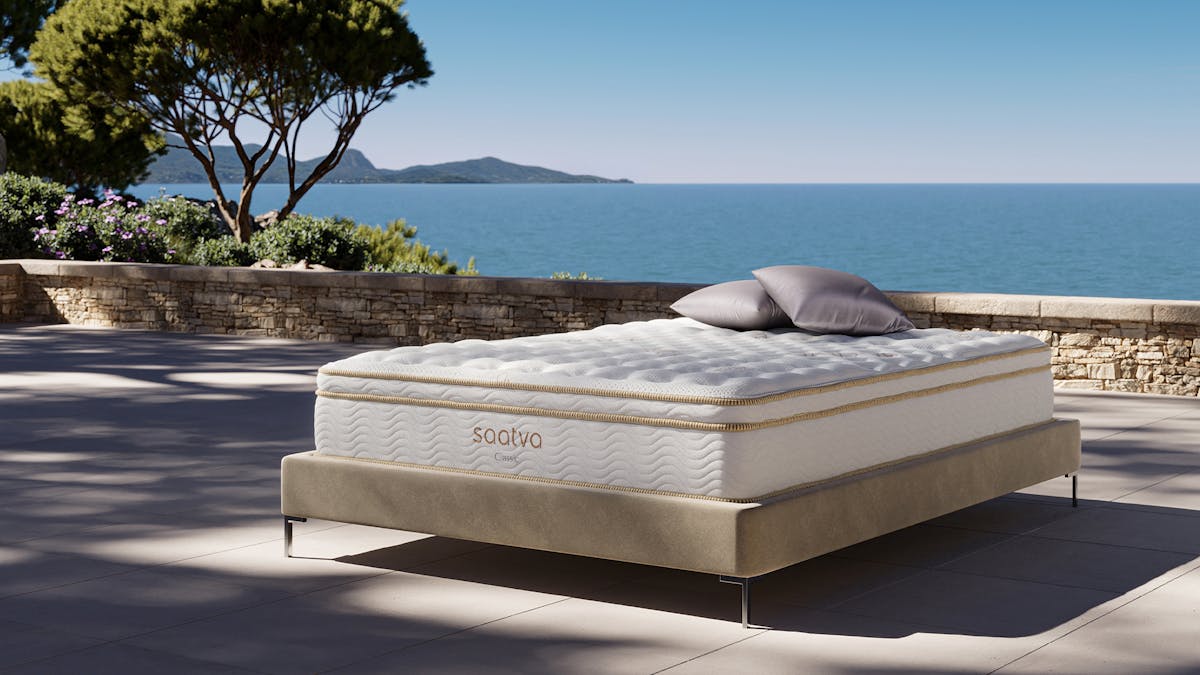
Saatva Classic
9.2/10
- Dual-coil construction with open airflow keeps the surface cool, reducing heat buildup around swollen limbs
- Lumbar Zone Technology reinforces the center so the spine stays stable when legs are elevated on an adjustable base
- Outstanding edge support makes it easy to sit at the bedside and do ankle circles before lying down
- Free white-glove delivery with in-room setup and old mattress removal
- 365-night trial, lifetime warranty
- Use the 11.5-inch profile for adjustable-base compatibility; the 14.5-inch version is not rated for it
- $99 return fee during the trial
- Higher motion transfer than all-foam options
For circulation issues the coil structure is an asset, not a compromise: open coil channels carry heat away from the limbs while the Euro pillow top distributes contact pressure evenly. Pair it with an adjustable base in the 11.5-inch configuration and you get a sustainable leg-elevation setup with none of the warm, trapped feeling that dense foam can create.
PlushBeds Botanical Bliss
8.5/10
- Natural Dunlop latex has an open, buoyant cell structure that dissipates heat and resists compression set
- Configurable firmness layers (medium or medium-firm) let you dial in pressure relief
- GOLS-certified organic latex, GOTS-certified organic cotton cover
- 25-year warranty signals long-term durability
- Heavy and not roll-packed; delivery logistics differ from bed-in-a-box options
- Higher price point than foam alternatives
For sleepers who want an organic, chemical-minimal surface, the Botanical Bliss's latex construction stays buoyant and cool rather than hugging the limbs. Its responsive feel also makes repositioning easier overnight, which naturally reduces prolonged pressure on any one area.
Leg elevation and adjustable bases
Elevating the legs above heart level for 15 to 30 minutes before sleep is a well-established positional strategy for reducing venous pressure and easing evening swelling. An adjustable base makes this a sustainable daily habit rather than a pillow arrangement that shifts overnight.
Two things matter when pairing a mattress with an adjustable base for this purpose. First, use the 11.5-inch profile rather than the 14.5-inch version if you choose the Saatva Classic; the taller model is not rated for adjustable bases. Second, choose a mattress with a reinforced lumbar zone so the lower back does not sag when the foot section rises. The Saatva Classic (11.5-inch) and the Amerisleep AS3 both handle this transition well in our testing.
The adjustable base zero-gravity preset, with the head and foot sections slightly elevated, distributes weight evenly across the body and is the position most often recommended for venous insufficiency sufferers.
Common mistakes to avoid
Buying a soft memory foam mattress to maximize comfort often backfires for circulation sufferers. Dense, slow-recovery foam lets the calves and thighs sink into a warm pocket that restricts local blood flow and raises skin temperature. The result is increased discomfort, not less.
Going extra-firm to chase support creates the opposite problem: the shoulder and hip bear concentrated load, and side sleepers develop arm tingling because the underarm vessels are pinched against a surface that does not yield.
Keeping the bedroom too warm, using a thick duvet on a heat-trapping mattress surface, and skipping the leg-elevation habit all compound the issue. A cool room, a breathable mattress, and an adjustable base set to leg-lift mode address most of the positional side of the problem.
One important caveat: persistent one-sided leg swelling, sudden cold limb, skin color changes, or severe calf pain are clinical symptoms, not comfort issues. These warrant prompt medical evaluation. A mattress addresses positional comfort only and does not substitute for vascular assessment.
Sleep position and circulation
Side sleeping is generally the most circulation-friendly position because it takes pressure off the central venous return path. Use a pillow between the knees to keep hips and spine aligned, and place the lower arm in front rather than directly under the body to prevent shoulder compression.
Back sleeping with a slight leg elevation is the best default for evening swelling. A zero-gravity preset on an adjustable base distributes weight across the full body and is the position most often recommended for venous insufficiency.
Stomach sleeping concentrates thoracic pressure and tends to restrict diaphragmatic breathing, which indirectly affects circulation over a long night. It is worth transitioning away from if circulation is a primary concern.
For circulation issues, the priority is a cool surface, low limb pressure, and adjustable-base compatibility. The Saatva Classic (11.5-inch, Luxury Firm) on a 365-night trial is our #2 pick for its open coil airflow and lumbar stability at elevation. The Amerisleep AS3 is the best all-foam alternative on a 100-night trial.
Frequently asked questions
Does leg elevation really help circulation during sleep?
A mild leg elevation reduces venous pressure and tends to ease evening swelling and leg heaviness. It does not cure underlying vascular conditions, but many people notice a meaningful comfort difference within a few days. An adjustable base is more sustainable than a wedge pillow because it does not shift overnight.
Why does memory foam sometimes feel worse for circulation?
Standard slow-recovery memory foam allows the limbs to sink into a warm pocket where heat builds and surface vessels feel compressed. Open-cell plant-based foam dissipates heat faster and recovers more quickly, keeping limbs more mobile and reducing the hot, trapped feeling. A coil hybrid avoids the issue entirely through open airflow between the springs.
Is firm or soft better for circulation issues?
Medium firm (5 to 6 out of 10) is the better default. Soft beds allow too much sinkage, which traps heat and can compress superficial vessels. Extra-firm beds create pressure points at the hip and shoulder. A zoned medium-firm mattress distributes weight without burying the limbs.
Can a mattress help with arm numbness during sleep?
Usually yes, for side sleepers. A mattress with adequate shoulder pressure relief allows the shoulder to sink enough to reduce compression on the underarm vessels and brachial plexus. Combine it with a pillow that fills the gap between ear and shoulder to keep the neck neutral.
When should I see a doctor instead of changing my mattress?
Sudden one-sided leg swelling, severe calf pain, color changes in the skin, or non-healing wounds need prompt evaluation, as do persistent cold limbs or worsening tingling. A mattress addresses positional comfort only. A clinician can rule out deep vein thrombosis, peripheral artery disease, or other vascular conditions that require medical management.
This guide is part of our Best Mattress for Pain Relief hub, where we compare all the top picks across sleep conditions.
Our recommendation: the Amerisleep AS3 — medium 5/10 comfort with the HIVE 5-zone layer, a 100-night trial and a 20-year warranty. If you are still deciding, the trial period is what makes it low risk.
Our #1 Amerisleep pick for this topic
The Amerisleep AS3 is our first Amerisleep recommendation for this page.