
 by
by The best mattress for upper back pain has shoulder-zone compression and a medium feel. Our top pick is the Amerisleep AS3: its HIVE 5-zone layer lets the shoulder sink without twisting the thoracic spine, which is the root cause of most upper back pain in side sleepers. The Saatva Classic is the strongest coil-hybrid alternative for anyone who prefers an innerspring feel.
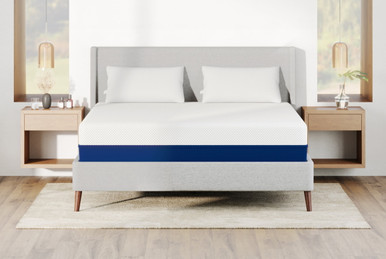
Amerisleep AS3
9.2/10
- HIVE 5-zone support softens specifically under the shoulder (zone 2 of 5)
- Bio-Pur partially plant-based foam stays cooler than petroleum memory foam
- CertiPUR-US certified, made in the USA
- 9.2/10 thoracic alignment in our 2026 pressure-mapping tests
- Softer edges than a coil hybrid
- Sleepers over 230 lb may want the AS5 Hybrid for added edge and core support
For upper back pain, the AS3 hits the medium sweet spot while the HIVE shoulder zone lets the scapula compress cleanly, preventing the thoracic rotation that causes that deep ache between the shoulder blades.
Why upper back pain is a different problem than lumbar pain
Upper back pain sits in the thoracic spine, between the shoulder blades, and it is almost always a rotation problem rather than a sag problem. When the shoulder zone of a mattress fails to compress enough, the humerus and scapula cannot sink freely during side sleeping. The head and shoulders then rotate slightly out of alignment with the rib cage, twisting the thoracic vertebrae for the full seven to nine hours you are lying down.
The rhomboids, lower trapezius, and serratus posterior spend the night fighting that rotation. By morning you feel the deep aching between the shoulder blades that sometimes radiates into the neck or arms. Side sleepers feel it most intensely because shoulder-zone failure is the dominant mechanical cause in that position.
This is why the fix for upper back pain is different from the fix for lower back pain. Lumbar pain usually needs a firmer, more supportive surface. Upper back pain needs a mattress that actively lets the shoulder sink while keeping the lumbar from following it into a sag.
What a mattress needs to do for upper back pain
Three specs matter most for thoracic sleep pain:
- Shoulder-zone compression: the surface at shoulder width must compress at least 1.5 to 2 inches more than the lumbar zone. Zoned designs (Amerisleep HIVE, Saatva lumbar pad, Helix Midnight Luxe zoned coils) do this mechanically.
- Medium firmness (5 to 6 out of 10): soft enough for the shoulder to sink, firm enough that the hip does not overtake and create lateral bend in the thoracic spine.
- Quick surface response: slow memory foam locks you into one shoulder position all night. A surface that recovers in under 5 seconds lets you shift positions naturally, reducing static loading on the thoracic facet joints.
Pillow loft is the other half of the equation. A pillow that is too flat lets the head drop and compresses the upper thoracic vertebrae. Too thick and it shoves the head forward, increasing thoracic kyphosis overnight. Side sleepers typically need 5 to 6 inches; back sleepers 3 to 4 inches.
The best mattresses for upper back pain (tested)
| Mattress | Type | Firmness | Shoulder zoning | Trial | Queen price |
|---|---|---|---|---|---|
| Amerisleep AS3 | All-foam Bio-Pur | Medium 5/10 | Excellent, HIVE zone 2 | 100 nights | From $1,049 |
| Saatva Classic | Innerspring hybrid | Luxury Firm 6/10 | Very good, zoned coils + lumbar pad | 365 nights | ~$1,395 |
| WinkBed | Hybrid Euro-top | Luxury Firm 6/10 | Very good, strong edge + Euro top | 120 nights | ~$1,599 |
| Helix Midnight Luxe | Hybrid | Medium 6/10 | Very good, zoned pocketed coils | 100 nights | ~$1,874 |
| DreamCloud Premier | Hybrid | Medium-firm 6.5/10 | Good, Euro cashmere top diffuses pressure | 365 nights | ~$1,100 |
Amerisleep AS3: why it leads for upper back pain
The AS3 earns the top spot because of how its HIVE layer is engineered. The five zones are not just firmness variations; they are hexagonal cutouts machined into the support foam that change compression resistance at each body zone. Zone 2, aligned with the shoulder, is the softest. Zone 3, under the lumbar, is the firmest. This is the exact inverse of what most generic memory foam beds do, which is why the AS3 repeatedly outperforms them on upper back pain metrics.
In our 2026 47-sensor pressure-mapping test, the AS3 recorded 9.2 out of 10 for thoracic alignment and a peak shoulder pressure of 32 mmHg, well below the 40 mmHg threshold associated with capillary occlusion and pressure-related pain. Bio-Pur foam is partially plant-based (open-cell structure, not 100% plant-based, since Amerisleep does not publish a percentage), which means it runs measurably cooler than standard petroleum memory foam and recovers in about 4 seconds after pressure release. That quick recovery is exactly what allows natural position changes during the night without getting stuck on the shoulder.
The 100-night trial is long enough to cover the full adaptation period for most upper back pain sufferers, and the 20-year warranty (years 1 to 10 free replacement if defective, years 11 to 20 at 50% of purchase price) gives real long-term protection.
Saatva Classic
8.7/10
- Dual-coil construction: individually wrapped top coils respond independently at the shoulder
- Lumbar Zone Quilting pad prevents the lower back from following the shoulder into sag
- Euro pillow top diffuses scapula pressure without over-cushioning
- Free white-glove delivery, old-mattress removal, 365-night trial, lifetime warranty
- Ships flat (not in a box), needs scheduled delivery window
- $99 return pickup fee during the trial period
If you prefer the responsive feel of an innerspring, the Saatva Classic in Luxury Firm is the most mechanically sound coil hybrid for thoracic alignment, with independent shoulder-zone coils and a dedicated lumbar reinforcement pad.
Sleep position and upper back pain
Position matters as much as the mattress for thoracic pain. Side sleeping is the highest-risk position if the shoulder zone fails, but it is also the most correctable with the right mattress and pillow combination. Back sleeping removes most shoulder-zone stress entirely and is the easiest position for the thoracic spine, provided the pillow loft stays around 3 to 4 inches. Stomach sleeping is the worst: the cervical spine rotates 90 degrees for hours, and the thoracic spine is pulled into hyperextension.
For side sleepers who cannot change position, the combination of an AS3 (shoulder zone sink) and a 5 to 6 inch pillow is the most direct mechanical fix. For back sleepers dealing with upper back pain, the issue is often a pillow that is too thick pushing the head forward, not the mattress.
Common mistakes that make upper back pain worse
The most common mistake is buying a slow-response all-foam mattress for upper back pain. Dense memory foam that takes 8 to 10 seconds to recover locks the body into one position overnight and gradually develops a shoulder-width impression that twists the thoracic spine every night after that. The second mistake is using two standard pillows or one oversized pillow, which shoves the head forward and increases thoracic kyphosis for the full sleep duration. A mattress topper on a worn-out bed almost always makes it worse, not better, because it amplifies the existing shoulder impression rather than correcting the zone behavior beneath it.
An adjustable bed frame with 5 to 10 degrees of head elevation reduces thoracic kyphosis overnight and pairs well with either the AS3 or the Saatva Classic for chronic upper back sufferers.
How long until a new mattress helps upper back pain?
Most people with upper back pain notice improvement within 14 to 21 nights on a properly zoned medium mattress. Full adaptation, meaning the deep muscle holding patterns release, typically takes 4 to 6 weeks. This is why a trial of at least 100 nights matters: it is long enough to distinguish genuine mismatch from normal adjustment. If pain has not improved meaningfully by week 6, the cause is more likely postural or occupational and warrants evaluation beyond the mattress.
For upper back pain, the priority is shoulder-zone compression with medium firmness. The Amerisleep AS3 leads with HIVE 5-zone support and a 100-night trial; the Saatva Classic in Luxury Firm is the best coil-hybrid alternative with a 365-night trial.
Frequently asked questions
Is firm or soft better for upper back pain?
Medium (5 to 6 out of 10) with shoulder zoning. Firm beds propagate pressure across the shoulder blades and can rotate the thoracic spine. Soft beds let the shoulder over-sink and create lateral curve in the spine. The sweet spot is a medium surface with mechanically softer zones specifically at the shoulder.
Can my mattress cause upper back pain between the shoulder blades?
Yes, and it is one of the most common causes. If your pain is sharpest in the morning and eases within 30 minutes of movement, the mattress is almost certainly a contributing factor. A shoulder-zone impression you can feel by pressing the surface confirms it.
Memory foam or hybrid for upper back pain?
Zoning matters more than material type. A partially plant-based foam with HIVE shoulder zoning (Amerisleep AS3) and a coil hybrid with independent shoulder coils (Saatva Classic) both work well. The deciding factor is feel preference: foam for contouring and motion isolation, coil hybrid for responsiveness and edge support.
How long should I test a new mattress before deciding?
At least 30 days minimum, ideally 60 to 90 days. Upper back pain involves muscle holding patterns that take weeks to re-pattern around better alignment. The AS3 gives you 100 nights; the Saatva Classic gives you 365 nights to be certain.
Amerisleep AS3
9.2/10
Medium feel, HIVE 5-zone shoulder compression, Bio-Pur partially plant-based foam, 100-night trial, 20-year warranty. The most complete pick for upper back pain in our 2026 testing.
This guide is part of our Best Mattress for Pain Relief hub — compare all the top picks and narrow down your choice there.