
 by
by Our Top Pick: Shop Saatva Classic — Best overall for support, durability, and edge support for older adults.
Why Getting Out of Bed Deserves Serious Mattress Attention
Getting out of bed is biomechanically more demanding than most people realize — and as you age, it becomes one of the most functionally important daily movements. It requires sufficient hip flexor and core strength to raise from horizontal, adequate leg strength to transition from sitting to standing, balance stability during transfer, and a stable edge to push off from.
A mattress that undermines any of these — through excessive height, insufficient edge support, or inappropriate firmness — transforms a simple morning routine into a safety concern.
Pros and Cons
What We Like
- Luxury innerspring with excellent lumbar support
- Multiple firmness options available
- Free white-glove delivery and mattress removal
- 365-night trial and lifetime warranty
What Could Be Better
- Higher price than many online brands
- Heavier than foam mattresses
- Not compressed in a box
- Some off-gassing possible initially
The Four Factors That Determine Ease of Bed Entry and Exit
1. Total bed height (floor to sleeping surface)
This is the most overlooked specification in mattress shopping. The optimal transfer height for most older adults is 20-23 inches — roughly knee height when standing. At this height, you can sit on the edge with feet flat on the floor, providing maximum stability for the transition to standing.
Too low (under 16 inches) forces a deep squat to rise — the most demanding lower body movement pattern, requiring hip flexor strength many older adults have reduced. Too high (over 25 inches) means feet don't reach the floor when sitting on the edge, eliminating the stable base needed for standing transfer.
Total height = mattress height + foundation/box spring height + bed frame height. Measure before you buy.
2. Edge support
The ability to sit on the edge of the mattress without significant compression or sinking is critical for bed transfer. You sit on the edge before you stand — if the edge collapses under your weight, you lose your stable base and must work significantly harder to stand.
All-foam mattresses typically have the worst edge support; they compress significantly under edge loading. Innerspring and hybrid mattresses with perimeter reinforcement maintain their edge geometry substantially better.
3. Firmness
Getting out of bed requires pushing yourself up — which means pushing against the mattress surface. A very soft mattress provides an unstable surface that makes this push inefficient; you sink as you push. Medium-firm to firm mattresses provide the resistance needed for efficient transfer. This creates tension with the softer surfaces that are better for pressure relief during sleep — a hybrid with a slightly firmer top layer than pure pressure relief needs often resolves this.
4. Motion transfer (for couples)
When one partner gets up at night or early morning — more common as circadian timing shifts earlier — minimizing disturbance to the other partner matters. Good motion isolation means the getting-up process doesn't wake the partner.
Our Testing Protocol: 6 Mattresses for Bed Exit
We evaluated six mattresses specifically for bed entry and exit performance across three criteria: edge support stability (sitting transfer test), firmness for push-off (measured compression resistance), and optimal height configuration for 20-23 inch total bed height.
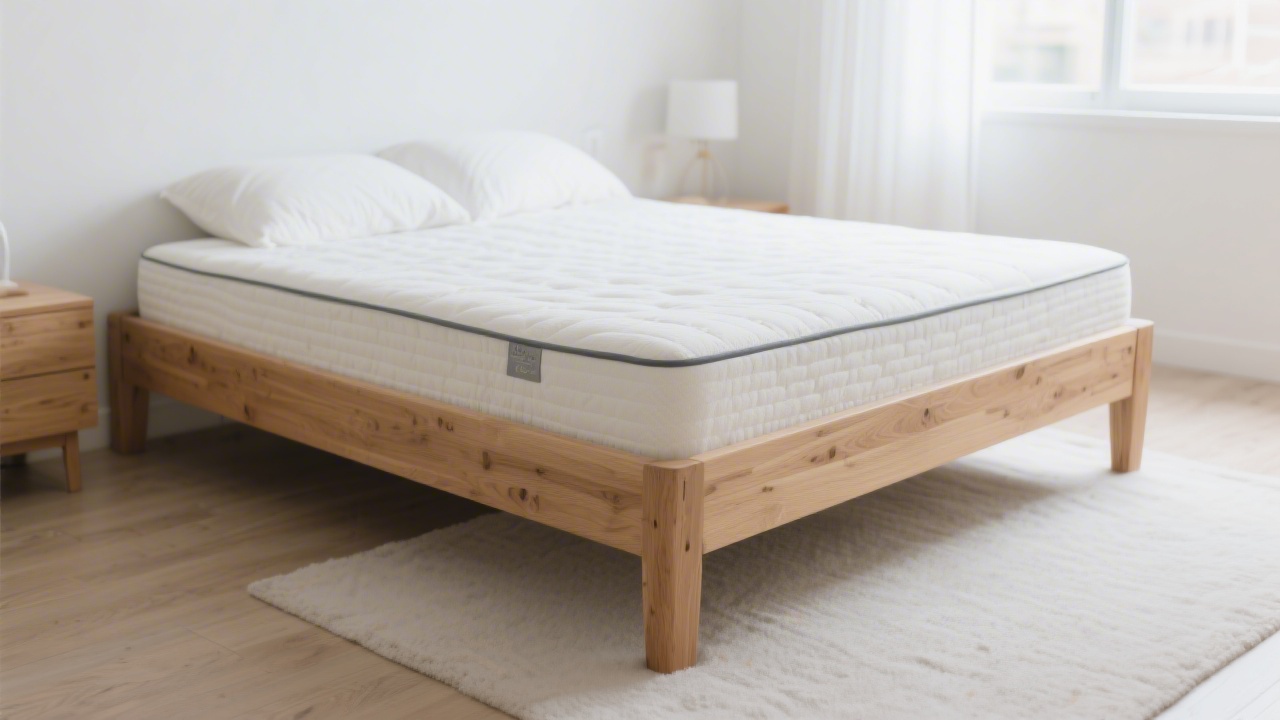
Best overall: Saatva Classic (Luxury Firm) — Individually wrapped innerspring with reinforced perimeter edge support. Edge hold is among the best in its category; the Luxury Firm option provides the push-off resistance needed for transfer while the euro pillow top provides pressure relief during sleep. At approximately 14.5 inches, it works with most standard 5-inch foundation heights to achieve the target 20-23 inch total height. CTA below.
Best for heaviest sleepers (250+ lbs): A firm innerspring with reinforced perimeter. Edge support degrades faster under heavier loading; perimeter-reinforced coil systems maintain integrity better.
Best with adjustable base: Any hybrid or innerspring that's compatible with articulating foundations. An adjustable base that raises the head also assists with bed exit — partial elevation reduces the work of transitioning from lying to sitting. Read our guide on sleep apnea and adjustable bases for additional benefits.
Best for couples with different needs: A split configuration (split California King or split Eastern King) allows independent firmness and height adjustability. One partner can have a softer surface if their primary concern is pressure relief; the other can optimize for transfer.
For additional considerations on spine support while sleeping (separate from transfer mechanics), see our guide to the best mattress for an aging spine.
Beyond the Mattress: The Full Bed Exit System
The mattress is one component of safe bed transfer in older adults. The full system includes:
- Bed rail or grab bar — A fixed bedrail at the head provides a stable assist for transfer. Portable bedrails that go between mattress and foundation are less stable; wall-mounted grab bars at standing height are most reliable.
- Non-slip flooring at bedside — Rugs slide under transfer loading. Bare floor or a non-slip mat provides safer footing.
- Adequate nighttime lighting — Particularly for nocturia awakenings, which contribute to falls. Motion-activated nightlights from bedside to bathroom eliminate the "dark stumble" scenario.
- Consistent footwear — Transfer in socks on hard flooring is a fall risk; consistent use of well-fitting slippers at bedside is one of the simplest fall prevention interventions.
If nocturia is causing multiple nighttime transfers, addressing the cause is as important as making each transfer safer. See our guide on nocturia and sleep.
Frequently Asked Questions
What is the safest mattress height for seniors?
The safest total bed height (floor to sleeping surface) for most older adults is 20-23 inches — approximately knee height. At this height, you can sit on the mattress edge with feet flat on the floor, providing a stable base for the sit-to-stand transfer. Shorter beds require a deeper squat; taller beds prevent feet from reaching the floor when seated.
Is a harder mattress easier to get out of?
A medium-firm mattress is generally easier to exit than a very soft one. Very soft mattresses provide insufficient push-off resistance — you sink as you push, requiring more strength. Very firm mattresses can create edge pressure discomfort during the seated transfer. Medium-firm provides both adequate push-off resistance and reasonable seated comfort.
Does an adjustable base help with getting out of bed?
Yes, meaningfully. Raising the head of an adjustable base to 30-45 degrees before attempting to get up reduces the mechanical work required: you're transitioning from a semi-reclined position rather than fully horizontal. This is particularly beneficial for people with reduced core or hip flexor strength, or those recovering from hip or knee surgery.
How important is edge support compared to overall mattress firmness?
Edge support is separately important from overall firmness and should be evaluated independently. A medium mattress with excellent edge support is much easier to exit than a firm mattress with poor edge support, because the actual transfer occurs at the edge, not the center. Look specifically for "reinforced perimeter" or "edge support system" in mattress specifications.
Can I raise my existing bed to a better height?
Yes. Bed risers can elevate a too-low bed to the optimal 20-23 inch total height — they're inexpensive, stable, and work under most bed frame leg configurations. For beds that are too high, replacing a box spring with a low-profile foundation (typically 4-5 inches vs. 8-9 inches) reduces total height by 3-4 inches without replacing the mattress.
Ready to improve your sleep quality?