
 by
by Our first recommendation for postpartum recovery is the Amerisleep AS3. Its medium-feel Bio-Pur memory foam offers cushioning, with HIVE zoning for support. Getting in and out of bed still needs to feel manageable at your bed height. Arrange help with setup and follow your clinician's recovery advice rather than relying on a mattress to make transfers safe.
Amerisleep AS3
9.3/10
- HIVE 5-zone support cushions hips and relieves pressure on a healing pelvis
- Mediumness makes rising from bed manageable without deep sinkage
- Open-cell Bio-Pur foam runs cooler than standard memory foam, CertiPUR-US certified
- 100-night trial and 20-year warranty, free delivery
- Softer edge support than a coil hybrid, less stable for repeated seated feeding
- Motion isolation good but not as quiet as latex for a co-sleeping partner
The AS3 is the strongest all-foam option for postpartum recovery, particularly for vaginal deliveries where perineal pressure relief is the priority. Its HIVE zoning actively cushions the hip and pelvic area without the sinkage trap that soft mattresses create.
What postpartum recovery needs from a mattress
The fourth trimester brings a specific set of physical demands that most mattress guides ignore. Abdominal muscles are weakened, sometimes healing from a surgical incision. Hips are wider and can ache from loosened ligaments. Breasts are heavy and tender. Sleep is broken into stretches as short as 45 minutes, which means getting in and out of bed can happen 8 to 12 times in a single night.
A surface that is too soft creates a sinkage trap: each time the body has to rise from deep foam, the core muscles engage under load, which is painful when those muscles are healing. A surface that is too firm applies concentrated pressure on bony prominences like the hip points and shoulders, already under strain from feeding postures. Medium-firm is the practical range for this period.
Four features matter more during postpartum recovery than at any other time:
- Edge support: a stable, reinforced perimeter makes sitting on the side of the bed to feed far safer when the core is weak and reflexes are slow from sleep deprivation.
- Pressure relief at the hips: the pelvis is recovering, and concentrated pressure at the hip points on a too-firm surface interrupts what sleep is available.
- Cooling: hormonal shifts after birth produce significant night sweats in most people. Dense memory foam traps heat and turns restful sleep into a damp, uncomfortable wake-up.
- Low odor: a newborn in the room increases sensitivity to chemical smells. CertiPUR-US certification and plant-derived foams reduce off-gassing to a practical minimum.
Top mattresses for postpartum recovery compared
| Mattress | Type | Firmness | Edge support | Trial | Queen price |
|---|---|---|---|---|---|
| Amerisleep AS3 | All-foam (Bio-Pur) | Medium 5/10 | Good | 100 nights | From $1,049 |
| Saatva Classic | Innerspring hybrid | Luxury Firm 6/10 | Excellent | 365 nights | From $1,695 |
| Sweetnight Twilight | Foam | Medium 5/10 | Fair | 100 nights | ~$259 |
Cesarean vs vaginal recovery: does mattress choice differ?
For cesarean recovery, edge support becomes the highest-priority feature. Rising from a flat surface requires engaging the core from a low position, which strains a healing incision. A reinforced perimeter allows a side-pivot and push technique: roll toward the edge, swing legs off, and push up from a higher stable surface rather than cranking the abdomen from flat. This is one reason the Saatva Classic performs particularly well for c-section recovery.
For vaginal delivery with significant perineal recovery, a soft-enough comfort layer to cushion the sit-bone area matters more than edge stiffness. The Amerisleep AS3's HIVE zoning places softer hexagonal segments at the hips and pelvis, reducing concentrated pressure at exactly that region. Both approaches work; the practical choice depends on which route was taken and which discomfort is dominant.
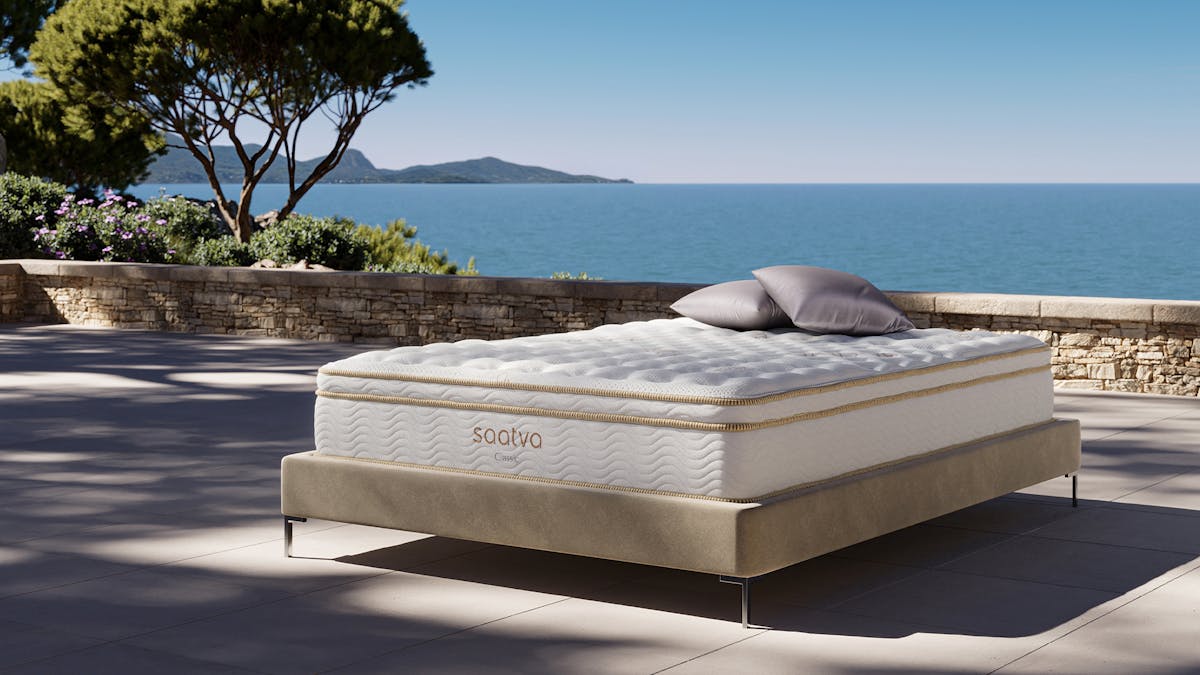
Saatva Classic
8.9/10
- Best-in-class edge support makes safe seated feeding manageable with a weak postpartum core
- Free white-glove delivery, setup, and old-mattress removal, no lifting required
- Breathable organic cotton cover reduces hormone-driven night sweats
- Dual-coil construction with reinforced lumbar zone, 365-night trial and lifetime warranty
- Available in 11.5-inch and 14.5-inch profiles so you can set the right get-out-of-bed height
- $99 return fee applies during the trial period
- Higher motion transfer than all-foam for a co-sleeping partner
The Saatva Classic earns the top spot for postpartum recovery because its reinforced perimeter is the single most important engineering feature for safe entry and exit when holding a newborn. White-glove delivery eliminates the one task a healing body genuinely cannot do safely.
Adjustable base for postpartum recovery
An adjustable base is unusually useful during this period. A slight head incline reduces acid reflux, common in the first weeks after birth. A leg lift can reduce ankle and foot swelling that often lingers. A zero-gravity position reduces pressure on a healing abdomen. Feeding in bed with a slight incline, rather than a stack of pillows, keeps the neck and upper back in better alignment during long overnight sessions.
The Saatva Classic in its 11.5-inch profile works with most adjustable bases; confirm compatibility before ordering the 14.5-inch version. The Amerisleep AS3 is fully adjustable-base compatible.
Cooling and night sweats
Estrogen and progesterone drop sharply after birth, which the body often processes as night sweats for two to six weeks. Dense, closed-cell memory foam traps heat against the body and amplifies this effect. The options that perform best during this period are coil-based airflow (Saatva), open-cell plant-based foam (Amerisleep Bio-Pur), or latex. All three run noticeably cooler than standard memory foam.
Mattress height and getting in and out of bed
A mattress that sits too low creates a mechanical disadvantage: rising requires more core activation from a lower starting position. Most people find getting in and out easiest when the top of the mattress sits between 24 and 30 inches from the floor. The Saatva Classic offers both 11.5- and 14.5-inch profiles at the same price; the 11.5-inch version on a standard frame usually lands in the right range.
Sweetnight Twilight
7.8/10
- CertiPUR-US certified foam at a very low price point
- Medium firmness avoids the sinkage trap during recovery
- 100-night trial and 10-year warranty
- Weaker edge support than the AS3 or Saatva
- Standard memory foam runs warmer than open-cell or coil options
- Less durable over multi-year use
A workable choice if budget is the primary constraint. The CertiPUR-US certification keeps chemical concerns low and the medium firmness avoids excess sinkage. Edge support and cooling are the main compromises.
Our first recommendation in this guide is the Amerisleep AS3. Bio-Pur memory foam and HIVE support give the AS3 a medium foam feel. Choose it if that balance of cushioning and support suits your sleeping position; it is not a coil-on-coil mattress.
Frequently asked questions
What firmness is best for postpartum recovery?
Medium-firm (5 to 6 out of 10) works for most postpartum sleepers. It cushions tender areas without creating the sinkage that makes getting up repeatedly exhausting. Plush is comfortable lying still but becomes a liability when standing 8 to 10 times per night.
Is a new mattress worth it just for the postpartum period?
A mattress that already sagged through pregnancy will exaggerate postpartum aches, particularly in the lower back and hips where feeding postures concentrate strain. If the current mattress has body impressions or provides inconsistent support, replacing it coincides well with a change that will remain useful long after the recovery period ends.
Can a mattress help with postpartum night sweats?
A breathable surface reduces heat retention but will not stop hormonal sweating entirely. Coil hybrids with organic cotton covers and open-cell foam designs run noticeably cooler than dense memory foam, which can make the difference between a brief wake-up and a fully disruptive one.
After a cesarean, which mattress feature matters most?
Edge support. Rising from a reinforced perimeter using the side-roll technique avoids loading the incision from a flat position. The Saatva Classic has lab-tested edge support that ranks among the best of any hybrid. The Amerisleep AS3 is also manageable with good technique but gives slightly less perimeter firmness.
Will an adjustable base help with night feeds?
Many postpartum sleepers find that a small head incline reduces reflux and supports a more upright feeding posture without pillow towers. A leg lift can also reduce ankle and foot swelling that lingers in the first weeks. Both positions are useful for short, frequent rest sessions between feeds.
This guide is part of our Best Mattress by Age & Life Stage hub.